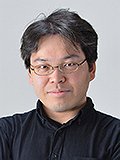
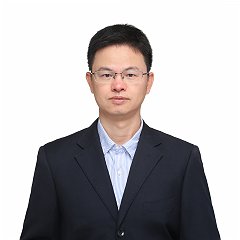
Hiroshi Unno is a Professor at Tohoku University 's Research Institute of Electrical Communication and a Visiting Professor at the National Institute of Informatics. He has served on program committees for major conferences like POPL , PLDI , ICFP , and CAV . Dr. Unno's research focuses on Programming Languages Software Verification Artificial Intelligence Higher-Order Model Checking Refinement Type Systems Temporal Logic His recent work (2023-2025) includes advancements in algebraic effects , probabilistic program verification , and prophecy-based type systems . Key contributions appear in POPL , PLDI , and ICFP journals. Scientific awards include Distinguished Paper Award at POPL 2024 Distinguished Paper Award at POPL 2023 PPL 2014 Best Paper Award He leads development of tools like RCaml , Thrust , and EffCaml for refinement type checking. Current projects involve Kakenhi grants 20H04162 and 25H00446 . Dr. Unno actively contributes to academic communities through Program Committee roles at AAAI, CAV, and SAS Editorial work for IPSJ Transactions Organizing PPL Summer School (2022)
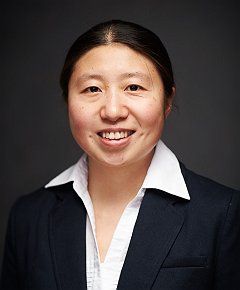
Limin Jia is a Research Professor in the Department of Electrical and Computer Engineering at Carnegie Mellon University, with a courtesy appointment in the Computer Science Department. She is affiliated with CyLab, CMU's security and privacy research institute. She received her PhD in Computer Science from Princeton University and a BE from the University of Science and Technology in China. Her research applies formal techniques to enhance software security, focusing on programming languages and distributed systems. Key interests include: Language-based security mechanisms Formal verification of distributed systems Secure compilation techniques Intermittent computing foundations Her publications demonstrate strong emphasis on security guarantees in programming languages (Rust/WebAssembly), formal methods for intermittent systems, and software supply chain security. Recent works frequently address type systems, compiler verification, and energy-constrained computing. Dr. Jia maintains an extensive advising portfolio with current and former students spanning PhD and Master's programs. She teaches foundational security courses including Browser Security and Introduction to Information Security .
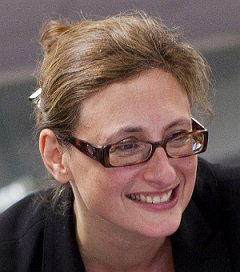
Philippa Gardner is a Professor in the Department of Computing at Imperial College London, where she has been on faculty since 2001 and became a professor in 2009. She holds a UKRI Established Fellowship (2018–2023) and directs the EPSRC-funded Research Institute on Verified Trustworthy Software Systems (VeTSS) from 2017 to 2022. Previously, she held an EPSRC Advanced Fellowship at the University of Cambridge (hosted by Robin Milner) and a Microsoft Research Cambridge/Royal Academy of Engineering Senior Fellowship (2005–2010). She completed her PhD in 1992 at the University of Edinburgh under Professor Gordon Plotkin, followed by five years of postdoctoral fellowships at Edinburgh. Her research focuses on program verification , with specialized interests in web programming (JavaScript/DOM), concurrent systems, and formal methods. She developed the Gillian platform for multi-language symbolic execution and has made significant contributions to separation logic, WebAssembly verification, and compositional reasoning techniques. Her recent publications demonstrate a strong emphasis on unified formal methods, scalable verification techniques, and practical tools for real-world languages like JavaScript and WebAssembly. Key themes include symbolic execution, correctness/incorrectness reasoning, and mechanized semantics. Awards and Fellowships: UKRI Established Fellowship (2018–2023) Microsoft Research Cambridge/Royal Academy of Engineering Senior Fellowship (2005–2010) Leadership and Service: Directs the VeTSS research institute focusing on trustworthy systems. Chaired the BCS awards committee (2013–2018), overseeing the Lovelace Medal and Roger Needham Award.
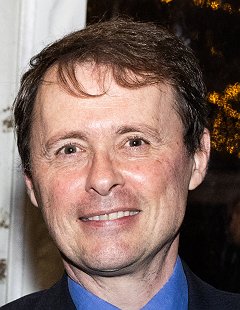
Xavier Denis is a researcher in formal methods and program verification, recently completing his PhD at Laboratoire Méthodes Formelles (LMF) under Université Paris-Saclay. He developed Creusot , a deductive verifier for Rust programs, and will join the Proof Methodology group at ETH Zurich as a postdoctoral researcher under Prof. Peter Mueller. Affiliation: Université Paris-Saclay, CNRS, ENS Paris-Saclay, INRIA Research interests: Program Verification, Ownership, Programs & Types His contributions include: Co-chairing the Student Volunteer subcommittee at POPL 2024 Authoring a PLDI 2022 paper on functional verification of Rust programs with unsafe code
Michael Norrish is an Associate Professor at the School of Computing, Australian National University (ANU) , specializing in formal methods, programming language semantics, and interactive theorem proving. His career spans roles at NICTA, Data61, and ANU, with a focus on mechanised mathematics and verified systems. PhD in Computer Science (University of Cambridge, 1999) Undergraduate degree from Victoria University of Wellington His research bridges interactive theorem-proving (ITP) systems like HOL4 with real-world systems verification, particularly in programming languages and compilers. He leads the CakeML project, developing a verified compiler for functional languages. His work intersects formal verification with practical system design, including projects on reproducibility debt in scientific software and verified processors. Recent publications highlight verified compilation techniques, reproducibility challenges, and Kolmogorov complexity formalization. He actively participates in conference program committees (e.g., CPP, PLDI) and promotes trustworthy systems development through tools like HOL4. Current affiliations: ANU, CakeML Project, Trustworthy Systems Research Group (UNSW) Collaborations: Chalmers University (postdoc opportunities), seL4 microkernel ecosystem
Aymeric Fromherz is a researcher at Inria Paris, focusing on formal methods for secure systems. He leads projects in Rust verification, high-assurance cryptography, and formalization of computational legal texts. Education includes a PhD from Carnegie Mellon University (co-advised by Bryan Parno and Corina Păsăreanu) and degrees from École Normale Supérieure. His research spans Rust verification (via Aeneas toolchain), verified cryptographic primitives , and computational law (through the Catala language). Recent publications address memory allocators, borrow-checking, and legal ambiguity detection. Major Scientific Awards : Distinguished Artifact Award (CAV 2025) Best Tool Paper Award (ESOP 2024) ACM SIGSAC Dissertation Award (2021) A.G. Milnes Dissertation Award (2021) He contributes to conferences like POPL, ICFP, and CPP, and participates in the Everest Project. The Prosecco Team at Inria Paris supports his research on formal methods and security.
Ranjit Jhala is a Professor of Computer Science Engineering at UC San Diego's Jacobs School of Engineering, where he leads the Programming Systems Group. His research spans Programming Languages and Software Engineering, focusing on building reliable systems through Type Systems, Model Checking, Program Analysis, and Automated Deduction. His current projects include Flux for Rust verification, Liquid Haskell refinement types, and techniques for analyzing timing channels. Professor Jhala teaches courses on Programming Languages (CSE 130) and Graduate Programming Languages (CSE 230), with extensive experience teaching compilers and verification topics. Professor Jhala advises several students including Alexander Bakst, Ben Cosman, and Marc Andrysco. Notable former students include Niki Vazou (Postdoc at Maryland), Ravi Chugh (University of Chicago), and Patrick Rondon (Google).
Matthew Fluet is an Associate Professor and Graduate Program Director in the Department of Computer Science at Rochester Institute of Technology's Golisano College of Computing and Information Sciences. He received his PhD in Computer Science from Cornell University and his BS in Mathematics from Harvey Mudd College. Prior to joining RIT, he was a research assistant professor at the Toyota Technological Institute at Chicago. Dr. Fluet's research focuses on programming languages, with particular emphasis on: Functional programming Compiler construction Program analysis Type systems Parallelism and concurrency His research has resulted in several significant projects including Manticore (a heterogeneous-parallel functional programming language), MaPLe/MPL (a functional language for provably efficient and safe multicore parallelism), and contributions to MLton (a whole-program optimizing Standard ML compiler). His work is supported by multiple National Science Foundation grants. Dr. Fluet has published extensively in top programming languages conferences including ICFP, POPL, PLDI, and PPoPP. His recent work focuses on automatic parallelism management, type-and control-flow analysis, and memory management for parallel systems, demonstrating a consistent research trajectory in making parallel programming safer and more accessible through language design. His notable research grants include: National Science Foundation (CISE Research Infrastructure): $224,329 (2014-2017) National Science Foundation (Software and Hardware Foundations): $236,744 (2014-2018) National Science Foundation: $412,261 (2011-2014) National Science Foundation: $91,867 (2008-2012) Dr. Fluet actively mentors graduate students, currently advising several MS project and thesis students. He teaches courses including Programming Skills (with focus on Rust), Compiler Construction, and Programming Language Concepts. He also serves in leadership roles including as Graduate Program Director for the Computer Science MS program and participates in departmental governance through the CS Curriculum Committee and GCCIS Curriculum Committee. He is an active member of the programming languages community, having served on program committees for major conferences and as Information Director for ACM SIGPLAN (2015-2018), demonstrating his commitment to advancing the field through research, education, and community service.
Hui Liu is a Professor in the School of Computer Science and Technology at Beijing Institute of Technology, where he leads research in AI-based software development with a focus on LLM applications. His work spans software refactoring, quality improvement, and maintenance, funded by the National Natural Science Foundation of China and the National Key Research and Development Program of China. PhD from Peking University (2008) Former graduate student at Software Engineering Institute, Peking University Distinguished member of China Computer Federation Secretary-General of CCF Technical Committee on Software Engineering Professor Liu's research centers on LLM-based program generation, evaluation and testing of large language models, software refactoring techniques, and automatic construction of software engineering datasets. His work bridges artificial intelligence and software engineering, with particular emphasis on improving code quality through empirical studies and machine learning techniques. Current projects include code contamination detection, context-aware naming recommendations, and refactoring validation using LLMs. His research has evolved from traditional code smell detection to cutting-edge applications of large language models in software development. Liu's publication record shows a strong trend toward LLM applications in software engineering, with recent work focusing on code review generation, commit message generation, and refactoring validation using large language models. His research combines empirical methods with machine learning approaches, often analyzing large code corpora from open-source projects. The work spans both theoretical foundations and practical tool development, with several contributions merged into Eclipse as part of the open-source community. ACM Distinguished Paper Award (ESEC/FSE 2023) ACM Distinguished Paper Award (ICSE 2022) RE'2021 Best Research Paper Award IET Software Premium Award (2018) New Century Excellent Talents in University (2013) Beijing Higher Education Young Elite Teacher (2013) Professor Liu actively mentors PhD and Master's students, with recent graduates including Waseem Akram (awarded Outstanding Graduate) and several students publishing at top venues. His research is supported by major Chinese funding agencies, and he serves on program committees for leading software engineering conferences including ASE, ICSE, and FSE. He maintains strong industry connections through contributions to Eclipse and studies of open-source ecosystems like Rust. Liu leads a research group focused on AI for software engineering, with active projects on code generation, refactoring, and quality improvement. The group collaborates extensively with international researchers and contributes directly to open-source tools, particularly in the Eclipse ecosystem where multiple refactoring improvements have been merged.
Zhiyuan Wan is an Associate Professor in the College of Computer Science and Technology at Zhejiang University, China. His academic career spans multiple prestigious institutions across North America and Asia, with a focus on advancing software engineering practices through empirical research and tool development. Dr. Wan's educational background includes: Ph.D. in Computer Science from Zhejiang University (2014) His postdoctoral journey featured positions at: University of British Columbia, Canada (2019-2020) Singapore Management University (2018) Zhejiang University (2016-2020) Lehigh University, United States (2014-2015) Dr. Wan's research program centers on empirical software engineering with particular expertise in blockchain technologies and software security. His work bridges theoretical insights with practical tool development, focusing on: Smart contract security and vulnerabilities in cryptocurrency ecosystems Code search and recommendation systems for developer productivity Empirical studies of developer practices and challenges Impact of machine learning on software development workflows His approach combines rigorous empirical methods with practical tool building to address real-world challenges faced by software practitioners. Analysis of Dr. Wan's recent publications reveals a strategic evolution toward blockchain security research, beginning around 2020 with studies on smart contract security and expanding to cover NFT ecosystems, Solana blockchain transactions, and cross-chain vulnerabilities. His work consistently applies empirical methods to uncover practical insights while developing tools that directly address identified challenges in software development. Dr. Wan actively contributes to the software engineering community through service on program committees for major conferences including ASE, ICSE, ESEC/FSE, and ISSTA. His academic leadership extends to mentoring relationships with students and collaborators across international institutions, though specific advisees are not documented in the provided materials.