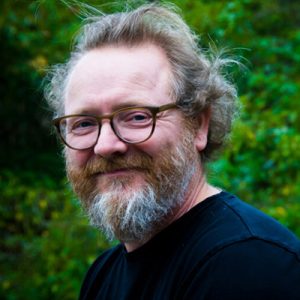
Dr Rod Thornton is a Senior Lecturer in Russian Defence and Security Studies at King’s College London, affiliated with the Defence Studies Department and School of Security Studies. He specializes in the Russian military's kinetic and sub-threshold warfare, with a focus on cyber capabilities, space warfare, and UK homeland resilience. His research includes recent British Academy-funded work on UK civil defense capacity during the pandemic, advocating for dedicated civil defense organizations. He has published extensively on Russian military tactics in Ukraine, AI-cyber integration, and space-based deterrence. Russian military cyber operations Space warfare dynamics UK resilience capacity gaps Scientific awards include a British Academy grant (2020). His students focus on asymmetric warfare, AI, cyber, and regional security issues. He teaches at the UK Defence Academy and has collaborated with institutions in Finland, South Korea, and the Freeman Air and Space Institute.
Professor Beatrice Heuser is a distinguished academic in the Department of Politics within the School of Social & Political Sciences at the University of Glasgow. Her career spans multiple prestigious institutions across Europe, including King's College London, University of Reading, and visiting professorships at Sciences Po Paris, Bundeswehr University Munich, and MGIMO. She maintains significant affiliations with major strategic research institutes including Chatham House, RUSI, IFRI, and IRSEM. Education: BA from Bedford College London, MA from LSE, DPhil from Oxford (St Antony's/St John's), Habilitation from University of Marburg Professional Experience: Former Director of Studies at German Bundeswehr's military history research office, NATO Headquarters consultant, and extensive teaching across European institutions Her research centers on strategic studies with particular focus on the cultural dimensions of warfare, nuclear strategy, and the historical evolution of strategic thought. Key research areas include strategic culture, military exercises as political instruments, laws of war development, and European defense policy. Her work bridges historical analysis with contemporary security challenges, examining how cultural narratives shape strategic decision-making from antiquity to the nuclear age. Professor Heuser's recent publications demonstrate consistent scholarly output across strategic theory, military history, and contemporary security issues. Her work shows particular emphasis on the conceptual foundations of strategic culture, historical analysis of warfare evolution, and practical applications to modern security challenges including nuclear deterrence and asymmetric warfare. The interdisciplinary nature of her research connects political theory, historical analysis, and security studies. She actively supervises graduate students in strategic theory, nuclear strategy, insurgency studies, and defense policy-making within NATO/EU contexts. Her teaching portfolio includes War and International Relations, Defense Policy, and Strategic Theory courses.
Peter Gries is a Professor of Chinese Politics and the Lee Kai Hung Chair at the University of Manchester, serving as the founding Director of the Manchester China Institute. He previously held roles at the University of Oklahoma and the University of Colorado, Boulder. Born in Singapore, he holds degrees from Middlebury, the University of Michigan, and a PhD from UC Berkeley. His research focuses on political psychology, particularly U.S.-China relations and Chinese nationalism, with notable works including China’s New Nationalism and The Politics of American Foreign Policy . He leads initiatives like the UK-China International Photography Award and the UK-China Diplomatic Dialogue. His grants include funding from the Ford Foundation and Smith Richardson Foundation for projects on security dialogues and course development. He sits on editorial boards of The China Quarterly , Political Psychology , and Nations & Nationalism . Recent work explores racial stereotypes, intersectionality, and threat perception in international relations. Education : Bachelor's and Master's in Asian Studies from Middlebury and the University of Michigan PhD in Politics from UC Berkeley Research Interests : Political psychology of international affairs U.S.-China relations Chinese nationalism and foreign policy Public opinion dynamics Grants : $60,000 from Smith Richardson Foundation (2005–2006) Multiple grants from Ford Foundation and Mershon Center for Sino-American Security Dialogues $4,000 from Freeman Foundation for Chinese Foreign Policy course development Media Contributions : Expert commentary on BBC World News, NYT, and CGTN Discussions on U.S.-China trade wars, China’s Japan policy, and global perceptions of China Labs/Institutes : Manchester China Institute Former director of the Institute for US-China Issues at University of Oklahoma
Robert S. Ross is Professor of Political Science at Boston College and holds affiliate positions at Harvard University's John King Fairbank Center for Chinese Studies and MIT's Security Studies Program. He specializes in Chinese security policy, East Asian security dynamics, and US-China relations. Ross has held visiting roles at institutions including Tsinghua University, Peking University, and Fudan University, reflecting his deep engagement with Chinese academic and policy communities. Education: B.A., Tufts University M.A. & Ph.D., Columbia University His research interests focus on the intersection of Chinese domestic politics and foreign policy, particularly in the context of power transitions and strategic competition. Key themes include Sino-American relations, regional security architecture, and the implications of China's rise for global governance. Ross has authored influential works such as Chinese Security Policy and Normalization of U.S.-China Relations , and his analyses frequently appear in journals like International Security and Foreign Affairs . Ross has advised U.S. government agencies and testified before Congress, emphasizing practical policy insights alongside academic rigor. His grants and fellowships include support from the MacArthur Foundation and the Ford Foundation. He currently serves on multiple editorial boards and academic advisory committees, including the U.S.-China Working Group of Congress and the National Committee on U.S.-China Relations. His recent work explores Europe's role in the Asia-Pacific balance of power and the evolving U.S.-China strategic rivalry, reflecting his interdisciplinary approach to contemporary geopolitical challenges.
Clémence Poirier is a Senior Researcher in the Cyberdefense Project within the Risk and Resilience Team at the Center for Security Studies (CSS) at ETH Zurich. She previously served as a Research Fellow at the European Space Policy Institute (ESPI) in Vienna and as a Researcher for Flinders University in Adelaide, Australia. She also holds the position of Space Generation Advocacy and Policy Platform's Lead on Responsible Space Behavior at the Space Generation Advisory Council (SGAC). Her educational background includes a Master's degree in International Relations, International Security and Defense and a Bachelor's degree in Foreign Applied Languages (English, Russian, Spanish), both from University Jean Moulin Lyon III, France. Dr. Poirier is multilingual, which supports her international research collaborations. Dr. Poirier's research focuses on the critical intersection of space operations and cybersecurity, with particular emphasis on geopolitical implications of cyber conflict in outer space. Her work examines how terrestrial conflicts like the Ukraine war impact space security architecture and explores policy frameworks for protecting space infrastructure from cyber threats. She has conducted extensive research on space cybersecurity policy across multiple jurisdictions including Australia, Europe, and the United States. Analysis of her publication record reveals a clear progression from foundational space policy research toward increasingly specialized work on space cybersecurity. Her recent publications demonstrate growing attention to practical policy implementation challenges, with several papers addressing specific national and regional approaches to space cybersecurity governance. There's also a notable trend toward multidisciplinary collaboration, particularly with technical experts in space systems engineering. Dr. Poirier has established significant research partnerships with major space institutions including the European Space Agency, with whom she collaborated on climate policy research examining the integration of space-based data in European environmental policies. Her work with SmartSat CRC in Australia demonstrates international research coordination on space infrastructure security. She leads research initiatives focused on responsible space behavior and has contributed to policy development through her work with the European Economic and Social Committee. Her current Cyberdefense Project at ETH Zurich's CSS represents the culmination of her expertise in space security policy development.
Katarzyna Kaczmarska is a Senior Lecturer in Politics and International Relations at the School of Social and Political Science, University of Edinburgh. She joined the university in 2019, bringing expertise in the sociology of international relations knowledge, academic freedom, and post-Soviet politics. Her research focuses on knowledge construction among scholars and practitioners, with particular emphasis on Russia’s domestic and foreign policies. She actively contributes to academic freedom initiatives, including co-editing a 2022 special issue of the International Journal of Human Rights on academic freedom and internationalization. Education: PhD in International Studies, MSc in Development Studies (Central Asia focus), MA in International Relations. She has held fellowships at Aberystwyth University (Marie Skłodowska-Curie) and St Petersburg State University. Her teaching includes courses on Russian foreign policy and International Relations theory. Research interests encompass the sociology of IR knowledge, academic freedom challenges, and post-Soviet geopolitics. She supervises PhD projects in Global IR, academic freedom, and Russian studies. Her 2020 book, Making Global Knowledge in Local Contexts , explores how Russian scholars navigate international relations theory in policy advice. Key roles: Member of the ISA Academic Freedom Committee, University of Edinburgh Academic Freedom Working Group. Media commentary: Regular contributor to LBC News, TBS Radio South Korea, and The Conversation.
Tymofiy Mylovanov is an Associate Professor of Microeconomics at the University of Pittsburgh. His research focuses on political economy, macroeconomic policy design, blockchain applications in governance, and post-conflict reconstruction strategies with a particular emphasis on Ukraine and Eastern Europe. His work bridges theoretical economics with practical policy analysis, addressing issues such as public procurement reforms, sanctions impact on businesses, and the design of fiscal frameworks for war-torn economies. Mylovanov has extensively studied the economic consequences of geopolitical conflicts, including the Russia-Ukraine war, and advocates for institutional reforms to ensure democratic stability and economic resilience. Key research themes include: Optimal mechanisms for foreign aid allocation Blockchain's role in public sector transparency Anti-corruption frameworks in post-authoritarian states Economic policy responses to hybrid warfare Mylovanov's recent publications analyze Ukraine's macroeconomic challenges, the effectiveness of international sanctions, and innovative governance models leveraging technology. His work frequently appears in high-impact policy journals and is cited in global policy discussions about Eastern European development.
Shuxian LUO is an Assistant Professor of Asian Studies at the University of Hawai’i at Mānoa, specializing in Indo-Pacific maritime security, Chinese foreign policy, and U.S.-China relations. Her research focuses on crisis management mechanisms, territorial disputes, and geopolitical dynamics in the South China Sea and Yellow Sea. She holds a Ph.D. in International Relations from Johns Hopkins SAIS (2021), an M.A. in China Studies from Johns Hopkins SAIS (2016), an M.A. in Political Science from Columbia University (2008), and a B.A. in English Literature from Peking University (2007). Her current book project analyzes China's escalation strategies in maritime disputes, while ongoing research includes studies on Sino-Russian relations, Hong Kong’s Baodiao movement, and Arctic geo-economic interests. Her recent publications explore AI risks in U.S.-China crisis management, China’s conciliatory posture toward South Korea, and ASEAN’s role in great power competition. Dr. Luo’s work bridges theoretical frameworks with real-world policy implications, emphasizing the interplay between military tactics, legal frameworks, and diplomatic signaling in conflict prevention. She frequently publishes in journals like China International Strategy Review and the Journal of Contemporary China, and contributes to policy analyses for institutions like Brookings and War on the Rocks.
Will Norman is a Reader in American Literature and Culture at the University of Kent’s School of English. He holds a BA from Nottingham and a DPhil from Oxford. His research focuses on mid-20th-century American literature and culture, particularly modernism, complicity in post-war intellectual history, and intersections between literature and Cold War geopolitics. Norman has held prestigious fellowships, including a Leverhulme Research Fellowship and a Fulbright Scholarship at Yale University. He co-edits the Journal of American Studies and has authored major works such as Transatlantic Aliens: Modernism, Exile and Culture in Midcentury America and Nabokov, History and the Texture of Time . His upcoming book Complicity in American Literature after 1945 (Oxford University Press, 2025) explores race, liberalism, and colonialism in postwar texts. His research spans modernist authors, Cold War cultural apparatuses, and crime fiction. Recent projects examine psychological warfare and national security narratives. Norman has supervised PhD students on topics like graphic novels, gender and medicalization in Cold War fiction, and Nabokov’s engagement with historical trauma. Norman’s publications include over 30 peer-reviewed articles and book chapters, with work featured in Comparative Literature Studies , American Literature , and Journal of American Studies . He is a co-editor of special journal issues on complicity and cartographic imagination in postwar America.
Professor Michael Goodman is a Professor of Intelligence and International Affairs at King's College London, serving as Director of the King’s Centre for the Study of Intelligence. He previously headed the Department of War Studies and currently holds visiting roles at the Norwegian Intelligence School and Sciences Po. His research focuses on intelligence history, Cold War dynamics, and nuclear weapons, with a prolific publication record including books like The Official History of the Joint Intelligence Committee and Spinning Intelligence . Goodman has been the Official Historian of the Joint Intelligence Committee and is a British Army reservist on government secondment until 2026. His academic contributions span intelligence theory, security policy, and international affairs. Awards include the 2025 Fellowship of the Academy of Social Sciences. Goodman supervises PhD students in intelligence history, contemporary issues, and nuclear weapons studies. He leads interdisciplinary initiatives at the King’s Cybersecurity Centre and Conflict Records Unit, emphasizing historical and strategic insights into modern security challenges.
Kevin Limonier is a lecturer in geography and Slavic studies at the French Institute of Geopolitics (Paris 8 University) and deputy director of GEODE, a Center of Excellence selected by France's Ministry of the Armed Forces. His research focuses on the geopolitics of Russian-speaking cyberspace, digital sovereignty, and open-source intelligence (OSINT), with particular relevance to the Ukraine conflict and Russian information warfare. His work bridges digital and physical spaces, challenging traditional notions of cyberspace by proposing the datasphere as a tangible layer of reality. He has developed tools for tracking information dissemination on social networks and analyzing Russian strategies of influence, including fake news and support for political figures like Marine Le Pen. Expertise : Digital ethnography, cybersecurity, Russian strategic studies Key Contributions : Co-editor of Hérodote issue 186 on OSINT, fieldwork in Dubna (Russia) on nuclear cities and hacker communities His articles highlight trends in cyber geopolitics , Ukraine war analysis , digital sovereignty , and Russian influence operations , particularly in Africa and Europe.
Gunnar Wiegand is a Visiting Professor at the College of Europe's EU International Relations and Diplomacy Studies Department and the Paris School of International Affairs (Sciences Po). He currently serves as Visiting Distinguished Fellow at the German Marshall Fund's Indo-Pacific Program and Senior Adviser to the European Policy Centre's Strategic Board. Previously, he held leadership roles in the European External Action Service (EEAS), including Managing Director for Asia and the Pacific (2016–2023), shaping EU policies toward China, India, ASEAN, and the Indo-Pacific. His career includes key negotiations on EU-ASEAN partnerships, the EU-Japan Strategic Partnership Agreement, and EU-Pakistan engagement plans. Education: Law Degree from the University of Hamburg and an MA in International Relations from the Paul S. Nitze School of Advanced International Studies (SAIS), Washington, DC. His research focuses on EU foreign policy, Asia-Pacific dynamics, and Eastern European geopolitical issues. Notable publications include analyses on China-Russia-Europe relations and EU Eastern Partnership strategies. Wiegand’s prior roles span diplomacy, trade policy, and institutional advising, including service at the European Commission, Friedrich Naumann Foundation, and IRELA in Madrid.
Jeff Sahadeo is a Professor of Russian and Eurasian History at Carleton University, affiliated with the Department of History within the Faculty of Public and Global Affairs. He specializes in contemporary Central Asia and the Caucasus, with a strong focus on empire, migration, and nationalism. BA, Simon Fraser University MA, Carleton University PhD, University of Illinois at Urbana-Champaign His research explores the intersections of empire and identity in Russia and Central Asia, with particular attention to diaspora, migration, and comparative colonialisms. He investigates how historical memory shapes ethnic relations, especially in post-Soviet contexts like Kyrgyzstan and the Ferghana Valley. His work often employs oral history and interdisciplinary methods to understand the lived experiences of marginalized groups in Soviet and imperial Russia. Jeff Sahadeo's recent scholarly output reflects a deep engagement with themes of race, urban life, and empire. His publications analyze the racialization of southern migrants in Soviet cities, the imperial administration of Tashkent, and the geopolitical dynamics of contemporary Central Asia. The articles span disciplines including history, sociology, political science, and memory studies, with recurring subfields such as postcolonial theory, urban marginality, and historical trauma. His current research projects—funded by SSHRC—include studies on rivers and societies in Soviet Georgia and the multinational character of Soviet cities like Moscow and Leningrad. Committee Member, Reginald Zelnik Prize for Best Book in History, ASEEES (2018–2019) He has advised various research initiatives and leads the Migration Research Laboratory at South Ural State University, Russia. His public engagement includes media appearances on CBC, CTV, ABC News, and CFRA, particularly during the Ukraine crisis and on issues related to Russian foreign policy. He has also contributed to policy discussions through the Global Centre for Pluralism and the Kyrgyz Presidential Commission on Historical Science. Jeff Sahadeo teaches core courses in European, Russian, and Eurasian Studies, including graduate seminars on research methodology, imperialism, and Soviet culture. He co-teaches a course on Nazism and Stalinism, reflecting his broader interest in totalitarian regimes and comparative history.
Gilbert Achcar is a Professor of Development Studies and International Relations at the Department of Development Studies, SOAS University of London. He holds a PhD in Social History/International Relations from Paris VIII University, alongside earlier degrees from institutions in France and Lebanon. His career includes teaching and research roles in Beirut, Berlin, and Paris before joining SOAS in 2007. His research focuses on globalisation, global power relations, the Middle East and North Africa (MENA), the sociology of religion, and revolutionary movements. Notable works include The Clash of Barbarisms , Perilous Power (co-authored with Noam Chomsky), and The New Cold War . His books have been translated into 20 languages, addressing themes like the Arab uprisings, US foreign policy, and the geopolitics of conflict. Dr. Achcar supervises PhD students such as Anne-Marie Misconi (on Iraqi Orientalism) and Bryony Wolff (on Egypt and Turkey’s political economy). He actively engages with contemporary issues like the Gaza crisis and the Syrian conflict, offering critical analyses of neoliberalism, global power structures, and revolutionary processes. His work bridges academic scholarship with public discourse on pressing geopolitical challenges.
University of North Carolina at Chapel HillUnited States
Graeme Robertson is a Professor of Political Science at the University of North Carolina at Chapel Hill and Director of the Center for Slavic, Eurasian and East European Studies. His research focuses on authoritarian politics, protest dynamics, and regime stability in post-communist states, with particular emphasis on Russia and Ukraine. He earned his academic qualifications in political science, though specific details of his education are not explicitly stated in the provided texts. Robertson has authored influential books including Putin v. The People (Yale UP, 2019), Revolution and Reform in Ukraine (PONARS Eurasia), and The Politics of Protest in Hybrid Regimes (Cambridge UP). His work has appeared in top journals like the American Political Science Review and Proceedings of the National Academy of Sciences . Robertson’s research themes include the interplay between authoritarian regimes and public opinion, the role of identity in political mobilization, and the impact of external pressures on autocratic governance. His recent projects analyze Russia’s war in Ukraine, protest behaviors in hybrid regimes, and psychological underpinnings of support for authoritarian policies. As Associate Editor for Comparative Politics at the American Journal of Political Science , he contributes to advancing methodological rigor in the field. His interdisciplinary approach combines experimental methods, survey analysis, and comparative case studies to dissect complex political phenomena. Robertson leads the Center for Slavic, Eurasian and East European Studies, fostering academic exchange and research on Eastern Europe. His work frequently engages with policy-relevant issues, including authoritarian governance, conflict resolution, and democratic backsliding.