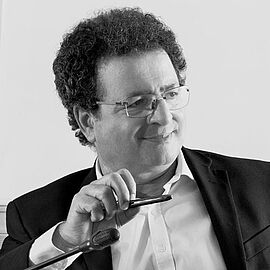
Dr. Simon Granovsky-Larsen is Department Head and Associate Professor of Politics and International Studies at the University of Regina's Faculty of Arts. He holds a PhD and MA from York University and a BA Honors from Dalhousie University. As an Associate Fellow of York University's Centre for Research on Latin America and the Caribbean, he maintains strong academic connections across institutions. His research expertise spans several interconnected areas: Social movements and political violence in Central America Environmental conflict and extractive industries Green extractivism and renewable energy transitions Corporate counter-insurgency and human rights Critical development studies and Canadian foreign policy Dr. Granovsky-Larsen's scholarly work demonstrates a consistent focus on power dynamics in post-conflict societies, particularly examining how economic restructuring affects marginalized communities. His publications reveal an evolving research trajectory from traditional agrarian conflict studies toward contemporary environmental justice issues related to the energy transition, while maintaining a critical perspective on neoliberal development models. His recent publications indicate active research in green extractivism, with several 2023-2025 articles examining Canadian participation in Central American environmental conflicts related to renewable energy projects. This represents a natural evolution from his earlier work on traditional extractive industries and agrarian conflict. Dr. Granovsky-Larsen has established himself as a significant voice in critical Latin American studies, with particular expertise on Guatemala. His book 'Dealing with Peace' (2019) represents a major contribution to understanding post-conflict transitions and social movements. As Department Head, he oversees the Politics and International Studies department while maintaining an active research agenda and supervising graduate students. His interdisciplinary approach bridges political science, development studies, and environmental studies, offering students a nuanced understanding of contemporary global challenges.
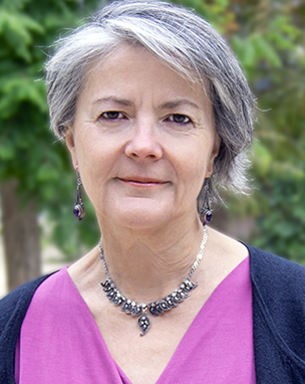
Amy A. Quark is a Professor of Sociology at William & Mary, specializing in transnational governance, educational equity, and rural sociology. She leads significant community-engaged research initiatives and maintains an extensive publication record. Her research spans: Transnational Governance : Global regulatory systems, trade standards (e.g., cotton, infant formula), and power dynamics in WTO frameworks Educational Equity & Racial Justice : School rezoning, integration policies, and community advocacy through The Local Black Histories Project Rural Communities : Neoliberal impacts on Saskatchewan, labor markets, and social cohesion in agricultural regions Key awards include: Best Book in Global and Transnational Sociology (ASA 2014) Best Graduate Student Paper Award (Rural Sociological Society 2005) Honorable Mention for Sociology of Development Book (ASA 2014) She directs The Local Black Histories Project, involving over 50 students in oral history collection, archival research, and K-12 curriculum development. This initiative partners with The Village Initiative and includes a Descendant Advisory Board.
John Harter, Ph.D., serves as a Professor at Eastern Kentucky University, where his office resides in the Business & Technology Center. With over three decades of academic experience since his 1993 publication, he maintains active research leadership in sports economics, industrial organization, and economic education—specializing in the economic dynamics of collegiate and interscholastic athletics, R&D-driven market competition, and financial literacy program evaluation. His educational foundation includes: Ph.D. in Economics from Purdue University M.S. in Economics from Purdue University B.A. from Yale University Dr. Harter's research uniquely bridges theoretical economics with practical applications in sports management and community development. His work examines how small-city sports facilities generate economic value, how school characteristics influence athletic tournament outcomes, and how childhood experiences shape financial security. This applied focus extends to evaluating financial education initiatives in Eastern Kentucky, demonstrating his commitment to regionally relevant scholarship that addresses the economic challenges of rural communities. Recent publications (2022-2024) reveal a pronounced emphasis on sports economics, particularly NCAA reclassification dynamics and interscholastic tournament structures, while maintaining connections to broader themes in family economics and public finance. His methodological approach combines contingent valuation techniques, longitudinal analysis, and institutional case studies to produce actionable insights for athletic departments and educational policymakers. Professional engagement includes active membership in key scholarly communities: American Economic Association North American Association of Sports Economists Indiana Academy of the Social Sciences While no formal lab structure exists, Dr. Harter cultivates research opportunities through EKU's institutional connections, particularly in the College of Business and Technology. His advising philosophy emphasizes hands-on data collection from athletic departments and community organizations, with students frequently contributing to publications as co-authors. Current projects appear focused on the economic implications of NCAA restructuring and trauma-informed financial capability frameworks, building on his longstanding expertise in valuation methodologies and institutional economics.
Dr. Muhammed Miah serves as Dean of the College of Business and Professor/Interim Chair of the Business Information Systems Department at Tennessee State University, with 17+ years of academic leadership including a postdoctoral fellowship at UNC Chapel Hill. His educational credentials include: Post Doc - University of North Carolina Chapel Hill, 2010 Ph.D. Computer Science - University of Texas at Arlington, 2009 M.B.A. Computer Information Systems - Quinnipiac University, 2003 M.S. Computer and Information Science - University of New Haven, 2001 B.S. Civil Engineering - Khulna University of Engineering and Technology, 1994 Dr. Miah's research bridges technological innovation with socioeconomic impact, particularly in developing economies. His work demonstrates consistent focus on blockchain applications across healthcare and real estate sectors, AI-driven diagnostic systems for pandemic response, and fintech solutions for financial inclusion. Recent publications reveal increasing emphasis on mobile technology's role in healthcare workforce development and socioeconomic implications of digital financial systems, often incorporating data analytics approaches to address real-world constraints in resource-limited settings. His recognitions include: Distinguished Scholar Award, European Journal of Scientific Research (2021) Distinguished Research Paper Award, CONISAR 2011 STEM Scholarship and Dean's Fellowship during PhD studies Government of Bangladesh Scholarship during undergraduate studies As an active editorial board member for multiple journals, Dr. Miah maintains strong scholarly engagement while leading business education initiatives. His leadership combines technical expertise in information systems with practical understanding of economic development challenges, particularly through his ongoing research in developing nation contexts.
Professor Ben Rogaly is a Professor of Human Geography at the University of Sussex, where he conducts research at the intersection of migration studies, racial capitalism, and urban geography. His work challenges dominant narratives about immigration and diversity, particularly through his focus on 'non-elite cosmopolitanism' in English provincial cities. His research interests span several interconnected themes: migration and urban diversity, racial capitalism and labor geographies, oral history methodologies, and the role of culture and music in building transnational solidarity. He has conducted extensive fieldwork in Peterborough and Brighton, examining how working-class communities navigate diversity and build solidarity across difference. Rogaly's recent publications reveal a consistent focus on hope, solidarity, and resistance in challenging political contexts. His 2024 book 'Brighton bound' explores urban migration across a century, while his collaborative work on 'Hope as a practice in the face of existential crises' examines resident-activist research. His publications consistently address how communities maintain solidarity in the face of rising nationalism and inequality. As a supervisor, Rogaly has guided 18 doctoral students to completion and currently oversees three PhD candidates. His funded research projects, including 'Hopeful Solidarities' and 'Facing the trouble,' demonstrate his commitment to collaborative, community-engaged scholarship that bridges academic research and social justice. His work with Moushumi Bhowmik on music as a resource for transnational solidarity and his film 'Workers,' co-produced with Jay Gearing, highlight his innovative approach to research that combines academic rigor with creative expression. Rogaly's scholarship consistently centers marginalized voices while making significant theoretical contributions to human geography and migration studies.
El-Mouhoub Mouhoud is Professor of Economics and currently serves as President of the University of Paris Dauphine (PSL-Research University). He is a researcher at the Laboratory of Economics of Dauphine-DIAL joint research unit with the IRD (Institute of Development Research) and founder-director of the CNRS International Research Group DREEM (Development of Euro-Mediterranean Economic Research) established in 2007. Previously, he served as Scientific Advisor to the General Planning Commission, Service to the Prime Minister (France Stratégies) from 1995-2007. Professor Mouhoud's research focuses on globalization, territorial competitiveness, offshoring and relocation of activities, international migration, and the development of countries in the Middle East and North Africa region. His work demonstrates a consistent interest in the economic dimensions of international migration, particularly examining remittance flows, their determinants, and developmental impacts across multiple countries including France, South Africa, Morocco, and Algeria. His publications reveal a methodological approach combining theoretical economic analysis with empirical studies using both French and international data. His extensive publication record shows significant contributions to understanding the dynamics of globalization, particularly its effects on industrial territories and employment patterns. The analysis of his 15 most recent articles indicates a strong focus on migration economics, with particular attention to the relationship between migration, remittances, and development outcomes in both sending and receiving countries. His work often examines policy implications, suggesting a practical orientation to his research that bridges academic inquiry and policy relevance. Professor Mouhoud maintains an active international academic presence as a regular visiting professor at numerous prestigious institutions worldwide, including the New School for Social Research in New York, Princeton University, Harvard University, Fudan University in Shanghai, University of Hanoi, Seoul National University, and University of Bogota. He has also served as a consultant to major international organizations including the OECD, the UN, and the World Bank, demonstrating the policy relevance of his research.
Yvanne Bouvet is a Senior Lecturer in Geography (HDR) at the University of Western Brittany's Faculty of Letters and Human Sciences, affiliated with the Breton and Celtic Research Centre (CRBC). Her research examines maritime geography, fisheries, aquaculture, and regional systems in Latin America (particularly Argentina) and France/Brittany. She coordinates the research axis 'Conscience(s) du maritime' at CRBC and directs academic publications for CRBC Editions. Affiliations: Senior Lecturer, Department of Geography, University of Western Brittany Member of GIS Histoire et sciences de la mer, IDA-Brest, and IDMeR Collaborator with Argentine universities (La Plata, Mar del Plata) since 1998 Research Focus: Her work integrates socio-spatial analysis of maritime resources, tourism development, and territorial conflicts. Key themes include fisheries sustainability, maritime sovereignty, and the role of tourism in marginal region integration. She employs interdisciplinary methods spanning political ecology, discourse analysis, and regional geography. Publications: Recent articles (2017-2023) demonstrate consistent emphasis on marine resource governance, with geographic focus on Argentina and Atlantic Europe. Trends include critical analysis of fisheries policies, tourism as a development tool, and geopolitical dimensions of maritime spaces. Academic Leadership: Actively advises PhD students in fisheries and cultural geography. Previously served as Department Co-President (2019-2021) and University Vice-President for Heritage/Finance (2007-2016). Organizes international conferences like 'Discours sur la mer' (2017).
Paula Maria Bögel serves as Junior Professor for Transformation Management in Rural Areas at the University of Vechta, where she leads interdisciplinary research connecting psychology, economics, and sustainability science. Her work focuses on understanding how positive and sustainable ways of life can become reality in rural areas, cities, organizations, and private homes, with particular emphasis on the human agents of change. Her research interests center on transdisciplinary and transformative approaches, particularly through real-world laboratories. She investigates citizen-centered energy transitions, organizational change for sustainability, and the psychological dimensions of sociotechnical transitions. Her work bridges the gap between theoretical transition research and practical implementation, with strong emphasis on stakeholder engagement and participatory methods. Analysis of her recent publications reveals a consistent focus on real-world laboratories as transformation spaces, the psychological dimensions of energy transitions, and the integration of micro-level human factors with macro-level transition processes. Her work increasingly emphasizes inclusivity, community engagement, and the connection between individual agency and systemic change in sustainability transitions. Joachim Reutter Prize for Social Innovations from the Gips-Schüle Foundation Best Paper Award in 'Contribution to Practice' category at CSR Communication Conference Professor Bögel collaborates extensively with national and international research institutions including Fraunhofer ISI, Sussex Energy Group, and TU Berlin, while also working with corporate partners and stakeholders from society and politics. Her projects often take the form of real-world laboratories, such as the 'Your Balcony Network. Energy Creates Community' initiative, which demonstrates practical approaches to citizen-centered energy transition. She leads research teams working at the intersection of psychology, sustainability science, and rural development, with particular focus on creating practical transformation pathways that connect individual behavior change with systemic restructuring. Her approach emphasizes the importance of transdisciplinary collaboration and the co-creation of knowledge with stakeholders from multiple sectors.
Iliyan Genov Mateev is an Associate Professor with a PhD at the Department of Economic Theory and International Economic Relations within the Faculty of Economics at St. Cyril and St. Methodius University of Veliko Tarnovo in Bulgaria. His extensive academic career spans over two decades with consistent scholarly output in international economics, particularly focusing on East Asian economies and international economic relations. Professor Mateev's research interests span several key areas in economics and international relations: International Economics, with particular expertise in EU-Asia relations East Asian Economies, specializing in China, Japan, and ASEAN countries Economic Integration processes at regional and global levels Rural Development and assessment methodologies, particularly in the Bulgarian context Digital Transformation in rural economies Environmental sustainability in regional development His recent scholarly work demonstrates a strategic evolution from traditional international economics toward contemporary challenges in rural development, digital transformation, and ecological sustainability. While maintaining his expertise in East Asian economies, Professor Mateev has increasingly focused on applying economic theory to practical rural development challenges in Bulgaria, particularly through innovative assessment methodologies like the E-SMART framework. His work bridges theoretical economic concepts with practical policy applications, demonstrating relevance to both academic discourse and real-world economic development. Professor Mateev has been actively involved in significant research projects including 'Digital and ecological solutions to support the development of rural areas in Bulgaria' (2024) and 'Application and transfer of innovative scientific tools for the assessment of rural areas' (2023), which reflect his commitment to addressing contemporary socioeconomic challenges through interdisciplinary research approaches. His work often involves collaboration with researchers across multiple disciplines and institutions, contributing to Bulgaria's integration with European research frameworks.
Jesper Sølver Schou is an Associate Professor and Head of the Section for Production, Markets and Policy at the Department of Food and Resource Economics (IFRO), University of Copenhagen. With extensive experience in research, research management, and research-based public-sector services, Dr. Schou serves as a key knowledge resource on the economic performance of the agricultural sector and agriculture's role in the Danish economy. Education: 1992: Cand. Agro. from the Royal Agricultural and Veterinarian University, Copenhagen 1994: BSs. in International Economics, Copenhagen Business School 1999: Ph.D. from the Royal Agricultural and Veterinarian University, Copenhagen 2019: Higher Education Teaching (University Pedagogy), University of Copenhagen Dr. Schou's research program focuses on agricultural economics, nature management and provision of public goods, agricultural policies and the environment, and policy analysis. His work bridges economic theory with practical applications in agricultural and environmental policy, often examining the economic implications of land use decisions and conservation practices. He frequently employs cost-benefit analysis methodologies to evaluate policy interventions. Analysis of his recent publications reveals a strong interdisciplinary approach combining economic analysis with ecological considerations. His research spans land consolidation processes, rewilding economics, nature valuation methodologies, and the socioeconomic impacts of agricultural policies. There is a clear trend toward examining practical implementation challenges and economic tradeoffs in environmental management. Dr. Schou manages the department's Public Sector Service contract with the Ministry of Food and Environment and has secured research funding from Realdania, 15 Juni Foundation, The Danish Nature Agency, and The Ministry for Food and Environment. He represents UCPH at The Global Club: Network of Agricultural Economics Research Institutes and Agencies (AERIAS) and has served as a reviewer for FORMAS, the Swedish research council for sustainable development. Teaching and Supervision: Teaching: Introduction to Economics; Applied Benefit-Cost Analysis Supervision: Agricultural and Food Economics; Environmental Economics
Michaël Pouzenc is a Professor at the University of Toulouse-Jean Jaurès, affiliated with the Daniel-Faucher Institute's Department of Geography, Planning, and Environment. He serves as Deputy Director of the Rural Dynamics research team within the Interdisciplinary Laboratory for Solidarity, Societies, Territories (LISST) and is also associated with the Multidisciplinary Institute for Studies on the Americas in Toulouse (IPEAT). Professor Pouzenc's research focuses on contemporary rural transformations, with particular attention to the construction of resources in rural areas, territorIALIZED quality of agri-food products, local farmer-consumer relations, and the spatial reorganization of food trade. His work examines how sustainable development considerations are integrated into rural commercial systems and territorial planning policies, analyzing the evolution of user and consumer practices in relation to large-scale distribution networks. His recent publications (2020-2024) reveal a strong focus on rural dynamics in southern France, particularly examining eco-communities, farm infrastructure transitions, retail restructuring in rural contexts, and the territorialization of sustainable food systems. His research demonstrates consistent engagement with both theoretical frameworks in rural geography and practical applications for rural development policy. As an active researcher, Professor Pouzenc collaborates extensively with colleagues across France and internationally, particularly with researchers in Mexico and Spain. His work appears in diverse publication formats including journal articles, book chapters, and monographs, with recent contributions to the understanding of short food supply chains, geographical indications, and rural innovation. Professor Pouzenc leads the Rural Dynamics research team, which investigates how rural areas are reshaped by evolving commercial patterns, agricultural practices, and territorial development policies. His work provides valuable insights for policymakers, rural development practitioners, and scholars interested in contemporary rural transformations in Europe and beyond.
Marie-Christine Henninger is a Lecturer in Management Sciences at Université Toulouse - Jean Jaurès, where she serves as Head of the Master 1 Innovation, Enterprise and Society program and Head of the DU Preparatory to the Masters in Project Management. She is a permanent researcher within the Rural Dynamics team at the Interdisciplinary Laboratory for Solidarity, Societies, Territories (LISST), focusing on agricultural cooperatives and organizational behavior. Her research expertise spans the complex relationships between farmer-members and agricultural cooperatives, examining concepts of involvement, trust, and loyalty through mixed-method approaches. She has extended this work to healthcare settings, studying psychological needs satisfaction among nursing home caregivers. Professor Henninger's work bridges theoretical organizational behavior concepts with practical applications in both agricultural and healthcare sectors. Analysis of her recent publications reveals a consistent focus on cooperative governance, member participation, and sustainable value chains, with increasing attention to biosourced sectors like hemp, wool, and leather. Her research demonstrates how collective action frameworks can restructure traditional agricultural sectors while maintaining social and environmental sustainability. Among her notable contributions are methodological approaches to measuring cooperative member engagement and practical frameworks for implementing participatory governance models. Her work with young cooperative members demonstrates how psychological empowerment through structured workshops can rebuild mobilization environments. Professor Henninger actively supervises graduate students through her leadership of Master's programs and research teams. Her collaborative approach is evident in her extensive co-authorship network, particularly with researchers like Valérie Barraud-Didier, Hichem Amichi, and Claude Roussillon Soyer. Her research laboratory, Rural Dynamics, operates within LISST and focuses on the social dimensions of agricultural change, with particular expertise in cooperative organizations and sustainable food systems. The team maintains strong connections with French agricultural cooperatives and policymakers, ensuring practical relevance of their academic work.
Ildikó Asztalos Morell is an Associate Professor and Senior Lecturer in the Division of Rural Development at the Swedish University of Agricultural Sciences (SLU). Her academic work critically engages with issues of social justice and citizenship through intersectional lenses of gender, ethnicity, and age. With extensive research experience spanning postsocialist transitions, rural development, and indigenous studies, she leads multiple funded projects exploring multicultural aging, migration, and food sovereignty. Her work connects theoretical frameworks with practical applications in rural communities across Sweden, Hungary, India, and the Arctic regions. Dr. Asztalos Morell earned her PhD from Uppsala University in 1999 with a thesis titled "Emancipations Dead-End Roads? Studies in the formation and development of the Hungarian Model for Agriculture and Gender (1956-1989)". Her academic journey has taken her through various research positions focusing on gender studies, rural sociology, and postsocialist transitions. Her research interests center on social justice and citizenship from intersectional perspectives of gender, ethnicity, and age. She explores how these intersecting identities shape experiences in socio-economic transitions, particularly in postsocialist contexts. Her work spans diverse areas including gender regimes under state socialism, family farm emergence, poverty governance, migration studies (particularly focusing on unprivileged EU migrants and asylum-seeking youth), multicultural aging, and indigenous Arctic food sovereignty. She approaches these topics through critical analysis of public-private partnerships, denizenship, and securitization processes, often employing comparative methodologies across national contexts. Her recent publications reveal a clear trajectory toward increasingly intersectional and globally comparative research. While maintaining her foundational focus on postsocialist transitions and gender dynamics in rural contexts, her work has expanded to examine indigenous food sovereignty in Arctic regions, multicultural aging across Sweden and India, and the impacts of digitalization on traditional industries. The thematic evolution shows a progression from national (Hungarian) case studies toward transnational comparative frameworks, with growing emphasis on policy relevance and practical applications for vulnerable populations. Her research consistently bridges theoretical insights with practical implications for social policy and community development. Dr. Asztalos Morell has led numerous significant research projects funded by various agencies: Forte and ICMR funded collaborative project on healthy aging in indigenous communities (2023-2026) JUSTNORTH project on indigenous entrepreneurship in the Arctic (EU-funded, 5.999.994 Euro) FUTURE FOOD project on indigenous food systems (450,000 SEK) Multicultural aspects of Active Aging (Forte and IMRC, 3,000,000 SEK) Local care regimes in rural transformation (Formas, 2,250,000 SEK) Negotiating poverty in post-socialist rural communities (Vetenskapsrådet, 7,000,000 SEK) As a dedicated mentor, Dr. Asztalos Morell has supervised multiple PhD students to completion, including Cecilia Bygdell (2014) and Carl Johansson (2023). She has also co-supervised Jonas Welander (2017) and provided postdoctoral supervision for Elena Bogdanova. Her collaborative approach extends to numerous research circles with municipalities and authorities, particularly focusing on gender equality, multicultural aspects of care, and human rights. These collaborations have resulted in policy-relevant insights while maintaining strong academic rigor. Her grant portfolio demonstrates exceptional success in securing competitive funding across diverse thematic areas, reflecting both the quality of her research and its societal relevance. Dr. Asztalos Morell is actively involved with SLU's Future Food initiative and the Sami-related research center, contributing to interdisciplinary approaches to food sovereignty and indigenous knowledge systems. Her work with the JUSTNORTH project connects her with international partners across the Arctic region, while her ongoing collaborations with municipalities in Sweden demonstrate her commitment to applied research that addresses real-world challenges in rural development and social inclusion.
António José Costa Alves Gonçalves serves as an Assistant Professor at Estoril School of Hotel Management and Tourism (ESHTE) in Portugal, where he has held continuous academic positions since 1993. Currently Deputy Coordinator of the Tourist Information Course and collaborator at ESHTE's Research, Development and Innovation Center (CIDI), his career includes significant administrative roles including Director of Tourist Information Course (2013-2014) and Operational Manager for Tourist Information. His academic foundation includes a Postgraduate Doctorate in Tourism (2017-2018) from University of Lisbon, Master's Degree in Geography and Regional Planning (2001) from Nova University of Lisbon with distinction, and Bachelor's Degree in Geography (1993) from the same institution. Dr. Gonçalves' research centers on Portuguese Historical Villages as critical tourism resources, examining their cultural significance, sustainability challenges, and valorization strategies. His work extends to urban tourism in Lisbon (museums, public transport), rural tourism development in mountain regions, and tourism education innovations. Recent publications demonstrate strong methodological diversity combining geographical analysis with tourism management perspectives. Analysis of his 15 most recent publications (2011-2022) reveals three dominant research trajectories: (1) Comprehensive studies of Historical Villages addressing social recognition, negative aspects and sustainable solutions; (2) Urban cultural resources in Lisbon including museums and public transport as tourist assets; (3) Pandemic-era educational adaptations focusing on self-regulated learning and academic resilience in tourism education. As an active institutional contributor, he serves on ESHTE's Research, Development and Innovation Center (CIDI) and has participated in organizing the International Research Forum on Guided Tours (2015) and International Guide-Interpreter Day events (2023).
Jesse Heley is a Reader (equivalent to Associate Professor) in the Department of Geography & Earth Sciences at Aberystwyth University and Co-Director of the Wales Institute of Social & Economic Research, Data & Methods (WISERD). He holds a BA in Human Geography with International Politics, an MA in Space, Place & Politics, and a PhD in Geography from Aberystwyth University, where he studied rural class structures and aspirations. His research explores political and economic geography, spatial planning, and rural restructuring, with emphasis on: Relational conceptions of space in rural studies Impacts of globalization on rural localities Rural gentrification and class identity dynamics Ethnographic methods in 'insider' research Governance of rural-urban synergies Heley's recent publications analyze Brexit's rural societal impacts, civil society elites, globalization in everyday products (e.g., wool, Fanta), and aging populations' roles in rural communities. His work consistently employs mixed-method approaches to dissect spatial inequalities and governance challenges. As Co-Investigator on major grants (e.g., ERC-funded GLOBAL-RURAL, EU Horizon 2020 ROBUST), he examines rural development in globalization. He currently co-leads WISERD's theme on Polarisation, Austerity and Civic Deficit and collaborates with the Centre for Welsh Politics & Society.