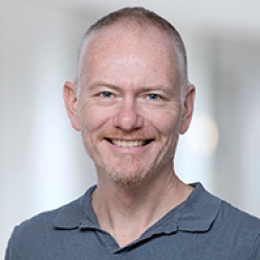
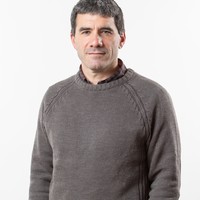
Dimitrios Gousios is a Professor at the University of Thessaly's Department of Spatial Engineering, Urban Planning and Regional Development, where he directs the Rural Space Laboratory and the Greek-French postgraduate program DYNTAR (Spatial Dynamics and Spatial Planning of Rural Space). He holds a PhD in Geography and Spatial Planning from the University of Toulouse-Le Mirail, France, with additional degrees in Sociology and Advanced Rural Studies. His research focuses on: Territorial development methodologies for rural spaces, emphasizing resource identification and heritage valorization Mountain area dynamics , small-town roles, and local governance transformations Participatory planning tools , including GIS applications for community-led diagnostics Family farming evolution and multifunctional agriculture in Mediterranean contexts Publications predominantly explore rural territorialization, spatial governance innovations, and crisis adaptation in Greek/EU agriculture. Recent work emphasizes participatory certification systems (e.g., for local dairy products) and High Nature Value farming linkages. Awards: Chevalier dans l'Ordre des Palmes Académiques (2005) from France's Ministry of Education for contributions to education and culture. He has coordinated over 40 EU/national research projects, including: HNV-LINK (Horizon 2020) LACTIMED (MED Program) ENERSCAPES (MED Program) National Mountain Strategy for Cyprus (2018-2019) As Director of the Rural Space Laboratory, he oversees international collaborations with universities in France, Albania, Morocco, and Egypt, facilitating student exchanges and joint research on Mediterranean rural development.
Tijana Ljubisavljević is a faculty member at Singidunum University, affiliated with the Faculty of Tourism and Hotel Management. She holds a Doctoral degree in Management in Hotel Management and Tourism from the Faculty of Hotel Management and Tourism in Vrnjačka Banja, University of Kragujevac (2017-2023), a Master's in Banking and Financial Management from the Faculty of Economics, University of Belgrade (2009-2011), and a Bachelor's in Finance, Banking, and Insurance from the same university (2002-2006). Research Interests: Her work focuses on spa tourism, rural tourism development, privatization of tourism infrastructure, and sustainable tourism. She has explored policy instruments for rural tourism growth, direct investment strategies in underdeveloped regions, and the intersection of digital media with cultural heritage promotion. Publications: Recent articles analyze bankruptcy proceedings in spa hotels, rural tourism development in Serbian municipalities, and medical tourism potential. Her research spans economic policies, investment strategies, and digitization applications in tourism sectors. Current Role: At Singidunum University, she contributes to academic programs in tourism and hospitality management, integrating practical and theoretical insights into her teaching.
Xiang Li is an Associate Professor (W2) at Leipzig University and the Halle Institute for Economic Research (IWH), where she leads the research group 'Internationale Integration der Finanzmärkte, Wirtschaftswachstum und Finanzstabilität' since January 2019. She holds additional affiliations as a Guest Researcher at Peking University's Institute of Digital Finance and Deutsche Bundesbank. Dr. Li serves as Associate Editor for the Journal of Financial Stability and Co-Editor for Economic Change and Restructuring. Education includes: Ph.D. in Economics, Peking University (2018) B.A. in Economics and Philosophy, Peking University (2013) Her research examines international finance and FinTech, focusing on: Capital flow dynamics and financial stability Monetary policy transmission mechanisms Chinese financial markets and development Climate finance and capital reallocation Global financial cycles and political ties Recent publications demonstrate strong focus on FinTech's impact on monetary policy, household debt effects, and international capital movements. Honors include: Leibniz-Professorinnenprogramm 2024 (selected among eight nationwide) She leads research teams at IWH and collaborates internationally, with prior experience as part-time economist at the IMF Office in China (2017-2018).
Torbjörn Bildtgård is a Senior Lecturer at the Department of Social Work, Stockholm University , specializing in aging studies, family sociology, and cultural food analysis. His research explores intergenerational dynamics, late-life relationships, and societal constructions of food and care. Research Focus : Aging populations, stepfamily emotional bonds, and cultural food rationalities Key Projects : Grey divorce trends, late-life relationship transformations, and care policy analysis Academic Contributions include: 2022 study on biological vs. stepfamily emotional proximity 2021 framework for third-party mediation in steprelationships 2015 analysis of time's role in late-life intimacy 2013 comparative food culture research between Sweden and France Contact : torbjorn.bildtgard@socarb.su.se
José van Dijck is a Distinguished University Professor of Media and Digital Society at Utrecht University's Faculty of Humanities, Department of Media and Performance Studies. She obtained her PhD in Comparative Literature from the University of California, San Diego (1992) after graduating from Utrecht University (1985). Previously, she served as Dean of Humanities at the University of Amsterdam (2008-2012) and President of the Royal Netherlands Academy of Arts and Sciences (KNAW, 2015-2018). Her research critically examines the impact of digital platforms, algorithms, and datafication on public values, democracy, and societal structures. Key research domains include platform governance, digital education infrastructures, AI ethics, and the preservation of public values in connective technologies. Her conceptualization of the 'Platform Society' has become foundational in media studies. Major scientific awards include the Spinoza Prize (2021), the C.Edward Baker Award for lifetime achievements from the International Communication Association, and honorary doctorates from Lund University (2019) and University of Oslo (2024). She leads Utrecht University's focus area Governing the Digital Society , developing tools like the Ethical Data Assistant (DEDA) for public institutions. She advises governments on digital policy (e.g., COVID-19 apps) and contributes to initiatives like PublicSpaces coalition. Her research has been supported through the Spinoza Prize grant (€2.5M) focusing on public digital infrastructures. Van Dijck directs research on platformization in education, data governance, and AI. She collaborates with Utrecht Data School and coordinates international projects like PERITIA on trust in expertise. Her work bridges humanities, law, public administration, and computer science.
Leslie Hossfeld serves as Dean of the College of Behavioral, Social and Health Sciences and Professor of Sociology at Clemson University, bringing extensive leadership experience from prior roles as Department Head at Mississippi State University and Chair at the University of North Carolina Wilmington. Her nationally recognized scholarship bridges rural sociology, public health, and agricultural policy. She earned her PhD in Sociology from North Carolina State University, Master of Social Science in Sociology from the University of Mississippi, and BA in History from the University of North Carolina Wilmington. Her academic journey reflects deep commitment to understanding structural inequalities through interdisciplinary lenses. Dean Hossfeld's research centers on rural economic development , social determinants of health , health-agriculture policy integration , and food/nutrition security . She examines how economic restructuring impacts rural communities through food systems, employing engaged sociology methodologies to address health disparities and promote food sovereignty. Her work consistently emphasizes community-driven solutions and policy coherence across sectors. Analysis of her 2020-2024 publications reveals dominant focus on food insecurity during crises like the COVID-19 pandemic, particularly in rural and college settings. These works demonstrate sophisticated interdisciplinary approaches examining intersections of socioeconomic factors, health outcomes, and food environments using mixed-methods frameworks across diverse geographic contexts. Her scientific recognition includes: Clemson University URSAAA Award for research expenditures exceeding $1 million (2024) SC Sociological Association Excellence in Scholarship Award (2023) NC Sociological Association Lifetime Achievement Award (2019) MSU President’s Commission on Status of Women Faculty Award (2018) SSRC Research Fellow designation (2016) Dean Hossfeld has secured major USDA funding including the SERA-47 multi-state initiative across 13 southern states, developed economic recovery projects for rural North Carolina counties, and implemented food sovereignty initiatives in the Mississippi Delta. Her congressional testimony on rural economic decline demonstrates impactful policy engagement, while her leadership in national sociological organizations shows commitment to advancing public sociology. She actively collaborates with Clemson's Center for Research on Health Disparities and Institute for Family and Neighborhood Life, leading interdisciplinary teams that integrate community engagement with rigorous research to address complex societal challenges through engaged scholarship frameworks.
Arthur Shapiro is a Professor of Education in the Department of Educational Leadership and Policy Studies at the University of South Florida's College of Education. Previously, he served as professor at George Peabody College of Vanderbilt University and directed the first off-campus doctoral center at the University of Tennessee. His career spans K-12 roles including high school teacher, principal, director of secondary education, assistant superintendent, and superintendent across urban, suburban, and rural districts. His research centers on educational leadership and policy analysis, with specialization in school reform strategies like decentralizing large schools into small learning communities and evaluating reform effectiveness through constructivist models. He has conducted international consulting, notably leading efforts to restructure Macedonia's decentralized school system, and addresses critical issues in educational policy, curriculum development, and supervision. Key recognition includes: International Council of Professors of Educational Leadership’s Living Legend Award (2017) He currently chairs USF's United Faculty of Florida Chapter while maintaining active affiliation in the Educational Leadership and Policy Studies program, continuing his advocacy for evidence-based educational practices through writing and national consultation.
Professor Katharine N. Rankin holds a joint appointment in the Department of Geography and Program in Planning at the University of Toronto. Her work bridges political economy, feminist theory, and post-colonial studies, focusing on market-state relations and social change across Nepal, Vietnam, and Toronto. PhD in City and Regional Planning from Cornell University MRP in City and Regional Planning from Cornell University BA in Anthropology from Cornell University Her research examines: Gender and Development – analyzing institutional power dynamics in Nepal and Vietnam Commercial Gentrification – tracking urban economic shifts in Toronto’s inner suburbs Post-Conflict State-Building – investigating Nepal’s political transition Market Regulation – comparing liberalization processes in South/Southeast Asia Methodological Focus: Long-term ethnographic fieldwork integrating feminist and critical theory. Key Themes: Displacement, exploitation, and alternative futures in development processes.
Prof. Dr. René Zeier is an active Professor at the Lucerne University of Applied Sciences and Arts, where he is affiliated with the Institute for Communication and Marketing within the Marketing and Management department. His academic career builds upon extensive industry experience in product management, key account management, and marketing leadership roles at major corporations including Nestlé, Novartis, and Coca-Cola. His educational background includes a lic. oec. HSG from the University of St. Gallen with specialization in marketing, followed by a Dr. oec. HSG from the same institution focusing on systemic management and tourism. Prof. Zeier's research and teaching focus primarily on Entrepreneurship and Ecosystem Development , with additional expertise in Business Development, Product Management, and Marketing. His work emphasizes practical applications of systemic management approaches to contemporary business challenges, particularly in entrepreneurial contexts and regional economic development. An analysis of his recent publications reveals a strong trend toward entrepreneurship education, business transformation, and regional ecosystem development. His work bridges theoretical frameworks with practical applications, particularly through initiatives like the Smart-up program for fostering entrepreneurial thinking in academic settings. His research spans multiple disciplines including business management, marketing, tourism, and systemic organizational approaches. His notable recognition includes: Winner of the Teaching Innovation and Entrepreneurship Excellence Awards 2019 for Kalamata at the 14th European Conference on Innovation and Entrepreneurship Prof. Zeier has been actively involved in mentoring and supporting startups through his role as Head of Smart-up. His projects include the Horw Start-Up Ecosystem at HSLU, initiatives to strengthen hospitality in Central Switzerland, and research on E-Loyalty in travel, tourism, and hospitality. He has also contributed to international educational programs such as the Tourism Lecturing Education Program for the North Caucasus Federal University in Russia. He leads or participates in several organizational initiatives including the Swiss Ski and Snowboard School Klewenalp-Stockhütte (as President), Bike Guiding Klewenalp-Stockhütte (as President), and the Zurich Folk Festival Association (as Vice President).
Qiong He is a Lecturer at the School of Geography & Sustainable Development, University of St Andrews (since 2024). Her research integrates urban geography, housing studies, and population dynamics to analyze residential segregation, migration patterns, and urban governance frameworks. PhD in Urban Geography (University of Amsterdam, 2022) Postdoctoral researcher (University of Hong Kong, 2022-2024) Research Themes: • Critical geographies of education-housing intersections in China • Transnational residential practices of skilled migrants • Urban restructuring and middle-class mobility dynamics • Contributions to UN Sustainable Development Goals (SDGs) related to sustainable cities and reduced inequalities. Recent Trends: Her latest publications examine state-led infrastructuring of mobility through education systems, habitus theory in migrant housing practices, and intergenerational housing strategies in China. Awards & Roles: Early Career Editor, Area Development and Policy (2024–) Seed grant recipient (University of Amsterdam's Center for Urban Studies) Mentorship: Accepting postgraduate research students while advancing her mixed-methods research agenda.
Igor Ortega Sunsundegui is a Researcher at LANKI, Institute of Cooperative Studies at Mondragon University, affiliated with the Faculty of Humanities and Education Sciences (HUHEZI). His work focuses on cooperativism and social innovation within the context of the renowned Mondragon Cooperative Experience. Doctor in cooperativism and social economy (2021) Thesis: "The contribution of the founders of Mondragon cooperativism to cooperative thought" Supervised by Dr. Leire Uriarte Zabala and Dr. Fred Freundlich His research spans cooperative history, worker participation, industrial democracy, and territorial development, with particular attention to the Basque region of Spain. Ortega Sunsundegui examines how cooperative models contribute to economic resilience, social innovation, and regional development in contemporary economic contexts. His recent publications (2024-2025) demonstrate a focus on cooperative responsibility, worker associations, and the evolving challenges facing cooperative enterprises in the Basque Country. His work appears in journals specializing in social economy and cooperative studies, reflecting his commitment to both theoretical and practical applications of cooperative principles. "Por qué en Mondragón..." (2025) analyzes historical choices in cooperative development "Asociacionismo obrero..." (2024) reinterprets labor associations' role in cooperative origins "PRODUCTIVE PRAGMATISM" (2024) examines industrial democracy under neoliberal conditions Ortega Sunsundegui's work demonstrates the practical application of cooperative principles in addressing contemporary economic challenges, particularly in the Basque region. His research contributes to understanding how cooperative models can foster economic resilience, social innovation, and sustainable territorial development in the face of global economic transformations.
Professor Niels Fold is a distinguished academic at the University of Copenhagen's Department of Geosciences and Natural Resource Management within the Faculty of Science. He has served as a Professor since 2015, following previous roles as Professor (MSO) from 2006-2015 and Associate Professor from 1997-2006. His extensive career includes significant research management experience, coordination of multi-country programs, and cross-disciplinary project leadership across numerous international collaborations. Dr. Fold earned his PhD in Economic Geography from the University of Copenhagen in 1993, following a Master of Science in Geography (1984), Bachelor of Arts in Economics (1982), and Bachelor of Science in Geography (1979), all from the same institution. His academic journey reflects a consistent focus on the intersection of geography, economics, and development studies. His research addresses the relationship between economic-geographic globalization processes and local responses, primarily examined through the analytical lens of global value chains (GVCs). He specializes in agro-industrial value chains connecting producers in the Global South with consumers in the Global North. His approach combines structural GVC analysis with livelihood studies to understand rural development and agrarian transformation. His work extends to mineral-based GVCs, focusing on small-scale mining in Africa and increasingly on large-scale mining and value chain segments in Europe. His regional expertise spans Africa (Ghana, Tanzania), Southeast Asia (Malaysia, Vietnam), and more recently Greenland. His recent publications demonstrate a continued focus on GVCs, rural development, and socio-ecological systems across multiple continents. The research spans Africa (particularly Tanzania, South Africa, and Colombia), Southeast Asia (Vietnam, Malaysia), and Greenland, with increasing attention to sustainability issues, ecological infrastructure, and the intersection of tourism with natural resource exploitation. His work shows methodological sophistication in linking macro-level global processes with micro-level local impacts. Member of Editorial Board, Journal of Agrarian Change (2012-present) Member of Editorial Board, Danish Journal of Geography (2004-present) Director, Centre for Sustainable Artisanal Small-Scale Mining, Geocenter Denmark (2009-present) Coordinator, Danish University Consortium for capacity development at Sokoine University of Agriculture, Tanzania (2014-present) Task leader in European-African partnership for Food and Nutrition Security and Sustainable Agriculture (2018-2022) Professor Fold has supervised approximately 40 Bachelor's theses and 70 Master's theses, in addition to numerous PhD students whose research spans multiple continents and addresses critical development issues. His research has been supported by major funding bodies including the European Commission, Council for Development Research, Geocenter Denmark, and the Carlsberg Foundation, with total funding exceeding millions of Danish kroner and Euros across numerous projects. His field work spans multiple continents with extensive experience in Africa (Ghana, Mali, Burkina Faso, Tanzania, Rwanda, South Africa, Zimbabwe, Zambia), Asia (Vietnam, Malaysia, Nepal), and Latin America (Colombia). He currently leads research projects in South Africa (Socio-economic benefits of ecological infrastructure), Colombia (Aquaponics and livelihoods), Tanzania (Contract farming), and Greenland (the nexus between tourism and exploitation of natural resources), demonstrating his continued active engagement in cutting-edge research across diverse geographical contexts.
Dr. Priniti Panday is a faculty member at the Gabelli School of Business, Roger Williams University, Rhode Island, USA. Her research focuses on gender studies, economic development, and child welfare, with a particular emphasis on the relationship between women’s empowerment and children’s well-being in developing countries. Her methodological approach combines comparative studies, regression analysis, and demographic research across multiple geographic, religious, and income-based contexts. Key Research Themes: Gender inequality and its impact on child mortality/malnutrition Human Development Index sensitivity to income assumptions Interplay of conflict, remittances, and poverty Trade liberalization effects on labor markets Recent Publications: 2025 - Human Development Index income sensitivity 2020 - Comparative women's status and child welfare studies 2018 - Women's status and child welfare in developing countries 2017 - Agricultural output and food aid in Sub-Saharan Africa Contact: Email: ppanday@rwu.edu
Shannon Monnat is the Lerner Chair for Public Health Promotion, Professor of Sociology, and Co-Director of the Policy, Place, and Population Health Lab in the Maxwell School of Citizenship and Public Affairs at Syracuse University. She also serves as Director of the Center for Policy Research, Faculty Affiliate at the Aging Studies Institute, and Research Affiliate at the Center for Aging and Policy Studies. Additionally, she is a Fellow at the Carsey School of Public Policy at the University of New Hampshire. Dr. Monnat received her PhD in Sociology from the State University of New York at Albany in 2008. Her research focuses on rural demography and population health, examining trends and geographic differences in health and mortality with a special interest in rural health disparities. She is a leading national expert on structural and spatial determinants of drug overdose and other deaths of despair. Her research interests center on the intersection of place, public policy, and health, with particular emphasis on rural populations. Monnat investigates geographic variations in health outcomes, mortality patterns, and the social determinants of health disparities. Her recent work has focused on opioid abuse, deaths of despair, and the differential impacts of the COVID-19 pandemic across rural and urban communities. Analysis of her recent publications reveals consistent focus on geographic health disparities, particularly rural-urban differences in mortality, substance abuse, and mental health outcomes. Her work often examines how policy contexts shape health outcomes, with significant attention to the impacts of state-level policies on working-age adult mortality, drug overdoses, and suicide rates. She employs sophisticated spatial and demographic methods to understand the complex interplay between social, economic, and geographic factors in population health. Frederick H. Buttel Outstanding Scholarly Achievement Award, Rural Sociological Society (2025) Chancellor's Citation for Excellence - Faculty Excellence and Scholarly Distinction, Syracuse University (2023) Excellence in Graduate Education Faculty Recognition Award, Syracuse University (2022) Monnat has secured over $12 million in external funding as PI or co-PI from prestigious sources including NIH, National Institute of Justice, USDA, Robert Wood Johnson Foundation, and Institute for New Economic Thinking. Current projects include a NIDA-funded study examining how state COVID-19 mitigation policies affect psychological wellbeing, drug overdose, and suicide, and an NIA-funded project investigating geographic disparities in midlife mortality. She regularly presents her research to academic, policy, and public audiences including the United Nations, National Academy of Sciences, and Congressional briefings. She co-directs the Policy, Place, and Population Health Lab, which brings together interdisciplinary researchers to examine how social, economic, and political contexts shape health and wellbeing across different places. The lab focuses particularly on rural communities and vulnerable populations, working to translate research findings into actionable policy recommendations.
Michel Ehrenhard is an Associate Professor at the University of Twente, specializing in Entrepreneurship, Technology, and Management. His research spans interdisciplinary domains, including artificial intelligence, organizational integrity, digital transformation, and sustainable innovation. Primary Affiliation: University of Twente Research Themes: AI ethics, organizational resilience, fintech, inclusive innovation. Recent work focuses on digital sovereignty (2025), automated idea evaluation (2025), and inclusive digital rural transformation (2024). His studies explore institutional pressures on organizational practices, cooperative enterprise dynamics, and the intersection of technology with societal challenges. Scientific Awards: Best Developmental Paper Award, British Academy of Management (2015) Best Dissertation Award, Academy of Management (2010) Best Junior Paper Award (2015) Best Paper Sub Theme Award, European Group for Organisation Studies (2016) #datagrant Twitter Award (2014) He has contributed to editorial boards (e.g., Technological Forecasting and Social Change ) and organized conferences, emphasizing practical applications in entrepreneurship and digital innovation.