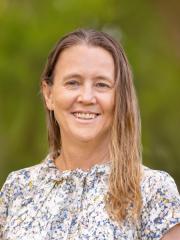
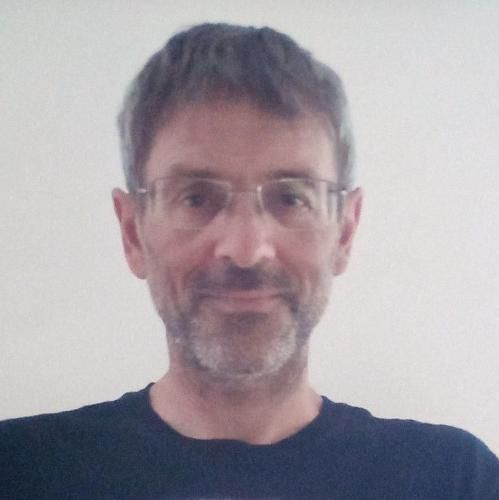
Alexandra Delgado Jiménez is a faculty member at the Higher Polytechnic School of Universidad Nebrija , specializing in Urban and Regional Planning. She leads research within the At-the-oUTSET Nebrija Research Group on Architecture and Urbanism in the face of Social, Economic and Territorial Transformations , focusing on energy transition, climate change, and sustainable urban development. Doctor from Universidad Politécnica de Madrid (2012) Supervised by Dr. Fernando Roch Peña Her recent work explores carbon footprint methodologies, renewable energy integration in urban areas, and community-led initiatives for social justice. She has contributed to case studies in Madrid and Mediterranean regions, emphasizing digitalization and policy innovation in placemaking. Her email is adelgado@nebrija.es .
Emilio Martín Gutiérrez is a Professor of Medieval History at the University of Cadiz , Spain. His work focuses on rural landscapes and society-environment interaction in Western Andalusia during the 13th to 15th centuries . He is affiliated with the Institute of Viticulture and Agri-Food Research (IVAGRO) and leads the HUM182 Medievalism of Cadiz research group. PhD in Medieval History (University of Cadiz, 2002) Specializes in Agrarian History , Landscape History , and Peasant History Active in Archaeology and Climate History research His 15 most recent publications (2003-2025) examine: Environmental conflicts in medieval cities Tidal mill ecosystems Linen retting pollution Coastal governance systems Wine landscape evolution Salt exploitation dynamics Articles frequently employ documentary analysis , archaeological evidence , and comparative environmental studies . Key scientific contributions include: Establishing the Riparia Project framework Documenting 15th-century resource management Mapping Genoese commercial networks
Bruno Esperante Paramos (A Baña, 1988) is an Assistant Professor in Economic History at the Department of Applied Economics, University of Santiago de Compostela (USC). He holds a PhD in Contemporary History from USC with International Qualification (2020), awarded the 7th Valentín Paz Andrade Prize for best PhD work. Faculty Member, Faculty of Economic and Business Sciences Member of Interuniversity Research Center for Atlantic Cultural Landscapes (CISPAC) Part of HISTAGRA research group: Agrarian and political history of the rural world (19th-20th centuries) His research spans Agrarian History , Rural Studies , and Technological Change , focusing on Atlantic Iberian agricultural contexts. Key projects include tractor diffusion analysis in smallholder Galician farms (1939-2000), genetic crop transfers from the Americas (1800-1940), and environmental policy conflicts (1999-2019). Methodology combines archival research, oral history, and socio-institutional frameworks. Notable publications include: Rise and fall of the agricultural tractor sector in Spain (1950-1994) (2021) Old and new plants from the Americas to Europe (2020) Environmental Sustainability and Technological Change (2019) Awards: 7th Valentín Paz Andrade Prize (2020) Collaborations include researchers at USC, University of Barcelona, and Universidad Nacional de Costa Rica. His work examines technology adoption logics that extend beyond economic profit, emphasizing cultural and social factors in small-scale farming contexts. Affiliations: Interuniversity Research Center for Atlantic Cultural Landscapes (CISPAC) HISTAGRA Research Group University of Santiago de Compostela (Current) University of Barcelona (Post-Doc)
Michael Trepel is a Lecturer at the Institute for Ecosystem Research, Christian-Albrechts-University of Kiel, where he has held the position of Privatdozent since 2006. Concurrently, he serves as an advisor at the Ministry for Energy Transition, Agriculture, Environment and Rural Areas of Schleswig-Holstein (since 2012) and works at the State Office for Agriculture, Environment and Rural Areas (since 2004). His career includes research positions at Lund University and the University of Copenhagen. Education: • Dr. rer. nat. habil. in Ecology (2006), Christian-Albrechts-University of Kiel • Dr. rer. nat. (2000), Christian-Albrechts-University of Kiel • Diploma in Biology (1995), Christian-Albrechts-University of Kiel Research Focus: Trepel specializes in ecohydrological systems, particularly wetland nutrient management, water restitution, and cost-effectiveness of ecosystem functions. His work integrates: Peatland hydrology and conservation strategies Catchment-scale nutrient modeling Implementation of EU Water Framework Directive Climate protection through wetland restoration Publication Trends: His recent articles (2016-2024) demonstrate a consistent focus on sustainable water management, with 73% addressing peatland ecosystems and 67% analyzing nutrient pollution mitigation. Key themes include policy implementation of environmental directives, development of modeling tools for river basins, and interdisciplinary approaches to balancing agricultural needs with conservation goals. Professional Leadership: Chairman of Nature Conservation Section, German Society for Moor and Peat Science Editorial Board Member: Ecohydrology and Hydrobiology , Peatlands International , TELMA Webmaster for International Mire Conservation Group Head of Nutrients Working Group, Elbe River Basin Community
Giuseppe Pappalardo is an Assistant Professor at the Faculty of Agriculture of the University of Catania , specializing in rural buildings and agro-forest land planning. His academic career spans decades of contributions to agricultural engineering and territorial planning. Education: Graduated in 1983 from the University of Catania's Faculty of Agriculture. Pappalardo's research focuses on rural architecture , GIS applications , and territorial planning , particularly for DOC cheese dairies, honey/vegetable processing facilities, and semi-urban agricultural landscapes. His work emphasizes the integration of traditional rural buildings with modern planning techniques. His publications highlight the use of GIS technology for urban green management , forest monitoring , and land use cartography , with a strong focus on Sicily's agricultural systems. Articles from 2007–2014 demonstrate interdisciplinary engagement with agricultural engineering, environmental science, and landscape design. He has taught courses across multiple institutions, including the University of Catania and the University of Messina, covering topics like Geomatics , Surveying , and Agricultural Systems Planning . Contact: gpappalr@unict.it | Office: Via S. Sofia, 100 - 2nd floor, no. 17, Catania.
María Clara García Mayor is a Professor in the Department of Building and Urban Planning at the University of Alicante, affiliated with the Higher Polytechnic School. She serves as a researcher at the Interuniversity Institute of Geography and collaborates with the MappingAME research group. Her academic credentials include a PhD in Architecture from the Polytechnic University of Valencia and a PhD from the University of Alicante. She has completed two five-year teaching periods and one research period (sexenio). Dr. García Mayor's research focuses on landscape dynamics at urban, peri-urban, and territorial scales in the Spanish Mediterranean Basin . Her work uniquely integrates geolocated social media data to monitor urban dynamics in public spaces and their relationship with green infrastructure systems. She has developed innovative methodologies for landscape-based spatial planning using digital traces and has conducted extensive research on Mediterranean peri-urban landscapes known as 'huertas.' Her recent publications reveal a strong trend toward using social media data for urban analysis, particularly focusing on green infrastructure planning, peri-urban transitions, and Mediterranean landscape dynamics. Her work bridges urban planning, landscape architecture, and data science, creating innovative approaches to understanding urban spaces through digital footprints. Dr. García Mayor has directed or co-directed 25 undergraduate and master's theses in the last five years. She has participated in numerous research projects, including as coordinator of the [GreenWedgeConnectivity] project on peri-urban green infrastructure assessment and as collaborator on projects funded by the Valencian Government and the University of Alicante. Her transfer projects include collaborations with municipalities like Santa Pola and San Vicente del Raspeig on urban planning and landscape integration. She has held administrative roles as Secretary of the Department of Building and Urban Planning from 2017 to 2024. Her teaching portfolio includes courses such as Final Degree Project, Contemporary Models of Urban Development, Territorial and Urban Planning, and Urban Planning 4 across various architecture and civil engineering programs at the University of Alicante.
Ivan Chupin is a Lecturer in Political Science at the University of Versailles Saint-Quentin-en-Yvelines (UVSQ), affiliated with the Department of Social Sciences and the Laboratory of Professions, Institutions, Temporalities (SPRING). His academic career spans multiple institutions including Université Lomonossov de Moscou (2010-2014), Université de Lille 2, and Université Paris 1. Research Focus: Sociology of journalistic elites and their training Comparative France-Russia media sociology Professions sociology Public policies (higher education, agricultural policy) His current research examines Political Journalism in Russia and Journalists/Communicators in the Agricultural Sector, with strong emphasis on professional practices and institutional constraints. Chupin's recent publications demonstrate consistent output in top European journals, with notable 2018 monograph Les écoles du journalisme. Les enjeux de la scolarisation d'une profession (1899-2018) winning the 2019 Prix des assises internationales du journalisme. His work bridges French and Russian media systems while maintaining strong connections to agricultural policy domains. Scientific Recognition: Prix des assises internationales du journalisme (2019) Editorial board membership for Politiques de communication (since 2016) Editorial board membership for Cahiers du journalisme (since 2009) Chupin serves as Head of M2 and M1 Communication Policies programs at UVSQ/Paris Saclay while maintaining active research collaborations through CEFR (Franco-Russian Study Center) and multiple French laboratories (CESDIP, DANTE, PRINTEMPS, VIP). He regularly organizes international seminars on media-politics-agriculture intersections.
Professor Graciela Isabel Metternicht is a Professor of Environmental Geography in the Environmental Management Programme of the School of Biological, Earth and Environmental Sciences at the University of New South Wales (UNSW). She has extensive international experience including previous roles as Regional Coordinator of Early Warning and Assessment for the United Nations Environment Programme in Latin America and the Caribbean, and academic positions at the University of South Australia and Curtin University of Technology. Her research expertise spans: Environmental management and policy implementation Geospatial technologies for land degradation assessment Sustainable development goals monitoring Rangelands and drylands management Spatial planning for environmental sustainability Professor Metternicht has secured significant research funding from the Australian Research Council, industry partners, international agencies, and the CRC for Spatial Information. Her work focuses on practical applications of remote sensing and GIS for vegetation degradation monitoring, soil salinization assessment, and sustainable rural planning, resulting in protocols for improved landscape condition mapping. Professional recognition includes: Fellow of the Surveying and Spatial Science Institute of Australia Honorary Fellow of the International Cartographic Association Leadership roles with UN Global Environmental Facility and IUCN Drylands Ecosystems Specialist Group Chair of the Australian Academy of Sciences National Committee for Geographical Sciences She actively supervises numerous research projects addressing critical environmental challenges including sustainable development pathways, marine spatial planning, land use change impacts in the Mekong Basin, electric vehicle adoption, and solid waste management in remote coastal areas.
Jean-Eudes Beuret is a Lecturer at Institut Agro Rennes-Angers since 2008, with a focus on Environmental Resource Management , Non-market Coordination , and Peacebuilding in Conflict Zones . He leads the Rural Development research and teaching unit and coordinates programs like the International Master in Rural Development and Integrated Coastal Zone Management . PhD in Rural Economics (ENSAR-SPDR, 1998) Habilitation to Direct Research (University of Versailles Saint Quentin, 2008) His research spans non-market coordination mechanisms in environmental governance, comparative analysis of consultation processes in OECD and UNESCO projects, and post-conflict institutional rebuilding in the Great Lakes region. Recent work focuses on biosphere reserve governance , participatory policy evaluation , and conflict mediation in coastal zones . He has contributed to frameworks like the Logical Framework Approach for development projects and RELIEF audit methodology for consultation processes. Beuret has advised PhD students on topics like public resource governance in Brazil , policy determinants of aquaculture innovation , and environmental mediation in coastal zones . His collaborations include UNESCO, OECD, and local organizations in Burundi, Congo, and Ecuador.
Chiara Giorio is a researcher at the University of Cambridge , affiliated with the Department of Chemistry . She is a supervisor in the Cambridge NERC Doctoral Landscape Awards (Training Partnerships) and collaborates with the British Antarctic Survey to develop climate proxies from ice core organic compounds. Her research focuses on atmospheric chemical processes leading to aerosol formation, with emphasis on optical and hygroscopic properties relevant for climate impact. She employs smog chamber experiments and high-resolution mass spectrometry to analyze ambient and laboratory-generated aerosols, and studies land use changes through polar ice core analysis. Her recent work includes marine VOC emissions in the Benguela upwelling system, climate reconstruction via ice core biomarkers, and urban pollution health risks . Techniques span cloud condensation nuclei measurements , atmospheric chemistry modeling , and trace metal speciation .
Dr Chris Jacobson is an Adjunct Associate Professor and Principal Research Fellow at the University of Queensland's Centre for Policy Futures. She specializes in international development, focusing on resilience and adaptation, particularly in agriculture policy and implementation across Southeast Asia and the Pacific Islands. Bachelor of Science, Lincoln University Canterbury Doctor of Philosophy in Environmental Management, Lincoln University Canterbury Her research bridges policy and action to enhance food security and sustainability, emphasizing agrarian change dynamics and monitoring/evaluation for adaptation. She has led projects in Cambodia, Vietnam, Solomon Islands, and Pacific nations like Kiribati and Fiji, culminating in a current focus on knowledge brokering for Environmental and Human Health (One Health) in Cambodia. Chris's recent publications analyze coastal management laws in Australia and Brazil, climate resilience in Cambodia, and water management in socio-ecological landscapes. While her formal scientific awards are not explicitly listed, her contributions to policy development for smallholder livelihoods and environmental sustainability are significant. Scientific Planning Group member, Asia Pacific Network for Global Change Research Contributor to UN Satoyama Initiative Principal researcher for Pacific Community (SPC) Extension Strategy She remains available for supervision, with a history of advising on climate migration and land cover change. Her work integrates Indigenous perspectives and cross-cultural approaches to environmental research and management.
Jana Ilková is an Assistant Professor at the Department of Photography and New Media at the Academy of Fine Arts Bratislava. Her work centers on visual explorations of urban spaces and cultural environments. Research Interests: Urban Studies, Cultural Geography, Documentary Photography Email: ilkova@vsvu.sk Ilková’s projects focus on capturing the interplay between human activity and natural or abandoned spaces. Notable works include: Airport (2016–2018): Examines the rural airport in Malé Bielice as a site of cultural convergence and multidimensional movement. Around the River (2016–2018): Documents the latent peripheries along the Danube River in Bratislava, exploring entropy, human traces, and ecological reclamation. Her artistic practice integrates themes of memory, urban fragmentation, and societal interaction with physical spaces.
Dr. William James Harvey is an Associate Professor at the Department of Kinesiology & Physical Education in the Faculty of Education at McGill University , where he also serves as Director of the CHAMPS Lab (Choices in Health, Action, Motivation, Pedagogy, and Skills). His work bridges theory and practice in Adapted Physical Activity , focusing on Self-Determination , Self-Regulation , and Mental Health through physical activity and leisure. Academic Background : B.Ed., M.A., and Ph.D. in Adapted Physical Activity from McGill University. Research Themes : His studies explore the intersection of Physical Health Education , Sports Sociology , and Critical Pedagogy , particularly for individuals with disabilities or ADHD. Current Supervision : Accepting Master's and Ph.D. students for the 2024-25 academic year.
Juan Manuel Domingo Santos is a Professor at the Department of Agroforestry Sciences within the Higher Technical School of Engineering at the University of Huelva. His work spans sustainable forest management, climate change adaptation, and soil conservation, with leadership in projects tackling forest fire prevention and international cooperation in applied research. Education: PhD in Environmental Technologies (2002) from the Polytechnic University of Madrid. His research focuses on integrating climate variables into forest planning, including solar radiation parameters, moisture indices, and soil erodibility. He has led or participated in national and Interreg-POCTEP projects to develop resilient forest plantations and fire restoration strategies. Recent publications highlight GIS/LiDAR tools for sustainable forestry, ecological growth models for Eucalyptus, and soil erosion studies. He directed the Master's Degree in Forestry Engineering (2014-2022) and collaborated in Andalusian fire restoration working groups.
Concepcion Obon de Castro is a Professor in the Department of Applied Biology at Miguel Hernández University of Elche (UMH), Spain. She teaches Botany, Ethnobotany, and related courses across Agro-Food Engineering, Environmental Science, Agroecology, and Viticulture programs. As Senate Member (Sector 1) and Institutional Chair Secretary for the Palmeral d'Elx Chair, she contributes to university governance and cultural heritage preservation in Elche's UNESCO-listed date palm landscapes. Her research centers on Plant Taxonomy (her UNESCO specialty), Ethnobotany, and Archaeobotany, with emphasis on Mediterranean flora, crop domestication (particularly grapevine and date palm), and historical gardens. She investigates medieval Islamic garden heritage, agrobiodiversity conservation, and ethnobotanical applications in food/medicine across Mediterranean and Andean contexts. Her methodological approach integrates morphometric analysis, nomenclatural typification, and Bayesian statistics for seed identification. Analysis of her recent publications reveals dominant trends in archaeobotanical studies of Vitis and Phoenix species, employing morphometric techniques to trace domestication pathways. Her work bridges historical analysis with modern conservation, addressing cultural landscapes, endangered species documentation, and traditional knowledge systems. Key themes include medieval garden reconstruction, crop evolution evidence from archaeological seeds, and ethnobotanical documentation of indigenous practices. Scientific Awards No scientific awards documented in available information Advising and Grants No student advisement details or grant funding information appears in the provided materials. Her institutional roles within UMH's governance structures suggest administrative leadership capacity. Labs and Teams Professor Obon de Castro is affiliated with UMH's University Institute for Agro-food and Agro-environmental Research and Innovation (CIAGRO), conducting interdisciplinary research on sustainable agriculture, environmental conservation, and cultural landscape preservation. Her work supports projects on agrobiodiversity documentation, ethnobotanical knowledge systems, and the scientific management of Elche's Palmeral World Heritage site.