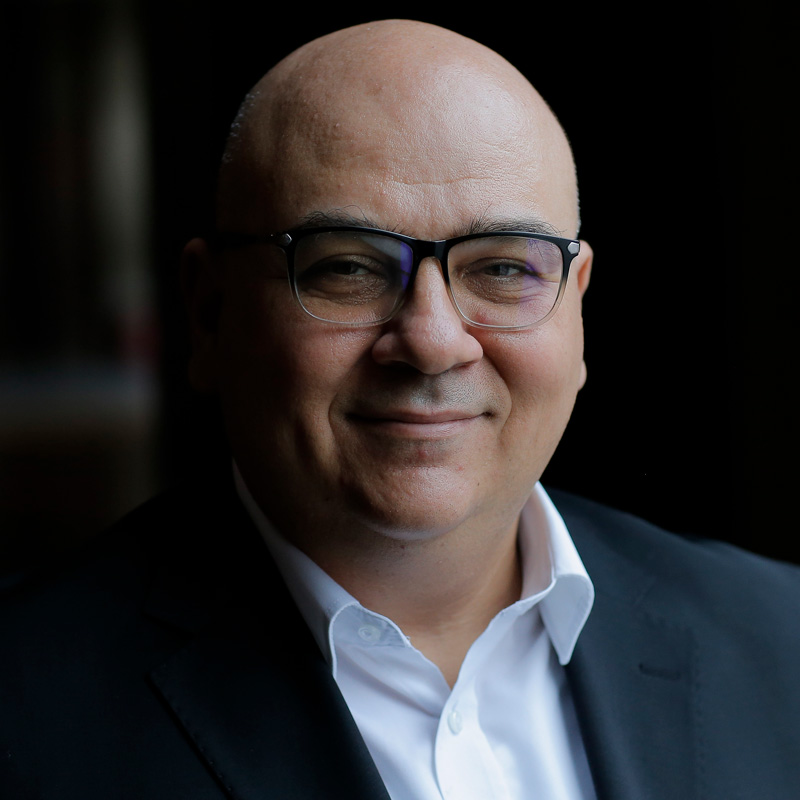
Prof. Dr. Menelaos Gkartzios is a distinguished academic affiliated with the Department of City and Regional Planning at Middle East Technical University , with extensive experience at institutions including Newcastle University , Izmir Institute of Technology , and University College Dublin . He has served as a Visiting Professor at Tongji University and contributes to editorial boards such as Habitat International and Journal of Rural Studies . Education: PhD in Regional & Urban Planning, University College Dublin (2008) MSc in Environmental Resource Management, University College Dublin (2003) MAgrSc in Agricultural Economics & Rural Development, Agricultural University of Athens (2002) PGCert in Advanced Studies in Academic Practice, Newcastle University (2014) Research Focus: His work bridges sustainable rural development , urban-rural dynamics , and the cultural dimensions of place-making . Key themes include counterurbanisation , rural mobilities , and artistic practice in planning . Publication Trends: Recent articles and books examine climate-driven migration , community co-creation , and rural housing paradoxes . His scholarship spans interdisciplinary frameworks, merging rural sociology , geography , and planning theory . Leadership Roles: He co-leads the AESOP Thematic Group on Rural Planning and contributes to global planning discourse through edited volumes like The Routledge Companion to Rural Planning .
Prof. Fatih Terzi is a faculty member in the Department of Urban and Regional Planning at Istanbul Technical University's Faculty of Architecture. His research focuses on sustainable urban development, resilience, ecology, GIS applications, and smart cities. He has held visiting researcher positions at Clemson University (USA), University College London, and Technical University Berlin. He has led projects supported by EU, TÜBİTAK, and others, addressing ecological planning, risk reduction, and urban regeneration. His work bridges academic research with practical urban planning, including projects with municipalities and the Ministry of Environment. He has received multiple awards for research and design, including the Best Paper Award (2025) and TÜBİTAK recognitions. Education: PhD in Urban and Regional Planning from Istanbul Technical University (2010), MSc in Urban Planning (2004), BSc in Urban and Regional Planning from Yıldız Technical University (2000). Research interests include spatial strategic planning, ecological cities, and climate-sensitive urban design. He uses urban modeling and GIS to address sustainability challenges. His recent projects include Istanbul's flood risk analysis, green space strategies, and sustainable city planning in Kayseri and Malatya. Notable awards include the 2024 TÜBİTAK award for urban resilience projects and the 2023 Istanbul Technical University Academic Performance Award. He has also been recognized for design competitions, including the İzmir Ecological Living Area Project (2021) and the 2017 Balkan Architectural Biennale Urbanism Grand Prix. Prof. Terzi holds administrative roles at Istanbul Technical University, including Merkez Danışma Kurulu Üyeliği (2023–present). He oversees academic projects on urban resilience, smart cities, and ecological planning, contributing to both national and international initiatives.
Duygu SALMAN ÖZTÜRK is an Assistant Professor at Boğazici University's Department of Tourism Administration. She holds a Ph.D. in Organization Studies from Bilgi University (2014), an M.A. in Industrial/Organizational Psychology from City University of New York (2003), and a B.A. in Tourism Administration from Boğazici University (2000). Her research focuses on diversity management, socio-cultural impacts of tourism, equality in the tourism industry, organizational culture, and emotional labor. Ph.D., Organization Studies, Bilgi University (2014) M.A., Industrial/Organizational Psychology, City University of New York (2003) B.A., Tourism Administration, Boğazici University (2000) Her research spans organizational psychology and tourism studies, examining intersections between gender, labor dynamics, cultural heritage, and sustainable development. She has led projects on implicit bias, human factors in cybersecurity, and diversity management frameworks. Her 2024 article on gender and gig economy tourism labor highlights contemporary trends in precarious work environments. Scientific awards include the Best Doctoral Paper Award (2008). She has supervised PhD student Serra Yağış and collaborated with scholars like Prof. Dr. Burak Güçlü and Prof. Dr. Bengi Ertuna. Her teaching portfolio includes undergraduate and graduate courses such as Diversity Management, Organizational Behavior, and Qualitative Research.
Assoc. Prof. Dr. Yusuf Aydoğdu is an academic at Bingöl University's Faculty of Arts and Sciences, Department of Turkish Language and Literature. He holds academic rank of Associate Professor since 2023. His expertise spans Modern Turkish Literature, Postmodernism in Literature, and Socialist Realism in Poetry. Education: Bachelor's (2003–2008): Turkish Language and Literature Teaching, Dokuz Eylül University Master's (2008–2011): İzmir Dokuz Eylül University, thesis on 'Socialist Realist Elements in Kemal Özer's Poetry' PhD (2012–2016): Atatürk University, thesis on 'Postmodern Elements in Murathan Mungan's Fiction' Research interests include modern Turkish literary movements, postmodern narrative techniques, and cultural identity studies. His 15 most recent articles (2014–2024) explore themes such as postmodern historiography, socialist realism in poetry, and hermeneutic literary criticism. Notable works include analyses of Murathan Mungan's short stories and Namık Kemal's existential narratives. He is a referee for journals like Bingöl Üniversitesi Sosyal Bilimler Enstitüsü Dergisi and has authored/co-authored books on postmodern Turkish literature and literary criticism.
Dr. Mehmet Kaya is a Lecturer in the History Department of Bingöl University's Faculty of Arts and Sciences since 2009. He holds a PhD in Republic History from Fırat University (2004) and has served as Department Head (2009-2012) and currently leads the Republican History Subdivision. His research focuses on Turkish-Iranian relations, modern Middle Eastern history, and the diplomatic history of the Republic of Turkey. Education: BA in History (Fırat University, 1987), MA in Revolutionary History (Istanbul University, 1992), PhD in Turkish-Iranian Relations (Fırat University, 2004) Research interests include 20th-century diplomacy, Ottoman-Turkish transition, and regional geopolitics. He has published extensively on topics like Iran's 1979 Revolution, Turkish-Israeli relations, and Kurdish uprisings. Recent works analyze Iran's Syria policy (2022) and Ali Şeriati's influence on the Iranian Revolution (2024). He co-authored chapters in volumes like Modern İran Tarihi (2021) and participated in international conferences on Karabakh conflicts and Iranian opposition groups. Serves as referee for Bingöl University's Social Sciences Journal.
Assoc. Prof. Savaş DURMUŞ is affiliated with Kafkas University , where he has held the position of Associate Professor in the Department of International Trade and Logistics since 2021. He previously served as a Department Head (2019–present) and Deputy Institute Director (2012–2015). His academic journey includes a PhD in Economics (2007–2011) and MSc in Business Administration (2001–2004) from Turkish institutions. Education : PhD, Economics, Celâl Bayar University (2007–2011) MSc, Business Administration, Selçuk University (2001–2004) BA, Business Administration, Atatürk University (1988–1993) Research Interests focus on Development Economics , Macro Economics , and Business Cycles , with a strong emphasis on empirical analysis of economic policy, international trade, and financial systems. His work spans topics like tourism economics, energy sector performance, and regional development. Scientific Contributions include 15+ peer-reviewed articles (2020–2024) on themes such as financial development, Dutch disease, and Industry 4.0. He has co-authored studies on tourism’s impact on growth and cross-country analyses of economic complexity. Editorial Work includes roles as editor for international books like Banka ve Finansal Sistem (2016) and Analysis of Economics Applications (2023). He has collaborated extensively with academics such as Dilek Şahin (27 joint publications) and Hasan Ayaydın (17 joint publications).
Prof. Dr. Nuri Başoğlu is a Professor at Izmir Institute of Technology (IYTE). His educational background includes a BSc in Industrial Engineering from Boğaziçi University, and both MSc and PhD in Production Management from Istanbul University. Research Focus His research spans interdisciplinary domains with emphasis on: Technology Adoption : Healthcare systems, mobile services, and education. Innovation Processes : Sociotechnical systems, product design, and decision support. Information Systems : Strategic implementation and human-computer interaction. Recent publication trends (2010–2013) highlight technology diffusion in healthcare, including telemedicine, health informatics, and e-learning. Cross-cultural studies on mobile services and ERP optimization in manufacturing also feature prominently. No awards, grants, or supervised students are documented in the provided materials.
Sezgin YILDIZ is a Lecturer at the Department of Social Studies Education, Faculty of Education, Adıyaman University since 2011. He holds a PhD in Geography from Atatürk University's Institute of Social Sciences (2025) and a B.Ed. from Erzurum Atatürk University's Department of Geography Education (2008). Before joining academia, he worked as a Geography Teacher in the Turkish Ministry of National Education (2008-2011). His research focuses on tourism development, geography education, and geotourism potential assessment. Notable projects include analyzing Adıyaman Province's canyon systems for geopark designation and examining the impact of recent earthquakes on tourism activities. He has contributed to studies on rural development through botanical tourism (e.g., Nargis flower in Gerger district) and cave-based geotourism opportunities. Teaching responsibilities include courses like 'Economy and Entrepreneurship,' 'Disaster Management,' and 'Political Geography.' He maintains active engagement with community service practices and educational innovation initiatives.
Prof. Dr. Emre Erdoğan is a faculty member at Istanbul Bilgi University's European Institute, Department of International Relations. His research focuses on political polarization, child well-being, migration policies, and populism's impact on democracy. He has contributed to understanding Syrian refugees' educational challenges, child labor dynamics in Turkey, and the role of emotions in political discourse. His work bridges academic research with policy advocacy, particularly in areas like NEET youth inclusion and rural development. Publications span child welfare indicators, electoral integrity, and the sociopolitical consequences of crises such as the 2020 Nagorno-Karabakh War and the pandemic’s effects on education. Key themes in his scholarship include: Dimensions of polarization in Turkish society Childhood vulnerabilities in marginalized communities Populist rhetoric and media dynamics Refugee integration and policy design His recent work explores digital democracy gaps, post-pandemic governance, and the intersection of migration studies with child rights frameworks.
Sevda Yalçın serves as a full-time Lecturer at Kafkas University's Kağızman Vocational School within the Department of Therapy and Rehabilitation. With continuous academic service since 1997, she maintains an active teaching schedule covering quality management, statistics, and customer relationship management courses at the associate degree level. Her educational background includes a BSc in Statistics from Anadolu University (1993-1997) and an MSc in Business Administration (without thesis) from Atatürk University's Institute of Social Sciences (2006-2008). Yalçın's research focuses on economic analysis of regional development with particular emphasis on South Caucasus countries, African economies, and Turkish agricultural sectors. Her work frequently employs global indices like Legatum Prosperity Index and World Bank's Doing Business indicators to evaluate economic performance and sustainable development potential. She maintains a strong regional focus on Kağızman district in eastern Turkey, analyzing local development challenges through community participation and rural tourism potential. Her publication record shows consistent output since 2012 with 39 total publications including 16 articles, 21 conference presentations, and 2 books. The research demonstrates evolving focus from broader Balkan and post-Soviet economic analysis toward increasingly specialized regional studies of South Caucasus and Turkey's agricultural sector. As a dedicated academic collaborator, she maintains a longstanding research partnership with Alper Yalçın (39 joint publications), with additional collaborations including Kubilay Aras, Coşkun Alıcı, and Kerem Karabulut. Her work demonstrates strong alignment with UN Sustainable Development Goals through sustainable local development research.
Professor Orhan KANDEMİR is a faculty member at Kastamonu University's Faculty of Economics and Administrative Sciences, Department of Economics. He currently serves as a full-time Professor (since 2024), having progressed through academic ranks from Lecturer (2008) to Assistant Professor (2011), Associate Professor (2018), and finally to Professor. He also holds significant administrative positions including Vice Dean of the Faculty (2023-present) and Director of the Research Application Center (2022-present). Dr. KANDEMİR earned his PhD in Economics from Sakarya University (2006-2010), Master's degree from Abant İzzet Baysal University (2003-2005), and BA in Economics from the same institution (1994-1997). His academic journey reflects a strong foundation in economic theory and development studies. His research focuses on Development Economy and Economic Growth, with significant contributions to International Economics, Human Development, Regional Development, and Social Policy. His work often examines Turkey's economic position within global contexts, regional development strategies, and social inequality issues. He has published extensively in these areas, with a particular emphasis on practical applications for regional development in Turkey. His recent publications demonstrate a trend toward analyzing the socioeconomic impacts of global crises, gender-related economic issues, and regional development strategies. His work combines theoretical economic frameworks with empirical analyses of Turkish and international datasets, particularly focusing on development indicators and policy implications. Best Paper Award (2017) from Azerbaijan National Academy of Sciences Professor KANDEMİR has served as main advisor for 13 Master's theses covering topics such as poverty, gender inequality, regional development, and economic policy. His administrative roles include multiple terms as Department Head (2009-2015) and Institute Director (2022-2023). He has led four research projects funded by Kastamonu University's Scientific Research Projects Unit and other national organizations, focusing on rural development, regional economic analysis, and international economic relations. His work connects academic research with practical regional development initiatives, particularly in the Kastamonu region of Turkey, where he has conducted numerous studies on local economic potential, tourism development, and agricultural strategies.
Zabitgil Gülseren, Özlem is an academic at Istanbul Sabahattin Zaim University specializing in English Language Teaching (ELT) and Second Language Acquisition . Her work focuses on integrating technology into language instruction, analyzing learner anxiety, and evaluating pedagogical methods. Research Themes : Technology-enhanced learning, vocabulary acquisition, formative assessment. Key Collaborations : Co-authored studies with Sıla Selver Akar, Enes Atay, and others. Article Trends : Recent works (2024) examine authentic video-based vocabulary instruction, while 2022–2020 studies explore online collaborative writing, digital storytelling, and formative assessment practices. Earlier works (2015–2019) analyze anxiety, gender factors in strategy use, and classical teaching methods. Advising and Grants : Supervised research on topics like digital tools in ELT and L1 usage in classrooms. No specific grant details provided in the text.
Şule Alıcı is an Associate Professor in the Department of Basic Education, Faculty of Education, at Kırşehir Ahi Evran University , Turkey. Since 2022 she has held the rank of Doçent (Associate Professor) on a full-time basis, and since 2022 she also serves as Deputy Director of the University Research & Application Centre. Previously she was Assistant Professor (Dr. Öğretim Üyesi) at the same university (2022-2025) and Research Assistant at Middle East Technical University (2007-2018) and Queensland University of Technology (2017). Education PhD in Preschool Education, Middle East Technical University, Institute of Social Sciences, 2013-2018 MA in Preschool Education (Thesis), Middle East Technical University, Institute of Social Sciences, 2009-2013 BA in Mathematics & Science Education, Gazi University, Gazi Faculty of Education, 2002-2007 Research Focus Dr Alıcı’s scholarship lies at the intersection of early childhood education , education for sustainability , creative drama , and media literacy . She explores how preschool teachers can be empowered to integrate sustainability principles into daily practice, how creative drama can be harnessed to enhance children’s environmental awareness, and how critical media literacy can be used as a transformative tool in teacher professional development. Her work spans curriculum development, teacher education reform, and cross-cultural comparative analyses. Her recent publications reveal a consistent trajectory toward re-orienting early childhood teacher education for sustainability . Using mixed-methods and case-study designs, she investigates teacher candidates’ experiences during practicum, the role of forest schools and outdoor learning, and generational changes in traditional children’s play. Collectively, these studies highlight systemic challenges and innovative pathways for embedding sustainability and creativity within Turkish and international ECE contexts. Awards & Recognition TÜBİTAK Publication Incentive Award (2023) OMEP Special Achievement Commendation – Education for Sustainable Development (2017) National Publication Incentive Award (2011) Projects & Grants Dr Alıcı has led or co-investigated five funded projects, including ReNCitReScArCe (2024, UN & EU supported), Dijital Dünyada Siber Kimlik Farkındalığı (TÜBA-TÜBİTAK 2021-2022), and Müzede Yeşeren Umutlar (Ministry of Development, 2019). These initiatives engage pre-service teachers, school counsellors, rural women, and museum visitors in sustainability and digital citizenship education. Professional Service & Leadership She is Vice-Chair of the Transnational Dialogues in Research in Early Childhood Education for Sustainability network and of the EECERA Sustainability SIG , an active member of AERA, EECERA, OMEP and TEMA, and has organised several international conferences and special journal issues.
Prof. Cenap Sancar is a faculty member at Karadeniz Technical University in the Faculty of Architecture, Department of Urban and Regional Planning . With a career spanning over 35 years, he has held academic positions ranging from Research Assistant (1990-2000) to Professor (2017-present). His work bridges urban planning , GIS applications , and regional development , with a focus on sustainability and social equity . Education : Doctorate (1993-2000), Postgraduate (1989-1993), Undergraduate (1985-1989) in Architecture from Karadeniz Technical University. Managerial Roles : Head of Department (2009-2019), Deputy Head of Department (2005-2009). His research interests include urban ecology , transportation planning , and heritage conservation , often integrating GIS and remote sensing . Recent publications explore affordable housing , campus mobility , and landslide risk mapping , reflecting interdisciplinary trends in urban studies and environmental engineering . Scientific awards include recognition from Istanbul Metropolitan Municipality (2007) and Trabzon Belediyesi (1996). He has supervised 11 theses and contributed to 19 projects, including TUBITAK-funded research on rural area typologies and data design.
Lecturer Aydin Uçar has been affiliated with Akdeniz University's Faculty of Architecture, Department of Interior Architecture since 2000. He holds a postgraduate degree in Architecture/Reconstruction and Restoration from Yildiz Technical University (2000) and an undergraduate degree in Architecture from Anadolu University (1997). Education: Anadolu University (B.Arch), Yildiz Technical University (M.Arch) Research Areas: Architecture, History of Architecture and Restoration, Restoration, Engineering and Technology Aydin Uçar's work focuses on architectural restoration, cultural heritage, and spatial planning. His research bridges historical analysis with modern applications, particularly in post-disaster rural settlements and digital fabrication technologies like CNC in furniture design. He has explored the interplay between traditional architecture and contemporary tourism development strategies. His recent projects include the use of AR technology in Phaselis case studies (2022-2024). Uçar has contributed to understanding Anatolian architectural identity through publications on topics ranging from archaeological reconstruction to 20th-century rural modernization. Scientific Awards : Best Papers WSEAS (2010) Grants & Scholarships : SEE together Traveling Academy Scholarship (2022) Travel Grants (2015, 2014) Research Scholarship (2003) Professional Activities : Founder of Pratikiz Mimarlık Ltd. Şti. (2017) Jury member in architectural competitions (2002-2008) Active in international academic conferences (2008-2022)