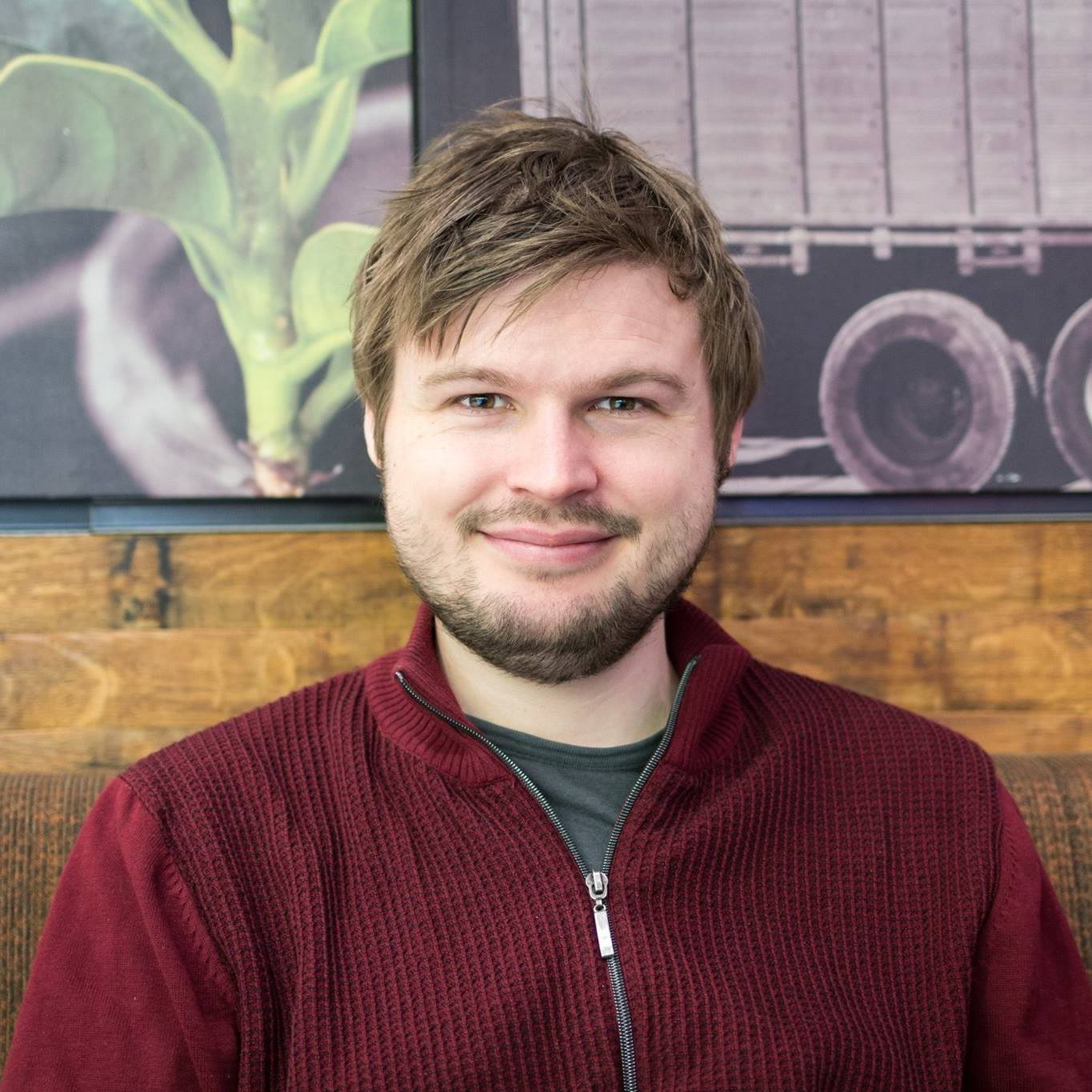
Yassine Ghannane is a Research Fellow at the Department of Computer Science , University of Copenhagen , specializing in Algorithms and Complexity . University: University of Copenhagen Department: Department of Computer Science Research Focus: Theoretical computer science, permutation-based evolutionary algorithms, computational complexity His recent work includes runtime analysis and theory development for permutation-based evolutionary algorithms, as well as module-based neural network mapping heuristics. Publications span 2022–2024 with interdisciplinary applications in machine learning and optimization. Contact: yagh@di.ku.dk | Office: Universitetsparken 1, 2100 København Ø, Denmark
Elli Anastasiadi is an Assistant Professor in the Department of Computer Science at Aalborg University, part of the Technical Faculty of IT and Design. She is a member of the DEIS (Distributed, Embedded and Intelligent Systems) research group, which focuses on formal methods, verification, and intelligent systems. Prior to her current role, she was a postdoctoral researcher at Uppsala University and completed her PhD at Reykjavik University. Education: PhD in Computer Science, Reykjavik University (2022) Master’s in Applied Mathematics and Computer Science, NTUA, Greece Her research centers on formal verification of concurrent and parallel systems , with emphasis on runtime verification, process algebra, and logical foundations. She works extensively with hyperproperties, modal logic, and equational reasoning. Her work bridges theoretical computer science with practical verification tools. Recent publications show a strong trend in logic-based verification , particularly in modal and temporal logics, recursion, and monitor synthesis. Her work often involves complexity analysis and axiomatization of logical systems. Scientific Awards: PhD grant from Reykjavik University research fund She has advised no publicly listed students yet and is actively involved in academic service, including co-organizing workshops and being an invited speaker. She collaborates closely with leading researchers in concurrency theory and formal methods. Labs and Teams: Member of the DEIS research group at Aalborg University, contributing to projects on verification, distributed systems, and intelligent decision-making.
Peter Sestoft is a Professor at the IT University of Copenhagen (ITU), leading the Computer Science Department since 2017. His primary roles include academic leadership, research in programming languages and software engineering, and teaching. He holds a PhD in Computer Science from the University of Copenhagen (1991) and has held academic positions at institutions like the Royal Veterinary and Agricultural University and the Technical University of Denmark before joining ITU in 1999. His research focuses on programming languages, functional and managed object-oriented languages, parallel programming, compilers, and spreadsheet implementation technologies. He has developed influential tools like the C5 Generic Collection Library for C# and Moscow ML, a Standard ML implementation. His work on Funcalc and Corecalc advanced spreadsheet technology with user-defined functions and efficient recalculation algorithms. Key contributions include over 30 publications, including books on programming language concepts and Java/C# syntax. He has led major research projects such as 'Popular Parallel Programming' (P3) and 'Probabli' for actuarial calculations. His academic service includes roles on national grant committees and international conference organizing committees. Notable advising includes PhD students like Andrzej Wasowski (ITU Professor) and David Christiansen (Director of Haskell Foundation). His work has been recognized through grants exceeding 25 million DKK and collaborations with institutions like Microsoft Research and Harvard University.
Martin Elsman is a full-time Professor in the Programming Languages and Theory of Computation section at the Department of Computer Science, University of Copenhagen (DIKU). He serves as head of the PLTC section and head of studies for the BSc education in Computer Science and Economics. Elsman is also an active maintainer of several software tools including the MLKit and SMLtoJs. Joined DIKU in 2012 after 4 years at SimCorp (2008-2012) and previous Associate Professorship at IT University of Copenhagen (2003-2008). Co-developer of Futhark, TAIL APL compiler, SMLtoJs, and SMLserver. Education: M.Sc. in Engineering, Technical University of Denmark Ph.D. in Computer Science, University of Copenhagen (DIKU), supervised by Mads Tofte. Research Interests: Elsman works on programming language design and implementation, with a focus on functional programming, module systems, domain-specific languages for financial contracts, region-based memory management, compilation techniques for parallelism, program optimization, and static type systems. His work spans both theoretical and applied domains, including blockchain-based financial contract execution, web technology, and GPU programming using functional languages. Publication Trends: His recent articles focus on functional programming, array programming, parallelism, and memory management. Topics include region inference, type systems for data-parallelism, program optimization techniques, and domain-specific compilation for financial and quantum computing. He frequently collaborates with Troels Henriksen and others on tools like Futhark and MLKit.
Anders Møller is a Professor and Vice Head of Department at the Department of Computer Science, Aarhus University, Denmark. He is a leading researcher in programming languages and software engineering, with a primary focus on static and dynamic program analysis. He serves as Chairman of the PhD Committee and holds leadership roles in the international research community, including Vice-Chair of ACM SIGPLAN and Associate Editor for ACM TOPLAS and ACM TOSEM. His research interests include programming languages, software engineering, static and dynamic analysis, program verification, and security. His work bridges theoretical foundations and practical applications, particularly in improving software reliability and security through advanced analysis techniques. The trends in his recent publications reflect a strong emphasis on static analysis for security, scalability, and real-world impact—especially in web applications, smart contracts, and open-source software supply chains. His research has evolved toward practical deployment, demonstrated by the founding and acquisition of Coana by Socket in 2025 for enhanced vulnerability detection. Recipient of the Danish Elite Research Prize 2020 ACM Distinguished Member He actively mentors students and contributes to the academic community through conference leadership (e.g., OOPSLA, PLDI, ICSE). He also co-authored the widely used textbook Static Program Analysis with Michael I. Schwartzbach. His work is deeply integrated into both academic and industrial advancements in software analysis and security.
Stefan Hallerstede is an Associate Professor at the Department of Electrical and Computer Engineering, Aarhus University. His research focuses on formal methods, software engineering, and cyber-physical systems, with a particular emphasis on component-based systems and code generation. He has contributed to over 61 research outputs and participated in 23 peer-review activities.
Joel Daniel Andersson is a Research Fellow at the Department of Computer Science , University of Copenhagen, affiliated with the Faculty of Science . He is a member of the Providentia group under the supervision of Rasmus Pagh , focusing on differentially private algorithms in the continual observation setting. His work bridges theoretical challenges in privacy-preserving data analysis with practical applications in machine learning and statistics. PhD in progress (third-year) at the University of Copenhagen Former Master's student in Engineering Physics (Lund University, 2020) Previous industry experience: Software Engineer at Ericsson (5G protocols) Research Interests Joel's research explores differential privacy in streaming algorithms , particularly for continual observation —a framework where private statistics must be released incrementally over time. He investigates optimal solutions for problems like binary continual counting, comparing noise mechanisms (Laplace vs. Gaussian), and designing efficient algorithms for dynamic data streams. Earlier work includes computational modeling of beam dynamics at CERN for high-energy physics applications. Recent Publications His publications span theoretical computer science and computational physics , appearing in venues like NeurIPS , ICML , FORC , and physics journals. Key themes include: Differential privacy in streaming and machine learning Algorithmic design for continual data release Computational modeling for particle accelerators Privacy expiration and noise mechanism trade-offs Affiliations Joel collaborates with: BARC (Basic Algorithms Research Copenhagen) group Providentia group Adam Smith's lab at Boston University (visiting researcher, Jan–Apr 2025)
Affiliations & Roles Michele Albano is an Associate Professor at the Department of Computer Science, Aalborg University, Denmark. He is affiliated with The Technical Faculty of IT and Design, focusing on research in IoT, Cyber-Physical Systems, and Edge Computing. He leads the Productive4.0 project (2017–2020), funded by Horizon Europe, addressing Industry 4.0 challenges in product lifecycle management. His work integrates formal verification tools like Uppaal with real-world applications in robotics, energy systems, and blockchain-based platforms. Research Interests Albano's research spans IoT architecture optimization , energy-efficient systems , and model-driven engineering . He develops tools for autonomous exploration algorithms (MAES), edge-cloud resource orchestration, and fault-tolerant computation offloading. His work bridges theoretical models (e.g., Uppaal SMC) with practical implementations in smart grids and robotic systems. Recent projects include blockchain-based crowdsourcing for machine learning and energy-aware thermal dynamics estimation in buildings. Collaborations & Impact He collaborates with the European Industry 6.0 community, contributing to the Arrowhead Framework for interoperable IoT systems. His research outputs include 112 publications, with 2025 highlights in human-inspired robotics and cognitive cloud frameworks. Media coverage in 2024–2025 highlights his work on green IT and secure API generation. Albano advises students on system modeling (e.g., ACSmt plugin development) and edge computing optimization. Labs & Teams His research group focuses on Cyber-Physical Systems and Smart Grids , with contributions to tools like RoutesMobilityModel and FlexHousing. He actively participates in workshops on New Trends in Software Architecture (SATrends '24) and IEEE conferences on Industrial Informatics.
Tomer Sagi is an Associate Professor in the Department of Computer Science at Aalborg University (AAU), Denmark. He is affiliated with The Technical Faculty of IT and Design and leads projects in the AI for the People and BLUE – Marine & Maritime Research groups. His research focuses on data integration, ontology engineering, artificial intelligence applications in healthcare and environmental science, and knowledge graph development. PhD in Information Systems from Technion-Israel Institute of Technology (2015) Former Lecturer at University of Haifa (2017–2022) Principal Investigator/Co-PI in projects like ODINI (AI-based Data Integration), MEHDIE (Middle Eastern Heritage Knowledge Graph), and DarkScience (Microbial Data Science) Research Interests: Data Integration, AI for Ocean Science, Medical Informatics, Ontology Evaluation, Multilingual Knowledge Systems, and Explainable AI. His work contributes to UN Sustainable Development Goals related to innovation and infrastructure. Key Projects (2022–2025): DarkScience: Metagenomic data analysis funded by Villum Foundation ODINI: AI-driven ocean data fusion and 3D reconstruction MEHDIE: Multilingual historical knowledge graphs for Middle Eastern heritage Awards: Received NLP4KGC Best Paper Award (2023) and AIME 2020 Best Paper Nomination. His contributions span 46+ publications, 8 datasets, and media coverage on AI applications in healthcare and environmental science. Labs/Teams: Active in AI for the People (applied AI solutions) and BLUE (marine data science). Collaborations include work on virtual twin technology for stroke management and medical data analytics.
Morten Rhiger is an Associate Professor in the Department of People and Technology at Roskilde University, Denmark, specializing in programming language theory and implementation with expertise in semantics, type systems, and compiler design. His research portfolio centers on: Programming Languages : Core design principles and theoretical foundations Semantics : Formal denotational and operational frameworks Type Systems : Safety mechanisms and correctness verification Compilers : Optimization techniques and runtime systems Program Generation : Staged computation and automatic code synthesis Multi-stage Languages : Runtime code generation and partial evaluation Publication trends reveal sustained contributions from foundational work (2009-2012) on pattern combinators and staged computation to recent innovations in type-based uncurrying (2024), with significant interdisciplinary work on energy-transparent systems (2016). His research consistently bridges theoretical rigor with practical implementation challenges. Rhiger actively contributes to major research initiatives including ENTRA (2012-2015) for energy transparency, NUSA (2011-2013) for model checking, and recent energy-certification projects (2020-2022), demonstrating sustained focus on program analysis and energy-aware computing. He maintains strong community engagement through organizing the Copenhagen Programming Languages Workshop and participating in key conferences including the Symposium on Implementation and Application of Functional Languages.
Thomas Troels Hildebrandt is a Professor in the Department of Computer Science at the University of Copenhagen, where he heads the Software, Data, People & Society research section. His work focuses on developing reliable and flexible software systems that adapt to user needs and legislative changes, with applications in digital law, workflows, and business processes. His educational background includes: PhD in Computer Science from Aarhus University (awarded February 23, 2000) Professor Hildebrandt's research spans Software Engineering , Process Modeling , and Business Process Management , with a focus on declarative approaches like Dynamic Condition Response (DCR) graphs. His work integrates formal methods to ensure system reliability in contexts ranging from smart contracts to public governance. He actively explores societal implications of AI, advocating for transparency and user-centered design in digital systems. Recent publications demonstrate a strong trend toward declarative process modeling applied to smart contracts and public governance . Key developments include DCR graphs for dynamic behavior modeling, cross-chain business logic monitoring, and digital compliance frameworks. His interdisciplinary approach bridges computer science with real-world societal challenges, particularly in adapting systems to evolving legislation and user requirements. No specific scientific awards are mentioned in the provided information. Professor Hildebrandt leads interdisciplinary research projects and serves on advisory boards for digitalization and AI. His work has fostered industry collaboration, including founding DCR Solutions based on his research. He acts as an independent consultant and speaker in digital transformation, with recent projects focusing on blockchain integration and public sector AI ethics. He directs the Software, Data, People & Society research section, which develops human-centered methods for adaptable digital systems. Current initiatives include DCR graph applications for GDPR compliance, smart contract security, and transparent AI in public services, with strong industry and government partnerships.
Martin Zimmermann is an Associate Professor in the Department of Computer Science at Aalborg University, where he leads the Distributed, Embedded and Intelligent Systems research group. Previously, he held roles as a lecturer at the University of Liverpool and postdoctoral researcher at Saarland University and the University of Warsaw. He earned his PhD from RWTH Aachen University, with a Fulbright-funded period at DePaul University in Chicago. Education: PhD in Computer Science, RWTH Aachen University MSc in Computer Science, RWTH Aachen University (with Fulbright at DePaul University) Research Interests: Zimmermann focuses on temporal logics, reactive synthesis, and automata theory, particularly exploring HyperLTL, model-checking techniques, and formal verification challenges. His work bridges theoretical foundations with practical applications in real-time systems and neural-network control. Key Contributions: Notable publications include advancements in HyperQPTL model-checking, complexity analysis of second-order HyperLTL, and robust temporal logics. His research often addresses decidability, computational complexity, and algorithmic solutions for infinite games and reactive systems. Teaching: Teaches courses like Computability and Complexity, Algorithms and Computability, and Computer Architecture at Aalborg University. Service: Served on PCs of major conferences (e.g., CONCUR, CSL) and organized events like MOVEP 2022. Awards: Received the Best Paper Award at MFCS 2021 for groundbreaking work on pushdown automata expressiveness.
Ekkart Kindler is an Associate Professor in the Department of Applied Mathematics and Computer Science at DTU Compute, Technical University of Denmark. His research focuses on model-based software engineering, process mining, and road condition assessment using vehicle sensor data. He leads the Competence Centre for Model-Based Software Engineering, supporting industry adoption of advanced software development methodologies. Education: M.Sc. (1990), Ph.D. (1995) from Technische Universität München; Habilitation in Computer Science (2001) from Humboldt-Universität zu Berlin. He held visiting professorships at German universities (2000–2007) and has extensive experience in formal methods, business process modeling, and Petri nets. Research interests include declarative process modeling, complexity metrics for cognitive load assessment, and the integration of formal methods into industrial software development. His work contributes to UN Sustainable Development Goals related to sustainable infrastructure (SDG 9) and innovation (SDG 9). Notable collaborations include road condition assessment projects using vehicle sensor data (LiRA-CD dataset) and contributions to Petri net standards (PNML). He has supervised PhD students such as K. I. Simonsen (protocol software) and A. Skar (road assessment). Grants and projects: Live Road Assessment with Vehicle Sensors (2019–2022), Model Transformation Tools (2013–2016), and waste management modeling (2012–2016). Active in open-source datasets and tool development for indoor climate control (climify.org).
Morten Haahr Kristensen is a Research Fellow at the Department of Electrical and Computer Engineering at Aarhus University, Denmark. His work focuses on software engineering and computing systems, particularly in the domains of robotics, autonomous systems, and digital twins. Primary Affiliation: Department of Electrical and Computer Engineering, Aarhus University Other Affiliation: Software Engineering & Computing Systems group Research Interests: Morten investigates formal architectural patterns for adaptive robotic software and runtime verification of autonomous systems. His projects include safety analysis of self-adaptive robot behavior using digital twin technology. He contributes to trustworthy software systems through tutorial lectures and collaborative research. Selected projects: Determining the Limits of Self-Adaptive Behaviour of Robots from a Safety Perspective (2024-2027) Publications: Recent works include contributions to conferences like FASE 2025 and IEEE ACSOS-C 2024, focusing on digital twin implementations and formal verification in robotic systems.
Magnus Madsen is an Associate Professor at the Department of Computer Science, Aarhus University. He specializes in programming language design, compilers, and type and effect systems, and is the lead developer of the Flix programming language. His research focuses on advancing static analysis techniques and declarative language constructs for effectful and data-driven programming. Research Interests : - Programming language design - Type systems and effect systems - Static program analysis - Datalog and declarative programming - Compiler optimization and implementation Awards & Grants : - 2023: Sapere Aude Grant (Independent Research Fund Denmark) - 2022: Dahl-Nygaard (Junior) Prize (ECOOP) - 2022: STEM Grant (Stibo Foundation) - 2021: Amazon Research Award (collaboration with Jaco van de Pol) - 2020: DFF Project One (Independent Research Fund Denmark) Advising & Collaboration : - Supervises four current PhD students (listed above). - Active in academic service: PC member for ECOOP, OOPSLA, PLDI, and other conferences. - Collaborates with industry (e.g., Google, Systematic) and academia on tool development and language research. Labs & Projects : - Core contributor to the Flix programming language and the CASA (Center for Advanced Software Analysis) initiative. - Involved in interdisciplinary projects combining declarative programming with domain-specific applications.