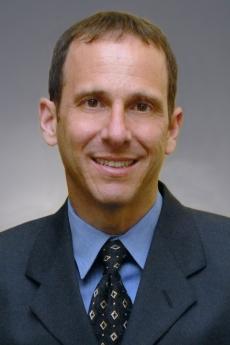
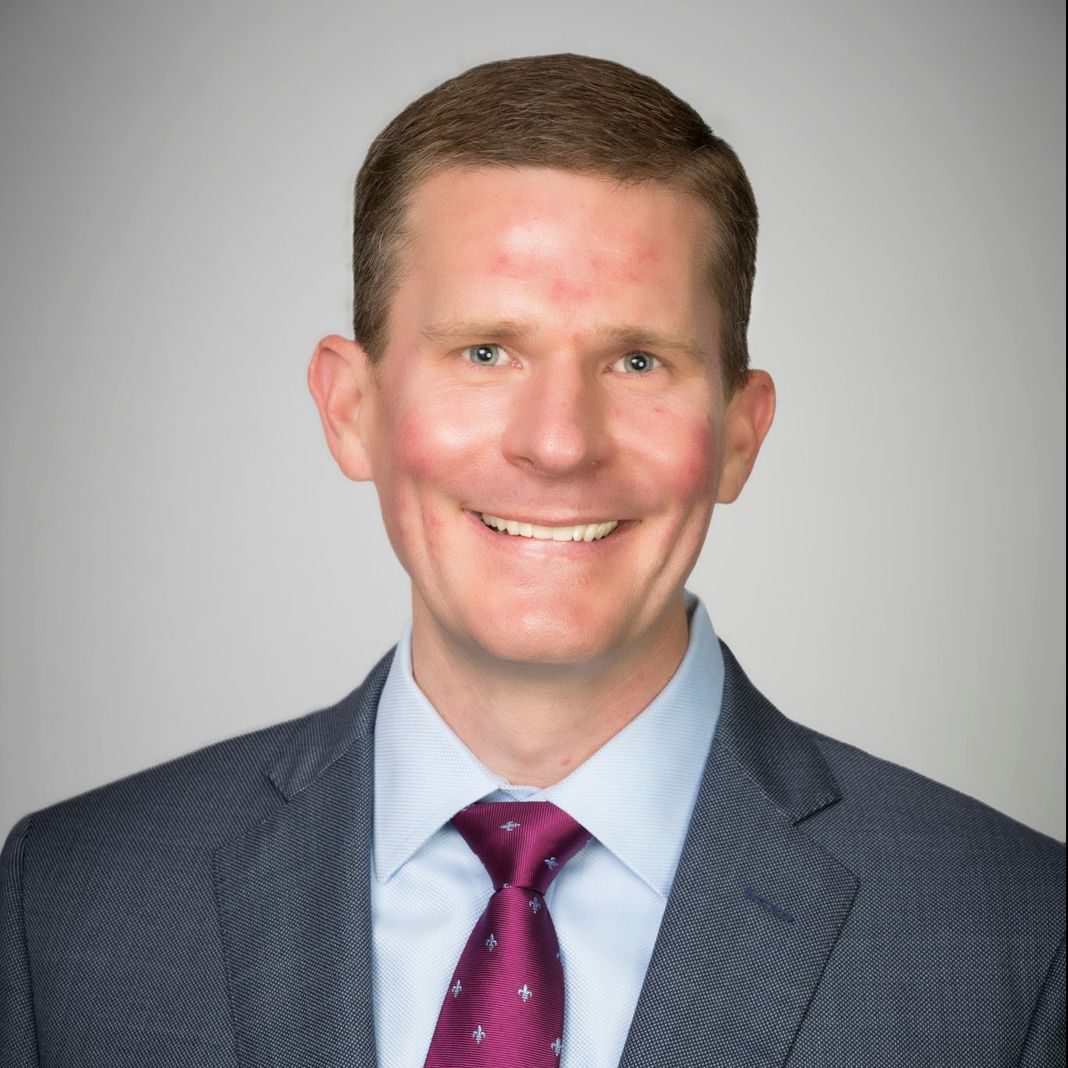
Maria Bergström is an Associate Professor in European Law at the Faculty of Law, Uppsala University. She received her PhD in 2003 from the European University Institute (EUI) in Florence. Her research focuses on EU criminal law, constitutional law, administrative law, procedural law, and the interplay between national law and EU law, with particular emphasis on anti-money laundering, mutual legal assistance, and the rule of law in digital contexts. PhD (2003), European University Institute, Florence Expert on EU criminal law and justice cooperation Key projects include work on the European investigation order and rulemaking centralization Her publications and projects address: Competence issues in EU governance Fragmentation and integration in legal frameworks Public-private cooperation in anti-money laundering Digital age challenges for EU legal systems Mutual recognition in criminal justice Rule of law and judicial trust mechanisms
Professor David A. Weisbach of the University of Chicago Law School is a leading scholar in tax law and economics, with significant contributions to climate change policy and public finance. His work bridges legal theory and economic analysis, focusing on optimal taxation frameworks, carbon pricing, and regulatory efficiency. Key Research Areas : Tax policy, climate change economics, corporate taxation, and cost-benefit analysis. Collaborations : Regularly partners with economists and climate scientists, including Samuel Kortum and Ian Foster. Recent publications analyze fiscal redistribution, carbon taxation design, and trade implications for climate policy. His articles emphasize empirical economic modeling and policy coherence, with keywords spanning Tax Law , Climate Policy , and Public Finance . While no formal awards are listed, his work remains influential in legal and economic circles. Emails can be found through the University of Chicago Law School’s official contact page.
Richard Murphy is the AT&T Professor of Law at Texas Tech University School of Law, where he has taught since 2009. His primary academic home is within the School of Law at Texas Tech University, where he holds a named professorship. Previously, Professor Murphy taught at William Mitchell College of Law starting in 2000, and has served as a visiting professor at the law schools of University of Idaho, Seton Hall, and Lewis & Clark. Professor Murphy received his B.A. from Carleton College in 1987, magna cum laude, and his J.D. from University of Minnesota Law School in 1995, summa cum laude. After law school, he clerked for Judge Stephen S. Trott of the U.S. Court of Appeals for the Ninth Circuit, followed by work as a litigation associate at Dorsey & Whitney in Minneapolis. Professor Murphy's research focuses primarily on Administrative Law, with particular expertise in judicial deference doctrines, separation of powers, and the administrative state. He has developed specialized knowledge in areas including Chevron deference, unitary executive theory, and the judicial review of agency action. His scholarship often examines the relationship between constitutional principles and administrative governance, with notable contributions to understanding presidential control of agencies and the proper scope of judicial review. His publications demonstrate consistent scholarly engagement with evolving administrative law doctrines, particularly the Chevron framework and alternatives to traditional deference models. Professor Murphy's work shows an increasing focus on constitutional dimensions of administrative law, including due process concerns in national security contexts and the proper boundaries of presidential power over agencies. His scholarship bridges theoretical administrative law concepts with practical regulatory concerns. Co-author of Volumes 32 & 33 of Federal Practice & Procedure, Judicial Review of Administrative Action Co-editor of an administrative law casebook Co-author of Supreme Court News in Administrative and Regulatory Law News (ABA) Professor Murphy teaches Administrative Law, Civil Procedure, Property, Antitrust, and Telecommunications Law. His scholarship and teaching reflect deep engagement with both doctrinal and theoretical aspects of administrative governance. While the available information doesn't specify particular advising relationships or grant funding, his extensive publication record and named professorship suggest significant scholarly impact within the administrative law community.
Daniel Capra is the Philip D. Reed Professor of Law at Fordham University's School of Law, where he has taught since 1981. His expertise spans Criminal Law and Procedure, Evidence, and Legal Ethics. He holds leadership roles in numerous judicial and bar committees, including the Judicial Conference Advisory Committee on the Federal Rules of Evidence, where he drafted key amendments like Rule 502. His work focuses on modernizing evidence rules, addressing circuit splits, and integrating digital evidence into legal frameworks. Education: Rockhurst University (AB, 1974); University of California, Berkeley (JD, 1977). Research Interests: Capra’s scholarship emphasizes evidence law reform, electronic evidence authentication, forensic expert testimony standards, and judicial rulemaking. He has authored foundational texts like Principles of Evidence and Evidence: The Objection Method , and his recent work tackles challenges posed by emerging technologies like deepfakes. Professional Activities: As a Special Master in high-profile litigations (e.g., In re IPO Securities Litigation ), he resolves complex discovery and privilege disputes. He advises on China’s evidence law reforms and frequently lectures federal judges on evidence and sentencing. Awards: Elected to the American Law Institute (2008); Fordham’s Teacher of the Year (2006). Grants & Advising: No grants listed, but extensive advisory roles in judicial committees and institutional leadership. His expertise influences legal education and practice through committee work and publications. Labs/Teams: Collaborates with the Sedona Conference on electronic discovery and chairs Fordham’s Judicial Clerkship Committee.
Gwendolyn Savitz is an Associate Professor at The University of Tulsa's College of Law, specializing in Administrative Law, Energy Law, and Military Law. She holds an LL.M. from Yale Law School, a J.D. from American University’s Washington College of Law, and a B.A. from Dartmouth College. Her research focuses on administrative state mechanisms, including rulemaking, adjudication, and military justice, with particular attention to issues like regulatory reform and accountability. Education: LL.M., Yale Law School J.D., American University – Washington College of Law B.A., Dartmouth College Research Interests: Professor Savitz’s work addresses the complexities of administrative law, including standing in rulemaking, agency finality, and military legal frameworks. She advocates for reforms in public comment processes and compensation mechanisms for military victims. Her expertise bridges theoretical legal analysis and practical applications in energy and military contexts. Grants & Advising: Specific grants or advising roles are not detailed in the provided information. Labs/Teams: While not explicitly mentioned, her research aligns with the College of Law’s initiatives in administrative and military law.
Catherine Struve is the David E. Kaufman & Leopold C. Glass Professor of Law at the University of Pennsylvania Law School. She serves as Reporter to the U.S. Judicial Conference Standing Committee on Rules of Practice and Procedure, playing a pivotal role in shaping federal procedural rules. Her research focuses on civil procedure, federal courts, and appellate jurisdiction, with recent work examining federal appellate procedure and inmate appeals. Struve has been recognized for her teaching excellence, winning the Lindback Award for Distinguished Teaching (2024) and the Harvey Levin Memorial Award (2003, 2009, 2015). In 2010, she was elected to the American Law Institute’s Council, reflecting her national influence in legal scholarship. Her research explores complex procedural issues such as tribal sovereignty litigation, pretrial detention conditions, and FDA-related tort reform. Notable contributions include The Federal Rules of Inmate Appeals (2018) and The Paradox of Delegation (2002), which critically examine judicial rulemaking dynamics. Recent publications address the Prison Litigation Reform Act (PLRA) and jurisdictional boundaries in appellate practice. Grants & Leadership: Struve’s service includes advising federal judicial committees and shaping procedural reform initiatives. Labs/Teams: Active in interdisciplinary legal networks, including collaborations with the American Law Institute and federal judiciary committees.
Hannah Wiseman is a Professor of Law at Penn State University and holds the Wilson Faculty Fellowship in the College of Earth and Mineral Sciences. She is also a Co-funded Faculty Member with the Institutes of Energy and the Environment. Her expertise spans Energy Law, Environmental Law, Oil and Gas Regulation, and Administrative Law. Education: J.D. from Yale Law School and A.B. summa cum laude from Dartmouth College. Her research focuses on regulatory design, federalism in energy governance, and the challenges of scaling renewable energy. Recent work examines grid reliability, subsurface zoning, and energy justice. She has co-authored influential articles in leading law journals, often collaborating with experts like Alexandra Klass and Joshua Macey. Key article trends: Grid modernization and clean energy (2024, 2022) Federalism dynamics in energy policy (2021, 2020) Hydraulic fracturing governance (2020, 2016) Wiseman has received funding from the Alfred P. Sloan Foundation, U.S. Department of Energy, and Pennsylvania agencies. She contributes to policy discussions through webinars, podcasts, and media commentary on energy affordability and climate litigation.
Danshera Cords is a Professor of Law at Albany Law School, where she teaches in the areas of partnership tax, corporate tax, individual tax, tax policy, business organizations, and Chinese law. Her scholarship critically examines the intersection of tax law, gender, poverty, and administrative justice. Her research interests include feminist legal theory, disaster relief taxation, charitable giving incentives, virtual currency taxation, and the earned income tax credit. She advocates for equitable tax policies that account for power imbalances, particularly in marital and economic relationships. Her work often highlights systemic distortions in tax enforcement and relief mechanisms. The recent publications of Professor Cords span from 2007 to 2020, revealing a consistent engagement with pressing issues in tax policy, administrative law, and social justice. Themes include the human impact of tax liens, reform of tax court appointments, green tax incentives in China, and the role of charitable giving in disaster response. Her interdisciplinary approach integrates legal doctrine, policy analysis, and socio-economic equity. Professor Cords contributed a feminist re-interpretation of Cheshire v. Commissioner in the book Feminist Judgments: Rewritten Tax Opinions , where she reimagines the court’s decision by centering the wife’s experience and critiquing the adversarial expectations placed on spouses. This work exemplifies her commitment to exposing and reforming gendered power dynamics in tax law. She has also explored historical developments in public sector compensation, the treatment of low-income taxpayers, and regulatory responses to financial innovation. While no formal scientific awards are listed, her publications in prominent legal journals and books reflect significant scholarly impact. Professor Cords has advised on collaborative tax regulation, IRS reform, and post-welfare reform poverty survival strategies. Her work often calls for systemic changes to improve fairness and accessibility in the tax system. She has not listed any formal advisees in the provided text. Her research connects with broader efforts in administrative law, legal feminism, and economic justice. She is affiliated with a vibrant legal academic community and continues to publish on evolving tax policy challenges.
Bradley M. Baranowski is a Visiting Assistant Professor at Boston University School of Law, where he teaches courses in Administrative Law and Federal Courts. He holds a PhD in American history from the University of Wisconsin-Madison and a JD from Boston University School of Law. His academic work focuses on the intersection of legal history, civil procedure, and federal judicial administration. BA: Kent State University MA: University of Wisconsin-Madison PhD: University of Wisconsin-Madison JD: Boston University School of Law His research centers on Administrative Law , Civil Procedure , and Federal Courts , with a particular interest in the historical development of judicial rulemaking and agency governance. His scholarship builds on his experience as a Supreme Court Fellow at the Federal Judicial Center, where he studied civil procedure reforms and administrative agency functions. Although no publications are listed in the provided text, his research trajectory suggests a focus on institutional legal history, judicial power, and administrative governance, likely contributing to both legal doctrine and policy debates. Bradley Baranowski has been quoted in media outlets such as The Daily Free Press and New Bedford Light on matters concerning legal procedure and constitutional governance. He previously clerked for the Honorable David A. Lowy (Massachusetts Supreme Judicial Court) and the Honorable Karen Nelson Moore (Sixth Circuit Court of Appeals), and practiced civil litigation at Jones Day before returning to academia. He is affiliated with active teaching and engagement at BU Law, including participation in faculty initiatives and public discourse. There is no mention of advising students, leading a lab, or managing a research team in the provided materials.
Doug Sarro is an Assistant Professor at the University of Ottawa Faculty of Law , specializing in corporate law, securities regulation, and the intersection of innovation, law, and politics. He holds a JD (Gold Medal) from Osgoode Hall Law School and an SJD from the University of Toronto, with additional qualifications as a CFA charterholder and a member of the bars of New York and Ontario. Education: HBA, SJD (Toronto); JD (Osgoode Hall Law School) His research examines regulatory frameworks for financial markets and corporate governance, with recent publications in leading journals including the McGill Law Journal and Capital Markets Law Journal . His work spans topics like judicial review of rulemaking, sustainable investment management, and regulatory sandboxes. Doug actively engages with industry through his role as Academic Director of the uOttawa Startup Law Clinic and as a member of CFA Societies Canada’s Advocacy Council. Scientific Awards: David Watson Memorial Prize (Queen’s Law Journal)
Alan B. Morrison serves as the Lerner Family Associate Dean for Public Interest and Public Service Law and Professorial Lecturer in Law at George Washington University Law School. In his administrative role, he creates pro bono opportunities for students, brings public interest programs to the law school, encourages students to pursue careers in non-profit and government sectors, and assists with funding legal education for public service careers. Morrison's research spans Constitutional Law, Civil Procedure, and Administrative Law, with particular expertise in Supreme Court litigation and separation of powers issues. His career has focused on law reform litigation in areas including open government, legal profession regulation, agency compliance, consumer protection, and class action settlements. His scholarly work demonstrates consistent engagement with fundamental constitutional questions and procedural justice issues. His recent publications show a clear trend toward analyzing judicial philosophy in the Roberts Court, administrative agency authority, and the structural foundations of civil procedure. These works reflect his deep practical experience arguing 20 cases before the Supreme Court, including landmark victories in Goldfarb v. Virginia State Bar, Virginia State Board of Pharmacy v. Virginia Citizens Consumer Council, and INS v. Chadha. President of American Academy of Appellate Lawyers (1999-2000) Morrison has taught civil procedure and constitutional law at GW Law and previously at Harvard, NYU, Stanford, Hawaii, and American University law schools. He maintains active engagement with the legal community through positions including elected member of the Board of Governors of the District of Columbia Bar, senior fellow of the Administrative Conference of the United States, member of the American Law Institute, and member of the Committee on Science, Technology & Law of the National Academy of Sciences. His current media commentary addresses contemporary issues like Trump's legal challenges and tariff policies.
Jonathan R. Siegel serves as Associate Dean for Research and Faculty Development and holds the F. Elwood and Eleanor Davis Professor of Law position at The George Washington University Law School. Joining the law school in 1995, Professor Siegel has established himself as a prominent legal scholar with expertise spanning multiple areas of law. His professional background includes four years with the Appellate Staff, Civil Division, of the U.S. Department of Justice, where he briefed and argued appellate cases on behalf of the president and numerous government officials and agencies, following a clerkship with Chief Judge Patricia M. Wald of the District of Columbia Circuit. Professor Siegel's educational background includes: BA from Harvard University JD from Yale University Professor Siegel's research interests focus on civil procedure, federal jurisdiction, administrative law, and intellectual property. His scholarly work demonstrates deep engagement with constitutional interpretation, statutory construction methodologies, and the role of courts in reviewing administrative action. He has been particularly active in analyzing Chevron deference and textualist approaches to legal interpretation, as evidenced by his numerous publications and media commentary on these subjects. His work bridges theoretical legal scholarship with practical implications for how courts interpret statutes and regulations. An analysis of Professor Siegel's recent publications reveals consistent engagement with judicial interpretation frameworks, particularly examining textualism versus intentionalism in statutory construction. His scholarship frequently addresses the relationship between courts and administrative agencies, with significant focus on Chevron deference and its constitutional foundations. The trajectory of his work shows increasing attention to practical implications of legal interpretation methods in administrative contexts, while maintaining strong theoretical foundations in constitutional law and judicial review principles. Professor Siegel has been actively engaged in the legal community through media commentary and expert analysis. He has been quoted in major publications including The New York Times, Wall Street Journal, Washington Post, and Associated Press on matters related to administrative law, statutory interpretation, and constitutional questions. His recent commentary has focused on the potential implications of the Supreme Court's pending ruling on the Chevron doctrine, EPA chemical rulemaking, and election integrity issues.
Jennifer Bryan Morgan serves as Associate Librarian for Government Information and Lecturer in Law at Indiana University Maurer School of Law, where she has worked since 1994. Previously serving as head of circulation and patron services for six years, she was appointed government documents librarian in 2001 and continues to direct the Law Library's U.S. government depository program while providing specialized reference services. Her research focuses on legislative history methodologies and electronic access to government information systems. Morgan teaches Advanced Legal Research courses at the Law School, provides guest lectures across various law courses, and instructs on government information at IU's School of Informatics and Computing. She also serves as affiliated faculty at the University of Washington's Information School. Morgan's publication record demonstrates consistent scholarly activity since 2004, with recent works examining government information accessibility, legislative research methodologies, and the evolution of government document systems. Her research bridges library science and legal scholarship, particularly in the areas of federal depository programs and electronic government information systems. Appointed to Depository Library Council by GPO Director (2020-2023) As an active participant in professional organizations, Morgan serves on committees for the American Association of Law Libraries, Government Documents Special Interest Section, INDIGO, Ohio Regional Association of Law Libraries, and Indiana University Librarians Association. Her teaching extends beyond traditional classroom settings through CALI lessons and national research teach-in instructional resources.
Donna M. Nagy serves as the Executive Associate Dean and C. Ben Dutton Professor of Business Law at Indiana University Maurer School of Law. She joined the law school faculty in 2006 and has served as executive associate dean for much of the last decade, specifically from 2013-2019 and 2020-21. Prior to joining Indiana University, Professor Nagy began her teaching career in 1994 at the University of Cincinnati College of Law, where she served as Interim Dean from 2004-05 and as Associate Dean for Faculty Development from 2002-04. She has also held visiting positions at the University of Illinois College of Law and the University of Canterbury School of Law in Christchurch, New Zealand. Professor Nagy's educational background includes: B.A. from Vassar College (1986), where she was a member of Phi Beta Kappa J.D. from New York University Law School (1989), where she served as Articles Editor of the New York University Law Review and was elected to the Order of the Coif Professor Nagy specializes in securities litigation, securities regulation, and corporate law. Her research focuses on insider trading, fiduciary duties in securities contexts, congressional trading ethics, and SEC enforcement mechanisms. She has made significant contributions to understanding the intersection of corporate governance and securities regulation, particularly regarding political intelligence and selective disclosure by government officials. Her scholarship bridges theoretical legal frameworks with practical regulatory challenges in financial markets, with particular attention to how information flows between government and financial markets impact market integrity. Professor Nagy's scholarly output demonstrates consistent engagement with evolving securities law challenges, with recent work focusing on ESG disclosure, climate change considerations in SEC regulation, and the application of major questions doctrine to SEC authority. Her publications show a trajectory from foundational work on insider trading theory to contemporary issues at the intersection of securities regulation, political ethics, and environmental considerations, reflecting the expanding scope of securities law in addressing modern financial market challenges. Professor Nagy has received notable professional recognition including: Election to membership in The American Law Institute Election to the Order of the Coif Articles Editor, New York University Law Review Service on the National Adjudicatory Council of the Financial Industry Regulatory Authority (FINRA) (2010-2012) Membership on the ABA Corporate Laws Committee (2011-2017) Professor Nagy has been actively involved in legal education and professional service, serving as chair of the Program Committee for the AALS Annual Meeting (2017) and chair of the Planning Committee for the New Law Teachers Workshop (2015). She has contributed to law reform efforts through amicus briefs and testimony before congressional committees on issues including insider trading and congressional stock ownership. Her teaching portfolio includes Securities Litigation and Enforcement, Corporations, Securities Regulation, and a Seminar in Corporate Law, where she trains the next generation of securities law practitioners and scholars. Professor Nagy has been a frequent speaker on securities regulation and litigation topics at law schools and professional conferences. She has also served in leadership roles with the Association of American Law Schools and was a vice president and member of the Board of Trustees of the SEC Historical Society from 2008-11, demonstrating her commitment to preserving and understanding the historical context of securities regulation.
Sean Dennis serves as an Associate Professor of Accounting at the Kenneth G. Dixon School of Accounting, University of Central Florida, a position held since 2019 following prior faculty service at the University of Kentucky. His professional background includes audit practice experience at KPMG serving financial services clients like Wachovia and Wells Fargo. His academic credentials include: Bachelor of Business Administration (BBA) and Master of Science (MS) in Accountancy from the University of Notre Dame Doctor of Philosophy (Ph.D.) in Accounting from the University of Wisconsin-Madison Dennis's research investigates how auditors preserve value in financial reporting through enhanced judgment and decision-making, with specialized focus on artificial intelligence applications for complex estimates, fraud brainstorming dynamics, auditor reporting, and liability considerations. His work has been published in premier journals including The Accounting Review, Journal of Accounting Research, and Accounting, Organizations and Society. Analysis of his 2015-2025 publications reveals a pronounced shift toward AI integration in auditing, particularly for complex estimate validation and fraud detection systems. His scholarly output consistently engages with regulatory frameworks through formal comment letters to standard-setting bodies like the PCAOB and IAASB, demonstrating dual expertise in academic research and practical standard implementation. No formal scientific awards are documented in available materials, though Dennis maintains active Certified Public Accountant licenses in Florida and North Carolina with research presented internationally. His teaching emphasizes undergraduate auditing pedagogy focused on critical questioning and analytical reasoning skills. While specific graduate student mentorship details are unreported, his role as Associate Professor implies academic advising responsibilities. His industry background and regulatory engagement reflect practice-oriented research approaches, though no dedicated laboratories or formal research teams are mentioned in the source materials.