Nicholas Carnevale is a Senior Research Scientist in Neuroscience at Yale School of Medicine, affiliated with the Department of Neuroscience. His work focuses on computational neuroscience, neuronal modeling, and electrophysiological simulations using the NEURON software. He holds an MD and PhD from Duke University, with postgraduate training at Stanford University and the University of California, San Diego. Carnevale collaborates extensively with Michael Hines on advancing the NEURON simulation environment, including its porting to multiple platforms and integration with real-time dynamic clamp systems. His research emphasizes understanding neuronal structure-function relationships, particularly in hippocampal and olfactory bulb neurons. He has developed educational tools and short courses to disseminate simulation methodologies. Key contributions include the Electrotonic Workbench, ModelDB database, and the Neuroscience Gateway, promoting open-access computational resources. His work bridges theoretical models with experimental neuroscience, advancing drug screening methods and understanding neural network dynamics.
Ahmad Siddiquei serves as an Assistant Professor in Management at Bond Business School, Bond University, Australia, where he conducts research at the intersection of leadership theory and sustainable business practices. His academic roles include editorial board membership for Frontiers in Psychology and active participation in the Academy of Management. His educational background comprises a Ph.D. in Management from Bond University (awarded June 2019), an MBA (awarded March 2011), and a BBA-IT (Hons.) in Business and Information Technology from Bahauddin Zakariya University, Pakistan (awarded August 2009). Siddiquei's research centers on leadership dynamics within project teams, with specialized focus on temporal leadership, servant leadership in construction, and sustainable leadership across tourism, IT, and construction sectors. His work explores how green inclusive leadership drives eco-innovation through knowledge management and CSR communication, while examining stress-inducing aspects of inclusive leadership and resilience mechanisms in high-pressure environments. Analysis of his 39 research outputs (2014-2025) reveals consistent thematic progression from foundational leadership studies toward contemporary applications in sustainability and digital transformation, with recent publications heavily emphasizing construction industry applications and green innovation pathways across multiple sectors. He actively supervises doctoral research, inviting proposals focused on leadership impact with clear managerial implications, particularly in servant leadership and ethical leadership domains within project team contexts.
Maribel Acosta is a Professor of Databases and Information Systems at Ruhr-Universität Bochum's Faculty of Computer Science. She holds affiliations with the Institut für Neuroinformatik (INI), focusing on interdisciplinary research combining natural and artificial cognitive systems. Her work spans databases, semantic web technologies, artificial intelligence, and machine learning applied to knowledge graphs. Acosta earned her Ph.D. (Summa Cum Laude, 2017) and Master's in Computer Science from Karlsruhe Institute of Technology (KIT). She has held roles including Junior Professor at RUB (2020–present), Deputy Professor at KIT (2019–2020), and Assistant Lecturer at Heidelberg University (2020). Research Interests: Her primary research focuses on efficient querying of knowledge graphs, integration of machine learning in data management, and semantic web technologies. Key areas include knowledge graph population, federated query processing, and stability in neural networks. Recent work explores applications in automotive systems and social science data integration. Awards: Notable recognitions include a 2022 WWW Best Paper nomination, Aminer's Top-100 Influential Scholars (2020–2021), and multiple teaching excellence awards from KIT (2017–2020). Teaching & Labs: She teaches courses on database systems, knowledge graphs, and artificial intelligence at RUB. Her lab contributes to projects like SMART-KG and has pioneered federated SPARQL query frameworks. She actively supervises doctoral research in knowledge graph applications and machine learning.
Pauli Miettinen is a Professor of Data Science at the University of Eastern Finland, affiliated with the School of Computing within the Faculty of Science, Forestry and Technology. His research focuses on data science methodologies, including matrix and tensor decompositions, redescription mining, and social network analysis. Key applications span ecological niche modeling, health data analysis, and parliamentary candidate opinion analysis. He leads the Algorithmic Data Analysis research group and contributed to the Neuro-Innovation project (2021–2026). Recent work includes advancements in differentially private redescription mining and hyperbolic community graph generation. His publications emphasize efficient algorithms for data mining tasks like biclustering and non-negative matrix factorization. Selected achievements include developing the HyGen graph generator and pioneering techniques for interpretable data representation. His research bridges theoretical method development with practical applications in diverse domains.
Chamila Talagala is a Senior Lecturer in the Department of Law at the Faculty of Arts and Society, Charles Darwin University, Australia. He is an active HDR Supervisor at Griffith University and a registered postgraduate research supervisor. His academic and legal expertise spans Intellectual Property, Public Law, Commercial Law, and Civil Law, with significant contributions to legal scholarship in Sri Lanka and internationally. Education: PhD in Copyright, Translation and Access to Scientific and Technical Knowledge, Griffith University (2016), awarded with First Grade Academic Excellence Master of Laws (Honours, First in Order of Merit), University of Colombo (2008) Post Graduate Diploma in Intellectual Property Law (Honours, First in Order of Merit), Sri Lanka Law College (2008) LLB (Honours), University of Colombo (2005) Advanced Diploma in Management Accounting, CIMA, UK (2004) Research Interests: Dr. Talagala's research focuses on Intellectual Property, Copyright Law, Judicial Review, Constitutional Law, and the intersection of law with emerging technologies like Artificial Intelligence. His work emphasizes access to knowledge, fairness in legal systems, and legal reforms in developing countries. He has explored topics such as AI-generated works, fair use in education, and constitutional judicial power in Sri Lanka. Recent Research Trends: His recent publications (2021–2025) reflect a strong focus on contemporary legal challenges, including AI and copyright, digital privacy, open-ended copyright exceptions, and constitutional safeguards through writ jurisdiction. These works appear in high-impact journals and edited volumes from publishers like Springer, Routledge, and Bloomsbury, indicating a sustained and influential research trajectory in both national and international legal discourse. Scientific Awards and Honors: Gold Medalist and First in Order of Merit, Attorneys-at-Law Final Examination First in Order of Merit in all Postgraduate Examinations PhD awarded without alteration; recognized on Academic Excellence Listing Nominated for Chancellor’s Medal at Griffith University First Grade Academic Excellence, PhD, Griffith University Advising and Grants: Dr. Talagala is registered to supervise postgraduate research students and serves as an HDR Supervisor at Griffith University. He has received prestigious scholarships including the Griffith University Postgraduate Research Scholar and Griffith University International Postgraduate Research Scholar awards. His research has been supported through academic appointments and collaborative projects, particularly in the areas of intellectual property reform and access to knowledge in South Asia. Labs and Research Teams: While no formal lab is mentioned, Dr. Talagala is actively involved in research networks and collaborative projects, particularly in Sri Lanka and Australia. He has co-authored works with scholars like Kariyawasam and Marsoof, and contributes to regional dialogues on IP law and constitutional justice. His affiliations with Griffith University and Charles Darwin University place him within vibrant academic communities focused on legal innovation and social justice.
Peter Carlman is a Researcher at Karlstad University, Sweden, specializing in physical education, sport psychology, and the sociocultural dimensions of youth sports. His work focuses on inclusion of marginalized groups (refugee youth, rural populations), gender dynamics in sport, and innovative pedagogical approaches in outdoor and physical activities. He collaborates extensively with educators, policymakers, and community organizations to design evidence-based programs. Key research interests include: Cultural diversity in sports participation Rural youth access to physical activity Refugee integration through sports clubs Outdoor education's role in child development Gender equity in school-based sports programs Publications emphasize comparative studies between Sweden and international contexts (e.g., refugee youth programs in the U.S. vs. Sweden). He has authored textbooks on applied sport psychology for undergraduate students and contributed to policy evaluations like the SMARTIS health promotion project. Recent work explores the Anthropocene's impact on sports infrastructure and participatory patterns among inactive rural children. His research consistently bridges theoretical frameworks with practical interventions, emphasizing community-driven solutions.
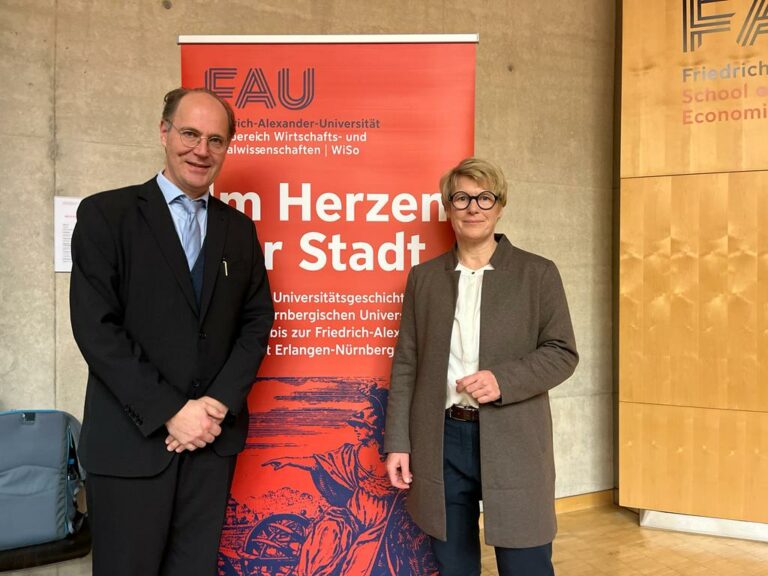
Prof. Dr. Veronika Grimm is a leading economist at Friedrich-Alexander-Universität Erlangen-Nürnberg and serves as the spokeswoman for FAU Solar. She has been elected to the DFG review board and actively contributes to energy policy discourse through her research and public reports, including presentations on Germany's Annual Report by the Council of Economic Experts. School: School of Business and Economics Academic Rank: Professor Key Research Areas: Energy economics, climate policy, market design, and renewable energy systems Her work focuses on the economic implications of energy transitions, including hydrogen markets, coal phase-outs, and electricity market reforms. She employs advanced mathematical modeling to analyze multilevel market structures and policy interventions. Recent publications highlight her expertise in: European energy market dynamics Net-zero policy frameworks Hydrogen technology funding mechanisms Global green energy trade Behavioral economics in public policy contexts Scientific Contributions: DFG Review Board Election (2024) Key participant in EU energy policy evaluations Regular advisor on climate-economic synergies
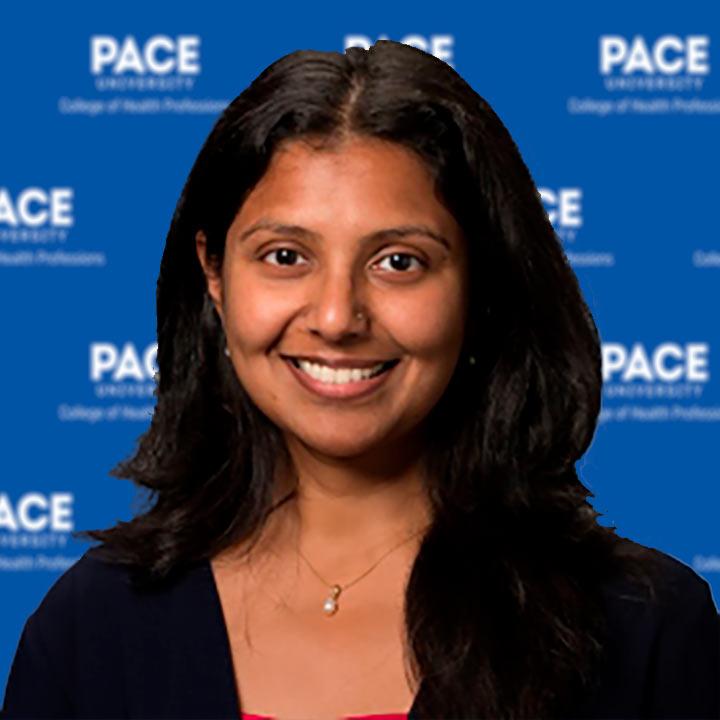
Sethu Karthikeyan is an Associate Professor in the Department of Communication Sciences and Disorders at the College of Health Professions, Pace University, where he has been a faculty member since 2013. He holds a PhD in Speech-Language-Hearing Sciences from The Graduate Center, City University of New York. His academic roles are deeply integrated with interdisciplinary research at the intersection of evolutionary psychology, speech science, and sociolinguistics. PhD, Speech-Language-Hearing Sciences, The Graduate School and University Center, The City University of New York, 2012 MS, Speech and Hearing, All India Institute of Speech and Hearing, Mysore, India, 2003 BS, Speech and Hearing, Dr. MV Shetty College of Speech and Hearing, Mangalore, India, 2001 Dr. Karthikeyan's research focuses on evolutionary behavioral sciences, particularly the human capacity for spoken language, social evaluations based on speech, vocal-verbal flexibility, and cultural diversity. He investigates how voice pitch, articulation, and dialect influence perceptions of attractiveness, status, and empathy, often using an evolutionary psychology framework. His work bridges speech science and sociocultural factors, with collaborations involving the Evolutionary Psychology Lab at SUNY New Paltz and the Behavioral Endocrinology and Evolution Lab at Penn State. His recent publications, including in Scientific Reports and Evolutionary Behavioral Sciences , reveal a strong trend toward understanding human mating behaviors, sound symbolism (e.g., Bouba-Kiki effect), and cross-cultural communication. The articles collectively emphasize experimental and evolutionary approaches to language and social perception, often incorporating cross-modal and cross-cultural data. Dr. Karthikeyan has received several honors, including the College of Health Professions Dean's Scholarship Award (2023), the Martin Gitterman Excellence in Teaching Award (2010), and the Moe and Hannah Bergman Award (2009). He has advised multiple student researchers and secured numerous grants, such as the Dean’s Summer Research Grant (2024), SRC awards, and the Kenan Grant for conference presentations (2014–2024). He is also actively involved in university governance, serving on committees including the Allied Health Search Committee and the Scholarly Research Committee. Dr. Karthikeyan is an Editorial Board member of Scientific Reports (Human Behaviour) and a member of professional organizations such as the International Society for Human Ethology and the American Speech-Language-Hearing Association. He teaches courses such as Evolutionary Psychology, The Science of Speech Sounds, and Research in Communication Science Disorders, reflecting his broad expertise and integrative approach to behavioral and communication sciences.
Margarita Cecilia Torres Sevilla is a historian, medievalist researcher, professor, and politician affiliated with the University of León. She holds the academic rank of Professor in the Department of History at the Faculty of Philosophy and Letters. Her research focuses on Medieval History, particularly genealogy, heraldry, and nobiliary studies in the Kingdom of León and Castile (9th-13th centuries). She is renowned for her controversial 2014 book Los Reyes del Grial , which posited the Chalice of Doña Urraca as the Holy Grail based on Arabic documents. Doctorate: University of León (1997), thesis on noble lineages in the Kingdom of León Academic Affiliations: Member of the Hispano-Belgian Academy of History, Melitense Academy of the Sovereign Order of Malta, and Royal Matritense Academy of Genealogy and Heraldry Her research spans medieval kinship structures, power dynamics, and cultural memory. Articles in her profile reflect interdisciplinary work in information security (2018) and higher education policy, though her core expertise remains medieval Iberian studies. She has supervised no publicized students. Primer Premio para Jóvenes Medievalistas (1999) Primer Premio Nacional de Genealogía, Heráldica y Nobiliaria (2000) Premio “Florianne de Koskull” (2003) She served as Councilor for Culture, Heritage, and Tourism in León City Council (2015-2019) but resigned her role as official chronicler of León in 2015 due to incompatibility with her political office.
Emanuel Vahid Towfigh is a Professor of Public Law, Empirical Legal Research and Law & Economics at EBS University of Business and Law in Germany. He holds the Chair in Public Law at EBS Law School and is Professor of Law & Economics at EBS Business School. Since October 2024, he serves as a Max Planck Fellow at the Max Planck Institute for Comparative Public Law and International Law in Heidelberg, where he heads the Center for Diversity in Law funded by Stiftung Mercator. He is also Director of the BRYTER Center for Digitalization & Law and supports the EBS Diversity & Refugee Law Clinic. Additionally, he is a Distinguished Scholar in Residence at Peking University's School of Transnational Law and a Research Affiliate at the Max Planck Institute for Research on Collective Goods. Having earned his doctorate from the University of Münster in 2005 with a thesis on religious communities (focusing on the Bahá'í faith), Towfigh completed his habilitation at the same university in 2014 with his work 'The Party Paradox.' His academic journey includes research positions at the Max Planck Institute for Research on Collective Goods (2007-2016), a Global Fellowship at NYU School of Law (2011/12), and a Visiting Professorship at the University of Virginia School of Law (2012/13). He served as Dean of EBS Law School from 2018 to 2020 and has been Vice Dean for Research since 2023. Towfigh's research spans interdisciplinary governance, combining interests in public and constitutional law, democracy theory, religious constitutional law, party law, municipal law, European law, and corporate law. His work employs doctrinal, comparative, economic, and empirical methodologies. His recent publications reflect a strong focus on diversity in law, algorithmic decision-making systems, digitalization's impact on legal frameworks, and the intersection of constitutional principles with contemporary social challenges. The trend in his scholarship shows increasing attention to how legal systems can accommodate diversity while maintaining constitutional principles, with growing emphasis on digital governance and algorithmic fairness. 2005 Dissertation Prize by the University of Münster 2015 Prize for the Promotion of Young Academics by the University Society of Münster Member of Young Academy at Brandenburg Academy of Sciences and Leopoldina (2011-2016) As Co-Editor in Chief of the German Law Journal since 2016 (previously Editor since 2011), Towfigh has significantly shaped scholarly discourse in comparative constitutional law. His leadership extends to directing the BRYTER Center for Digitalization & Law, which focuses on legal education in the digital age and the intersection of law and technology. He also heads the Center for Diversity in Law, examining how legal systems can better address diversity perspectives. Towfigh serves on the supervisory board of Freudenberg SE and as a member of the National Spiritual Assembly of the Bahá'í Community in Germany. His professional memberships include the Vereinigung der Deutschen Staatsrechtslehrer, International Society of Public Law (ICON•S), and Society for Empirical Legal Studies. Through the BRYTER Center, Towfigh has pioneered innovative teaching approaches including 'Legal Engineering' courses and workshops on legal tech automation. His 'Smartbook Fundamental Rights' integrates 67 learning videos with traditional legal education. The Center for Diversity in Law under his direction examines diversity perspectives in legal research, law as an instrument for managing human diversity, and legal pluralism.
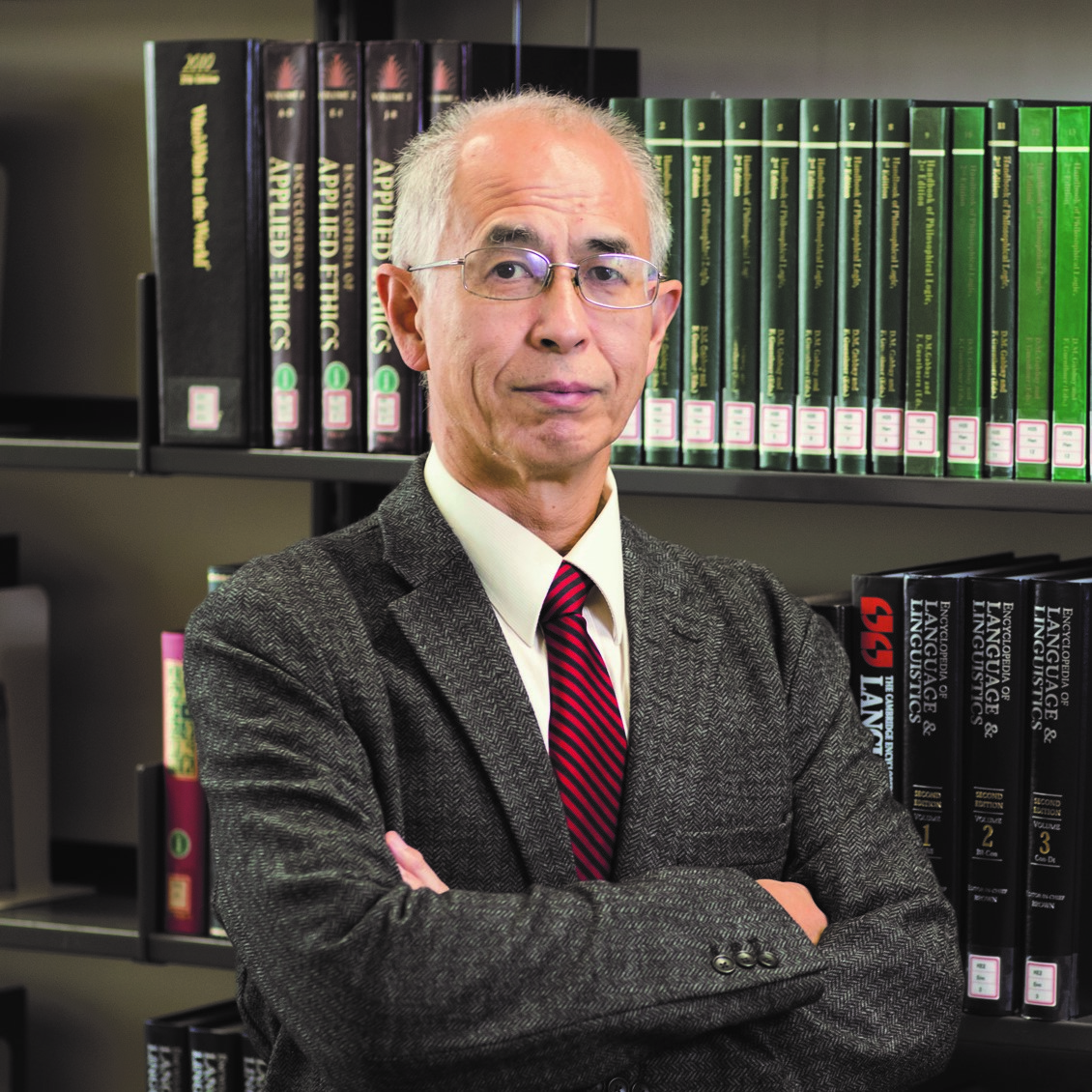
Ken Satoh is a full Professor at the National Institute of Informatics (NII) and Sokendai (The Graduate University of Advanced Studies), Japan. He leads the Center for Juris-Informatics within the Joint Support-Center for Data Science Research (ROIS-DS). Previously, he worked at Fujitsu (1981-1995) and was an Associate Professor at Hokkaido University until 2001. He holds a law degree from the University of Tokyo (2006-2009) and passed the Japanese bar exam in 2017. Roles: Director of Center for Juris-Informatics, Principal Investigator in multiple AI/Law projects Research Focus: Juris-informatics (merging informatics and law), logical foundations of AI, legal debugging, and compliance mechanisms for AI systems His work bridges AI and legal systems, including developing the PROLEG framework for legal reasoning and organizing international workshops like JURISIN. Key contributions include applying logical inference to detect legal conflicts in algorithmic governance systems and advancing AI ethics through compliance checks with regulations like GDPR. He has authored over 130 publications, including works on legal norm reasoning, multi-agent systems, and formal methods in law. His research group collaborates globally, hosting competitions like COLIEE to advance legal AI technologies.
Popescu-Belis Andrei serves as an Associate Professor at the University of Applied Sciences and Arts Western Switzerland (HES-SO), specifically within the Institute of Information and Communication Technologies (IICT) at HEIG-VD campus in Yverdon-les-Bains. His academic work spans teaching computer science fundamentals and advanced natural language processing concepts across both undergraduate and graduate programs. His research interests focus on Natural Language Processing , Machine Translation , and Human-Machine Dialogue systems, with particular emphasis on low-resource language scenarios. His work addresses challenges in speech-to-speech translation, subword tokenization, neural machine translation optimization, and creative applications like poem generation. Recent publications through 2025 demonstrate his ongoing contributions to the field, particularly in multilingual NMT training schedules and low-resource language processing pipelines. Analysis of his 15 most recent publications reveals consistent focus on practical solutions for language barriers, with increasing attention to reinforcement learning applications and creative language generation. His work on GPoeT demonstrates the intersection of traditional literary forms with modern language models, while his research on low-resource translation pipelines addresses real-world community interpreting needs. He has led significant research projects including Digital Lyric (2019-2020), a collaboration with UNIL (University of Lausanne) to develop systems for aiding poem generation for a public exhibition at Morges Castle. This project demonstrates his interdisciplinary approach bridging computational linguistics with creative applications. His academic contributions include: Development of specialized training pipelines for low-resource neural machine translation Innovative approaches to speech-to-speech translation for community interpreting Novel methods for constrained language model applications in creative writing Significant contributions to understanding subword tokenization mechanics Popescu-Belis maintains active research collaborations across institutions, as evidenced by his work with UNIL and various international conference publications. His teaching portfolio includes courses in natural language processing, data preparation, unsupervised machine learning, and computer science fundamentals, demonstrating his commitment to both theoretical and practical aspects of the field.
Nguyen Phong Hoang is an Assistant Professor in the Department of Computer Science at the University of British Columbia (UBC), affiliated with the Systopia Lab and Security and Privacy Group. His research focuses on network security, online privacy, and Internet measurement, with particular emphasis on improving networked system security and reinforcing privacy through large-scale data collection. He has pioneered projects like GFWeb and GFWatch to measure China’s Great Firewall and other censorship mechanisms. Prior to UBC, he was a Postdoctoral Scholar at the University of Chicago under Prof. Nick Feamster, and completed his PhD at Stony Brook University under Prof. Michalis Polychronakis. His work has been supported by the OTF’s Information Controls Fellowship, enabling collaborations with groups like the Citizen Lab (U of Toronto) and UMass Amherst. He currently teaches courses on computer networking and network security at UBC. Research interests include DNS censorship detection, domain name encryption protocols (e.g., DNS-over-HTTPS), and methods to evade Internet censorship. His publications analyze global network interference, connection tampering, and the impact of encryption protocols on censorship resistance. He has developed tools like GFWeb’s interactive dashboard for longitudinal censorship monitoring and contributed to improving I2P (Invisible Internet Project) resilience against surveillance. Phong has also served on program committees for major conferences including IEEE S&P, USENIX Security, and IMC. Phong’s academic journey includes time at Kyoto University and JAIST in Japan, where he explored location privacy in dating apps and network anonymity. His interdisciplinary approach bridges technical cybersecurity solutions with policy implications, contributing to both academic discourse and public understanding of Internet freedom challenges.
Prof. Dr. Matthias Althoff is an Associate Professor of Cyber-Physical Systems at the Technical University of Munich (TUM), leading the Chair of Cyber-Physical Systems within the TUM School of Computation, Information and Technology. His research focuses on formal safety verification, model-based design, and reachability analysis for systems such as autonomous vehicles, robotics, and power grids. Education: He earned his diploma in Mechatronics and Information Technology (2005) and PhD (2010, summa cum laude) from TUM. He held postdoctoral positions at Carnegie Mellon University (2010–2012) and served as a junior professor at TU Ilmenau (2012–2013) before joining TUM as a full professor in 2013, becoming an associate professor in 2019. Research Interests: His work spans cyber-physical systems, formal methods for safety assurance, autonomous vehicles, modular robotics, and smart grid control. He develops tools like CommonRoad and CORA for scenario-based testing and reachability analysis. Awards: He has received the IEEE/ACM William J. McCalla ICCAD Best Paper Award (2012) and the Best Poster Award at the IEEE Intelligent Vehicles Symposium (2009). Labs/Projects: Leads the Cyber-Physical Systems group, collaborating on projects such as the Scenario Factory for automated vehicle testing and CommonPower for safe smart grid control. He also co-founded startups RobCo and aiina .
Nabil Al-Najjar is the John L. and Helen Kellogg Professor of Managerial Economics & Decision Sciences at Northwestern University's Kellogg School of Management. He holds a PhD in Economics from the University of Minnesota (1989), preceded by an MA from the University of Ottawa (1982) and a BA from Al-Mustansiriah University (1979). Prior to joining Kellogg in 1995, he taught at the University of Quebec in Montreal. His research focuses on decision theory, game theory, and learning-based models in markets and contracts. Notable contributions include frameworks for uncertainty modeling, aggregate risk analysis, and recursive utility theory. He has published in top journals such as the Journal of Economic Theory, Econometrica, and the American Economic Review. Award-winning educator, Al-Najjar twice received the Sidney J. Levy Teaching Award (1996-97, 2006-07) for excellence in microeconomics and competitive strategy instruction. He also holds editorial roles at the International Journal of Game Theory and Journal of Mathematical Economics. His work bridges theoretical economics with practical applications, addressing issues like market fundamentals, contractual complexity, and policy design under uncertainty. Over 49 peer-reviewed publications and 12 case studies reflect his interdisciplinary impact across economic theory and applied fields.