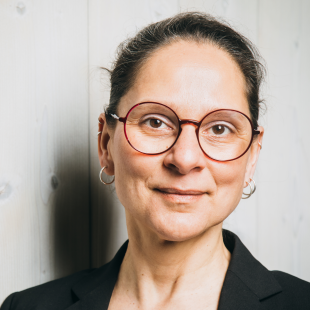
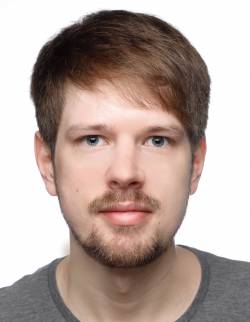
Dennis McLeod is a Professor at the University of Southern California , specializing in Database Systems , Ontology Engineering , and Semantic Heterogeneity resolution. His work bridges Federated Database Systems and Web Engineering , focusing on component-based architectures, adaptive ontologies, and geospatial data processing. Key Research Areas : Semantic heterogeneity, ontology-driven data mining, mobile web information management, and distributed systems. Collaborations : Extensive partnerships with researchers like Qing Li , Cyrus Shahabi , and Stefania Leone across institutions. Publications (2014-1995) span topics from component-based web engineering to distributed earthquake science , with recent work on geostreaming, social network tag-geotag analysis, and spam filtering using ontologies. His contributions include frameworks for multi-resolution document transmission , object-oriented database sharing , and adaptive query optimization in federated systems. Scientific Impact : Co-chairs and tutorials at major conferences (VLDB, CoopIS, ICDE). Co-edited proceedings for ICWL 2008 and contributed to Expert Database Systems (1989-1991). Pioneered INTERBASE for controlled sharing in federated databases (1990).
Dr. Tobias Strauß is a Lecturer at the Institute of Mathematics, Faculty of Mathematics and Natural Sciences, University of Rostock. He teaches courses such as Elementary Algebra and Number Theory and Analytical Geometry, focusing on foundational mathematical concepts and their applications. His research interests span historical document analysis, machine learning, and neural networks, with a particular emphasis on handwritten text recognition (HTR) and computational solutions for cultural heritage digitization. He actively contributes to the Mathematics Society RHO eV, supporting students in mathematics competitions and enrichment programs. Dr. Strauß’s research combines computer vision and machine learning to address challenges in document analysis, including text line detection, cursive script recognition, and keyword search in historical manuscripts. His work also explores semi-supervised learning techniques and neural network architectures tailored for HTR tasks. Through RHO eV, he promotes mathematics education through weekend seminars, district clubs, and game-based learning activities, fostering student engagement and problem-solving skills. His publications highlight advancements in HTR systems, such as the CITlab Recognition & Retrieval Engine, and address topics like regular expression-based decoding and Arabic handwriting recognition. These contributions underscore his expertise in bridging theoretical mathematics with practical applications in digital humanities and education. Dr. Strauß can be contacted via tobias.strauss@uni-rostock.de or through the university’s chat platform. No formal awards or grants are noted in the provided materials, though his involvement in international competitions (e.g., ICFHR, ICDAR) reflects his scholarly engagement.
Prof. Martin Matzner is a Full Professor at Friedrich-Alexander University Erlangen-Nuremberg, leading the Department of Digital Industrial Service Systems. Previously, he held positions as Research Assistant and Academic Rat at the University of Münster. His expertise spans Business Process Management, Service Systems, and Cyber-Physical Systems, with notable contributions to peer-to-peer charging infrastructure and collaborative consumption platforms. He completed a Habilitation (2016) and PhD (2012) in political science and business informatics. Education: Habilitation in Business Informatics (2016), PhD in Political Science (2012), Diplom in Business Informatics (2007) from University of Münster, with studies at Turku School of Economics (2005). Research focuses on digital service innovation, including projects like CrowdStrom (P2P electric vehicle charging) and smartmarket² (location-based retail solutions). Awards include the Best Prototype Award (2017) and Emerald Citations of Excellence (2015). Advised students include Christian Rest (2015 Master’s thesis on sharing platforms). Key projects include FOKUS:SE (service engineering network), RISE_BPM (EU-funded BPM innovation), and federal initiatives in e-Government (FIM project). Active in international collaborations with Brazil and Russia.
Hongbo Liu is a researcher at Indiana University - Purdue University Indianapolis , Department of Computer Information and Graphics. With a focus on Artificial Intelligence, Machine Learning, and Network Analysis , Liu has contributed extensively to computational intelligence through 118+ publications since 2004. Multi-disciplinary research spanning Graph Theory, Swarm Intelligence, and Deep Learning Recent work includes Robust Gated Models for Temporal Networks and Self-Adaptive Neuroevolution Systems (2024-2025) Key research themes include: Dynamic network analysis and link prediction Crowd behavior modeling and trajectory forecasting Swarm-based optimization for complex systems Fuzzy logic and granular computing applications Neural network architectures for image and text processing Liu's publications demonstrate strong collaborations with researchers like Ajith Abraham, Yu Yang, and Bo Zhang across 15+ academic journals and conferences . The work spans from theoretical graph algorithms (2015-2017) to applied systems in autonomous robotics and blockchain (2024).
Prof. Dr. Boris Koldehofe is a Full Professor of Distributed and Operating Systems at the Technical University of Ilmenau, Germany since 2023. Previously, he held Full Professor of Computer Networks at the University of Groningen (2020–2023) and served as a Senior Researcher/Lecturer at Technical University of Darmstadt (2014–2020). He is also an Adjunct Professor at TU Darmstadt since 2020. Research Focus: Distributed Systems, Software-defined Networking, Complex Event Processing (CEP), Fog Computing, Privacy Engineering Education: Habilitation in Communications and Distributed Systems (2019), PhD in Computer Science (2005) Research Trends : His 2024–2023 publications emphasize analog/memristor-based network computing , privacy-preserving CEP , and time-sensitive networking . Key themes include programmable data planes , AI-driven infrastructure , and energy-efficient systems . Recent work explores federated learning in vehicular networks and privacy engineering for IoT analytics . Projects & Leadership : He leads the DFG CRC 1053 MAKI (2014–2024) and the Parrot: Privacy Engineering for IoT project (2021–). He serves as principal investigator for dynamic Industry 4.0 communication networks and has managed collaborations with institutions like EPFL, University of Stuttgart, and University of Heidelberg.
Dr. Olga Kellert serves as a Lecturer in the Department of Romance Philology within the Faculty of Humanities at the University of Göttingen, where she conducts interdisciplinary research at the intersection of sociolinguistics, computational linguistics, and historical Romance linguistics. Her work bridges traditional linguistic analysis with cutting-edge digital methodologies, particularly focusing on language variation in social media contexts and diachronic syntactic change. Her research encompasses three primary domains: (1) Sociolinguistic analysis of code-switching and language variation using geolocated social media data, particularly examining Spanish-French interactions in Quebec and Spanish-Italian dynamics in South America; (2) Computational approaches to sentiment analysis and linguistic modeling, with emphasis on syntax-aware NLP systems; (3) Historical evolution of quantificational structures in Romance languages, especially indefinites and free choice items across Old and Modern Italian, Spanish, and Catalan. Current projects include the sociocomputational assessment of belief states among vulnerable indigenous groups in Latin American crises (funded through international collaboration with Mexico, Ecuador, Peru, and Austria) and geospatial analysis of urban linguistic variation using Twitter data. Her publication trajectory reveals a strategic evolution from foundational work in Romance syntax and prosody toward increasingly computational methodologies, with recent publications heavily featuring NLP applications, geotagged linguistic analysis, and interdisciplinary crisis communication research. This shift reflects broader trends in digital humanities while maintaining deep roots in Romance linguistic theory. Habilitation Completion Grant from the Faculty of Humanities, University of Göttingen Dr. Kellert actively supervises student project work on language mixing in social media contexts and collaborates extensively through the University of Göttingen's CRC 'Textstrukturen' research center. Her grant portfolio demonstrates significant international collaboration, particularly with Latin American institutions on crisis communication projects and European partners on historical linguistics initiatives. Current funding includes DFG support for 'Quantification in Old Italian' and international partnerships for sociolinguistic crisis response research. Her research operates within the Collaborative Research Center 'Textstrukturen' at the University of Göttingen, where she contributes to interdisciplinary teams combining linguistic theory, computational methods, and sociocultural analysis. Recent projects involve cross-institutional teams spanning Mexico, Ecuador, Peru, Austria, France, and Italy, with particular emphasis on community-engaged research with indigenous populations in Latin America.
Prof. Dr. Martin Middendorf is a faculty member at the Department of Computer Science , Faculty of Mathematics and Computer Science , Leipzig University , Germany. He leads the Swarm Intelligence and Complex Systems Group and focuses on interdisciplinary research at the intersection of computational methods and biological systems. Fields of Interest Swarm Intelligence Bioinformatics Genome Rearrangement Analysis Combinatorial Optimization Evolutionary Algorithms Task Allocation in Multi-Agent Systems His recent research emphasizes mitochondrial genome annotation , predator-prey dynamics in swarm systems , and metaheuristic algorithms for dynamic optimization . Key trends include de-Bruijn graph applications , pheromone-dependent movement modeling , and automated behavior tracking in social insects . Supervised Students Dr. Nicolas Wieseke Dr. Hoang Thanh Le Dr. Fatma Turna Tobias Jagla Carsten Seemann Prof. Middendorf's group develops tools like DeGeCI 1.1 for mitochondrial gene annotation and explores swarm-controlled emergence in ant clustering systems. They apply swarm intelligence principles to solve real-world problems in vehicle routing , sewer network design , and biomedical signal processing .
Mario Marchese is a Professor at the Department of Electrical, Electronic, Telecommunications Engineering and Naval Architecture (DITEN) at the University of Genoa, Italy. His research spans satellite communications, space networks, IoT, and cybersecurity, with extensive publications in top IEEE journals and conferences. He collaborates frequently with researchers including Fabio Patrone, Franco Davoli, and Igor Bisio on cutting-edge networking technologies. Professor Marchese's research focuses on the integration of satellite networks with terrestrial systems, particularly for 5G and beyond. His work addresses critical challenges in non-terrestrial networks, edge computing in space environments, and cybersecurity for critical infrastructure. Recent projects include developing frameworks for secure energy communities, anomaly detection in industrial control systems, and advanced satellite handover mechanisms using AI techniques. His research bridges theoretical networking concepts with practical implementations for real-world applications. Analysis of his recent publications (2023-2025) reveals a strong trend toward integrating AI with satellite and space networks, particularly focusing on cybersecurity applications for smart grids and industrial systems. His work increasingly incorporates deep learning for satellite resource management and employs software-defined approaches for network security. The research spans theoretical frameworks, practical implementations, and dataset creation for security testing in emerging network environments. Professor Marchese has made significant contributions through numerous publications in prestigious venues including IEEE Access, IEEE Transactions on Aerospace and Electronic Systems, and IEEE Globecom. His collaborative work extends across multiple European research projects focused on next-generation networking technologies. He actively mentors students and researchers, with his work forming the foundation for several PhD theses and research projects at the University of Genoa. His laboratory focuses on experimental validation of networking concepts using software-defined radio platforms and advanced simulation environments for space networking scenarios. Current research directions include federated learning applications for space networks and secure integration of satellite systems with terrestrial 5G infrastructure.
Yu-Fang Chen is a research professor at Academia Sinica, Taiwan, active across premier programming-languages venues such as PLDI, POPL, OOPSLA, SAS, APLAS and VMCAI. His work sits at the intersection of program verification , automata theory and constraint solving , with recent emphasis on quantum-circuit verification and string-number constraint solving . Research interests revolve around rigorous methods to ensure software reliability: developing novel automata models (level-synchronized tree automata, position-constrained string automata), building practical solvers that blend length, substring and numeric constraints, and extending automated reasoning to the quantum domain. His papers consistently introduce new decision procedures, learning algorithms and tool-chains that improve the scalability of static analysis and formal verification. Between 2017 and 2025 he (co-)authored more than a dozen peer-reviewed papers and served on over thirty program committees, including steering and organization chair roles for VMCAI 2026 and SAS 2023 . No doctoral students or funded-grant details are disclosed in the supplied sources.
Prof. Dr.-Ing. Anni-Yasmin Turhan is a faculty member at Paderborn University , affiliated with the Faculty of Computer Science, Electrical Engineering and Mathematics and the Department of Computer Science . She leads the Knowledge Representation group. Research: Focuses on logic-based systems, Description Logics (DLs), nonmonotonic reasoning, robust query answering over DL knowledge bases, and symbolic learning of concepts/queries. Teaching: Offers courses on theoretical computer science (bachelor) and foundational logics for knowledge representation (master), including DLs and nonmonotonic reasoning. Contact: Email: turhan@uni-paderborn.de , Phone: +49 5251 60-6341, Office: Room F2.101, Fürstenallee 11, 33102 Paderborn. Research Trends: Recent publications emphasize symbolic learning in DLs, inconsistency-tolerant querying, temporal knowledge bases, and robust reasoning frameworks. Collaborative work includes co-authored studies with R. Peñaloza, O.F. Gil, F. Patrizi, and G. Perelli.
Niels Seidel is a computer scientist and researcher at FernUniversität in Hagen, where he serves as the Lead of project APLE II at the CATALPA research center and as an alternate/deputy member of the CATALPA executive board. He works within the Faculty of Mathematics and Computer Science, focusing on the development of adaptive personalized learning environments for higher education. His work bridges computer science and educational technology, with particular emphasis on supporting self-regulated learning, reading comprehension, and assessment activities across diverse student populations. Seidel's research interests span multiple interconnected domains in educational technology. His primary focus is on Adaptive Learning Environments , where he designs, develops, and evaluates systems that support learners in self-regulated learning, reading, and assessment. His work in Learning Analytics involves analyzing and visualizing learning behavior at individual, group, and organizational levels while accounting for learner diversity. He has made significant contributions to Video-Based Learning , examining how video content can be structured and presented to optimize learning outcomes. His research increasingly incorporates Artificial Intelligence to create more responsive and personalized educational experiences, as evidenced by his recent work on generative AI applications for evaluating self-regulated learning skills. His publication record shows a clear trajectory toward increasingly sophisticated adaptive learning systems. Early work focused on foundational aspects of video-based learning and interaction design patterns, while recent publications demonstrate sophisticated integration of AI, learning analytics, and adaptive techniques. His research consistently addresses practical challenges in distance education while contributing to theoretical frameworks in educational technology. The 2024-2025 publications reveal particular emphasis on self-regulated learning assessment, reading comprehension support, and the application of generative AI in educational contexts. As an academic advisor, Seidel has supervised numerous bachelor's, master's, and diploma theses since 2018, mentoring students working on diverse projects related to educational technology. His current leadership roles include serving as spokesman for the Working Group Learning Analytics within the SIG Educational Technology of the German Informatics Society since 2021. He has secured funding for multiple projects, including the Google.org-funded Theresienstadt explained project and the BMBF-funded Life Long Learning Open Operating Platform (L³OOP). Seidel leads the APLE II project at CATALPA research center, which aims to develop domain-independent adaptive personalized learning environments for higher education. His work leverages the research infrastructure at FernUniversität in Hagen, particularly the Moodle-based learning management system, to implement and test innovative educational technologies with large student cohorts in real-world settings.
Fabian Ostermann is a researcher at the Chair 11: ALGORITHM ENGINEERING within the Department of Computer Science at Technical University of Dortmund. His work focuses on the intersection of artificial intelligence and music technology, with particular expertise in algorithmic composition and evolutionary approaches to music generation. His primary research interests include: Artificial Intelligence for Music Applications Computer Music and Algorithmic Composition Reinforcement Learning and Evolutionary Algorithms Neuroevolution and Procedural Content Generation Music Information Retrieval Systems Ostermann's research output demonstrates a strong focus on applying AI techniques to music creation and analysis. His recent work explores the use of large language models in evolutionary music generation, adaptive video game music systems, and novel approaches to instrument recognition in polyphonic audio. He has developed significant resources for the research community including the AAM dataset of artificial audio multitracks, which contains 3,000 algorithmically generated music tracks with rich annotations. His scientific contributions have been recognized through invitations to serve on program committees for major conferences including EvoMUSART (2024, 2025) and IJCAI's Special Track on AI, the Arts, & Creativity. He has also contributed to journals such as Computer Music Journal and Transactions of the International Society for Music Information Retrieval. Ostermann has supervised numerous student theses on topics ranging from transformer-based music generation to evolutionary approaches for recreating vector graphics. His teaching portfolio includes courses on practical optimization, music informatics, and digital entertainment technologies across multiple semesters from WS20/21 through SS25.
Professor Gabriele Taentzer serves at Philipps University of Marburg within the Department of Mathematics and Computer Science, holding key roles as Professor of Software Engineering and Deputy Executive Director of the Marburg Center for Digital Culture and Infrastructure (MCDCI). She leads the Software Engineering research group and contributes significantly to academic governance as a member of the MArburg University Research Academy Board and the Cooperative Doctoral Platform. Her research centers on Model-Driven Software Development with specialized expertise in Model Transformation, Software Quality Assurance, and Graph Transformation systems. She investigates formal methods for ensuring model consistency, developing rule-based approaches for graph repair, and integrating data quality perspectives into software engineering processes. Her work bridges theoretical computer science with practical applications in distributed systems and mobile application development. Professor Taentzer has demonstrated exceptional leadership in the academic community through extensive committee service. She chaired the ETAPS-conference 'Fundamental Approaches to Software Engineering (FASE)' Steering Committee (2011-2021), served as General Conference Chair for STAF 2017, and held PC chair positions for major conferences including MODELS 2023 and FASE 2010. Her editorial contributions include membership on the SoSym journal editorial board and reviewing for top-tier publications like IEEE TSE and ACM Computing Surveys. Philipps-Universität Marburg Teaching Award 2020 She actively mentors students and researchers in software engineering methodologies while leading collaborative projects through the Marburg Center for Digital Culture and Infrastructure. Her research group maintains strong connections with international conferences and workshops, particularly in graph transformation and model-driven engineering domains.
Minhong Wang is a Professor at the Faculty of Education, University of Hong Kong, with additional affiliation at the University of Edinburgh's Usher Institute. With an extensive publication record spanning over two decades from 2005 to 2025, Wang has established themselves as a leading researcher in educational technology and learning sciences. Their work bridges the gap between computer science and education, developing innovative technology-enhanced learning environments that support complex skill development and knowledge construction. Wang's research interests focus on educational technology, learning analytics, computer-supported collaborative learning, and cognitive mapping approaches. Their work examines how technology can enhance problem-solving processes, support self-regulated learning, and improve educational outcomes across various contexts. Recent research has expanded into multimodal learning analytics, teacher professional development through technology, and the application of advanced computational methods to educational challenges. Wang's approach integrates theoretical frameworks with practical implementations, creating systems that transform how educators and learners interact with digital environments. Analysis of Wang's recent publications (2023-2025) reveals a strategic expansion of research scope while maintaining core educational technology focus. The work demonstrates increasing sophistication in learning analytics methodologies, with growing integration of computer vision techniques and advanced machine learning approaches. This reflects a trend toward more comprehensive multimodal analysis of learning processes, moving beyond traditional text-based interactions to incorporate visual, spatial, and behavioral data in educational contexts. The research maintains strong practical applications while advancing theoretical understanding of how technology mediates learning. Wang has collaborated extensively with researchers across multiple institutions globally, particularly in Hong Kong, mainland China, and international partners. Their work demonstrates consistent funding support through numerous research projects, though specific grant details aren't visible in the publication record. The collaborative nature of the work suggests leadership in research teams focused on developing and evaluating innovative educational technologies.
Yufei Li is a Professor at Xi'an Jiaotong University's School of Computer Science and Technology, Department of Computer Science. With an extensive publication record spanning from 2007 to 2025, Dr. Li has established himself as a prominent researcher in database systems, software engineering, and machine learning applications. His work demonstrates strong interdisciplinary connections between computer science and electrical engineering, particularly in power systems applications. Dr. Li's research interests span multiple domains of computer science and engineering. His primary focus is on database systems, where he has pioneered work in LLM-based database tuning systems like GPTuner. He also has significant contributions in software configuration and performance optimization, as evidenced by his CSAT framework. His research extends to computer vision applications for security screening and medical diagnostics, as well as electrical engineering applications in power systems and UAV control. This diverse portfolio demonstrates his ability to bridge theoretical computer science with practical engineering applications across multiple domains. Analysis of Dr. Li's recent publications (2023-2025) reveals a strong trend toward integrating large language models with traditional computer science domains. His work on GPTuner represents a significant advancement in applying LLMs to database tuning, while his research on QUITE demonstrates innovative approaches to query rewriting using LLM agents. There's also a clear pattern of applying advanced machine learning techniques to solve domain-specific problems across electrical engineering, medical diagnostics, and industrial quality control. The interdisciplinary nature of his work positions him at the forefront of AI integration across multiple engineering disciplines. Dr. Li has established a productive research group with numerous doctoral students and collaborators, particularly Jiale Lao, Yibo Wang, and Jianguo Wang who frequently appear as co-authors on his recent publications. His research has been consistently funded, as evidenced by the steady stream of publications across multiple high-impact venues including IEEE Access, Journal of Systems and Software, and CVPR. His work demonstrates strong industry relevance with applications in database management, software configuration, security screening, and power systems. Dr. Li leads a research team focused on database systems and AI integration, with strong connections to both computer science and electrical engineering domains. His group appears to specialize in applying cutting-edge machine learning techniques, particularly large language models, to solve longstanding problems in database management and software engineering. The team maintains active collaborations with researchers across multiple institutions, as evidenced by the diverse author lists on his publications.