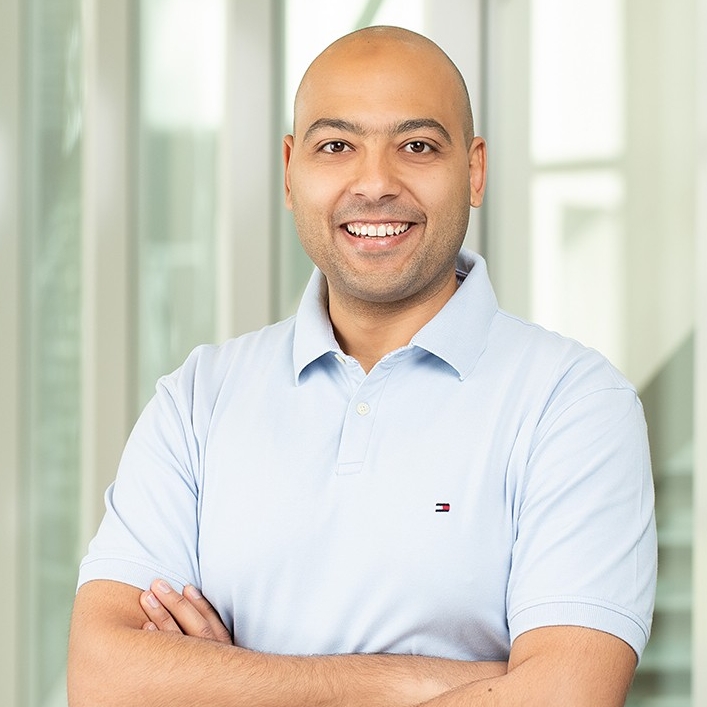
Dr. Curt von Keyserlingk is a Reader (equivalent to Associate Professor) in theoretical physics at King's College London, based in the Theory & Simulation of Condensed Matter Group within the Department of Physics, Faculty of Natural, Mathematical & Engineering Sciences. His research focuses on understanding complex quantum systems through both analytical and numerical approaches. His educational background includes an MMath from the University of Cambridge, followed by DPhil studies at the University of Oxford under Professor Steve Simon. Prior to his current position at King's, he held a postdoctoral research fellowship at the Princeton Center for Theoretical Science and was a lecturer at the University of Birmingham. Dr. von Keyserlingk's research centers on interacting quantum systems, studying exotic phenomena such as superconductivity, topological order, localization, and time crystallinity. His work bridges the gap between fundamental quantum mechanics and practical applications in quantum computing. He develops both analytical frameworks and numerical tools to understand how quantum systems evolve and behave under various conditions, with particular emphasis on non-equilibrium dynamics, quantum information processing, and topological phases of matter. His recent publications reveal a strong focus on quantum many-body systems, with particular attention to topological phases in three dimensions, operator dynamics in quantum systems, and the interplay between dissipation and quantum information. His work spans from fundamental theoretical questions about quantum thermalization to practical applications in quantum error correction and quantum computing architectures. Dr. von Keyserlingk is the recipient of a prestigious UKRI Future Leaders Fellowship, which supports his research on robust many-body quantum phenomena. His current projects include 'Robust Many-body Quantum Phenomena Through Driving And Dissipation' (2025-2028) and 'Robust many-body Quantum phenomena through Driving and Dissipation' (2022-2025). He actively supervises PhD students and runs the physics intercollegiate programme between King's College London and Royal Holloway, University of London. His research group focuses on developing new theoretical frameworks to understand quantum systems that could potentially be harnessed for quantum computing applications.