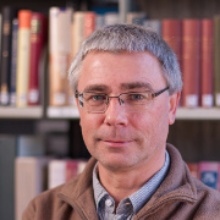
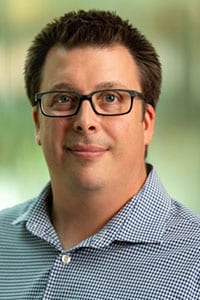
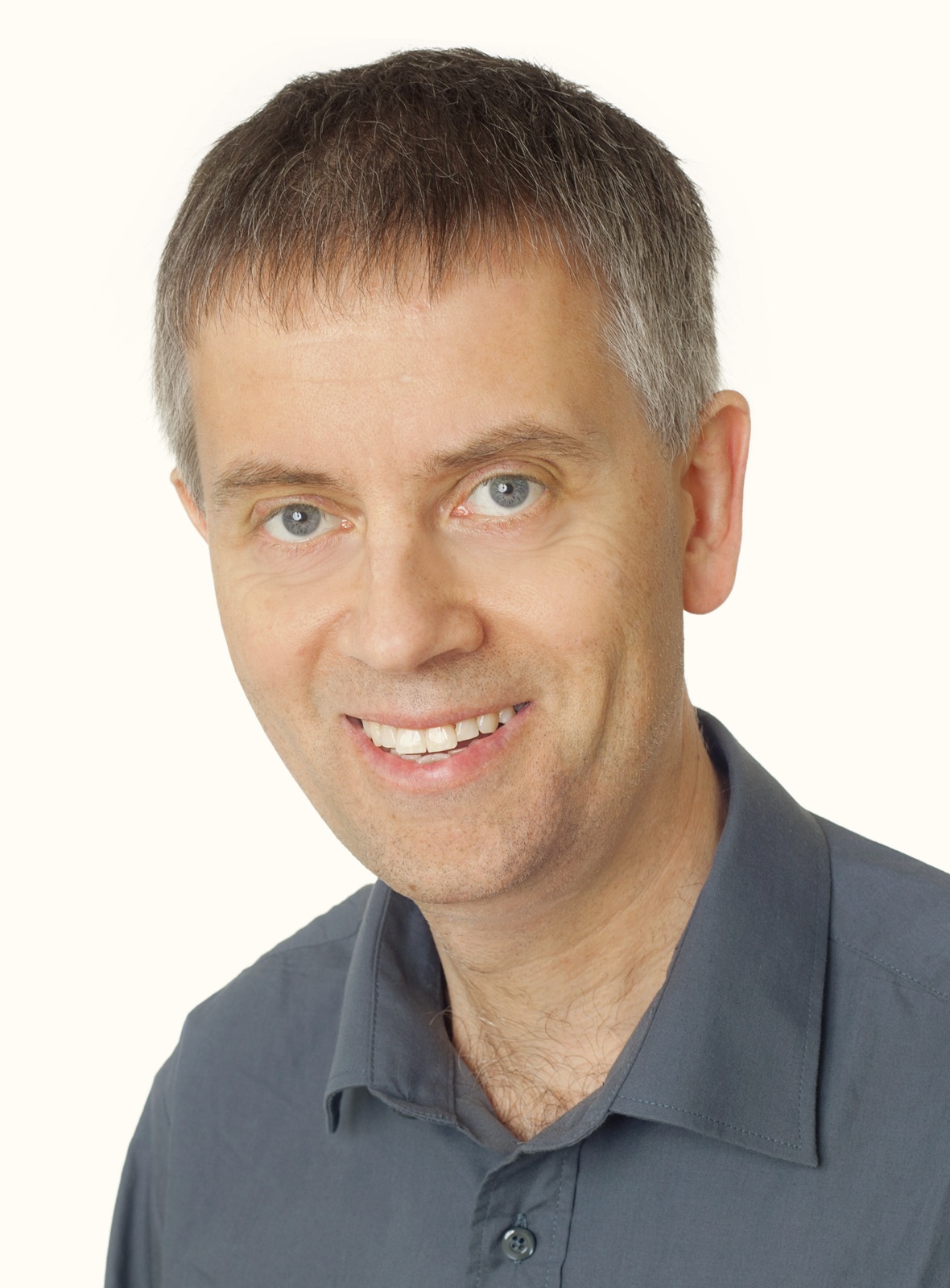
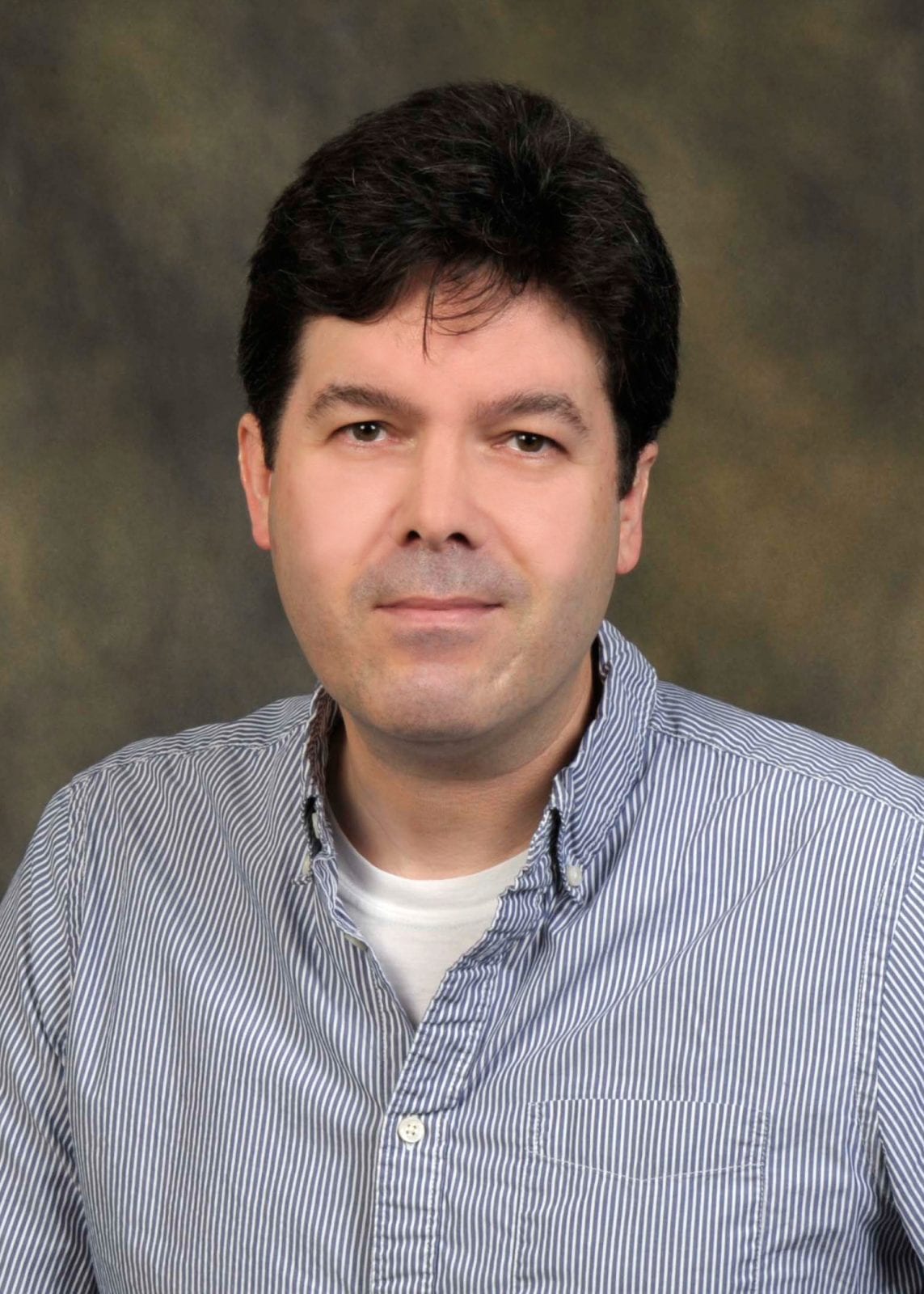
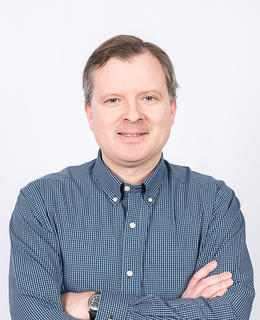
John William Mahoney serves as Academic Lead for ACU Thrive & HELTA at the Centre for Education and Innovation, Australian Catholic University (ACU), focusing on educational innovation and psychological research across academic and sporting contexts. His research spans educational psychology, sport psychology, and adolescent development, with emphasis on teacher-student dynamics, mental toughness development, psychological interventions for depression, and positive youth development in refugee/migrant populations. Methodologically, he employs systematic reviews, intervention studies, and psychometric validation. Analysis of his 14 publications (2011-2024) reveals consistent application of self-determination theory across educational and sports settings. Key trends include systematic reviews on exercise for depression (2024), mental toughness interventions in youth athletes (2014-2016), and work-integrated learning outcomes (2017), demonstrating interdisciplinary collaboration and real-world impact. Affiliated with ACU's Centre for Education and Innovation, Mahoney contributes to HELTA and ACU Thrive initiatives aimed at enhancing student employability, well-being, and educational outcomes through evidence-based psychological frameworks.
Jens von Wolfersdorf is a Professor at the University of Stuttgart's Faculty of Engineering, Department of Mechanical Engineering. His research focuses on advanced thermal management systems for high-speed aerospace applications, particularly in the areas of heat transfer, fluid dynamics, and combustion. He specializes in experimental and numerical methods for analyzing complex flows in rotating and stationary cooling channels, transpiration cooling for rocket engines, and turbulence modeling. His work integrates cutting-edge techniques such as thermochromic liquid crystal (TLC) measurements, particle image velocimetry (PIV), and computational fluid dynamics (CFD) to validate novel cooling configurations. Key projects include the COOREFLEX-Turbo initiative and contributions to the European ATLLAS-II program for high-speed vehicle materials. Recent studies emphasize rotational heat transfer effects in two-pass cooling channels, additive manufacturing of ribbed cooling structures, and validation of coupled FEM-CFD frameworks. His research addresses challenges in aerospace thermal protection, turbine blade cooling, and scramjet combustor efficiency. Publications span over 15 years, with a focus on transient heat transfer, flow visualization, and material characterization for transpiration-cooled systems. Collaborations involve experimental facilities for high-speed flows and advanced thermal measurement systems.
Professor Gao Min Gao is a distinguished academic at Cardiff University's School of Engineering, holding the position of Professor of Energy Materials and Head of the Thermoelectric Laboratory. With over 25 years of experience in thermoelectric research, he has established himself as a leading expert in energy conversion technologies. His career at Cardiff University spans from Research Assistant/Associate (1993-1999) to his current professorship (2016-Present), with progressive academic promotions reflecting his significant contributions to the field. BSc in Semiconductor Physics from Xidian University, China PhD in Thermoelectrics under Professor D M Rowe at Cardiff University, UK Professor Gao's research focuses on fundamental understanding of thermoelectric processes for energy harvesting applications, with key areas including thermoelectric materials and devices, solution processed solar cells (Perovskite, OPV), concentrated photovoltaic/thermoelectric systems, and magnetocaloric materials. His work has significantly advanced the field, particularly through his early contributions to Peltier module applications for waste heat recovery and the development of improved TE module theory. His current research emphasizes novel characterization techniques for thermoelectric processes and innovative concepts for full-spectrum solar energy harvesting based on hybrid PV-TE systems. His extensive publication record demonstrates consistent high-impact research output across thermoelectrics and solar energy conversion. The articles show a clear progression from fundamental thermoelectric theory to practical applications and hybrid systems, with recent work focusing on spectral splitting, advanced concentrator designs, and novel material systems like Fe11Ti3Al6 alloys. His research bridges fundamental physics with practical engineering applications, particularly in waste heat recovery and solar energy harvesting. Board Member of European Thermoelectric Society (2013-2019) Member of EPSRC Review College (2016-Present) Theme coordinator (Device Physics), UK Thermoelectric Network (2016-Present) Independent expert for EC H2020 Programme (2014-2016) Professor Gao has supervised numerous PhD students, with current projects spanning laser micro-spectroscopy, next-generation photovoltaics, graphene/ceramic composites, and full-spectrum solar energy harvesting. His externally funded research includes significant projects such as the EU-RFCS-funded 'Development of innovative TEG systems optimized for energy harvesting from EAF off-gas cooling water' (2020-2024) and the EPSRC SUPERGEN project on 'Environmental impact of perovskite solar cell' (2019). His Thermoelectric Laboratory at Cardiff University serves as a hub for cutting-edge research in energy materials and conversion technologies.
Dr. Cem Demir is a Lecturer in the Department of Civil Engineering at Istanbul Technical University (ITU), specializing in Structural Engineering with a focus on earthquake engineering, reinforced concrete structures, and historical building restoration. He holds a PhD in Structural Engineering from ITU (2004) and has extensive experience in seismic assessment, retrofitting, and failure analysis of existing buildings. His research emphasizes sustainable structural solutions, including the use of FRP composites and novel mortars for enhancing seismic resilience. He has contributed to major projects like the Istanbul Building Stock Seismic Risk Assessment and post-earthquake analyses of recent Turkish earthquakes (e.g., 2023 Kahramanmaraş). His work bridges historical preservation and modern seismic safety, with notable studies on structures like the 13th-century Divrigi Hospital and Hirka-i Serif Mosque. Education: PhD (Structural Engineering, ITU, 2004); Master's (Structural Engineering, ITU, 2001); Bachelor's (Civil Engineering, ITU, 1997). Research Interests: Seismic retrofitting of sub-standard RC columns, masonry structures, historical monuments, and cost-benefit analyses for urban resilience. His studies integrate experimental testing (e.g., full-scale building tests) with computational modeling to improve structural performance under seismic loads. Recent Work: Focus on sustainable materials (e.g., glass fiber-reinforced mortar), rapid assessment frameworks (PERA method), and post-disaster damage evaluation. He collaborates internationally, presenting at conferences like WCEE 2024 and SMAR 2024. His contributions address critical issues like Istanbul's seismic vulnerability and post-2023 earthquake building performance.
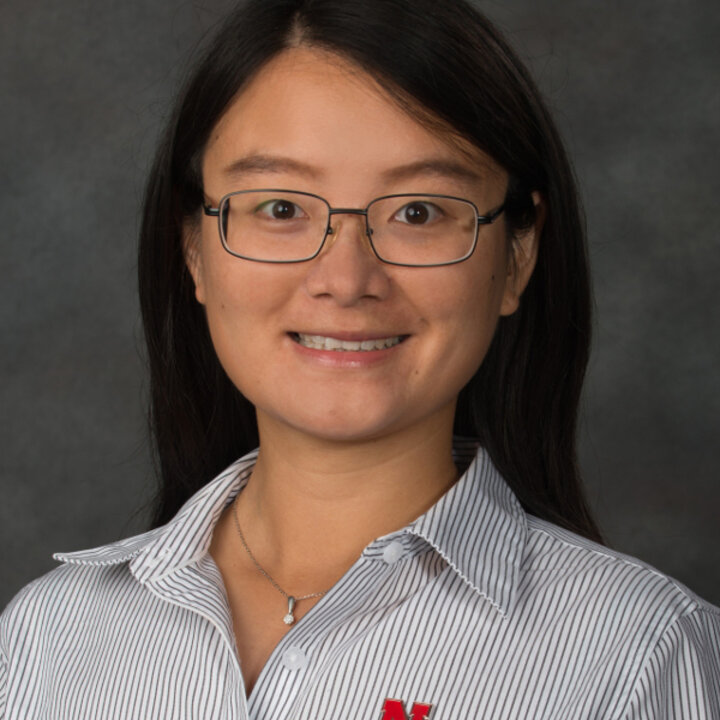
Yeyin Shi is an Associate Professor and Agricultural Intelligence Engineer at the University of Nebraska-Lincoln, Department of Biological Systems Engineering. His research focuses on applying artificial intelligence and remote sensing technologies to enhance agricultural productivity and sustainability. He teaches courses such as AGST 316: Technologies and Techniques for Digital Agriculture and AGEN/AGRO/AGST 431/892: Site-Specific Crop Management. He holds a Ph.D. in Biosystems and Agricultural Engineering from Oklahoma State University (2014), an M.S. (2010), and a B.S. in Mechanical Engineering from Nanjing Forestry University (2007). Research Interests: Agricultural data generation/analysis, remote sensing systems (satellite/UAV-based), crop stress sensing, precision crop management, and high-throughput phenotyping. His work bridges machine learning, robotics, and agronomy to address challenges in sustainable farming practices. Recent projects include maize tassel detection via deep learning, UAV-based weed detection, and nitrogen stress indices for maize using hyperspectral imagery. Awards: ASABE Outstanding Manuscript Reviewer (2015), 1st Place Postdoc Research Poster (2015), 2nd Place Student Robotic Competition (2012) Grants: Active collaborations on USDA-funded projects for precision agriculture and phenotyping Labs/Teams: Leads the Agricultural Intelligence Research Group at UNL, focusing on AI-driven agricultural solutions His research emphasizes scalable solutions through edge computing and cloud-based frameworks for irrigation scheduling and crop monitoring, aiming to optimize resource use in both row crops and livestock systems.
Nicolas Binder is a Professor and Head of the Turbomachinery and Propulsion Research Group at ISAE-SUPAERO . His research focuses on turbomachinery aerodynamics, unsteady flow analysis, and innovative propulsion systems for aerospace applications. Member of EuroTurbo executive committee ASME Member Associate Editor, Journal of Turbomachinery Research expertise in off-design operations and windmilling flows Research Interests : Aerodynamics of turbomachinery in severe off-design conditions Unsteady flow dynamics in turbines Innovative propulsion methods including magneto-hydrodynamics Flow analysis techniques for compressors and fans Recent publications (2024-2021) emphasize transient flow modeling in turbines, windmilling operation optimization, and variable geometry turbine performance. Articles span experimental validation of numerical models, shock wave interactions, and novel propulsion concepts like plasma-thrusters for drones.
Timothy Grant is an Assistant Professor of Biochemistry at the University of Wisconsin–Madison and an Investigator at the Morgridge Institute for Research , embedded within the John W. and Jeanne M. Rowe Center for Research in Virology . His laboratory, the Grant Lab , focuses on pushing the limits of cryo-electron microscopy (cryo-EM) to visualize ever-smaller and more dynamic biological macromolecules. Education & Academic Home: Faculty appointment: Assistant Professor, Department of Biochemistry, UW–Madison College of Agricultural and Life Sciences. Concurrent appointment: Morgridge Institute Investigator, Rowe Center for Research in Virology. Research Interests: The Grant group develops computational and experimental methods that extend cryo-EM into two major frontiers: size —capturing structures of very small proteins previously invisible to cryo-EM—and motion —resolving conformational changes of molecular machines in real time. These advances are integrated into the open-source software package cisTEM , which provides a user-friendly workflow for single-particle image processing. Publication Trends: Across the 15 most recent papers (2021-2025), Grant’s work spans method-centric algorithmic innovation, high-resolution structural studies of bacterial DNA replication-restart machinery, and integrative technologies that couple native mass spectrometry with cryo-EM. A clear trajectory emerges from tool development toward application in virology and antibiotic-target validation. Scientific Awards: None explicitly mentioned in the provided text. Students & Research Team: Grant currently mentors six graduate students (Colin Hemme, Gan Li, Heidy Elkhaligy, Peter Ducos, Roma Broadberry, Shashwat Shastri) and several postdoctoral researchers and staff, including Alex Duckworth, Raison Dsouza, and Tim Wagner. Laboratory & Collaborations: The Grant Lab is physically located within UW–Madison’s Biochemistry Building and leverages the Center for High-Throughput Computing shared between UW–Madison and Morgridge to perform large-scale cryo-EM data processing.
Michelle Clayton is an Associate Professor of Comparative Literature and Hispanic Studies at Brown University. She holds a BA from Oxford University and a PhD from Princeton University. Her research focuses on modern and contemporary Latin American and European literature, avant-garde aesthetics, dance, and interdisciplinary studies. Her first book, *Poetry in Pieces: César Vallejo and Lyric Modernity* (2011), explores the poet's work within a transnational modernist context. Her current book project, *Articulations: Dancing Across Modernities*, examines dance's role in 20th-century avant-garde cultural exchanges. Her teaching spans modern poetry, Latin American narrative, and interdisciplinary studies in literature, dance, and film. Clayton has received numerous awards, including the Brown Graduate School Faculty Award for Advising (2020) and the John Rowe Workman Teaching Award (2019). She serves on editorial boards for journals like *Flashpoints* and actively contributes to Latin American studies and comparative literature. Her research highlights three key areas: modernist poetry, dance as cultural practice, and Latin American narrative. Recent publications include essays on Roberto Bolaño, dance in literature, and the intersection of pre-Columbian motifs with modern performance. Clayton’s work bridges historical analysis with contemporary interdisciplinary methodologies, emphasizing transnational cultural flows and avant-garde innovation.
Jason Hsu is an Adjunct Professor of Finance at the Anderson School of Management, UCLA , where he teaches Financial Policy for Managers and Quantitative Asset Management. He is also a founder, chairman, and CIO of Rayliant Global Advisors, co-founder of Research Affiliates, and non-executive chairman of Henderson Rowe in the UK. Ph.D. in Finance (2005), UCLA Anderson School of Management M.Sc., Stanford University B.Sc. summa cum laude, California Institute of Technology His research focuses on cross-sectional equity anomalies, international finance, asset return predictability, and smart beta strategies . He has pioneered innovations in quantitative asset management , including contributions to risk parity and factor investing . His work bridges theoretical finance with practical implementation in emerging markets like China . With over 40 peer-reviewed publications, his recent articles explore topics like Chinese A-Shares, ESG investing, and quality factors . His work has been recognized with multiple CFA Institute Graham & Dodd Scroll Awards and William Sharpe Awards for excellence in indexing and quantitative finance. 2016 CFA Graham and Dodd Scroll Award 2015 & 2013 William Sharpe Awards 2013 Jacobs-Levy/Fabozzi-Bernstein Outstanding Paper Award 2012 Financial Analyst Journal Reader's Choice Award Hsu’s career spans academia, asset management innovation, and editorial leadership for journals like the Journal of Investment Management . He actively contributes to global financial discourse as a columnist for Caixin Media.
Jim Tørresen is a Professor of Computer Science at the Department of Informatics, University of Oslo, where he has been employed since 1999 (Associate Professor 1999-2005, Professor since 2006). He serves as group leader for the Robotics and Intelligent Systems (ROBIN) research group and is also a Principal Investigator at the Centre for Interdisciplinary Studies in Rhythm, Time and Motion (RITMO). His academic career includes visiting positions at Cornell University's Creative Machines Lab (2010-2011) and Kyoto University in Japan (1993-1994). His educational background includes a Dr.ing. (Ph.D.) in Computer Architecture from the Norwegian University of Science and Technology (1996) and an M.Sc. in Computer Architecture from the same institution (1991). Before his academic career, he worked in industry at Navia Aviation (1998-1999) and NERA Telecommunications (1996-1998). Tørresen's research spans artificial intelligence, robotics, and bio-inspired computing. His work focuses on biology-inspired algorithms, programmable logic (FPGA), robotics (simulation, prototyping, control), and human-robot interaction. He has made significant contributions to areas including evolutionary computing, reconfigurable hardware, and adaptive systems. His research often bridges theoretical computer science with practical applications in healthcare, music, and industrial settings. His recent publications demonstrate a strong focus on human-robot interaction, particularly in healthcare contexts for elderly care, as well as applications in sports science, musical robotics, and geological engineering. His work shows a consistent pattern of interdisciplinary research that combines machine learning techniques with domain-specific challenges. Tørresen has also authored a popular science book on artificial intelligence in the "what is" series by Universitetsforlaget, which discusses fundamental concepts, methods, future perspectives, and ethical aspects of AI. He has been active in academic leadership, serving as General Chair for the 22nd International Conference on Field Programmable Logic and Applications (FPL) in 2012 and the 9th Joint IEEE International Conference of Developmental Learning and Epigenetic Robotics in 2019. As group leader of ROBIN, he oversees research on intelligent systems that operate in dynamic environments requiring runtime adaptation. The group works at both fundamental and applied levels, using evolutionary algorithms for robot learning and machine learning techniques for classification and recognition tasks in various application domains.
Dr. Mathijs Hofmijster is an Assistant Professor affiliated with the Faculty of Behavioural and Movement Sciences, Physiology Department at Vrije Universiteit Amsterdam, as well as the Amsterdam Movement Sciences (AMS) and the Institute for Brain and Behavior Amsterdam (IBBA). His research focuses on biomechanics and physiology in sports performance, particularly in rowing and cycling. Key areas include power output measurement, neuromuscular adaptations, and training optimization. He teaches courses such as 'Moving Matters in Health' and supervises graduate research in elite athlete performance. Research Interests: Rowing biomechanics and power output analysis Neuromuscular fatigue and training adaptations Para-cycling performance and adapted physical activity Instrumentation for sports performance monitoring Recent work highlights include a 2024 scoping review on elite para-cycling performance and advancements in blade force measurement techniques (2019). His articles explore topics ranging from muscle morphology in Olympic rowers (2018) to real-time feedback systems improving training compliance (2017). He has supervised one PhD thesis and maintains active collaborations in sports science, contributing to UN Sustainable Development Goals related to health and well-being.
Felix Naumann is a Professor at the Hasso Plattner Institute in Potsdam, Germany, specializing in data management and database systems. His research focuses on data quality, data profiling, entity resolution, functional dependencies, and database optimization. He has authored over 300 publications in top-tier conferences and journals, including VLDB, SIGMOD, and ICDE. His work bridges theoretical foundations with practical systems, such as TASHEEH for data cleaning and PRISMA for privacy-preserving schema matching. He serves as an editor for the ACM Journal of Data and Information Quality and has led initiatives on hybrid conference formats and inclusive computing. Key contributions include: Data Quality: Pioneered studies on data quality's impact on machine learning and developed tools like AutoTSAD for anomaly detection. Data Dependency Discovery: Advanced functional and inclusion dependency mining algorithms, including Hitting Set Enumeration methods. Schema Matching & Integration: Created systems like BrewER and Frost for entity resolution and schema alignment. Educational Impact: Led massive open courses in data engineering with over 10,000 participants. His work emphasizes practical applications in cultural heritage data (ReCLAIM), Wikipedia table analysis, and cross-platform data systems (RHEEMix). He collaborates extensively with industry and academia, addressing challenges in dynamic datasets and data governance.
Jason Swanson is an Associate Professor in the Department of Mathematics at the University of Central Florida, specializing in stochastic processes and probability theory. His research encompasses stochastic differential equations, fractional Brownian motion, and the foundations of probability. Recent work includes developing the iterated Dirichlet process for Bayesian inference and extending representations for row-exchangeable arrays. He maintains an active research program connecting mathematical logic with probability theory. Teaching responsibilities include graduate courses in Measure and Probability (MAA 6238) and undergraduate probability (MAP 4113). His lecture notes on measure-theoretic probability are publicly available.
Kyle O'Keefe is a Professor in the Department of Geomatics Engineering at the University of Calgary's Schulich School of Engineering. He holds dual B.Sc. degrees in Geomatics Engineering (University of Calgary, 2000) and Honours Physics (University of British Columbia, 1997), and a Ph.D. in Geomatics Engineering (University of Calgary, 2004). He is a Professional Engineer (P.Eng.) registered with the Association of Professional Engineers and Geoscientists of Alberta since 2005. His research focuses on positioning and navigation technologies, including Global Navigation Satellite Systems (GNSS) advancements Ultra-wideband (UWB) ranging for vehicle/pedestrian navigation Indoor positioning using wireless signals Wearable sensor integration for biomechanics and navigation GNSS spoofing detection and cybersecurity Notable projects include: Development of UWB-augmented GNSS for RTK surveying (2007–present) Wearable sensor systems for rowing/kayaking motion analysis (2017–present) CanX-2 nanosatellite GPS receiver operations (2008) Igliniit project with Inuit hunters for Arctic environmental monitoring (2006–2009) Multi-constellation GNSS evaluation across 20+ years He has received prestigious awards including the Michael Richey Medal (2011) and multiple Best Paper Awards at IPIN and ION conferences. His teaching includes courses like Advanced GNSS Theory and Wireless Location. Active in professional organizations, he co-edits special journal issues and advises industry on emerging navigation technologies.
Dr. Neil Bezodis is Associate Professor of Biomechanics and Technology in the School of Sport and Exercise Sciences at Swansea University, where he leads the Elite and Professional Sports (EPS) Research Group. His work bridges biomechanical research with practical applications in professional sports, collaborating with organizations including British Athletics, the English Institute of Sport, and various rugby institutions. Neil's research focuses on understanding the biomechanics of sports techniques, with particular emphasis on sprint acceleration and Rugby Union. His work employs both empirical and simulation methods to analyze athletic performance, contributing significantly to our understanding of how technical factors influence outcomes in competitive sports. He has developed expertise in analyzing sprint starts, acceleration phases, and place-kicking techniques across various athletic disciplines. His recent publications reveal a strong trend toward interdisciplinary research combining biomechanics with technology development. A significant portion of his work examines sprint acceleration mechanics, particularly the initial phases of sprinting in both track athletes and rugby players. Another major focus is rugby place-kicking biomechanics, analyzing factors that contribute to successful kicking performance. His research increasingly incorporates wearable technology and sensor applications for performance monitoring and enhancement. Dr. Bezodis has received several notable honors: Fellow of the Higher Education Academy (HEA) since 2012 Elected director of the International Society for Biomechanics in Sport (ISBS) since 2014 ISBS Fellow (2017) Elected Vice President (Awards) of ISBS (2019) As a supervisor, Dr. Bezodis guides multiple postgraduate research projects focusing on performance enhancement in Olympic sports, swimming starts, sports wheelchair design, and football readiness assessment. He collaborates with industrial partners including the English Institute of Sport and the Welsh Government on projects developing printed smart devices for Olympic athletes. His EPS Research Group serves as a hub for biomechanics research with direct applications to professional sports performance. Dr. Bezodis leads the Elite and Professional Sports Research Group at Swansea University, which collaborates with international institutions including Auckland University of Technology, Fukuoka University, and the National Institute of Fitness and Sport in Kanoya. The group works closely with sporting organizations such as British Athletics, the English Institute of Sport, and various rugby unions to translate biomechanical research into practical performance enhancements for elite athletes.