Patrick Keogh is a Professor and Head of Department at the University of Bath within the College of Engineering & Design 's Department of Mechanical Engineering . His research focuses on rotating machine dynamics, magnetic bearings, and precision manufacturing systems. Active research areas include rotordynamics, vibration control, and soft robotics Principal Investigator in 16 funded projects (2015-present) Pioneering work in adaptive seal systems and wireless rotor actuation His recent publications emphasize advancements in robotic precision, active control strategies, and gas turbine engineering. Notable collaborations include GKN Aerospace and Innovate UK partnerships. Current projects address low-cost automation and dynamic metrology applications in manufacturing.
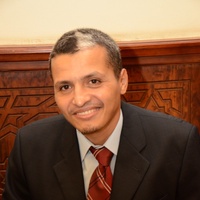
Tamer Elsayed is a Professor in the Mechanical Design Department at Helwan University, Egypt, and an Honorary Research Fellow at the School of Engineering. His research spans structural dynamics, vibration analysis, fluid-structure interaction, and mechanical design, with strong applications in oil and gas, desalination, and composite materials. Professor, Mechanical Design Department, Helwan University (2021–present) Associate Professor (2016–2020), Assistant Professor (2011–2020), same department PhD in Engineering, University of Sheffield Master’s in Engineering, Helwan University His research focuses on: Modeling lateral vibrations of drill strings in oil fields Exact and numerical solutions for continuous systems like beams and plates Fluid-structure interaction, especially water hammer effects Computational fluid dynamics of hydraulic turbomachinery in desalination plants Dynamics of nano-beams and functionally graded materials Recent publications (2020–2025) show a consistent focus on nonlinear dynamics, vibration control, and structural integrity in mechanical systems. Key themes include rotordynamics, bearing analysis, thermoelastic stresses, and fatigue in polymeric and composite materials. His work integrates analytical methods (e.g., variational iteration) with numerical modeling and experimental validation. He serves as a reviewer for several high-impact journals: International Journal of Mechanical Sciences Applied Mathematical Modelling Structural Engineering and Mechanics International Journal of Pressure Vessels and Piping Scientia Iranica Engineering Research Journal Dr. Elsayed has advised on numerous research projects related to desalination systems, pressure vessels, and energy recovery devices. His collaborations span institutions including the University of Aberdeen. While no formal grants are listed, his extensive publication record suggests active research funding. He is involved in both experimental and computational modeling, often combining transfer matrix methods with finite element analysis. He is a key contributor to the mechanical design and dynamics of systems in seawater reverse osmosis (SWRO) desalination plants, particularly in hydraulic turbochargers and high-pressure pumps.
Denis W. Fermental is an Associate Professor of Electrical Engineering & Computer Science at Tufts University's College of Engineering. He has held this position since 1967, serving as Department Chairman from 1988–1996. His research focuses on Control Theory, Analog/Digital Electronics, and mechanical systems applications. Education: Ph.D. Electrical Engineering, Northeastern University (1965) M.S. Electrical Engineering, Northeastern University (1962) B.S. Electrical Engineering, Tufts University (1958) Research Interests: Fermental's work spans control systems design, rotor dynamics analysis, magnetic bearings, and aerospace instrumentation. His contributions include foundational studies on Jeffcott rotor decomposition and inertial navigation systems. Professional Contributions: He has led over 30 years of industrial consulting for Draper Laboratories, United Electric Controls, and Foley Hoag Law Firm. His projects involved stellar tracker systems, spacecraft control algorithms, and industrial automation. Grants: "Industrial Application of Microprocessors" (1976–1978), NSF Equipment Grant (1968–1970) Awards: 1996–1997 Outstanding Faculty Award, 1977 Lillian Leibner Teaching Award Committee Work: Served on 20+ university committees including curriculum development, admissions policy, and graduate school restructuring. Active in Sigma Xi and IEEE.
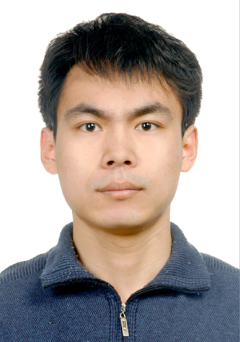
Shupeng SUN is an associate researcher at the Department of Engineering Mechanics , School of Civil Engineering , Shandong University . His research focuses on structural dynamics, aerospace engineering, and vibration control. Academic Rank: Researcher Email: shpsun@sdu.edu.cn Research Interests Dynamics of slender structures Aircraft dynamics and control Active and passive vibration control Overall design of small satellites Scientific Contributions Studied nonlinear vibrations of rotating shells Developed dynamic modeling strategies for spacecraft Investigated wave propagation in cylindrical structures Awards & Grants National Natural Science Foundation of China (Grant No. 11802129)
Martin White is a researcher at City University London, specializing in thermal systems, turbomachinery, and energy conversion. His work focuses on supercritical CO2 technologies, organic Rankine cycles (ORC), and turbine design. He has contributed to projects like the SCARABEUS initiative, advancing axial turbine designs for concentrated solar power plants. His research includes optimizing turbine efficiency, fluid selection for power generation, and computational fluid dynamics (CFD) simulations of two-phase flows. Collaborating with institutions globally, White has published extensively on topics such as radial inflow turbines, non-equilibrium phase change processes, and the integration of dopants in CO2 mixtures to enhance thermal systems. His work emphasizes practical applications in waste heat recovery and renewable energy systems. Education: PhD in Mechanical Engineering from City University London (2015). His doctoral thesis, The design and analysis of radial inflow turbines implemented within low temperature organic Rankine cycles , laid the groundwork for his current research. He holds an ORCID ID (0000-0002-7744-1993) and can be reached at Martin.White@city.ac.uk . Key projects include the design of 130 MW axial turbines for SCARABEUS, loss analysis in radial turbines, and CFD-based optimization of nozzles for organic fluids. His research bridges aerodynamic design, thermodynamics, and mechanical engineering, addressing challenges in both small-scale and utility-sized energy systems.
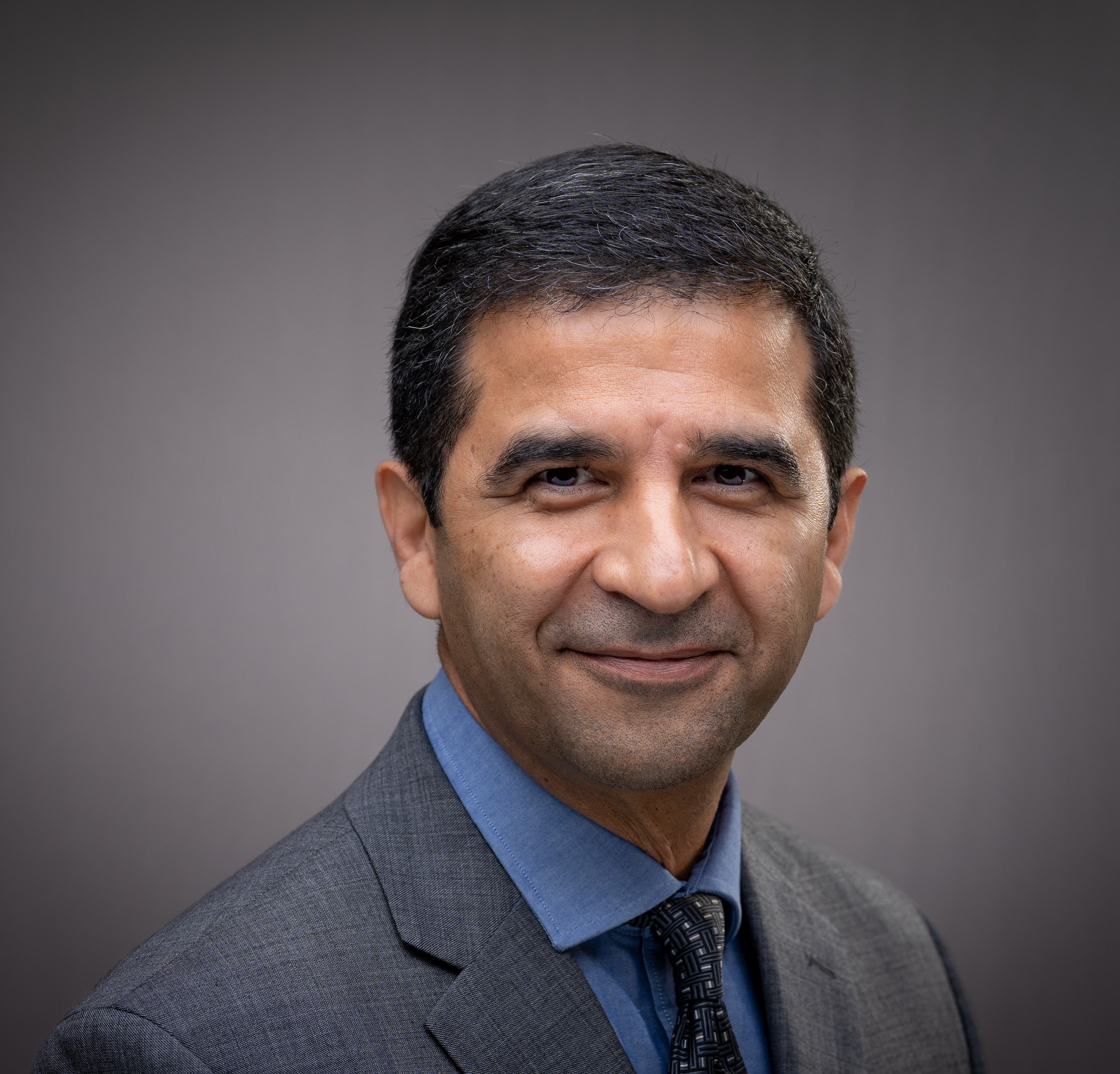
Dr. Mohammad Ali Ayoubi is an Associate Professor in the Department of Mechanical Engineering at Santa Clara University's School of Engineering. He holds a Ph.D. in Aeronautics and Astronautics from Purdue University (2007), an M.S. in Aerospace Engineering from Sharif University of Technology (1998), and a B.Sc. in Mechanical Engineering from Amirkabir University of Technology (1991). His research focuses on dynamics and control systems for aerospace applications, including: Multibody and spacecraft dynamics Vibration control of rotating machinery Intelligent control algorithms (fuzzy logic, neural networks) Guidance systems for reentry vehicles and spacecraft attitude control Recent publications (2016-2024) demonstrate strong emphasis on spacecraft control, vibration suppression, and optimal guidance methods, frequently employing advanced techniques like Takagi-Sugeno fuzzy models and data-driven approaches. Awards & Honors: AIAA Leadership Award (2019) ASME Fellow (2016) NASA Faculty Fellow (2013-2014) Researcher of the Year, Santa Clara University (2013) Teaching excellence awards from Purdue University (2004-2006)
Erasmo Carrera is a Full Professor at the Department of Mechanical and Aerospace Engineering (DIMEAS) of the Polytechnic University of Turin. His career spans over three decades, including roles as a Researcher (1992), Associate Professor (2000), and Visiting Professor at institutions like Virginia Tech and University of Stuttgart. He leads research on composite materials , aeroelasticity , and high-fidelity finite element models , with over 200 publications and leadership in EU/national projects. Education : Laurea in Aeronautics (1986) and Aerospace Engineering (1988) from Polytechnic University of Turin, joint PhD in Aerospace Engineering (1991). Research focus on multifield problems , smart composites , thermal stress , and digital twin technologies . Recent articles highlight advancements in metamaterial band gaps , CUF-based finite elements , and thermoelastic analyses . He received the Commander of the Order of Merit of the Italian Republic (2017) and manages research contracts with institutions like ASI and EMBRAER. His work with PhD students and teams explores composite damage , rotordynamics , and hybrid-electric aircraft optimization.
Rodolfo Azzara is a Fixed-term researcher at the Department of Mechanical and Aerospace Engineering (DIMEAS) at Politecnico di Torino, affiliated with the College of Mechanical, Aerospace and Automotive Engineering. His position is designated under Law 240/10 art.24-a, indicating a fixed-term research appointment within the Italian academic system. He is an active member of the MUL2 (MULtilayered structures and MULtifield analyses) research group, focusing on advanced computational methods for structural analysis. Dr. Azzara's research interests span aerospace engineering with particular emphasis on composite structures, finite element analysis, higher-order theories, nonlinear dynamics, rotordynamics, structural theories, and vibrations. His work primarily falls under the scientific disciplinary sector IIND-01/D - Aerospace Construction and Structures (Area 0009 - Industrial and Information Engineering), with ERC sectors PE8_1 (Aerospace engineering) and PE8_4 (Computational engineering). His research directly contributes to SDG Goal 9: Industry, Innovation, and Infrastructure through advanced computational methods for structural analysis. Analysis of Dr. Azzara's recent publications (2022-2025) reveals a strong focus on high-fidelity computational methods for structural analysis, particularly using the Carrera Unified Formulation (CUF) framework. His work demonstrates expertise in nonlinear dynamics, rotordynamics, and thermoelastic analysis of aerospace structures. A consistent theme across his publications is the development and application of variable-kinematic finite elements for complex structural problems, including rotating machinery, composite materials, and wave propagation phenomena. His research shows increasing sophistication in handling geometric nonlinearity, thermal effects, and multi-physics coupling in structural systems. Dr. Azzara actively contributes to academic teaching within the Aerospace Engineering program. His teaching portfolio includes Aerospace Vehicle Design, Design and Additive Manufacturing for Aerospace Applications, Aeronautical Structures, Fundamentals of Structural Mechanics, and Aeronautical Construction Techniques. He has served as both Course Collaborator and Course Lecturer across multiple academic years (2019/20-2025/26), demonstrating consistent engagement with student education at both undergraduate and graduate levels. His research methodology emphasizes high-fidelity modeling through advanced finite element techniques, particularly focusing on beam, plate, and shell elements with variable kinematics. This approach allows for accurate representation of complex structural behaviors while maintaining computational efficiency. Dr. Azzara's work frequently appears in ASME conferences and engineering mechanics journals, indicating recognition within the structural dynamics and aerospace engineering communities.
Simone Venturini is a Fixed-term Assistant Professor in the Department of Mechanical and Aerospace Engineering (DIMEAS) at Politecnico di Torino. He is affiliated with the College of Mechanical, Aerospace, and Automotive Engineering and serves as a course collaborator for several core mechanical and automotive engineering programs. His research focuses on applied mechanics and structural dynamics, with specific interests in vibrations, rotordynamics, experimental modal analysis, and the experimental-numerical correlation of mechanical systems. He is actively involved in the Vehicle Dynamics research group at DIMEAS, where his work integrates digital twin technologies for automotive components such as wheels and tire-rim systems. His expertise extends to energy storage and the structural dynamic design of machines. His recent publications (2024–2021) highlight advancements in digital twin modeling for failure identification, rotor dynamics with magnetic supports, and model reduction techniques for tracked vehicles. These works appear in prominent journals such as Mechanism and Machine Theory , Engineering Failure Analysis , and International Journal of Non-Linear Mechanics , reflecting a strong trend toward integrating experimental data with numerical models for real-world engineering applications. Simone Venturini contributes to teaching across multiple degree programs, including Mechanical System Dynamics , Vehicle Mechanics , and Vehicle Dynamics Simulation at both Bachelor's and Master's levels. He has been consistently involved in these courses from the 2019/2020 academic year through 2025/26, demonstrating sustained academic engagement. His scientific work aligns with key research sectors including PE8_7 (Mechanical Engineering), PE8_10 (Manufacturing Engineering), and PE8_14 (Automotive and Rail Engineering) under the ERC framework, and supports UN Sustainable Development Goals 7, 9, and 12. He is a member of the IIND-02/A – Applied Mechanics scientific branch within Area 0009 (Industrial and Information Engineering). He collaborates extensively with researchers such as Elvio Bonisoli, Carlo Rosso, Mauro Velardocchia, and Enrico Galvagno. Although no formal advising or grant information is provided, his collaborative research output suggests active participation in funded or institutional research projects. He is part of the Vehicle Dynamics research group at DIMEAS, which serves as his primary research team and laboratory environment.
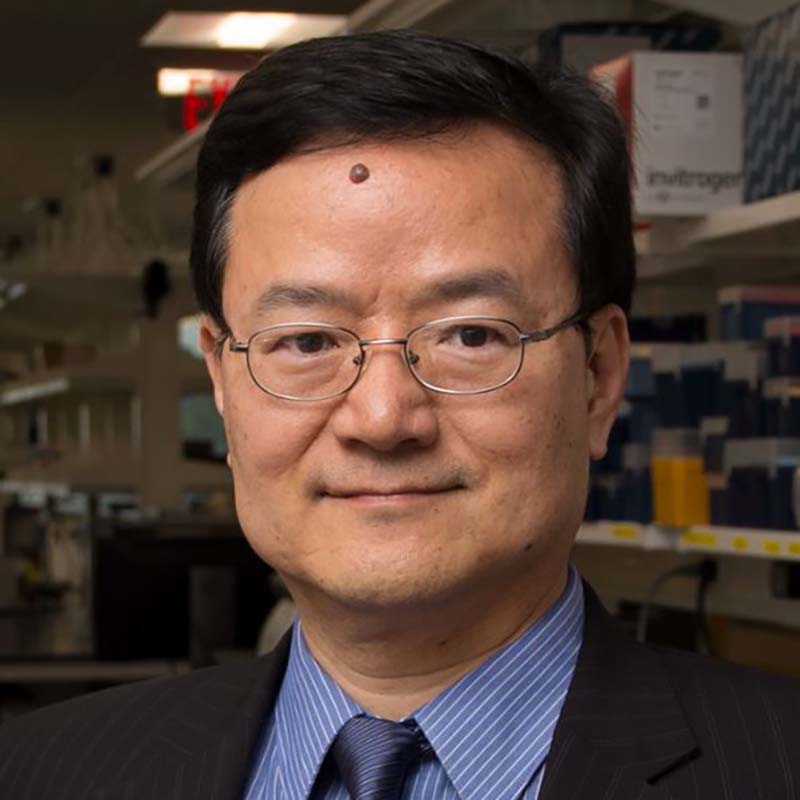
Bin He is a Professor of Biomedical Engineering, Electrical and Computer Engineering, and Neuroscience Institute. His research focuses on neural engineering and technology, non-invasive brain monitoring, and systems neuroscience. He leads studies on brain-computer interfaces (BCI), transcranial focused ultrasound neuromodulation, and applications in motor control and clinical neuroengineering. His work bridges neurotechnology with clinical applications, including stroke rehabilitation and pain management. He has pioneered real-time BCI systems enabling robotic arm control via EEG signals and explored ultrasound-based modulation of brain circuits in both human and nonhuman primate models. Key contributions include advancing EEG source imaging techniques, developing methods for seizure source localization, and integrating AI with robotics for precision assembly and manipulation. His research spans robotics, sensor technology, and biomedical systems, with applications in hydropower inspection and UAV navigation. He maintains active collaborations in multidisciplinary teams addressing challenges in human-robot interaction, neuroprosthetics, and medical device innovation. His work is supported by grants focusing on translational neurotechnology and has resulted in over 150 peer-reviewed publications. He serves as a core faculty member in the Neuroscience Institute, contributing to training next-generation researchers in neural computation and systems neuroscience.
Francesco Antonino Raffa is a Full Professor at the Department of Applied Science and Technology (DISAT) at Polytechnic University of Turin. His research spans Nonlinear Quantum Optics and Rotordynamics , with a focus on dynamic stiffness analysis of rotating shafts and quantum systems. He leads the Nanophysics and Quantum Systems research team at DISAT and collaborates with INRiM (2013-2016) on quantum optics. Teaching Roles : Course Lecturer for Machine Construction (2019-2024) in Electrical Engineering and Physics II (2017-2024) in Mechanical Engineering. Research Projects : Scientific Manager for MAGDAMP (2009-2012), a vibration damping platform using magnetostrictive actuators. Recent Publications Trend : Theoretical and computational studies on quantum cavities, squeezing operators, and nonlinear quantum models, alongside mechanical stability analyses. His work bridges Quantum Physics and Mechanical Engineering . Scientific Awards : INRiM Fellow (2013-2016). Advising : PhD student Alice Bellettini (2021-2025) on massive quantum vortices in Bose-Einstein condensates.
Tanmay Dutt Mathur serves as an Assistant Professor in the Department of Aerospace Engineering at Indian Institute of Technology Kanpur. Education: PhD, The Pennsylvania State University, 2019 MS, The Pennsylvania State University, 2015 B.Tech, Indian Institute of Technology Roorkee, 2012 Research Profile: Dr. Mathur specializes in rotorcraft and aeroengine gearboxes, rotordynamics of turbomachinery, design of rotating mechanical systems, and tribology and lubrication. His research bridges theoretical dynamics with practical aerospace engineering applications, focusing on improving reliability and performance of critical rotating machinery components in aerospace systems. Professional Background: Before joining IIT Kanpur, Dr. Mathur accumulated substantial industry experience including roles as Drive System Technical Leader at Leonardo Helicopters, Research Engineer at GE Research, and Postdoctoral Scholar at Penn State. His industry background provides valuable practical perspective to his academic work.
Kristin Krenek serves as Professor of Industrial Mathematics at Berlin University of Applied Sciences within the Department of Mathematics, Physics and Chemistry since 2021, maintaining her office in Haus Beuth (Room A 222) at Luxemburger Str. 10, Berlin. Her academic foundation includes: Diploma in Mathematics with thesis "Algebraic Modeling of Kinematic Chains" (Technomathematics), TU Dresden (2007) Doctorate on "Model order reduction of large rotordynamic systems", TU Munich (2008-2012) Professor Krenek's research integrates Industrial Mathematics with mechanical engineering applications, specializing in Model Order Reduction techniques for complex rotordynamic systems and algebraic approaches to kinematic chain modeling. Her work bridges theoretical mathematics with industrial problem-solving in machinery dynamics. Prior to her professorship, she accumulated substantial industry-academia experience as Research Associate at TU Berlin (2019-2021) and TU Dresden (2007-2008), Lecturer at Siemens AG's Berlin Technical Academy (2016-2019), and Development Engineer at Siemens AG (2008-2016), where she applied mathematical methods to real-world engineering challenges.
Dr Alexander Shaw is a Senior Lecturer in Aerospace Engineering at Swansea University, affiliated with the Zienkiewicz Centre for Computational Engineering. His research focuses on structural vibration (nonlinearity, chaotic responses) and morphing aircraft structures, with applications in rotorcraft efficiency through the EU-funded SABRE project. He teaches structural analysis and aircraft design, and his work bridges experimental and analytical methods to model nonlinear dynamics in static structures and rotating machinery. Key areas include adaptive aircraft design, composite materials, and rotordynamics. Affiliations: School of Aerospace, Civil, Electrical and Mechanical Engineering Research Group: Aerospace and Structural Engineering Research Interests: Dr Shaw's expertise spans structural dynamics, nonlinear vibration, morphing aircraft concepts, and composite structures. His recent projects emphasize improving rotor blade efficiency via bend-twist coupling and metamaterials, alongside passive energy balancing systems for morphing wings. Experimental validations of concepts like lag-twist coupling and quasi-zero stiffness devices are central to his contributions. Publications: Recent work includes studies on frictional vibration devices (2024), helicopter blade dynamics (2022-2023), and metamaterial-based morphing systems (2022). His research addresses gaps in nonlinear modeling for industrial applications.
Christophe Eloy is a Professor of Fluid Mechanics at Centrale Marseille, conducting research at the IRPHE Institute in Marseille. His work focuses on fluid-structure interactions, hydrodynamic instabilities, animal locomotion, aeroelasticity, rotating flows, and plant biomechanics, combining analytical, experimental, and numerical methods. Affiliation : Centrale Marseille (IRPHE Institute) Research Themes : Fluid mechanics, biomechanics, turbulence, and computational physics at the intersection of biology and engineering. He leads the ERC-funded C0PEP0D project exploring fluid mechanics, AI, and biological systems. Collaborations include nuclear engineering (e.g., PWR fuel assembly dynamics), plant growth mechanics, and microorganism navigation strategies. His work spans experimental setups like ICARE facilities and theoretical models for optimal swimming and flow sensing. Recent studies address reinforcement learning for navigation, planktonic turbulence surfing, and seismic responses of cylinder assemblies. He actively mentors interns and PhD students in multidisciplinary projects.