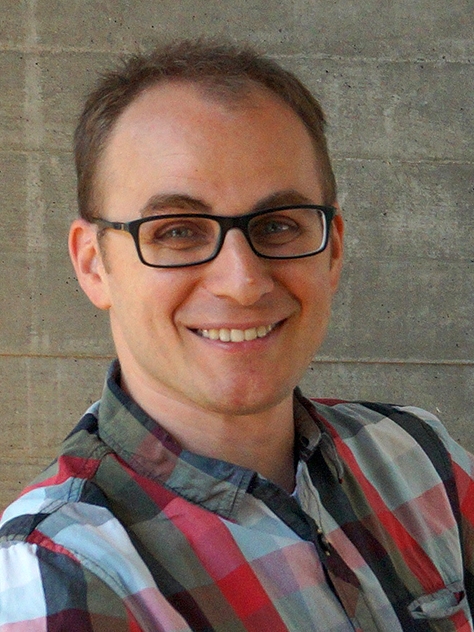
Professor Fadi Dohnal heads the Division for Mechatronics Lienz at UMIT, Private University for Health Sciences, Medical Informatics and Technology, Austria. He maintains an extensive international academic background with positions at leading institutions worldwide. His educational credentials include: Diploma in Mechanical Engineering Diploma in Applied Physics PhD in Dynamics (2005) from Vienna University of Technology, Austria Habilitation (2012) from Technical University Darmstadt, Germany Professor Dohnal's primary research focus is on nonlinear dynamics , specializing in identification, numerical simulation, and experimental implementation. His innovative work explores the deliberate design of nonlinearities for practical applications in both biomedical and industrial engineering contexts. His expertise spans multiple specialized domains including vibration dynamics, structural dynamics, rotordynamics, wave dynamics, and earthquake dynamics. He has organized numerous national and international conferences, minisymposia, and professional training courses throughout his career. Professor Dohnal is an active member of the DIN/VDI Standards Committee in Acoustics, Noise Control and Vibration Engineering (NALS) and Austrian Standards, with previous membership in ASME, GAMM and EUROMECH. His professional experience also includes industry work in the heavy-duty sector where he earned certification as a Principal Engineer in Rotordynamics.
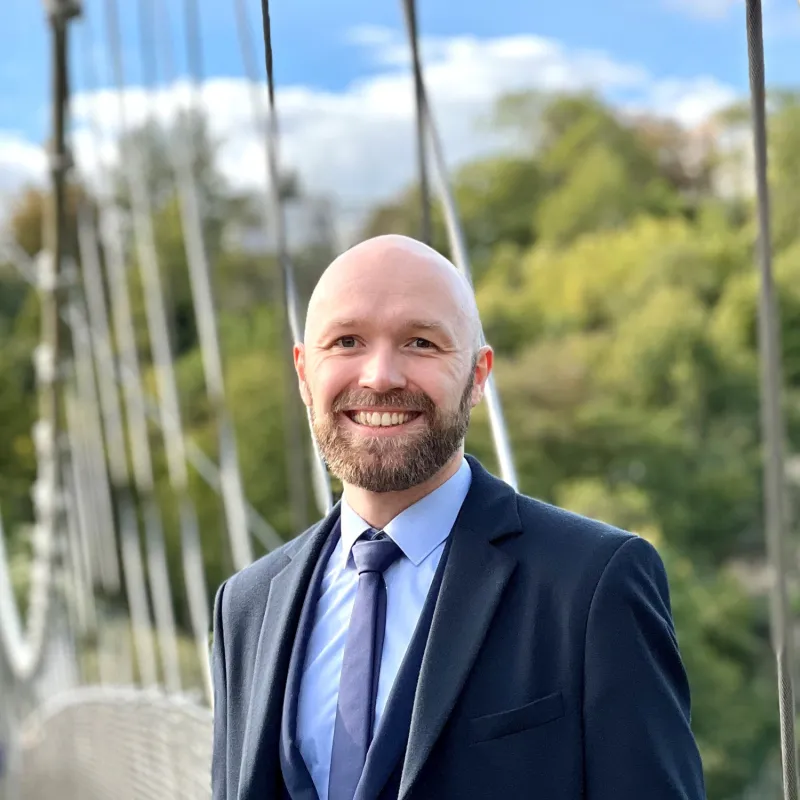
Henrik Ebel is an Assistant Professor (Tenure Track) in Mechanical Engineering at Lappeenranta-Lahti University of Technology (LUT), specifically within the LUT School of Energy Systems. He joined LUT in 2024 after previously working at the University of Stuttgart's Institute of Engineering and Computational Mechanics from 2016 to 2024. Dr. Ebel's research focuses on the intersection of artificial intelligence, machine learning, and mechanical engineering, with particular emphasis on: Distributed cooperative robotics Model predictive control systems Non-holonomic robot control Data-driven approaches to mechanical engineering problems Automation systems development His research aims to bring cooperative robotics from laboratory settings to real-world applications in Finland, focusing on using multiple simple and cost-efficient robots that collaborate to solve problems rather than relying on single complex machines. He believes automation promotes sustainability through better energy conservation, generation, and storage compared to manual processes. His recent publications demonstrate consistent advancement in cooperative robotics, control systems, and machine learning applications in mechanical engineering. As an educator, Dr. Ebel supervises doctoral students and finds fulfillment in seeing them grow and succeed in their research. He values the human aspect of academia and enjoys teaching as a complement to his research work, noting that honing teaching skills helps him explain research better and pass on important future-oriented knowledge.
Stefano Marchesiello is a Full Professor of Applied Mechanics at the Polytechnic University of Turin, Department of Mechanical and Aerospace Engineering (DIMEAS), a position he has held since 2019. His academic work spans theoretical studies, numerical applications, and experimental tests within the field of Applied Mechanics. He maintains active roles in doctoral education, serving on mechanical engineering doctoral colleges from 2013/2014 through 2024/2025, and teaches courses including Dynamics and Identification of Nonlinear Systems, Dynamics of Mechanical Systems, Vibration Mechanics, and Machine Mechanics for Aerospace Engineering. Marchesiello's research focuses on modal analysis and identification, damage diagnosis in structures and construction materials, damping systems, mechanical vibrations, and nonlinear dynamics. His primary research lines include vehicle-bridge dynamic interaction, dynamic identification techniques in linear and nonlinear fields, damage identification, vibrations of continuous systems with non-proportional damping, innovative vibration damping devices, diagnostics and monitoring of rotating systems, and pantograph-catenary dynamic interaction. His work bridges theoretical mechanics with practical engineering applications, particularly in transportation infrastructure and mechanical systems. His recent publications demonstrate a strong focus on nonlinear system identification, structural health monitoring, and vibration analysis across various mechanical and aerospace applications. Marchesiello's research shows increasing integration of machine learning techniques with traditional mechanical engineering approaches, particularly in system identification and damage detection. His work spans from fundamental nonlinear dynamics to practical applications in railway systems, rotating machinery, and structural components. Certificate of reviewing awarded by Journal of Sound and Vibration - Elsevier, Netherlands (2013) Certificate of Excellence in Reviewing - Mechanical Systems and Signal Processing 2013 awarded by Elsevier, Netherlands (2013) Marchesiello serves as Scientific Director for multiple commercial research contracts, particularly with Officina Fratelli Bertolotti SpA, focusing on vibration damping systems for railway catenaries and rotor dynamics modeling. He has led research projects from 2008 through 2023, demonstrating sustained research leadership and industry collaboration. His editorial work includes membership on the Editorial Board of SHOCK AND VIBRATION since 2018, and he has served on program committees for the International Conference on Damage Assessment of Structures (DAMAS) across multiple years. He is actively involved with the Dynamics of Mechanical Systems and Identification research group (DIMEAS), which focuses on developing advanced methods for analyzing and identifying mechanical systems with both linear and nonlinear behaviors. His research integrates computational modeling, experimental validation, and practical applications across multiple engineering domains.
Francesco Antonino Raffa is a Full Professor at the Department of Applied Science and Technology (DISAT) at Polytechnic University of Turin. His research spans Nonlinear Quantum Optics and Rotordynamics , with a focus on dynamic stiffness analysis of rotating shafts and quantum systems. He leads the Nanophysics and Quantum Systems research team at DISAT and collaborates with INRiM (2013-2016) on quantum optics. Teaching Roles : Course Lecturer for Machine Construction (2019-2024) in Electrical Engineering and Physics II (2017-2024) in Mechanical Engineering. Research Projects : Scientific Manager for MAGDAMP (2009-2012), a vibration damping platform using magnetostrictive actuators. Recent Publications Trend : Theoretical and computational studies on quantum cavities, squeezing operators, and nonlinear quantum models, alongside mechanical stability analyses. His work bridges Quantum Physics and Mechanical Engineering . Scientific Awards : INRiM Fellow (2013-2016). Advising : PhD student Alice Bellettini (2021-2025) on massive quantum vortices in Bose-Einstein condensates.
Katrin Ellermann is a University Professor (Professor) at the Institute of Mechanics , Graz University of Technology (TU Graz), Austria. Her research spans rotordynamics , nonlinear vibrations , biomedical engineering (particularly aortic dissection modeling), and offshore systems . She has developed advanced numerical methods like the Numerical Assembly Technique and applied fractional derivative damping models to rotor systems. Her work integrates computational mechanics with applications in industrial machinery and cardiovascular diagnostics via impedance cardiography. Her research interests include: Stability and vibration analysis of mechanical systems Computational modeling of aortic dissection and thrombosis Application of polynomial chaos expansion and sensitivity analysis Control systems using Kalman filters and mechatronic simulations Nonlinear dynamics in offshore structures Advanced damping models via fractional calculus Recent publications focus on rotordynamics (balancing techniques, damping models) and biomedical simulations (SynthAorta dataset, false lumen thrombosis). She has also contributed to fault detection in railway and offshore systems.
Anindya Chatterjee is a Professor in the Department of Mechanical Engineering at the Indian Institute of Technology Kanpur. He has a PhD in Theoretical and Applied Mechanics from Cornell University (1997) and previously held faculty positions at IISc Bangalore (2000-2009) and IIT Kharagpur (2009-2012). His educational background includes: PhD, Theoretical and Applied Mechanics, Cornell University, 1997 M.S, Applied Mathematics, University of Florida, 1993 M.S, Engineering Mechanics, University of Florida, 1993 B.Tech, Mechanical Engineering, IIT Kharagpur, 1989 Professor Chatterjee's research spans a broad range of topics within applied mechanics and applied mathematics. His work focuses on developing low-dimensional models of complex systems. His research interests include dynamics, vibrations, solid mechanics, nonlinear vibrations, systems with delays, fractional order dynamics, rigid body impact, rotors, fatigue models, statistics of test data, damping in solids, and hysteresis models. His approach often involves seeking simplified representations of higher-dimensional systems using innovative methods. His recent publications demonstrate significant contributions to the understanding of modal damping in vibrating objects, fractional derivatives, nonlinear rotor dynamics, wave propagation, and modal analysis. These works have been published in prestigious journals like Proceedings of the Royal Society of London A. Among his notable honors, Professor Chatterjee is a Fellow of the Indian National Academy of Engineering (FNAE). He teaches courses in Dynamics, strength of materials, nonlinear vibrations, and controls. His office is located at FB-357, Department of Mechanical Engineering, IIT Kanpur, Kanpur 208016.
F. Avallone is a researcher in the Faculty of Aerospace Engineering at Delft University of Technology with an external position at Politecnico di Torino since January 2023. Their research focuses on the intersection of aerodynamics and aeroacoustics, particularly for wind energy applications. Research interests span multiple specialized areas with significant emphasis on noise reduction technologies. The research fingerprint shows strong concentration in trailing edge engineering (36%), aerodynamics (30%), general reduction techniques (30%), acoustics (25%), and porous materials applications (25%). Current work addresses practical challenges in wind turbine technology, propeller noise, and aircraft landing gear acoustics. Professor Avallone has produced 187 research outputs including numerous 2025 publications in top aerospace journals. Recent work demonstrates consistent focus on experimental approaches to aerodynamic and acoustic problems, with particular attention to measurement techniques and noise reduction solutions. European Starting Grant (implied from 2022 press coverage) With 10 supervised works documented, Professor Avallone maintains an active supervision record. Their research receives attention as indicated by reader captures and news mentions across multiple publications. Collaborations extend internationally with strong connections to researchers like D. Ragni and T. Sinnige. The research group appears focused on experimental aerospace engineering with capabilities in wind tunnel testing, acoustic measurements, and advanced flow visualization techniques as evidenced by recent publications and datasets.
Etienne Balmes is an Associate Professor at Arts et Métiers ParisTech and Professor at SDTools, specializing in structural dynamics and damping. His affiliations include MIT (PhD), CentraleSupélec, and ONERA. He leads the DISCOH research team at PIMM laboratory, focusing on industrial applications like brake squeal and railway systems. His research integrates viscoelastic damping , model reduction , and experimental modal analysis . Key areas include: Design of viscoelastic treatments for aerospace/automotive systems Parametric testing under temperature/pressure variations Friction-induced vibration (e.g., brake squeal) Homogenization of composite materials Recent publications emphasize brake NVH analysis, railway dynamics, and model reduction techniques. Trends show a shift toward real-time simulation of non-linear systems and industrial validation of damping solutions. At DISCOH lab, he collaborates with SNCF, ONERA, and automotive partners, leveraging tools like SDT for vibration testing. Teaching includes courses on mechanical vibrations and modal analysis at ENSAM/CentraleSupélec.