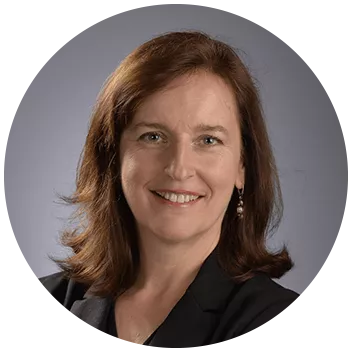
Marc Jacob is a Researcher at the Laboratory of Fluid Mechanics and Acoustics (LMFA, UMR 5509) affiliated with École Centrale de Lyon in Lyon, France. His work focuses on aeroacoustics, turbulent boundary layers, and fluid dynamics with applications in noise control and computational modeling. He contributes to experimental and numerical studies of flow instabilities, rotor-stator interactions, and aerodynamic noise reduction. Research interests include: Aeroacoustic noise mechanisms in rotating machinery Turbulent flow control using circular cavities Machine learning for fluid dynamics predictions LES and CFD simulations for noise prediction Recent Work : Recent studies address drag reduction via staggered cavities, neural network-based pressure field reconstruction, and parametric LBM modeling of slat-airfoil systems. His research bridges fundamental fluid mechanics with engineering applications like fan noise reduction and coronary artery flow analysis. Awards : No specific awards mentioned in available texts. Labs & Teams : Active in LMFA's Acoustics group (AC) and collaborates with ENS Lyon and INSA Lyon on multi-disciplinary fluid mechanics projects. Involves in developing experimental techniques (PIV, LDV) and acoustic measurement systems.
John Soundar Jerome is a Lecturer and researcher at the Laboratory of Fluid Mechanics and Acoustics (LMFA - UMR 5509) affiliated with Claude-Bernard Lyon1 University. His primary role combines teaching and research in fluid mechanics and acoustics, focusing on multiphase flows, turbulence, and environmental fluid dynamics. He is part of the EM³ team (Multi-physical, Multi-phase & Multi-scale flows) within LMFA. Research interests include the interplay between liquid inertia and bubble dynamics in jet experiments, aeroacoustics of rotating machines, and multiphase flow phenomena. His work has been recognized with notable features, including a 2024 Journal of Fluid Mechanics cover and a 2016 AIP Publishing cover highlight. Recent contributions include studies on plunging jets and bubble cloud buoyancy. Featured awards: JFM Cover (2024), AIP Cover (2016), Lyon1 Actu Recherche (2020) He contributes to academic training in mechanical engineering and collaborates on projects involving experimental and numerical fluid dynamics. His research aligns with broader societal goals in environmental and industrial fluid mechanics.
Antonio Augusto Pereira is a Researcher affiliated with the Acoustics Team at the Laboratory of Fluid Mechanics and Acoustics (LMFA - UMR 5509) in Lyon, France. His research focuses on aeroacoustics, fluid mechanics, and related fields. He is part of the LMFA, a joint research unit under CNRS, UCBL (Université Claude Bernard Lyon 1), INSA Lyon, and École Centrale de Lyon. His work contributes to advancements in acoustics and fluid dynamics, particularly within the context of rotating machines and compressible flows. He holds a position at the IT Cinnov team, emphasizing interdisciplinary research and innovation. His affiliations include involvement with the LMFA’s experimental facilities and numerical simulation projects. While specific grants or awards are not explicitly listed, his contributions align with the lab’s broader goals in environmental flows, turbulence, and applied fluid mechanics.
Jean-Charles Vingiano is a Researcher affiliated with the Acoustics Group (AC) at the Laboratory of Fluid Mechanics and Acoustics (LMFA - UMR 5509) in Lyon, France. His primary research interests include aeroacoustics, fluid mechanics, and the study of noise generation in rotating machinery and compressible flows. The LMFA is a joint research unit between CNRS, INSA Lyon, École Centrale de Lyon, UCBL, and UCLOUVAIN. While specific educational background and grants are not explicitly detailed in the provided texts, his affiliation with the Acoustics Group suggests involvement in experimental and computational studies related to noise propagation, turbulence, and acoustic phenomena. No awards or recent publications are listed in the directory entry, though the lab's broader research themes align with his group's focus on environmental and industrial acoustics applications.
Antonio Norelli is a Research Fellow at Oxford University and a PhD student in Computer Science at Sapienza University of Rome, specializing in AI and deep learning within the GLADIA research group. His academic journey includes a BSc in Physics, an MSc in Computer Science, and the SSAS interdisciplinary honors program. He has held research internships at Spiketrap (San Francisco) and Amazon Lablet in Tübingen. His research focuses on bridging the gap between human and artificial intelligence, emphasizing symbolic reasoning, explainable AI, and multimodal learning. Notable contributions include the ASIF framework for unsupervised multimodal alignment and Olivaw, an Othello-playing AI that achieves expert-level performance without human knowledge. His key research interests span artificial scientific discovery, neural network explainability, and the theoretical foundations of intelligence. Recent work explores relative representation learning and zero-shot latent space communication, with applications in cross-modal retrieval and efficient model adaptation. Norelli’s interdisciplinary approach combines insights from philosophy of science (Popperian critical rationalism) with machine learning to develop systems capable of symbolic reasoning and hypothesis generation. Publications highlight advancements in: (1) Multimodal learning without training through coupled data alignment, (2) Game AI strategies for Othello using minimal resources, (3) Neuro-symbolic architectures for interpretable decision-making. His work has been presented at NeurIPS and IEEE Transactions on Games, among others. Current efforts aim to formalize intelligence as information-processing mechanisms grounded in symbol manipulation and semantic alignment.
Dr. Ana María Megía Macías is an Assistant Professor at the School of Engineering (ICAI) of the Universidad Pontificia Comillas, affiliated with the Institute for Research in Technology (IIT). She specializes in plasma engineering, with a focus on ion sources and biomedical applications of plasmas. Her research includes plasma diagnostics, optimization of medical therapies using cold atmospheric plasma, and surface treatment technologies. She holds a Doctoral Degree in Science and Technology Applied to Industrial Engineering from 2014. Prior roles include work at ESS Bilbao and CERN, and teaching at the University of Deusto. She currently teaches subjects like Physics, Engineering Thermodynamics, and Machine Design at ICAI. Her research interests span plasma diagnostics for ion sources, plasma medicine, and interdisciplinary projects involving additive manufacturing for medical devices. Key projects include studies on cold plasma for wound treatment and collaborations on hydrogen ion sources for CERN experiments. Dr. Megía Macías has published extensively on plasma physics and biomedical applications, including work on chronic wound healing and viral inactivation. Awards include the prestigious EmprendeXXI Award for her Medical Plasmas project. She actively reviews for journals like IEEE Transactions on Instrumentation and Measurement and Review of Scientific Instruments.
Bingyan Chen is a Research Fellow at the Department of Engineering, University of Huddersfield, affiliated with the School of Computing and Engineering. His expertise lies in non-stationary signal processing, machine condition monitoring, and rotating machinery fault diagnosis, focusing on railway systems and bearing dynamics. He holds a Doctor of Philosophy by Publication from his institution. His research integrates advanced signal processing techniques with mechanical engineering challenges, particularly in railway axle-box bearings and vibration analysis. Key contributions include envelope spectrum optimization, blind deconvolution methods, and tribodynamic modeling. Chen has published extensively in top journals like Mechanical Systems and Signal Processing and serves as an editor for the journal Machines . His work addresses UN Sustainable Development Goals related to infrastructure and innovation. Collaborations span international teams focusing on railway engineering and bearing diagnostics. Current research emphasizes adaptive signal filtering, sparsity measures, and sensor technology for condition monitoring advancements. Editorial activities include peer-review roles for high-impact journals, reflecting his leadership in the field. He actively presents at international conferences, recently discussing tribodynamic modeling and bearing fault enhancement techniques.
Dr. Matthew Giamou is an Assistant Professor in the Department of Computing and Software at McMaster University, leading the Autonomous Robotics and Convex Optimization (ARCO) Lab. His research focuses on global optimization, sensor calibration, SLAM, and motion planning, with applications in robotics, manufacturing, and geosciences. He emphasizes developing interpretable and safety-certifiable algorithms as alternatives to deep learning. Education: B.A.Sc. in Engineering Science (University of Toronto, 2015), M.Sc. in Aeronautics and Astronautics (MIT, 2017), Ph.D. in Aerospace Studies (University of Toronto, 2022). Postdoctoral work at Northeastern University’s Institute for Experiential Robotics. Research interests include mobile robotics , convex optimization , computer vision , and machine learning . ARCO Lab’s current projects involve scalable spatiotemporal algorithms for robust perception and planning. His work bridges theoretical optimization with practical robotics challenges like multi-robot communication and medical robotics. Publications reflect a focus on geometric robotics, optimization methods, and sensor systems. Key themes include inverse kinematics, SLAM, and calibration algorithms with formal safety guarantees. Scientific Awards: - 2020 IEEE IROS Best Workshop Paper Award - 2020 Robotics: Science and Systems Best Student Paper - 2019 RBC AI Graduate Fellowship Advising: Actively mentoring graduate students in robotics and optimization. Lab activities emphasize collaboration with non-experts in fields like space exploration and manufacturing. Teaching includes advanced courses on group theory for optimization and machine learning (CAS 752). Lab Infrastructure: ARCO Lab is housed in ABB C536, with facilities for robotics prototyping and algorithm testing. Ongoing projects aim to deploy safe autonomy tools for diverse end-user domains.
Xavier Pic is a Research Fellow at EURECOM's Data Science department. His work focuses on advancing DNA-based data storage technologies, particularly in the intersection of computer science, bioengineering, and machine learning. He specializes in developing innovative coding algorithms, entropy coders, and neural network architectures for robust image and media storage on synthetic DNA. Key research areas include implicit neural representations, multiple description coding, and compressive autoencoders. His contributions address challenges in long-term data preservation, error resilience, and efficient encoding-decoding processes. Xavier actively explores applications ranging from molecular biology-driven storage solutions to hybrid systems combining classical algorithms (e.g., JPEG) with modern deep learning techniques. His research portfolio reflects interdisciplinary collaboration, bridging computer science with synthetic biology. Prior to his current role, he contributed to text alignment projects using deep learning and dynamic programming for historical document analysis.
Antonio Martinez Sanchez is a Ramón y Cajal Researcher at the University of Murcia's Faculty of Informatics, Department of Information and Communication Engineering. His research focuses on computational methods for cryo-electron tomography, artificial intelligence, and bioimaging. He holds a PhD from the University of Almería (2013), specializing in differential geometry-based computational techniques for electron tomography. Education : PhD in Computer Science, Universidad de Almería (2013) His research interests include deep learning applications in microscopy, membrane protein analysis, and high-performance computing for 3D imaging. Recent work emphasizes template matching, orientation estimation, and automated pipelines for cryo-electron tomography. He leads the AIKE (Artificial Intelligence and Knowledge Engineering) research group and contributes to tools like ScipionTomo and MemBrain. Articles highlight advancements in computational methods for structural biology, such as fast cross-correlation algorithms and deep learning-driven orientation estimation. These techniques address challenges in analyzing cellular architecture and viral interactions. His work bridges computer science and biology, advancing tools for subcellular imaging and data reproducibility. Labs/Teams : AIKE: Artificial Intelligence and Knowledge Engineering research group.
Dr. Zhidong Xiao serves as Principal Academic (Associate Professor) at Bournemouth University's National Centre for Computer Animation within the Faculty of Media and Communication. With over ten years of leadership experience including roles as Programme Leader, Head of Education, and Deputy Head of Department, he drives academic strategy and research innovation in computer animation and digital media. His work bridges technical excellence with creative industry applications through extensive collaborations across the UK and China. Dr. Xiao's educational foundation includes a PhD in Computer Graphics (2010) and postgraduate certificates in Education Practice (2010) and Research Degree Supervision (2011) from Bournemouth University, complemented by a BEng (Hons) in Thermodynamics from Taiyuan University of Technology, China (1994). PhD in Computer Graphics, Bournemouth University (2010) PGCE in Education Practice, Bournemouth University (2010) PGCE in Research Degree Supervision, Bournemouth University (2011) BEng (Hons) in Thermodynamics, Taiyuan University of Technology (1994) His research spans Computer Graphics, Motion Capture, Artificial Intelligence, and Virtual Reality with focus on physics-based simulation, sign language recognition, and motion synthesis. Recent work integrates partial differential equations with machine learning to solve animation challenges in facial realism, deformation simulation, and 3D reconstruction. His interdisciplinary approach connects computer science with creative industries, healthcare applications, and educational technology while advancing core techniques in neural rendering and motion analysis. Analysis of his 15 most recent publications reveals consistent innovation in physics-based animation techniques (40%), motion capture processing (25%), and neural approaches to 3D reconstruction (35%). Key trends include the fusion of analytical physics models with deep learning architectures, development of efficient real-time simulation methods, and expansion into accessibility applications through sign language recognition systems. Scientific recognitions include: Fellow of British Computer Society (2023) Fellow of Higher Education Academy (2011) Best Poster Award at Pacific Graphics 2014 He maintains active peer review roles for EPSRC, ESRC, IEEE Transactions on Multimedia, and ACM SIGGRAPH conferences. Dr. Xiao has supervised seven PhD students to completion while currently guiding Alexandra Sergeeva Alexdottir's research on Phantom Touch phenomena. His grant portfolio demonstrates strong industry-academia collaboration: Principal Investigator Capturing and representing sign language (British Council, 2025) VE Communication Programme (Erasmus+, 2020) Co-Investigator Rehabilitation Enhancement via Motion Capture (BU Fusion Fund, 2013) Cross-Channel Film Lab (Interreg, 2012) Digital Beijing Opera Project (2010) As a core member of Bournemouth's Computer Graphics and Visualisation Research Group and Centre for Digital Entertainment, he leads initiatives in motion capture technology through AccessMocap Studio. His international outreach includes invited lectures across China on computer animation education and visual effects techniques, strengthening global partnerships in creative technology development.
Dr. Ketema Zeleke is a researcher at Charles Sturt University's Agricultural, Environmental and Veterinary Sciences faculty, affiliated with the Gulbali Research Institute. His work focuses on sustainable water management in agricultural systems across various global contexts, with particular expertise in irrigation engineering and climate adaptation strategies. BSc in Irrigation Engineering, Arbaminch University, Ethiopia MSc in Irrigation and Water Management, KU Leuven and UV Brussels, Belgium PhD in Soil Hydrology/Geohydrology, University of Orange Free State, South Africa Dr. Zeleke's research spans agricultural water management, crop water productivity modelling, climate variability and change impacts, hydrology, soil physics, and soil and water conservation. His work addresses critical challenges in irrigation engineering and water resource management, particularly in semiarid and arid regions. He has developed models for predicting crop responses to water stress and has investigated innovative irrigation techniques including regulated deficit irrigation for horticultural crops. His research has significant implications for food security in water-scarce regions and contributes to multiple UN Sustainable Development Goals related to clean water, climate action, and sustainable agriculture. Analysis of Dr. Zeleke's recent publications reveals a strong focus on climate adaptation in agricultural systems, with particular attention to irrigation optimization across diverse geographical contexts including Australia, China, Laos, and Ethiopia. His work demonstrates consistent application of modeling approaches to address water scarcity challenges, with increasing emphasis on compound climate stressors like drought-heatwave interactions in recent years. As a registered supervisor, Dr. Zeleke mentors graduate students in agricultural water management research. His work has been supported by various research grants focusing on climate adaptation in agricultural systems and sustainable irrigation practices. He actively contributes to the scientific community through peer review for journals including Agricultural Water Management and Crop and Pasture Science, and has served on review panels since 2014. Dr. Zeleke is affiliated with the Gulbali Research Institute at Charles Sturt University, where he collaborates with interdisciplinary teams on projects related to agricultural innovation, water management, and climate resilience. His international research collaborations span Ethiopia, South Africa, Germany, China, Laos, and Australia, reflecting the global relevance of his work on sustainable water management in agricultural systems.
Ewa Deelman is a Research Professor in the Department of Computer Science at the University of Southern California (USC) and a Principal Scientist at the USC Information Sciences Institute. She also directs Science Automation Technologies, a research group focused on automating scientific processes through advanced workflow management solutions. Her work is foundational in enabling complex scientific computations across distributed computing environments. Deelman's research centers on scientific workflow automation, including resource provisioning, data management, and job scheduling in distributed systems. She pioneered workflow planning for distributed computations and leads the development of the Pegasus Workflow Management System. Current interests extend to anomaly detection using machine learning, quantum-classical hybrid workflows, and edge-to-cloud continuum integration. Her group's work bridges theoretical advances with practical tools for domain sciences like seismology and molecular dynamics. Analysis of her recent publications reveals a strong emphasis on enhancing workflow robustness through machine learning and emerging technologies. Key trends include LLM-based scheduling optimization, pandemic-driven resilience studies, and quantum workflow integration. Her work increasingly addresses cross-cutting challenges in data-intensive science, particularly in managing computational workflows across heterogeneous infrastructures from edge devices to cloud platforms. As Director of Science Automation Technologies, Deelman oversees a team that has made Pegasus a cornerstone tool in scientific computing. The system handles complex workflow orchestration for projects like CyberShake (seismic hazard analysis) and molecular dynamics simulations, automating data movement, execution, and error recovery across campus clusters, supercomputers, and cloud resources.
Dr. Arivazhagan Anbalagan is an Assistant Professor in Digital Manufacturing at Coventry University's Institute for Advanced Manufacturing and Engineering (AME), leading research in Industry 4.0, IoT integration, and advanced manufacturing systems. He holds a PhD from IIT Roorkee and has over 15 years of experience in CAD/CAM automation, CNC machining, and materials science. Education: Doctorate in CAD/CAPP Systems (IIT Roorkee, 2008) MEng in CAD/CAM (Vellore Institute of Technology, 2003) BEng in Mechanical Engineering (University of Madras, 2001) Research Interests: Focuses on digital twins, STEP-NC machining, machine learning for feature recognition, and sustainable manufacturing. Key areas include: IoT-based Manufacturing Integration High-Entropy Alloys Development 3D Printing & Additive Manufacturing Finite Element Analysis (FEA) for Tool Design Recent Contributions: Published on digital twin implementation, hydrogen embrittlement mitigation, and CFRP machining. Active in collaborative projects like the EU FP7 Toolbox Website and Mindsphere data integration. Awards & Memberships: Chartered Engineer (IMechE) Fellow of the Higher Education Academy (HEA) PhD External Examiner at Staffordshire University Lab & Teams: Leads AME's manufacturing systems research group, specializing in CAD/CAM automation and IoT-driven manufacturing workflows.
Faris Elasha is a Senior Lecturer in Dynamics at Coventry University's CEES School of Engineering since September 2015. Previously, he served as a Research Fellow at Cranfield University and held roles in the Power Generation Industry, leading maintenance teams for power stations. He holds a First Class BSc in Mechanical Engineering from Sudan University of Science and Technology, an MSc (Distinction) in Mechanical Engineering Design from The University of Manchester, and a PhD in Mechanical Engineering from Cranfield University. His research focuses on condition monitoring, diagnostics, and prognosis of rotating machinery, particularly in gearbox dynamics, asset integrity management, and vibration-based analysis. He has contributed to developing the first condition monitoring system for tidal turbines. His work aligns with UN Sustainable Development Goals, emphasizing reliability improvement and cost reduction in mechanical systems. Key research trends in his publications include advanced signal processing techniques (e.g., wavelet transforms), machine learning applications for prognostics, and vibration analysis for fault detection in gears and bearings. His articles span aerospace (helicopter gearboxes), renewable energy (wind and tidal turbines), and general mechanical systems. Elasha has supervised one student and engaged in academic activities such as PhD examinations and collaborative research with institutions like Cranfield University. His expertise bridges industrial practice and academic research, addressing challenges in rotating equipment health management.