Assoc Prof Ng Teng Yong is an Associate Professor at the School of Mechanical & Aerospace Engineering (NTU), specializing in numerical modeling and simulation. With a background as Research Manager at A*STAR Institute of High Performance Computing, his work spans materials science, nanotechnology, and aerospace engineering. Current focus on graphene-based desalination membranes Expertise in molecular dynamics simulations Investigates nanoscale fluid mechanics and structural dynamics Recent publications highlight advancements in energy-efficient electrodialysis, smart robotics, and nonlinear vibration analysis. His interdisciplinary approach integrates computational methods with experimental validation in additive manufacturing and soft material mechanics.
Professor Tony Shardlow is affiliated with the Department of Mathematical Sciences at the University of Bath , UK. His research spans Stochastic Differential Equations , Bayesian Inverse Problems , Statistical Shape Modelling , and Numerical Analysis , with applications in data science, medical imaging, and computational physics. Labs/Teams : IMI (Institute for Mathematical Innovation), Prob-L@b (Probability Laboratory at Bath), SAMBa (EPSRC Centre for Doctoral Training in Statistical Applied Mathematics). Recent Research Trends : Focus on geometric shape analysis using flow fields, stochastic PDEs for particle dynamics, and Bayesian inference techniques in industrial and medical contexts. Collaborative work bridges computational mathematics with applications in hip dysplasia assessment and pesticide delivery systems. Advising : Supervised Fengpei Wang's PhD thesis on dimension reduction and Sinkhorn algorithms. Collaborates with researchers like N. D. F. Campbell and C. Poon. Teaching : Offers MA30170 - Numerical Solution of Elliptic PDEs.
Matt Nowinski is a Collegiate Associate Professor in the Department of Mechanical Engineering at Virginia Tech's College of Engineering. His professional roles include advisory board memberships and leadership positions within the department. He holds multiple degrees including a Ph.D. in Mechanical Engineering from ETH Zurich (1999), an M.S. in Computer Science from Syracuse University (2022), and prior mechanical/aerospace engineering degrees from Virginia Tech. His research focuses on asteroid dynamics (particularly D-type and V-type asteroids), gas turbine engines, aeroelasticity, and education technology. Notable areas include lightcurve analysis, surface mineralogy modeling, and machine learning applications in astronomy. His work bridges aerospace engineering with astrophysics, leveraging both experimental and computational methods. Dr. Nowinski has over 24 years of industry experience as a Boeing subject matter expert in military communications systems, complemented by academic roles at George Mason University and University of Chicago. He is a recipient of the John Jones Faculty Fellowship and Society of Distinguished Alumni honor. His research contributions span asteroid characterization, turbine blade flutter mechanisms, and telescope instrumentation. Current work emphasizes observational astronomy through the Stone Edge Observatory and Slack-based collaborative platforms. He actively contributes to advancing STEM education through innovative curricula and research integration.
Dr Davoud Cheraghi Home is a Reader (Associate Professor) in Pure Mathematics at Imperial College London, affiliated with the Pure Analysis and PDEs and Geometry research groups. His research focuses on complex analysis and dynamical systems, particularly holomorphic maps, rigidity phenomena, and small divisors problems, bridging analysis, geometry, and combinatorics. He has organized numerous conferences and workshops, including events at Imperial College and the School of Mathematics in Tehran. Dr Cheraghi teaches advanced courses in geometric complex analysis, analysis, and dynamical systems at Imperial College, as well as at the University of Warwick and Stony Brook University. He has mentored PhD students and postdoctoral researchers, contributing significantly to the field through his publications and collaborations. His research interests encompass geometric analysis (quasi-conformal mappings, elliptic PDEs), renormalization operators, and low-dimensional analytic dynamics. Notable publications include studies on irrationally indifferent attractors, Siegel polynomials, and combinatorial rigidity. Dr Cheraghi’s work is supported by extensive teaching and mentorship activities, reflecting his commitment to advancing both research and education in pure mathematics.
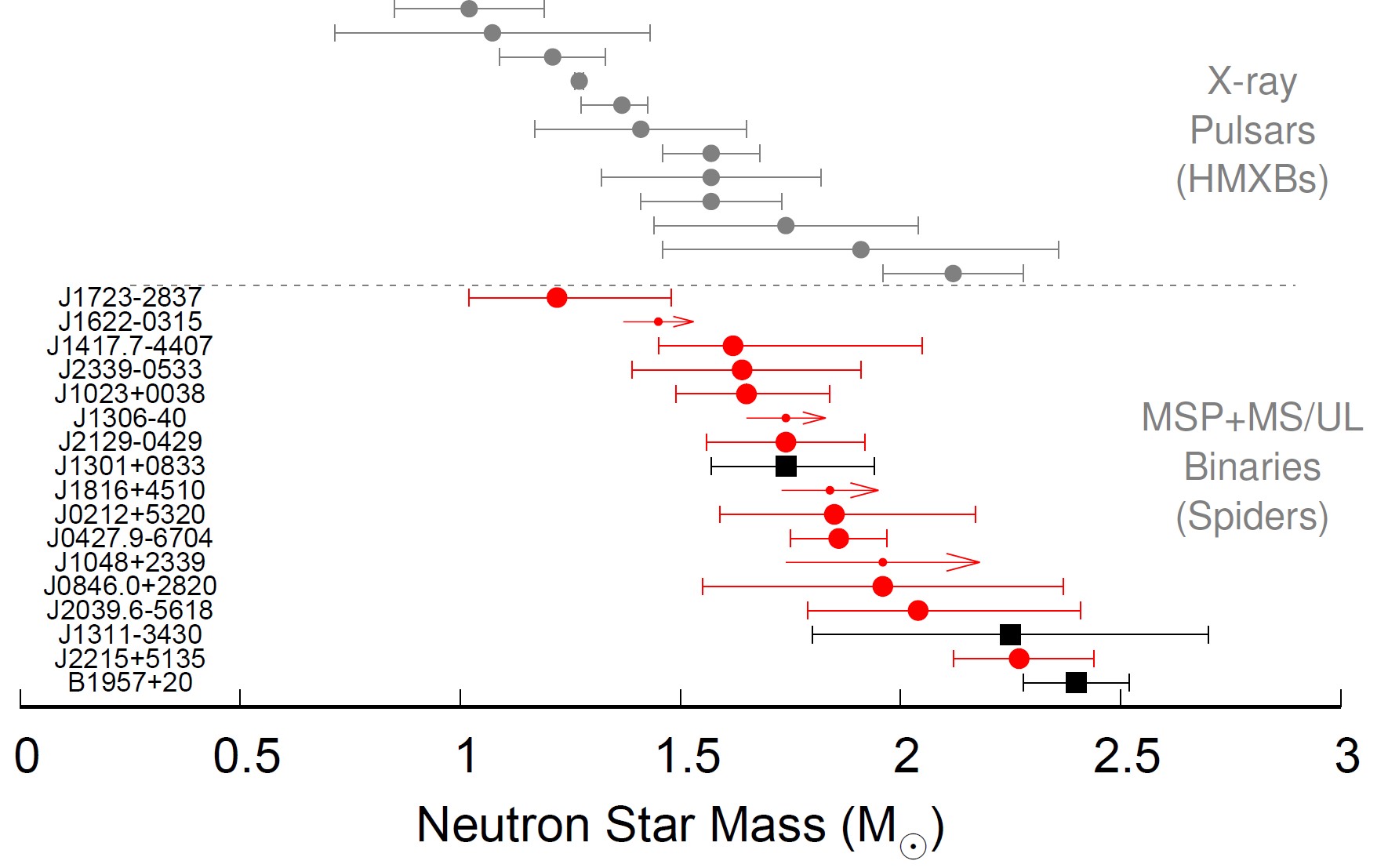
Manuel Linares Alegret is a Professor in the Department of Physics at the Norwegian University of Science and Technology (NTNU) in Trondheim, Norway, where he has been employed since September 2021. He also holds an Associate Professor position at the Polytechnic University of Catalonia (UPC) in Barcelona, Spain, since 2018. His research focuses on high-energy astrophysics with particular emphasis on neutron stars, black holes, white dwarfs, and compact objects in binary systems. Dr. Linares earned his Physics Degree from Universitat de Barcelona (1998-2004) followed by a PhD in Astronomy from Universiteit van Amsterdam (2004-2009). His subsequent career includes prestigious fellowships including Rubicon Fellow at MIT (2009-2012), IAC Fellow (2012-2017), and Marie Curie Fellow at UPC (2017-2018). His research interests primarily center on compact binary systems, particularly millisecond pulsars known as 'spiders' (including black widows and redbacks), neutron star physics, accretion flows, thermonuclear bursts, and the search for super-massive neutron stars. His work combines observational astronomy with theoretical modeling to understand extreme physics in these systems. He leads the LOVE-NEST project, which investigates compact binary millisecond pulsars to find the most massive neutron stars and understand the interaction between accretion flows, pulsar winds, and neutron star magnetospheres. An analysis of his recent publications reveals a strong focus on spider pulsar systems, with particular attention to mass measurements, orbital dynamics, irradiation effects, and the relationship between accretion and rotation-powered states. His work spans multiple observational wavelengths including optical, X-ray, and radio, often utilizing data from major telescopes and space observatories. ERC Consolidator Grant for LOVE-NEST project Marie Curie Fellow IAC Fellow Rubicon Fellow Dr. Linares has supervised numerous students at various levels, including PhD candidates, Master's students, and undergraduate research projects. He currently leads a substantial research team under the LOVE-NEST project, which has received 2M EUR in funding. His group includes multiple postdoctoral fellows and PhD candidates working on various aspects of compact object astrophysics. He teaches Observational Astrophysics (FY3215) at NTNU and has previously taught Quantum Physics and Physics I at UPC. He is the principal investigator of the LOVE-NEST (Looking for Super-Massive Neutron Stars) research group at NTNU, which focuses on compact binary millisecond pulsars. This team conducts research using multiple observational facilities worldwide and collaborates with international groups including those at the Instituto de Astrofísica de Canarias and the University of Manchester.
Norm Murray is a Professor at the Canadian Institute for Theoretical Astrophysics (CITA) within the University of Toronto . With a Ph.D. from UC Berkeley (1986), his research spans nonlinear dynamics , planetary formation , solar system evolution , and active galactic nuclei . His work combines theoretical physics with observational data from radio telescopes, X-ray satellites, and cosmological simulations. Recent research focuses on galaxy formation (via FIRE simulations), dark matter interactions in dwarf galaxies, and AGN disk dynamics . He employs machine learning for planetary collision modeling and investigates the interplay of magnetohydrodynamics and radiative transfer in quasar environments. Publications highlight his expertise in computational astrophysics, spanning topics from cosmic molecular gas mapping to the stability of exoplanetary systems.
Siavash Pourkamali is an Associate Professor in the Department of Electrical Engineering at the University of Texas at Dallas, within the Erik Jonsson School of Engineering and Computer Science. His research focuses on MEMS, NEMS, and microsystems, particularly in the development of thermally actuated resonators and sensors for environmental and biomedical applications. Education: PhD in Electrical Engineering, Georgia Institute of Technology, 2006 MS in Electrical Engineering, Georgia Institute of Technology, 2004 BS in Electrical Engineering, Sharif University of Technology, Tehran, Iran, 2001 His research interests include MEMS, NEMS, thermal actuation, resonant sensors, gas and pressure sensing, and real-time particulate monitoring. His work bridges fundamental microsystem design with practical applications in environmental monitoring and biomedical diagnostics. Recent publications highlight advancements in thermally actuated VHF resonators, self-sustained oscillators, and MEMS-based mass sensing. The research demonstrates a strong trend toward miniaturization, high sensitivity, and integration of resonant structures for real-time, label-free detection in both environmental and biological contexts. No scientific awards are mentioned in the provided text. Pourkamali has actively advised numerous graduate and undergraduate students, including PhD and MS candidates in electrical engineering and bioengineering. He has also served on multiple university committees, including the Graduate Council and Honors Council, and contributed to curriculum development and faculty search processes. His lab supports ongoing research in nano-positioning, resonant sensing, and microsystem integration. He leads a research group focused on MEMS and NEMS technologies, with current projects involving nano-precision measurement, aerosol impactors with embedded resonant balances, and scanning probe nanolithography systems. The lab collaborates across disciplines, particularly in biomedical and environmental sensing applications.
Prof. Dr. Michael Kramer is a Professor of Astrophysics at the University of Manchester and a Scientific Member (Managing Director) at the Max Planck Institute for Radio Astronomy. He leads the COMPACT Research Group and specializes in radio astronomical fundamental physics. University of Manchester: Professor for Astrophysics Max Planck Institute for Radio Astronomy: Managing Director, Radio Astronomical Fundamental Physics Research Interests: Dr. Kramer focuses on pulsars , neutron stars , and gravitational physics , using these as tools to test general relativity , detect gravitational waves , and study transients in the Milky Way. Recent Research Trends: His 15 most recent publications emphasize fast radio bursts (FRBs) , axion dark matter searches , black hole imaging , and pulsar timing arrays for gravitational wave detection. Studies include the M87 jet, Galactic Center magnetars, and MeerKAT telescope optimizations.
Zeynep Atamer is an Assistant Professor at Oregon State University's Food Science and Technology Department, affiliated with the Food Innovation Center in Portland, OR. Her research focuses on dairy science and technology, particularly bacteriophage dynamics, spore inactivation, milk protein behavior, membrane processing, and food safety optimization. Primary affiliation: Oregon State University, Food Innovation Center Department: Food Science and Technology Research interests include: Dairy bacteriophages and their thermal/non-thermal inactivation Spore-forming bacteria in dairy processing Milk protein fractionation and functional properties Membrane separation technologies for dairy applications Cheese and fermentation process optimization Development of phage-free dairy products and sensitive detection systems Recent publications highlight advancements in UV-C/phage reduction strategies, casein-based material development, bitter peptide characterization in cheese, and encapsulation technologies for microbial control. Key subfields include dairy processing stressors, whey protein stability, and gut microbiota modulation via phage delivery. Her work integrates industrial-scale validation with lab-to-commercial translation, addressing critical challenges in dairy safety and functionality through interdisciplinary approaches spanning microbiology, biochemistry, and food engineering.
Christopher Kochanek is a Professor and Ohio Eminent Scholar in the Department of Astronomy at The Ohio State University, affiliated with the College of Arts and Sciences. His expertise lies in cosmology, gravitational lensing, and supernovae. He earned his Ph.D. from the California Institute of Technology (1989) and a B.A. from Cornell University (1985). His research focuses on using gravitational lensing to study dark energy, dark matter substructures, and quasar accretion disks. He pioneered time-domain astronomy, exploring variability in massive stars and quasars, and co-led the ASAS-SN project for all-sky supernova detection. Key achievements include the Dannie Heineman Prize for Astrophysics (2020) and the AAS Beatrice M. Tinsley Prize (shared 2020). His work spans binary neutron star mergers, Milky Way mass estimation, and dust-obscured stellar explosions. Recent studies analyze supernova progenitors and long-term variability trends in transient events. Awards: Heineman Prize (2020), Tinsley Prize (2020) Grants & Projects: ASAS-SN collaboration with Prof. Stanek, dark energy constraints via lensing, and Milky Way dynamics. Labs/Teams: Active in the Ohio State Astronomy Instrumentation Group and ASAS-SN observatory network.
Jane Luu is a Professor II at the Centre for Planetary Habitability (UiO), specializing in comets, asteroids, and interstellar objects . Her research focuses on dynamic processes in small Solar System bodies, including fragmentation, disintegration, and dust behavior. She collaborates with international teams using facilities like the Nordic Optical Telescope (NOT) and WIYN Telescopes. Email: jane.luu@geo.uio.no Address: Sem Sælands vei 13, Svein Rosseland's house, 0371 Oslo Her work includes studies on comet outbursts (e.g., 12P/Pons-Brooks), disintegration mechanisms (C/2019 J2), and interstellar interlopers like 2I/Borisov and ’Oumuamua, where she proposed fractal dust aggregate models. Recent publications examine episodic activity in asteroids (6478 Gault) and discus-shaped comets (C/2014 B1).
Professor Christian Knigge serves as Professor of Astrophysics at the University of Southampton and is a core member of the Southampton Theory Astrophysics and Gravity (STAG) Research Centre within the Institute for Life Sciences. His research program investigates accretion phenomena across diverse cosmic scales, from stellar-mass compact objects to supermassive black holes. Knigge's primary research focuses on accretion phenomena and associated outflows, cataclysmic variables, close binaries, globular clusters, and active galactic nuclei. He examines the physical mechanisms driving accretion disk instabilities, outflow generation, and explosive events in binary systems, with particular emphasis on white dwarf and black hole accretors. His work integrates observational data with theoretical modeling to unravel the complex physics of these high-energy environments. Recent publications (2024-2025) reveal a strong emphasis on multi-wavelength observational campaigns, especially leveraging JWST capabilities, alongside theoretical code development. Key research threads include characterizing disk winds in active galactic nuclei, identifying quasi-periodic oscillations in white dwarf systems, classifying optical outbursts in cataclysmic variables, and developing computational tools like the SIROCCO radiative transfer code. These studies demonstrate his leadership in connecting observational signatures with fundamental accretion physics across different astrophysical regimes. Supervision: Currently guides six PhD students in Physics (Austen George William Wallis, Cordelia Brown, Brian Luff, Zackery Alexander Irving, Arianna Clarissa Albayati, Pornisara Nuchvanichakul) Grants: Leads STFC-funded projects including 'Line-Driven Disk Winds in Active Galactic Nuclei', 'C Knigge - Astrophysics at Southampton', and previously held a Leverhulme Trust Research Fellowship for 'The Universal Nature of Accreting Compact Objects' As an integral member of the STAG Research Centre, Knigge collaborates within a multidisciplinary team investigating gravity-dominated systems, contributing to Southampton's prominence in theoretical and observational astrophysics through both individual research initiatives and institutional consolidation grants.
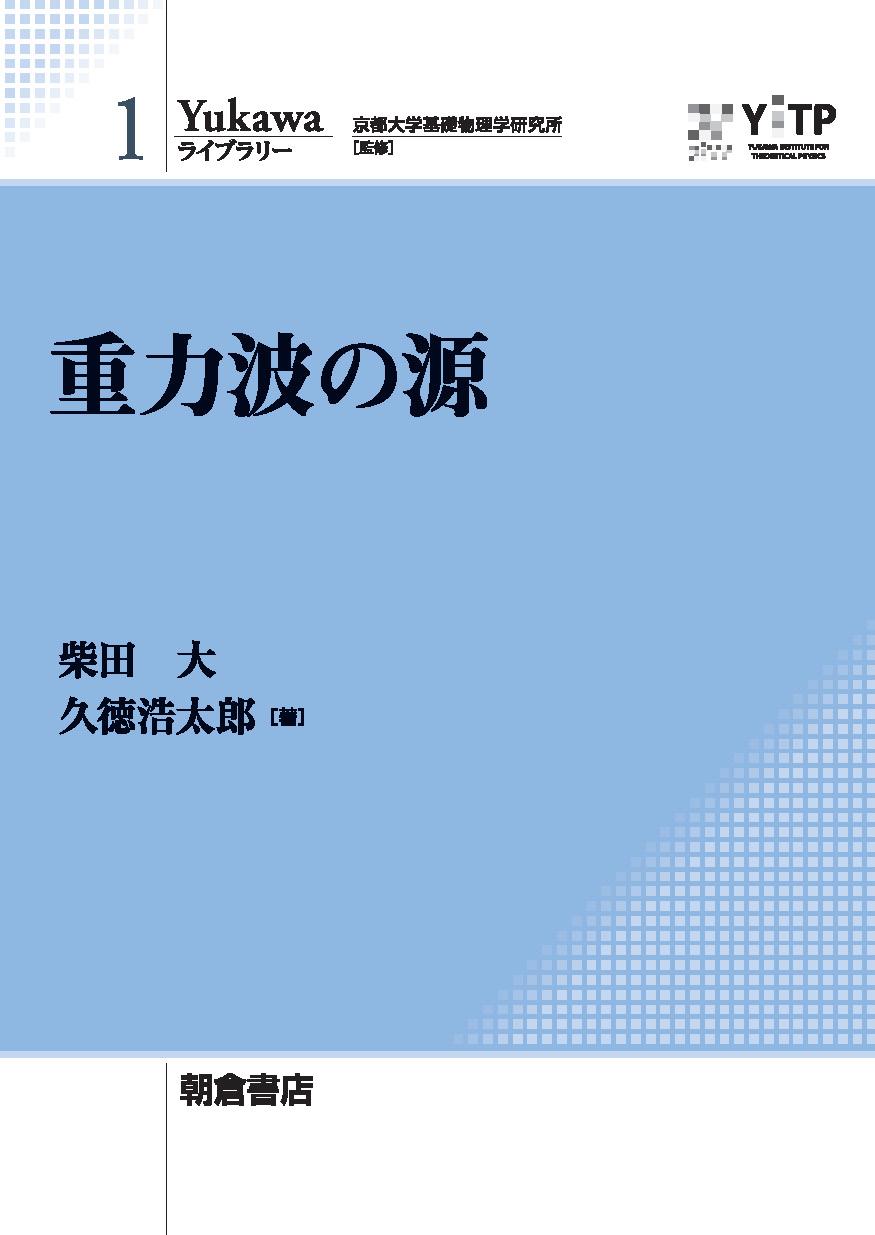
Prof. Masaru Shibata is a leading figure in computational relativistic astrophysics, currently serving as Director at the Max Planck Institute for Gravitational Physics (Albert Einstein Institute) since 2018 and Professor at Kyoto University's Yukawa Institute for Theoretical Physics since 2009. His career spans multiple prestigious institutions including University of Tokyo and Osaka University. PhD in Physics, Kyoto University (1994) Graduate studies in Physics, Kyoto University (1989-1993) Undergraduate in Science, Tokyo Institute of Technology (1985-1989) As a Professor with primary focus on Relativistic Astrophysics , Shibata's research investigates gravitational wave sources , neutron star mergers , black hole formation , and multimessenger astrophysics . His work combines general relativistic simulations , magnetohydrodynamic modeling , and neutrino radiation studies to understand high-energy cosmic phenomena. Recent publications (2024-2025) demonstrate expertise in supermassive star collapse , binary neutron star merger dynamics , and black hole-torus systems . These studies employ advanced numerical relativity techniques with applications to gravitational wave astronomy and gamma-ray burst modeling . 2025 Japan's Medal of Honor (Shiju-houshou) 2018 Nishina Memorial Prize 2013 International Society of General Relativity and Gravitation Fellow 2010 JSAP Excellent Young Researchers Prize 2008 Physical Society of Japan Outstanding Paper Award 2003 Nishinomiya-Yukawa Memorial Prize Shibata contributes to both theoretical frameworks and computational methodology in relativistic astrophysics, maintaining active collaborations with international research teams while leading computational projects at his dual institutions.
Prof. Dr. Peter Manz leads the Experimental Plasma Physics group at the Institute of Physics, University of Greifswald . His research focuses on understanding plasma turbulence in magnetically confined fusion plasmas and simulating astrophysical phenomena like accretion disks through laboratory experiments. The group collaborates with the Max Planck Institute for Plasma Physics in Greifswald and Garching. Conducts fundamental experiments using the linear plasma experiment VINETA Investigates drift wave turbulence and its impact on fusion reactor designs Develops tabletop models for astrophysical systems Recent Research Highlights include publications on tokamak density limits (2025) and vortex dynamics in Keplerian rotation experiments (2025). The group emphasizes collaborative research with international institutions and offers thesis opportunities in both experimental and theoretical plasma physics. Teaching includes lectures on fusion plasmas (Fr. 12-14) and low-temperature plasmas (Fr. 8-10) at the University of Greifswald.
Simone Salvadori is an Associate Professor at the Department of Energy (DENERG) of Politecnico di Torino, specializing in Computational Fluid Dynamics, Heat Transfer, and Turbomachinery. His research intersects Aerospace Engineering , Propulsion , and Energy Sustainability (SDG 7 & 9). He leads the EnaTech-RDE project on CO2-Free Rotating Detonation Engines and contributes to H2POWRD for hydrogen propulsion systems. Editorial roles: Guest Editor for Frontiers in Aerospace Engineering and Applied Sciences , Member of Energies Editorial Board. Organizing Committee Member for 8th ART Summer School (2024) and multiple international conferences including Aerospace Europe Conference 2023. His research focuses on pressure gain combustion , film cooling optimization , and machine learning-driven turbine design . He employs advanced computational tools to analyze unsteady flows, cavity dynamics, and exhaust systems in gas turbines, with applications to hydrogen/natural gas blends and rotating detonation engines . Salvadori supervises PhD students in projects related to high-pressure turbine vane coupling , cooling channel optimization , and exhaust flow control . He collaborates with the TEP Research Group and networks like ETN Global (Energy & Turbomachinery Network).