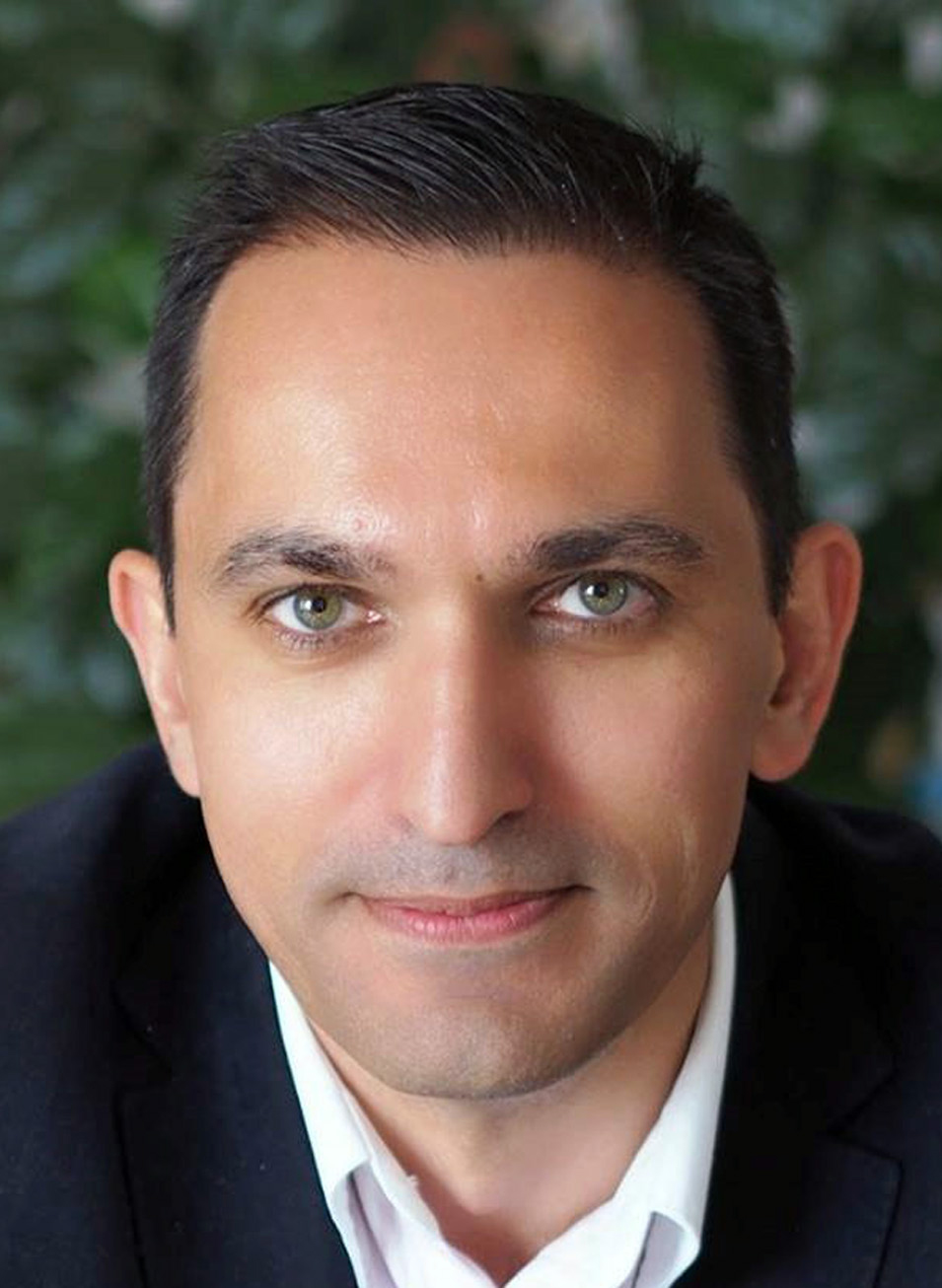
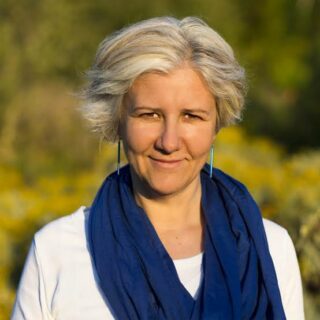
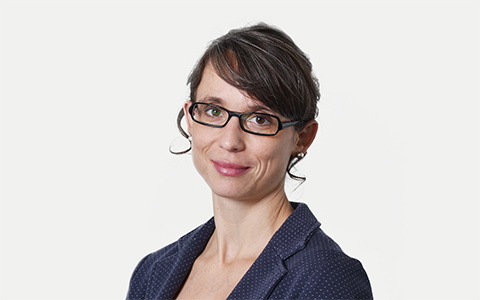
Didier Reinhardt is a Professor at the Department of Biology , University of Fribourg , focusing on plant-microbe symbiosis, arbuscular mycorrhizal fungi, and nitrogen fixation. His work bridges molecular genetics, biochemistry, and evolutionary biology to understand symbiotic signaling and cellular accommodation. Key Research Areas : Plant-microbe interactions, phyllotaxis, VAPYRIN/GRAS transcription factors, strigolactone signaling, and mycorrhizal symbiosis. Recent Publications : Explore genome assembly of argan trees, LCO receptor functionality in legumes, and VAPYRIN's role in endosomal trafficking during mycorrhizal symbiosis. Contact : didier.reinhardt@unifr.ch | +41 26 300 8818 His research on symbiotic signaling pathways and nutrient exchange mechanisms informs sustainable agriculture. Current projects include studying leghemoglobin phosphorylation in nitrogen fixation and chitooligosaccharide hydrolysis in rhizobial communication.
Niklas Lentelink is a researcher affiliated with the Chair of Synthetic Organic Chemistry at the Department of Chemistry and Applied Biosciences, ETH Zurich. His work is rooted in organic synthesis, a field critical to drug discovery, materials science, and chemical innovation. Research Context: The Chair of Synthetic Organic Chemistry, where Lentelink is based, focuses on developing novel synthetic methodologies, understanding reaction mechanisms, and creating functional molecules with applications in medicine and technology. University: ETH Zurich Department: Chair of Synthetic Organic Chemistry Email: niklas.lentelink@org.chem.ethz.ch
Zainabu Jallo is a postdoctoral researcher and lecturer in anthropology at the University of Basel (CH) and an Associate Fellow at Collegium. Her work bridges material culture studies, criminal anthropology, and Afro-Atlantic traditions, exploring the historical and ideological legacies of discredited scientific frameworks. Education: PhD in Anthropology from the University of Bern (CH). Research Focus: Zainabu examines how criminal anthropology’s biases, rooted in legal and institutional frameworks, have shaped modern understandings of humanity through material objects. Her projects, such as Inherited Futures? Objects, Time, and Knowledge , analyze the tangible remnants of colonial and pseudoscientific ideologies. Teaching: She develops courses on provenance research, museum anthropology, Afro-Atlantic studies, and iconic criticism. Publications: Recent works include the monograph Diasporic Consciousness in the Material Culture of Brazilian Candomblé (2025) and the edited volume Material Culture in Transit: Theory and Practice (2023). Scientific Awards: Swiss National Science Foundation Fellowship (2025–2026) Associate Fellow at Collegium
Prof. Dr. Jivko Stoyanov serves as Titularprofessor at the Institute of Social and Preventive Medicine, University of Bern, and leads the SCI Population Biobanking & Translational Medicine group at Swiss Paraplegic Research, Nottwil. Education PhD in Molecular Biology, University of Birmingham MSc in Translational Medicine, University of Edinburgh Research Interests His research focuses on spinal cord injury (SCI), investigating the biological mechanisms of multi-organ conditions and developing regenerative therapies. Key areas include: IVD Biology and Regeneration using human mesenchymal stem cells (MSCs) and intervertebral disc (IVD) cells Immunity and Infection in SCI, particularly immunosenescence and urinary tract infections Biology of Aging with SCI, including pain and musculoskeletal research Tissue engineering under normoxic and hypoxic conditions for disc regeneration Biobanking for SCI population studies Teaching Molecular Biology at the Medical Faculty, University of Bern Historical roots of evidence-based medicine in the Master of Health Sciences program, University of Lucerne Laboratory and Technical Expertise His group maintains a national biobank for SCI and a collection of matched cell sets (IVD cells, MSCs, peripheral blood cells). They specialize in hypoxic cell culture, molecular methods (PCR, ELISA, immunoblotting, immunohistochemistry), and live cell imaging.
Professor Christian Hardtke is a leading researcher in plant molecular biology at the Department of Plant Molecular Biology within the Faculty of Biology and Medicine at the University of Lausanne. He directs an active research laboratory focused on understanding the genetic and molecular mechanisms controlling plant growth and development. His work bridges fundamental plant science with potential applications in sustainable biomass production. Prof. Hardtke's research centers on the genetic control of plant growth rate and morphology, particularly investigating root system architecture and secondary growth mechanisms. His laboratory exploits natural genetic variation in Arabidopsis thaliana to identify genes responsible for quantitative aspects of plant form. Key research areas include phloem differentiation, hormone signaling pathways (particularly CLE peptides and brassinosteroids), and the molecular basis of developmental plasticity in plants. Analysis of Prof. Hardtke's recent publications reveals a strong focus on receptor kinase signaling pathways, cell-cell communication in vascular development, and the genetic basis of plant morphological variation. His work often combines genetic, molecular, and cell biological approaches to unravel complex developmental processes, with several publications appearing in high-impact journals including PNAS, Nature Communications, and The Plant Cell. Prof. Hardtke actively supervises PhD students, with recent graduates including Hang, Nicholay, and Ana Cecilia Aliaga Fandino. His laboratory receives generous research funding that supports multiple projects exploring fundamental aspects of plant development. He has established a productive research program with numerous collaborations and publications spanning plant genetics, molecular biology, and developmental physiology. The Hardtke Lab maintains a strong research presence investigating the molecular mechanisms of plant growth and development, with particular emphasis on how plants control their form through genetic and environmental interactions. The laboratory continues to make significant contributions to our understanding of plant developmental biology, with implications for both basic science and potential agricultural applications.
Teresa Galí-Izard is a Professor at ETH Zurich where she directs the Being Alive Chair within the Institute of Landscape and Urban Studies (LUS) in the Department of Architecture. She also serves as director of the Master's program in Landscape Architecture at ETH Zurich and is a director at Arquitectura Agronomia, a landscape architecture firm based in Barcelona. As a trained agronomist from the Technical University of Catalonia, she brings interdisciplinary expertise to her work bridging landscape architecture, ecology, and agricultural science. Her research focuses on translating the hidden potential of landscapes through understanding climate and geology as foundational elements for design. She has developed innovative methodologies including the BeingAliveLanguage software integrated with Rhino/Grasshopper that revolutionizes visualization of soil-centric information. Her work emphasizes fieldwork as essential practice, with particular attention to soil systems, geological conditions, and climate patterns as primary matter for landscape design. Professor Galí-Izard leads the global Garden of the XXI Century project with installations in Spain, Switzerland, USA, and Chile, exploring regenerative landscape cultivation and experimental gardening practices. Her publications and research demonstrate a consistent focus on translating landscapes through drawing, cartography, and digital tools while maintaining deep engagement with living systems and their evolutionary processes. Nominated for Schelling Architecture Prize (2024) for revolutionary contributions to landscape architecture understanding President of the Jury of the European Prize for Urban Public Space (2022) Member of the Oberlander Prize Jury She actively supervises student work through foundation studios and seminars at ETH Zurich, with recent projects including 'Regenerative Practices for Exhausted Landscapes' and 'Slow Water: Exploring Keyline Design in Switzerland.' Her Being Alive Chair functions as a laboratory for developing new approaches to landscape architecture that emphasize care, translation, and understanding of living systems. The chair organizes fieldwork weeks, research colloquia, and public lectures that foster interdisciplinary dialogue about landscape practices in the Anthropocene.
Dr. Sophie Baeriswyl serves as a Research Associate at the School of Applied Psychology, University of Applied Sciences Northwestern Switzerland (FHNW), where she also directs the Certificate of Advanced Studies (CAS) in Work and Organizational Psychology. Her academic career is deeply rooted in the intersection of work psychology, health promotion, and educational settings. Education: Doctorate in Psychology (2014-2016) at the University of Bern under Prof. Dr. A. Elfering Master's degree in Psychology (2008-2011) at the University of Bern with focus on Work and Organizational Psychology and Clinical Psychology Bachelor's degree in Psychology (2004-2007) at the University of Bern Additional training in Project Management, Statistics, and Large Group Methods Dr. Baeriswyl's research focuses on critical issues in contemporary work environments, particularly examining modern forms of control ("indirect control") and self-endangerment behaviors, psychosocial risks in organizations, work-life balance, and the specific challenges facing teachers in educational settings. Her work bridges theoretical frameworks with practical applications, addressing how workplace demands impact mental and physical health. She investigates how teachers cope with high demands, the relationship between workload and emotional exhaustion, and the role of autonomy in mitigating work-related stress. Analysis of her publication record reveals a consistent focus on teacher well-being and organizational health, with particular emphasis on how work overload leads to exhaustion through mechanisms like prolonged working hours. Her research demonstrates how autonomy can buffer negative effects of work overload, and she has developed innovative concepts like "self-endangering work behavior" to explain emotional exhaustion pathways. Recent work explores health-promoting routines in accelerated work environments and the transition from self-endangerment to self-care and team resilience. As an educator, Dr. Baeriswyl co-directs the CAS in Work and Organizational Psychology, supports research workshops, and supervises Bachelor's and Master's theses. Her practical work includes evaluating stress prevention initiatives like the "Schools Act – Stress Prevention at Work" and examining work-related stress and mental disorders in workplaces. Dr. Baeriswyl works within the Institute for Mental and Organizational Health at FHNW, which addresses how digitalization, social upheavals, and new work forms create both opportunities and challenges for mental and organizational health. Her research contributes significantly to understanding and improving workplace well-being, particularly in educational contexts.