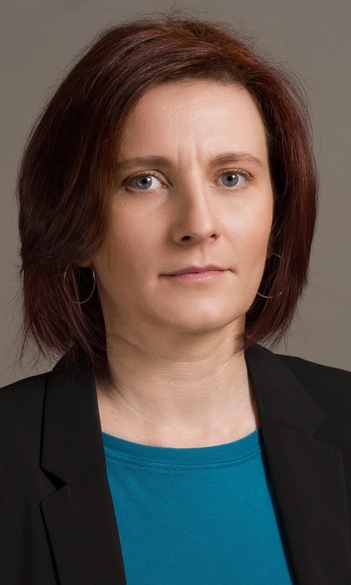
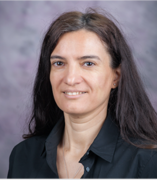
Teréz Vincze is an Assistant Professor at the Department of Film Theory and Film History within the Faculty of Humanities at Eötvös Loránd University (ELTE). She holds additional roles as an habilitated assistant professor and has been teaching at ELTE since 2004. Her work bridges film theory , historical analysis , and gender studies , with a focus on self-reflexive cinema and trauma representation . B.A. in Hungarian Language and Literature (ELTE, 2000) M.A. in Aesthetics (ELTE, 2001) Ph.D. in Aesthetics (ELTE, 2009, summa cum laude) Habilitation in Film Studies (ELTE, 2024) Vincze's research spans European cinema , with particular emphasis on Hungarian and East Asian films , modernist techniques , and cultural memory . Her publications analyze authorship , spatial concepts , and body politics in post-communist and transnational contexts. Key trends in her film analysis include self-reflexivity , trauma phenomenology , and gender representation . Her works examine directors like István Szabó , Ferenc Kósa , and Hong Sang-soo , alongside comparative studies of Bollywood and Taiwanese cinema . She has served as editor for the journal Metropolis since 1999 and as editor-in-chief (2003–2009). Her recent habilitation (2024) solidifies her expertise in film theory and contemporary cinema , with ongoing research into cinematic space and political allegory .
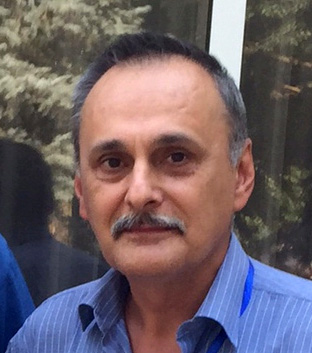
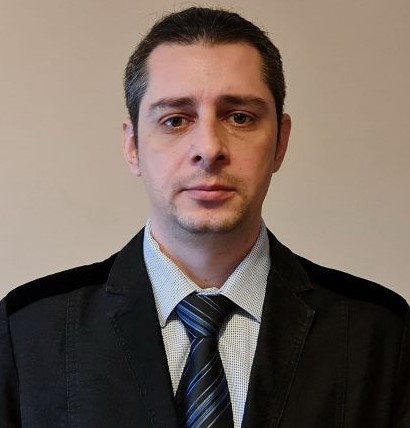
Gabriel Ciobanu is a Professor at Alexandru Ioan Cuza University of Iasi, Romania, and a Senior Researcher at the Romanian Academy, Iasi. He has held various academic positions internationally including as a Visiting Professor at Newcastle University (UK) from 2010-2015 and as a Research Fellow/Professor at the National University of Singapore (2000-2004). His educational background includes PhD studies at A.I.Cuza University and Edinburgh University (1990-1994) under the mentorship of Robin Milner, and his undergraduate studies in the Faculty of Mathematics and Computer Science at A.I.Cuza University of Iasi (1977-1982). Professor Ciobanu's research focuses on Membrane Computing and Natural Computing , Distributed Systems Models including process calculi with emphasis on semantics, behavioral equivalences, logics, and verification. He has made significant contributions to bridging membrane computing and process calculi, and to the Foundations of Mathematics and Computer Science through his work on Finitely Supported Mathematics. His research has applications in theoretical computer science, formal methods, and computational biology. His publication record shows a consistent research trajectory focusing on theoretical computer science with applications to natural computing, membrane systems, process calculi, and finitely supported structures. Recent work (2023-2025) continues to explore these areas with increasing focus on multi-agent systems, continuation semantics, and applications to medical systems and reaction systems. Scientific Awards and Recognition 2013 Grigore Moisil Award, Romanian Academy (as co-author of "Mobility in Process Calculi and Natural Computing", Springer) 2010-2013 Member of the National Research Council (CNCS) in Romania 2008-2010 Royal Society of London Joint International Project (Newcastle University, School of Computing) 2004 Octav Mayer Award for Scientific Achievements, Romanian Academy of Sciences, Iasi branch 2000 Grigore Moisil Award of the Romanian Academy of Sciences for results in Theoretical Computer Science 1995-1996 Japan Society for the Promotion of Science Fellowship (Tohoku University and Kyoto University) 1994 DAAD Research Fellowship (Institute of Computer Science, University of Kiel) 1991-1992 Royal Society of London and Romanian Academy Fellowship (University of Edinburgh) Professor Ciobanu has supervised 8 PhD students and numerous master's students. He has served as Editor-in-Chief of the Scientific Annals of Computer Science since 2006 and has been a guest editor for special issues of several international journals. He has collaborated with researchers from numerous countries including UK, France, Netherlands, Spain, Italy, Russia, China, Singapore, and India. He has been involved in various research projects and has spent research periods at prestigious institutions worldwide including Edinburgh University, Universite de Paris XI, CWI and VU Amsterdam, Tohoku and Kyoto University, National University of Singapore, and Newcastle University.
Prof. Dr. Benjamin Lucas Meisnitzer holds the Chair of Romance Linguistics with a Focus on Hispanic and Lusitanian Studies at the University of Leipzig since 2018. He previously held academic positions at Johannes Gutenberg University Mainz (Assistant Professor, 2014-2018) and Ludwig Maximilian University Munich (Lecturer, 2010-2014). As Vice Dean for Studies (since 2023) and President of the German Lusitanists Association (since 2021) , he bridges institutional leadership with research excellence. Education : LMU Munich (Magister Artium in Romance Philology/German Linguistics, 2006) and Universidade Nova Lisbon (2001-2006). Research Interests span multiple dimensions of Romance languages, including: Language Change & Grammaticalization (e.g., temporal semantics, modality, diachronic morphosyntax) Language Contact & Variation (e.g., Spanish/Portuguese in Latin America/Africa, Catalan/Galician/Basque) Applied Linguistics (e.g., L3 acquisition, phraseology in teaching, digital media) Pluricentricity (e.g., standardization processes, non-dominant varieties) Theoretical Syntax & Pragmatics (e.g., modal particles, clitics, tense-aspect-modality interactions) Article Trends reflect his expertise in: Comparative analysis of Ibero-Romance varieties in diachrony and contact scenarios Grammaticalization of modality and evidentiality markers Standardization challenges in African Portuguese and Lusophone contexts Digital media’s impact on language acquisition and variation Creole languages and typological hybridity Academic Leadership : Co-Director of the DFG-AHRC CrossMoGram project (with University of Central Lancashire) Chairman of the Doctoral Committee for Linguistics at Leipzig Visiting professorships in Brazil (UFRN, USP, UFFS) and Mozambique (Universidade Rovuma) Teaching emphasizes: Contrastive grammar (Spanish-Portuguese-German) Sociolinguistics and language policy Multilingualism in educational contexts Historical development of Romance languages
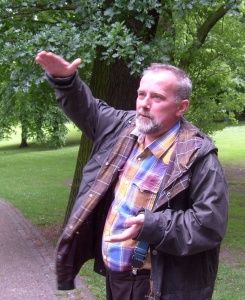
Prof. Alexandru Gafton is a Professor and Head of the Department of Romanian Language and General Linguistics at Alexandru Ioan Cuza University in Iași. His academic career spans roles from preparator (1995–1997) to professor since 2005. He holds a doctorate in philology (2000) and has led doctoral programs since 2008. Gafton is an editor of the journal Diacronia and has organized national conferences on religious discourse. His research focuses on diachronic linguistics, historical phonetics, biblical translation, and cultural anthropology. Key contributions include studies on the evolution of the Romanian language through biblical translations, paleography, and the foundational texts of the Iași School of Linguistics. He has authored over 30 books and numerous articles, including Elemente de istorie a limbii române and Evolutionismul Parabolelor . Gafton’s work emphasizes the interplay between language, culture, and history, with a focus on Romanian linguistic norms and their socio-historical contexts. He has held visiting professorships in Germany and Switzerland and has received grants, including the Prince Dimitrie Sturdza Fellowship. His editorial work includes critical editions of historical texts like Codicele Bratul and Palia de la Orăştie . Gafton’s research also explores the philosophical foundations of science and the role of metaphor in language evolution.
Dr. Cornelia Caragea is the Robert V. Kenyon Professor in the Department of Computer Science at the University of Illinois at Chicago (UIC), College of Engineering. She holds a Ph.D. in Computer Science from Iowa State University. As a Program Director at the National Science Foundation , she bridges academic research with national funding priorities. UIC Affiliation: Department of Computer Science, College of Engineering NSF Role: Program Director (current) Education: Ph.D., Computer Science, Iowa State University Her research spans artificial intelligence, machine learning, and natural language processing , focusing on semi-supervised learning, data cartography, and emotion/stance detection in social media. Applications include privacy prediction for images , disaster response systems , and scientific document analysis. She pioneered datasets like SciNLI, GunStance, and EZ-STANCE, while developing techniques such as Beam Tree Recursion and JointMatch. Recent publications emphasize semi-supervised frameworks for NLP tasks, multimodal disaster tweet classification , and large vision-language model evaluations . Collaborations with students like Seo Yeon Park, Jishnu Ray Chowdhury, and Chenye Zhao highlight her expertise in domain adaptation and calibrated knowledge distillation . She actively recruits PhD students for research assistantships in NLP, info retrieval, and machine learning. Her work has appeared in top venues including ACL, EMNLP, NeurIPS, and CVPR.
Ana-Sabina Uban is an Associate Professor at the Faculty of Mathematics and Computer Science, University of Bucharest . She earned her Ph.D. in Computer Science in 2020 under the supervision of Professor Liviu Dinu with a thesis on distributional and stylistic aspects of natural language. She teaches and coordinates courses in natural language processing, AI, and machine learning for both computer science and digital humanities students. Education: Ph.D. in Computer Science, University of Bucharest (2020) – Thesis: "Distributional aspects of natural language. Semantic and stylistic dimensions of text" Research Interests: Dr. Uban’s research is strongly interdisciplinary, bridging natural language processing , computational linguistics , psychology , and cognitive science . She explores historical computational linguistics , distributional semantics , and multilingualism , while also investigating explainability in AI models and mental health disorder detection using social media data. Research Trends & Publication Focus: Her recent publications span clinical NLP , mental health detection , historical linguistics , and multilingual cognate identification . A recurring theme is the application of advanced NLP techniques—such as transformer models, contrastive learning, and ensemble classification—to real-world problems in health, literature, and historical language study. Teaching & Student Supervision: Dr. Uban currently teaches and coordinates the following courses: Bio-medical NLP – Master’s level (English) Artificial Intelligence – Bachelor’s level for Mathematics students Practical Introduction to Machine Learning – Master’s level for Digital Humanities students Natural Language Processing 1 & 2 – Master’s labs and projects Contact: auban@fmi.unibuc.ro
Mihai-Bogdan Atanasiu is an Associate Professor at the Faculty of History, Alexandru Ioan Cuza University of Iași, and Director of the Department of Socio-Human Sciences, Institute for Interdisciplinary Research. He holds a Ph.D. in History (2012) and has led research projects funded by the Ministry of National Education (2008-2020). His research spans the political, social, and cultural history of Moldavia (17th-19th centuries), auxiliary sciences of history (genealogy, prosopography, heraldry), and historical source editing. He has published two monographs, edited source materials, and contributed to prestigious journals, including international collaborations. Doctor of History (2012) Postdoctoral Researcher (2014-2015) Director, Department of Socio-Human Sciences (2008-present) His academic work integrates prosopography, heraldry, and biographical analysis to study aristocratic elites, monastic networks, and cultural identity formation. Recent publications examine highwaymen in 19th-century Romanian principalities, cross-civilizational genealogical studies, and comparative analyses of power structures in France and Moldavia. He coordinates study volumes and serves on editorial boards of recognized journals. 2025: Highwaymen and social history in the Long Nineteenth Century 2024: Cross-civilizational genealogy and heraldry 2023: 18th-century Moldavian diptychs, coinage, and rulership propaganda Atanasiu earned the Nicolae Iorga Award (2017) from the Romanian Academy. His projects bridge archival research with interdisciplinary methodologies, focusing on elite social structures, monastic documentation, and transnational historical influences.
Assoc. Prof. PhD Anna Marinova Ivanova is a faculty member at the Faculty of Philosophy within the University of Veliko Tarnovo . She specializes in Epistemology , Philosophy of Science , and Ethics , with a focus on epistemic justification , scientific objectivity , and intercultural philosophical discourse . ORCID: 0000-0002-1312-5684 University email: anna.ivanova@ts.uni-vt.bg Ivanova's research explores the intersection of epistemic norms and linguistic frameworks , as seen in her work on testimony theory , teleological concepts in biology , and critical thinking in multicultural contexts . Her recent publications analyze scientific skepticism , metaphilosophical status of knowledge theories , and axiological dimensions of scientific trustworthiness . Key project involvements include: Laboratory for Applied Academic Ethics (2023-2025): Modernizing facilities for research ethics , academic integrity , and interdisciplinary studies . International Scientific Networks (2021-2025): Collaborative research on epistemological trends , philosophy of education , and global philosophical dialogues . History of Bulgarian Humanitarian Thought (2021-2024): Critical examination of Bulgarian philosophical traditions , science-philosophy intersections , and epistemological methodologies . She contributes to academic community building through: Co-organizing international conferences like "30 Years of Philosophy Specialization" (2022) and "Philosophy, Science, Values" (2024) Coordinating the International Student Philosophical Essay Contest (2025) to bridge high school and university education Advancing WoS-indexed publications and international research networks with Serbian, Polish, and Romanian institutions
Alexei Kochetov is a Professor in the Department of Linguistics at the University of Toronto, Faculty of Arts and Science. His research focuses on the interface between phonology and phonetics, particularly palatalization, assimilation, and their phonetic correlates. He has held academic positions at the University of Toronto since 2003 and previously at Simon Fraser University. Kochetov holds a PhD from the University of Toronto (2001), an MA from Pittsburg State University (1996), and a BA from Perm State University (1992). His research interests include articulatory phonetics, cross-linguistic phonological phenomena, and bilingual speech production. He has conducted studies on languages such as Russian, Japanese, Kalasha, Kannada, and Korean using methods like electropalatography (EPG), ultrasound, and acoustic analysis. Recent work explores L2 acquisition of English consonants, nasal depalatalization in French, and articulatory MRI studies of Indian languages. Kochetov has secured extensive SSHRC funding for projects on speech production, perception, and bilingualism. His articles (e.g., on French nasal depalatalization, Russian palatalization, and Korean liquids) reflect his expertise in articulatory detail and cross-linguistic comparison. Though no specific awards are listed, his contributions to phonetics are highlighted through his prolific grant activity and experimental methodologies. He supervises graduate students in phonetics/phonology and teaches courses like Advanced Phonetics and Phonetic Analysis . His research lab focuses on cutting-edge articulatory imaging and remote data collection techniques, contributing to both theoretical and applied linguistics.
Yoana Stoilova Slavcheva serves as a Senior Lecturer at the Department of General Linguistics and Old Bulgarian Studies within the Faculty of Modern Languages at St. Cyril and St. Methodius University of Veliko Turnovo. Holding a PhD, she contributes significantly to academic life through teaching courses in linguistics and literature, and through active research in Balkan literary studies with a focus on Bulgarian-Romanian comparative analysis. Her scholarly interests span Comparative Literature , Bulgarian and Romanian Literary History , Translation Studies , and Linguistics . She particularly examines de-ideologization processes in 20th-century Balkan literature, anti-totalitarian narratives, and the reception of literary works across cultural boundaries. Her research extends to language pedagogy, developing teaching materials for Bulgarian students learning Romanian and investigating CEFR-aligned methodologies. Analysis of her publication record (2010-2024) reveals consistent focus on political and ideological dimensions of literature during communist-era Bulgaria and Romania. She frequently analyzes works by authors such as Ismail Kadare, Marin Preda, and Mircea Cartarescu, exploring themes of dissent, exile, and cultural identity through historical contextualization and close textual analysis. Dr. Slavcheva participates in international research projects including the ongoing "International Academic Networks - Traditions and Innovations" (2024) fostering collaboration with universities in Nis, Warsaw, and Craiova, and the earlier "Centers and Peripheries of the Balkans" (2010-2012) examining cultural-linguistic dynamics. These projects highlight her commitment to sustainable academic cooperation and intergenerational knowledge transfer. No scientific awards were explicitly mentioned in available documentation. As a Senior Lecturer, she engages in academic advising and curriculum development, with project participation indicating active mentorship of young researchers through international conferences, doctoral seminars, and student workshops. Her involvement in cross-border educational initiatives demonstrates dedication to enhancing graduate career prospects and academic visibility.
Professor Martin D Maiden is a leading scholar in Romance linguistics, holding the position of Professor of the Romance Languages at the University of Oxford and Fellow of Trinity College. He is affiliated with the Faculty of Medieval and Modern Languages, specializing in the history of Romance languages with a focus on inflectional morphology and dialectology. His research integrates general historical linguistics and morphological theory, particularly examining Italo-Romance, Daco-Romance (Romanian), and other Romance languages like French, Spanish, Dalmatian, and Romansh. His teaching expertise spans Italian linguistics, Romanian linguistics, general Romance linguistics, historical linguistics, and morphology. Maiden has authored and edited numerous influential works, including The Cambridge History of the Romance Languages and The Oxford History of Romanian Morphology . His research often explores morphological autonomy, morphomes, and diachronic changes in verb paradigms across Romance languages. Maiden’s recent publications (2021–2024) emphasize Romanian morphology, Italo-Romance verb structures, and contact-induced changes. Key themes include the evolution of plural formations in Istro-Romanian under Croatian influence, the role of Slavic influences in Romanian inflectional systems, and the application of morphomic theory to cognitive linguistics. His work bridges theoretical insights with empirical diachronic analysis, contributing significantly to Romance linguistics methodology.
Irina Livezeanu is an Associate Professor in the Department of History at the University of Pittsburgh, affiliated with the Kenneth P. Dietrich School of Arts and Sciences. She specializes in East Central European history, focusing on intellectual and cultural history, nationalism, and gender studies. Her work examines interwar Romania, Jewish communities, and avant-garde movements. Education: PhD in History (University of Michigan, 1986), MA in Russian and East European Studies (1979), and BA in Classics (Swarthmore College, 1974). Research interests span modernization processes in Eastern Europe, cultural regionalism, and the intersection of nationalism and gender. She has authored influential books like Cultural Politics in Greater Romania (1995) and co-edited The Routledge History of East Central Europe since 1700 (2017). Her recent scholarship addresses Romanian avant-garde movements, post-communist cultural debates, and Holocaust historiography. Major awards include the Heldt Prize (1995) and American Romanian Academy Book Award (1995). She has held fellowships at institutions like the Library of Congress and the American Philosophical Society. Livezeanu advises numerous graduate students and has served on editorial boards of journals like Aspasia and Journal of Romanian Studies . She is past President of the Society for Romanian Studies (2010–2014) and actively engages in academic service across multiple institutions.
Prof. Dan Cristea is a faculty member at the Faculty of Computer Science, Alexandru Ioan Cuza University (UAIC), specializing in Artificial Intelligence and Natural Language Processing. He holds a PhD and is a corresponding member of the Romanian Academy. His research focuses on computational linguistics, knowledge representation, and historical document deciphering, with notable projects like DeLORo for old Cyrillic texts and EUROLAN Summer Schools. He has supervised numerous students in AI and NLP projects, including systems for question-answering, sentiment analysis, and agent-based models. His work bridges theoretical linguistics with practical applications in digital heritage preservation and multilingual technologies. Education: PhD (not explicitly stated in text), but his academic rank implies doctoral qualifications. Research Interests: AI applications in NLP, discourse analysis, computational linguistics, and cultural heritage digitization. Projects include MappingBooks for geographical text navigation, CoBiLiRo for bimodal corpora, and Sentimatrix for sentiment analysis. He collaborates internationally on corpora like EuReCo and has developed tools for dependency parsing and semantic annotation. Key Achievements: Corresponding member of the Romanian Academy Lead developer of the Corpus of Contemporary Romanian Language (CoRoLa) Pioneered AI-driven historical document transcription systems Grants and Collaborations: Involved in EU-funded projects like i-Librarian and i-Publisher. Collaborates with institutions globally on NLP and corpus linguistics. Labs/Teams: Director of the NLP-Group@UAIC-FII and heads the DeLORo project team.
Dr. Halszka Bąk is an Assistant Professor at the Faculty of English, Adam Mickiewicz University, Poznań, specializing in experimental pragmatics and emotion-language interface studies. Her research spans psycholinguistics, cognitive linguistics, and multilingualism, with a focus on affective language processing and linguistic relativity. Education: BA (2009), MA (2010, 2011) in English and Russian, and Ph.D. (2015) in English Linguistics from Poznań. Her work explores how linguistic and cultural factors influence emotional prosody processing, empathy-driven emotion term selection, and cross-linguistic differences in emotion evaluation. She has developed the Poznań Induced Emotion Database and EmCat Basic Emotion Term Databases as research tools for affective science. Dr. Bąk has received the Psychonomic Society's Member Select-Speaker Award for methodological rigor in bilingual emotion processing research. She has participated in grants like SONATA 10 and SONATA 13, investigating psychophysiological correlates of affective language processing and basic emotion terms in Polish-English contexts.
Milan Krajčovič is a Senior Researcher at the Institute of History of the Slovak Academy of Sciences, specializing in Central European and Balkan historical dynamics with emphasis on Slovak international relations. His career spans over six decades of scholarly contributions to understanding national movements within Habsburg and post-Habsburg contexts. His educational background includes: Faculty of Arts, Comenius University Bratislava (1955-1960) PhDr. (1968) CSc (1967) DrSc (1993) Krajčovič's research focuses on the interplay between nationalism and international diplomacy, particularly examining Slovak-Yugoslav-Romanian solidarity movements, border disputes, and minority rights within Central Europe. His methodology combines archival analysis with comparative studies of national emancipation processes, revealing how Central European nations navigated imperial structures and international conferences to assert cultural and political identities. This work bridges diplomatic history with social movements analysis. His recent publications (1999-2005) demonstrate evolving emphasis on comparative nationalism studies, with increasing attention to economic dimensions of minority cooperation and post-WWI reemigration patterns. Key trends include analysis of Slovak autonomy proposals within Habsburg federalism frameworks and critical examination of how historical narratives shape contemporary Central European identities. Scientific recognition includes: Corresponding Membership in the Serbian Academy of Sciences (1968) Sozialwissenschaftliche Forchungsinstitut EAO Otzenhausen Award for German history scholarship (2001) Europäische Akademie Otzenhausen Award for European historical analysis (2003) Romanian Ministry of Education Diploma of Excellence (2006) As Chairman of the Slovakia-Romania Historians Commission and long-serving Editor-in-Chief of Historical Studies, Krajčovič has significantly shaped academic collaboration across Central Europe. His editorial leadership of Historické štúdie (volumes 34-44) established critical frameworks for Slovak historiography while facilitating international scholarly exchange through conference organization and commission leadership.