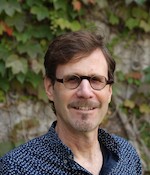
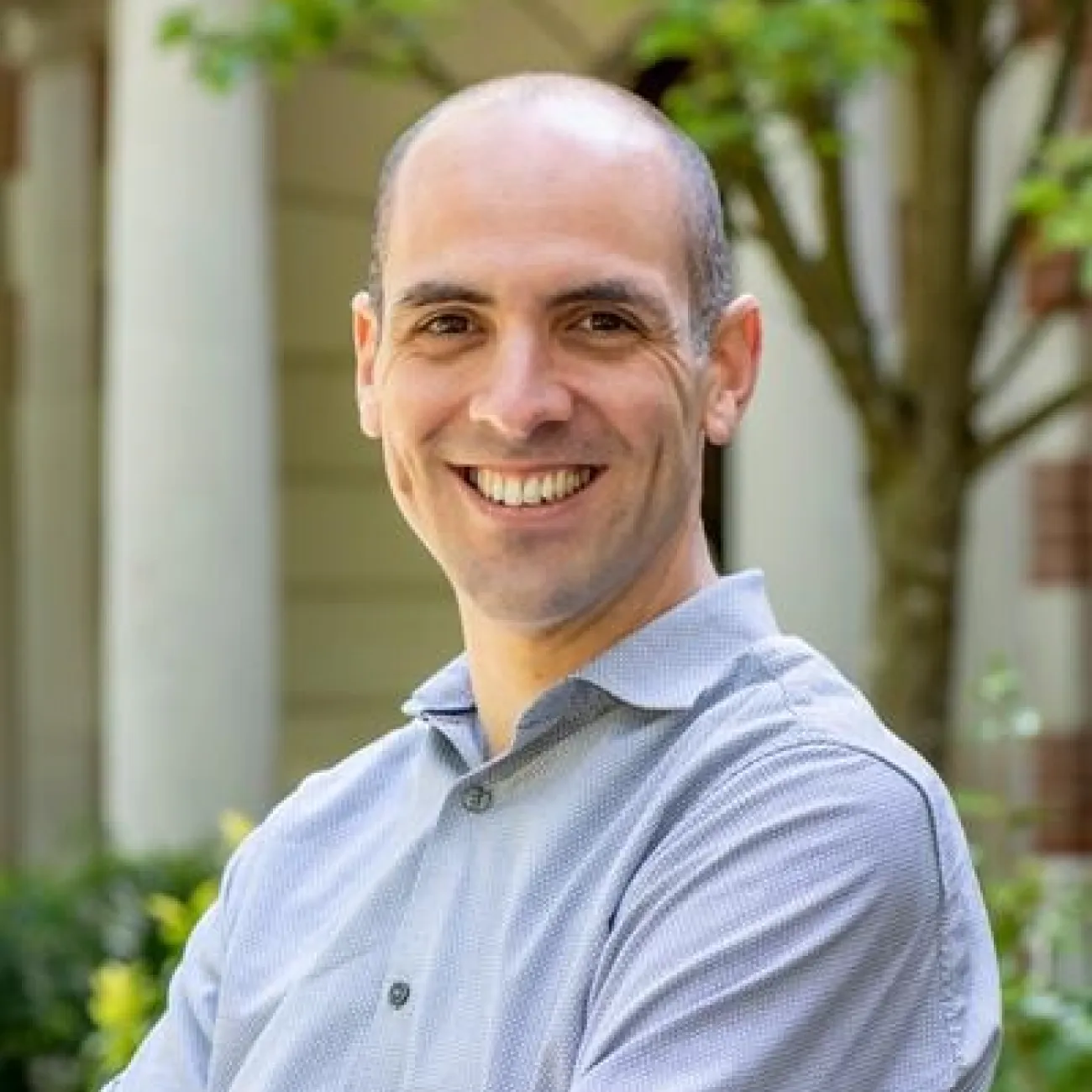
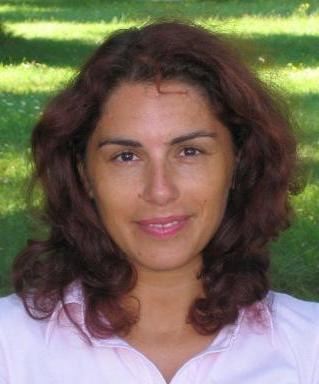
Dr Marieke Meelen is an Associate Professor in Historical Linguistics at the University of Cambridge, affiliated with the Faculty of Modern and Medieval Languages and Linguistics. She serves as a Fellow, Tutor, and Director of Studies at Trinity Hall. Research Interests: Historical Linguistics, Comparative Syntax, Information Structure, Grammaticalisation & Pragmaticalisation, NLP for low-resource languages, Celtic & Tibeto-Burman languages Projects: PI for ELDP-funded endangered language documentation in Nepal; collaborator on ERC-funded 'PaganTibet' and AHRC-funded 'Emergence of Egophoricity' Key Contributions: Development of ASR and HTR models for Tibeto-Burman languages; historical treebank of Welsh; computational approaches to Celtic and Tibeto-Burman syntax Publications & Grants focus on syntactic reconstruction, corpus creation, and NLP for endangered languages. She mentors PhD students working on Celtic or Tibeto-Burman languages and consults for computational linguistics projects.
Leo Wanner is a prominent Professor at Universitat Pompeu Fabra's Department of Information and Communication Technologies, specializing in Natural Language Processing. With a research career spanning over three decades, he has made significant contributions to computational linguistics, particularly in natural language generation, collocations, and hate speech detection. He has served as editor for multiple editions of the International Conference on Computational Linguistics (COLING) including the 2025 edition. Wanner's research interests encompass a wide range of topics in computational linguistics, with recent work focusing on hate speech detection, multilingual processing, and the capabilities of large language models. His work bridges theoretical linguistics with practical applications, addressing challenges in lexical semantics, syntax, and discourse analysis. Notably, he has pioneered research in collocation processing and has contributed to the development of frameworks for analyzing thematic progression in texts. His publication record demonstrates consistent productivity with significant contributions across multiple subfields. Recent work shows a strong focus on contemporary challenges in NLP, particularly hate speech detection and the capabilities of large language models. His research often takes a multilingual perspective, addressing challenges across different language families including Romance and Slavic languages. Wanner has led significant research projects including the development of FORGe, a multilingual deep sentence generator based on the Meaning-Text Theory, which achieved top performance in the WebNLG challenge. His work on multilingual surface realization has established important benchmarks in the field through shared tasks that have engaged researchers worldwide. As an academic leader, Wanner has mentored numerous researchers and contributed to building research infrastructure through corpus development and annotation schema design. His work on collocation resources, thematic progression analysis, and hate speech detection frameworks has provided valuable resources for the broader NLP community.
Antonio Fábregas (b. 1978) is a Professor at the Department of Language and Literature, Norwegian University of Science and Technology (NTNU), specializing in Spanish grammar, variation, morphosyntax, comparative linguistics, and semantics. He has authored 8 monographs and over 150 articles/book chapters. Research : Focuses on syntax, semantics, phonology, and their interactions in word formation. Explores Spanish language variation, sociolinguistic contact phenomena, and theoretical morphology. Teaching : Engaged in linguistics education at NTNU (office: Bygg 4 Dragvoll, Trondheim). Publications : Recent work includes analyses of Spanish prefixation, argument structure, elative compounds, and negation-participle constructions. Key contributions to morphological theory and Romance language comparison.
Aria Adli is a Professor of Romance Linguistics at the University of Cologne , where he founded and directs the Sociolinguistic Lab . He holds a tenured W3 professorship and previously held positions at Humboldt University Berlin, University of Strasbourg, and University of Freiburg. Education : Diplom in Psychology (University of Bonn, 1998) Double degree: Maitrise in Linguistics (Université de Toulouse II) and Licence in Psychology (1998) Habilitation (University of Freiburg, 2011) PhD in Romance Philology (University of Tübingen, summa cum laude, 2003) His research focuses on grammatical variation , examining syntax-information structure interfaces, social stratification (Bourdieu's lifestyle), and register effects. He uses cross-linguistic comparisons (French, Spanish, Catalan, Persian) and methods like corpus analysis, computer simulations, and fieldwork. Scientific Awards : Emmy-Noether Fellowship (DFG) DAAD grants for multilingualism research art, science & business-Stipendium (Akademie Schloss Solitude) Thyssen-Stiftung funding Grants & Projects : Principal investigator for SFB 1412 subproject 'Register: Language-Users' Knowledge of Situational-Functional Variation' DFG grant for 'Grammar-Usage Relationship in Spanish/Persian' Organized international workshops on sociolinguistics, register, and variation Academic Leadership : Head of the Sociolinguistic Lab Geschäftsführender Direktor of Fachgruppe 5 (Phil Fakultät UzK) Member of Excellence Cluster 'Choice in Expression' initiation group
Maria Sol López Martínez is a Researcher at the University of Santiago de Compostela, affiliated with the Department of Galician Philology within the Faculty of Philology. She is part of the Galician Language Institute (ILG) and the FILGA research group, focusing on Galician Philology and Linguistics. Her work spans Galician and Portuguese philologies, with a specialization in syntactic structures and historical linguistic analysis. She earned her Doctorate in 1991 with the thesis The direct complement with the preposition 'A' in Galician , supervised by Dr. Ramón Lorenzo Vázquez. Her research interests include syntactic patterns in Galician, historical language evolution, and comparative studies between Galician and Portuguese. No scientific awards or grants are explicitly mentioned. She contributes to academic discourse through her affiliation with the ILG and FILGA, though specific lab or team details beyond these are not provided.
Stefano Quaglia is an Assistant Professor at the Institute of Romance Studies , University of Graz. His research focuses on syntax and its interfaces with morphology and semantics , using Italian as a comparative framework within and beyond Romance languages. Email: stefano.quaglia@uni-graz.at Office: Room 003303056, Merangasse 70/III, Graz, Austria Consultation Hours: Wednesday, 3:30-4:30 p.m. Research interests include: Spatial expressions and functional sentence structure Long-distance dependencies Language contact phenomena Particle verbs and clausal organization Wh-movement and information structure Cross-linguistic syntactic analysis Recent publications highlight empirical and theoretical work on verbal theme vowels , Slavic prefix ordering , and L3 transfer dynamics . His studies integrate synchronic analysis with diachronic and contact linguistics frameworks. Articles demonstrate trends in: Syntax-morphology interfaces : Allomorphy, prefix stacking, particle systems Comparative Romance-Slavic analysis : Extraction patterns, convergence phenomena Language acquisition : CLI effects in bilingual/multilingual contexts Prosodic constraints : Stress and phrasing in particle verbs Information structure : Wh-questions in Romance
Lucia Busso is a Researcher at Aston University, affiliated with the Research Centre for the Humanities and the Aston Institute for Forensic Linguistics within the College of Business and Social Sciences. Her research focuses on usage-based models of language, corpus linguistics, cognitive linguistics, and experimental methods applied to forensic and sociolinguistic contexts. She holds a PhD in Linguistics from Università di Pisa (2015–2018), awarded in 2019. Her work spans topics such as valency coercion in Italian, construction grammar, forensic linguistic analysis, and corpus-driven studies of media representation. Key areas include analyzing power dynamics in online communities, legal-lay language differences, and metaphorical discourse in pandemic reporting. She contributes to interdisciplinary projects, including the development of specialized corpora like CorIELLS and the Aston Forensic Linguistic Databank (FOLD). Busso’s research highlights the intersection of cognitive and corpus-based approaches, with recent studies emphasizing forensic applications, gender-based violence representation, and sociolinguistic patterns in Italian and English. Her methodologies integrate computational tools, experimental psychology, and qualitative discourse analysis. Her articles reflect a commitment to advancing linguistic theory while addressing real-world issues like media framing, legal language, and anonymous communication dynamics. She actively engages in public outreach, such as the CorpusCast podcast episode on forensic linguistics.
Thomas Rainsford is a Lecturer at the University of Stuttgart's Institute of Linguistics, Division of Romance Linguistics. His research focuses on historical Romance linguistics, particularly phonological change, morpho-syntax, and corpus development. He holds a PhD from the University of Cambridge and has held positions at ENS de Lyon and as a British Academy Post-Doctoral Fellow at the University of Oxford. Research interests center on: Diachronic evolution of French, Occitan, and Italian Prosodic changes and phonological annotation Lexical and morpho-syntactic aspects of motion events Historical corpus development with multi-layer annotation Publications demonstrate consistent focus on: Historical phonology and orthographic systems Syntactic change in medieval Gallo-Romance languages Corpus linguistics methodologies Computational approaches to historical texts Awards include the British Academy Post-Doctoral Fellowship. Current research involves leading a DFG-funded project examining motion events in French and Italian through lexical and syntactic change analysis. Developed the Old Gallo-Romance Corpus (OGR) with specialized phonological and metrical annotation layers.
Marcela Depiante is a Professor of Spanish in the Department of Languages at the University of Wisconsin-Eau Claire, affiliated with the College of Arts and Sciences. She holds a Ph.D. in Linguistics from the University of Connecticut (2000), an M.A. in Linguistics from the University of Maryland (1993), and a B.A. in Psychology with Linguistics concentration from the University of Massachusetts Boston. Her research focuses on Romance Linguistics, particularly comparative syntax and morphology between Spanish and English. Key interests include ellipsis and anaphora phenomena, syntax-semantics of adpositions, bilingualism, L1 attrition, and the syntax of Heritage Spanish in the U.S. Notable work includes studies on null complement anaphora, non-canonical agreement patterns, and stranded prepositions in Spanish. Recent presentations include discussions on Spanish 'parecer' complement structures (2023), locative constructions in Argentine Spanish (2023), and hyper-raising phenomena (2022). Her publications appear in venues like Oxford Handbook of Ellipsis and Hispanic Linguistics Symposium proceedings. She collaborates frequently with Adolfo Ausín on syntactic analysis projects. Teaching responsibilities include Spanish linguistics courses (e.g., Span 491, 492), advanced grammar, and translation. Her work bridges formal syntax with sociolinguistic aspects of language variation and attrition.
Natasha Popovic is an Associate Professor at the Faculty of Philosophy, University of Novi Sad , specializing in Romance Studies . Her academic journey includes a 2005 undergraduate degree in French Language and Literature, a 2009 master's thesis on French prepositions à and de in Serbian syntax, and a 2016 doctoral dissertation on causality in French and Serbian languages. Research interests include: Modern French language Syntax and semantics Translation studies Contrastive language-culture analysis She has participated in the Ministry of Education's Languages and Culture in Time and Space (Project 178002) since 2010 and received the Coimbra Group Scholarship for research at the University of Poitiers (2017). Her work spans pedagogical innovation, including: Using comics for language learning Integrating the Moodle platform Methodology for teaching French Key publications analyze prepositional logic, cultural translation, and causal constructions across French and Serbian languages.
Grant Goodall is a Professor of Linguistics and Director of the Linguistics Language Program at the University of California San Diego. He holds a B.A. from UCLA and a Ph.D. from UC San Diego, with additional studies at MIT and UNAM. His research focuses on syntax, particularly syntactic representations, their interaction with cognitive processes, and language acquisition across lifespans. He directs the Experimental Syntax Lab and has pioneered experimental techniques for studying sentence acceptability, with work on English, Spanish, Chinese, and constructed languages like Esperanto. Before joining UC San Diego, he taught at the University of Texas at El Paso and held visiting positions in Switzerland and Argentina. His work emphasizes applying linguistic research to improve second language learning. Key areas include experimental syntax, language pedagogy, and cross-linguistic variation in island phenomena. Recent research trends in his articles emphasize coordination structures, L2 syntax processing, and the application of experimental methods to syntactic theory. He has contributed to debates on wh-movement, D-linking, and the universality of island constraints across languages. His experimental studies often compare methodologies like magnitude estimation with traditional acceptability judgments. Scientific Awards: None explicitly listed in provided texts. Lab Affiliations: Director of UC San Diego's Experimental Syntax Lab and Linguistics Language Program. Teaching Contributions: Developed materials for introductory Spanish (e.g., 'Conéctate') and advocates for evidence-based language pedagogy.
Glyn Hicks is an Associate Professor and Head of the Department of Modern Languages and Linguistics at the University of Southampton. He holds a PhD in Linguistics from the University of York, with research focusing on syntactic theory, language acquisition, and bilingual syntax attrition. His work explores Minimalist approaches to syntactic phenomena like 'tough'-movement and binding theory, alongside applications to second language acquisition and attrition in bilingual speakers. Research highlights include co-investigating the AHRC-funded 'Vulnerable Native Grammars' project (2020-2023), examining attrition in native grammars of bilinguals exposed to second languages post-childhood. He teaches undergraduate modules such as Elements of Linguistics, Syntax, and Advanced Syntax, and has contributed to postgraduate language analysis courses. Education: BA French & Linguistics (York), MA & PhD Linguistics (York) Active Roles: Chair of AHRC Peer Review College (2017-2020), Chair of QAA Subject Benchmark Group (2021-2022) His research bridges formal syntactic theory with applied linguistics, emphasizing cross-linguistic comparative analysis across Germanic and Romance languages.
Rainier Grutman is a Full Professor of French and Translation Studies at the University of Ottawa, holding a cross-appointment in the Department of French and the School of Translation & Interpretation within the Faculty of Arts. Trained in Romance philology and Comparative Literature at Namur, Leuven, and Madrid universities, he completed his Ph.D. in French Studies at the University of Montreal in 1994. In 2022, he was elected to the prestigious Academy of Europe (Academia Europaea), class of 'Humanities,' section 'Literary and Theatrical Studies.' His educational background includes: Ph.D. in French Studies from Université de Montréal (1994) Romance and Hispanic philology from Universidad Complutense de Madrid (1989) M. Phil. in French and Romance Literatures from KU Leuven (1988) Teacher certification for upper-level high school from KU Leuven (1988) B. Phil. in French and Romance Literatures from Université de Namur (1986) Grutman's research primarily focuses on multilingualism in literature, self-translation, and translation studies, with particular attention to bilingual writers and multilingual texts. His work spans comparative literature, sociolinguistics, and postcolonial theory, examining how language functions within literary contexts across different cultural settings including Belgium, Canada, Spain, and Italy. He has made significant contributions to understanding how writers navigate multiple languages in their creative work and how these multilingual texts are translated and received by diverse audiences. His scholarly output reveals a consistent focus on self-translation as both a literary phenomenon and cultural practice. His research demonstrates how self-translation functions as a negotiation between languages and cultures, often revealing power dynamics between linguistic communities. Grutman's work frequently examines the intersection of language, identity, and power in literary contexts, with particular attention to how writers position themselves within multilingual frameworks. His most recent publications (2020-2024) continue this trajectory with studies on code-switching in literature, multilingual readership, and transatlantic self-translation practices. His major scholarly recognitions include: Gabrielle-Roy prize for Canadian literary criticism (for 'Des langues qui résonnent') Election to the Academy of Europe (Academia Europaea) in 2022 Grutman has supervised numerous graduate students and collaborated extensively with scholars internationally. His work has been supported by various research grants that have enabled him to explore multilingual writing across different cultural contexts. He has edited special journal issues and co-authored significant reference works in translation studies, including the French version of H. Van Gorp's 'Lexicon van literaire termen' and the comprehensive 'Histoire de la littérature belge.' His teaching at the University of Ottawa includes advanced courses on literary poetics, intertextuality, sociocriticism, and comparative literature with a focus on multilingual writing and self-translation. He maintains active research collaborations with institutions in Belgium, Spain, and Italy, reflecting his international scholarly network and the transnational nature of his research interests in multilingual literature and translation.
Dalina Kallulli is an Associate Professor at the University of Vienna , Department of Linguistics. Since 2012, she has been a leading figure in theoretical and comparative syntax, with a focus on Albanian and Balkan languages . Her work bridges syntax, semantics, and morphology, emphasizing interfaces and universals. Education: PhD in Theoretical Linguistics (University of Durham, 1999), Cand.Philol. in General Linguistics (University of Trondheim, 1995), MA in English (University of Tirana, 1991) Research Interests include grammar theory , comparative syntax , syntax-semantics interfaces , and language cognition . Her publications explore clitic doubling, voice systems, and cross-linguistic morphological phenomena. Notable fellowships include the Hertha Firnberg Fellowship (2004-2007) and APART Fellow (2008-2010). Recent Publications highlight diachronic aspects of voice systems, form copy in wh-dependencies, and the role of diminutives in suppressing root projections. She has been a visiting scholar at institutions like the University of Massachusetts at Amherst and New York University. Awards and Invitations: Hertha Firnberg Fellowship (FWF) APART Fellow (Austrian Academy of Sciences) W3 Professor (acting chair) at Ludwig Maximilian University of Munich Invited talks at major international conferences (GLOW, DGfS, NELS) Teaching encompasses courses in Theory of Grammar , Introductory Linguistics , and seminars on syntactic typology.
Nadav Asraf is a Lecturer in Classics at Harvard University, holding office hours Wednesday and Friday 10:30–11:45 a.m. in Boylston 206. His primary affiliation is with the Department of Classics within the Faculty of Arts and Sciences. He holds a BA in Classics from the Hebrew University (2012) and a PhD in Classical Philology from Harvard University (2023). His doctoral dissertation focused on The Middle Category in the Aorist Tense in the Homeric Epics—A Study of Form vs. Function . Research interests span structural and functional linguistics of Ancient Greek and Latin, Indo-European linguistics, textual transmission studies, post-classical Greek language evolution, late Latin and Romance language emergence, metrics/prosody, classical reception by Hebrew speakers, language pedagogy, and the history of classical education. His work emphasizes syntactic-morphology interfaces and diachronic linguistic analysis. Recent publications (2021–2023) focus on syntactic-morphology interactions in Ancient Greek, including aorist tense analysis, noun incorporation mechanisms, and morpheme syntactic properties. These contributions advance understanding of Ancient Greek linguistic structures and their theoretical implications. No academic awards or grants are explicitly listed in the provided materials. His professional activities include teaching and research supervision in classical philology and historical linguistics.