Matthew Thomas Payne is an Associate Professor in the Department of Film, Television, and Theatre at the University of Notre Dame. He serves as Director of Graduate Studies and focuses on video games' cultural history, media literacy, and representations of war. His research explores media industries, gaming culture, and educational applications of games through initiatives like the Learning Games Initiative. Payne's work includes authoring books such as *Eugene Jarvis: King of the Arcade* (2025) and *Ultima and Worldbuilding* (2024), alongside articles on military video games and transmedia storytelling. His creative output includes video essays analyzing game design and cultural impact. Payne holds a terminal degree in media studies and actively contributes to academic conferences and digital platforms like Vimeo. Education: Ph.D. in Media Studies (assumed based on faculty role). Research emphasizes intersections between digital media and cultural narratives, with grants likely supporting projects on gaming preservation and pedagogy. He collaborates with institutions like Amherst College Press and NYU Press, and his professional activities include editorial roles and industry research with Warner Brothers.
Max V. Birk is an Associate Professor at Eindhoven University of Technology (TU/e), affiliated with the Human-Technology Interaction group in the School of Industrial Engineering and Innovation Sciences. He holds a secondary appointment as EAISI Health Associate Professor. His interdisciplinary research focuses on game-based design strategies, digital health, and motivational interface design, with contributions to games user research, eSports, and interactive experience tools. Birk earned a Psychology degree from the University of Trier (2012) and a Computer Science PhD from the University of Saskatchewan (2018), focusing on avatar customization for health engagement. Research Contributions: Birk’s work spans player experience, behavioral data analysis, and game-based digital biomarkers for stress. He leads the NWO Veni-funded project on game-based biomarkers for acute/chronic stress. His research has been published in top HCI venues like CHI and ACM Transactions on CHI. Organized global workshops and co-chaired CHI PLAY 2020/2021 Collaborations with Tencent, AlienTrap, and global game developers Editorial roles at JMIR Mental Health Awards & Honors: 2023 TU/e Young Researcher Award 2022 Best MSc Teacher Industrial Design NWO Veni Grant (2020) Multiple ACM awards and recognitions Academic Leadership: Vice-chair of Eindhoven Young Academy of Engineering Board member of EWUU Centre for Unusual Collaboration Member of De Jonge Akademie (KNAW) Teaching: Courses include 'Digital Tools & Human Wellbeing', 'Human Factors', and 'Social Media & Online Life'.
Matthew Payne is an Associate Professor in the Department of Film, Television, and Theatre at the University of Notre Dame. His affiliations include roles as Director of Graduate Studies and regional director for the Learning Games Initiative, a multi-institute research collective focused on game archiving and education. His research spans video game studies, media literacy, military entertainment, and the cultural history of video games. He explores play theory, media and war, and the intersection of media production with new technologies. The 15 most recent articles highlight his focus on video game studies, transmedia narratives, and the cultural implications of gaming. These works cover topics from Nintendo Amiibo to slow game time mechanics in Red Dead Redemption 2, with recurring themes of military representation and ludic storytelling. Matthew Payne has co-edited notable works including How to Play Video Games and Joystick Soldiers , emphasizing collaborative approaches to game studies and critical analysis of military gaming.
Dr Jamie Woodcock is a Senior Lecturer in Digital Economy at King's College London, based in the Department of Digital Humanities within the Faculty of Arts & Humanities. He holds a PhD in sociology from Goldsmiths, University of London, and has held academic positions at institutions including the University of Leeds, University of Manchester, LSE, and the Open University. His research focuses on labour processes, platform work, gig economy dynamics, and worker organizing, with a particular emphasis on critical global capitalism and digital culture. Woodcock’s research interests include the games industry, unionization strategies, and resistance to algorithmic management. He is an editorial board member of Notes from Below and Historical Materialism , and contributes to interdisciplinary initiatives such as the Research Centre for Digital Culture and the Critical Global Capitalism Studies Collective at King’s. His work has been widely covered in media and he frequently speaks on digital labour issues. He has authored influential books like The Fight Against Platform Capitalism and The Gig Economy: A Critical Introduction , co-authored Guerrilla Democracy: Mobile Power and Revolution in the 21st Century , and published extensively on topics ranging from delivery platform strikes to gamification critiques. His recent recognition includes a 2025-26 Digital Futures Institute Fellowship.
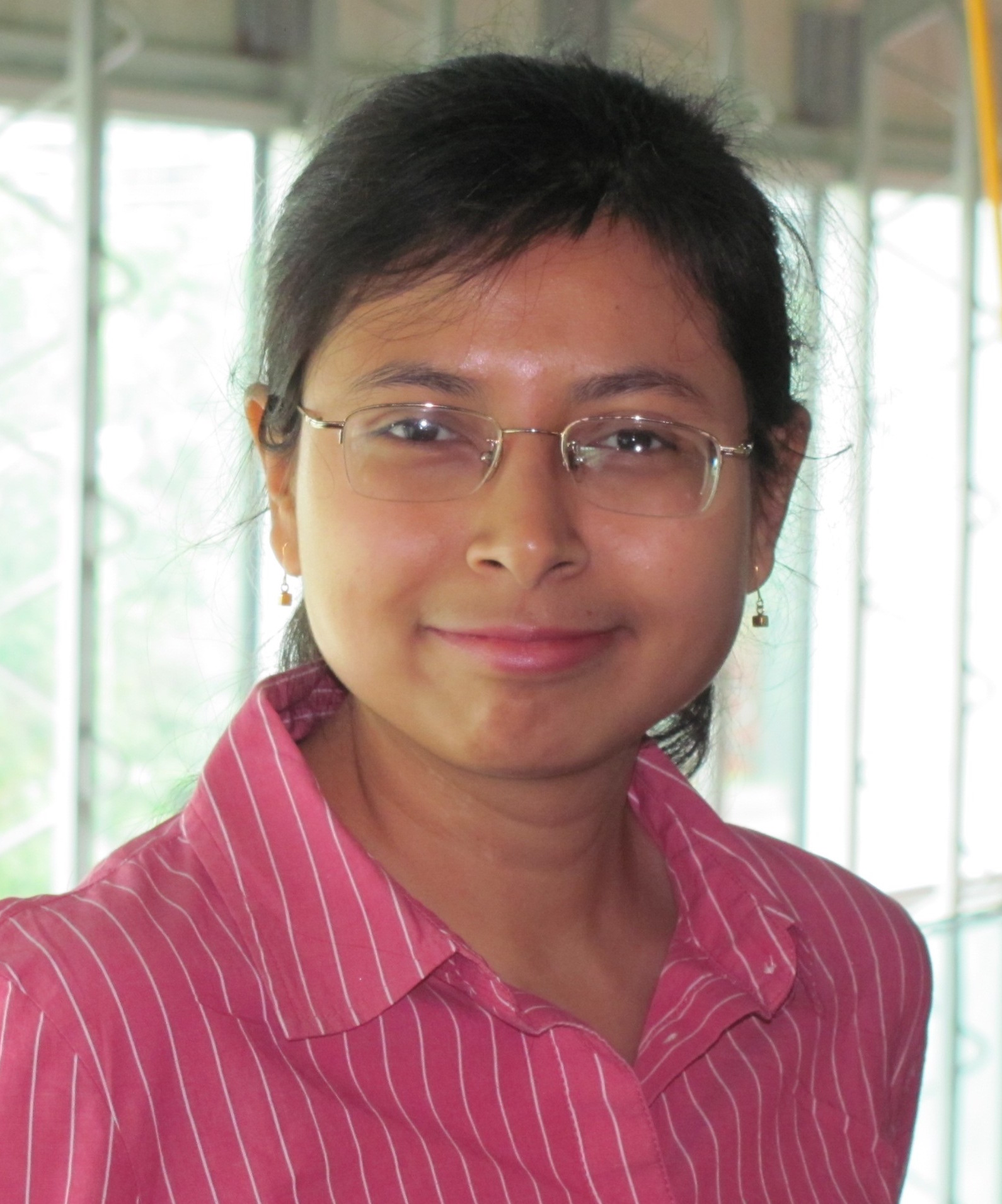
Sushmita Ruj is an Associate Professor in the School of Computer Science and Engineering at the University of New South Wales (UNSW), Sydney. She serves as the Faculty of Engineering Lead for the UNSW Institute for Cybersecurity (IfCyber) and as the Taste of Research (ToR) Coordinator within the School of Computer Science and Engineering. Her academic journey includes previous positions as a Senior Research Scientist at CSIRO's Data61 (2019-2022), Associate Professor at the Indian Statistical Institute, Kolkata, and Assistant Professor at the Indian Institute of Technology (IIT), Indore. Dr. Ruj's primary research interests focus on applied cryptography, post-quantum cryptography, cybersecurity, blockchains, and data privacy. She designs practical, efficient, and provably secure protocols for real-life applications, with particular emphasis on critical infrastructure including smart grids, cloud computing, ad hoc networks, and data sharing frameworks. As quantum technology advances, her work increasingly focuses on developing quantum-safe algorithms to ensure a more secure Internet infrastructure. Her research spans multiple domains including cryptographic key management, proofs of storage, verifiable computation, vector commitments, and privacy-enhancing technologies for cloud and IoT environments. Her recent publications demonstrate a strong trend toward post-quantum cryptography solutions, with particular emphasis on blockchain applications, DNS security, and privacy-preserving protocols for industrial IoT. The research shows increasing focus on practical implementations of theoretical cryptographic concepts, with applications across multiple sectors including finance, healthcare, and critical infrastructure. Her work bridges the gap between theoretical cryptography and real-world security challenges, with growing emphasis on the transition from classical to quantum-resistant systems. Best Paper Award at ACISP 2024 JNCA Best Survey Award (2023) NSW Innovation Award (iAward) Merit Winner (2022) Women in Science Award from CSIRO (2020) ACM Senior Member (2016) IEEE Senior Member (2015) Samsung GRO award (2014) Dr. Ruj has successfully mentored numerous PhD and Master's students, with many of her former students now holding academic positions at institutions like IIT Indore, TU Wien, and CISPA Helmholtz Center. She has secured significant competitive funding including multiple Australian Research Council (ARC) grants, Samsung GRO Award, NetApp Faculty Fellowship, Cisco Academic Grant, and IBM Research grant. Her current research portfolio includes projects on blockchain-based quantum-safe digital medical passports, embedding trust in digital IDs, and resilience of supply chain unstructured data. As Faculty of Engineering Lead for IfCyber, Dr. Ruj plays a key role in UNSW's cybersecurity research initiatives. She has served on editorial boards for prestigious journals including IEEE Transactions on Information Forensics and Security and has held leadership positions in major conferences such as ACISP 2021 and Indocrypt 2020. She was also a member of the working group on "Blockchain For Cybersecurity" for the National Blockchain Roadmap of Australia and the first Blockchain Working group set up by the Reserve Bank of India.
Nick Graham is a Professor in the School of Computing at Queen's University, Canada. He holds a PhD from TU Berlin and teaches courses like Game Architecture and Digital Game Development. His research focuses on next-generation digital games, particularly exergames (combining exercise with play) and educational games. He directs the EQUIS Lab, which develops accessible gaming solutions for populations like children with cerebral palsy and spinal cord injury patients. Graham previously served as VP Research & Development at Namzak Labs and has held academic roles at York University and Queen's University. Education: PhD (Dr.-Ing.) in Engineering - TU Berlin (1995) MSc in Computer Science - Queen's University (1988) BSc in Computer Science - University of Toronto (1985) Research Interests: Exergames promoting physical activity through gaming Accessibility in game design for persons with disabilities Game networking and distributed algorithms Augmented reality tools for education Lab & Collaborations: The EQUIS Lab develops projects such as the Liberi exergame and conversion tools for existing games like Skyrim into exergames. Techniques like 'Partial Automation' enable gameplay accessibility. Professional Roles: Director, EQUIS Lab Member, IFIP Working Group 2.7 on User Interface Engineering VP Research & Development, Namzak Labs (2000–present)
T.L. Taylor is a Professor of Comparative Media Studies at MIT, affiliated with the School of Humanities, Arts, and Social Sciences. She holds the Margaret MacVicar Faculty Fellow distinction and directs the MIT Game Lab. Her expertise spans online gaming culture, sociology of technology, and digital media studies. Taylor’s research bridges qualitative methods with critical analyses of virtual worlds, esports, and live-streaming platforms. Education: M.A. (1997) and Ph.D. (2000) from Brandeis University; B.A. (1990) from UC Berkeley; community college graduate (Chaffey, 1988). She has taught courses on critical internet studies, qualitative methods, and gaming at MIT. Taylor co-founded the non-profit AnyKey and served on Twitch’s Safety Advisory Council (2020–2024), advocating for inclusive gaming environments. Research interests include digital culture, ethnography of online spaces, and the socio-technical dynamics of games. Her award-winning book Watch Me Play: Twitch and the Rise of Game Live Streaming (2018) explores live-streaming’s cultural impact. She also authored Raising the Stakes (2012) on esports professionalization and Play Between Worlds (2006) on MMOG communities. Awards include the 2019 MacVicar Faculty Fellow for undergraduate teaching excellence and the ASA CITAMS Book Award. Her work intersects academia and industry, with consulting roles at Microsoft Research and contributions to policy discussions at the White House and International Olympics Committee. Taylor’s current projects include studies on play in curated environments like Disney parks and the evolving socio-technical assemblages of theme parks. She advises on civic initiatives and regularly publishes on esports diversity, platform moderation, and digital cultural practices.
Elizabeth Davis is an Extension Associate Professor at Utah State University (USU) and serves as the Kane County Director. She works in the Home and Community Department, focusing on youth development, STEM education, and family engagement activities. Education: MS in Family Consumer and Human Development (Adolescent Focus), Utah State University (2010) Research Interests: Social-emotional learning for youth Integrating STEM into family and community settings Improving college and career readiness Enhancing relationships through educational programs Publications: Her work includes peer-reviewed articles on behavioral medicine, STEM curriculum development, and technical reports on relationship-building initiatives. Key themes span youth development, educational outreach, and health interventions. Scientific Awards: 2nd Place Marketing Public Relations (2021) Excellence in 4-H STEM Programming (2021) Extension Innovator Award (2021) 1st Place Innovative Program (2021) Marketing/Public Relations Award (2020) Achievement of Service Award (2020) Innovative Program Award (TEAM) (2020) Grants & Teams: She contributes to Utah State University Extension projects, including the Hidden Gems adventure guides and 4-H STEM programming. Her work emphasizes community-based learning and health outcomes.
Saurabh Amin is a Professor in the Department of Civil and Environmental Engineering at the Massachusetts Institute of Technology (MIT), where he also serves as the Edmund K. Turner Professor and Undergraduate Officer. He is a Principal Investigator at the Laboratory of Information and Decision Systems and holds affiliations with the Operations Research Center and the Center for Computational Science and Engineering. His educational background includes: B.Tech. 2002, Indian Institute of Technology (IIT) Roorkee M.S. 2004, University of Texas (UT) Austin Ph.D. 2011, University of California (UC) Berkeley Saurabh Amin's research focuses on the design and control of infrastructure systems using game theory and optimization in networks. His work spans three main areas: resilient network control, information systems and incentive design, and optimal resource allocation in large-scale infrastructure systems. By concentrating on critical infrastructure domains including highway transportation, electric power distribution, and urban water networks, his research develops innovative theory and tools to enhance system performance against both stochastic and adversarial disruptions. His approach involves modeling cyber-physical interactions in infrastructures to assess vulnerabilities, developing detection and response tools for failures at various scales, and designing economic incentive schemes that improve aggregate public good while accounting for dependencies and private information among strategic entities. Amin's work bridges mathematical systems theory with practical civil engineering applications, creating a rigorous theoretical foundation for infrastructure resilience that addresses diverse failure mechanisms from natural disasters to deliberate malicious actions. His recent publications demonstrate a strong focus on decarbonization of energy systems, resilient infrastructure planning under climate uncertainty, optimization methods for complex networked systems, and game-theoretic approaches to sustainable infrastructure management. His work increasingly integrates artificial intelligence and machine learning techniques with traditional control theory to address contemporary challenges in infrastructure resilience and sustainability. The research shows a clear trajectory toward addressing climate change impacts on infrastructure systems while maintaining economic efficiency and operational reliability. Professor Amin has received numerous prestigious awards and honors: Common Ground Excellence in Teaching Award, 2025 HSCC Test-of-Time Award, 2024 MIT CEE, Distinguished Service and Leadership Award, 2023 Samuel M. Seegal Prize (SoE) – inspiring students in pursuing and achieving excellence, 2022 Earll M. Murman for Excellence in Undergraduate Advising, 2022 C3.ai Digital Transformation Institute Research Award, 2020 MIT, Ole Madsen Mentoring Award, 2020 MIT, Energy Initiative Research Award, 2020 National Academy of Engineering, China-America Frontiers of Engineering Symposium speaker, 2019 MIT, Robert N. Noyce Career Development Professor, 2015-2018 Google Faculty Research Award, 2015 National Science Foundation CAREER Award, 2015 Siebel Energy Institute Research Award, 2015 MIT, Solomon Buchsbaum AT&T Research Fund Award, 2012 Professor Amin has been actively involved in significant research projects including the C3.ai DTI project on Causal Reasoning for Real-Time Attack Identification in Cyber-Physical Systems and another on Learning in Routing Games for Sustainable Electromobility. He serves as the chief scientist on multi-institutional NSF grants, including the $9 million Foundations of Resilient Cyber-Physical Systems (CPS) project. His teaching portfolio includes courses such as 1.008 Engineering for a Sustainable World, 1.104 Sensing and Intelligent Systems, 1.020 Engineering Sustainability: Analysis and Design, and 1.208 Resilient Networks. As Undergraduate Officer, he plays a key role in shaping the educational experience for civil and environmental engineering students at MIT. Professor Amin leads the Resilient Infrastructure Networks Lab at MIT, where his team develops theoretical foundations and practical tools for infrastructure resilience. The lab focuses on the intersection of control theory, game theory, and optimization applied to cyber-physical infrastructure systems. Current research directions include pandemic-resilient urban mobility and hurricane-resilient smart grid operations, reflecting the lab's commitment to addressing pressing societal challenges through rigorous systems engineering approaches.
Robert Östling is a Professor of Economics at the Stockholm School of Economics (SSE), affiliated with the Department of Economics and the Karl-Adam Bonnier Center for Governance within the House of Governance and Public Policy. He holds a PhD from SSE (2008) and previously worked at Stockholm University's Institute for International Economic Studies until 2018. His research focuses on applied microeconomics and behavioral economics, particularly examining how wealth impacts attitudes, behavior, and life outcomes using Swedish lottery data. He teaches econometrics, behavioral economics, and economics for MBA students, and serves as program director for SSE's MSc in Economics. Key roles include board membership of the Swedish Economics Association and the Expert Group on Public Economics (ESO), and membership in the scientific advisory board of the Swedish Consumer Protection Agency. He co-founded the popular economics blog Ekonomistas , recognized as 'Swede of the Year' in 2017. Awards include the Assar Lindbeck Medal (2021) and the Arnberg Prize (2009). His research spans wealth effects on labor supply, health, child development, and political behavior. Notable projects include studying lottery winners' long-term well-being and portfolio decisions. Teaching innovations include using animated GIFs for econometrics instruction. He has contributed to policy debates on economic reforms, consumer protection, and pandemic responses. Outreach activities include public writing and policy advisory roles. His research has been featured in outlets like the New York Times and Swedish media. He remains active in academic networks, including the Network for Evidence-Based Policy.
Sam Pizelo is an Assistant Professor of Game Studies at the Institute for Communication, Culture, Information & Technology (ICCIT), University of Toronto. His research investigates the role of games as modeling technologies in the development of computing, artificial intelligence, and neoliberal capitalism. He is actively engaged in both scholarly and creative practices, integrating media art, data science, and game design into his academic work. Research Interests: Sam's work spans game studies, digital humanities, media theory, and critical computing. He explores how games function as epistemic tools that shape knowledge production, particularly in technoscientific domains. His research connects historical analysis with contemporary digital methods to examine the cultural and philosophical implications of games. The recent publications reflect a strong focus on the historical and systemic roles of games in shaping modern computing and thought. Themes include the modeling revolution, systems thinking, and the deep cultural roots of game logic. His work bridges humanities scholarship with computational practice. Scientific Contributions: Co-creator of Project Quintessence , a corpus exploration framework combining machine learning and dynamic visualizations for archival research. Founding member of the Degrowth Game Design Project (DeGDP) , a multi-campus initiative exploring games for post-growth futures. Sam Pizelo is an active researcher and media practitioner without listed advisees or awards in the provided text. He maintains academic affiliations with the University of Toronto and previously held a visiting position at NYU.
Jeff Shamma is the Department Head and Professor of Industrial and Enterprise Systems Engineering (ISE) at the University of Illinois at Urbana-Champaign, holding the Jerry S. Dobrovolny Chair. He is also courtesy Professor in Aerospace Engineering and Mechanical Science and Engineering. Formerly, he held the Julian T. Hightower Chair at Georgia Institute of Technology and faculty positions at KAUST. Dr. Shamma earned his PhD in Systems Science and Engineering from MIT (1988) and a BS in Mechanical Engineering from Georgia Tech (1983). He is a Fellow of IEEE and IFAC, recipient of the IFAC High Impact Paper Award, AACC Donald P. Eckman Award, and NSF Young Investigator Award. His research spans Decision and Control , Game Theory , and Multi-Agent Systems , focusing on human-machine networks, distributed autonomy, and adaptive robotic systems. Recent work examines crowd dynamics, risk-sensitive control, and feedback linearization for constrained optimization. Jeff has served as Editor-in-Chief of IEEE Transactions on Control of Network Systems (2020–2024) and held editorial roles in journals like Annual Reviews in Control and IEEE Transactions on Robotics . His 15 most recent publications (2024–2025) analyze learning dynamics, multi-agent optimization, and UAV-crawler systems, reflecting trends in autonomous systems, game-theoretic modeling, and industrial inspection technologies. Scientific distinctions include: Fellow of IEEE and IFAC IFAC High Impact Paper Award (2020) AACC Donald P. Eckman Award (1996) NSF Young Investigator Award (1992) Mohammed Dahleh Distinguished Lecture Award (2013) Dr. Shamma advises current PhD students Hassan Abdelraouf, Aya Hamed, and Nawaf Otaibi, with former advisees including Sarah Toonsi (2025) and Fat-hy Rajab (2025). His lab integrates theoretical research with applied projects like FalconScan, a UAV-crawler system for industrial inspection, and develops magnetic legs for curved surface UAV landing.
Julia Kurz is a Researcher at TU Dortmund University's Department of Sociology of Science and Technology, Faculty of Social Sciences. She leads the 'Visually Integrated Clinical Collaboration' project within the Collaborative Research Center (SFB) Media of Cooperation. Her work spans healthcare informatics, educational research, and disability studies. Education: M.A. in Sociology from the University of Siegen (2011), with prior studies at Philipps-University Marburg. Professional experience includes research roles at the University of Siegen (2012–2023) and support work with disabled populations (since 2001). Research focuses on information workflows in hospitals, collaborative data practices, and participatory technology design. Recent talks address topics like disempowerment in participation frameworks and challenges in transdisciplinary research. Her publications explore medical visualization tools, mentoring impacts, and role-playing pedagogy. Award recognition details are not explicitly listed, but her grants include SFB funding for the Media of Cooperation project. Advising activity is not documented here. She contributes to seminars on competence, knowledge theory, and educational innovation.
Kevin Schut, a Teaching Professor at Trinity Western University's School of the Arts, Media + Culture, is a Game Studies scholar with expertise in video games, religion, ethics, and media ecology. He earned his PhD in Communication Studies (2004) and BA in Communication Arts & Sciences, History (1996), and has held leadership roles including Associate Dean and Chair of Media + Communication. His 2013 book Of Games & God explores Christian perspectives on gaming. PhD, Communication Studies, University of Iowa (2004) BA, Communication Arts & Sciences & History, Calvin College (1996) His research focuses on moral decision-making in games, media's cultural impact, and technology-religion intersections. Recent projects include analyzing procedural generation in No Man’s Sky and faith-based game design frameworks. Key awards include the 2013 Word Guild Best Book award and TWU's 2009 Provost’s Innovative Teaching Award. He teaches courses like Video Games and Culture and Media, Culture, and Criticism .
Gerald Voorhees is an Associate Professor and Chair of Communication Arts at the University of Waterloo. He holds a Ph.D. from The University of Iowa (2008) and a B.S. in Speech Communication from the University of Texas at Austin, where he was a Senior Fellow in the Honors Program of the College of Communication. His research explores games and new media as platforms for identity and cultural construction, with a focus on public discourse around gaming and rhetorics of race and ethnicity. Dr. Voorhees has held significant academic roles, including Vice-President of the Canadian Game Studies Association and former membership on the Executive Board of the Digital Games Research Association. He previously taught at Oregon State University and developed the Game and Interactive Media Design track at High Point University. His teaching spans communication theory, media studies, and game design, with courses such as DAC 204 (Game Design) and COMMST 430 (Communication and Social Justice). His research integrates critical theory with digital media analysis, examining topics like gender representation in games, neoliberal masculinity in esports, and racial dynamics in gaming cultures. He has co-edited influential volumes such as Masculinities in Play (2018) and Feminisms in Play (2018), contributing to foundational discussions in game studies. His recent work addresses intersectional feminism in gaming and the cultural implications of shooter game genres. Dr. Voorhees actively engages with professional organizations and academic publishing, serving as co-editor of the Approaches to Game Studies book series (Bloomsbury) and managing editor of the Gender in Play trilogy (Palgrave Macmillan). His scholarship bridges theoretical frameworks with empirical analysis, shaping interdisciplinary dialogue on digital media's societal impact.