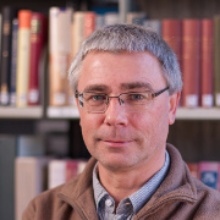
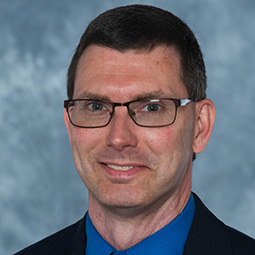
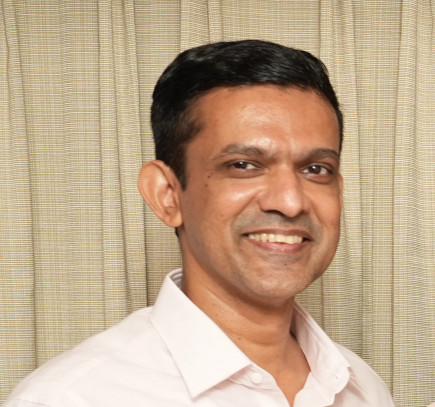
Roman Samulyak is a Professor in the Department of Applied Mathematics and Statistics at Stony Brook University. He holds a Ph.D. from NJIT in Applied and Computational Mathematics with specializations in Hydro- and Electrodynamics. His research develops advanced numerical algorithms for modeling complex physical systems in high-energy physics and fusion energy. Research spans computational methods for magnetohydrodynamics, plasma physics, nuclear fusion/fission systems, and particle accelerator design. Current applications include disruption mitigation in tokamaks and laser-driven particle acceleration. Recent publications demonstrate strong focus on plasma-based accelerators and fusion reactor modeling, particularly pellet ablation dynamics, laser wakefield acceleration, and MHD simulations of tokamak plasmas. Research utilizes high-performance computing resources for large-scale simulations. Office location is Math Tower 1-108 at Stony Brook University.
Dr. Ajay V. Singh is an Associate Professor in the Department of Aerospace Engineering at the Indian Institute of Technology Kanpur, India. He leads the Combustion and Propulsion Laboratory and has established himself as a leading researcher in combustion science and propulsion technology in India. His work on detonation physics has positioned IIT Kanpur at the forefront of this field with the unveiling of "India's First Detonation Tube Research Facility". Dr. Singh's educational background includes: PhD in Mechanical Engineering from University of Maryland, College Park (2015) M.Tech in Aerospace Engineering from Indian Institute of Technology Kanpur (2008) B.Tech in Mechanical Engineering from U.P. Technical University, Lucknow (2006) His research spans fundamental and applied aspects of combustion science with particular focus on high-speed propulsion systems, detonation cycle engines, gas turbine combustion, soot formation and oxidation, flame-synthesized functional nanoparticles, and fire dynamics. His innovative work bridges theoretical understanding with practical applications in aerospace propulsion, energy systems, and fire safety engineering. The media has widely covered his research, with features in India Today, Times of India, Hindustan Times, and Republic Bharat. Dr. Singh's publication record shows a clear trend toward increasingly sophisticated detonation research and fire dynamics studies, with recent work focusing on turbulent wind-driven flames, detonation inhibition mechanisms, and alternative fuel combustion. His articles consistently address challenges in high-speed propulsion and fire safety, demonstrating both theoretical depth and practical relevance. His scientific contributions have been recognized with numerous prestigious awards including the Distinguished Paper Award from the Combustion Institute (the only faculty member in India to receive this honor), a nomination for the Silver Combustion Medal, multiple Best Paper Awards, and the Exemplary Performance in Teaching Award. As an educator and mentor, Dr. Singh has guided numerous PhD and Master's students through their research. His Combustion and Propulsion Laboratory is supported by multiple research grants from agencies including ISRO, ARDB, SERB, and ANRF. He has developed specialized courses including "Explosion and Detonation Physics," which is the first of its kind at IIT Kanpur. Dr. Singh's laboratory serves as a hub for cutting-edge research in combustion science, featuring India's first Detonation Tube Research Facility and advanced experimental setups for studying flame dynamics, soot formation, and detonation physics. His international collaborations include institutions such as Stanford University, University of Maryland, Peking University, and Beijing Institute of Technology.
Jens von Wolfersdorf is a Professor at the University of Stuttgart's Faculty of Engineering, Department of Mechanical Engineering. His research focuses on advanced thermal management systems for high-speed aerospace applications, particularly in the areas of heat transfer, fluid dynamics, and combustion. He specializes in experimental and numerical methods for analyzing complex flows in rotating and stationary cooling channels, transpiration cooling for rocket engines, and turbulence modeling. His work integrates cutting-edge techniques such as thermochromic liquid crystal (TLC) measurements, particle image velocimetry (PIV), and computational fluid dynamics (CFD) to validate novel cooling configurations. Key projects include the COOREFLEX-Turbo initiative and contributions to the European ATLLAS-II program for high-speed vehicle materials. Recent studies emphasize rotational heat transfer effects in two-pass cooling channels, additive manufacturing of ribbed cooling structures, and validation of coupled FEM-CFD frameworks. His research addresses challenges in aerospace thermal protection, turbine blade cooling, and scramjet combustor efficiency. Publications span over 15 years, with a focus on transient heat transfer, flow visualization, and material characterization for transpiration-cooled systems. Collaborations involve experimental facilities for high-speed flows and advanced thermal measurement systems.
Marina Milovanović is a Professor at the University of Singidunum, Faculty of Informatics and Computing, Department of Mathematics. She holds dual doctoral degrees from the Faculty of Science, University of Kragujevac (Department of Mathematics, 2014) and Faculty of Entrepreneurial Business, Union University (2008), along with Master's and Bachelor's degrees from the Faculty of Mathematics, University of Belgrade (2000-2005 and 1995-2000 respectively). Faculty of Science, University of Kragujevac, Department of Mathematics (PhD, 2014) Faculty of Entrepreneurial Business, Union University (PhD, 2008) Faculty of Mathematics, University of Belgrade (Master's, 2000-2005) Faculty of Mathematics, University of Belgrade (Bachelor's, 1995-2000) Svetozar Marković High School, science and mathematics major (1991-1995) Professor Milovanović specializes in Mathematics Education and Educational Technology, with particular expertise in interactive multimedia applications for teaching mathematics. Her research consistently bridges theoretical mathematics with practical educational technology solutions, evolving from traditional multimedia approaches to incorporating cutting-edge AI and machine learning techniques. She has authored multiple books including 'Interactive multimedia in mathematics teaching' (2015) and collections of solved mathematics problems for entrance exams. Her recent publication record through 2025 demonstrates active engagement in interdisciplinary research, particularly at the intersection of educational technology, artificial intelligence, and practical applications in fields ranging from software engineering to medical diagnostics. Her work shows a clear trajectory from foundational educational technology research toward more sophisticated AI-enhanced learning systems. Professor Milovanović has made significant contributions to semantic web applications in education, particularly through Moodle LMS enhancements, and has explored SCADA applications in industrial contexts. Her collaborative research spans multiple countries and institutions, reflecting an international scholarly network. She has extensive experience developing computer tools for engineering education and has published on diverse topics including petroleum industry processes, environmental management, and financial mathematics. Her work demonstrates consistent application of computational approaches to solve domain-specific problems across multiple disciplines.
Lt Col Darrell S. Crowe, PhD, is an Assistant Professor of Aerospace Engineering in the Department of Aeronautics and Astronautics at the Air Force Institute of Technology (AFIT), part of the Graduate School of Engineering and Management at Air University. He is an active military officer and educator contributing to advanced aerospace research and graduate education within the U.S. Air Force. Education: PhD in Aeronautical Engineering, Air Force Institute of Technology, 2014 MS in Aeronautical Engineering, Air Force Institute of Technology, 2008 BS in Aerospace Engineering, Texas A&M University, 2003 Dr. Crowe's research focuses on propulsion aerodynamics, computational fluid dynamics (CFD), supersonic and hypersonic flows, jet interaction effects, and store separation dynamics. His work involves high-fidelity simulations of exhaust nozzles, thermal distortion modeling, and active flow control, often in collaboration with military and aerospace applications. He investigates complex phenomena such as hot streaks in serpentine nozzles, film cooling, and cavity acoustics, contributing to improved aircraft and propulsion system design. His recent publications demonstrate a strong trend in advancing CFD methodologies for defense-related aerospace problems, particularly in propulsion-airframe integration, weapon bay aerodynamics, and supersonic/hypersonic flow control. The articles span both experimental validation and numerical modeling, emphasizing accuracy, turbulence modeling, and multi-physics coupling in extreme environments. Scientific Awards and Honors: AFIT Dean's Distinguished Teaching Professor, 2023 AIAA Associate Fellow, 2020 Air Force Meritorious Service Medal (2018, 2021) Joint Service Commendation Medal, 2017 Southwestern Ohio Council for Higher Education Faculty Excellence Award, 2015 Field Grade Officer of the Quarter, Air University, 2015 Air Force Commendation Medal, 2011 Company Grade Officer of the Quarter (2005, 2009) Air Force Achievement Medal, 2006 Dr. Crowe advises MS thesis students in aerospace engineering and teaches graduate-level courses in his domain. He has been involved in flight testing and simulation projects, often funded through U.S. Air Force research programs. His work supports critical defense capabilities in aircraft performance, propulsion efficiency, and weapon system integration. He is actively involved in professional organizations such as the American Institute of Aeronautics and Astronautics (AIAA) and contributes to major conferences and workshops, including the Propulsion Aerodynamics Workshops. His research is conducted within AFIT’s advanced simulation and modeling environment, leveraging tools like Kestrel and BCFD for high-fidelity analysis.
Travis W. Knight is Professor and Chair of Mechanical Engineering at the University of South Carolina's Molinaroli College of Engineering and Computing, where he also serves as Program Director for the Nuclear Engineering Graduate Program. His research focuses on advanced nuclear technologies including fuel development, reactor design, and spent fuel management. Education: Ph.D. Nuclear Engineering Science, University of Florida (2000) M.S. Nuclear Engineering Science, University of Florida (1995) B.S. Nuclear Engineering, University of Florida (1994) Dr. Knight's research interests span nuclear fuel development, reactor design innovations, and nuclear waste solutions. His work integrates computational modeling with experimental validation to advance nuclear energy applications in power generation, space propulsion, and defense systems. His publications demonstrate a consistent focus on nuclear fuel behavior, reactor safety, and waste management, with recent emphasis on experimental methods for fuel characterization and microreactor technologies. Major Awards: Fellow of the American Nuclear Society (2024) Breakthrough Leadership in Research Award (2020) Research Achievement Award (2018) Dr. Knight has supervised numerous doctoral and master's students in nuclear engineering, maintaining active research groups focused on fuel development and reactor safety. His lab facilities include capabilities for nuclear material synthesis, characterization, and computational modeling.
Zia Javanbakht is a Senior Lecturer at the School of Engineering and Built Environment , Griffith University , specializing in Mechanical Engineering and Industrial Design . As a chartered engineer with a PhD in Mechanical Engineering, he contributes to research in Continuum Mechanics , Material Modelling (composites and metamaterials), and Computational Modelling . He is affiliated with the Australian Centre for Precision Health and Technology (PRECISE) and has been involved in projects related to additive manufacturing, auxetic materials, and composite structures. Research Interests include the development of advanced computational models for material behavior, with a focus on auxetic structures , triply periodic minimal surfaces (TPMS) , and additively manufactured composites . His work addresses challenges in residual stress analysis , multiscale modelling , and machine learning applications in material deformation mechanisms. Scientific Awards Fellow (FHEA) of Higher Education Authority, Dublin, Ireland (since 2021) Key Funded Projects span collaborations with Gilmour Space Technologies (CRC-P grant for rocket fuel tanks), Bond University (concrete sensor testing), and internal Griffith University grants for equipment like the Transient Plane Source Thermal Conductivity Analyser . He actively supervises PhD and Master’s students in topics such as polymer-matrix composites , auxetic timber structures , and additive manufacturing failure models . Collaboration Networks include the AuxeticsLab and partnerships with industry leaders like Stoddart Group Pty Ltd and ATL Composites . His teaching portfolio covers Constitutive Material Modelling (7015ENG) and Computational Statics and Dynamics (7252ENG), reflecting his expertise in computational techniques and structural analysis.
Cheng Huang is an Assistant Professor in the Department of Aerospace Engineering at the University of Kansas. His research focuses on computational fluid dynamics, aerospace propulsion, turbulent combustion modeling, and reduced-order modeling techniques. He is affiliated with the Computational AeroPropulsion Laboratory and can be contacted at chenghuang@ku.edu. Education: B.S. from Shanghai Jiaotong University M.S. and Ph.D. from Purdue University Research Interests: LES Modeling of Turbulent Reacting Flows Data-Driven and Reduced-Order Modeling of Complex Fluid Flows Combustion Instability Analysis in Aerospace Propulsion Recent Work Trends: His publications emphasize reduced-order modeling techniques for rocket combustion dynamics, rotating detonation engines, and multiscale fluid systems. Key methodologies include projection-based models, data-driven approaches, and nonlinear approximations of latent dynamics.
Malay Kumar Das is a Professor in the Department of Mechanical Engineering at the Indian Institute of Technology Kanpur, specializing in Fluid and Thermal Science. His academic journey includes a PhD from Pennsylvania State University (2008), M.Tech from IIT Kanpur (2003), and B.E. from Bengal Engineering College, Shibpur (1989). Previously, he worked at the West Bengal Power Development Corporation from 1990 to 2001 before transitioning to academia. His research focuses on Energy Conversion and Storage, Hydrodynamic Instability, and Thermal Science. Dr. Das's work bridges fundamental fluid dynamics with practical applications in energy systems and biomedical engineering. His expertise spans computational fluid dynamics, heat transfer phenomena, and energy conversion technologies. Analysis of Dr. Das's recent publications reveals a strong trend toward interdisciplinary research, particularly at the intersection of fluid mechanics with biomedical applications (such as blood flow modeling in cerebral aneurysms) and sustainable energy technologies (including fuel cells, methane production, and nanofluid applications). His work demonstrates both theoretical depth and practical relevance to contemporary engineering challenges. Dr. Das actively supervises research students, currently guiding 9 PhD candidates and having successfully completed 22 MTech theses with 3 more in progress. His professional activities reflect a commitment to advancing knowledge in thermal and fluid sciences while training the next generation of engineers. Outside academic pursuits, he engages in adventure sports, photography, and aerobics.
Ingrid Mann is a Professor in Space Physics at the UiT The Arctic University of Norway , Department of Physics and Technology. She leads and participates in multiple externally funded research initiatives including the Cosmic dust injection into the upper Earth atmosphere , MXD 2 rocket project to study the mesosphere , and EISCAT Research infrastructure project . ORCID: 0000-0002-2805-3265 Member of research group Space Physics Member of projects: Intermittent fluctuations in physical systems , Maxidusty-2 , CASCADE , Codia , Boosting Space Business , and Forskningsparken 1 A216 Her research spans space and atmospheric physics , focusing on dusty plasmas , cosmic dust dynamics , and polar atmosphere interactions . She employs spacecraft observations , EISCAT radar , rocket experiments , and machine learning for data analysis. Recent publications highlight cosmic dust detection with Parker Solar Probe and Solar Orbiter , PMSE multilayer properties , and dust impact signal modeling . Her work integrates radar , optical , and spacecraft data to understand polar atmospheric systems. She teaches FYS-2000 Kvantemekanikk , FYS-2019 Sun, Planets, and Space , and supervises G-Chaser student rocket projects . Her research group contributes to EISCAT_3D infrastructure and interplanetary dust modeling . Co-edited books: Nanodust in the Solar System (2012) Small Bodies in Planetary Systems (2008) Modern Meteor Science (2005)
Steven Son is the Alfred J McAllister Professor of Mechanical Engineering at Purdue University with a courtesy appointment in Materials Engineering. His research focuses on energetic materials, combustion physics, and advanced propulsion systems through experimental and computational investigations. Primary Affiliation: Department of Mechanical Engineering, College of Engineering Laboratory: Zucrow Labs, Purdue University Dr. Son's research spans: Combustion and detonation physics Laser diagnostics and spectroscopy Smart energetic material design Additive manufacturing of propulsion components Flexoelectric and piezoelectric material applications Thermal decomposition mechanisms His recent work demonstrates advancements in: Aluminized composite propellant characterization Shock sensitivity of molecular crystals Throttleable solid propellant systems Machine learning for energetic material properties 3D-printed energetic compositions Current advisees include graduate student Ethan Binkley , while his laboratory group conducts research at Zucrow Labs, Purdue's premier propulsion research facility.
Per Gunnar Kjeldsberg is a Professor at the Department of Electronic Systems, Norwegian University of Science and Technology (NTNU), and currently serves as acting head of the institute. His research focuses on embedded heterogeneous multi-processor systems , particularly in multimedia and digital signal processing applications . He has led and participated in numerous national and international projects, including EU Horizon 2020 initiatives like READEX (as work package leader) and Tulipp (as principal researcher), and supervises the MSCA-IF project Palmera . Kjeldsberg is a Senior Member of IEEE and part of the European Network of Excellence HiPEAC . Education : Sivilingeniør (MSc) in Electrical Engineering (1992), PhD (2001) from Norwegian Institute of Technology (NTH)/NTNU His work spans energy-efficient computing , radiation-hardened memory design for space applications, and dynamic hardware management . Publications include co-authoring three books and over 150 peer-reviewed articles in journals and conferences. He leads the Circuit and Radio Systems group and drives a strategic NTNU initiative on Energy Efficient Computing Systems . Kjeldsberg has held visiting researcher roles at imec (Belgium), University of California, Irvine, imec Netherlands (Holst Centre), and University of New South Wales (Australia). Scientific Awards : Senior Member of IEEE Mikroelektronikkprisen (2006–2015)
Joel George is an Associate Professor in the Department of Aerospace Engineering at the Indian Institute of Technology Madras (IIT Madras), where he conducts advanced research in aerospace vehicle dynamics, navigation, and control systems. His work spans theoretical studies, experimental validation, and practical applications in both atmospheric flight and space exploration domains. Dr. George's research focuses on several critical areas of aerospace engineering: Hybrid rocket propulsion systems and thrust control mechanisms Spacecraft landing technologies, including soft landing applications Orbital mechanics, particularly periodic orbits around asteroids Unmanned aerial vehicle (UAV) applications for microgravity experiments Propeller modeling for small UAV systems Geophysical flows research as part of IIT Madras's Centre of Excellence His recent publications demonstrate a strong trend toward innovative propulsion systems with practical space applications. Dr. George's work on hybrid rocket motors shows particular promise for safer vertical takeoff and landing systems both in space exploration and terrestrial aviation. His research on UAV-based microgravity platforms offers cost-effective alternatives to traditional space-based microgravity research methods. As a dedicated mentor, Dr. George supervises several PhD students including Anandu Bhadran (hybrid rocket motors), Rishi (asteroid orbital dynamics), and Siddhardha (UAV microgravity platforms). His collaborative work extends to partnerships with Prof. Ramakrishna and other researchers at IIT Madras. Within the Geophysical Flows Lab, a Centre of Excellence at IIT Madras, Dr. George contributes his expertise in UAV design, automation, and environmental monitoring. The lab employs a unified approach combining field measurements, climate modeling, and laboratory studies to advance understanding of air-sea interactions in the northern Indian Ocean, with applications to weather prediction and climate science.
Kristina Anne Lynch is a Professor of Physics and Astronomy at Dartmouth College, serving as Undergraduate Advisor. She specializes in plasma physics and auroral ionosphere studies, with expertise in sounding rockets and satellite missions. Her research focuses on auroral structures, spacecraft charging, and autonomous sensorcraft development. Education: A.B. from Washington University in St. Louis (1984), M.S. and Ph.D. from University of New Hampshire (1992). Professional experience includes work at the Air Force Geophysics Laboratory and UNH Space Science Center before joining Dartmouth in 2002. Research interests include auroral ionosphere dynamics, plasma evolution, and laboratory plasma calibration. She leads projects like the ELEPHANT facility and the GNEISS sounding rocket mission, aiming to study three-dimensional ionospheric responses to auroral phenomena. Her lab develops small spacecraft technologies and student-centered projects like the 'Boblet' subpayload. Key contributions include studies on spacecraft charging mechanisms, resonance cavity plasma sources, and low-density plasma sheaths. She collaborates on missions such as Cascades-2, Isinglass, and the ESA SWARM satellite data analysis. Lynch is a Principal Investigator for multiple rocket programs and co-investigator on projects like RENU, MICA, and SCIFER-2. She teaches undergraduate and graduate courses in classical mechanics and electromagnetism.
Piotr Koniorczyk is a full professor at the Military University of Technology, specializing in mechanical engineering and thermal sciences. His research focuses on thermophysical properties of materials, heat transfer in engineering systems, and advanced materials for aerospace and defense applications. He has published over 91 articles and supervised 12 promoted theses, demonstrating expertise in topics such as thermal analysis of metals, composite materials, and thermal management systems. His work includes studies on steel barrel heat transfer in firearms, thermophysical properties of tool steels, and passive cooling solutions for high-power electronics. Notable projects involve numerical simulations of heat transfer in rocket engines and gun barrels, as well as investigations into phase-change materials for thermal energy storage. His research has contributed to advancements in materials science, thermal engineering, and aerospace technology.