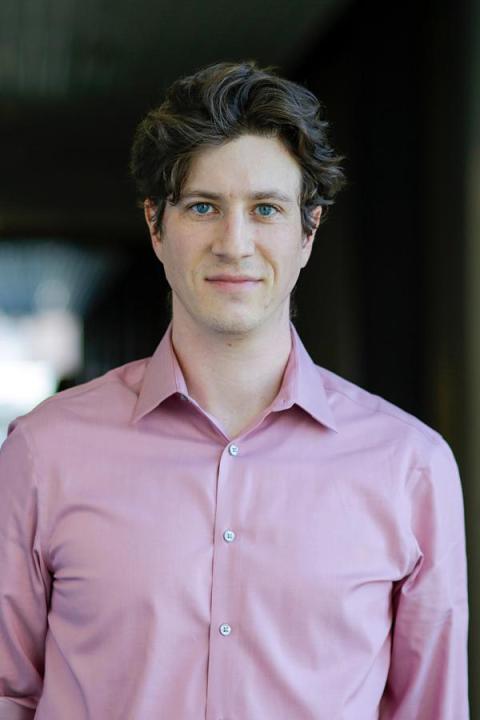
Patrick Forré is an Assistant Professor and Lab Manager of the AI4Science Lab at the Informatics Institute, Faculty of Science, University of Amsterdam. His work bridges theoretical machine learning and scientific applications, fostering interdisciplinary collaboration across informatics, mathematics, ecology, chemistry, physics, biology, and astrophysics. His research centers on mathematical foundations of machine learning including causal inference, graphical models, information theory, conditional independence structures, and geometric deep learning. He specializes in applying these techniques to scientific data problems, particularly in electro-catalysis and nitrogen fixation, where machine learning enhances molecular simulations and quantum chemical modeling. His theoretical work addresses non-linear structural causal models with cycles and latent confounders. The AI4Science Lab under his management focuses on detecting hidden patterns in scientific data through projects like electrode-electrolyte interface modeling, nitrogen-fixing coordination complexes analysis, and classical DFT neural approximations. Located in LAB42 Building at Amsterdam Science Park, the lab connects diverse scientific disciplines through machine learning innovation while organizing colloquia, workshops, and PhD defenses.
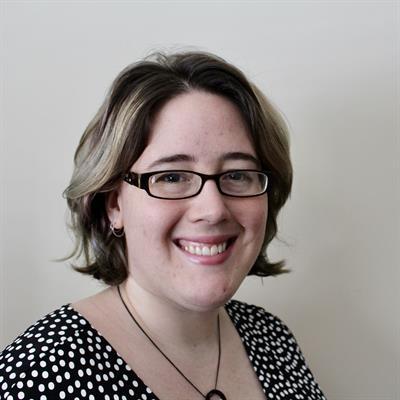
Dr. Yu Fang is an Associate Professor in the Department of Information Management at National Chengchi University's College of Business in Taipei, Taiwan. With a strong academic foundation from National Taiwan University (BS and MS) and a PhD in Computer Science from the University of California, Santa Barbara, Dr. Fang has established herself as a prominent researcher in software security and formal methods, with recent expansion into AI security domains. PhD in Computer Science, University of California, Santa Barbara (2005-2010) MS in Information Management, National Taiwan University (1998-2000) BS in Information Management, National Taiwan University (1994-1998) Dr. Fang's research spans software security, formal verification, and string analysis, with significant contributions to vulnerability detection in web applications, static analysis of mobile applications, and more recently, security and testing of neural networks. Her work bridges theoretical formal methods with practical security applications, particularly in the context of modern software systems and AI technologies. The evolution of her research shows a clear trajectory from traditional software security toward addressing emerging challenges in AI security, including adversarial examples, deepfake detection, and fairness verification in machine learning models. Analysis of Dr. Fang's recent publications reveals a strategic expansion of her research focus. While maintaining her strong foundation in software security and formal methods, she has successfully transitioned into the rapidly evolving field of AI security. Her work now addresses critical challenges such as adversarial example detection using explainability methods (DeepSHAP), concolic testing for neural network fairness verification, and defenses against deepfake attacks. This represents a natural progression from her earlier work on string analysis and vulnerability detection in traditional software systems. Senior Excellent Teacher (10 years) award from National Chengchi University National Science Council (now Ministry of Science and Technology) Research Award Dr. Fang has secured substantial research funding, particularly from Taiwan's Ministry of Science and Technology, with current projects focusing on neural network automated testing and AI security. Her research group maintains active collaborations with both academic and industry partners, particularly in the financial technology sector where security and regulatory compliance are paramount. While specific lab affiliations aren't explicitly mentioned in the provided information, her research profile suggests strong connections to the Software Security Laboratory within the Department of Information Management.
Wei-Chiu Ma is an Assistant Professor of Computer Science at Cornell University, where he leads research at the intersection of 3D/4D computer vision and robotics. His work focuses on building AI systems that can understand, reconstruct, and re-simulate our dynamic world to enable more robust autonomous systems and advance entertainment applications. Prior to joining Cornell, Dr. Ma was a Young Investigator/Postdoc at AI2 / University of Washington. He received his Ph.D. from MIT, working with Antonio Torralba and Raquel Urtasun. Before his Ph.D., he was a Senior Research Scientist at Uber ATG R&D and Waabi working on self-driving vehicles, and completed his M.S. in Robotics at Carnegie Mellon University under the advisement of Kris M. Kitani. Dr. Ma's research interests span several interconnected areas in computer vision and robotics: 3D/4D Computer Vision: Focused on scene reconstruction, modeling, and understanding from visual inputs Neural Radiance Fields (NeRF): Developing techniques for novel view synthesis and scene representation Robotics and Simulation: Creating realistic sensor simulation for autonomous systems Digital Twins: Building interactive, game-engine compatible virtual environments Self-Driving Technology: Working on scene flow estimation, sensor simulation, and vehicle localization His recent publications demonstrate a strong focus on pushing the boundaries of 3D scene understanding, with particular emphasis on extreme-view geometry, neural rendering techniques, and creating realistic simulations for autonomous systems. His work often bridges theoretical computer vision with practical applications in robotics and autonomous vehicles. Dr. Ma has received several notable recognitions including being selected as a Cyber-Physical Systems (CPS) rising star and a Siebel Scholar. He has also earned the Best Application Award for his work on TDTOS: T-Shirt Design and Try On System. As an educator and mentor, Dr. Ma is actively involved in guiding the next generation of researchers. He hosts pro bono office hours for students from underrepresented groups and is committed to fostering diversity in the field. He is currently building his research group at Cornell and plans to hire 1-2 graduate students during the 2024-25 cycle. Dr. Ma has organized several influential workshops including the "Synthetic Data for Computer Vision" workshop at CVPR 2025, the "Agent in Interaction, from Humans to Robots" workshop at CVPR 2025, and the "3D Modeling, Reconstruction, and Generation in the Wild" workshop at ECCV 2024, demonstrating his leadership in the computer vision community.
Hassan Ghasemzadeh is an Associate Professor and Program Director in the College of Health Solutions at Arizona State University (ASU), where he is also on the graduate faculty for biomedical informatics, computer science, computer engineering, and biomedical engineering. Prior to joining ASU, he served as an assistant/associate professor of computer science at Washington State University (2014-2021) and as a postdoctoral research manager at UCLA (2011-2013). Education: PostDoc, Computer Science, University of California Los Angeles PhD, Computer Engineering, University of Texas at Dallas MS, Computer Engineering, University of Tehran BS, Computer Engineering, Sharif University of Technology Dr. Ghasemzadeh's research focuses on digital health, machine learning, and algorithm design, with applications spanning wearable technologies, chronic disease management, and behavioral health. His work bridges computer science with healthcare, developing novel algorithms and systems that use wearable sensors to monitor and improve health outcomes. His research has particular emphasis on diabetes management, Parkinson's disease detection, and stress monitoring through advanced sensor analysis and machine learning techniques. His recent publications demonstrate a strong focus on leveraging large language models, counterfactual reasoning, and advanced deep learning techniques to address challenges in digital health. The research spans multiple domains including glucose prediction, Parkinson's disease assessment, cannabis use monitoring, and activity recognition, showing a consistent thread of applying cutting-edge AI to solve real-world health problems with wearable sensor data. Scientific Awards: 2025 Best Poster Award, ASU College of Health Solutions Faculty Research Day 2024 Research Award, ASU College of Health Solutions 2024 Best Poster Award, ASU College of Health Solutions Faculty Research Day 2018 Early Career Development Award, National Science Foundation (NSF CAREER) 2018 Early Career Award, WSU School of EECS Dr. Ghasemzadeh actively mentors numerous graduate students in the Embedded Machine Intelligence Lab (EMIL), with current PhD students including Eric Junyoung Kim, Ebrahim Farahmad, Saman Khamesian, Shovito Barua Soumma, Pegah Khorasani, and others. His research has been funded by prestigious organizations including the National Science Foundation, with projects often focusing on developing innovative wearable health monitoring systems that have led to commercial applications such as WANDA and Sense4Baby. Dr. Ghasemzadeh leads the Embedded Machine Intelligence Lab (EMIL), which focuses on developing machine learning algorithms for embedded and wearable systems. The lab creates solutions that address real-world health challenges through interdisciplinary research that combines computer science, electrical engineering, and clinical medicine. Current projects include glucose prediction systems, Parkinson's disease detection tools, and personalized hydration monitoring applications.
Mark S Stamp is a tenured Professor in the Department of Computer Science at San José State University. Previously, he held roles at the National Security Agency (NSA) and the startup MediaSnap, Inc. His academic journey began with a B.S. in Computer Science and History from Morningside College, followed by a Ph.D. in Mathematics from Texas Tech University. Current role: Professor, Computer Science, San José State University Prior roles: NSA analyst, MediaSnap entrepreneur Research Interests Professor Stamp's work focuses on Machine Learning and Deep Learning applications in Cybersecurity , particularly Malware Analysis , Adversarial AI , and Steganographic Capacity . His research spans Hidden Markov Models , Federated Learning , and Android Malware Detection . Recent Publications Trend His 2025–2024 publications emphasize malware classification using hybrid models (e.g., HMM-CNN), adversarial attack analysis in federated learning, and steganographic techniques in transformer models. Additional work explores chatbot detection, energy-efficient neural networks, and cybersecurity applications of QR/Aztec code analysis and keystroke dynamics . Advising & Collaborations While specific advisees are not listed, his research engages with collaborators in AI security , mobile threat detection , and sequence modeling . His career bridges academia, intelligence, and startup innovation.
Luís A. Nunes Amaral is the Erastus Otis Haven Professor of Engineering Sciences and Applied Mathematics at Northwestern University's McCormick School of Engineering. He also holds courtesy appointments in Physics and Astronomy, and Medicine (Pulmonary and Critical Care). His research focuses on complex systems, systems biology, and the science of science, addressing challenges in healthcare, innovation, and machine intelligence. He has published over 180 peer-reviewed papers in prestigious journals like Nature, Science, and Cell. Education: PhD in Physics (Boston University), M.S. and B.S. in Physics (Universidade de Lisboa). Research Interests: Emergence of complex systems, healthcare analytics, creativity in science, and AI ethics. His work spans interdisciplinary collaborations, including projects on electronic health records, gene expression dynamics, and open justice systems. Selected Awards: NIH CAREER Award, Keck Foundation Distinguished Scholar, HHMI Early Career Scientist, Fellowships from APS, AAAS, and Network Science Society. He received the 2020 Provost's Award for Exemplary Faculty Service. Lab: Amaral Lab focuses on network science, systems biology, and quantitative social science. Current Students: Includes PhD candidates Maalavika Pillai, Feihong Xu, and Huaxia Zhou. Grants: Active funding in healthcare analytics, AI ethics, and systems biology.
Yoonkyung Lee is a Professor of Statistics and Computer Science Engineering at The Ohio State University, affiliated with the Department of Statistics in the College of Arts and Sciences. She holds a PhD from the University of Wisconsin-Madison (2002). Her primary research focuses on statistical learning and multivariate analysis, with specializations in classification, kernel methods, and model stability. She has a courtesy appointment in Computer Science and Engineering since 2016 and served as a faculty co-director of the Translational Data Analytics Institute (2020–2022). Her work has been funded by the National Science Foundation (NSF), and she was elected a Fellow of the American Statistical Association in 2015. Her educational background includes a PhD in Statistics from the University of Wisconsin-Madison. Her research interests emphasize developing methodologies for latent structures in multivariate data, computational frameworks for model stability, and predictive modeling. Notable contributions include advancements in kernel discriminant analysis, Bayesian restricted likelihood methods, and sparse logistic tensor decomposition. Prof. Lee serves on editorial boards for journals such as Chemometrics and Intelligent Laboratory Systems , Econometrics and Statistics , and Journal of Machine Learning Research . Her articles span topics like support vector machines, quantile regression, and nonlinear embeddings, reflecting her expertise in bridging statistics and machine learning. Beyond research, she has advised numerous projects and contributed to interdisciplinary initiatives in translational data analytics.
Hadeel Alnegheimish is a dual-affiliated academic serving as an Ibn Khaldun Postdoctoral Research Fellow at MIT's Computer Science and Artificial Intelligence Lab (CSAIL) and an Assistant Professor in the Department of Computer Science at King Saud University. Her research focuses on advancing machine learning and natural language processing, particularly in neuro-symbolic reasoning, model interpretability, and robust numerical reasoning. She holds a PhD from Imperial College London, advised by Alessandra Russo and Pranava Madhyastha, and completed an internship at DeepMind's Cognition team. Education: PhD in Computer Science, Imperial College London (2023) M.Sc. in Artificial Intelligence, Imperial College London B.Sc. in Computer and Information Sciences, King Saud University Research Interests: Compositional reasoning, model evaluation, and neuro-symbolic integration. She emphasizes transparent and reliable systems that demonstrate how answers are derived, alongside advancing evaluation methodologies. Current projects explore symbolic rule learning for LLMs and preserving word order sensitivity in neural models. Grants & Advising: Currently recruiting MIT UROPs for summer 2025. Collaborates actively with peers in neuro-symbolic NLP and evaluates model behavior through initiatives like Forced Invalidation. Labs & Teams: Participates in CSAIL's machine learning initiatives and leads pedagogical efforts at King Saud University, fostering interdisciplinary research in computational linguistics and AI.
John Galeotti is a Senior Systems Scientist and Adjunct Assistant Professor at Carnegie Mellon University (CMU), affiliated with the Robotics Institute (RI) and Biomedical Engineering departments. He directs the Biomedical Image Guidance Laboratory and has an adjunct appointment at the University of Pittsburgh's Bioengineering department. His research focuses on integrating medical robotics, computer vision, and advanced image analysis to improve clinical outcomes. With a Ph.D. in Robotics and B.S./M.S. in Computer Engineering, Galeotti's work emphasizes real-time computer-controlled optics, medical image segmentation, and AI-driven diagnostics. He has led projects in autonomous ultrasound scanning, needle insertion robotics, and synthetic data generation for medical AI. Research Keywords: Medical Robotics, Machine Learning, Ultrasound Segmentation, Computer Vision, Augmented Reality, Diagnostic Imaging Galeotti is a key contributor to the open-source Insight Segmentation and Registration Toolkit (ITK) and has received external teaching funding and awards for his internationally recognized course on medical image analysis algorithms. His lab's publications highlight advancements in AI applications for lung ultrasound, vessel segmentation, and optical coherence tomography.
Prof. Antske Fokkens is a Full Professor in Computational Linguistic Methods at Vrije Universiteit Amsterdam, with joint appointments in the Faculty of Humanities and the Network Institute. She directs the Text Mining/Language and AI track in the Linguistics Master's program and serves as Vice Dean of Research. Her research investigates methodological aspects of computational linguistics, focusing on language models, interpretable AI, and digital humanities. She develops tools to extract patterns from large text corpora for applications in social science and history, emphasizing transparency and interdisciplinary collaboration. Current projects include analyzing perspective expression in media and semantic modeling for biographical data. Recent publications examine shortcut learning in text classification, persona-driven content generation, hate speech model alignment, and cross-disciplinary approaches to stance detection. Her work integrates NLP with social science theories to analyze discourse on sustainability, polarization, and media framing.
Dr. Dario Grana is the Wyoming Excellence Chair and Professor at the University of Wyoming's Department of Geology and Geophysics. His research focuses on rock physics, seismic reservoir characterization, inverse problems, and geostatistics, with applications in critical zone studies, CO2 sequestration monitoring, and subsurface characterization. Education includes: PhD and MS in Geophysics, Stanford University (2013) MS in Applied Mathematics, University of Milano-Bicocca (2006) BS and MS in Mathematics, University of Pavia (2003, 2005) Research explores rock physics modeling in critical zones, geophysical monitoring of CO2 storage, joint seismic-electromagnetic inversion, and stochastic methods for subsurface characterization. Recent publications emphasize machine learning integration with geostatistical inversion and Bayesian methods for uncertainty quantification. Teaching includes Quantitative Geoscience, Mathematical Methods for Geoscience, Exploration Geoscience, Inverse Theory, and Rock Physics.
Ioana Banicescu is a Professor at Mississippi State University's Department of Computer Science and Engineering. She holds a Ph.D. in Computer Science from New York University and previously directed the Center for Cloud and Autonomic Computing. Her research focuses on parallel algorithms, scientific computing, performance modeling, and autonomic systems. Her education includes: Ph.D. Computer Science - New York University M.S. Computer Science - New York University B.S./M.S. Electronics and Telecommunications - Polytechnic University of Bucharest Banicescu's research explores fundamental challenges in high-performance computing, including dynamic load balancing, performance optimization, and autonomic resource management. Her recent work emphasizes explainable AI for cybersecurity systems and robust resource allocation models for heterogeneous computing environments. Her publication record demonstrates consistent focus on performance optimization in parallel systems, with recent expansion into cybersecurity applications using machine learning approaches. She maintains collaborations with national laboratories and international research forums. Banicescu has received multiple National Science Foundation awards for research excellence and serves on numerous program committees for IEEE/ACM conferences. She contributes to the academic community through editorial roles for Cluster Computing and the International Journal on Computational Science and Engineering.
Chengkai Li is a Professor and Associate Chair in the Department of Computer Science and Engineering at the University of Texas at Arlington (UTA), directing the Innovative Data Intelligence Research (IDIR) Lab and co-directing the Center for Artificial Intelligence and Big Data (CARIDA). He holds adjunct roles in the Multi-Interprofessional Center for Health Informatics (MICHI). His academic journey includes a Ph.D. from UIUC (2007) and faculty positions at UTA since 2007, progressing from Assistant to Full Professor (2019). Education: Ph.D. in Computer Science (UIUC, 2007), M.E. and B.S. from Nanjing University (2000, 1997). Research focuses on AI-driven data systems for social good, including computational fact-checking, knowledge graphs, and graph data usability. Key projects include ClaimBuster (end-to-end fact-checking), FactWatcher (automated fact monitoring), and Maverick (exceptional fact discovery). His work spans 30+ news features and collaborations with organizations like Knight Foundation and Google. Publications (over 100) appear in top venues (SIGMOD, KDD, VLDB), with awards like the 2017 SIGMOD Most Reproducible Paper Award. He advises over 30 students and leads grants totaling millions from NSF, Knight Foundation, and industry partners. Labs/Teams: IDIR Lab (40+ researchers), CARIDA (AI/Big Data initiatives), and partnerships with Duke Tech & Check Cooperative.
Samuel Carton is an Assistant Professor in the Department of Computer Science at the University of New Hampshire (UNH), within the College of Engineering and Physical Sciences. His research focuses on human-centered natural language processing (NLP), emphasizing the implicit knowledge acquired by NLP models and methods to present this knowledge effectively to human stakeholders for ethical and practical use. He holds a Ph.D. in Information Science/Studies from the University of Michigan and has conducted postdoctoral research with Chenhao Tan at the University of Colorado Boulder and University of Chicago. He teaches courses including Natural Language Processing, Advanced Topics in CS, and Doctoral Research. Education: Ph.D., Information Science/Studies, University of Michigan Research Interests: Human-AI collaboration, model interpretability, ethical AI, and explainable NLP. His work bridges algorithm design and human-subject experimentation to ensure models are both effective and trustworthy. Grants & Advising: No explicit grants listed; actively involved in doctoral research supervision as seen in his course offerings. Labs & Teams: No specific lab affiliations explicitly mentioned, but his research likely involves collaborations with NLP and AI ethics groups.
Elaine Short is an Assistant Professor in the Department of Computer Science and a secondary appointment in Mechanical Engineering at Tufts University's School of Engineering. She leads the Assistive Agent Behavior and Learning (AABL) Lab, focusing on human-robot interaction, accessibility, and assistive technology. Education: PhD in Computer Science, University of Southern California (2017) MS in Computer Science, University of Southern California (2012) BS in Computer Science, Yale University (2010) Her research applies human-centered design and disability community values to AI/ML development in robotics, emphasizing robust human-robot interaction in natural environments, group/crowd dynamics, and inclusive design for non-normative users. Recent publications highlight trends in human-robot co-creative collaboration, shared control systems, policy modification through imagined actions, and accessibility challenges in robotics. Awards include NSF Graduate Research Fellowship, Google Anita Borg Scholarship, and multiple teaching/research recognitions. Scientific Awards: National Science Foundation Graduate Research Fellowship USC Provost's Fellowship Google Anita Borg Scholarship Viterbi School of Engineering Merit Award WiSE Merit Award Best Research/Teaching Assistant Awards Saybrook College Mary Casner Prize