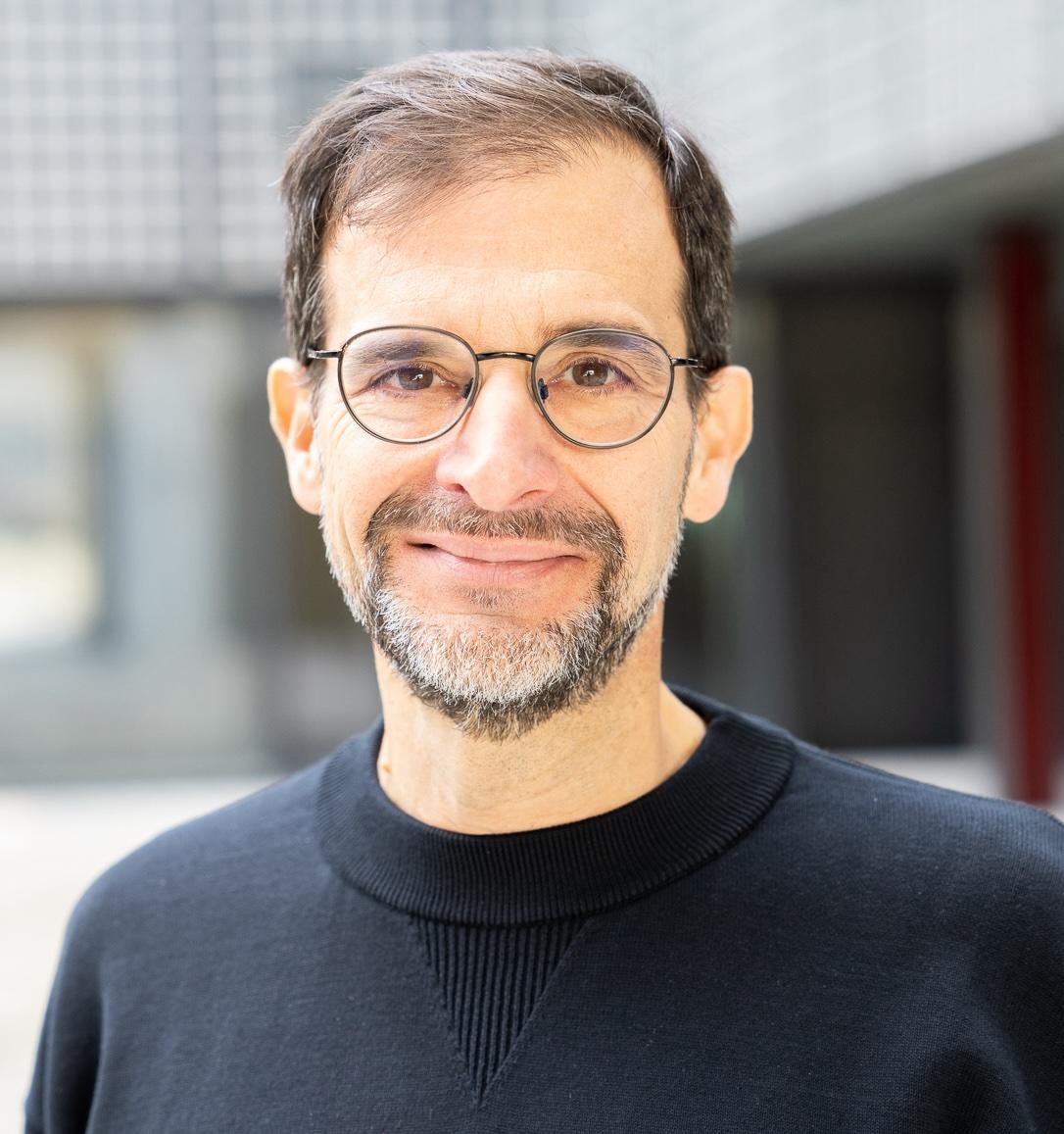
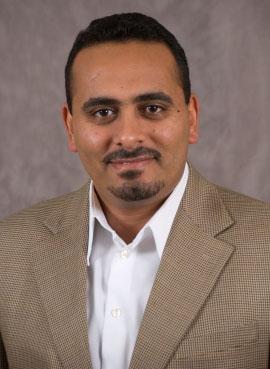
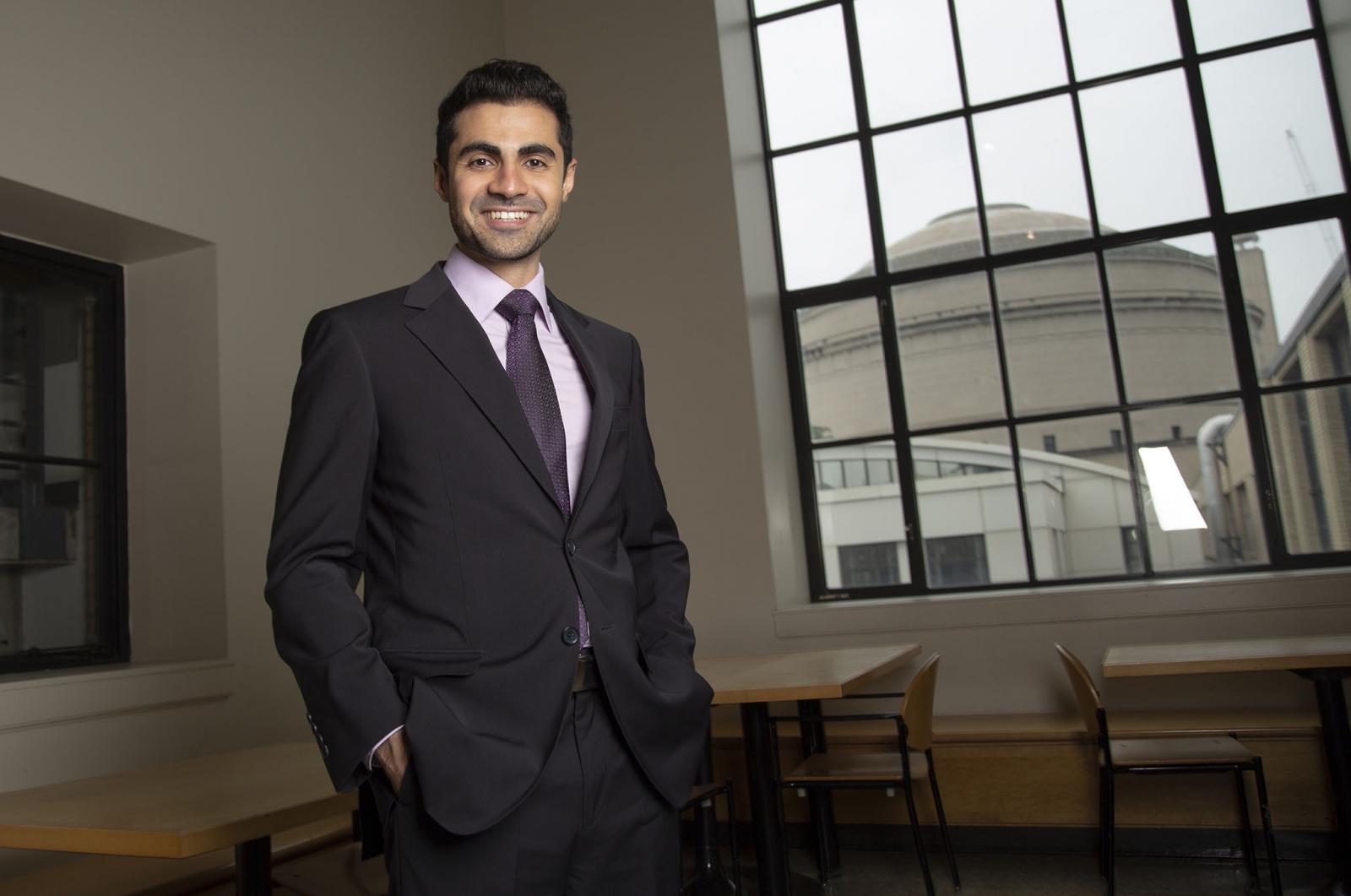
Robert West is an Associate Professor at EPFL (École polytechnique fédérale de Lausanne) in the School of Computer and Communication Sciences , leading the Data Science Lab (dlab) . His research focuses on Natural Language Processing , Machine Learning , and Computational Social Science , analyzing human-generated data from the web, social media, and online platforms. Education : PhD in Computer Science (2016) - Stanford University MSc in Computer Science (2010) - McGill University BSc in Computer Science (2007) - Technische Universität München Research Interests : West develops algorithms for analyzing large-scale web data, with emphasis on multilingual NLP , social network analysis , and AI ethics . His work bridges machine learning with social science to understand digital human behavior. Scientific Awards : ICWSM’22 Adamic–Glance Distinguished Young Researcher Award Google Faculty Research Award Facebook Research Award Multiple Outstanding Paper Awards at ICWSM and WWW Advising & Grants : He advises 12 PhD students and has secured funding from the Swiss National Science Foundation , Swiss Data Science Center , and industry partners. His lab maintains collaborations with Microsoft Research and CROSS . Labs & Collaborations : West leads the Data Science Lab at EPFL, which focuses on web-scale data analysis , privacy-preserving machine learning , and AI for social good . The lab develops tools like Wikispeedia and Quotebank for public data exploration.
Luca Carlone is the Boeing Career Development Associate Professor in the Department of Aeronautics and Astronautics at MIT and a Principal Investigator at the Laboratory for Information & Decision Systems (LIDS) . He leads the SPARK Lab , focusing on developing certifiable perception algorithms for autonomous systems. PhD in Mechatronics (Polytechnic University of Turin, 2012) Research spans robotics, computer vision, and optimization Research Interests : Certifiable Perception algorithms for high-integrity systems High-level Perception (geometric, semantic, physical understanding) Efficient Perception methods for resource-constrained robots Scientific Contributions include: 2024 Outstanding Systems Paper Award (RSS) 2023 IEEE Transactions on Robotics King-Sun Fu Award 2021 NSF CAREER Award 2020 AIAA Advising Award 2019 Amazon Research Award Advising : Teaches graduate courses like Visual Navigation for Autonomous Vehicles and Robotics: Science and Systems . Collaborates with institutions including JPL, Caltech, and KAIST through the DARPA SubT Challenge.
Bo Dai is an Assistant Professor at the School of Computational Science and Engineering, Georgia Institute of Technology, and a Staff Research Scientist at Google DeepMind. His research focuses on Agent AI, Generative Models, and Representation Learning, aiming to create decision-making agents through world modeling. He holds a Ph.D. from Georgia Tech (2013–2018) and previously worked at Google Brain. Dai has authored numerous influential papers in top conferences like NeurIPS, ICML, and ICLR, and received the AISTATS Best Paper Award (2016). Education: Ph.D., School of Computational Science and Engineering, Georgia Tech (2013–2018) Research Interests: Reinforcement Learning and Representation Learning for decision-making agents Generative Models and their integration with Agent AI Provable and scalable algorithms for real-world applications His work bridges theory and practice, emphasizing spectral representations and provable guarantees in complex systems. Key Article Trends: His recent work emphasizes scalable spectral methods for multi-agent systems, diffusion policies, and representation-based techniques in reinforcement learning. He also explores LLM alignment and sim-to-real transfer learning. Awards: AISTATS Best Paper Award (2016) NeurIPS Workshop Best Paper (2017) Ross Fellowship (2011–2012) Advising & Grants: Supervises 6 current Ph.D. and M.S. students. Active in organizing workshops on reinforcement learning and serves as an Area Chair for top conferences. Labs & Software: Leads development of Representation-based Reinforcement Learning and Repr-Control toolboxes for nonlinear control and stochastic systems.
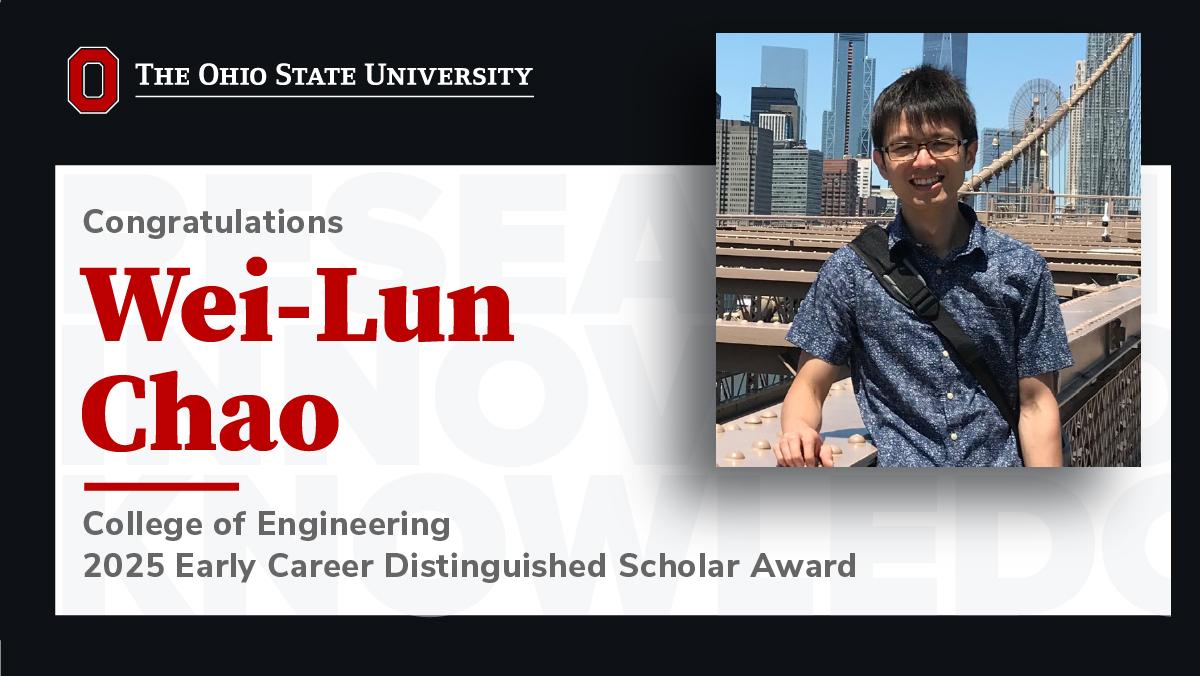
Wei-Lun (Harry) Chao is an Associate Professor in the Department of Computer Science and Engineering at the Ohio State University (OSU), College of Engineering. Promoted to this role in May 2025, he is also an Innovation Scholar and Distinguished Assistant Professor of Engineering Inclusive Excellence. His work spans machine learning, computer vision, and their applications in autonomous driving, healthcare, biology, and natural language processing. Research Focus: Machine learning with imperfect data, interpretable and personalized learning, robust perception for autonomous systems, and visual recognition in real-world scenarios. Awards: 2025 OSU Early Career Distinguished Scholar Award, CVPR Best Student Paper Award (2024), CSE Faculty Teaching Award (2024), Lumley Research Award (2023). Grants: Funded by NSF, NIH, ONR, Cisco, AWS, and Google. Notable Research Trends: The 15 most recent articles highlight his work on vision foundation models, federated learning, diffusion models for biological species generation, interpretable vision transformers, and robust perception systems for autonomous driving. Key subfields include sparse autoencoders, 3D object detection, semi-supervised learning, and anomaly detection in scientific domains. Scientific Awards: 2025 Early Career Distinguished Scholar Award (OSU) CVPR Best Student Paper Award (2024) CSE Faculty Teaching Award (2024) Lumley Research Award (2023) Mentoring & Grants: As an advisor for the OSU Buckeye AutoDrive Team and AI Club, he mentors graduate and undergraduate students. His research is supported by major grants from NSF, NIH, ONR, and industry partners like Cisco and Google.
Hyesoon Kim is a Professor at the Georgia Institute of Technology , affiliated with the College of Computing and leading the HPArch research group . She co-directs the Center for Research into Novel Computing Hierarchies (CRNCH) . Her research focuses on Computer Architecture , GPU , Compilers and Runtime Systems , and Hardware Security , particularly for heterogeneous systems. Contact : hyesoon@cc.gatech.edu Location : 266 Ferst Drive, KACB 2344, Atlanta, GA Research Trends Her recent work spans RISC-V extensions for security, CUDA optimization on softcore GPUs, memory safety techniques, and energy-efficient deep learning architectures. Articles emphasize heterogeneous computing , GPU performance scaling, and IoT -oriented neural network methods. Open Source Projects She leads development of Macsim (heterogeneous architecture simulator) and Vortex (open-source GPU platform).
Katie Byl is an Associate Professor in the Departments of Electrical and Computer Engineering and Mechanical Engineering at the University of California, Santa Barbara (UCSB). Her research focuses on robot dynamics and control, particularly in locomotion and manipulation, with applications in rough terrain legged locomotion, supervised autonomy, and flapping-wing flight. She holds B.S., M.S., and Ph.D. degrees in Mechanical Engineering from MIT. Affiliations: Center for Control, Dynamical Systems and Computation (CCDC) Mechanical Engineering Department Research Interests: Byl’s work emphasizes modeling and control of underactuated systems, stochasticity in real-world environments, and the development of robust control principles for dynamic systems. Her applied projects include exoskeletons, autonomous robots like RoboSimian (part of the DARPA Robotics Challenge), and flapping-wing microrobotics. Scientific Awards: NSF Early Career Development Award Hellman Faculty Fellowship Alfred P. Sloan Foundation Fellowship in Neuroscience Regents’ Junior Faculty Fellowship Teaching & Advising: Byl teaches courses in control systems (e.g., ECE 147B, ECE 179D) and robotics. She advises students in UCSB’s Robotics Lab, emphasizing a mix of control theory, mechanical design, and algorithm development. Undergraduate researchers are also recruited annually for summer projects. Labs & Teams: Her Robotics Lab focuses on hardware implementation of control ideas, maintaining a high robot-to-student ratio. Collaborations include the Army’s Institute for Collaborative Biotechnologies and the DARPA Robotics Challenge with JPL.
John Lygeros is a Full Professor and Head of the Institute for Automatic Control at ETH Zurich's Department of Information Technology and Electrical Engineering. He received his B.Eng. (1990) and M.Sc. (1991) from Imperial College London, and Ph.D. (1996) from UC Berkeley. Before joining ETH Zurich in 2006, he held academic positions at the University of Cambridge and University of Patras. His research focuses on: Modeling and control of hierarchical hybrid systems Large-scale dynamical systems applied to biochemical networks Control of automated transportation systems via wireless networks Energy systems and advanced manufacturing control His research demonstrates strong emphasis on optimization methods, distributed control architectures, and machine learning applications in control systems, with significant contributions to real-time optimization algorithms and data-driven control methodologies. Major scientific awards include: HSCC Test of Time Award (2024) ERC Advanced Grant (2018) O. Hugo Schuck Best Paper Award (2018) IEEE George S. Axelby Paper Award (2016) Three Golden Owl teaching awards from ETH Zurich He leads the Automatic Control Laboratory at ETH Zurich and serves as Director of the National Centre of Competence in Research 'Dependable Ubiquitous Automation'. He has advised over 60 doctoral candidates since 2017, with research spanning optimization algorithms, power systems, autonomous systems, and machine learning applications.
Professor Hanumant Singh leads the Electrical and Computer Engineering department at Northeastern University, with a joint appointment in Mechanical and Industrial Engineering , and serves as Program Director for the Master of Science in Robotics. He earned his Ph.D. from MIT/WHOI Joint Program in 1995 and has conducted over 60 expeditions globally, focusing on marine geology, polar studies, and coral reef ecology. His research emphasizes field robotics , including SLAM, underwater manipulation, and imaging in extreme environments. He developed the Seabed AUV and Jetyak ASV , widely used in scientific research. His labs include the Field Robotics Lab and the Institute for Experiential Robotics . Research Interests: Machine Learning for Fisheries SLAM with dynamic objects Underwater imaging and manipulation Autonomous surface and aerial systems Polar and marine robotics Awards: ICRA Best Student Paper Award, IEEE Oceanic Engineering Society Distinguished Faculty Award (2025), Lifetime Achievement Award (2022), and IEEE Fellow status. His work has been featured in Nature Geoscience , Polar Biology , and media outlets like WGBH. Students & Collaborations: Advises students like Srinidhi Pattala (MS Robotics) and Dennis Giaya (PhD Computer Engineering). Collaborates with institutions on projects such as Antarctic sea ice thickness estimation and deep-sea submersible missions.
Colin Jones is an Associate Professor at the École Polytechnique Fédérale de Lausanne (EPFL) in the Automatic Control Laboratory, School of Engineering. He earned his BASc and MASc in Electrical Engineering and Mathematics from the University of British Columbia (1994-2002) and a PhD in Control Theory from the University of Cambridge (2002-2005). Prior to EPFL, he was an assistant professor there and a senior researcher at ETH Zürich. Current role: Director of the Robotics, Control, and Intelligent Systems Doctoral Program at EPFL Research focus: Optimization-based and model predictive control (MPC) for renewable energy systems, green energy management, and data-driven control methods His recent work (2023-2025) spans high-speed predictive control , smart grid optimization , and physically consistent neural networks , with applications to buildings, hovercrafts, and power systems. He has secured an ERC Starting Grant for his research on optimal control of building networks. Publications include over 200 papers in journals like Automatica , IEEE Transactions , and Energy and Buildings . Notable article trends include distributed optimization , data privacy in energy systems , and nonlinear MPC for autonomous vehicles . Scientific Awards : ERC Starting Grant for optimal control of building networks Advising : Supervises 10 current PhD students and has advised 19 past PhD students, including Alessandretti Andrea and Diwale Sanket Sanjay. Grants and projects emphasize smart energy systems , predictive demand response , and nonlinear control .
Professor Nagi Gebraeel serves as the Georgia Power Early Career Professor in the H. Milton Stewart School of Industrial and Systems Engineering at Georgia Institute of Technology, where his research integrates predictive analytics, machine learning, and optimization for industrial IoT applications. His work focuses on real-time equipment diagnostics, prognostics, and operational decision-making in critical infrastructure systems. Education: Ph.D. in Industrial Engineering (2003), Purdue University M.S. in Industrial Engineering (1998), Purdue University Research Focus: Dr. Gebraeel develops statistical learning algorithms for IoT-enabled maintenance, repair, and operations (MRO), with emphasis on federated learning frameworks for distributed fault diagnosis and cybersecurity protection against Industrial Control System (ICS) attacks. His research spans manufacturing, power generation, and deep space habitats through NASA's HOME Space Technology Research Institute, where he pioneers self-aware habitat systems. Recent work addresses data heterogeneity in high-consequence industrial environments using causal-informed analytics. Publication Trends: His 2024-2025 publications demonstrate a strong trajectory toward distributionally robust optimization for maintenance logistics, federated learning architectures for distributed fault diagnosis, and prognostics for complex systems like offshore wind farms and industrial robots. Key themes include handling imbalanced data in fault diagnosis, state-space representations for interdependent systems, and cybersecurity integration in manufacturing networks. Awards and Recognition: NSF CAREER Award (2007) SAE Aircraft Electrical Power System Recognition Award (2008) SAE Materials Modeling and Testing Recognition Award (2006) IEEE-AUTOTESTCON Certificate (2006) Fellow of the Institute of Industrial and Systems Engineers Advising and Funding: Dr. Gebraeel mentors doctoral students including Michael Ibrahim (2025 IISE Best Student Paper winner), Heraldo Rozas (now Assistant Professor at University of Chile), Ayush Mohanty, and Nazal Mohamed. He secured a $500,000 NSF grant in August 2025 for AI-driven cybersecurity in distributed manufacturing networks and leads NASA-funded research on deep space habitat systems. His work bridges academic research with industry applications through Georgia Tech's Strategic Energy Institute collaborations. Research Infrastructure: He directs the Analytics and Prognostics Systems laboratory at Georgia Tech's Manufacturing Institute and leads the Predictive Analytics and Intelligent Systems (PAIS) research group. Previously, he served as associate director of Georgia Tech's Strategic Energy Institute (2014-2019), fostering data science applications in energy systems.
Navid Azizan is the Alfred H. (1929) and Jean M. Hayes Career Development Assistant Professor at Massachusetts Institute of Technology (MIT), holding dual appointments in the Department of Mechanical Engineering (in Control, Instrumentation & Robotics) and the Schwarzman College of Computing's Institute for Data, Systems & Society (IDSS). He is also a Principal Investigator in the Laboratory for Information & Decision Systems (LIDS), and a faculty member of the MIT Statistics and Data Science Center, the Center for Computational Science and Engineering, and the Operations Research Center. Dr. Azizan received his PhD in Computing and Mathematical Sciences from the California Institute of Technology (Caltech) in 2020, his MSc in Electrical Engineering from the University of Southern California in 2015, and his BSc in Electrical Engineering with a minor in Physics from Sharif University of Technology in 2013. Prior to joining MIT, he completed a postdoc at Stanford University's Autonomous Systems Laboratory and was a research scientist intern at Google DeepMind. His research spans the intersection of machine learning, systems and control, mathematical optimization, and network science. Dr. Azizan's work focuses on developing principled learning and optimization algorithms for reliable intelligent systems, with applications to autonomy and sociotechnical systems. His research has significant implications for creating trustworthy AI systems that can operate effectively in complex, uncertain environments. Dr. Azizan's recent publications demonstrate a strong focus on uncertainty quantification, reliable AI systems, constrained optimization, and control-oriented learning. His work bridges theoretical foundations with practical applications, particularly in autonomous systems where safety and reliability are paramount. His research group has made notable contributions to areas including neural network verification, multi-agent reinforcement learning, and adaptive inference techniques for large language models, with several papers featured on MIT News and selected for oral presentations at top conferences. Alfred H. (1929) and Jean M. Hayes Career Development Professorship (2025-present) Frank E. Perkins Award for Excellence in Graduate Advising (2025) List of Outstanding Academic Leaders in Data from the CDO Magazine (2024, 2023) Amazon Science Hub Research Award (2023) Outstanding UROP Faculty Mentor (2023) Esther and Harold E. Edgerton (1927) Career Development Chair (2022-2025) Information Theory and Applications (ITA) Gold Graduation Award (2020) Dr. Azizan has been recognized for his excellence in graduate advising, receiving the Frank E. Perkins Award for Excellence in Graduate Advising in 2025. During the pandemic, he founded and co-organized the 'Control meets Learning' virtual seminar series, connecting researchers across disciplines. His work has attracted significant research funding from industry partners including Google, Amazon, and MathWorks, supporting both fundamental research and practical applications in reliable intelligent systems. The Azizan Lab at MIT brings together researchers from mechanical engineering, computer science, and applied mathematics to tackle challenges at the intersection of learning and control. The lab emphasizes both theoretical foundations and practical implementations, with a particular focus on developing algorithms that provide guarantees of performance and safety. Current research directions include uncertainty quantification in AI systems, constrained optimization for neural networks, and control-oriented learning for autonomous systems, with applications spanning robotics, transportation, and complex sociotechnical systems.
Richard Franz Löscher is a researcher at the Institute of Applied Mathematics specializing in numerical methods for optimal control problems. He holds a BSc, Diplom-Ingenieur (Dipl.-Ing.), and Doctorate in Technical Sciences (Dr.techn.), demonstrating extensive technical education and engineering expertise. His educational qualifications include: BSc Diploma in Engineering (Dipl.-Ing.) Doctorate in Technical Sciences (Dr.techn.) Löscher's research centers on numerical mathematics with deep specialization in finite element methodologies for distributed optimal control problems governed by partial differential equations. His work addresses elliptic, parabolic, and hyperbolic control systems through regularization techniques, adaptive mesh refinement, and robust solver development. Key innovations include variable energy regularization frameworks, mass-lumping discretizations, and complexity-optimal space-time finite element systems that significantly advance computational efficiency and error estimation in constrained control environments. Analysis of his 2024-2026 publications reveals a cohesive research trajectory focused on overcoming computational bottlenecks in optimal control. His work consistently bridges theoretical rigor with practical implementation, emphasizing discretization schemes that balance accuracy and computational cost while addressing state/control constraints across diverse PDE systems. No scientific awards or honors were documented in available sources. Löscher maintains active research collaborations with prominent figures including Ulrich Langer and Olaf Steinbach, evidenced by co-authored publications and peer-review activities for journals like Journal of Computational and Applied Mathematics. His external research engagement includes a July 2024 visit to Delft University of Technology, highlighting international academic partnerships.
Nirupam Roy is an Assistant Professor at the Department of Computer Science, University of Maryland, College Park, and Director of the iCoSMoS research lab. His work bridges wireless networking, mobile computing, and acoustic sensing with applications in IoT, localization, healthcare, security, and wearables. Research Focus: Wireless Networking & Mobile Sensing Awards: Best paper award, MobiSys 2022 Best demo award, MobiSys 2021 CSL Ph.D. Thesis Award, UIUC 2019 Students: Nakul Garg, Yang Bai, Irtaza Shahid, Harshvardhan Takawale, Aritrik Ghosh, Ayushi Mishra, Sumbul Zehra, Justin Goodman Grants: NSF CAREER award (2023), Meta Research Award (2023)
Marta Kwiatkowska is a Professor of Computing Systems at the University of Oxford and a Fellow of Trinity College. Her research focuses on probabilistic verification , quantitative model checking , and formal methods for complex systems including autonomous robots, medical devices, and biological systems. She leads the development of the PRISM and PRISM-games probabilistic model checkers. Key research areas: Probabilistic systems, formal verification, autonomous robotics, medical device analysis, systems biology Grants: ERC Advanced Grant VERIWARE, EPSRC Programme Grant Mobile Autonomy Awards: 2024 ETAPS Test-of-Time Tool Award for PRISM Students: Current and former advisees in topics spanning formal methods, robotics, and quantitative verification The PRISM-games extension enables verification of stochastic multi-player games with applications in network protocols, autonomous systems, and game theory. Her work bridges theory, algorithms, and practical implementation, with real-world applications in ubiquitous computing and nanotechnology.
Prof. Dr. Melanie Zeilinger is an Associate Professor at the Department of Mechanical and Process Engineering at ETH Zurich, leading the Intelligent Control Systems group at the Institute for Dynamic Systems and Control. She holds a diploma in Engineering Cybernetics from the University of Stuttgart (2006) and a Ph.D. in Electrical Engineering from ETH Zurich (2011). Her postdoctoral research included stints at EPFL (2011–2012), a Marie Curie fellowship at UC Berkeley and the Max Planck Institute (2012–2015), and a professorship at the University of Freiburg (2018–2019). Her research focuses on learning-based control, distributed control systems, and robotics , with applications to medical devices (e.g., hydrocephalus shunts) and human-in-the-loop systems. She organizes the Conference on Learning for Dynamics and Control (L4DC) and contributes to initiatives like the "Algorithm on My Team" project. Her awards include the ETH Medal for her PhD thesis, a Marie-Curie IO Fellowship , and an SNF Assistant Professorship grant . She serves as an Associate Editor for IEEE Control Systems Letters and actively reviews for top journals/conferences like IEEE TAC, Automatica, and NeurIPS. Key projects include: VIEshunt: A smart ventricular shunt for hydrocephalus treatment, combining control systems and medical engineering. Autonomous Racing: Contextual tuning and safety-certified learning-based MPC for real-time obstacle avoidance. Data-Driven Control: Integrating Gaussian processes and state-space models into MPC frameworks for uncertain systems. Her work bridges control theory, machine learning, and robotics, addressing societal challenges such as healthcare and energy efficiency.