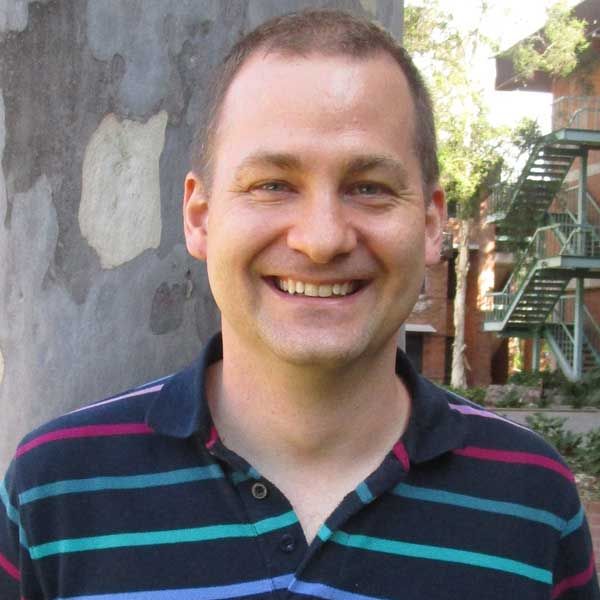
Dr. Cheng-Chew Lim is a Professor in the School of Electrical and Mechanical Engineering at the University of Adelaide. He specializes in control theory, autonomous systems, and multi-agent reinforcement learning. His research focuses on trusted autonomous systems, secure cyber-physical networks, and decentralized decision-making models. He has published over 300 articles and supervised 50+ PhD and master’s students. Dr. Lim teaches courses in control systems, autonomous systems, and engineering project management. He has held editorial roles, including Associate Editor for IEEE Transactions on Systems, Man, and Cybernetics, and is actively involved in professional associations like the IEEE Control and Aerospace Electronic Systems Joint Chapter. His current projects include physics-informed neural networks for medical imaging, secure distributed autonomous systems, and resilient formation control under cyberattacks. Dr. Lim has secured research grants from ARC and industry partnerships, emphasizing practical applications in robotics, cybersecurity, and smart systems.
Dr. Ian Renner is a Senior Lecturer in the School of Information and Physical Sciences at the University of Newcastle, specializing in Data Science and Statistics. He holds a PhD in Statistics from the University of New South Wales, complemented by a Master of Statistics from the University of Utah and a Bachelor of Science in Mathematics from Valparaiso University. His research focuses on species distribution models (SDMs), particularly leveraging presence-only data and point process models. He developed the PPM-LASSO approach and maintains the R package 'ppmlasso' for model implementation. Education: PhD (Statistics), University of New South Wales Master of Statistics, University of Utah Bachelor of Science (Mathematics), Valparaiso University Research Interests: Dr. Renner's work bridges statistics and ecology, emphasizing the development of robust SDMs. Key areas include: Unifying MAXENT and Poisson point process models Observer bias correction in ecological data Integration of regularization techniques (e.g., LASSO) for predictive accuracy Application of citizen science data in conservation His methodologies address challenges like taxonomy changes and sampling biases in species distribution studies. Publications: His recent work highlights advancements in SDM stability, citizen science applications, and regularization methods. Key themes include improving model reliability through penalized likelihoods and addressing ecological data complexities. Awards: JB Douglas Award (2011) Runner-up for Best Student Talk (2011) EJG Pitman Prize (2010) Grants & Supervision: He has secured $12,838 in internal grants, including a visiting fellowship at CNRS (France) and conference funding. He currently co-supervises a PhD on deep learning for speech depression recognition and has guided two other students in statistical ecology and methodology. Labs/Teams: Leads the development of the 'ppmlasso' R package, collaborating with researchers like Olivier Gimenez and Eric Beh to advance ecological statistics.
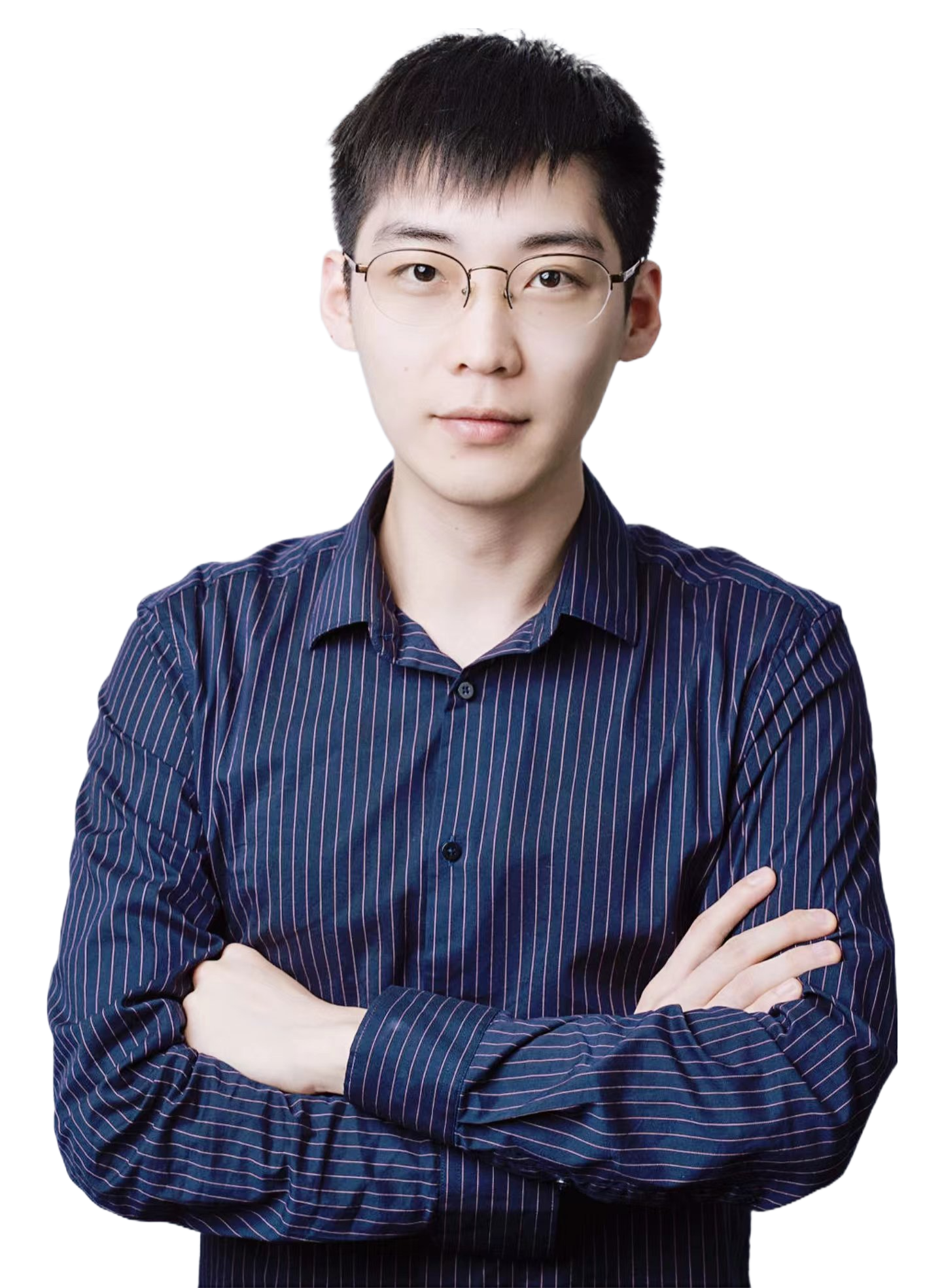
Tony Bui is a Research Fellow at the Department of Data Science & AI, Monash University. His research focuses on the intersection of Generative AI and Trustworthy Machine Learning, particularly addressing ethical and security challenges in AI models such as ChatGPT and Stable Diffusion. He is actively involved in developing methodologies to prevent harmful outputs from generative models. Research Interests: Trustworthy Machine Learning Generative Models Adversarial Machine Learning Model Security Ethical AI Current Project: TMLGenAI: Trustworthy Generative AI (2024–2026), a collaborative initiative exploring safe and aligned foundation models. As a Chief Investigator, he contributes to advancing the theoretical and practical aspects of ethical AI. Advising/Grants: Tony Bui has been accepting PhD students since 2020 and is a key researcher in projects funded by Monash University. His work bridges foundational theory with real-world applications, emphasizing robustness and ethical considerations in AI systems.
Dan Warren is a Senior Research Fellow at the Gulbali Research Institute, Charles Sturt University, where he conducts interdisciplinary research in population biology, ecology, evolution, and conservation. His work centers on developing and refining species distribution models and environmental niche models to understand biodiversity and support conservation under global change. PhD in Population Biology, University of California, Davis Dan Warren's research interests lie in the development and application of quantitative tools for ecology and evolution. He focuses on species distribution models (SDMs), environmental niche models (ENMs), and their use in understanding biodiversity patterns, evolutionary processes, and conservation planning. His methodological innovations, such as those in the ENMTools R package, are widely adopted. His work spans animal behavior, climate change impacts, and conservation management, with strong relevance to UN Sustainable Development Goals on climate action and life on land. His recent publications reflect a consistent focus on improving the accuracy, interpretation, and application of species distribution models. Trends include addressing bias in model outputs, enhancing methodological standards, and developing robust tools for conservation under climate uncertainty. He frequently publishes in top ecological journals such as Ecography and Methods in Ecology and Evolution , and his work integrates software development with theoretical ecology. Dan Warren has served in key scientific roles, including as Associate Editor for Ecography and Systematic Biology , and as a reviewer for the IPBES global assessment. These contributions highlight his leadership in advancing scientific rigor and policy relevance in biodiversity science. He is actively involved in mentoring and collaborative research, contributing to datasets and methodological frameworks used by the broader ecological community. His work supports both academic inquiry and practical conservation, emphasizing robust, data-driven decision-making.
Dr Miao Xu is a Research Fellow at the University of Queensland (UQ), affiliated with the School of Electrical Engineering and Computer Science within the Faculty of Engineering, Architecture and Information Technology. She holds an Australian Research Council DECRA Fellowship (ARC DECRA), recognizing her early-career research excellence. Her research focuses on machine learning, data science, and time series analysis, with applications in healthcare, materials science, and algorithmic fairness. Dr Xu's work addresses challenges in noisy label handling, unlearning mechanisms, and adaptive modeling for irregular data. Education: She earned a Doctor of Philosophy (PhD) from Nanjing University. She is actively involved in supervising research and contributes to the Centre for Enterprise AI at UQ. Research Interests: Dr Xu’s expertise spans machine learning , time series analysis , deep learning , and unsupervised learning . Her recent work emphasizes robust learning with noisy or incomplete labels, model unlearning, and applications in alloy design and medical informatics. She explores methods like instance-attention GNNs for irregular time series and confidence-guided techniques for adversarial attack detection. Publications: Her recent work includes advancements in GNN-based time series modeling, bias mitigation in text classification, and active learning for alloy design. Key themes include improving generalization, reducing algorithmic bias, and enhancing model transparency. Awards: Her ARC DECRA fellowship (202X–202X) supports her research on data-driven methodologies. Supervision & Grants: Available for PhD supervision in machine learning and data science. Her grants include funding for projects in unlearning mechanisms and spatiotemporal modeling. Labs/Teams: Affiliated with the Centre for Enterprise AI at UQ, collaborating on enterprise-scale AI applications and interdisciplinary research.
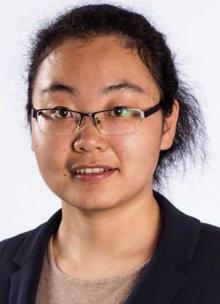
Yanrong Yang is an Associate Professor at the Research School of Finance, Actuarial Studies and Statistics, The Australian National University. Her research focuses on high-dimensional statistical inference, large-dimensional random matrix theory, functional data analysis, and responsible statistical learning. She has developed asymptotic theories for high-dimensional statistics and applied them to time series forecasting and panel data analysis. PhD in Statistics, Nanyang Technological University (2009-2013) MSc in Statistics, Shandong University (2006-2009) BSc in Statistics, Shandong University (2002-2006) Her research explores high-dimensional data analysis, including eigenvalue methods, functional principal component analysis, and applications to mortality forecasting and financial portfolio optimization. Recent publications examine fairness-aware models for annuity pricing, robust PCA techniques, and eigen-analysis for time series clustering. She has published extensively in top journals such as the Annals of Statistics, Journal of Econometrics, and Journal of the American Statistical Association. Her current project, Feature Learning for High-dimensional Functional Time Series (2023-2026), investigates representation learning in financial time series.
Stephane Heritier is a Professor (Research) at Monash University's Faculty of Medicine, specializing in Biostatistics, Data Analytics, and Health Economics. He previously held roles at the NHMRC Clinical Trials Centre and The George Institute in Sydney. His expertise includes adaptive trial designs, survival analysis, and robust biostatistics. He is a Chief Investigator on major trials like REMAP-CAP, ITACS, and STAREE-MIND, and leads research funded by NHMRC, ARC, and MRFF grants. He also co-authored the book *Robust Methods in Biostatistics* (2009). Affiliations: Monash University (Primary), University of Sydney (Honorary Associate Professor, 2013–2016) Teaching: Coordinates regression courses in the BCA Master of Statistics and MPH5200 (Epidemiology) Grants & Projects: Includes ARC-funded survival analysis methods (2022–2024), MRFF grants for depression (EMPACT), trauma (FEISTY-II), and ECMO trials (RECOMMEND) Research Interests: Adaptive designs, Bayesian platforms, cluster trials, robust statistics, and translational biostatistics. His work aligns with UN SDGs focused on health and innovation. Advising & Teams: Leads the AusTriM Centre for Clinical Trials Methodology and collaborates on global projects like the DIAAMOND and STAREE-MIND trials. His teams include interdisciplinary experts in medicine, statistics, and healthcare.
Ye Lu is a Senior Lecturer in the School of Economics at the University of Sydney. She holds a PhD in Economics from Indiana University Bloomington (2017). Her research focuses on econometric theory with applications to time series analysis, financial econometrics, and large-dimensional data. Key interests include continuous time modelling with high-frequency data, nonlinear factor models, and econometric methods for event-driven data. Education: PhD in Economics, Indiana University Bloomington (2017) Research emphasizes developing robust methodologies for data-rich environments, addressing challenges in traditional econometric approaches. Recent work includes bootstrap inference for Hawkes processes and zero-inflated GARX models for energy price spikes. Teaching responsibilities include courses like ECMT1020 (Introduction to Econometrics) and ECOS3904 (Applied Macroeconometrics). Her publications appear in top journals such as Journal of Econometrics and Energy Economics .
Associate Professor Christopher Wensrich is a faculty member in the School of Engineering at the University of Newcastle, Australia, specializing in Mechanical Engineering. He has a strong background in applied mechanics from both computational and experimental perspectives, with significant expertise in granular mechanics, neutron diffraction strain measurement, and Bragg-edge transmission strain tomography. Education: PhD, University of Newcastle Bachelor of Mathematics, University of Newcastle Bachelor of Engineering, University of Newcastle Professor Wensrich's research focuses on several interconnected areas within mechanical engineering and materials science. His primary expertise lies in granular mechanics, spanning from micromechanics and homogenization of granular systems to analytical modeling of granular dynamics (particularly the silo quaking problem) and computational modeling using the Discrete Element Method (DEM). He is also a pioneer in applying neutron diffraction strain scanning techniques to granular systems. In the broader field of applied mechanics, he has made significant contributions to neutron diffraction-based strain measurement, including breakthroughs in Bragg-edge Transmission Strain Tomography, where he demonstrated the world's first practical application outside of simple axisymmetric systems. His publication record demonstrates a consistent focus on developing and applying advanced techniques for strain measurement and reconstruction in granular and composite materials. His recent work has centered on tomographic reconstruction methods using neutron diffraction, with particular emphasis on Bragg-edge techniques for 2D and 3D strain field reconstruction. His research bridges theoretical mathematics, computational methods, and experimental validation, creating a robust framework for non-destructive stress measurement in complex materials. Professional Recognition: President of the Australian Neutron Beam User Group (ANBUG) since December 2022 Member of the ACNS Program Advisory Team at ANSTO (Australian Nuclear Science and Technology Organisation) since March 2019 Visiting Fellow at Clare Hall College, Cambridge University (January-June 2023) Visiting Researcher at Isaac Newton Institute for Mathematical Sciences (January-June 2023) Professor Wensrich has secured substantial research funding, with a total of $5,478,793 across 42 grants. His funding portfolio includes projects from the Australian Research Council (ARC), ANSTO, and international partners like Oakridge National Laboratory and Japan Proton Accelerator Research Complex. He has successfully supervised 11 PhD and Masters students to completion, with research topics spanning granular mechanics, conveyor systems, and neutron strain tomography. His current research involves collaborations with institutions worldwide, focusing on advanced strain measurement techniques and their application to complex material systems.
Jennifer Chan is a Professor in the Statistics Department at the University of Sydney's Faculty of Science. She earned her PhD from the University of New South Wales in 1997 and previously lectured at the University of Hong Kong before joining her current institution in 2006. Her research integrates statistical and machine learning models with applications in finance and insurance, including volatility modeling, Bayesian methods, and neural network applications. Her interdisciplinary research focuses on: Generalized linear mixed models and multivariate volatility measures Machine learning techniques for financial risk assessment Bayesian robustness and portfolio optimization Time-series analysis of cryptocurrencies and equity markets Recent publications demonstrate strong focus on Bayesian models in finance (42% of last 15 papers), machine learning applications (33%), and actuarial science (25%), with emerging emphasis on neural networks for financial forecasting. Awards & Honors: Second prize, Natural Science Award of China's Ministry of Education (2008) National Drug Strategy Research Scholarship (1994-1996) She supervises doctoral candidates working on machine learning applications in finance and insurance. Her international collaborations include institutions in Israel, Japan, Malaysia, and the United States.
Professor Parastoo Sadeghi is a distinguished academic in the School of Engineering and Information Technology at the University of New South Wales (UNSW) Canberra, where she serves as Professor of Electrical Engineering. She joined UNSW Canberra in October 2020 after spending 15 years at the Australian National University (2005-2020). Professor Sadeghi received her bachelor's and master's degrees in electrical engineering from Sharif University of Technology, Tehran, Iran, in 1995 and 1997, respectively, and completed her Ph.D. in electrical engineering from UNSW Sydney in 2006. Professor Sadeghi's research spans several cutting-edge areas in information theory and communications, with particular emphasis on information theory , data privacy , network and index coding , wireless communications theory and systems , and spherical signal processing . Her work has resulted in over 200 refereed journal articles and conference papers, plus a book on Hilbert Space Methods in Signal Processing published by Cambridge University Press in 2013. Her recent publications demonstrate a strong focus on differential privacy mechanisms, information leakage analysis, and network coding optimization, with significant contributions to the theoretical foundations of these fields. Professor Sadeghi has held several prestigious positions in the academic community, including serving as Associate Editor for coding techniques for the IEEE Transactions on Information Theory (2016-2019), General Co-chair of the 2021 IEEE International Symposium on Information Theory in Melbourne, and as an elected member on the Board of Governors of the IEEE Information Theory Society (2019-2020). She has been a Senior Member of the IEEE since 2007 and has conducted research visits at leading institutions including the Technical University of Munich (2008) and MIT (2009, 2013, 2020). Her recent work shows increasing focus on privacy-preserving technologies and the theoretical foundations of secure communications, with numerous publications in top-tier venues. Senior Member of IEEE (since 2007) General Co-chair of 2021 IEEE International Symposium on Information Theory Associate Editor for IEEE Transactions on Information Theory (2016-2019) Elected member, IEEE Information Theory Society Board of Governors (2019-2020) Professor Sadeghi actively supervises graduate students in fundamental problems related to information theory, wireless communications, data privacy, and network coding. She offers competitive scholarships of $35,000 AUD for high-achieving PhD students with strong mathematical backgrounds. Her research group maintains strong international collaborations, as evidenced by her frequent research visits to top global institutions and numerous co-authored publications with international researchers. She continues to be an active contributor to the advancement of information theory and its applications to modern communication and privacy challenges.
Akanksha Negi is a Lecturer (Assistant Professor) in the Department of Econometrics and Business Statistics at Monash University, Australia. Her academic journey includes a PhD in Economics (2020) from Michigan State University, preceded by a BS and MS in Statistics from the University of Delhi, India. Education: PhD in Economics, Michigan State University (2020) BS and MS in Statistics, University of Delhi (India) Research Interests focus on Econometrics, particularly Causal Inference and Experimental Design. Her work addresses methodological challenges in treatment effect estimation, including misclassification, heterogeneity, and missing data, with applications to agricultural economics and network transaction costs. Trends in Publications highlight contributions to Difference-in-Differences, Doubly Robust Estimation, and M-Estimation frameworks. She also explores dynamics in agricultural markets, aligning with UN Sustainable Development Goals (SDGs) related to poverty reduction and economic prosperity.
Yu Yao is a Lecturer in Machine Learning at the School of Computer Science, The University of Sydney. He joined in December 2023 and focuses on developing robust and interpretable machine learning systems. His research emphasizes robustness to data noise, adaptable ML systems, and disentangled representation learning. Yao holds a PhD from The University of Sydney under Professors Tongliang Liu and Dacheng Tao, followed by postdoctoral positions at Mohamed bin Zayed University of Artificial Intelligence and Carnegie Mellon University. Education: PhD in Computer Science (University of Sydney), postdoctoral research at MBZUAI and CMU. Research interests include causal inference in ML, multimodal learning, and label noise mitigation. He has published extensively in top venues like ICML, NeurIPS, and ICLR, and served as an Area Chair for AJCAI 2023, NeurIPS 2025, and ICLR 2025. Awards: Outstanding Reviewer (NeurIPS 2023, ICLR 2023), University of Sydney Research Excellence Prize (2019) Teaching: Advanced Machine Learning (USYD), Guest Lectures on noisy label learning (MBZUAI, China University of Petroleum) Service: Action Editor for TMLR, Area Chair for ICML/ICLR/NeurIPS, reviewer for top journals and conferences His lab focuses on trustworthy AI, with ongoing projects on causal mechanisms in robust learning and interpretable multimodal systems. Current advisees include PhD candidates Ruojing Dong and Jiyang Zheng (co-advised with Prof. Liu), and master's student Kai Lian.
Hsein Kew is a Senior Lecturer in the Department of Econometrics and Business Statistics at Monash University. He holds a PhD in Economics from the University of Melbourne and previously worked as a researcher at the Melbourne Institute of Applied Economic and Social Research, focusing on empirical analyses of social security and labor market interactions. PhD in Economics, University of Melbourne Researcher, Melbourne Institute of Applied Economic and Social Research Senior Lecturer, Department of Econometrics and Business Statistics, Monash University His research primarily centers on time series analysis , heteroskedastic models , and non-parametric methods , with applications in financial econometrics and forecasting. He teaches Financial Econometrics and Data Analysis in Business, contributing to both theoretical and applied econometric education. The recent publications by Hsein Kew span from 2014 to 2024 and reflect a consistent focus on advanced econometric methodology. The articles demonstrate expertise in predictive regression models , unit root testing under volatility shifts , long memory processes , and autocorrelation testing under complex dependency and heteroskedastic structures . These works are published in top-tier journals such as the Journal of Econometrics and Econometric Theory , indicating a strong contribution to econometric theory and robust inference under non-standard conditions. Notable research projects include an Australian Research Council (ARC)-funded project titled A new class of statistical methods for analysing long memory time series models with heteroskedasticity (2010–2013), where he served as a Chief Investigator. This project aligns with his ongoing research interests in modeling time series with long memory and time-varying volatility. ARC Research Project: A new class of statistical methods for analysing long memory time series models with heteroskedasticity (2010–2013) While no scientific awards are listed in the provided text, his sustained publication record and involvement in funded research indicate active scholarly engagement. He has collaborated with prominent econometricians such as David Harris and Jiti Gao, suggesting integration into a strong research network. There is no mention of advising students or leading a lab, but his role as a Senior Lecturer implies teaching and mentorship responsibilities.
Bin Peng is a Professor in the Department of Econometrics and Business Statistics at Monash University. His research focuses on developing novel econometric models and methods, particularly in panel data analysis, time series econometrics, and climate data modeling. He holds a PhD in Econometrics from Monash University (2013) under Professors Giovanni Forchini and Don Poskitt, preceded by a BSc in Mathematics from Nanjing University (2007). His work addresses structural changes in factor models, time-varying parameters in vector error-correction frameworks, and productivity convergence in manufacturing sectors. Key contributions include nonparametric panel models for climate data and methodologies for handling interactive effects in panel data with general factors. Peng has received multiple Dean’s Awards, including the 2021 Early Career Research Excellence Award, 2023 Commendation for Excellence, and 2024 Researcher of the Year. He leads a 2021–2025 project on modeling time trends in panel data, funded by Monash University. His recent articles (2021–2025) emphasize methodological advancements in econometric theory, applied to climate science, economic growth, and macroeconomic policy.