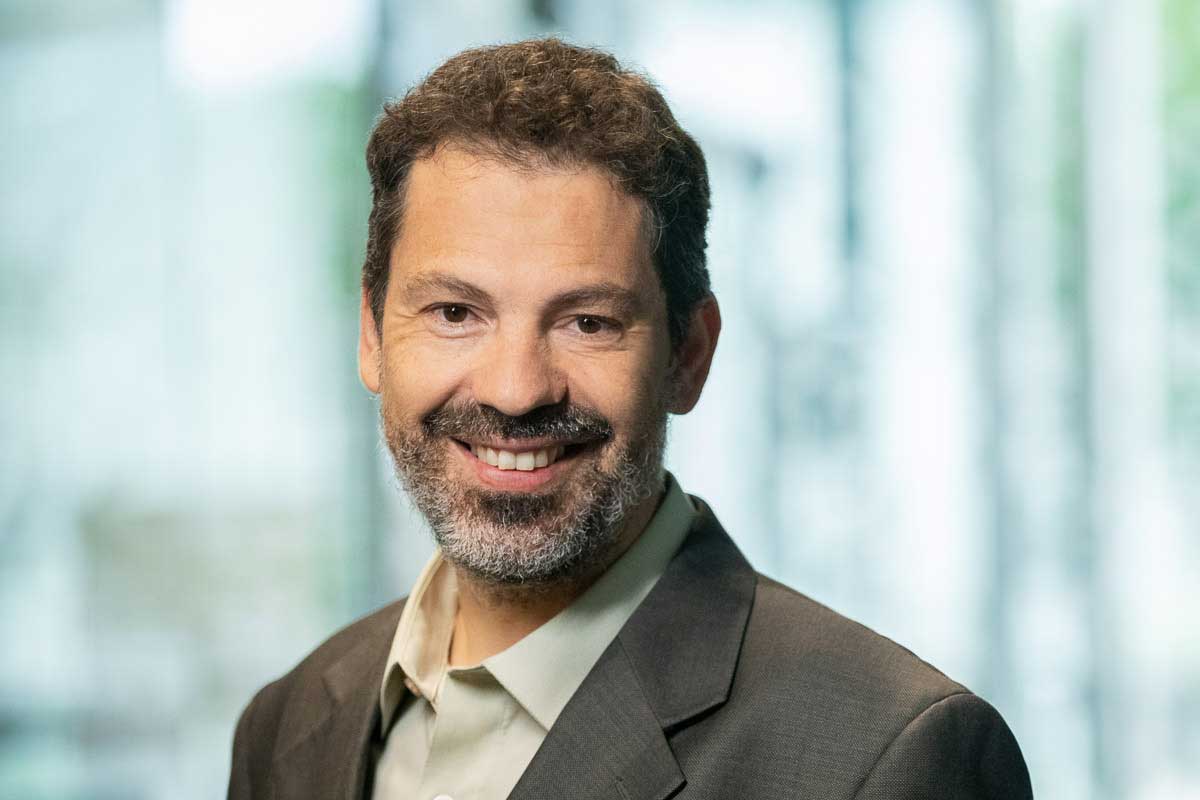
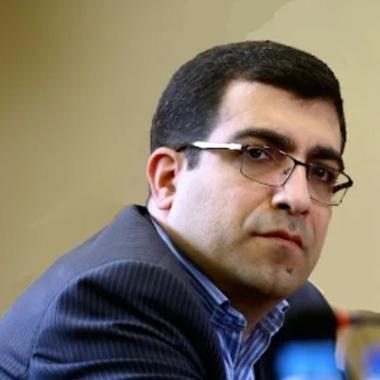
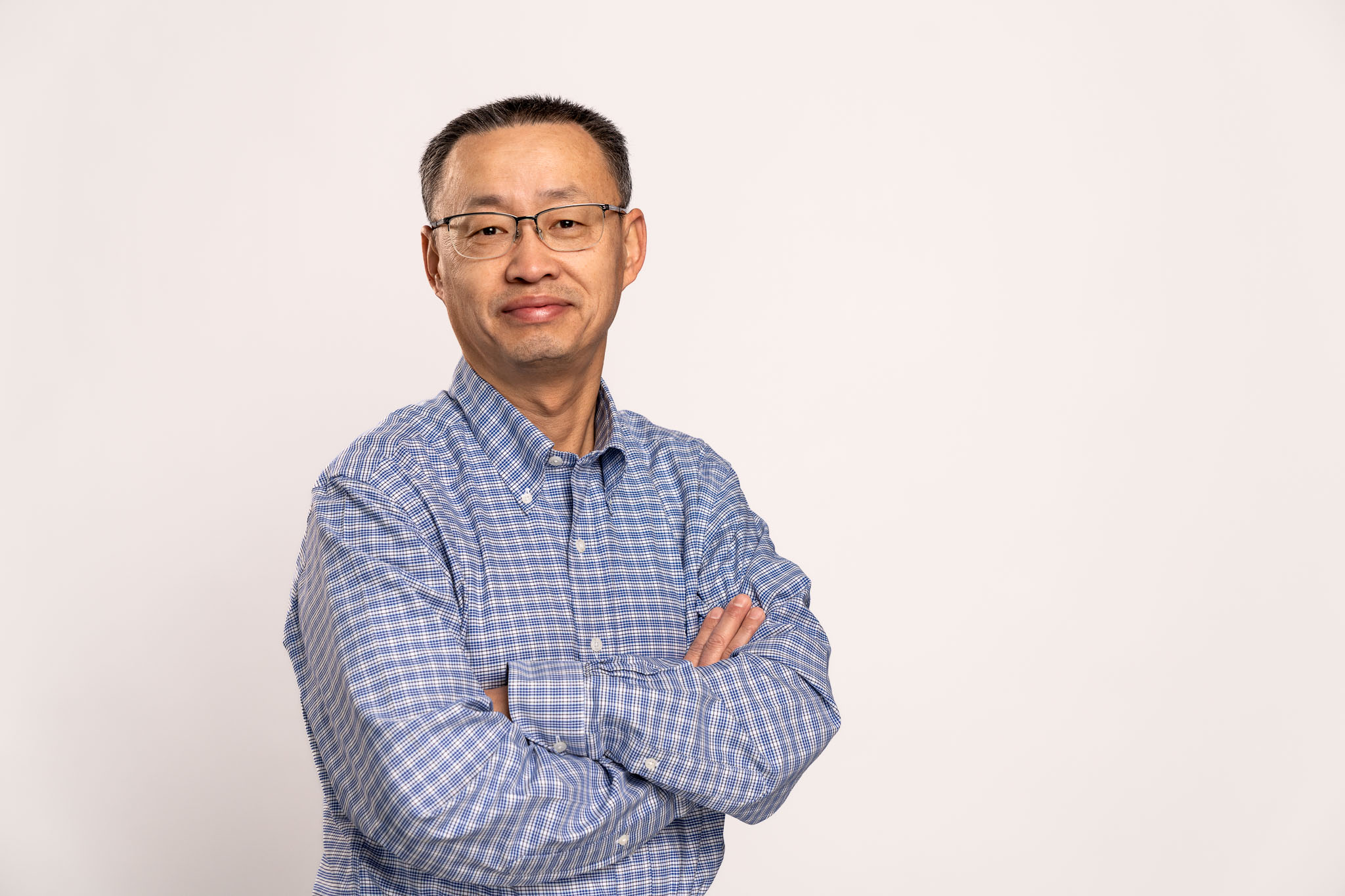
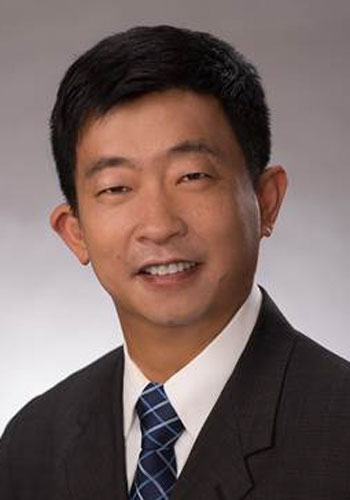
Marko Tanasković (born December 6, 1986) is a researcher at Singidunum University with a PhD in Information Technology and Electrical Engineering from ETH Zurich (2015). His academic background includes master's (ETH Zurich, 2011) and bachelor's (University of Belgrade, 2009) studies in Electrical Engineering. Doctoral studies: Information Technology and Electrical Engineering, ETH Zurich (2011-2015) Master studies: Information Technology and Electrical Engineering, ETH Zurich (2009-2011) Basic studies: Electrical Engineering, University of Belgrade (2005-2009) Tanasković's research focuses on control systems , predictive modeling , and optimization algorithms for mechanical and electrical systems. His work addresses adaptive model predictive control (MPC), sensorless motor positioning, and data-driven approaches for nonlinear systems. Recent publications (2018-2024) demonstrate expertise in: Embedded control systems (rotor polarity detection) Drone forensics and autonomous navigation Industrial automation (LabVIEW applications) Biomedical sensor development ('Smart Anklet') Machine learning optimization (firefly algorithm)
Stavros Tripakis is an Associate Professor at the Khoury College of Computer Sciences at Northeastern University , where he joined in 2018. He is on sabbatical during the 2024-2025 academic year. His research focuses on the foundations of software and system design , emphasizing formal methods , computer-aided verification and synthesis, with applications to safety-critical, embedded, and cyber-physical systems, security, and trustworthy AI. He leads a group developing theory and tools for designing better systems. Recent publications explore distributed protocol synthesis, neural network verification, and inductive invariant inference, reflecting trends in formal methods for AI and distributed systems. His work often intersects with automated reasoning, model checking, and tool development. Scientific awards include the Distinguished Artifact Award at TACAS 2018 for the Refinement Calculus of Reactive Systems (RCRS) toolset. He advises Derek Egolf , Daniel Melcer , and William Schultz (graduated 2025). Former postdocs include Rômulo Meira-Góes (now Penn State) and Eunsuk Kang (now CMU). Current projects include the NSF FMitF grant (2023-2027) on safe multi-agent reinforcement learning and the NSF SaTC grant (2018-2022) on protocol design.
Mahsa Ghasemi is an Assistant Professor at the Elmore Family School of Electrical and Computer Engineering, Purdue University, located in West Lafayette. She holds a B.Sc. in Mechanical Engineering from Sharif University of Technology (2014), an M.S.E. in Mechanical Engineering from The University of Texas at Austin (2017), and a Ph.D. in Electrical and Computer Engineering from The University of Texas at Austin (2021). Her research focuses on task-oriented knowledge acquisition, online learning and control, human-robot interaction, trustworthy AI, and socially beneficial autonomy. She is affiliated with the Materials and Electrical Engineering Building at Purdue. Education: B.Sc., Mechanical Engineering, Sharif University of Technology (2014) M.S.E., Mechanical Engineering, UT Austin (2017) Ph.D., Electrical and Computer Engineering, UT Austin (2021) Her research interests span interdisciplinary areas including reinforcement learning, causal inference, control systems, and human-autonomy collaboration. Recent work emphasizes resilient cyber-physical systems, privacy-preserving multi-agent learning, and causal discovery in decision-making frameworks. Her articles address challenges in sensor selection, no-regret learning in bandits, and formal methods for autonomous systems. Publications highlight contributions to submodular optimization in hypothesis testing, robust sensor scheduling in intrusion detection, and adaptive experimental design for causal discovery. Her work bridges theoretical foundations with practical applications in robotics, cybersecurity, and AI ethics. No scientific awards or grants are explicitly listed in the provided data. She advises no listed students but collaborates on projects involving diverse planning and decision-making in constrained environments.
Sanjay G. Rao is a Professor in the School of Electrical and Computer Engineering at Purdue University, with a courtesy appointment in Computer Science. He joined Purdue in 2005 and has held positions as Assistant, Associate, and full Professor since then. His research focuses on network synthesis, verification, and Internet video distribution. He has been recognized with the NSF CAREER Award and ACM SIGMETRICS Test of Time Award for his foundational work on End System Multicast. Education: B.Tech in Computer Science and Engineering, Indian Institute of Technology, Madras (1997) M.S. and Ph.D. in Computer Science, Carnegie Mellon University (2000, 2004) Research Interests: His work spans network design and verification, Internet video distribution, and cloud computing. Recent projects include causal reasoning for video streaming, 360° video optimization, and resilient routing algorithms. He leads the Internet Systems Laboratory at Purdue, which develops systems for network performance guarantees and video delivery innovations. Articles Trends: Recent work emphasizes causal inference in video streaming (e.g., Veritas) and perceptual quality for next-generation video (e.g., Dragonfly). Longstanding focus on network synthesis: PCF (2020) and Robust Validation (2017) address resilient design under uncertainty. Early contributions like End System Multicast (2002) pioneered peer-to-peer video streaming. Awards: NSF CAREER Award (2010) ACM SIGMETRICS Test of Time Award (2011) ACM Distinguished Member (2021) Purdue Seed of Success Award (2017) Advising & Grants: Supervised 15+ PhD students, many now in academia and industry (e.g., Meta, Google, AT&T). Secured $4M+ in grants from NSF, industry (Google, Cisco, Amazon), and federal programs. Notable grants include NSF support for video optimization (2022-2025) and network synthesis (2023-2027). Labs & Teams: Internet Systems Laboratory (ISL): Focuses on scalable network solutions and video streaming. Collaborations with industry (e.g., Amazon Prime Video, Meta) on real-world deployment challenges.
Prof. Antske Fokkens is a Full Professor in Computational Linguistic Methods at Vrije Universiteit Amsterdam, with joint appointments in the Faculty of Humanities and the Network Institute. She directs the Text Mining/Language and AI track in the Linguistics Master's program and serves as Vice Dean of Research. Her research investigates methodological aspects of computational linguistics, focusing on language models, interpretable AI, and digital humanities. She develops tools to extract patterns from large text corpora for applications in social science and history, emphasizing transparency and interdisciplinary collaboration. Current projects include analyzing perspective expression in media and semantic modeling for biographical data. Recent publications examine shortcut learning in text classification, persona-driven content generation, hate speech model alignment, and cross-disciplinary approaches to stance detection. Her work integrates NLP with social science theories to analyze discourse on sustainability, polarization, and media framing.
Bahman Gharesifard is a Professor in the Department of Mathematics and Statistics at Queen's University, Canada. He holds a Ph.D. from Queen's University (2009) and advanced degrees from Shiraz University (B.Sc., 2002; M.Sc., 2005). His research focuses on systems and control theory, with emphasis on distributed control, optimization, geometric control, and their intersections with network sciences, machine learning, and game theory. He has been recognized with the First Year Instructor Teaching Award in Engineering & Applied Science (2014 & 2016). His academic journey includes postdoctoral research at the University of California, San Diego (2009–2012) and the University of Illinois, Urbana-Champaign (2012–2013). His work bridges theoretical foundations of control systems with practical applications in distributed optimization, neural networks, and contagion models on networks. Recent research trends include advancing Lyapunov-based methods for reinforcement learning, analyzing structural controllability in sparse systems, and developing models for network dynamics using Pólya urn frameworks. His articles explore topics like averaged controllability, flexible-step MPC, and stability in distributed algorithms. Education: Ph.D., Queen's University (2009) M.Sc., Shiraz University (2005) B.Sc., Shiraz University (2002) Awards: Engineering & Applied Science First Year Instructor Teaching Award (2014) Engineering & Applied Science First Year Instructor Teaching Award (2016) He collaborates on projects involving secure distributed optimization, epidemic modeling via Pólya contagion networks, and neural network approximation guarantees. His lab contributes to theoretical control advancements with practical implications in robotics, energy systems, and AI.
Dr. Eleftherios Doitsidis is an Associate Professor at the School of Production Engineering & Management of the Technical University of Crete (TUC) and a member of the Intelligent Systems & Robotics Laboratory. Previously, he served as faculty at the Department of Electronic Engineering at Hellenic Mediterranean University. His expertise spans multirobot systems, autonomous vehicle control, and computational intelligence. He holds a robust record of EU and national research project involvement. Research Interests: Specializes in multirobot team coordination, autonomous navigation systems for UAVs/AUVs, control systems design, and computational intelligence applications. Recent work focuses on energy-efficient path-planning for swarms, educational robotics frameworks like HYDRA, and digital twin integration in autonomous systems. Publications Trends: His 150+ publications address cutting-edge topics including: Autonomous vehicle control architectures Modular robotics for STEM education Optimization algorithms for multirobot systems Energy efficiency in manufacturing systems Advising & Projects: Lead researcher on numerous funded projects involving UAV/AUV missions, swarm robotics, and educational technology. Active in collaborative research with institutions like the University of South Florida. Labs & Groups: Leads the Intelligent Systems & Robotics Lab at TUC, developing advanced robotic platforms and educational tools. Maintains an open-access research portal at doitsidis.tuc.gr .
Dr. Yue Wang is a Professor and the Warren H. Owen - Duke Energy Professor of Engineering at Clemson University's Department of Mechanical Engineering, where she directs the I2R laboratory. She serves as an NSF program director and holds IEEE Senior Member and ASME Fellow distinctions. Her research focuses on cooperative control, human-robot collaboration, cyber-physical systems, and multi-agent systems, supported by NSF, AFOSR, NASA, and others. Dr. Wang earned her BS from Shanghai University (2005), MS and PhD from Worcester Polytechnic Institute (2008, 2011), and completed a postdoc at the University of Notre Dame (2011-2012). Her work emphasizes trust models, human-in-the-loop systems, and safety-critical applications like autonomous vehicles and manufacturing automation. Key contributions include formal verification frameworks, Bayesian trust models, and risk-aware decision-making algorithms. Awards: ASME Fellow (202?), IEEE Senior Member (202?). Funding: NSF, AFOSR, ARO, NASA EPSCoR, Clemson University. Active in IEEE committees, including leadership in the Manufacturing Automation and Robotic Control technical committee. Labs/Teams: I2R Laboratory (focusing on intelligent and integrated robotics systems).
Dr. Ali Davoudi is a Professor of Electrical Engineering at The University of Texas at Arlington (UTA), where he also serves as Co-Director of Research Programs in the College of Engineering. He holds a B.Sc. from Sharif University of Technology (2003), M.A.Sc. from The University of British Columbia (2005), and Ph.D. from The University of Illinois at Urbana-Champaign (2010). His research focuses on microgrids, power electronics systems, renewable energy systems, and electrified transportation, with particular expertise in control systems and energy conversion. Dr. Davoudi has authored/co-authored over 136 journal articles, 87 conference papers, and holds two U.S. patents. His work has been recognized with prestigious awards, including the IEEE Fellow (2023), Fellow of the Asia-Pacific AI Association (2022), and the 2017 IEEE Richard M. Bass Outstanding Young Engineer Award. He has led federal-funded projects totaling over $6.2 million, focusing on resilient DC power systems, naval microgrids, and energy storage optimization. His research emphasizes distributed control, formal verification, and resilience in power systems, with applications to naval, smart grid, and electrified transportation technologies. Key contributions include adaptive dynamic programming for multi-agent systems, bipartite output containment, and robust control of DC microgrids under adversarial attacks.
Dr. Frank L Lewis is a Professor and Moncrief-O'Donnell Endowed Chair in Electrical Engineering at The University of Texas at Arlington (UTA), where he has been since 1990. His research focuses on autonomous systems control, optimal control, reinforcement learning, and neural networks. He holds a PhD from Georgia Institute of Technology (1981), an MS in Aeronautical Engineering from the University of West Florida (1977), and a BS/ME in Physics/Electrical Engineering from Rice University (1971). His research has been ranked #1 globally in Optimal Control and Reinforcement Learning, and #2 in Control Theory by ScholarGPS. He has authored 527 journal papers, 30 books, and graduated 65 PhD students. Notable recognitions include the IEEE Neural Networks Pioneer Award (2012), AIAA Intelligent Systems Award (2016), and Texas Regents Outstanding Teaching Award (2013). Dr. Lewis has secured $17M in research grants, including from NSF, ONR, and ARO. He serves on numerous editorial boards and is a Fellow of IEEE, IFAC, and the National Academy of Inventors. His work spans robotics, autonomous systems, and industrial control, with applications in unmanned aerial vehicles (UAVs), distributed control systems, and renewable energy.
Elaine Short is an Assistant Professor in the Department of Computer Science and a secondary appointment in Mechanical Engineering at Tufts University's School of Engineering. She leads the Assistive Agent Behavior and Learning (AABL) Lab, focusing on human-robot interaction, accessibility, and assistive technology. Education: PhD in Computer Science, University of Southern California (2017) MS in Computer Science, University of Southern California (2012) BS in Computer Science, Yale University (2010) Her research applies human-centered design and disability community values to AI/ML development in robotics, emphasizing robust human-robot interaction in natural environments, group/crowd dynamics, and inclusive design for non-normative users. Recent publications highlight trends in human-robot co-creative collaboration, shared control systems, policy modification through imagined actions, and accessibility challenges in robotics. Awards include NSF Graduate Research Fellowship, Google Anita Borg Scholarship, and multiple teaching/research recognitions. Scientific Awards: National Science Foundation Graduate Research Fellowship USC Provost's Fellowship Google Anita Borg Scholarship Viterbi School of Engineering Merit Award WiSE Merit Award Best Research/Teaching Assistant Awards Saybrook College Mary Casner Prize
Dr. Vahid Rafe is Lecturer and co-program lead for Computer Science at Goldsmiths, University of London. His research focuses on search-based software engineering and blockchain technology, with additional expertise in formal verification and model transformation. Research integrates artificial intelligence with software engineering practices including automated testing techniques, bug localization, and formal verification. Recent work applies machine learning to software quality assurance, combinatorial testing optimization, and blockchain security analysis. Publications demonstrate consistent innovation in AI-enhanced software engineering methods, particularly hybrid algorithms for test generation and deep learning approaches for software maintenance. Recent work addresses security vulnerabilities in cryptographic systems.
Professor Jinjun Shan is a Full Professor of Space Engineering and former Department Chair (2018-2023) in the Department of Earth and Space Science and Engineering at York University's Lassonde School of Engineering. An internationally recognized expert in dynamics, control and navigation, he joined York University as an Assistant Professor in 2006, was promoted to Associate Professor in 2011, and became a Full Professor in 2016. Dr. Shan received his B.Eng., M.Eng., and Ph.D. degrees from Harbin Institute of Technology, China, in 1997, 1999, and 2002, respectively. Before joining York, he was a Post-Doctoral Fellow at the University of Toronto Institute for Aerospace Studies (2003-2006) and a Research Assistant at City University of Hong Kong (2002-2003). His research focuses on dynamics, control and navigation, autonomous systems, multi-agent systems, smart materials and structures, space instrumentation, active vibration control, and orbit dynamics. Dr. Shan has made significant contributions to national and international space missions including NEOSSat and has attracted over $5 million in research funding from governmental agencies and industry partners. His laboratory, the Spacecraft Dynamics Control and Navigation Laboratory (SDCNLab), which he founded in 2006, conducts cutting-edge research in space engineering. Dr. Shan's extensive publication record includes over 200 peer-reviewed journal and conference papers, with his most recent work focusing on multi-agent formation control, autonomous vehicle decision-making, quadrotor control systems, and smart material applications. His research shows a clear progression from fundamental dynamics and control theory toward increasingly complex multi-agent systems and real-world applications in autonomous vehicles and space engineering. Fellow of Canadian Academy of Engineering (CAE) Fellow of Engineering Institute of Canada (EIC) Fellow of American Astronautical Society (AAS) Associate Fellow of AIAA Alexander von Humboldt Research Fellowship JSPS Fellowship Lassonde Educator of the Year Award (2022) Named in Stanford's list of world's top 2% researchers Dr. Shan has successfully mentored numerous graduate students and post-doctoral fellows, with current advisees working on cutting-edge projects in multi-agent systems, UAV control, and smart materials. His research is supported by substantial funding from NSERC, CSA, and industry partners. As the founding director of SDCNLab, he has built a comprehensive research facility for spacecraft dynamics, control, and navigation, recently expanding to include autonomous unmanned vehicle research through a CFI JELF award. His laboratory continues to make significant contributions to both theoretical advancements and practical applications in space engineering and autonomous systems.
Dr. Zhu Han is the John and Rebecca Moores Professor at the University of Houston's Cullen College of Engineering, Department of Electrical and Computer Engineering. His research focuses on game theory, wireless networking, security, data analysis, and smart grid applications. He holds doctoral and master's degrees from the University of Maryland and a bachelor's from Tsinghua University. Research interests span: Next-generation wireless systems (6G/7G) AI/ML integration in communications Reconfigurable intelligent surfaces Quantum machine learning applications Secure and efficient network architectures His recent publications demonstrate strong focus on generative AI integration in wireless systems, quantum networking, semantic communications, and security frameworks for future networks. Awards and honors include: IEEE/ACM/AAAS Fellow status IEEE Kiyo Tomiyasu Award (2021) Highly Cited Researcher since 2017 IEEE Distinguished Lecturer (2015-2018) Dr. Han leads research in wireless communications and networking, with extensive industry collaboration. His lab focuses on developing theoretical foundations and practical implementations for next-generation communication systems.
Chadi Assi is a Professor and Tier II Concordia Research Chair at the Concordia Institute for Information Systems Engineering, Concordia University. His research focuses on wireless networks, information security, and smart grid systems, with particular emphasis on reconfigurable intelligent surfaces (RIS), integrated sensing and communication (ISAC), cybersecurity for electric vehicles (EVs), and machine learning-driven network optimization. He has pioneered work on mitigating cyber-physical attacks in power grids and IoT ecosystems, while advancing cooperative communication protocols like RSMA and NOMA. His technical contributions span theoretical frameworks for energy efficiency maximization in hybrid SDMA/NOMA schemes, low-complexity RIS element selection algorithms, and adversarial PINN models for grid dynamics. He also investigates vulnerabilities in EV charging infrastructure and O-RAN synchronization protocols, proposing robust detection mechanisms like PEACE and Grid Mirror. His interdisciplinary work bridges communications, power systems, and AI, addressing challenges in 5G/6G security and resilient IoT provisioning. Key Research Areas: RIS-enabled ISAC networks, EV cybersecurity, meta-learning in communications, IoT malware analysis Current Projects: Grid resilience against load-altering attacks, Movable antenna optimization, federated learning for AGC systems Recent publications (2024-2025) emphasize deep reinforcement learning frameworks for RIS-aided networks, cooperative RSMA performance enhancement, and defense mechanisms against dynamic trigger-based attacks. He has also developed novel datasets for advanced persistent threats and frameworks like ChargePrint for EV charging security analysis. His work is published in top venues including IEEE Transactions on Smart Grid, IEEE JSAC, and IEEE ICC, reflecting contributions to both theoretical advancements and practical system implementations.