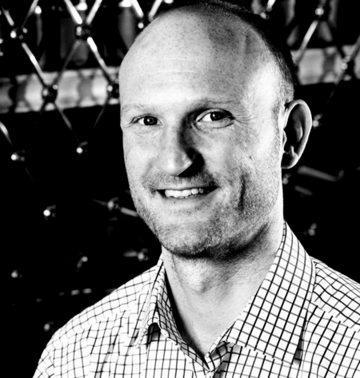
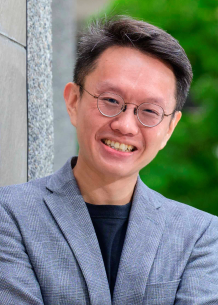
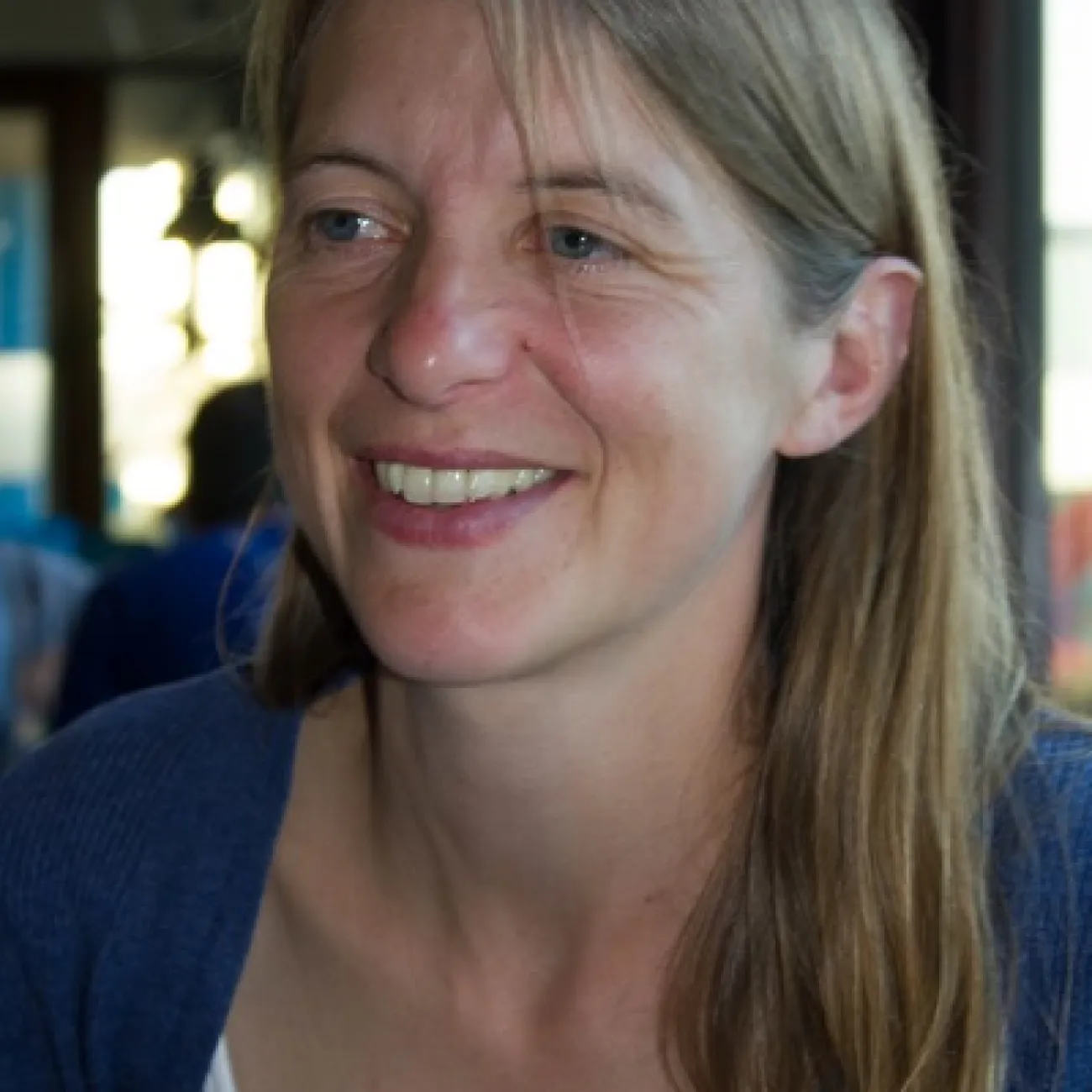
Professor Anders C. Hansen is a mathematician at the University of Cambridge and University of Oslo, leading the Applied Functional and Harmonic Analysis group. His work bridges functional analysis, artificial intelligence, and computational mathematics, focusing on the Solvability Complexity Index (SCI) hierarchy and stability issues in deep learning. He has held prestigious fellowships, including a Royal Society University Research Fellowship and Peterhouse Bye-Fellowship. Educated at the University of Cambridge, UC Berkeley, and the Norwegian University of Science and Technology Developed groundbreaking theories in compressed sensing and deep learning, revealing algorithmic instability paradoxes Organized workshops on computational mathematics and AI interpretability His research explores the SCI hierarchy , exposing computational barriers in AI, quantum mechanics, and inverse problems. Key projects include Smale’s 18th problem and analyzing neural network stability. His work has transformed understanding of compressed sensing, particularly in medical imaging. Recent scientific awards include the Whitehead Prize (2019), IMA Prize (2018), and Leverhulme Prize (2017). Collaborations span institutions like Caltech, MIT, and the University of Vienna. As an educator, he teaches NST Part IA Mathematical Methods , Part II Numerical Analysis , and a Part III course on Compressed Sensing . His group has mentored 17 PhD and postdoctoral researchers since 2012.
Joel Goh is Associate Professor at the Department of Analytics and Operations, NUS Business School, National University of Singapore. He serves as Director of the J.Y. Pillay Comparative Asia Research Centre (under NUS Global Asia Institute) and PhD Program Director at the Institute of Operations Research and Analytics (IORA). Previously, he was Assistant Professor at Harvard Business School (2014-2017) and Visiting Scholar (2017-2022). BSc, MSc, PhD in Operations, Information, and Technology from Stanford University His research focuses on healthcare analytics (preventing health conditions, hospital operations, frailty assessment), supply chain analytics (digital business models, platform leakage), and service platform operations (hospital-at-home programs, incentive design). He co-created the Robust Optimization Made Easy (ROME) software. Recent publications analyze workplace psychological safety (2024), hospital-at-home models (2024), and platform leakage dynamics (2023). His work spans 18+ journals with 740+ citations for burnout cost studies (2022) and 606+ citations for physician well-being research (2017). Teaching Honors : 2023: Best MBA Teaching & Skinner Innovation Award 2021: NUS Annual Teaching Excellence Award 2020: Early Career Research Excellence Award & 40 Under 40 Best MBA Professors Advising & Grants : Served as PhD Program Director. Received NUS Start-Up Grant R-314-000-110-133 (2021) and Humanities & Social Sciences Fellowship (2021). Editorial roles include Associate Editor at Management Science , Manufacturing & Service Operations Management , and Senior Editor at Production and Operations Management .
Dr. Arno Solin is a tenured Associate Professor in Machine Learning at Aalto University's Department of Computer Science and an Academy of Finland Research Fellow . He leads the Aalto machine learning research group and serves as Director of the Finnish Doctoral Program Network in AI (AI-DOC) . His work bridges probabilistic modeling with practical applications in sensor fusion and real-time inference. ELLIS Scholar (European Laboratory for Learning and Intelligent Systems) Adjunct Professor at Tampere University Member of Young Academy Finland (2021–2025) Research Interests focus on data-efficient machine learning with probabilistic methods for real-time inference and sensor fusion. Key areas include Gaussian processes, diffusion models, stochastic differential equations, and uncertainty quantification in deep learning. His group develops methods that combine structural constraints with adaptive learning for deployment on resource-limited hardware. Publication Trends show consistent output in top venues (NeurIPS, ICML, ICLR, AISTATS) with emphasis on diffusion models , 3D scene reconstruction , and real-time probabilistic modeling . Recent works explore physics-informed learning, heterophily-aware graph models, and compressed representations for world models in reinforcement learning. Scientific Recognition : Awarded AI Researcher of the Year 2024 by AI Finland Teacher of the Year 2023 at Aalto CS ISIF Jean-Pierre Le Cadre Best Paper Award (2018) MLSP Schizophrenia Classification Challenge Winner (2014) NeurIPS/ICML Reviewer Awards Research Leadership includes coordinating Finland's AI Center of Excellence program and directing the Finnish Doctoral Program Network in AI (AI-DOC). He supervises 15+ doctoral/postdoctoral researchers and has spun off Spectacular AI , a company commercializing sensor fusion technology.
Raphael Hauser is an Associate Professor in Numerical Mathematics at the University of Oxford's Mathematical Institute, Director of Graduate Studies - Teaching, and Tanaka Fellow in Applied Mathematics at Pembroke College. His affiliations include membership in the Data Science, Numerical Analysis, and Mathematical and Computational Finance research groups, as well as a fellowship at the Alan Turing Institute. Education: PhD in Operations Research, Cornell University, Ithaca, USA Dipl. Math. ETH, Swiss Federal Institute of Technology (ETH Zurich), Switzerland Research interests span data science, numerical optimisation, medical imaging, distributed computing, and applied probability/statistics. His work integrates mathematical rigor with practical applications, particularly in optimization algorithms, machine learning theory, and medical imaging technology. Publications focus on optimization theory, stochastic processes, medical imaging systems, and computational finance, with recurring themes in non-convex optimization guarantees, PCA variants, and X-ray tomography innovations. Awards: Oxford University Teaching Award (2007) SIAM Optimization Prize (2005) SIAM Student Paper Prize (2000) Advising includes 15+ DPhil students and 40+ MSc students, with projects in optimization, finance, imaging, and machine learning. Current postdocs and students are affiliated with the Alan Turing Institute and industrial partners like Siemens and Macquarie Group. He leads teams in the Mathematical Institute's research groups and collaborates with the Alan Turing Institute on large-scale data science initiatives.
Michael U. Gutmann is a Senior Lecturer in Machine Learning at the School of Informatics, University of Edinburgh, and a member of the Institute for Adaptive and Neural Computation. His research lies at the intersection of machine learning, statistics, and scientific applications, with a focus on developing inference methods for complex and implicit models. Education: PhD in Computational Neuroscience, University of Tokyo MSc in Engineering and Applied Mathematics, Swiss Federal Institute of Technology (ETH) Zurich MSc, Ecole Centrale Paris His primary research interests include Bayesian inference, likelihood-free inference, optimal experimental design, unsupervised learning, and applications in computational biology and neuroscience. He is best known for introducing Noise-Contrastive Estimation (NCE), a foundational technique for training unnormalized statistical models. His recent work spans variational inference, density ratio estimation, flow models for missing data, and AI-driven experimental design in behavioral and biological sciences. His publications, including in NeurIPS , ICML , JMLR , and eLife , demonstrate a strong emphasis on methodological innovation for scientific discovery. He has contributed to open-source tools such as ELFI (Engine for Likelihood-Free Inference) and developed practical implementations of robust inference algorithms. Scientific Awards: No specific awards listed in the provided texts. Michael Gutmann actively supervises students and collaborates with leading researchers in machine learning and computational biology. He has secured research funding from EPSRC and BBSRC for projects in generative modeling and infectious disease epidemiology. He teaches advanced courses such as Probabilistic Modelling and Reasoning and Data Mining, reflecting his deep engagement with both theoretical and applied aspects of machine learning. Labs and Research Groups: Institute for Adaptive and Neural Computation (ANC), University of Edinburgh Former affiliations with Department of Mathematics and Statistics and Department of Computer Science at the University of Helsinki and Aalto University
Professor Paul Goulart is a full Professor of Engineering Science at the University of Oxford and Tutorial Fellow at St Edmund Hall, positions he has held since 2014. He leads research and teaching in robust optimization, control systems, and high-speed numerical methods, with applications spanning fluid flows, traffic networks, and economics. Education SB & MSc, Aeronautics and Astronautics – Massachusetts Institute of Technology (MIT) PhD, Control Engineering – University of Cambridge (Gates Scholar, 2007) Research Interests Professor Goulart’s work lies at the intersection of control engineering and optimization . His core expertise includes: Robust and high-speed convex optimization Model predictive control (MPC) and control barrier functions Neural-network-based control and system identification Optimization over traffic and economic networks Real-time and embedded optimization solvers These interests are reflected in prolific publication output and active supervision of doctoral researchers. Publications & Trends From 2020 to 2025 Professor Goulart has co-authored more than thirty papers. A dominant theme is the development of fast, reliable algorithms for conic optimization and robust control , often leveraging machine-learning techniques to enhance scalability and real-time performance. Recent works emphasize safety certificates, GPU-accelerated solvers, and neural-network controllers for uncertain systems. Awards & Honors Gates Cambridge Scholar (2003) Advising & Grants Professor Goulart actively seeks DPhil students in control engineering and optimization . He leads the Control Group within the Department of Engineering Science and has been involved in multiple industrially funded projects, although specific grant identifiers are not provided in the supplied text. Laboratory & Teams He is a member of the Control Group , Department of Engineering Science, University of Oxford, and serves as Secretary to the Governing Body of St Edmund Hall (Michaelmas Term 2024).
Dr. Meng Fang is a researcher specializing in Artificial Intelligence with a focus on Reinforcement Learning, Large Language Models, and their applications in medical QA, game theory, and causal inference. Their work combines technical innovation with practical problem-solving in safety-critical and domain-specific contexts. Key research areas: Social bias in AI, data augmentation, embodied agents, and model-based reinforcement learning Teaching: Coordinated module COMP532 - Machine Learning and BioInspired Optimisation (2024-25). Recent publications address challenges in offline RL robustness, vision-based safe reinforcement learning, and strategic game generalization.
Christian Coester is an Associate Professor of Computer Science at the University of Oxford and a Tutorial Fellow at St Anne's College. His research focuses on theoretical computer science, particularly in the design and analysis of algorithms for problems involving uncertainty and incomplete information. His primary research areas include: Online algorithms, with groundbreaking work on the k-server problem (including refuting the randomized k-server conjecture, which earned the STOC 2023 Best Paper Award) Learning-augmented algorithms (algorithms with predictions) that leverage machine learning predictions while maintaining robustness guarantees Fundamental problems such as the k-taxi problem, metrical task systems, and online shortest paths Coester's theoretical work aims to develop algorithms with provable performance guarantees, particularly focusing on competitive ratios that measure worst-case performance against optimal offline solutions. His research often addresses problems that are 'simple to state and hard to solve,' leading to techniques with broad applicability across theoretical computer science. His publications span top venues including STOC, FOCS, SODA, and ICML, showing consistent contributions to both classical online algorithms and the emerging field of learning-augmented algorithms. The publications reveal a strong focus on metric spaces, competitive analysis, and the integration of prediction models into traditional algorithmic frameworks. Coester has received significant recognition including the STOC 2023 Best Paper Award and a substantial ERC Starting Grant (EUR 1.5M) for 'Challenges in Competitive Online Optimisation' (2025-2029). He actively supervises PhD students and welcomes inquiries from mathematically skilled candidates interested in theoretical computer science.
Elina Rönnberg is a Professor and Deputy Head of Department at the Department of Mathematics, Linköping University, where she leads research in discrete optimisation and intelligent decision-making. Her work bridges theoretical method development and real-world applications in sectors such as healthcare, aviation, mining, and transportation. She is actively involved in the Wallenberg AI, Autonomous Systems and Software Program (WASP) and has collaborated with industry leaders like Saab and Scania. Her research focuses on advanced optimisation techniques including Dantzig-Wolfe decomposition, Lagrangian relaxation, column generation, branch-and-price, and logic-based Benders decomposition. She also explores hybrid methods combining mathematical programming with constraint programming and machine learning. Applications span nurse rostering, electric vehicle routing, aircraft arrival scheduling, and underground mine planning. Recent publications highlight a strong trend toward integrating AI and machine learning—particularly graph neural networks—with classical optimisation frameworks to accelerate solution methods. Her work emphasizes practical impact, robustness, and scalability in solving complex scheduling and resource allocation problems. Nurse Rostering with Strategic Planning of Skills for Sick-Leave Robustness (2024) Pricing for the EVRPTW with Piecewise Linear Charging (2024) Speeding Up Logic-Based Benders Decomposition with Graph Neural Networks (2024) Elina supervises several PhD students and has co-supervised doctoral research at international institutions including Makarere University (Uganda) and the University of Exeter (UK). She has contributed to applied projects through student theses in collaboration with Scania and Saab, focusing on electric vehicle routing and search-and-rescue optimisation. She previously served as a Specialist in Optimisation at Saab Aeronautics (2014–2020) and co-founded Schemagi, a scheduling tool aimed at improving quality in healthcare. She teaches courses such as Introduction to Optimization (TAOP07) and Project - Applied Mathematics (TATA62). Her research group, 'Mathematics and algorithms for intelligent decision-making,' operates within the Division of Applied Mathematics (TIMA) at the Department of Mathematics. The team develops decision support tools that enhance efficiency and sustainability in complex systems, particularly under the growing demands of electrification and digitalisation in transport and logistics.
Sigrid Källblad Nordin is an Associate Professor at KTH Royal Institute of Technology, affiliated with the Department of Mathematics (Division of Probability, Mathematical Physics, and Statistics). Her research focuses on Mathematical Finance, Probability Theory, and Stochastic Analysis, with an emphasis on measure-valued processes, martingale optimal transport, and model uncertainty. She holds a DPhil from the University of Oxford (2014). Her work bridges theoretical advancements in stochastic control, optimization, and financial applications. Recent research includes Bayesian optimal adaptive control, robust option pricing, and dynamically consistent investment strategies under uncertainty. She teaches courses such as Financial Mathematics and Financial Derivatives, and supervises PhD students Linn Engström and Chaorui Wang. Publications span journals like Annals of Applied Probability , Finance and Stochastics , and SIAM Journal on Control and Optimization , reflecting contributions to optimal transport, stochastic processes, and financial modeling. She is currently hiring a new PhD student and welcomes inquiries about master thesis supervision.
Shu-Jung Sunny Yang is a Professor and Chair in Operations Management at the School for Business and Society, University of York. He has held faculty positions at institutions including the University of Melbourne, University of Essex, and National Taiwan University, alongside administrative roles such as department head and research centre director. He earned his PhD in Management from the Australian Graduate School of Management (AGSM) at the University of Sydney and University of New South Wales. His research focuses on Supply Chain Resilience, Sustainable Operations, and Data-Driven Operations, combining formal theory, data science, and operational research. Recent work includes modeling supply chain collaboration for medical mask distribution during disruptions and exploring altruistic venturing through community-based approaches. His book Building Resilience: Consistent Re-rationalisation in Digital Transformation and Business Inheritance won the 2022 Golden Book Award in Taiwan. Awards: 2022 Golden Book Award (Taiwan) 2004 Sasakawa Young Leader Fellow (Japan) 2019 Ta-Yu Wu Memorial Award (Taiwan) Yang leads the Human futures in the digital transformation interdisciplinary cluster. His teaching includes Operations Management and Supply Chain Management. He currently serves as a guest editor for Transportation Research Part E and holds editorial roles at Journal of General Management and Journal of Management and Systems . Research grants include the British Academy-funded project on Optimising Product Line Design in Professional Service Operations . He actively collaborates with industry and academia, emphasizing practical applications of operations strategy.
Professor Christine Currie is a Professor of Operational Research within the School of Mathematical Sciences at the University of Southampton. She is a Fellow of the Alan Turing Institute and previously served as Director of the Centre for Operational Research, Management Science and Information Systems (CORMSIS). Her research is primarily funded by EPSRC and spans healthcare, disaster relief, and pricing optimisation. Research Interests: Simulation Optimisation Healthcare Management Decision Making Under Uncertainty Disaster Relief Logistics Optimal Pricing and Revenue Management Her recent work focuses on real-time simulation for emergency departments, infectious disease modelling, patient flow optimisation, food relief procurement in Indonesia, and robust pricing models in transportation and leisure sectors. The trend in her publications shows a strong emphasis on applied operational research with societal impact, particularly in digital twin integration and stochastic optimisation under uncertainty. Scientific Awards: Companion of Operational Research (2024) Professor Currie actively supervises PhD students and has secured multiple research grants, primarily from EPSRC. She has led projects such as 'Dial-a-Ride', 'CREST-OR', and 'Designing a resilient food supply network for natural disasters in West Java, Indonesia'. She also collaborates with external organisations and has supervised student projects with industry partners. Leadership and Editorial Roles: Editor-in-Chief, Journal of Simulation (2015–2024) Member, Editorial Board, Royal Society Open Science (2021–present) Co-chair, OR63 National Operational Research Conference (2021) Member, Operational Research Society Research Panel She is actively involved in the operational research community and leads interdisciplinary research teams including the Operational Research group, Institute for Life Sciences, CORMSIS, and the Centre for Healthcare Analytics.
Professor Klaus McDonald-Maier is a full Professor in the School of Computer Science and Electronic Engineering (CSEE) at the University of Essex , where he leads the Embedded and Intelligent Systems (EIS) Research Laboratory and heads the Intelligent Embedded Systems and Environments Research Group . He is also Director of Impact , Visiting Professor at the University of Kent, and Visiting Research Affiliate at NASA Jet Propulsion Laboratory, California Institute of Technology. Education PhD in High-Performance Parallel Neural Network Architectures, Friedrich-Schiller-University Jena (Germany, 1999) Electronic Engineering studies, University of Ulm (Germany) Electronic Engineering studies, Cardiff University (Wales) Electronic Engineering studies, École Supérieur de Chimie Physique Électronique de Lyon (CPE-Lyon) (France) Research Interests Professor McDonald-Maier’s research integrates embedded systems , System-on-Chip (SoC) architectures , and AI-driven robotics . He pioneers visual place recognition techniques that remain robust under severe appearance and viewpoint changes, develops cybersecurity frameworks based on ICMetrics for autonomous vehicles and IoT, and designs approximate real-time computing solutions for energy-constrained multicore and FPGA platforms. His work on radiation-tolerant systems supports space and nuclear applications, while his bio-inspired algorithms enable lightweight, neuromorphic perception on resource-limited robots. Publication Trends Between 2022 and 2025 his output converges on FPGA-accelerated AI , secure edge intelligence , visual navigation for autonomous systems , and healthcare analytics . He repeatedly couples rigorous algorithmic innovation with practical hardware deployment, yielding energy-efficient, real-time systems validated in domains ranging from autonomous driving to post-stroke rehabilitation. Scientific Awards & Recognition Best Paper Award – IEEE Transactions on Sustainable Computing (2024) Best Paper Award – IEEE/ACM DATE (2024) Best Paper Award – IEEE Systems Journal (2022) Best Paper Award – IEEE Sensors Journal (2021) Best Paper Award – IEEE Access (2020) Research Grants & Industrial Collaboration He has secured major funding from EPSRC , EU Horizon 2020 , Innovate UK , and industry partners. Current projects span trustworthy autonomy, radiation-hardened edge AI, and AI-enhanced rehabilitation technologies. He is Chief Scientist of UltraSoC Technologies Ltd and CEO of Metrarc Ltd , commercialising University research in semiconductor debug and cybersecurity respectively. Laboratory & Team Leadership As Director of the Embedded and Intelligent Systems Laboratory (EIS Lab) , he oversees a multidisciplinary team of researchers and PhD students, providing state-of-the-art FPGA, robotics, and embedded-systems facilities. The lab collaborates closely with NASA JPL, UK Atomic Energy Authority, and leading semiconductor firms to translate fundamental research into high-impact industrial solutions.
Dr. Nagham Saeed is an Associate Professor in Electrical and Electronic Engineering at the School of Computing and Engineering, University of West London, where she has been actively engaged in teaching and research since 2007. She holds a PhD in Intelligent MANET Optimisation from Brunel University and leads the Industrial Internet of Things (IIoT) research group. Her academic service includes editorial and technical committee roles for IEEE and MDPI, and she is a Chartered Engineer (CEng), Senior Member of IEEE, Member of IET, and Senior Fellow of the Higher Education Academy (HEA). PhD in Intelligent MANET Optimisation System, Brunel University (2011) Her research focuses on intelligent systems for smart cities, applying artificial intelligence to telecommunications, energy modeling, and industrial applications. She explores AI-driven optimization in next-generation networks, smart grid integration, battery management systems, and sustainable ICT. Her work also extends to engineering education, particularly feedforward teaching methods and student engagement. The recent publications reveal a strong trend in applying AI and machine learning to solve real-world challenges in energy systems, IoT, transportation, and environmental sustainability, often with a focus on smart cities and renewable integration. Dr. Saeed has been recognized with several awards, including: 2021 University of West London Student Union Best Supervisor/Tutor Award 2022 IEEE Region 8 Outstanding Women in Engineering Section Volunteer Award She mentors early-career engineers and academics and actively promotes electrical and electronic engineering among young girls. She has served as the 2023 IEEE Women in Engineering UK & Ireland Chair and is currently the Vice Chair (Chair-Elect) for the IEEE UK & Ireland Section (2024–2025). Her leadership spans technical innovation, academic service, and diversity advocacy in engineering. She teaches across a range of programs, including MSc Industrial Internet of Things, BEng and MSc Electrical and Electronic Engineering, and supervises PhD research in related fields.
Anders C. Hansen is Professor of Mathematics at the University of Cambridge (Faculty of Mathematics, Department of Applied Mathematics and Theoretical Physics) and Professor II at the University of Oslo. He leads the Applied Functional and Harmonic Analysis group and holds a Royal Society University Research Fellowship. His research bridges pure mathematics and cutting-edge applications in AI, computational harmonic analysis, inverse problems, and compressed sensing. Education: PhD from the University of Cambridge, MA from UC Berkeley, and BA from the Norwegian University of Science and Technology. Research Interests: Hansen's work centers on foundational challenges in computational mathematics, including the Solvability Complexity Index hierarchy for classifying computational problems, instability phenomena in deep learning, and theoretical advances in compressed sensing. His group develops rigorous frameworks for high-dimensional data analysis, medical imaging, and AI safety, often exposing paradoxes in algorithmic reliability. Publication Trends: Recent articles focus on the limits of deep learning (e.g., Smale's 18th problem, instability in image reconstruction), mathematical foundations of AI (trustworthiness, feature selection, LLMs), and advanced compressed sensing (asymptotic incoherence, spectral computations). His work consistently intersects functional analysis with computational feasibility. Awards: PROSE Award Finalist (2022) Whitehead Prize (2019) IMA Prize in Mathematics and Applications (2018) Leverhulme Prize (2017) Royal Society University Research Fellow (2012) Advising & Leadership: Hansen has supervised 17 PhD students and 8 postdocs. He leads the Applied Functional and Harmonic Analysis group, coordinating interdisciplinary projects in mathematical data science. His editorial roles include SIAM Journal on Imaging Sciences and Proceedings of the Royal Society A .