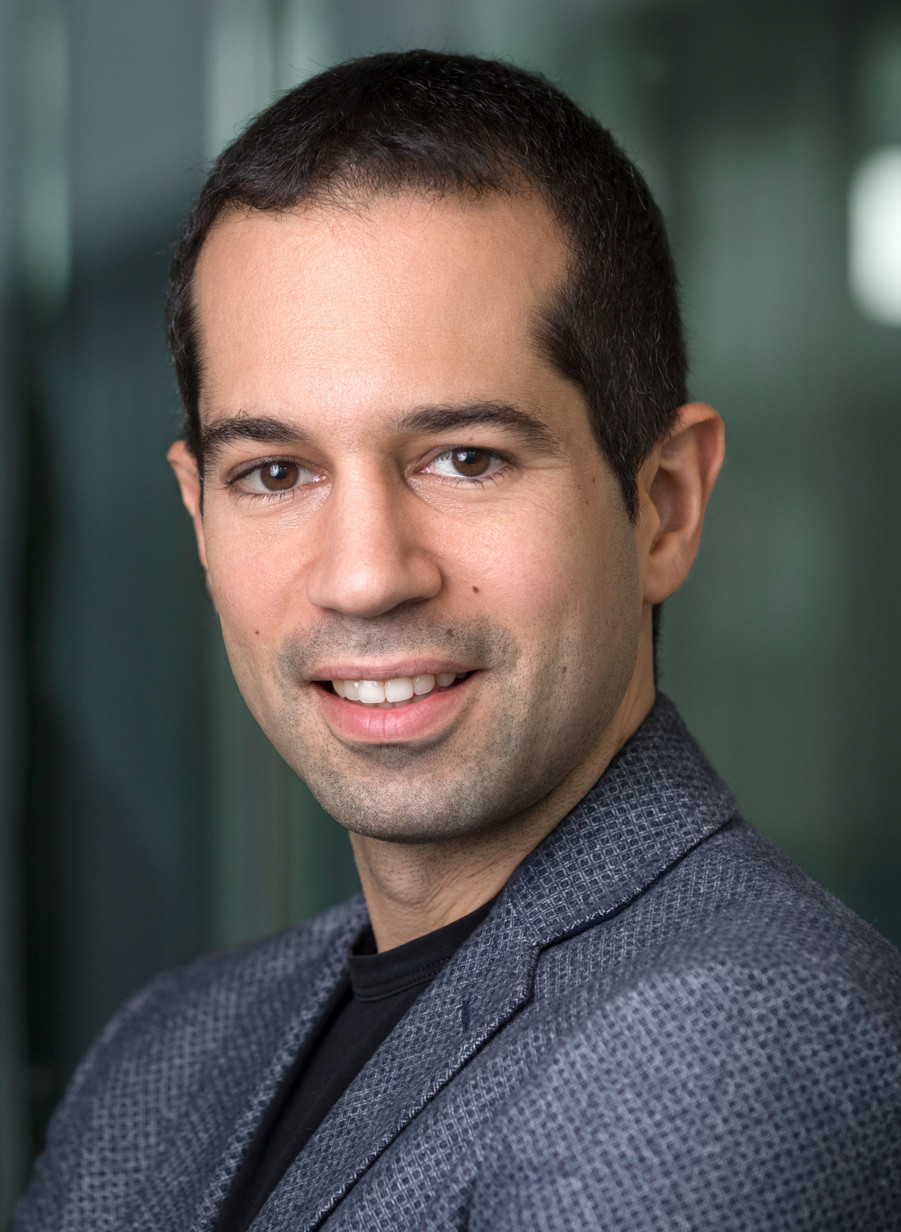
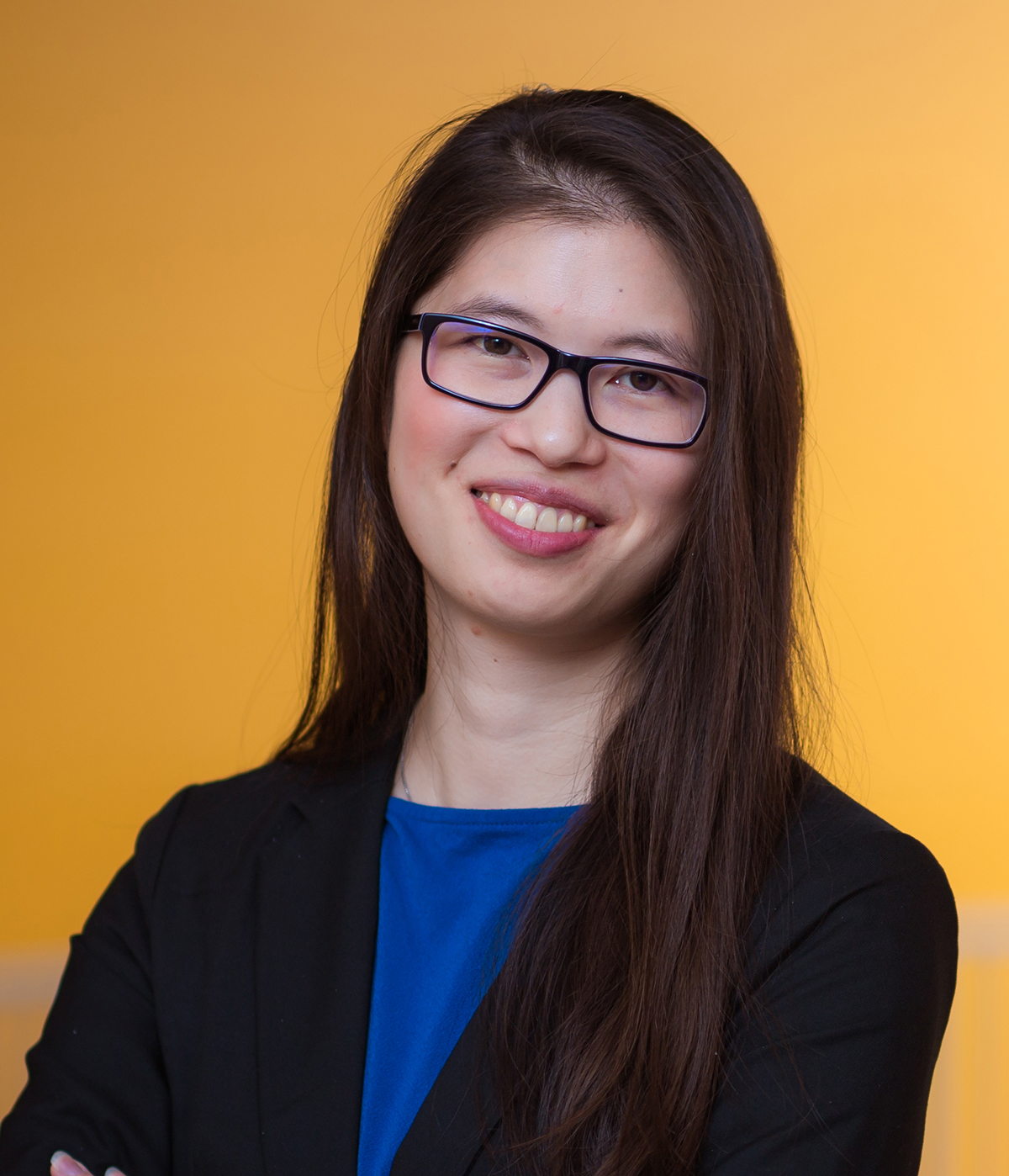
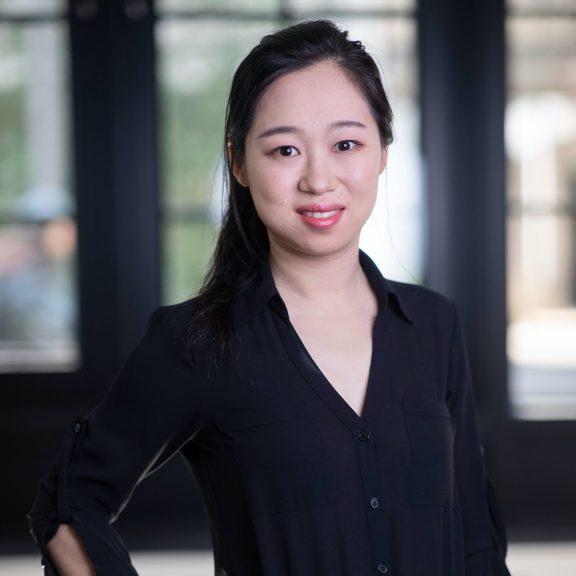
Mike Papadakis is an Associate Professor at the University of Luxembourg's Interdisciplinary Centre for Security, Reliability and Trust (SnT), where he leads the SerVal research group. His research focuses on software engineering, software security, and artificial intelligence. He holds a PhD in Software Testing and Verification from Athens University of Economics and Business, with an MSc and BSc from the same institution. His research explores mutation testing, machine learning applications in software development, and test optimization. Recent publications demonstrate a strong emphasis on AI robustness, flaky test analysis, and automated debugging techniques. Notable achievements include the IEEE TCSE Rising Star Award (2020) and 12 additional research awards. He has published over 100 peer-reviewed articles and delivered more than 30 invited talks globally.
Davide Scaramuzza is a Professor and Director of the Robotics and Perception Group at the University of Zurich. He holds a Ph.D. from ETH Zurich and has conducted postdoctoral research at the University of Pennsylvania and Stanford. His research focuses on autonomous drone navigation using visual and event-based sensors, leading to breakthroughs like AI drones outperforming human pilots in racing (Nature 2023). He pioneered algorithms for Mars helicopter navigation and developed the PX4 autopilot system. Key awards include the Kiyo-Tomiyasu IEEE Technical Field Award (2024), ERC Consolidator Grant (2019), and multiple best paper awards. His entrepreneurial ventures include co-founding Zurich-Eye (later Meta Zurich) and SUIND for agricultural drones. He co-authored the textbook Introduction to Autonomous Mobile Robots , widely used in academia. Research spans event camera algorithms, visual-inertial SLAM, and reinforcement learning for agile flight. His lab's work is featured in IEEE Spectrum, The Guardian, and Forbes. He advises UN initiatives on AI for disaster response and nuclear safety. Current projects include Graph-Generating State Space Models (CVPR 2024) and event-based vision for automotive systems (Nature 2024).
Giuseppe Bruno Averta is a Fixed-term Researcher at the Department of Control and Computer Science (DAUIN), Polytechnic University of Turin, and a member of the Interdepartmental Center SmartData@PoliTO - Big Data and Data Science Laboratory. He is affiliated with the College of Computer, Film and Mechatronics Engineering and contributes to national and international research in artificial intelligence and robotics. Averta has held a Visiting Researcher position at the Massachusetts Institute of Technology (MIT) from January to June 2019. His research interests include Computer Vision, Deep Learning, Robotics, Neural Architecture Search, Egocentric Vision, Embodied Intelligence (Edge/Tiny ML), and Human-Robot Collaboration . His work is aligned with ERC sectors in Artificial Intelligence, Machine Learning, and Robotics, and contributes to UN SDGs such as Good Health and Well-being, Industry Innovation and Infrastructure, and Responsible Consumption and Production. The recent publication trends highlight his focus on vision-language models (e.g., CLIP), egocentric action recognition, efficient neural architectures (e.g., BiSeNet, MaskFormer), and robust deep learning. His research bridges theoretical advances with practical robotics applications, including grasping and manipulation. Scientific Awards and Recognitions: Georges Giralt PhD Award (euRobotics AISBL, 2021) Wiley Best Reviewer (Wiley, Italy, 2021) Best Paper Award, ICUMT 2015 (2017) Fellow, ELLIS Network of Excellence (2022–) Fellow, DAAD AInet (2022–) DAAD AInet Fellowship Advising and Grants : Averta supervises multiple PhD students in the Artificial Intelligence and Computer and Systems Engineering doctoral programs at Politecnico di Torino. He is involved in teaching at both the master’s and doctoral levels, including courses on Robot Learning and Machine Learning and Deep Learning. He is also a co-inventor on a national and international patent for a method and algorithm for the automatic design of neural networks through machine learning, indicating active research funding and innovation. Labs and Research Groups : He is a member of the SmartData@PoliTO center and contributes to research in the VANDAL PoliTO lab (as indicated by his student Davide Buoso). His work is deeply integrated with teams working on egocentric vision, embodied AI, and neural architecture search.
Kok Sheik Wong is a Professor and Deputy Head (Research) at the School of Information Technology, Monash University Malaysia. He holds a Doctor of Engineering from Shinshu University, Japan, and Master’s and Bachelor’s degrees in Computer Science and Mathematics from Utah State University, USA. His academic leadership and research excellence are central to his role at Monash. B.S. Computational Mathematics, Utah State University (2002) M.S. Computer Science, Utah State University (2006) M.S. Mathematics, Utah State University (2004) Doctor of Engineering, Shinshu University, Japan (2009) His research focuses on multimedia signal processing and cybersecurity , particularly in data hiding , reversible data hiding , coverless steganography , and multimedia encryption . He is also expanding into digital health , applying AI to mental health in workplace environments. His work aligns with UN SDGs, particularly in health and education. The recent publication trends show a strong emphasis on reversible data hiding , image watermarking , and AI-driven health applications . His interdisciplinary work spans computer science, engineering, and public health, with increasing focus on real-world impact through EU and national grants. He has received several honors, including: Academic of Science Malaysia - Young Scientist Network (2020) Best Paper Award, IWDW 2019 ITEX 2021 Gold Medal for BAITRADAR School of IT Excellence in Research Award (2022) Dr. Wong actively supervises PhD students and leads major research projects, including the EU-funded WAge project. He has served as an associate editor for IEEE Signal Processing Letters and the Journal of Information Security and Applications, and is a member of IEEE IFS and APSIPA technical committees. His grants reflect strong external collaboration and funding in cybersecurity and digital health. He is involved in key research labs and teams through Monash University and international consortia, particularly in the areas of multimedia security and digital health innovation. His leadership in the WAge project connects him with European and Asia-Pacific research networks, enhancing global impact.
Yang Liu is an Assistant Professor in the Department of Electrical and Computer Engineering at the Baskin School of Engineering, University of California, Santa Cruz. Previously, they were affiliated with Harvard University and earned their PhD in 2015 from the Department of EECS at the University of Michigan, Ann Arbor. Their research lies at the intersection of machine learning, fairness, and trustworthy AI, with a strong focus on large language models, federated learning, and causal reasoning. Their research interests include: Machine Learning and Fairness Federated and Privacy-Preserving Learning Large Language Model Safety and Unlearning Causal Inference and Counterfactual Reasoning Anomaly Detection and Robust Forecasting Human-AI Interaction and Ethical AI Recent publications (2024–2025) demonstrate a strong trend in developing methods for machine unlearning, fairness in LLMs, and robustness under label noise and distribution shifts. Their work frequently appears in top-tier venues such as NeurIPS, ICLR, ICML, AAAI, and KDD, often in collaboration with researchers like Zhaowei Zhu, Mingyan Liu, Jiaheng Wei, and Kun Zhang. Themes include algorithmic fairness, model accountability, and human-aligned AI systems. Scientific contributions include: Frameworks for LLM unlearning and model editing Methods for fair classification and recourse Robust time series forecasting under anomalies Test-time adaptation in multimodal models Causal approaches to debiasing and policy learning While no formal advising list is provided, the depth and volume of collaborative work suggest active mentorship of graduate students and postdocs. Their research program is highly active, with numerous ongoing projects in trustworthy and socially responsible AI.
Pascal Vincent is an Associate Professor at the Department of Computer Science and Operational Research , University of Montreal, and a key member of the Montreal Institute for Learning Algorithms (MILA) . He holds a PhD in Computer Science from the University of Montreal and has been pivotal in advancing machine learning and artificial perception. Education: PhD in Computer Science (University of Montreal, 2003) His research spans machine learning , deep learning , representation learning , and neural networks , focusing on unsupervised methods and geometrically inspired algorithms. He explores how intelligent systems can autonomously build meaningful representations from raw data, driven by principles like the manifold hypothesis . Key projects include generative stochastic networks , contractive autoencoders , and high-dimensional sequence transduction . His work has resulted in 15+ recent publications in top venues like NIPS, ICML, and CVPR. Scientific Awards : Best student-paper award at ICML 2012 Honorable mention at NIPS 2011 Funded by FCI, FRQNT, CRSNG, CIFAR, and IBM Pascal has supervised 15+ doctoral and Master’s students , including Florian Bordes, Tom Bosc, and Nicolas Boulanger-Lewandowski, across topics like representation learning and generative models . He is also a co-founder of the UNIQUE (Union Neurosciences & Intelligence Artificielle Québec) research consortium.
Professor Matthew Simpson is a leading figure in applied mathematics at the School of Mathematical Sciences, Faculty of Science, Queensland University of Technology (QUT). He holds the position of Professor of Applied Mathematics and is an Australian Research Council (ARC) Future Fellow, reflecting his sustained research excellence. His work bridges mathematical theory and biological applications, particularly in cell migration, tissue invasion, and multiscale modeling. BE (Environmental) Honours 1, University of Newcastle (1995–1998) PhD (with Distinction), Environmental Engineering, University of Western Australia (2000–2003) Research Fellow, Department of Mathematics and Statistics, University of Melbourne (2003–2006) ARC Postdoctoral Fellow, University of Melbourne (2006–2009) Lecturer (2010–2011) and Senior Lecturer (2011–2013), QUT Associate Professor (2013–2014), QUT Professor and ARC Future Fellow (2014–present), QUT Matthew Simpson’s research focuses on mathematical and computational modeling of biological systems , particularly collective cell motion, diffusion processes, and reaction-diffusion dynamics. His interests span multiscale modeling , random walk processes , cell biology , and numerical and computational mathematics . He develops and analyzes models to understand phenomena such as wound healing, cancer progression, and tissue engineering. His recent publications (2023–2025) demonstrate a strong trend toward integrating data-driven modeling , likelihood-based inference , and equation learning with traditional mechanistic models. These works emphasize parameter identifiability , uncertainty quantification , and prediction robustness in biological contexts. Themes include sharp-fronted wave propagation, mechanical cell interactions, tumor spheroid formation, and generalized diffusivity in food drying, showcasing the breadth and depth of his modeling expertise. Among his key accolades are: J.H. Michell Medal (2012) – Awarded by ANZIAM for distinguished research by an early-career applied mathematician in Australia and New Zealand. ARC Future Fellowship (2013–2017) – For the project 'New data-driven mathematical models of collective cell motion' (FT130100148). Professor Simpson has also played significant editorial and leadership roles, including: Executive Associate Editor, Journal of Engineering Mathematics Academic Editor, PLoS ONE Editorial Board Member, ANZIAM Journal Co-chair of the 2015 ANZIAM meeting He has supervised PhD students on topics such as moving boundary problems, first-passage times, stochastic simulations, and curvature-dependent growth in biological systems. His research projects have been funded by competitive Australian grants (ARC DP and FT schemes), including studies on 3D cell migration, ghrelin’s role in cell invasion, and epithelial-to-mesenchymal transition in cancer and wound healing. He is actively involved in developing computational tools for biological modeling and promoting best practices in scientific publishing.
Martin Wainwright is a Professor at the University of California at Berkeley with joint appointments in the Department of Statistics and the Department of Electrical Engineering and Computer Sciences (EECS). His research spans high-dimensional statistics , information theory , statistical machine learning , and optimization theory . He has made significant contributions to understanding computational and statistical trade-offs in high-dimensional settings, as well as developing advanced message-passing algorithms for graphical models. His educational background includes a Bachelor's degree in Mathematics from the University of Waterloo and a Ph.D. in EECS from MIT . His work has been recognized with prestigious awards such as the COPSS Presidents' Award (2014) , IEEE Joint Paper Award (2012) , and Sloan Research Fellowship (2005) . He has advised numerous prominent researchers, including Nihar Shah , John Duchi , and Yuchen Zhang . Publications by Wainwright reflect trends in machine learning , high-dimensional data analysis , and graphical model inference . Notable works include advancements in Markov Chain Monte Carlo algorithms , pairwise comparison models , and distributed computation methods . He has also contributed extensively to signal processing and LDPC codes . COPSS Presidents' Award (2014) IEEE Joint Paper Award (2012) Institute of Mathematical Statistics Fellow (2011) NSF CAREER Award (2006) Okawa Research Grant (2005) Sloan Research Fellow (2005)
Thorsten Schmidt is Professor of Mathematical Stochastics at the University of Freiburg, succeeding Prof. Ernst Eberlein in the summer semester of 2015. He also serves as Senior Financial Engineer at MathFinance. Previously, he held professorships at Chemnitz University of Technology (2008-2015), Technical University Munich (2008), and University of Leipzig (2004 onwards). From 2017-2019, he was a Research Fellow at the Freiburg Institute for Advanced Studies (FRIAS) in a joint research group with the University of Strasbourg and USIAS on the topic of Linking Finance and Insurance. His research focuses primarily on financial and actuarial mathematics, stochastic processes, and statistics, with recent work on machine learning methods and their applications in financial mathematics and AI regulation. In Freiburg, his goal with his young team is to tackle complex challenges with improved mathematical models and apply these methodologies to various fields. Key Research Areas: Financial mathematics and credit risks Pricing and hedging of derivative financial products Statistics of stochastic processes Energy markets and nonlinear filter theory Machine learning applications in finance and insurance His recent publications show a strong trend toward integrating machine learning with traditional mathematical finance, particularly in risk management, insurance-finance arbitrage, and robust financial modeling. His work increasingly addresses ethical considerations in AI applications within finance, reflecting his broader interest in responsible AI development. Notable Awards: IDA Award Finance (2015) FRIAS-USIAS Research Fellow (2017/2018) IDA Award Machine Learning and AI (2020) MAPFRE Research Grant (2020) Luis Bachelier Fellow (2021) As Editor-in-Chief of Statistics and Risk Modeling and Associate Editor for Mathematical Finance and International Journal of Theoretical and Applied Finance, Schmidt plays a significant role in academic publishing. He leads the CRC 'Small Data' research center with Harald Binder, focusing on medical problems where disease progression must be estimated with few data points per patient. His LeanAI project, funded by the Vector Foundation, explores the connection between machine learning and theorem-proving software LEAN, aiming to develop AI that can translate between mathematics and formal proof systems. His laboratory work centers around the application of stochastic methods combined with machine learning to solve problems in finance and insurance where data is limited ('Small Data' initiative), with significant funding from DFG (€12 million for CRC Small Data) and the Carl Zeiss Foundation.
Rekha R. Thomas is a Professor of Mathematics and Undergraduate Program Director at the University of Washington. She holds a Ph.D. in Operations Research from Cornell University (1994), with postdoctoral experience at Yale University and the Konrad-Zuse-Zentrum in Berlin. Her research focuses on optimization, applied algebraic geometry, and computer vision, with contributions to semidefinite programming, graphical designs, and geometric algorithms. She has held distinguished positions such as the Robert R. and Elaine F. Phelps Professorship (2008–2012) and the Robert B. Warfield Jr. Faculty Fellowship (2017–2020). Her work bridges theory and application, addressing challenges in computer vision, combinatorial optimization, and algebraic geometry. Notable contributions include advancements in multiview geometry, kernel learning, and the geometric analysis of rank-deficient matrices. She actively collaborates across disciplines, publishing extensively and supervising numerous graduate students and postdocs. Rekha also engages in academic leadership, mentoring students, and participating in international conferences. Her research has been recognized through invited talks at major events like the International Congress of Mathematicians (2018) and SIAM Annual Meetings. She continues to explore the intersections of algebraic geometry, optimization, and computational methods.
Sergey Fomel is a Professor of Geophysics at the University of Texas at Austin, holding the Wallace E. Pratt Professorship and serving as Director of the Texas Consortium for Computational Seismology (TCCS). He is affiliated with the Jackson School of Geosciences, Bureau of Economic Geology, and the Oden Institute for Computational Engineering and Sciences. His research focuses on seismic data analysis, computational seismology, and machine learning applications in geophysics. He leads the Madagascar software project for open-source geophysical data analysis. Dr. Fomel earned his Ph.D. in Geophysics from Stanford University in 2001. He has held leadership roles in the Society of Exploration Geophysicists (SEG), including Vice President, Publications (2017–2019) and Distinguished Lecturer (2020). His awards include honorary memberships in SEG and the Geophysical Society of Houston (GSH). Recent research emphasizes deep learning for seismic inversion, noise reduction, and fault segmentation. His work addresses challenges in geophysical data processing, including adaptive algorithms, wave propagation modeling, and CO2 monitoring. Fomel's contributions span both theoretical and applied domains, bridging computational methods with practical geoscience applications. Education: Ph.D. in Geophysics, Stanford University (2001) Affiliations: Jackson School of Geosciences, Bureau of Economic Geology, Oden Institute Labs/Teams: Texas Consortium for Computational Seismology (TCCS), Madagascar Project
Ivan Canay is a Professor of Economics and Director of the Mathematical Methods in the Social Sciences Program at Northwestern University’s Weinberg College of Arts & Sciences. He holds a PhD from the University of Wisconsin, Madison (2008). His research focuses on econometric theory, particularly developing statistical methods for assessing partially identified models, including tests for moment inequalities and randomization-based inference techniques. Recent work addresses challenges in clustered data analysis, covariate-adaptive randomization, and regression discontinuity designs. Canay’s academic contributions include advancing methodologies for handling non-ignorable cluster sizes and improving the robustness of inference in settings with limited data. He serves as an associate editor for the Journal of Econometrics , Journal of Business and Economic Statistics , and Econometrics Journal . His work bridges theoretical econometrics with practical applications in policy evaluation and causal inference. Key research themes include: Partially identified models and moment inequality frameworks Bootstrap methods for clustered data Covariate-adaptive randomization in clinical trials Statistical software development (e.g., Stata modules) His publications emphasize methodological rigor while addressing real-world complexities in economic data. Current projects likely expand his work on inference under structural constraints and improving accessibility of econometric tools for applied researchers.
Cathy Wu is the Class of 1954 Career Development Associate Professor in Civil and Environmental Engineering at MIT, affiliated with the Institute for Data, Systems, and Society (IDSS). Her research bridges machine learning, optimization, and urban systems, with a focus on mixed autonomy systems in mobility. She holds degrees from MIT (B.S., M.Eng in EECS) and a Ph.D. from UC Berkeley (EECS). Education: B.S. and M.Eng in Electrical Engineering and Computer Science, MIT (2012-2013) Ph.D. in Electrical Engineering and Computer Science, UC Berkeley (2018) Research Interests: Reinforcement Learning and Machine Learning Large-scale Optimization and Control Theory Mobility Systems and Urban Infrastructure Implications of AI and Automation Her work emphasizes interdisciplinary collaboration, involving transportation, computer science, and public policy. She founded the Interdisciplinary Research Initiative within the ACM Future of Computing Academy to advance cross-disciplinary computing research. Key Projects: Includes Flow (open-source RL framework for traffic control), eco-driving incentive mechanisms, and mixed autonomy traffic optimization. Her articles address congestion mitigation, autonomous vehicle integration, and scalable supervision strategies. Awards: Recipient of fellowships, best paper awards, and teaching honors (specific names unlisted). Engagement: Collaborations with institutions like Microsoft Research, OpenAI, and Caltrans. Active in policy-oriented initiatives and education through IDSS programs.
Chuchu Fan is the Leonardo Career Development Professor and Director of the REALM Lab (REliable Autonomous system Lab) at MIT's School of Engineering , with a primary appointment in the Department of Aeronautics and Astronautics and Laboratory for Information and Decision Systems . Her work bridges formal methods , control theory , and machine learning to ensure safety in autonomous systems. Ph.D., University of Illinois at Urbana-Champaign (2019) B.E., Tsinghua University (2013) Her research focuses on rigorous safety verification of autonomous systems through neural Lyapunov-barrier functions , control contraction metrics , and formal logic specifications . Recent work emphasizes LLM integration for symbolic planning, multi-robot collaboration , and robustness against model uncertainties . The 15 most recent articles highlight trends in safety-critical control using graph neural networks , reinforcement learning , and temporal logic . Key themes include collision avoidance , multi-agent coordination , and runtime safety filters applied to drones, self-driving cars, and microgrids. Scientific Awards & Honors : 2025 ONR YIP Award 2023 NSF CAREER & AFOSR YIP Awards 2020 ACM Doctoral Dissertation Award 2016 Rising Stars in EECS As head of the REALM Lab, she leads projects on autonomous air taxis , safety verification , and neural certificates for robotic systems. Her teaching includes courses on feedback control and formal methods for autonomous systems.
Professor Yue Rong is a Full Professor at Curtin University's Department of Electrical and Computer Engineering, within the School of Electrical Engineering, Computing and Mathematical Sciences. He holds editorial roles at IEEE Transactions on Signal Processing and IEEE Wireless Communications Letters. His research focuses on signal processing for communications, underwater acoustic systems, wireless networks, and healthcare IoT. Rong has authored over 140 journal and conference papers and received multiple awards, including the 2010 Young Researcher of the Year Award. Education: B.E. (Electrical Engineering), Shanghai Jiao Tong University (1999) M.Sc. (Electrical Engineering), University of Duisburg-Essen (2002) Ph.D. (Electrical Engineering), Darmstadt University of Technology (2005) Research Interests: Rong's work spans cooperative MIMO communications, underwater acoustic systems, OFDM modulation, radar-based healthcare monitoring, and secure wireless protocols. His innovations include adaptive modulation schemes for underwater environments and radar-based vital signs detection. Recent trends in his publications emphasize AI-driven signal processing for healthcare IoT and underwater optical communication systems. Awards: Best Paper Awards (WCSP 2011, APCOMM 2010) Chinese Government Award (2004) DAAD/ABB Fellowship (2001-2002) Grants & Labs: His research is supported by grants focusing on UAV-enabled data collection and underwater network optimization. He leads projects in the Distributed Data Fusion and Emerging Technologies (DDFE) lab, advancing radar-cardiography and wearable health monitoring systems.