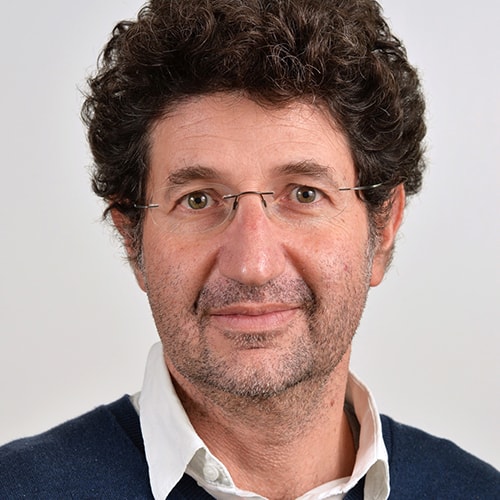
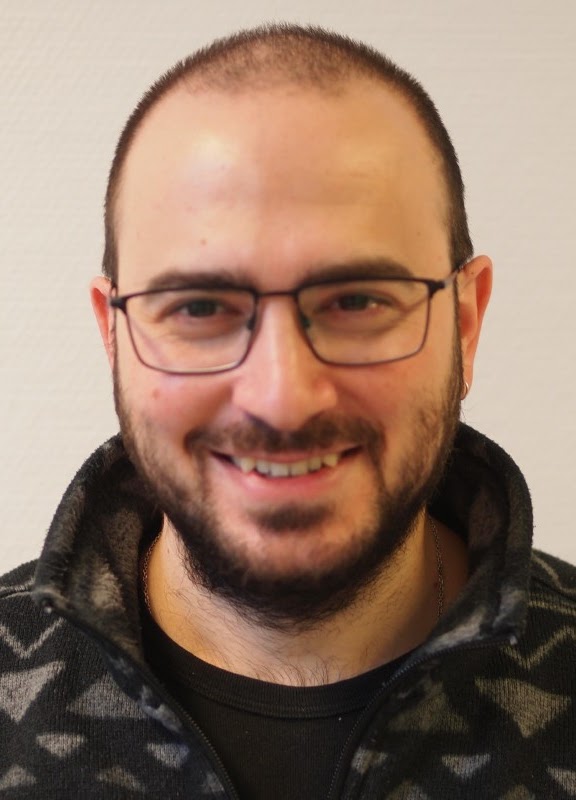
Arnav Arora is a PhD Fellow at the Department of Computer Science , University of Copenhagen (DIKU), specializing in Natural Language Processing . His work focuses on ethical AI, bias detection, and societal impacts of language models. Email: aar@di.ku.dk Location: Universitetsparken 1, 2100 København Ø Arnav's research explores fine-grained value alignment in language models, harmful content detection , and cross-cultural differences in AI responses. His work bridges technical NLP advancements with social responsibility, including dual use ethical frameworks and community value analysis . Key publication trends include: 2025: Bias mitigation through BiasGym framework 2024: Factcheck-Bench benchmark development 2023: Thorny Roses dual use analysis 2022: Cross-cultural value probing methods 2020: Multi-hop fact checking systems Arnav contributes to the Software, Data, People & Society (SDPS) section, collaborating with interdisciplinary teams on projects involving language model evaluation and societal impact mitigation . His work often addresses real-world AI deployment challenges through academic-industry partnerships.
Vito Latora is a Professor of Applied Mathematics and Chair of Complex Systems at the School of Mathematical Sciences, Queen Mary University of London, and also holds the position of Professor of Theoretical Physics at the University of Catania. He leads the Complex Systems and Networks Group, driving cutting-edge research at the intersection of physics, mathematics, and interdisciplinary sciences. His research focuses on complex systems, particularly the structure and dynamics of networks, including multiplex, temporal, and higher-order networks such as simplicial complexes and hypergraphs. He explores applications in social, biological, financial, and cognitive systems, with recent work on creativity, innovation, and success through network analysis. The 15 most recent publications reveal a strong trend in advancing network theory beyond pairwise interactions, with a focus on higher-order structures, memory effects, synchronization, and epidemic spreading. His work combines rigorous mathematical modeling with real-world applications, often published in high-impact journals like Nature Communications , Physical Review Letters , and Science Advances . Dual communities in spatial and biological networks Modeling epidemics with limited detection resources Synchronization via higher-order and directed interactions AI-driven financial risk management Evolutionary games on hypergraphs Interdisciplinary success and funding dynamics Vito Latora has mentored several researchers who appear as co-authors, including Iacopini, Williams, Di Bona, and Lacasa. While specific grants are not listed, his collaborative projects with neuroscientists and anthropologists, along with frequent publications, suggest active funding. He is involved in major scientific events such as NetSci 2023, indicating leadership in the network science community. He leads the Complex Systems and Networks Group at Queen Mary, fostering a collaborative environment for studying complex systems through theoretical, computational, and data-driven approaches.
Navid Bayati is an Associate Professor at the University of Southern Denmark, affiliated with the Institute of Mechanical and Electrical Engineering and the Centre for Industrial Electronics. He leads the Control and Protection of Smart Grids (CAP-SG) group and focuses on renewable/hybrid power systems, microgrid protection, and grid code compliance. Education: Ph.D. in Power Systems & Microgrid Protection (2020, Aalborg University); M.Sc. in Power Systems (2017, Amirkabir University of Technology) His research spans renewable energy integration , transient analysis , grid interconnection , and digital twin applications . Recent work includes machine learning for carbon emission prediction, fault localization in DC microgrids, and supercapacitor resilience in hybrid systems. Collaborations include projects like IEA Wind Task 50 and RePoSys , addressing grid renovation, life cycle assessment, and digital twin resilience. His teaching portfolio covers power electronics , energy management , and microgrid control .
Pooya Davari is a Professor and Head of the Section for Applied Power Electronic Systems at Aalborg University , Denmark. He leads the EMI/EMC in Power Electronics Research Group and serves as Vice Chair of the Energy Efficiency Mission. His research focuses on electromagnetic interference (EMI) and harmonic mitigation in power electronic systems, with over 200 publications and significant contributions to renewable energy integration. Education: B.Sc. and M.Sc. in Electronic Engineering (2004, 2008), Ph.D. in Power Electronics from Queensland University of Technology (2013) Prior Roles: Lecturer at QUT (2013–2014), Postdoc at AAU (2014) Research Interests: Harmonic and EMI analysis in grid-tied converters High power density converter design Signal processing for converter modeling Reliability of power electronic systems Article Trends: Recent work emphasizes EMI/EMC in renewable energy systems, wide bandgap semiconductors (SiC/GaN), and reliability modeling for EVs and hydrogen production via electrolysis. Sub-fields include converter topologies, grid integration challenges, and AI-driven diagnostics. Scientific Awards: Equinor 2022 Prize (Denmark’s oldest engineering award) IEEE EMC Society Young Professional Award (2020) World’s Top 2% Highly Cited Scientist (Stanford, 2021–2025) Multiple best paper awards (IEEE, Applied Sciences, etc.) Grants & Editorial Roles: Recipient of grants from Innovation Fund Denmark (Supra-EMC project), Horizon Europe (SOLARIS), and industry partnerships. Serves as Area Editor for IEEE Transactions on Transportation Electrification , Associate Editor for IEEE Transactions on Power Electronics , and Editor-in-Chief of Circuit World Journal (2020–2025). Labs & Standards: Coordinator of the EMC Laboratory at Aalborg University. Member of IEC standardization Working Groups 6 and 8 (TC77A), focusing on EMC strategies for power grids.
Sneha Das is an Assistant Professor at the Department of Applied Mathematics and Computer Science, Technical University of Denmark (DTU), specializing in Speech and Language Technology, Machine Learning, and Privacy-Preserving AI. Her research bridges technical innovation with applications in mental health and physiological signal analysis. Her work focuses on Speech Emotion Recognition , Distributed Speech Processing , and Explainable AI , with recent publications exploring model interpretability, speaker anonymization, and physiological data analysis for emotion detection. She actively supervises PhD students in projects involving AI for mental health and hydroacoustic modeling of fish behavior. Key Research Areas: Speech Emotion Recognition (SER) Privacy and Fairness in Speech Processing Transfer Learning with Physiological Time Series AI Applications in Health and Aquaculture Notable achievements include earning a DSc (Tech) degree for her thesis on robust distributed speech processing. She also contributes to educational activities, including teaching applied statistics and R programming to PhD students.
Rasmus Pagh is a Professor at the Department of Computer Science, University of Copenhagen, specializing in algorithms and complexity. His career includes a 2002 PhD from Aarhus University under Peter Bro Miltersen and a tenure at IT University of Copenhagen until 2020. He leads theoretical research with practical applications in big data, databases, and modern computer architecture parallelism. His research interests span algorithms, data structures, and privacy-preserving computing. Recent work includes the ERC-funded project on Scalable Similarity Search and contributions to the BARC center for basic algorithms research. He has collaborated with Google Research (2019-2020) and focuses on theoretical foundations with real-world impact. Key research trends in his 2023-2024 publications include privacy-preserving data analysis probabilistic data structures distributed secure computation noise-robust coding hashing efficiency continual privacy mechanisms Scientific recognition includes 2024 ACM Fellowship ERC grant leadership multiple top-tier conference publications
Kim Bjerge serves as Associate Professor and Group Leader in Aarhus University's Department of Electrical and Computer Engineering, specializing in computer vision and machine learning applications for ecological monitoring. His research bridges engineering and environmental science to develop innovative solutions for insect biodiversity assessment and sustainable agriculture. His core research interests include computer vision, deep learning, and edge computing systems for real-world ecological monitoring. Dr. Bjerge develops time-lapse camera pipelines and deep learning models specifically for insect population tracking in natural environments, with emphasis on agricultural applications like black soldier fly farming and biodiversity conservation. His work integrates signal processing techniques with biological data to create field-deployable monitoring systems. Recent publications reveal a strong trend toward practical implementations of computer vision in entomology, particularly focusing on edge processing for camera traps, automated trait prediction in insect farming, and biodiversity monitoring systems. Key research areas include nocturnal insect monitoring, floral environment analysis, and developing specialized datasets like AMI for insect identification in wild settings. He leads multiple significant research projects funded through competitive grants: MAMBO: Modern Approaches to Monitoring Biodiversity (2022-2026) FLYgene: Sustainable Insect Production for Livestock Feed (2022-2026) Automatisk monitering af nataktive insekter: Automatic nocturnal insect monitoring (2024-2029) Pilotprojekt for automatisk registrering af invasive plantearter: Invasive species monitoring (2020-2021) As head of the Signal Processing and Machine Learning research group, Dr. Bjerge directs interdisciplinary teams developing computer vision solutions for biological monitoring systems. His laboratory focuses on creating robust field-deployable technologies including scanner-based arthropod imaging systems, time-lapse camera networks for floral environments, and edge AI processors for real-time insect monitoring in agricultural settings.
Raghavendra Selvan, an Assistant Professor (Tenure Track) at the University of Copenhagen, holds joint appointments in the Machine Learning Section (Department of Computer Science), Kiehn Lab (Department of Neuroscience), and the Data Science Laboratory. His academic journey includes a PhD in Medical Image Analysis (2018), MSc in Communication Engineering (2015), and BSc in Electronics and Communication Engineering (2009). PhD - Medical Image Analysis, University of Copenhagen (2018) MSc - Communication Engineering, Chalmers University (2015) BSc - Electronics and Communication Engineering, BMS Institute of Technology, India (2009) His research focuses on Bayesian Machine Learning with emphasis on Medical Image Analysis, Graph-based Learning, Tensor Networks, Approximate Inference, and Multi-Object Tracking Theory. Recent publications highlight his contributions to environmentally sustainable AI practices, efficient deep learning in medical imaging, and novel applications of tensor networks. Key research areas: Green AI and Environmental Sustainability Medical Image Analysis Graph Neural Networks Crystal Structure Prediction Model Compression Materials Science Applications
Isabelle Augenstein is a Professor at the University of Copenhagen, Department of Computer Science (DIKU), where she heads the Copenhagen Natural Language Understanding (CopeNLU) research group and the Natural Language Processing section. She is also a co-lead of the Danish Pioneer Centre for Artificial Intelligence, Denmark's largest research center initiated by the Danish Ministry of Higher Education and Science. In October 2022, she became Denmark's youngest ever female full professor. Dr. Augenstein earned her undergraduate degree in Computational Linguistics and Psychology from Heidelberg University, followed by a Master's in Computational Linguistics. She completed her PhD in Computer Science at the University of Sheffield under the supervision of Dr. Diana Maynard and Prof. Fabio Ciravegna. In 2021, she earned a Habilitation at the University of Copenhagen in Explainable Fact-checking. Professor Augenstein's primary research focuses on fair and accountable Natural Language Processing, with particular emphasis on explainability, factuality, and bias detection. Her work spans multiple subfields including automated fact-checking, stance detection, gender bias analysis, and cultural bias in language models. She has pioneered research in explainable fact-checking, developing methods that not only predict claim veracity but also provide meaningful explanations of the decision-making process. Her research group has produced numerous influential papers on measuring model fragility, quantifying gender biases, and developing robust fact-checking systems that account for distribution shifts. Her significant contributions have been recognized with several prestigious awards: ERC Starting Grant on 'Explainable and Robust Automatic Fact Checking' DFF Sapere Aude Research Leader fellowship on 'Learning to Explain Attitudes on Social Media' Karen Spärck Jones Award from the British Computing Society and Bloomberg Hartmann Diploma Prize from the Hartmann Foundation Member of the Royal Danish Academy of Sciences and Letters since 2024 Professor Augenstein has secured significant research funding including her ERC Starting Grant supporting five years of blue-sky research. She actively mentors PhD students and postdoctoral researchers through her 'ExplainYourself' project. She served as President of SIGDAT (which organizes the EMNLP conference series), having previously held leadership roles as Vice President and Vice President-Elect. She is a co-founder of Widening NLP (WiNLP), an initiative to increase diversity in the NLP community, and maintains the BIG Directory of underrepresented groups in NLP. She leads the Copenhagen Natural Language Understanding (CopeNLU) research group, which relocated to the historic Østervold Observatory in Copenhagen's Botanical Gardens in 2023. The group focuses on developing methods for explainable and robust natural language understanding, with applications in fact-checking, bias detection, and social media analysis. Professor Augenstein also co-leads the Speech and Language collaboratory at the Pioneer Centre for Artificial Intelligence, where her team investigates how language models can better serve diverse populations while maintaining accountability and transparency.
Ravi Seshadri is an Associate Professor in the Transport Division at the Department of Technology, Management and Economics, Technical University of Denmark (DTU). His research focuses on designing equitable, efficient, and sustainable mobility solutions with a focus on fiscal instruments like congestion pricing and tradable permits, as well as emerging mobility modes such as shared and demand-responsive transit. He employs methods from transportation network equilibria, dynamic traffic assignment, and agent-based simulation. His research interests span transportation economics, urban planning, and intelligent transportation systems. Key areas include evaluating the impacts of automated mobility-on-demand systems, optimizing tolling strategies using predictive control and reinforcement learning, and integrating multi-modal transportation networks through game-theoretical frameworks. His work emphasizes real-world applications in urban freight systems, e-commerce logistics, and sustainable urban mobility policies. Recent projects include studying congestion pricing schemes via agent-based microsimulation, analyzing behavioral responses to decarbonization policies, and developing frameworks for tradable credit systems with peer-to-peer trading. He has contributed to both theoretical advancements (e.g., robust traffic assignment models) and applied tools like the SimMobility simulation platform. Ravi's research demonstrates a strong focus on bridging transportation engineering with policy analysis, using cutting-edge computational methods to address complex urban mobility challenges. His work spans academic publications, industry collaborations, and policy consultations to advance sustainable transportation systems.
Dr. Ramkrishan Maheshwari is an Associate Professor at the Institute of Mechanical and Electrical Engineering, University of Southern Denmark, specializing in power electronics and motor drive systems. His research focuses on advanced power converter topologies, wide bandgap semiconductors, and renewable energy integration. University: University of Southern Denmark Rank: Associate Professor Research: Power Converters, PWM Techniques, Wide Bandgap Devices Recent work involves small DC-link capacitors, machine learning-based component selection, and hydrogen production systems. His Google Scholar articles highlight innovations in converter design and control algorithms. Awards include the BHJ Foundation Teaching Prize (2023) and a Best Paper Award (ICPEE 2021). He supervises PhD students like M. A. Khan and R. K. Mahapatra and leads projects such as 'Efficient Cost Saving Grid Friendly PtX Converter' funded by Mads Clausens Fond.
Georgios Arvanitidis is an Associate Professor at the Technical University of Denmark (DTU) in the Department of Applied Mathematics and Computer Science, specifically within the Section for Cognitive Systems (CogSys). He has established himself as a leading researcher in geometric machine learning, focusing on the application of differential geometry principles to enhance machine learning models. His work bridges theoretical mathematics with practical applications in artificial intelligence, with particular emphasis on understanding the geometric structure of data manifolds and latent spaces. Dr. Arvanitidis completed his educational journey with a Bachelor's degree from the Department of Informatics at the Aristotle University of Thessaloniki, followed by a Master's degree in Computer Science from Saarland University supported by the Max Planck Institute for Informatics. He earned his PhD at DTU's Cognitive Systems section under the supervision of Søren Hauberg, with additional research experience at Philipp Hennig's Probabilistic Numerics group. Prior to his current position as associate professor, he was a PostDoc at the Max Planck Institute for Intelligent Systems working with Bernhard Schölkopf. Dr. Arvanitidis's research primarily focuses on differential geometry in machine learning , where he explores how geometric structures can enhance representation learning and statistical modeling. His work in generative models investigates how learning the geometry of data manifolds can improve deep learning architectures. In the domain of deep learning theory , he examines why deep learning models generalize effectively on unseen data, with particular attention to the curvature properties of loss landscapes. His research in approximate Bayesian inference applies geometric principles to improve uncertainty quantification in neural networks. Through his innovative approaches, Dr. Arvanitidis has established himself as a leading researcher in geometric machine learning, contributing to both theoretical foundations and practical applications across various domains including robotics and life sciences. The publication trends of Dr. Arvanitidis reveal a consistent and evolving focus on geometric approaches to machine learning problems. His recent work (2023-2025) demonstrates increasing sophistication in applying Riemannian geometry to deep learning architectures, with particular emphasis on latent space geometry, optimization on manifolds, and geometric interpretations of neural network behavior. A notable pattern is the progression from foundational work on geometric representations to more applied research in areas like robotics and causal inference. His publications span top-tier conferences including NeurIPS, ICML, ICLR, and AISTATS, reflecting the high impact of his research. The interdisciplinary nature of his work is evident in collaborations across mathematics, computer science, and robotics domains, with recent papers addressing challenges in multimodal sampling, safety guarantees for dynamical systems, and counterfactual explanations. Dr. Arvanitidis has received several notable scientific awards and recognitions: Sapere Aude starting grant from the Independent Research Fund Denmark (DFF) GADL funding i-Rase, Pathfinder, and EIC (European Innovation Council) funding Best reviewer award for NeurIPS 2019 Best reviewer award for NeurIPS 2018 Best student paper award at Robotics: Science and Systems (R:SS) 2021 Dr. Arvanitidis actively mentors PhD students and researchers, currently supervising Alejandro Valverde, Johanna Gegenfurtner, and Albert Kjøller Jacobsen. He has previously co-supervised Alison Pouplin's PhD and worked with research assistant Georgios Pantis. His group receives substantial funding through multiple prestigious grants including the Sapere Aude starting grant from the Independent Research Fund Denmark, as well as European Innovation Council funding. He has been instrumental in creating opportunities for students interested in geometric machine learning, offering BSc and MSc thesis projects focused on generative models, deep learning theory, and optimization techniques. Dr. Arvanitidis also contributes significantly to the academic community as a reviewer for top conferences including ICLR and TMLR, and as an area chair for NeurIPS, ICML, AISTATS, and UAI. He co-organized the Machine Learning Summer School 2020 in Tübingen, further demonstrating his commitment to education and community building. Dr. Arvanitidis leads a vibrant research group focused on geometric machine learning within the Cognitive Systems section at DTU. His team includes multiple PhD students working on cutting-edge research at the intersection of differential geometry and artificial intelligence. The group has developed notable software tools, including the "geometric_ml" GitHub repository with over 70 stars, which contains implementations for applying Riemannian geometry in machine learning. His research has practical applications in robotics, where geometric approaches enable more robust motion planning, as evidenced by his work on "Reactive Motion Generation on Learned Riemannian Manifolds" which received a best student paper award. Additionally, his methodologies have found applications in life sciences, as mentioned in his 2022 AISTATS paper. The collaborative nature of his work is evident through extensive partnerships with researchers at institutions including the Max Planck Institute for Intelligent Systems, University of Cambridge, and various European universities. His recent news items indicate active engagement with the academic community through talks, conference presentations, and ongoing supervision of new PhD students joining his group.
Sadegh Talebi is a Tenure Track Assistant Professor in the Machine Learning Section at the Department of Computer Science, University of Copenhagen . His research focuses on theoretical aspects of reinforcement learning, Markov decision processes, online learning, stochastic multi-armed bandit problems, and resource allocation in networks. Education BSc in Electrical Engineering (minor: Electronics) from Iran University of Science and Technology (IUST) (2004) MSc in Electrical Engineering (minor: Communication Systems) from Sharif University of Technology (2006) PhD in Electrical Engineering from the Department of Automatic Control at KTH Royal Institute of Technology (supervised by Alexandre Proutiere and Mikael Johansson) Research Specializes in theoretical foundations of reinforcement learning and online learning Key contributions in stochastic optimization, MDPs, and bandit algorithms Collaborates on applications in resource allocation and quantum computing Publications include high-impact work on offline RL, differentially private exploration, and scalable MDP solutions in journals like Neural Processing Letters and conferences such as NeurIPS and UAI.
Johannes Bjerva is a Full Professor at Aalborg University's Department of Computer Science (Campus Copenhagen), leading the Copenhagen branch and conducting interdisciplinary NLP research integrating linguistic typology. His work focuses on low-resource languages, language model security, and societal AI impact. PhD (University of Groningen, 2017): Thesis on multitask/multilingual lexical modeling M.A. & B.A. in Computational Linguistics (Stockholm University) Research interests span linguistically-informed NLP , language model security , and low-resource language technology . Current projects include the DFF Sapere Aude grant (2025) for language model detection security and the LM2-SEC project (2025–2030). His 2024 ACL paper on embedding inversion security and 2024 EMNLP paper on typological diversity exemplify recent work. Scientific awards include: 2021: Teacher of the Year (AAU Computer Science) 2019: Google Cloud research credits 2022: Carlsberg Semper Ardens (5M DKK) 2024: Novo Nordisk Data Science grant (~10M DKK) Supervision includes 8 PhD students across projects like CreoleVal and HiFi-KPI . He serves on the Industrial Researcher Committee at Innovation Fund Denmark and is a member of Det Unge Akademi (2023–2028).
Jes Frellsen is an Associate Professor at the Department of Applied Mathematics and Computer Science (DTU) since 2016. Previously, he held academic positions at the IT University of Copenhagen (2016-2019), postdoctoral roles at University of Cambridge (2013-2016) and University of Copenhagen (2011-2013). Education: PhD in Bioinformatics (2011), University of Copenhagen MSc in Bioinformatics (2007), University of Copenhagen BSc in Mathematics and Computer Science (2005), University of Copenhagen EAP Exchange at University of California, Santa Cruz (2004-2005) Research Focus Jes Frellsen specializes in statistical machine learning , particularly generative AI and deep generative models with applications in bioinformatics . His work integrates Bayesian inference , directional statistics , and Markov chain Monte Carlo methods to address challenges in macromolecular structure prediction and missing data imputation . Recent efforts explore uncertainty quantification in image segmentation and generative modeling for materials science. Advising & Collaborations He actively supervises PhD students and postdoctoral researchers in projects spanning news recommendation systems , medical imaging , and 3D structure generation . Collaborations include work with Zoubin Ghahramani (Cambridge) and Thomas Hamelryck (Copenhagen), with contributions to protein structure prediction and statistical methods in structural bioinformatics .