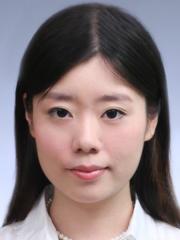
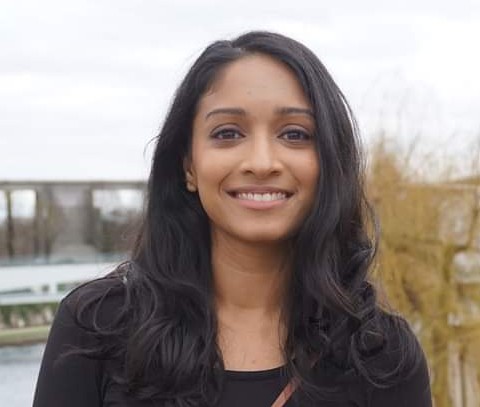
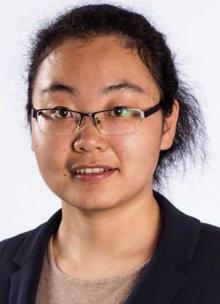
Professor Dinh Phung is the Head of the Department of Data Science & AI at Monash University. His research focuses on machine learning, deep learning, generative AI, and robust AI systems. He has authored over 250 publications, with applications in NLP, computer vision, digital health, and cybersecurity. Phung holds a PhD and BSc(Hons) in Computer Science from Curtin University. He leads major projects like 'Can Machines Unlearn?' and 'Trustworthy Generative AI', funded by the Australian Research Council and the Department of Defence. Education: Doctor of Philosophy, Computer Science, Curtin University (2005) Bachelor of Science (Honours), Computer Science, Curtin University (2001) Research Interests: Machine learning, deep learning, and generative models Optimal transport and Bayesian methods Robust and trustworthy AI Applications in digital health, cybersecurity, and autism research Key Projects (2023–2029): Can Machines Unlearn? (2025–2029): Safety in AI Trustworthy Generative AI (2024–2026): Foundation models Robust Machine Learning via Optimal Transport (2023–2025) Awards and Grants: Australian Research Council grants for AI safety and robustness Department of Defence funding for robust learning systems Collaborations: Global partnerships in AI ethics, cybersecurity, and healthcare. Active advisory roles, including with the Victorian Parliamentary Library.
Dr. Jiaojiao Jiang is a Senior Lecturer in the School of Computer Science and Engineering at the University of New South Wales (UNSW). She holds a Ph.D. from Deakin University (Melbourne, Australia) and has published over 45 articles with 1,100+ citations. Her research focuses on AI-driven cybersecurity solutions, particularly misinformation detection and modeling information propagation dynamics. She is affiliated with UNSW's Sydney campus and can be contacted at jiaojiao.jiang@unsw.edu.au . Education: Ph.D., Deakin University, 2010s Research Interests: Artificial Intelligence applications in cybersecurity Misinformation detection and network analysis Machine learning for network security Data privacy in IoT systems Publications span topics like fake news detection via graph neural networks, multiplex network robustness, and cyber threat intelligence frameworks. Her work bridges theoretical network science with practical cybersecurity challenges.
Dr. Andy Nguyen is a Senior Lecturer in Structural Engineering at the University of Southern Queensland, within the School of Engineering. He is an active researcher and educator, specializing in the Structural Health Monitoring (SHM) of critical civil infrastructure such as bridges, buildings, and transport tunnels. Bachelor of Engineering (BEng), NUCE, 1999 Master of Engineering (MEng), NUCE, 2003 Doctor of Philosophy (PhD), Queensland University of Technology (QUT), 2014 Dr. Nguyen's research is at the forefront of integrating advanced technologies into civil engineering. His primary focus is on developing and deploying sophisticated SHM systems that utilize sensors, data analytics, and machine learning to provide real-time insights into the structural integrity of ageing infrastructure. His work aims to enable proactive maintenance, extend the lifespan of structures, and enhance public safety. He has successfully implemented monitoring systems on major bridges and high-rise buildings in Queensland and New South Wales, with systems capable of even detecting distant earthquake events. His research interests span Structural Health Monitoring, Machine Learning for Engineering, Damage Detection, Finite Element Model Updating, Sustainable Building Materials like bamboo, and the application of AI for automated condition assessment of transport infrastructure. The analysis of his recent publications reveals a strong and consistent research trajectory centered on the application of data-driven and AI methods to solve practical problems in civil infrastructure. His work frequently combines signal processing techniques (like Stockwell Transform) with deep learning models for tasks such as crack detection in concrete and pavement. He also conducts significant research on model updating for complex structures like cable-stayed and arch bridges, using vibration data and optimization algorithms. The integration of machine learning for overload classification and the development of cost-effective, automated monitoring systems are key trends in his recent output. Advanced Queensland Fellow (2024-2027) Dr. Nguyen is actively involved in research supervision and collaboration. He is currently supervising several postgraduate students on projects related to AI-powered condition assessment, bamboo as a sustainable building material, and railway track design. He receives research funding from the Queensland Government through his Advanced Queensland Fellowship. His research has direct practical applications, as evidenced by his public engagement, such as writing for The Conversation on safeguarding ageing bridges, and his work with the Australian Network of Structural Health Monitoring. Dr. Nguyen's work embodies the development of a next-generation 'Living' Laboratory for engineering education, where research, teaching, and real-world infrastructure monitoring are integrated. His current projects involve creating smart, automated fault detection systems and advancing 'digital twin'-based monitoring platforms for infrastructure.
Dr. Yanjun Zhang is an Honorary Research Fellow at the School of Electrical Engineering and Computer Science, The University of Queensland. His research focuses on privacy-preserving technologies, federated learning, cybersecurity in IoT systems, and machine learning security. He holds a PhD in Privacy-Preserving Sharing for Genome-Wide Analysis from The University of Queensland (2021). Education: PhD in Information Technology, School of Information Technology and Electrical Engineering, The University of Queensland (2021) Research Interests: Designing secure collaborative machine learning frameworks Defending against adversarial attacks in cyber-physical systems Privacy preservation in distributed genomic and medical data analysis Compliance and ethics in virtual personal assistant applications Key Contributions: Developed privacy-preserving federated learning frameworks (AgrAmplifier, PrivColl) Conducted foundational studies on evasion attacks in IoT systems Created datasets for analyzing malicious browser extensions and Alexa skills Labs/Teams: Active contributor to UQ Cyber initiatives, including the 2021-2022 Seed Funding project on federated deep learning for medical imaging.
Qian Li is a Lecturer in Computing at the School of Electrical Engineering, Computing and Mathematical Sciences (EECMS) at Curtin University, Australia. She holds a Ph.D. from the Chinese Academy of Sciences and M.Sc. degrees from Shandong University and the University of Luxembourg. Her research focuses on causal machine learning, topological data analysis, and optimal transport, with applications in computer vision, data science, and recommendation systems. She has published over 50 articles in top-tier venues like IEEE Transactions and ACM conferences. Education Ph.D., Chinese Academy of Science (CAS) MSc (Research), Shandong University MSc (Research), University of Luxembourg Research Interests Dr. Li explores causal reasoning for machine learning, leveraging mathematical tools like Riemannian geometry and optimal transport to address challenges in robustness and interpretability. Her work spans causal inference, counterfactual fairness, and explainable AI, with applications in healthcare, energy, and commerce. Recent projects include causal-based recommendation systems and topological data analysis techniques. Key Achievements Secured a $120k grant from China's National Natural Science Foundation (2020-2024). Lead researcher on AI-driven solar energy storage projects with UNSW and Providence Asset Group. Recipient of prestigious scholarships including Chinese National Graduate Scholarship (2016, top 1%). Grants & Students Current Ph.D. students include Xiangmeng Wang and Tri Dung Duong. She has supervised graduates like Yangyang Shu (Adelaide University Research Associate) and Jun Yin (UTS). Labs & Teams Leads research in causal AI and topological data analysis, collaborating with institutions like UTS and the University of Melbourne.
Dr. Hongsheng Hu is currently a Lecturer in the School of Information and Physical Sciences at the University of Newcastle, Australia, specializing in the Data Science and Statistics focus area. Prior to this position, he served as a Postdoc Research Fellow at CSIRO's Data61 from October 2022 to August 2024. His academic journey includes a Doctor of Philosophy in Computer Systems Engineering from the University of Auckland in New Zealand, establishing his foundation in advanced computing systems. Dr. Hu's research centers on enhancing the trustworthiness of machine learning systems, with particular emphasis on identifying critical privacy vulnerabilities within machine learning models and developing robust defensive strategies. His work spans several key domains including adversarial machine learning (30% focus), statistical data science (30% focus), and data and information privacy (40% focus). He investigates membership inference attacks, machine unlearning techniques, and privacy-preserving mechanisms in federated learning environments. His research addresses fundamental challenges in AI security, exploring how machine learning models can be compromised through sophisticated privacy attacks and developing methods to mitigate these vulnerabilities while maintaining model utility. Analysis of Dr. Hu's publication record reveals a strong research trajectory focused on machine learning security and privacy. His work consistently addresses vulnerabilities in machine learning systems, particularly examining membership inference attacks, machine unlearning mechanisms, and privacy-preserving techniques in federated learning. The research spans top-tier venues including IEEE Security & Privacy, USENIX Security, NDSS, NeurIPS, IJCAI, AAAI, and WWW, demonstrating both technical depth and recognition by the research community. His publications show an evolving focus from foundational privacy attacks to developing more sophisticated unlearning techniques and robust defense mechanisms, with increasing citation counts indicating growing impact in the field. Active Program Committee member for USENIX Security, NDSS, ICLR, IJCAI, WWW, ICDM, ECML, and PKDD Invited reviewer for IEEE Transactions on Information Forensics and Security (TIFS), IEEE Transactions on Dependable and Secure Computing (TDSC), IEEE Transactions on Pattern Analysis and Machine Intelligence (IPAMI), and ACM Computing Surveys (CSUR) Dr. Hu currently serves as Course Coordinator for STAT6020 and STAT2020 Predictive Analytics at the University of Newcastle. As an academic supervisor, he co-supervises one PhD student working on 'Identifying and Mitigating Vulnerability in Recommender Systems' at Macquarie University. His research collaborations span multiple countries, with significant publication counts in Australia (18), China (12), New Zealand (10), and the United States (7), reflecting an active international research network focused on AI security challenges.
Dr. Sahani Pathiraja is a Lecturer (tenure track assistant professor) at UNSW Sydney , specializing in Data Science . Her research bridges mathematical and statistical foundations with practical applications in environmental and biomedical sciences. Research Focus : Sequential Bayesian inference, Monte Carlo methods, stochastic analysis of non-linear filtering, uncertainty quantification, and real-time parameter estimation. Current Projects : Co-investigator in the ARC Industrial Transformation Training Centre: Data Analytics for Resources and Environment (DARE) and the Next Generation Graduate Program (NGGP) in Sports Data Science and AI . Research Supervision : Dr. Pathiraja supervises PhD students in areas including: Bayesian inference Stochastic differential equations Data assimilation Non-linear filtering Scientific Collaborations : Her work intersects with environmental science, biomedical applications, and machine learning. Projects include stochastic hydrology, SDEs, and operator learning for environmental systems. Contact Information : Email: s.pathiraja@unsw.edu.au Phone: +61 2 8065 0836 Office: Room 2070, Level 2, The Red Centre, UNSW Sydney
Dr. Lizhen Qu is a Lecturer at Monash University’s Faculty of Information Technology, part of the AIM Lab. His research focuses on robust and privacy-preserving neuro-symbolic methods for NLP and multimodal applications, including causal reasoning in dialogue systems, legal AI, digital health, and social NLP. Previously, he worked at Data61/CSIRO and completed his PhD at Saarland University and the Max-Planck-Institute for Informatics. Education: PhD in Computer Science from Saarland University and Max-Planck-Institute for Informatics. Research interests include integrating deep learning with logical reasoning, causal discovery, and ethical AI applications. He leads projects like TMLGenAI (Trusted Generative AI) and HARNESS (Neuro-Symbolic Systems), addressing model robustness and societal impact. Projects: TMLGenAI (2024–2026), HARNESS (2023–2027), and Accessible Data Exploration for Blind People (2023–2027) Contributions: Developed benchmarks like LazyReview and ACCESS, and co-organized ACL and IJCNLP workshops Research trends span causal discovery in NLP, federated learning for legal systems (e.g., FedLegal), and multimodal security. His work aligns with UN SDGs for innovation and health.
Professor Dino Sejdinovic is a faculty member in the School of Computer and Mathematical Sciences at the University of Adelaide, part of the Faculty of Sciences, Engineering and Technology. Previously, he held positions as Lecturer and Associate Professor at the University of Oxford's Department of Statistics (2014–2022). His academic qualifications include a PhD in Electrical and Electronic Engineering from the University of Bristol (2009) and a Diplom in Mathematics and Theoretical Computer Science from the University of Sarajevo (2006). His research focuses on the intersection of statistical methodology and machine learning, encompassing large-scale nonparametric methods, robust machine learning, multiresolution data fusion, and measures of dependence. He has contributed to kernel methods, Bayesian inference, causal discovery, and applications in climate science, quantum computing, and social science data analysis. Education: PhD in Electrical and Electronic Engineering, University of Bristol (2009) Diplom in Mathematics and Theoretical Computer Science, University of Sarajevo (2006) Sejdinovic's work emphasizes bridging theoretical foundations with practical applications, such as cloud type classification using vision transformers and machine learning-driven quantum device optimization. His recent publications explore topics like kernel-based causal inference, Bayesian neural networks, and uncertainty quantification in statistical models. Advising and grants: Eligible to supervise Masters and PhD students in machine learning and statistics, though specific grants or student advisees are not explicitly listed in the provided texts.
Yanrong Yang is an Associate Professor at the Research School of Finance, Actuarial Studies and Statistics, The Australian National University. Her research focuses on high-dimensional statistical inference, large-dimensional random matrix theory, functional data analysis, and responsible statistical learning. She has developed asymptotic theories for high-dimensional statistics and applied them to time series forecasting and panel data analysis. PhD in Statistics, Nanyang Technological University (2009-2013) MSc in Statistics, Shandong University (2006-2009) BSc in Statistics, Shandong University (2002-2006) Her research explores high-dimensional data analysis, including eigenvalue methods, functional principal component analysis, and applications to mortality forecasting and financial portfolio optimization. Recent publications examine fairness-aware models for annuity pricing, robust PCA techniques, and eigen-analysis for time series clustering. She has published extensively in top journals such as the Annals of Statistics, Journal of Econometrics, and Journal of the American Statistical Association. Her current project, Feature Learning for High-dimensional Functional Time Series (2023-2026), investigates representation learning in financial time series.
Ye Lu is a Senior Lecturer in the School of Economics at the University of Sydney. She holds a PhD in Economics from Indiana University Bloomington (2017). Her research focuses on econometric theory with applications to time series analysis, financial econometrics, and large-dimensional data. Key interests include continuous time modelling with high-frequency data, nonlinear factor models, and econometric methods for event-driven data. Education: PhD in Economics, Indiana University Bloomington (2017) Research emphasizes developing robust methodologies for data-rich environments, addressing challenges in traditional econometric approaches. Recent work includes bootstrap inference for Hawkes processes and zero-inflated GARX models for energy price spikes. Teaching responsibilities include courses like ECMT1020 (Introduction to Econometrics) and ECOS3904 (Applied Macroeconometrics). Her publications appear in top journals such as Journal of Econometrics and Energy Economics .
David Frazier is a Professor in the Department of Econometrics & Business Statistics at Monash University, specializing in simulation-based inference, financial econometrics, and nonparametric/semiparametric modeling. He teaches ETC 1010: Data Modeling and Computing. His research focuses on robust statistical methods, Bayesian computation, and model misspecification. Key projects include 'Consequences of Model Misspecification in Approximate Bayesian Computation' (2020-2025) and 'Loss-based Bayesian Prediction' (2020-2025). Recent work addresses forecasting in misspecified models, weak identification in econometric frameworks, and robust variational Bayes techniques. His contributions align with UN Sustainable Development Goals related to economic and environmental sustainability. Projects: 4 active/funded projects with ARC, Brown University, and international collaborators. Publications: Over 37 peer-reviewed articles in journals like the Journal of the American Statistical Association and Journal of Econometrics. Research interests include advancing Bayesian methodologies for complex models, with applications in asset pricing and economic forecasting. His work emphasizes reliability in statistical inference under model uncertainty and computational efficiency.
Dan Warren is a Senior Research Fellow at the Gulbali Research Institute, Charles Sturt University, where he conducts interdisciplinary research in population biology, ecology, evolution, and conservation. His work centers on developing and refining species distribution models and environmental niche models to understand biodiversity and support conservation under global change. PhD in Population Biology, University of California, Davis Dan Warren's research interests lie in the development and application of quantitative tools for ecology and evolution. He focuses on species distribution models (SDMs), environmental niche models (ENMs), and their use in understanding biodiversity patterns, evolutionary processes, and conservation planning. His methodological innovations, such as those in the ENMTools R package, are widely adopted. His work spans animal behavior, climate change impacts, and conservation management, with strong relevance to UN Sustainable Development Goals on climate action and life on land. His recent publications reflect a consistent focus on improving the accuracy, interpretation, and application of species distribution models. Trends include addressing bias in model outputs, enhancing methodological standards, and developing robust tools for conservation under climate uncertainty. He frequently publishes in top ecological journals such as Ecography and Methods in Ecology and Evolution , and his work integrates software development with theoretical ecology. Dan Warren has served in key scientific roles, including as Associate Editor for Ecography and Systematic Biology , and as a reviewer for the IPBES global assessment. These contributions highlight his leadership in advancing scientific rigor and policy relevance in biodiversity science. He is actively involved in mentoring and collaborative research, contributing to datasets and methodological frameworks used by the broader ecological community. His work supports both academic inquiry and practical conservation, emphasizing robust, data-driven decision-making.
Associate Professor Christopher Wensrich is a faculty member in the School of Engineering at the University of Newcastle, Australia, specializing in Mechanical Engineering. He has a strong background in applied mechanics from both computational and experimental perspectives, with significant expertise in granular mechanics, neutron diffraction strain measurement, and Bragg-edge transmission strain tomography. Education: PhD, University of Newcastle Bachelor of Mathematics, University of Newcastle Bachelor of Engineering, University of Newcastle Professor Wensrich's research focuses on several interconnected areas within mechanical engineering and materials science. His primary expertise lies in granular mechanics, spanning from micromechanics and homogenization of granular systems to analytical modeling of granular dynamics (particularly the silo quaking problem) and computational modeling using the Discrete Element Method (DEM). He is also a pioneer in applying neutron diffraction strain scanning techniques to granular systems. In the broader field of applied mechanics, he has made significant contributions to neutron diffraction-based strain measurement, including breakthroughs in Bragg-edge Transmission Strain Tomography, where he demonstrated the world's first practical application outside of simple axisymmetric systems. His publication record demonstrates a consistent focus on developing and applying advanced techniques for strain measurement and reconstruction in granular and composite materials. His recent work has centered on tomographic reconstruction methods using neutron diffraction, with particular emphasis on Bragg-edge techniques for 2D and 3D strain field reconstruction. His research bridges theoretical mathematics, computational methods, and experimental validation, creating a robust framework for non-destructive stress measurement in complex materials. Professional Recognition: President of the Australian Neutron Beam User Group (ANBUG) since December 2022 Member of the ACNS Program Advisory Team at ANSTO (Australian Nuclear Science and Technology Organisation) since March 2019 Visiting Fellow at Clare Hall College, Cambridge University (January-June 2023) Visiting Researcher at Isaac Newton Institute for Mathematical Sciences (January-June 2023) Professor Wensrich has secured substantial research funding, with a total of $5,478,793 across 42 grants. His funding portfolio includes projects from the Australian Research Council (ARC), ANSTO, and international partners like Oakridge National Laboratory and Japan Proton Accelerator Research Complex. He has successfully supervised 11 PhD and Masters students to completion, with research topics spanning granular mechanics, conveyor systems, and neutron strain tomography. His current research involves collaborations with institutions worldwide, focusing on advanced strain measurement techniques and their application to complex material systems.
Dr. Fu Ouyang is a Senior Lecturer (equivalent to Assistant Professor) in the School of Economics at the University of Queensland (UQ), located in Brisbane, Australia. He holds a Ph.D. in Economics from Duke University (2017) and has been affiliated with UQ since 2018. His research focuses on theoretical and applied econometrics, with expertise in semiparametric/nonparametric methods, panel data analysis, causal inference, and discrete choice models. He applies these methodologies to fields like labor, health, and industrial organization economics. Dr. Ouyang is available for academic supervision and actively publishes in top-tier econometrics journals. Education: Ph.D. in Economics, Duke University, 2017 Research Interests: Development of robust econometric methods for causal inference and high-dimensional settings Analysis of longitudinal/panel data, binary choice models, and limited dependent variables Applications in empirical industrial organization, labor, and health economics Recent Research Trends: His work emphasizes semiparametric estimation techniques, dynamic panel models with lagged dependencies, and bundle choice analysis. Notable contributions include addressing heteroskedasticity in high-dimensional binary choice models and improving inference in multinomial response frameworks. Supervision & Grants: Dr. Ouyang is available to supervise graduate students but no specific grants are listed in the provided texts. His contact details include office room 532A in the Colin Clark Building and professional social media profiles (LinkedIn).