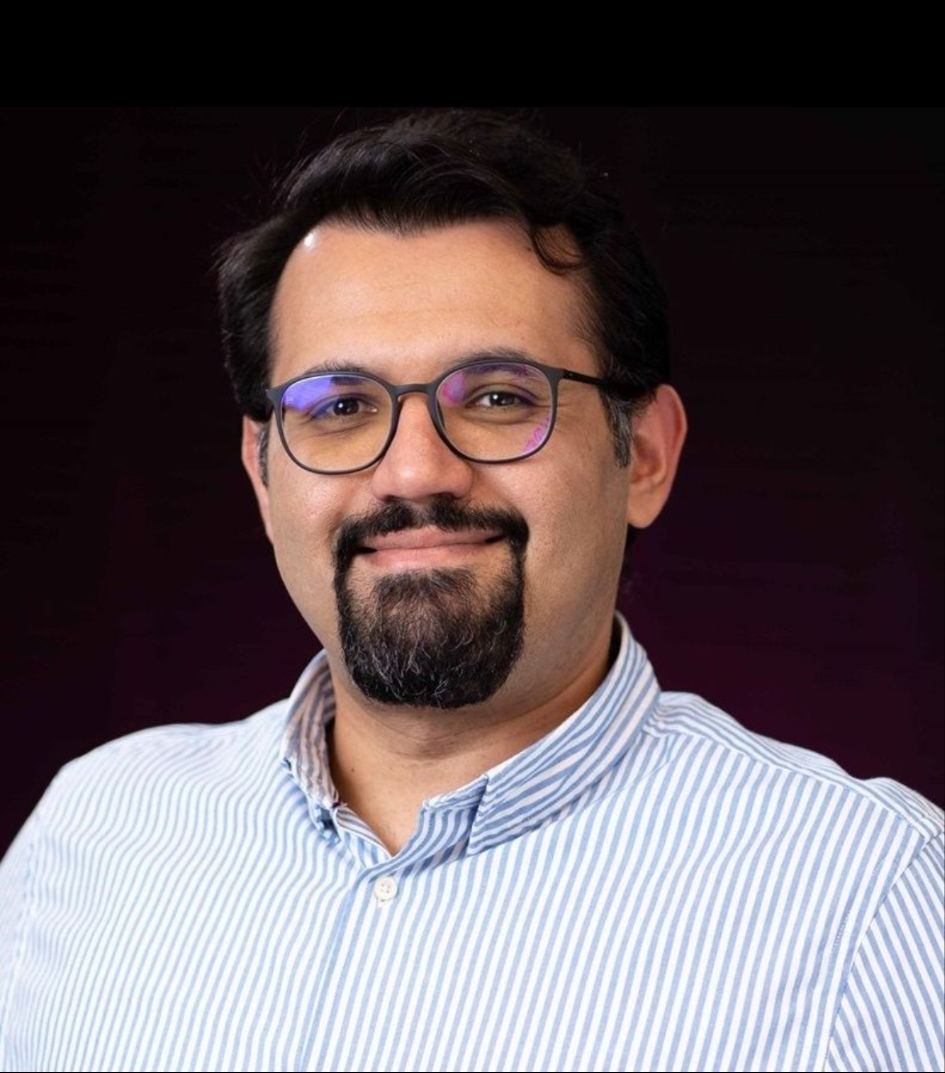
Shoudong Huang is a Professor at the School of Mechanical and Mechatronic Engineering , University of Technology Sydney, and Deputy Director of the UTS Robotics Institute. His research focuses on mobile robot navigation , SLAM , nonlinear state estimation , and surgical robotics . He has published over 200 papers and is recognized as one of the 100 Most Influential Scholars in Robotics (Aminer, 2018). PhD in Automatic Control, Northeastern University (China) Postdoctoral Research Fellow, University of Hong Kong (1998-2000) Research Fellow, Australian National University (2001-2003) Full-time academic roles at UTS since 2004 His work addresses challenges in robot localization across extreme environments (underwater, underground mining, surgical settings) and develops globally optimal SLAM algorithms with guaranteed performance. He has secured over $4 million AUD in external funding, including ARC Discovery grants and industry partnerships. Recent publications emphasize cross-modal calibration (camera-LiDAR), interval analysis for bounded noise , and template-based deformable surface reconstruction . These span applications in autonomous driving, surgical navigation, and UAV guidance. Chancellor’s Medal for Research Excellence (2020) Supervisor of the Year (2023) Best Paper Award (2016 ICARCV) Huang serves as Associate Editor for IEEE Transactions on Robotics and International Journal of Robotics Research , and has held leadership roles in top robotics conferences like IROS and RSS. His collaborations span MIT, USC, Zhejiang University, and industry partners including PMSW Research Pty Ltd and Multiplex Constructions Pty Ltd.
Ajmal Mian is a Professor of Computer Science at the University of Western Australia (UWA), affiliated with the School of Physics, Maths and Computing. He holds an Australian Research Council Future Fellowship (2022) and leads research in Artificial Intelligence, Computer Vision, and Machine Learning. His work focuses on 3D computer vision, adversarial AI defense, and explainable AI. His research interests include 3D point cloud analysis, face recognition, human action recognition, and remote sensing. He has published over 300 papers and secured major grants from ARC, NHMRC, and DARPA, totaling millions in funding. He has supervised 29 PhD students and mentored 12 postdoctoral researchers. Key projects include 3D diffusion models for scene generation, robust 3D vision systems, and defense against AI deception attacks. He serves as a fellow of IAPR, an ACM Distinguished Speaker, and has editorial roles at IEEE Transactions on Neural Networks and Pattern Recognition. Research Awards: HBF Mid-Career Scientist of the Year, West Australian Early Career Scientist of the Year, IAPR Best Scientific Paper Award. Grants: ARC Discovery Projects, National Intelligence & Security Discovery grants, DARPA grants for AI security. His teaching spans computer vision, machine learning, and programming courses. Collaborations include defense, medical, and agricultural applications.
Pieter van Goor is a Research Fellow at the Australian National University (ANU), affiliated with the School of Engineering and the Systems Theory and Robotics (STR) group. He holds a PhD in Control Theory (completed 2022) and dual bachelor's degrees (BEng/BSc, 2018). His research focuses on equivariant systems theory, state estimation, and robotics applications. Key contributions include equivariant observer design, Lie group-based control, and geometric data fusion. Education: Bachelor of Engineering (Research & Development) (Honours) in Mechatronics (ANU, 2018) Bachelor of Science in Mathematics (ANU, 2018) PhD in Control Theory (ANU, 2022) Research Interests: Equivariant systems theory, nonlinear control, robotics applications, state estimation on Lie groups, sensor fusion, and geometric control methods. His work emphasizes symmetry exploitation in filter design and observer construction for systems with inherent geometric structures. Grants & Collaborations: Active collaborations include work with Robert Mahony and institutions like the IEEE. Research spans theoretical frameworks (e.g., equivariant filters) and applied systems (e.g., ArduPilot autopilot, event cameras). Labs/Teams: Member of the Systems Theory and Robotics (STR) group at ANU, focusing on advanced control theory and robotics.
Dr. Ehsan Abbasnejad is an Associate Professor at Monash University's Department of Data Science and Artificial Intelligence, and holds adjunct positions at the Australian Institute for Machine Learning (AIML, University of Adelaide) and the Centre for Augmented Reasoning (CAR). He specializes in foundational AI, focusing on vision-language tasks, adversarial machine learning, and reinforcement learning. His work bridges theory with real-world applications in agriculture, energy, healthcare, and sports. Education: PhD in Computer Science from Australian National University (ANU). Research Interests: Machine Learning Theory and Adversarial Defenses Neural Network Robustness and Generalization Multimodal Learning (Vision-Language) Continual and Transfer Learning Applications in Energy, Healthcare, and Robotics Awards: Finalist for Australian AI Academic/Researcher of the Year (2024) Multidisciplinary competition wins (e.g., OzMineral Explorer Challenge) Advising & Grants: Australian Research Council (ARC) Discovery Project on Reinforcement Learning CSIRO's Next Generation Graduate Fund Accepting PhD students in foundational AI and applications Labs & Teams: Director of Foundational Machine Learning & Reasoning at Monash, leading global teams in AI competitions and industry collaborations (Microsoft Research, NEC Labs America).
Francisco Barillas Bedoya is an Associate Professor at the School of Banking and Finance within the UNSW Business School, University of New South Wales. His research focuses on theoretical and empirical asset pricing, particularly portfolio choice, asset pricing tests, macrofinance, and term structure of interest rates. He has published extensively in top-tier journals like the Journal of Finance and Management Science. PhD from New York University MA from University of British Columbia BSc from Trent University His recent publications analyze Sharpe ratios for model comparison, speculative behavior in bond markets, and risk premia in fixed income markets. While no formal awards are listed, his work intersects financial economics, econometrics, and computational methods. Office: Level 3, Room 333C, Ref E12 Email: f.barillas@unsw.edu.au
Matthew Dunbabin is a Professor at Queensland University of Technology (QUT) and Chief Investigator at the Australian Centre for Robotic Vision (ACRV). His expertise spans environmental robotics, with a focus on vision-based autonomous systems for marine conservation, water quality monitoring, and greenhouse gas management. He holds a PhD from QUT and a BEng (Aerospace) from RMIT. Dunbabin has led projects at CSIRO and QUT, developing robots like COTSBot and RangerBot to combat marine pests and promote reef restoration. His work has earned national and international awards, including the 2019 Australian Water Association Award and 2016 Google Impact Challenge. Education: PhD in Engineering, Queensland University of Technology (Queensland, Australia) BEng (Hons) in Aerospace Engineering, Royal Melbourne Institute of Technology (Melbourne, Australia) Research Interests: Environmental robotics and autonomous systems Vision-based perception and classification Marine habitat restoration and pest control Greenhouse gas monitoring via autonomous vehicles Cooperative robotics and sensor networks Awards & Recognition: 2019 Australian Water Association Award (SAMMI Project) 2019 Good Design Award - Sustainability (RangerBot) 2016 Google Impact Challenge People’s Choice Award (RangerBot AUV) 2010 Australian ICT Industry Association National iAward (iSnet) 2006 Queensland Engineering Excellence Innovation Award (Starbug Project) Grants & Projects: ARC Centre of Excellence for Robotic Vision (ACRV): Leading robotic vision research (2014–present) Revolutionising Protection Against Air Pollution: Air quality monitoring networks (2015–present) Establishing Advanced Networks for Air Quality Sensing: Sensor development for urban environments (2017–present) Labs & Collaborations: ACRV at QUT Institute for Future Environments (QUT) CSIRO Autonomous Systems Laboratory (2001–2013)
Dr. Divya Jayakumar Nair serves as Senior Lecturer in the School of Civil and Environmental Engineering at the University of New South Wales (UNSW), where she also holds the position of Associate Dean International – South Asia for UNSW Engineering. Her academic work is centered at the Research Centre for Integrated Transport Innovation (rCITI), focusing on transportation systems, network optimization, and disaster management applications. Dr. Nair's research interests span transportation engineering, disaster management, and urban mobility systems. Her work investigates complex network design problems, particularly in pre-disaster evacuation planning, transportation resilience, and food rescue logistics. She employs advanced analytical methods including traffic equilibrium modeling, network optimization techniques, and data-driven approaches to solve real-world transportation challenges with significant societal impact. Her recent publications demonstrate a strong focus on transportation resilience during disasters, with particular attention to equity considerations in pre-event planning. Dr. Nair's research shows how transportation networks can be optimized to improve emergency response while ensuring equitable access to safety for all population segments. Her work bridges theoretical network optimization with practical applications in urban environments facing climate-related challenges. Dr. Nair collaborates extensively with leading researchers in transportation including S. Travis Waller, Vinay V. Dixit, David Rey, and Taha Rashidi. Her collaborative approach spans multiple institutions and addresses pressing challenges in urban transportation systems worldwide.
Xuan Liang is a Lecturer in Statistics at the Research School of Finance, Actuarial Studies and Statistics (RSFAS), Australian National University. With a PhD from Peking University and postdoctoral experience at Monash University, his research focuses on spatial statistics, nonparametric modeling, and environmental data analysis. Education: PhD in Statistics (Peking University, 2017), BSc in Statistics (Zhejiang University, 2012) His work addresses methodological challenges in spatial panel data analysis, network modeling, and air pollution quantification. He has developed novel techniques for meteorological confounder adjustment in air quality assessments and contributed to distributed data analysis methods. Recent research trends include: Advancing quasi-score matching for spatial econometric models Improving subbagging algorithms for big data Creating robust distributed data aggregation frameworks Refining spatial autoregressive panel data methodologies Scientific contributions include: ANU Vice-Chancellor’s Citation for Outstanding Contribution to Student Learning (Early Career), 2022 CBE Teaching Commendation for Outstanding Teaching, 2020 Co-development of the ggmatplot R package for matrix visualization Co-inventor of Chinese patent 201811183512.0 for air quality assessment He teaches advanced courses in time series analysis, regression modeling, and mathematical statistics at ANU, while maintaining active research collaborations in econometrics and environmental statistics.
Dr. Feras Dayoub is a Senior Lecturer at the School of Computer and Mathematical Sciences (Faculty of Sciences, Engineering and Technology) at the University of Adelaide , specializing in Embodied AI and Robotic Vision within the Australian Institute for Machine Learning (AIML) . He co-directs the CROSSING French-Australian laboratory for human-autonomous agent teaming and holds an Adjunct position at the Queensland University of Technology (QUT) , serving as an Associate Investigator at its Centre for Robotics . Previously, he was a Chief Investigator at the ARC Centre of Excellence for Robotic Vision . His research focuses on advancing reliable deployment of computer vision and machine learning on mobile robots in real-world environments. Applied projects include agricultural automation , environmental conservation , and autonomous infrastructure monitoring . He has published extensively on topics like object detection , domain adaptation , 3D representation learning , and vision-language navigation , with a particular emphasis on robustness in dynamic and partially observed environments. Dr. Dayoub is also an educator specializing in programming , computer vision , and robotic perception . He contributes to open-source robotics research through tools like AARK (Autonomous Racing Toolkit) and has led teams developing solutions for precision agriculture (e.g., Deepfruits fruit detection system) and environmental monitoring (e.g., Crown-Of-Thorns starfish detection ). Key Collaborations : CROSSING Lab, QUT Centre for Robotics Research Themes : Embodied AI, Robust Perception, Domain Adaptation
Professor Josef Dick serves as a Professor and Deputy Head in the School of Mathematics & Statistics at the University of New South Wales (UNSW). With a distinguished career in computational mathematics, he has established himself as a leading researcher in numerical integration methods and quasi-Monte Carlo theory. His work bridges theoretical mathematics with practical computational applications across various scientific domains. Dr. Dick earned his PhD in Mathematics from UNSW in 2004 and his MSc in Mathematics from the University of Salzburg in 2001. His academic journey reflects a strong foundation in both theoretical and applied mathematics, which has informed his subsequent research contributions. Professor Dick's research primarily focuses on numerical integration and quasi-Monte Carlo rules , employing techniques from number theory , abstract algebra (particularly finite fields), discrepancy theory , wavelet theory , and statistics . His work provides rigorous analysis of practical algorithms for computational problems, with implementations often provided in Matlab to bridge theory and application. His research has successfully addressed point distributions on the unit cube for numerical integration, completely uniformly distributed sequences for Markov chain quasi-Monte Carlo algorithms, and explicit constructions of uniformly distributed points on the sphere. Analysis of his recent publications (2022-2025) reveals a consistent focus on advancing quasi-Monte Carlo methods, with increasing integration of machine learning techniques and applications to complex computational problems. His work demonstrates strong interdisciplinary connections between pure mathematics, computational science, and practical engineering applications, particularly in uncertainty quantification and high-dimensional numerical integration. Discovery project from Australian Research Council (2012-2014): "Mathematics in the round - the challenge of computational analysis on spheres" Queen Elizabeth II Fellowship from Australian Research Council (2010-2014): "Algebraic methods for Markov Chain Monte Carlo and quasi-Monte Carlo" UNSW Vice Chancellor Fellowship (2006-2009) Professor Dick has supervised numerous PhD and Honours students working on topics including Quasi-Monte Carlo methods, Discrepancy Theory, Markov chain Monte Carlo, and Uncertainty Quantification. His research has been supported by significant grants from the Australian Research Council, including serving as Chief Investigator on multiple projects. Beyond his research, he serves as an Editor for the Journal of Complexity and Journal of Approximation Theory, demonstrating his leadership in the mathematical community. He teaches courses in Algebra and Mathematical Computing for Finance at UNSW.
Dr. Mao Shan is a Senior Research Fellow at the Australian Centre for Robotics, part of The University of Sydney. He holds a PhD from The University of Sydney (2014) and has held research positions at Nanyang Technological University (2016-2017) and the Australian Centre for Robotics (2014-2016). His research focuses on autonomous systems, V2X communication, cooperative perception, and sensor fusion. Current students include Yaoqi HUANG, Henry LYU, Zhenxing MING, Nguyen TRAN, Tzu-yun TSENG, and Yupeng WANG. His work spans robotics, intelligent transportation systems, and control systems. Recent publications emphasize 3D object detection, cooperative perception frameworks, and autonomous navigation. He has contributed to the development of the University of Sydney Campus Dataset for robust autonomy testing and led cooperative perception projects funded by iMOVE CRC (2018). His research bridges theoretical advancements with practical applications in autonomous vehicles and multi-robot systems. Labs and affiliations include the Australian Centre for Robotics and the Intelligent Transport Systems Group. His interdisciplinary approach integrates probabilistic modeling, sensor fusion, and machine learning to address challenges in autonomous systems.
Professor Luke Prendergast is the Deputy Dean of the School of Computing, Engineering & Mathematical Sciences (SCEMS) at La Trobe University (LTU) and holds a Professorship in the Department of Mathematics and Statistics. He previously served as Head of Department (2014–2020) and led LTU's Statistics Consulting Platform. His research focuses on robust statistics, meta-analysis, dimension reduction, and applied statistics, leading the DRAMA research group. Collaborations span fields like endocrinology, disability studies, and respiratory health. He actively contributes to research grants, including projects on Prader-Willi syndrome and exercise for disability populations. Professor Prendergast's recent work emphasizes statistical software development (e.g., the rquest package) and applications in biostatistics, such as metabolomics analysis and health intervention fidelity. His articles address topics like quantile-based hypothesis testing, geospatial accessibility for disability care, and motivational interviewing efficacy. Professional roles include NHMRC grant review panels, editorial boards for Nutrients and Respirology , and leadership in the Statistical Society of Australia (SSA Vic). His teaching includes courses in meta-analysis, linear models, and data-based critical thinking. Grants funded projects on exercise programs for cerebral palsy populations and community-university partnerships for disability inclusion. Luke's work bridges statistical theory with real-world health challenges, emphasizing robust methodologies and interdisciplinary collaboration.
Christopher Ferrie is an Associate Professor at the University of Technology Sydney (UTS), where he is affiliated with the Faculty of Engineering and Information Technology and the Centre for Quantum Software and Information (QSI). His academic career spans quantum information science, machine learning, and scientific education, with a strong emphasis on both theoretical research and public engagement through science communication. Full-time faculty member at UTS Active researcher in quantum information science Director of the Centre for Quantum Software and Information Author of numerous scientific publications and popular science books Dr. Ferrie earned his PhD in Applied Mathematics from the Institute for Quantum Computing and University of Waterloo in Canada in 2012. His doctoral work focused on quantum information and laid the foundation for his subsequent research career in quantum computing and related fields. Dr. Ferrie's research interests span several interconnected domains within quantum information science. His primary focus is on quantum estimation and control, with particular emphasis on applying machine learning techniques to solve statistical problems in quantum information science. He investigates how quantum systems can be characterized, controlled, and optimized for practical applications. His work bridges theoretical quantum physics with practical implementations, exploring how quantum phenomena can be harnessed for computational advantage. Recent research directions include quantum machine learning, quantum neural networks, and quantum optimization algorithms, with applications ranging from quantum state tomography to solving combinatorial optimization problems. Analysis of Dr. Ferrie's recent publications reveals a strong focus on practical quantum computing challenges. His work consistently addresses the intersection of quantum information theory and machine learning, with particular emphasis on making quantum algorithms more efficient, interpretable, and robust against noise. A significant portion of his recent research explores variational quantum algorithms and their optimization, reflecting the current priorities in near-term quantum computing. His publications also demonstrate growing interest in quantum machine learning applications and the development of techniques for quantum error mitigation and characterization. Dr. Ferrie has secured multiple research grants supporting his work in quantum computing and related fields. His funded projects span quantum control, quantum probability, quantum machine learning, and statistical decision theory, reflecting the breadth of his research program. While specific major awards aren't detailed in the available information, his sustained funding and publication record indicate significant recognition within the quantum information science community. Dr. Ferrie is actively involved in research supervision and teaching, with current funding supporting multiple PhD students and postdoctoral researchers. His teaching responsibilities include courses on quantum computing, where he introduces students to the fundamentals of quantum information processing. His research group at the Centre for Quantum Software and Information focuses on developing novel quantum algorithms and exploring the practical implementation challenges of quantum computing. The Centre for Quantum Software and Information at UTS serves as the primary research environment for Dr. Ferrie's work. This center brings together researchers working on various aspects of quantum computing, from hardware development to algorithm design and applications. Dr. Ferrie's team within the center focuses specifically on quantum software development, quantum algorithm design, and the application of machine learning techniques to quantum information problems. The collaborative environment enables interdisciplinary research that bridges theoretical quantum physics with practical computing applications.
Roberto Togneri is a Professor and Senior Honorary Research Fellow at the University of Western Australia's School of Electrical, Electronic and Computer Engineering. He has been affiliated with the university since 1988, following his PhD in 1989. His research focuses on signal processing, speech recognition, machine learning, and biometrics, with notable contributions to audio-visual recognition systems and fraud detection. Education: PhD in Electrical Engineering (University of Western Australia, 1989). Research interests include feature extraction for audio signals, neural network models for speech and speaker recognition, and applications of machine learning to fraud prevention. His work has been recognized with awards such as the Education Innovation Award (ICASSP 2019) and grants from the Australian Research Council (e.g., DP110103336 for a 3D Audio-Visual Speech Recognition System). Key projects include developing robust speech recognition systems in adverse environments and advancing graph-based fraudster group detection using spatio-temporal data. He has also contributed to editorial roles in IEEE Signal Processing Magazine and authored over 214 research outputs. Funding highlights include $279,000 for a 3D audio-visual speech recognition system (2011–2013) and $230,000 for robust speech recognition in hostile environments (2010–2012). His research aligns with UN SDGs related to innovation and infrastructure.
Dr. Alan Huang is a Senior Lecturer at the School of Mathematics and Physics, University of Queensland. He holds a PhD in Statistics from the University of Chicago (McCormick Fellowship) and an Honours degree in Science (Advanced Mathematics) from the University of Sydney. His academic career includes lecturing roles at the University of Wisconsin-Madison and the University of Technology Sydney before joining UQ. Research Focus: Biostatistics, nonparametric methods, and statistical modeling for dispersed counts. Key Projects: Bayesian methods for agricultural data, trend analysis of pesticide concentrations in the Great Barrier Reef, spectral water quality analysis. Article Trends: His work spans generalized linear models, count data analysis, and environmental statistics, with recent emphasis on Conway-Maxwell-Poisson regression and time-series modeling. Collaborations include environmental science applications. Awards: McCormick Fellowship (University of Chicago). Supervision: Currently advising PhD research on count data methods. Past supervision includes topics in geotechnical uncertainty and rock mechanics. Collaborates with Queensland Department of Environment and Science on water quality projects.