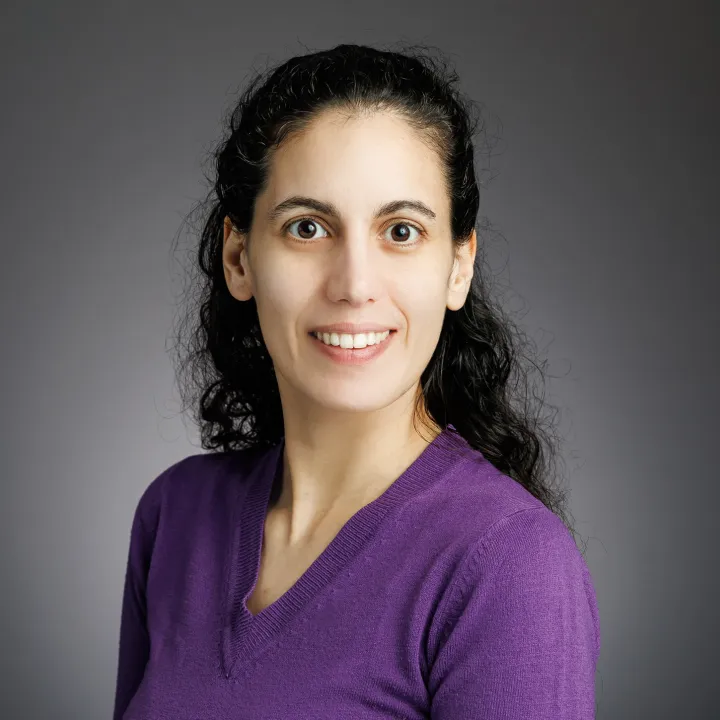
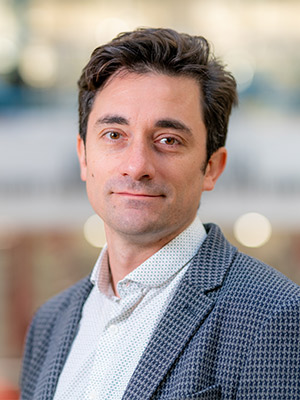
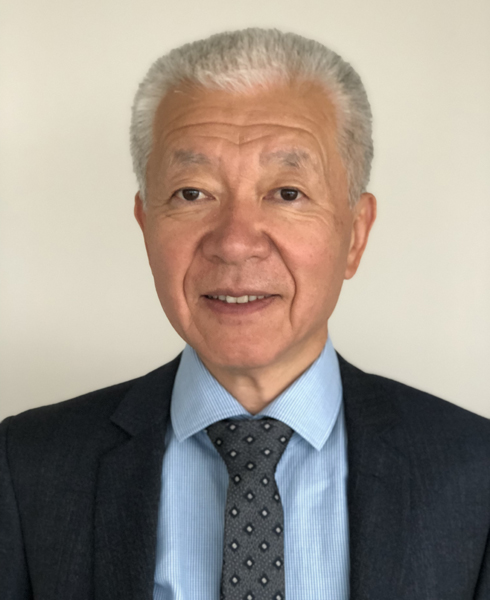
Liqun Wang is a Professor of Statistics at the University of Manitoba, within the Faculty of Science. His research focuses on statistical inference in complex models, measurement error correction, boundary crossing problems in stochastic processes, and Monte Carlo simulation methods. He holds a prominent role in advancing methodologies for nonlinear time series analysis and Bayesian inference. His work integrates theoretical rigor with practical applications, addressing challenges in econometrics, environmental science, and public health. Notable contributions include advancements in instrumental variable estimation, second-order least squares methods, and high-dimensional covariance estimation. He actively mentors graduate students in these areas and has published extensively in top-tier statistical journals. Recent research highlights include Bayesian bias correction techniques, sparse covariance matrix estimation, and modeling SARS-CoV-2 dynamics via wastewater data. His methodologies often bridge computational efficiency with statistical accuracy, making them applicable to diverse fields such as finance, biostatistics, and environmental monitoring. Despite prolific output (over 70 publications since 1990), Dr. Wang has yet to be explicitly noted for formal scientific awards. His academic profile emphasizes methodological innovation, with a strong focus on real-world data challenges and interdisciplinary collaboration.
Yong Zhang is affiliated with Tsinghua University's Research Institute of Information Technology in Beijing, China. His research focuses on machine learning, optimization algorithms, edge computing, and their applications in areas like time series analysis, federated learning, and sensor networks. He has collaborated on projects involving neural networks, scheduling problems, and privacy-preserving techniques. Education: Yong Zhang earned a PhD in Computer Science and Engineering from Fudan University in 2007. His academic career includes roles at institutions like the Chinese Academy of Sciences and the University of Hong Kong, reflecting a strong interdisciplinary background. Research Contributions: His work spans theoretical computer science, algorithm design, and applied machine learning. Notable areas include developing efficient scheduling algorithms for energy systems, creating robust federated learning frameworks for industrial demand forecasting, and advancing methods for sentiment analysis using multimodal data. He has also contributed to biomedical engineering through smartphone-based health monitoring systems. Collaborations: He frequently collaborates with researchers at institutions like the University of Electronic Science and Technology of China, Nanyang Technological University, and The Hong Kong Polytechnic University. Key projects involve data caching optimization in edge computing, distributed algorithms for dynamic networks, and combinatorial optimization problems. Labs & Future Work: His team explores cutting-edge topics in AI-driven systems, including trust-aware machine learning, distributed resource allocation, and real-time data processing for IoT applications. Current research emphasizes scalable solutions for complex optimization challenges in both academic and industrial settings.
Katerina Sotiraki is an Assistant Professor in the Department of Computer Science at Yale University, associated with the Archimedes AI research group. Her work focuses on theoretical cryptography, post-quantum cryptography, complexity theory, and secure computation. She holds a Ph.D. (2020) and M.S. (2016) in Computer Science from MIT, and a B.S. in Applied Mathematics (2013) from the National Technical University of Athens. Prior to Yale, she was a postdoc at UC Berkeley working with Raluca Ada Popa and Alessandro Chiesa, under the guidance of Vinod Vaikuntanathan at MIT. Research Interests : Design and analysis of cryptographic protocols resilient to quantum computing Efficient zero-knowledge proofs and succinct arguments Algorithmic game theory and fair division problems Lattice-based cryptography and post-quantum security Awards & Honors : Winner of 7th iDASH Competition (Track 3) - 2018 Chateaubriand Fellowship - 2018 Paris C. Kanellakis Fellowship (MIT EECS) - 2013 Key Contributions : Developed HOLMES - a system for secure collaborative learning Pioneered lattice-based succinct arguments with polylogarithmic verification Advanced understanding of modulo-p arguments through topological methods Labs & Teams : Active member of the Archimedes AI group at Yale, focusing on secure computation and cryptographic protocols.
Joost-Pieter Katoen is a full Professor at RWTH Aachen University and Head of its Computer Science Department since 2012. He also holds a part-time (20%) Professorship at the University of Twente . His research focuses on model checking , probabilistic verification , formal semantics , and software verification , with applications in aerospace systems. His work has led to significant tools like MRMC (probabilistic model checker), COMPASS (AADL analysis tool-set), and libalf (learning automata library). He has authored over 18 international projects (total €5.2 million) and graduated 12 PhD students. Scientific Awards : Member, German National Academy of Sciences (Leopoldina), 2024 ACM Fellow, 2020 ERC Advanced Grant, 2018 Honorary doctorate, Aalborg University, 2017 Teaching Award, RWTH Aachen, 2010 Philips Early Career Development Award, 1988 Research Trends (from articles): His recent work spans probabilistic program verification , quantitative game theory , Markov chain analysis , and parameter synthesis for stochastic systems, with applications in AI, quantum computing, and fault tree analysis. Leadership & Service : Katoen co-founded the QEST conference , chairs ETAPS steering committee, and has led numerous program committees (CONCUR, TACAS, QEST). He has served on editorial boards and organized conferences/seminars globally.
Ceyhun Eksin is an Associate Professor and the Corrie and Jim Furber '64 Faculty Fellow at the Texas A&M University Industrial & Systems Engineering Department. He is also affiliated with the Electrical & Computer Engineering Department. His research focuses on networked multi-agent systems, integrating game theory, distributed optimization, and control theory to address challenges in autonomous systems, energy systems, and epidemiological modeling. Education: Ph.D. in Electrical and Systems Engineering from the University of Pennsylvania (2015), followed by a postdoctoral fellowship at Georgia Institute of Technology (hosted by Professors Jeff S. Shamma and Joshua S. Weitz). Research interests emphasize the design and analysis of complex systems, including distributed algorithms for autonomous teams, epidemic dynamics influenced by behavioral changes, and optimization in smart grids. His work bridges theoretical foundations with practical applications in cyber-physical systems and social networks. Notable awards include the NSF CAREER Award (2023) and TAMIDS Career Initiation Fellowship (2023). His research has been published in top journals like Proceedings of the National Academy of Sciences and IEEE Transactions . Lab activities center on the NetMaS (Networked Multiagent Systems) Lab, focusing on theoretical and algorithmic innovations for multi-agent systems. Collaborations span academia and industry, addressing real-world challenges in energy, healthcare, and robotics.
Andrea Meilán-Vila is an Assistant Professor in the Department of Statistics at Universidad Carlos III de Madrid since 2021, holding a Juan de la Cierva Fellowship since 2023. She earned her PhD in Statistics from Universidade da Coruña (2021) and previously served as a Postdoctoral Fellow at Universidade de Santiago de Compostela's Department of Statistics, Mathematical Analysis and Optimisation. Her research focuses on nonparametric methods for analyzing complex data types, including directional, spatial, and functional data. Key areas include kernel smoothing techniques, goodness-of-fit testing for regression models, and spatial trend estimation. She serves as an Associate Editor for the Journal of Nonparametric Statistics . Recent work emphasizes applications in climate science (temperature curve modeling), fluid dynamics (wake flow control), and biomedical imaging (hippocampus shape analysis). Her methodologies address challenges like sparse data estimation and spatial correlation in regression frameworks. Key Projects: STENED (Stein-based goodness-of-fit tests for non-Euclidean data) Awards: Juan de la Cierva Fellowship (2023) Publications span journals like Journal of Fluid Mechanics , Statistical Papers , and TEST , with a focus on methodological advancements in statistical modeling and computational validation.
Jeff M Phillips is a Professor in the Kahlert School of Computing at the University of Utah, specializing in algorithms for big data analytics, computational geometry, and machine learning. He holds a BS in Computer Science and Mathematics from Rice University (2003) and a PhD in Computer Science from Duke University (2009). He serves as Director of the Utah Center for Data Science, Director of the Data Science Program in the Kahlert School of Computing, and Faculty Co-Director of the One U Data Science Hub. His research focuses on geometric data analysis, coresets, sketches, and handling uncertainty in data. Education: BS/BA (Rice University, 2003), PhD (Duke University, 2009) CI Postdoctoral Fellow at University of Utah (2009–2011) His research interests include algorithms for big data analytics, computational geometry, machine learning, spatial statistics, and AI. He has led NSF-funded projects on spatial data analysis, cosmic origins via AI, and reactive flow data modeling. Phillips has advised numerous PhD and master’s students, contributing to topics like trajectory classification and bias mitigation in word embeddings. His publications span computational geometry, data science, and machine learning. Notable work includes coresets for kernel density estimates, bias mitigation in language models, and scalable spatial scan statistics. Phillips is also active in academic service, serving as co-PC chair for SoCG 2024 and on program committees for major conferences like NeurIPS and ICML.
Zhang Yi-Cheng is a Full Professor of Theoretical Physics at the University of Fribourg, Switzerland, since 1992. His academic career includes visiting professorships at Nordita (Denmark) and INFN (Italy), and postdoctoral research at Brookhaven National Lab (USA). He specializes in interdisciplinary fields such as Econophysics , Statistical physics , and Complex network sciences , focusing on applications in financial markets, social systems, and global trade networks. His research explores topics like market dynamics, network structures, and algorithmic ranking systems. Notable awards include the 2011 Honorary Director of the Complexity Sciences Research Center and recognition as a 2011 Chinese '1000 Talents' awardee . His work bridges physics-based methodologies with socio-economic systems, addressing challenges in information-driven economies and networked societies. Zhang has contributed to influential studies on ranking algorithms, percolation theory in networks, and the interplay between economic complexity and trade. His interdisciplinary approach has led to advancements in understanding systemic risks, market inefficiencies, and the role of information in shaping global economic interactions.
Dr. Sara Ahmadian is a Researcher at the University of Waterloo's Department of Combinatorics and Optimization. She completed her Ph.D. in 2017 under the supervision of Prof. Chaitanya Swamy, earning the 2017 University of Waterloo Outstanding Achievement in Graduate Studies award. Her research focuses on designing efficient algorithms for optimization problems in machine learning and big data analysis, particularly in facility location and clustering. She has held visiting research positions at the University of Alberta, Hausdorff Research Institute for Mathematics, and École polytechnique fédérale de Lausanne. Education: Ph.D. in Combinatorics and Optimization, University of Waterloo (2017) Master's in Combinatorics and Optimization, University of Waterloo (2010) Bachelor's in Computer Engineering, Sharif University of Technology (2008) Research interests include approximation algorithms, online algorithms, and algorithmic game theory applied to clustering and facility location problems. Her work has led to advancements in k-means and k-median problems, with a notable improvement in the fundamental k-means algorithm. Scientific Awards: 2017 University of Waterloo Outstanding Achievement in Graduate Studies (Ph.D.) designation Advising and Grants: No specific advising or grant information is provided in the text. Labs/Teams: No specific lab or team affiliations mentioned.
Andreas J. Kassler is a Full Professor of Computer Science at Karlstad University, Sweden, where he has been since 2005. He co-chairs the Distributed Systems and Communication (DISCO) group and focuses on networking, cloud computing, and wireless networks. His research includes software-defined networking, future internet architectures, and network optimization. He has authored/co-authored over 130 peer-reviewed publications, holds 6 patents, and serves on editorial boards of journals like Journal of Internet Engineering . Education : Ph.D. in Computer Science, Universität Ulm (2002) Docent (Habilitation), Karlstad University (2007) M.Sc. in Mathematics/Computer Science, Universität Augsburg (1995) Research Interests : Software Defined Networking (SDN) Programmable Dataplanes Wireless Mesh Networks Time-Sensitive Networking (TSN) Edge Computing Machine Learning for Network Optimization Recent Directions : His work spans TSN scheduling, hybrid P4 solutions for 5G, and explainable AI in energy communities. He explores network resilience, latency optimization, and multi-objective control in microgrids. Service Contributions : Track co-chair for VTC 2015 General chair for Wired/Wireless Internet Communications (WWIC) 2013 Editor-in-Chief of IARIA Journal on Advances in Internet Technology Labs/Teams : Leads DISCO group at Karlstad University. Collaborates with global teams on projects like mmWave backhaul networks and SDN-enabled industrial control systems.
Professor Dino Sejdinovic is a faculty member in the School of Computer and Mathematical Sciences at the University of Adelaide, part of the Faculty of Sciences, Engineering and Technology. Previously, he held positions as Lecturer and Associate Professor at the University of Oxford's Department of Statistics (2014–2022). His academic qualifications include a PhD in Electrical and Electronic Engineering from the University of Bristol (2009) and a Diplom in Mathematics and Theoretical Computer Science from the University of Sarajevo (2006). His research focuses on the intersection of statistical methodology and machine learning, encompassing large-scale nonparametric methods, robust machine learning, multiresolution data fusion, and measures of dependence. He has contributed to kernel methods, Bayesian inference, causal discovery, and applications in climate science, quantum computing, and social science data analysis. Education: PhD in Electrical and Electronic Engineering, University of Bristol (2009) Diplom in Mathematics and Theoretical Computer Science, University of Sarajevo (2006) Sejdinovic's work emphasizes bridging theoretical foundations with practical applications, such as cloud type classification using vision transformers and machine learning-driven quantum device optimization. His recent publications explore topics like kernel-based causal inference, Bayesian neural networks, and uncertainty quantification in statistical models. Advising and grants: Eligible to supervise Masters and PhD students in machine learning and statistics, though specific grants or student advisees are not explicitly listed in the provided texts.
Dr. Cheng-Chew Lim is a Professor in the School of Electrical and Mechanical Engineering at the University of Adelaide. He specializes in control theory, autonomous systems, and multi-agent reinforcement learning. His research focuses on trusted autonomous systems, secure cyber-physical networks, and decentralized decision-making models. He has published over 300 articles and supervised 50+ PhD and master’s students. Dr. Lim teaches courses in control systems, autonomous systems, and engineering project management. He has held editorial roles, including Associate Editor for IEEE Transactions on Systems, Man, and Cybernetics, and is actively involved in professional associations like the IEEE Control and Aerospace Electronic Systems Joint Chapter. His current projects include physics-informed neural networks for medical imaging, secure distributed autonomous systems, and resilient formation control under cyberattacks. Dr. Lim has secured research grants from ARC and industry partnerships, emphasizing practical applications in robotics, cybersecurity, and smart systems.
Dr. Graziano Fiorillo is an Assistant Professor in the Department of Civil Engineering at the University of Manitoba's Price Faculty of Engineering. He holds a Ph.D. from the City University of New York and M.Sc./B.Sc. from the University of Naples, Italy. His research focuses on structural reliability, bridge systems analysis, and risk assessment, incorporating machine learning and high-performance computing. He has contributed to probabilistic frameworks for infrastructure resilience, filovirus outbreak modeling, and bridge redundancy evaluation. Education: Ph.D. Civil Engineering, City University of New York, 2016 M.Sc. Building Engineering, University of Naples Federico II, 2003 B.Sc. Building Engineering, University of Naples Federico II Research Interests: Dr. Fiorillo specializes in structural analysis of bridges, risk-based design, and machine learning applications in infrastructure. He develops probabilistic models for bridge network reliability and flood risk assessment, with a focus on Manitoba's infrastructure resilience. His work integrates computational fluid dynamics (CFD) and energy efficiency solutions for buildings. Publications: His recent work emphasizes interdisciplinary approaches to infrastructure challenges, including CFD for sediment transport, EnergyPlus-based building efficiency studies, and MPI parallel computing for reliability analysis. His 2024 studies on flood-overload interactions and additive manufacturing in construction highlight emerging trends in civil engineering. Awards: He received the 2012 New York State Intelligent Transportation Society Award for best student paper. His research has been applied to truck weight regulation strategies and bridge importance factor calibration. Advising & Grants: Offers M.Sc. opportunities in CFD, building energy efficiency, and bridge structures. Positions require expertise in OpenFOAM, EnergyPlus, or structural analysis software. No specific grants mentioned in the text.
Diego Patiño is an Assistant Professor in the Department of Computer Science and Engineering at the University of Texas at Arlington (UTA), a position he began in September 2024. He earned his Ph.D. in Computer Engineering from the National University of Colombia in 2020, following M.S. and B.S. degrees from the same institution. Prior to joining UTA, he served as a Postdoctoral Fellow at Drexel University and a Postdoctoral Researcher at the GRASP Laboratory, University of Pennsylvania. B.S. in Computer Engineering, National University of Colombia, 2010 M.S. in Computer Engineering, National University of Colombia, 2012 Ph.D. in Computer Engineering, National University of Colombia, 2020 Dr. Patiño's research centers on geometric computer vision and machine learning, with applications in robotics and 3D vision. His primary interests include 3D reconstruction, graph neural networks, symmetry detection, physics-informed machine learning, and reinforcement learning. He develops algorithms that integrate geometric priors and physical constraints into deep learning models to improve robustness and generalization in real-world robotic systems. His recent publications demonstrate a strong trend in leveraging implicit neural representations for 3D shape reconstruction, applying graph neural networks to swarm robotics, and enhancing computer vision tasks with self-supervised and physics-informed learning. Work spans high-impact venues such as IEEE RA-L, ICRA, ICPR, and MICCAI, showing a consistent focus on geometric reasoning, robotic perception, and medical imaging applications. His scientific contributions have been recognized with awards from the UTA Division of Student Affairs for exceptional dedication and positive impact (2024 and 2025). He is actively involved in securing research funding, with multiple grants under review from NSF, Air Force SBIR, and industry partners like Sony. Exceptional dedication and positive impact recognition, UTA Division of Student Affairs (December 9, 2024) Exceptional dedication and positive impact recognition, UTA Division of Student Affairs (April 30, 2025) Dr. Patiño advises and serves on committees for multiple graduate students in computer science and engineering, including doctoral and master’s candidates. He is also leading or co-leading several research grants under review, covering topics such as aerial swarm navigation, neuromorphic sensing, and industrial computer vision. He teaches graduate courses in computer vision and is involved in service roles including PhD admissions and faculty appointments committees. He is affiliated with research initiatives at UTA, including the UTARI Research Institute, where he has presented on geometric modeling and physics-informed learning. His lab focuses on developing next-generation computer vision algorithms for robotics, industrial inspection, and safety-critical systems.
Hsiao-Dong Chiang is a Professor in the School of Electrical and Computer Engineering at Cornell University. He holds a Ph.D. in Electrical Engineering from the University of California, Berkeley, and has made significant contributions to nonlinear system theory and power system stability. His research spans theoretical development and practical applications in electric power systems, nonlinear optimization, and machine learning. B.S., Electrical Engineering, National Taiwan University, 1979 M.S., Electrical Engineering, National Taiwan University, 1981 Ph.D., Electrical Engineering, University of California, Berkeley, 1986 Chiang's research interests focus on nonlinear system theory , power system stability and control , nonlinear optimization , and their applications to modern power grids with high penetration of inverter-based resources. He is renowned for developing the BCU method and TRUST-TECH methodology , which have enabled fast direct stability assessment and global optimization in complex systems. His work bridges fundamental theory with industrial deployment through his companies, Bigwood Systems, Inc. and Global Optimal Technology, Inc. His recent publications (2024–2025) reflect a strong trend toward integrating machine learning and deep neural networks with power system analysis , particularly in state estimation, optimal power flow, and voltage control. There is a clear emphasis on handling uncertainty, non-convexity, and multi-scale dynamics in active distribution networks and integrated energy systems . His work increasingly focuses on resilience , real-time control , and user-centered methodologies for modern grid operations. Chiang has received numerous scientific honors, including: IEEE Fellow (1997) United States Presidential Young Investigator Award (1989) Multiple DOE Grid Optimization Challenge Awards (2020–2023) Best Paper Awards from IEEE Transactions and Conferences Outstanding Education Award, Cornell University (1990) He has successfully managed over 100 research projects and holds 28 U.S. and international patents. As the founder of Bigwood Systems, Inc., he has commercialized advanced software for utility companies across the U.S. and Japan. His team has published over 480 refereed papers and received more than 17,500 citations. He advises a large research group and leads innovations in computational methods for energy systems. His lab is actively involved in developing next-generation tools for grid security, optimization, and machine learning integration.