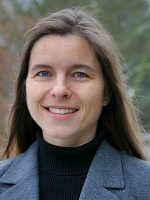
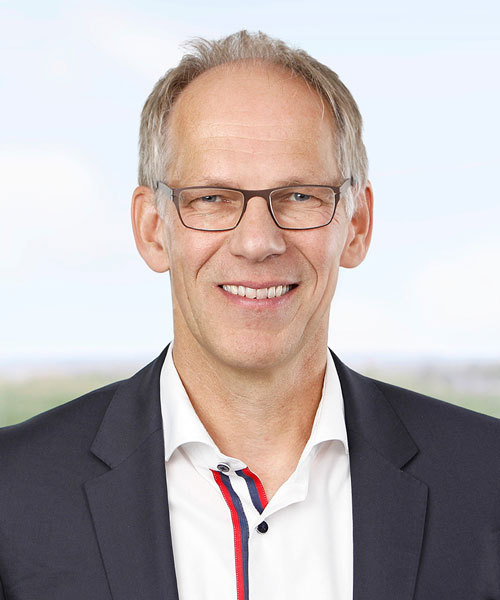
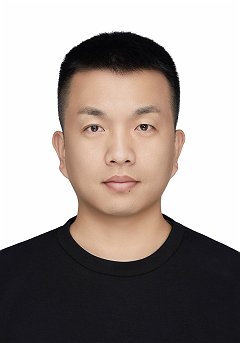
Lennart Bastian is a PhD Student at the Chair of Computer Aided Medical Procedures (Prof. Navab) at Technische Universität München . His research focuses on Surgical Data Science , 3D Computer Vision , and Medical Imaging , with specific interests in 3D Reconstruction , Pointcloud Segmentation , and Scene Understanding . His recent work includes advancements in Operating Room semantics , holistic face anonymization , and scalable statistical shape modeling . Across 2025, his publications demonstrate strong engagement with topological neural networks , SO(3) forecasting , and 3D shape matching algorithms for medical applications. Lennart has supervised numerous student projects, including Learning Robust Deformation Energies Neural Interpolation for Dynamic 6D Pose Weakly Supervised Segmentation in collaboration with the Chair of Computer Science Applications in Medicine.
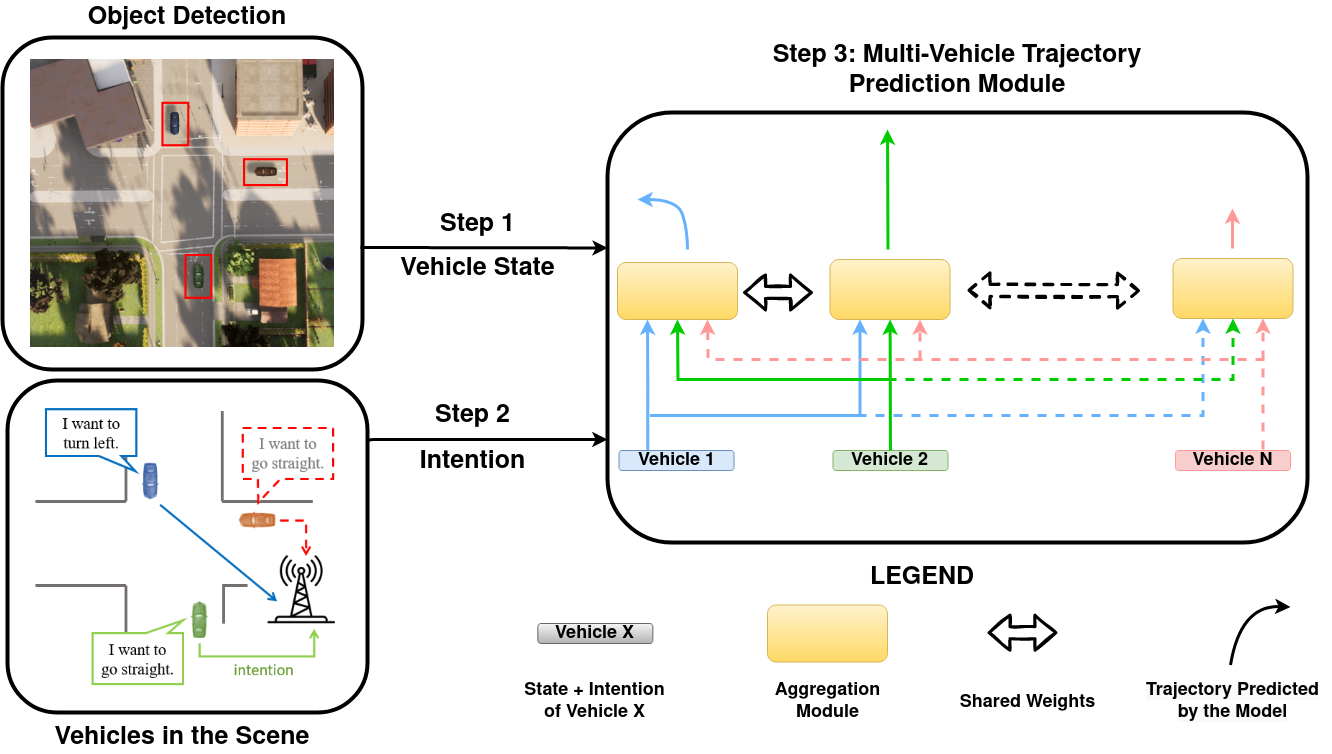
Dekai Zhu is a PhD researcher at the Chair of Computer Aided Medical Procedures (Technical University of Munich) and collaborates with Siemens AG. His work bridges computer vision, medical applications, and autonomous driving technologies. Education PhD in Technical University of Munich (2023–present) Master in Technical University of Munich (2023) Bachelor in Tongji University (2020) Research Interests Diffusion Models for 3D data 3D Computer Vision (Point Clouds, B-Rep) Autonomous Driving systems Medical Image Analysis integration His publications focus on trajectory prediction and control for autonomous vehicles at intersections, leveraging state and intention information instead of past trajectories. Notable contributions include methods for message passing between vehicle nodes and comparative analysis of offline vs. online evaluation metrics. His work demonstrates adaptability across simulation platforms like SUMO and CARLA. Supervision & Collaboration Supervised Master’s student Yixuan Hu on generative data augmentation for autonomous driving projects Collaborated with Qadeer Khan and Daniel Cremers on multi-agent control systems Software & Tools Developed open-source implementation for multi-vehicle trajectory prediction Integrated SUMO-CARLA co-simulation frameworks
PD Dr. Christian Wirkner is a faculty member at the University of Rostock , affiliated with the Institute of Biosciences under the Faculty of Mathematics and Natural Sciences . His research focuses on evolutionary morphology, comparative anatomy, and functional physiology of arthropods, particularly crustaceans and arachnids. Recent publications highlight his work on: 3D morphological analysis of arthropod organ systems Phenotypic variation in vascular structures Phylogenetic reconstruction of Malacostraca and Arachnida Biomechanical adaptations in scorpion tails and crustacean claws Evolutionary transitions during arachnid terrestrialisation Geometric morphometrics and computational modeling in zoology His methodological approach combines micro-CT, corrosion casting, and advanced morphometric techniques to study evolutionary patterns across diverse arthropod lineages.
Prof. Philipp Bach holds the Junior Professorship for Econometrics at the Department of Economics, Free University of Berlin . His research bridges causal machine learning, econometrics, and statistical methods, with a focus on software implementation and economic applications. He teaches courses in econometrics, causal machine learning, and data science using Python and R.
Daniel Rudolf is a Professor for Mathematical Data Science at the Faculty of Computer Science and Mathematics, University of Passau. His research focuses on computational statistics and mathematical data science with applications across various domains. His primary research interests include: Markov chains and their convergence properties Monte Carlo and Quasi-Monte Carlo methods Bayesian statistics and uncertainty quantification Information-Based Complexity High-dimensional analysis Rudolf maintains an active research group with current members Mareike Hasenpflug (PostDoc) and Philip Schär (Co-supervised PostDoc from the University of Jena). His former research group members have secured positions at prestigious institutions including the University of Bath, Sorbonne University, and TU Freiberg. His publication record shows consistent contributions to theoretical foundations of Markov chain theory and practical algorithms for statistical computation, with particular emphasis on slice sampling methods, convergence analysis, and high-dimensional problems that maintain performance regardless of dimensionality. He serves as an associate editor for the Journal of Complexity, contributing to the academic community through editorial work. His research has practical applications in molecular biology (ion channel analysis), geophysics (magnetotelluric impedance tensor decomposition), and various statistical modeling contexts.
Dr. Xia Chen is a Postdoctoral Fellow at the Technical University of Munich (TUM), working at the Georg Nemetschek Institute (GNI) within the Chair of Computing in Civil and Building Engineering. His research focuses on human-AI alignment, knowledge-integrated machine learning, and bio-inspired adaptive intelligence, with applications in engineering and scientific contexts. Dr. Chen earned his Ph.D. with summa cum laude distinction from Leibniz University Hannover and Technical University Berlin. His dissertation, "Beyond Predictions: Alignment between Prior Knowledge and Machine Learning for Human-Centered Augmented Intelligence," established foundational work in aligning AI systems with human cognition and decision-making processes. Prior to his current position, he was a Visiting Scholar at UC Berkeley's Center for the Built Environment (CBE). Dr. Chen's research interests center on developing AI systems that enhance rather than replace human capabilities in engineering contexts. His work spans several interconnected areas: human-AI alignment, where he explores how artificial systems can dynamically align with human cognition and values; knowledge representation and reasoning, focusing on integrating domain knowledge with data-driven approaches; machine learning methodologies that incorporate physics-based constraints; and applications of AI in the built environment for energy-efficient design and sustainable infrastructure. His publication record demonstrates a consistent focus on bridging the gap between theoretical AI advancements and practical engineering applications. Dr. Chen has pioneered approaches like component-based machine learning (CBML), which transforms system-level extrapolation problems into component-level interpolation challenges, making AI more robust with limited data. His recent work on symbolic neural networks for building physics and causal inference in design processes represents cutting-edge integration of domain knowledge with machine learning. summa cum laude PhD distinction from Leibniz University Hannover and TU Berlin Dr. Chen has contributed to several national research initiatives (DFG, BMBF), with projects ranging from component-based machine assistance to forecasting frameworks for energy systems. His work at the E.ON Energy Research Center (RWTH Aachen) involved meta-neural network ensembles for renewable prediction and economic evaluations of the German Energy Transition. He actively serves as a reviewer for venues including Advanced Engineering Informatics, Energy and Buildings, EG-ICE, and IBPSA. Dr. Chen's research is conducted within TUM's vibrant ecosystem for computational engineering, with connections to the Georg Nemetschek Institute's focus on digital transformation in the built environment. His work intersects with several research groups including those focused on Information Management, Digital Twinning, and Knowledge Representation and Reasoning within the Department of Civil and Environmental Engineering.
Frauke Feser is a senior researcher at the Helmholtz-Zentrum Hereon , Institute of Coastal Systems - Analysis and Modeling, leading the Coordination of Storm Themes team. Her work focuses on cyclone dynamics, climate change impacts on storm patterns, and regional climate modeling. Key research areas include: Extreme weather event attribution using spectral nudging Arctic and North Atlantic storm activity trends Coastal climate risk assessment and adaptation Validation of regional climate models against observations Her recent publications analyze: Climate change effects on marine heatwaves Comparative studies of storm datasets Methodological advances in dynamical downscaling Historical storm reconstructions using pressure data She actively investigates: Cyclone formation under warming scenarios Regional climate model performance metrics Storm impact forecasting systems Interactions between large-scale circulation and coastal weather
Jinhan Kim is a Postdoctoral Researcher at the Software Institute of USI University of Lugano, Switzerland, working in the TAU lab under the guidance of Prof. Paolo Tonella. He completed his Ph.D. in Software Engineering at KAIST, South Korea, under the supervision of Prof. Shin Yoo, where his research focused on mutation testing and the intersection of artificial intelligence and software engineering. His educational background includes: Ph.D. in Software Engineering, KAIST, South Korea (completed February 2023) Kim's research spans software engineering and artificial intelligence, with a focus on mutation testing, testing of deep learning systems, and security of AI models. He investigates techniques for improving the reliability and robustness of AI systems, particularly in safety-critical domains like autonomous driving. His work bridges traditional software engineering practices with modern AI systems, leading to novel approaches in fault localization, program repair, and adversarial testing. His recent publications reveal a strong trend toward testing and securing deep learning models in autonomous systems. He has developed taxonomies for attacks, frameworks for testing autonomous agents, and empirical studies on fault localization for neural networks. His work increasingly addresses securing AI systems against adversarial attacks and improving robustness of security detectors generated by large language models. Kim has received notable recognition including: Best Paper Award at the 18th International Workshop on Mutation Analysis (Mutation 2023) As an advisor, Kim supervises two PhD students: Masoud Jamshidiyan Tehrani and Samuele Pasini, working on security of deep learning models and robustness of security attack detectors. He actively serves the research community through program committees for ASE, ICSE, ISSTA, and ICST, and as organizer of DeepTest and SBFT workshops. His service includes being a Distinguished Reviewer for TOSEM. Kim is a core member of the TAU (Testing: Analysis and Understanding) lab at USI, which pioneers innovative approaches to software testing and analysis for modern AI-based systems.
Dr. Mena Teebken serves as an Associate Researcher at the Bavarian Research Institute for Digital Transformation (bidt), a leading independent research institution in Bavaria. Her work centers on the critical intersection of digital transformation and workplace data governance, particularly through the "Determinants of Data Disclosure in the Digital Workplace" (DetDat) project. This research investigates how various digital work factors influence employees' willingness to disclose personal data, aiming to develop evidence-based strategies for enhancing data protection while enabling beneficial data use. Her research interests encompass digital transformation, workplace data protection, artificial intelligence in organizational contexts, employee privacy, data governance, and the ethical dimensions of workplace surveillance. She explores how trust in data handling mechanisms, transparency in data practices, and perceived benefits influence employee data disclosure behaviors. Her work bridges technical, legal, and human aspects of data management in modern workplaces. Recent publications (2024-2025) reveal a strong focus on AI-driven workplace data dynamics, continuous data sharing, and risk-benefit trade-offs. Dr. Teebken's scholarship identifies key challenges in balancing innovation with privacy and proposes actionable recommendations for building employee trust through robust data protection frameworks. Her research highlights the importance of comprehensive data protection measures in fostering employee confidence and enabling broader data utilization. As a key contributor to the DetDat project, Dr. Teebken collaborates with an interdisciplinary team of experts including Prof. Thomas Hess (Ludwig-Maximilians-Universität München), Prof. Ioanna Constantiou (Copenhagen Business School), and Prof. Virpi Tuunainen (Aalto University). This collaboration spans multiple institutions and leverages diverse methodological approaches to address complex workplace data challenges.
Carina Heßeling serves as a Lecturer at FernUniversität Hagen's Faculty of Mathematics and Computer Science since August 2023, following the completion of her doctoral degree in Computer Science at the same institution. Her academic journey reflects deep institutional continuity through multiple research and teaching roles. Her educational foundation includes: Bachelor of Science in Computer Science, FernUniversität Hagen (2010-2017) Master of Science in Computer Science, FernUniversität Hagen (2017) PhD in Computer Science (Dr.Ing.), FernUniversität Hagen (2023) Dr. Heßeling's research program centers on advanced cybersecurity mechanisms , with specialized expertise in covert channel engineering and steganographic techniques for sensor networks. Her work pioneers novel approaches to data hiding within numeric representations and sensor transmissions, addressing critical vulnerabilities in network security protocols through mathematical innovation in floating-point arithmetic and data stream manipulation. Analysis of her eight publications (2022-2024) reveals concentrated investigation into covert channel bandwidth optimization, robustness against detection, and exploitation of numerical representation redundancies. The research demonstrates consistent methodological focus on sensor data systems while spanning cryptographic theory, network protocol analysis, and information-theoretic security frameworks. No scientific awards or honors are documented in available sources. Current information indicates no formal student advisement responsibilities or externally funded research grants. Professional activities appear centered on teaching duties and independent research within the university's cybersecurity research ecosystem.
Univ.-Prof. Dr. Andreas Kleine is a distinguished Professor at Distance University Hagen, holding the Chair of Business Administration, specializing in Quantitative Methods and Business Mathematics within the Faculty of Economics and Business Administration. Since 2011, he has led this department while also serving in significant administrative roles including as Vice Rector for Research and the Promotion of Young Academics (2016-2022) and currently as Ombudsperson for ensuring good scientific practice since March 2022. He is an active member of the research focus Energy, Environment & Sustainability and the research group Management of Energy-Flexible Factories (MaxFab). Saarland University - Diplom-Kaufmann in Business Administration (1989) Habilitation in Business Administration (2001) with thesis "Efficient Alternatives, Productions, and Organizations" University of Hohenheim - Chair of Operations Research (2002) and Department of Quantitative Methods Aston Business School - Visiting Scholar (2005) Württemberg Academy of Administrative and Economic Sciences - Teaching Experience Professor Kleine's research centers on applying quantitative methods to business administration problems, particularly where information is incomplete or multiple objectives must be balanced simultaneously. His work spans Data Envelopment Analysis, Multi-Criteria Decision Making, Optimization of renewable energies, and Risk Measurement. He has extensive experience in energy economics, focusing on how energy consumption and emissions in economic units can be recorded and operational processes optimized through energy flexibility potential. His research also explores optimal control of PV systems, forecasting electricity generation from renewables, and sustainability in production planning. Analyzing his recent publications reveals a strong trend toward sustainable operations research with emphasis on energy-flexible production systems, eco-efficient manufacturing, and multi-criteria optimization for sustainability. His work bridges theoretical operations research with practical applications in energy markets, production planning, and environmental management, often employing advanced methods like Data Envelopment Analysis and Pareto optimization to address complex sustainability challenges. Editor in Chief: Lecture Notes in Economics and Mathematical Systems Editorial Board: Journal of Business Economics Scientific Committee: International Conference on Data Envelopment Analysis (2023, 2017, 2016, 2015) Chair of Program Committee: VHB Annual Conference 2017 (St. Gallen) Chair of Scientific Commission "Operations Research" of VHB (2011-2015) Professor Kleine has served as reviewer for numerous prestigious journals including Annals of Operations Research, European Journal of Operational Research, and Journal of Business Economics. His research has been funded by both the German Research Foundation (DFG) and industry partners like TransnetBW for projects related to renewable energy market integration. He has played a key role in establishing the Research and Graduate Services at Distance University and served on the CRIS.NRW steering committee as representative of Vice Rectors for Research in North Rhine-Westphalian universities. As a member of the interdisciplinary research project MaXFab (Management Energieflexibler Fabriken) and the research focus on Energy, Environment & Sustainability, Professor Kleine collaborates with engineers, economists, and environmental scientists to develop practical solutions for energy-flexible production systems. His work with the Ombuds office for scientific integrity demonstrates his commitment to maintaining high research standards across the university.
Yanhui Li is an Assistant Professor at the Software Institute of Nanjing University, specializing in AI software testing and empirical software engineering. Holding a PhD from Southeast University, he actively contributes to both research and teaching in software engineering for AI systems. Institution: Nanjing University, Software Institute Academic Rank: Assistant Professor Teaching: Discrete Mathematics (2023-2025), Data Structure and Financial Algorithm (2016-2024), Advanced Algorithm (2024-2025) His research focuses on AI Testing and Debugging , Mutation Testing , and Empirical Software Engineering with applications in deep learning systems. Key areas include developing testing methodologies for machine learning fairness, word sense disambiguation models, and natural language inference systems. His work bridges theoretical formal methods with practical software analysis techniques to improve AI system reliability. Analysis of recent publications (2023-2025) reveals strong emphasis on testing deep learning components (40% of works), mutation testing adaptations (25%), and empirical studies of software engineering practices (20%). His research increasingly integrates causal analysis with traditional testing techniques, particularly for fairness evaluation in ML systems. 2019 Nanjing University 'Most Loved Teacher' Award (top 9 university-wide) 2020 Nanjing University 'Most Loved Teacher' Award (top 7 university-wide) 2022 & 2024 'Best Course' recognition for Data Structure and Financial Algorithm Dr. Li actively advises students and leads multiple research projects including National Natural Science Foundation funding for 'Semantic based testing data efficacy measurement for deep learning models'. His group recruits PhD and master's students specializing in AI software engineering, with emphasis on testing/debugging AI systems and empirical studies of AI development practices. Current projects include model-based code generation with Nanjing University of Aeronautics and Astronautics and Huawei-funded research on mixed-language programming environments.
Xiang Ling is an Associate Professor at the Institute of Software, Chinese Academy of Sciences (ISCAS) in Beijing, specializing in software security, data-driven security, AI security, and network/web security. His research bridges theoretical computer science with practical security applications, focusing on malware analysis, vulnerability detection, and adversarial machine learning. His research interests span multiple security domains with emphasis on applying data-driven approaches to security challenges. He investigates how machine learning techniques can be both applied to security problems and themselves secured against adversarial manipulation. His work particularly focuses on Windows and Android security ecosystems, with significant contributions to malware detection systems and vulnerability analysis tools. His publication record shows consistent contributions to top software engineering and security venues including ICSE, USENIX Security, IEEE S&P, and Black Hat. His research demonstrates strong trends toward integrating deep learning with security analysis while addressing practical challenges in real-world security systems. Recent work increasingly incorporates large language models for security applications. ACM SIGSOFT Distinguished Paper Award at ICSE 2025 for 'FUTURE' paper Multiple papers accepted at premier venues including ESEM 2025, EASE 2025, and ICSME 2025 Research funded through collaborations with major academic institutions Dr. Ling actively mentors students and collaborates with researchers globally. He maintains an active research group at ISCAS focusing on code analysis, system security, deep learning, and fuzz testing. His team regularly publishes in top-tier conferences and journals while developing practical security tools that address real-world vulnerabilities. He is currently recruiting interns and graduate students through platforms like 实习僧 (intern recruitment website).
Yan Zhu is a faculty member at the University of Macau , affiliated with the Analog and Mixed Signal VLSI Laboratory within the Faculty of Science and Technology. She has a strong research focus on high-performance analog and mixed-signal integrated circuits, particularly in data conversion and low-power design. Her research interests include: Analog and Mixed-Signal VLSI Design High-Speed Data Converters (ADCs) Noise-Shaping and Time-Domain Circuits PVT-Robust and Low-Power Circuit Techniques Compute-in-Memory and AI Hardware Acceleration The recent publications of Yan Zhu demonstrate a clear trend toward advanced ADC architectures such as time-interleaved, pipelined-SAR, and time-domain converters, with a strong emphasis on calibration, linearity, and energy efficiency. Her work frequently appears in top-tier journals like IEEE JSSC and conferences like ISSCC and CICC, indicating leadership in the field of analog circuit design. There is also a growing focus on machine learning hardware, particularly analog compute-in-memory systems for edge AI applications. No scientific awards or honors are mentioned in the provided text. Yan Zhu has made significant contributions through collaborative research, particularly with Chi-Hang Chan and Rui Paulo Martins , and has been involved in numerous projects related to ADC calibration, metastability, and high-speed sampling. While specific grant details are not listed, the volume and quality of publications suggest active funding support. She has not listed any advisees in the provided data. She is a core contributor to the Analog and Mixed Signal VLSI Laboratory at the University of Macau, where her team focuses on cutting-edge IC design for communication, sensing, and artificial intelligence applications.
Martin Schorcht is a Researcher at the Leibniz Institute of Ecological Urban and Regional Development (IÖR) in Dresden, Germany, where he works in the Research Department Spatial Information and Modeling. Since 2015, he has specialized in programming website applications and databases, automated geodata processing, and method development for settlement development analysis including new land use, building change detection, and densification indicators. Doctorate (2016-2023): Faculty of Forestry, Geosciences and Hydrosciences at TU Dresden on 'Spatial analysis, quantification and evaluation of developments in settlement structure based on topographic geodata' Diploma in Cartography (2007-2015): TU Dresden Internship (2011): Leibniz Institute for Regional Geography in Leipzig Internship (2010): ETH Zurich, Institute of Geodesy and Photogrammetry Schorcht's research focuses on spatial analysis of settlement structures using topographic geodata. His expertise spans cartography, remote sensing, and geographic information systems, with applications in sustainable land use planning. He develops innovative methods for building change detection, densification indicators, and land use monitoring, combining both theoretical frameworks and practical implementations for analyzing urban development patterns, settlement expansion, and transportation infrastructure growth. His publication record demonstrates consistent contributions to spatial analysis of settlement structures and land use change. Key themes across his work include building change detection methodologies, urban density metrics, and non-residential building stock analysis. His research often involves collaborative projects like the IÖR Monitor for settlement monitoring, ENOB DataNWG for non-residential building stock analysis, and the meinGrün project for urban green space navigation, reflecting his interdisciplinary approach to urban and regional development challenges. Schorcht actively participates in German academic societies including the German Society for Cartography eV - Society for Cartography and Geomatics (DGfK). His work contributes significantly to the field of land use monitoring and spatial information systems, with practical applications for urban planning and sustainable development policies in Germany. As part of the IÖR research team, Schorcht collaborates on various projects including the IÖR Monitor for settlement and open space development, ENOB DataNWG for primary data collection on non-residential building stock, and the meinGrün interactive app for urban green space navigation. His technical expertise in programming and geospatial data processing supports these initiatives through robust methodological frameworks and analytical tools.