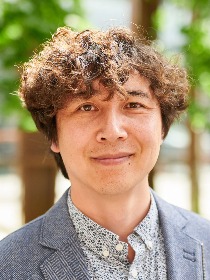
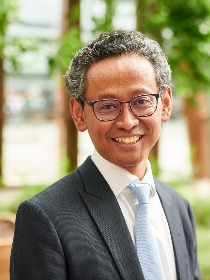
Tom A.E. Oomen is a Full Professor in the Department of Control Systems Technology at the Eindhoven University of Technology (TU/e). He holds affiliations with the Mechanical Engineering School and the EAISI High Tech Systems institute. His research focuses on data-driven control, motion control of mechatronic systems, and system identification, with applications in industries like automotive, medical, and energy systems. Academically, he earned his MSc and PhD from TU/e, and held visiting positions at KTH (Sweden) and the University of Newcastle (Australia). He has received notable grants (NWO Veni/Vidi) and awards, including IEEE and Mechatronics Paper Prize recognition. Oomen is a Senior Member of the IEEE and serves as an Associate Editor for IFAC Mechatronics and IEEE Control Systems Letters. His work bridges fundamental research and industry collaboration, emphasizing advanced motion control and learning algorithms. Projects include PROACTHIS (projection-based control) and ML4CONTROL (AI-driven motion control). He has supervised 99+ works and contributed to over 500 research outputs.
Raquel Fernández is Full Professor of Computational Linguistics and Dialogue Systems at the University of Amsterdam, where she leads the Dialogue Modelling Group at the Institute for Logic, Language & Computation (ILLC). As Vice-Director for Research at ILLC and a Fellow of the ELLIS Society, she bridges computational linguistics, cognitive science, and artificial intelligence through her research on language use in multimodal and conversational contexts. PhD in Computational Linguistics from King's College London Prior research positions at University of Potsdam and Stanford University's CSLI Her work explores how cognitive constraints, social interaction, and perception shape language use, with a focus on: Visually-grounded language processing Multimodal dialogue modeling Model uncertainty and calibration Language grounding in multimodal data Language learning and semantic change Dialogue reference resolution Recent publications analyze multimodal reasoning limitations, cross-lingual knowledge consistency, and uncertainty modeling in dialogue systems. She has received multiple accolades including an ERC Consolidator Grant , NWO VENI/VIDI/Aspasia fellowships , and EMNLP/GenBench awards . Outstanding Paper Award (EMNLP 2023) Best Data Award (GenBench Workshop 2023) ELLIS Society Fellow ERC Consolidator Grant #819455 recipient NWO VENI/VIDI/Aspasia awardee As a leader in academic service, she serves on the SIGDAT Executive Committee and chairs multiple conference committees. Her lab develops models for multimodal dialogue, visual storytelling, and grounded language understanding.
Hailong Jiao is an Assistant Professor in the Department of Electrical Engineering at Eindhoven University of Technology (TU/e) and an Associate Professor at Peking University Shenzhen Graduate School's School of Electronic and Computer Engineering. He is also a Visiting Assistant Professor with TU/e's Electronic Systems group. His research focuses on low-power and variations-resilient VLSI circuit and system design , including error-resilient systems, approximate computing, machine learning in VLSI, ultra-low voltage circuits, and emerging devices like 3D integration and carbon electronics. Education : BSc (highest honor, 2004, Shandong University), MSc (2008, Institute of Microelectronics, Chinese Academy of Sciences), PhD (2012, HKUST). Collaborations : BrainWave project (TU/e and Radboud University Nijmegen) developing wearable brainwave processing for epilepsy/Parkinson's healthcare. Editorial Roles : Associate Editor for Elsevier Microelectronics Journal and World Scientific Journal of Circuits, Systems, and Computers. Committee Memberships : HiPEAC, MemoCiS, ACM/SIGDA, and six IEEE committees. Research Trends : Recent articles emphasize energy-efficient IoT networks , voltage stacking , sensitivity control , and scan flip-flop design , aligning with UN SDGs for energy engineering and healthcare innovation. Scientific awards include highest honor at BSc .
Thomas Bäck is a Professor at the Leiden Institute of Advanced Computer Science (LIACS) , Leiden University , Netherlands, and a member of the interdisciplinary programme Society, Artificial Intelligence and Life Sciences (SAILS) . His academic career spans roles at Leiden University (1996–present) and leadership positions at the Center for Applied Systems Analysis in Dortmund (1994–2000). Education : Diplom-Informatiker (Computer Science), Technische Universität Dortmund (1990) Dr. rer. nat. (Computer Science), Technische Universität Dortmund (1994) Research Interests : Dr. Bäck specializes in evolutionary computation , machine learning , and their applications in sustainable smart industry and healthcare . Recent work focuses on integrating large language models (LLMs) and quantum computing into optimization frameworks, with projects like CIMPLO (predictive maintenance), ECOLE (experience-based optimization), and SAPPAO (airline operations optimization). Scientific Contributions : His 526+ publications cover evolutionary algorithms, quantum optimization, and LLM-driven design, with recent trends including: Quantum computing (e.g., quantum approximate optimization, quantum advantage challenges) LLM integration (e.g., hyperparameter tuning, mutation control, code evolution graphs) Healthcare and industry (e.g., predictive maintenance, anomaly detection, melt quality prediction) Algorithm benchmarking (e.g., IOHprofiler, MA-BBOB, explainable benchmarking) Scientific Awards : IEEE Fellow (2022) Royal Netherlands Academy of Arts and Sciences (KNAW) member (2021) Academia Europaea member (2022) IEEE Computational Intelligence Society Evolutionary Computation Pioneer Award (2015) Fellow, International Society of Genetic and Evolutionary Computation (2003) Best Ph.D. thesis award, German Society of Computer Science (GI) (1995) Advising and Grants : He supervises Ph.D. candidates in evolutionary computation and machine learning and has secured 7 major grants from organizations like the Dutch Research Council , European Commission , and The Research Council of Norway . His editorial roles include Editor-in-Chief of the Evolutionary Computation Journal and associate editorships in leading AI journals.
Ming Cao is a Full Professor at the University of Groningen (Netherlands), holding positions in the Department of Discrete Technology and Production Automation, the Engineering and Technology Institute Groningen, and serving as Chair of the Jantina Tammes School of Digital Society, Technology and AI. His academic roles include Director of the Jantina Tammes School and membership in prestigious organizations such as the International Federation of Automatic Control (IFAC) and the European Commission’s DG CNECT. Cao’s research focuses on multi-agent systems, autonomous robotics, complex networks, and cooperative control, with applications in robotics, epidemic modeling, and biomimetic sensors. Education: PostDoc in Mechanical Engineering from Princeton University (2008), PhD in Electrical Engineering from Yale University (2007). Research Interests: Multi-agent systems, distributed decision-making, cooperative control, robotic teams, seal whisker-inspired flow sensing, and privacy-preserving control systems. Recent Trends in Articles: Recent work emphasizes co-evolutionary dynamics in social-technical systems, privacy in control systems, and biomimetic robotics. Key topics include feedback mechanisms in cooperation, hypergraph-based epidemic models, and seal whisker mechanics for underwater sensing. Awards: European Control Award (2016), Manfred Thoma Medal (2017), ERC Grant (2012). Grants: Vidi Grant from NWO (2015) for agent coordination research. Labs/Teams: Jan C. Willems Center for Systems and Control, Research Center for Data Science and Systems Complexity (DSSC). Active in editorial roles for journals like Artificial Life and Robotics and the SIAM Journal on Control and Optimization .
Said Hamdioui serves as a full Professor in the Department of Computer Engineering within the Faculty of Electrical Engineering, Mathematics and Computer Science at Delft University of Technology. His research focuses on cutting-edge hardware architectures for neuromorphic computing and energy-efficient AI acceleration, with particular emphasis on memristor-based systems, emerging memory technologies, and fault-tolerant designs for edge applications. His research interests span Neuromorphic Computing , Memristor-Based Architectures , and Energy-Efficient AI Hardware , addressing critical challenges in hardware security, computation-in-memory, and reliable edge AI deployment. Recent work demonstrates significant advancements in RRAM/FeFET testing methodologies, spiking neural network implementations, and spin wave computing alternatives to traditional CMOS. His publications reveal strong trends toward real-world deployment of brain-inspired hardware with practical constraints like power efficiency, testability, and security. Award highlights include: DATE'20 Best Paper Award DFT'21 Outstanding Student Paper ETS 2021 Best Paper Award LATS 2018 & 2022 Best Paper Awards Professor Hamdioui actively contributes to the research community through editorial roles at IEEE Transactions on VLSI Systems , IEEE Design & Test , and Journal of Electronic Testing from 2017-2018. His leadership in multi-partner projects like CONVOLVE and NEUROKIT2E demonstrates strong industry-academia collaboration for edge AI solutions. Current work shows increasing focus on practical deployment challenges including in-field fault monitoring, security vulnerabilities in neuromorphic systems, and realistic brain simulation frameworks.
Thom de Vries is an Associate Professor at the University of Groningen's Faculty of Economics and Business, based in the HRM & Organizational Behavior department. He also serves as Program Director for the Master of Science in Human Resource Management and holds a lecturer position in Industrial Engineering Management. His expertise focuses on organizational resilience, team boundary spanning, and infrastructure management. He holds a Ph.D. in Business Administration (cum laude) from the University of Groningen (2015), with prior experience as a Business Researcher at TNO and academic leadership roles in program committees. Education highlights include: Ph.D. in Business Administration (cum laude), University of Groningen (2015) Res. M.A. and M.A. in Business Administration (cum laude), University of Groningen (2011, 2009) B.A. in Public Administration, Thorbecke Academie (2007) Research interests emphasize team dynamics in complex environments, particularly: Resilience and adaptability in critical infrastructure organizations Boundary spanning across teams/organizations Design of multiteam systems for complex tasks Disruption management in supply chains Notable projects include the NGinfra-funded ConCorCom initiative studying coordination during infrastructure challenges, and NWO grants exploring resilience and decision-making under uncertainty. His work has earned awards like the Academy of Management Best Paper Award and multiple teaching recognitions. Grants include: NGINFRA/NWO: ConCorCom (Context, Coordination, Competencies) NWO VENI: Team Boundary Spanning in Disruptions NWO: Resilience-Efficiency Balance in Planning Teaching roles span disciplines including Organizational Behavior, Survey Research, and Experimental Design across faculties. He actively supervises research master students and contributes to executive education programs.
Nathan van de Wouw is a Full Professor at the Mechanical Engineering Department of Eindhoven University of Technology (TU/e), affiliated with ICMS, EAISI Mobility, EAISI High Tech Systems, EAISI Foundational, and EIRES. He also holds an adjunct Full Professor position at the University of Minnesota and a part-time Full Professorship at Delft University of Technology. His research focuses on dynamics and control of mechanical systems, including mechatronics, robotics, smart manufacturing, energy systems, and networked control. He has supervised over 150 students and led numerous projects funded by industry partners like ASML, Philips, and Shell. Education: M.Sc. (with Honors) in Mechanical Engineering, TU/e (1994) Ph.D. in Mechanical Engineering, TU/e (1999) Research Interests: Nonlinear systems and control Model reduction and complexity analysis Data-driven and networked control strategies Applications in high-tech systems, autonomous vehicles, and energy systems Awards: IEEE Control Systems Technology Award (2015) for variable-gain control in motion systems Grants & Projects: Lead projects on mechatronic design, lithography systems, and thermodynamic optimization Collaborations with TNO, ASML, and industrial partners Labs & Teams: Member of TU/e’s Dynamics and Control group Affiliated with EAISI (Eindhoven AI Systems Institute)
Herman Bruyninckx is a Part-Time Full Professor at Eindhoven University of Technology (TU/e) in the Mechanical Engineering department, specifically within the Control Systems Technology group and EAISI High Tech Systems initiative. He also serves as a professor (Hoogleraar) at KU Leuven in Belgium. Academic focus on robotics, control systems, and multi-agent coordination Active research in model predictive control , semantic mapping , and dynamic constraint algorithms Recent publications address industrial automation , agro-food robotics , and haptic technology Research Highlights : Developed hybrid decision-making frameworks for multi-agent navigation Innovated swing-free control methods for robotic pick-and-place operations Formulated constrained dynamics algorithms with LQR-Gauss principle integration Created ExoTen-Glove for haptic feedback in virtual environments Collaborative Projects : Coordinated with researchers like René van de Molengraft , Elena Torta , and Koen de Vos Contributed to NWO/TTW FlexCRAFT project for cognitive robotics in agro-food technology
Maurice Heemels is a Full Professor at Eindhoven University of Technology (TU/e), leading the Control Systems Technology group. He holds additional professorships in EAISI Mobility, EAISI Foundational, EAISI Health, and EAISI High Tech Systems. His research focuses on hybrid and networked systems, emphasizing resource-aware control, event-triggered strategies, and cyber-physical systems integration. He is an IEEE Fellow and chairs the IFAC Technical Committee on Networked Systems. Academic Background: MSc and PhD in Mathematics (TU/e, 1995 and 1999, both summa cum laude ) Visiting Professorships: ETH Zurich (2001), UC Santa Barbara (2008) Industry Experience: Research & Development at Océ NV Research Interests: Hybrid Systems, Networked Control, Event-Triggered Control Model Predictive Control (MPC) in healthcare and high-tech systems Cyber-Physical Systems for applications like lithography and precision agriculture Key Contributions: Developed Hybrid Integrator-Gain (HIGS) systems and Projection-Based Control methodologies Recipient of a VICI Grant for wireless control systems research Oversaw over €7M in research funding from NWO, EU, and industry Awards & Recognition: Automatica Outstanding Service Award (2014) Best Paper Awards (EBCCSP 2017, etc.) Invited Keynote Speaker at ECC, CDC, and others Grants & Projects: Current Projects: COMEDI (Cost-effective Mechatronics), PROACTHIS (Projection-based Control) Past Projects: Fault Detection in Wafer Scanners, Drone-based Farming Labs & Teams: Active in TU/e’s Cyber-Physical Systems and Systems Engineering research groups, collaborating globally on nonsmooth dynamics and hybrid systems.
Prof. Bayu Jayawardhana is a Full Professor in Mechatronics and Control of Nonlinear Systems at the University of Groningen, affiliated with the Faculty of Science and Engineering. He leads the Jayawardhana Group focusing on opto-mechatronics and advanced nonlinear control theories. His roles include Director of Engineering and Scientific Director of the Engineering and Technology Institute Groningen. He holds editorial positions in journals like International Journal of Robust and Nonlinear Control and European Journal of Control . Education: PhD in Control and Power Group from Imperial College London (2006), M.Eng from Nanyang Technological University (2003), and B.Eng from Institut Teknologi Bandung (2000). Research interests span opto-mechatronics for high-tech systems, nonlinear control, and systems biology. Key projects include digital twins for energy optimization, control of ocean energy systems, and modeling of cryogenic actuators for telescopes. His work integrates AI and model-based methods for high-performance systems. Notable awards include the 2016 FSE Faculty Teacher of the Year Award and the Ben Feringa Impact Award (2020). He advises on ventures like Ocean Grazer B.V. and Sencilia B.V. Teaching includes graduate courses on nonlinear control, opto-mechatronics, and fitting dynamical models to data. His research labs include the Groningen Centre for Systems and Control and the Data Science and Systems Complexity Center.
Sara Magliacane is an Assistant Professor at the University of Amsterdam , affiliated with the Amsterdam Machine Learning Lab (AMLab) and the Informatics Institute . She also holds a Research Scientist position at the MIT-IBM Watson AI Lab and has been an ELLIS Scholar since 2022. Education PhD in Artificial Intelligence (2017), VU Amsterdam MSc in Computer Engineering (2011), Politecnico di Milano BSc in Computer Engineering (2008), Università degli Studi di Trieste Research Focus : At the intersection of Causality and Machine Learning , her work addresses Causal Representation Learning from high-dimensional data (images, sequences) Causal Discovery in latent confounder scenarios Causality-inspired Reinforcement Learning for robustness and adaptability Neurosymbolic AI for theoretical guarantees Publication Trends : Her recent work explores Factored adaptation in non-stationary environments (NeurIPS 2022) Temporal causal identifiability (ICML 2022) Binary interaction-based causal discovery (UAI 2023) Safe exploration in visual RL (HSCC 2021) Structure learning lower bounds (NeurIPS 2020) Scientific Recognition : ELLIS Scholar (2022–present) Spotlight presentations at ICML 2022 and ICLR 2022 Advising & Collaborations : Currently supervising 6 PhD students at the University of Amsterdam and AUMC, with 12 alumni advisees. Collaborates with researchers at MIT-IBM Watson AI Lab, Simons Institute, and TUM.
Fiona Sloothaak is an Assistant Professor at Eindhoven University of Technology (TU/e), affiliated with the Department of Mathematics and Computer Science, specializing in Stochastic Operations Research. She holds the Eurandom Assistant Professor title and contributes to the Stochastic Operations Research group. Her research focuses on cascading failures in complex systems, power grids, battery swapping networks, and stochastic processes. Education: Fiona earned a PhD in Stochastic Operations Research from TU/e in 2020 and completed a Master's in Mathematics (2015). Her doctoral thesis, Criticality in power networks: a probabilistic approach , explores cascading failures in power systems. Research Interests: Fiona’s work addresses systemic risk in infrastructure systems, including power grids and transportation networks. She investigates cascading failure dynamics, load balancing in battery swapping stations, and resource pooling strategies. Her studies often employ probabilistic modeling and queueing theory. Key Projects: She co-authored the MARCONI project (2019–2022), focusing on integrated planning for maritime logistics and service systems. This involved optimizing supply chain resilience and remote control tower operations. Scientific Award: Applied Probability Trust Prize (2020) Teaching: Courses include Stochastic Networks, Insurance and Credit Risk, and Probability and Stochastics 1. Grants: MARCONI project funding for maritime logistics optimization. Labs/Teams: Active in TU/e’s Stochastic Operations Research group and Eurandom institute. Collaborations span network topology analysis and interdisciplinary systems research.
Angelo Cervone is a Professor at Delft University of Technology's Department of Astrodynamics & Space Missions within the Faculty of Aerospace Engineering. His research focuses on advanced propulsion systems, CubeSat technology, additive manufacturing for space applications, and space systems design. He leads projects like LUMIO, a CubeSat mission to monitor lunar meteoroid impacts, and has contributed to the development of green propellants and smart composite structures with embedded sensors. His work integrates cutting-edge manufacturing techniques like laser powder directed energy deposition with propulsion system optimization, emphasizing sustainable and robust space technologies. Cervone has authored over 130 publications and edited the book Adaptive On- and Off-Earth Environments , reflecting his expertise in off-world infrastructure and robotic production systems. He received the Rhizome Award (2021) for advancing autarkic systems in off-Earth habitat development. Key Projects: LUMIO CubeSat mission, Rhizome habitat system development, smart propellant tank design Research Themes: CubeSat propulsion, lunar exploration, additive manufacturing for space, in-situ resource utilization His articles highlight advancements in micro-thrusters, structural health monitoring via fiber optics, and autonomous navigation systems for deep-space CubeSats. Cervone collaborates globally on missions requiring innovative propulsion architectures and materials science breakthroughs.
Ivana Nikoloska is an Assistant Professor at the Department of Electrical Engineering, Eindhoven University of Technology (TU/e). She is affiliated with the Center for Quantum Materials and Technology Eindhoven and BIASlab (Bayesian Intelligence and Stochastic Agents Lab). Her academic career includes prior roles as a Research Associate at King’s College London and a Visiting Researcher at Aalborg University. PhD: Monash University, Australia (2023) MSc & Dipl.-Ing.: University of Ss. Cyril and Methodius, North Macedonia Research Interests span foundational and applied machine learning, quantum computing, and information/communication engineering. Her work focuses on integrating Bayesian inference, variational methods, and quantum technologies for tasks like signal processing, channel estimation, and power control optimization. Quantum Machine Learning Bayesian Simulation-Based Inference Meta-learning for Wireless Systems Hybrid Quantum-Classical Architectures Stochastic Signal Processing Quantum Sensing & Metrology Notable Trends in Publications include quantum recurrent neural networks with adaptive gating, Bayesian frameworks for quantum sensing, and meta-learning applications in communication systems. She explores variational inference for planning and robust algorithms for channel estimation under non-ideal conditions.