Kasper Jessen is an Assistant Professor at Aalborg University's Faculty of Engineering and Science, affiliated with the Esbjerg Energy Section. He holds a Master's in Sustainable Energy Engineering (Offshore Energy Systems, 2018) and a Bachelor's in Energy Engineering (Dynamic Systems, 2016). His research focuses on sustainable energy technologies with emphasis on power electronics, microgrid stability, and solid oxide electrolysis systems. Primary research domains include: Design and control of DC microgrid infrastructure Robust power conversion for renewable energy systems Real-time simulation of electrochemical processes Advanced control algorithms for power-to-X applications Dynamic modeling of solid oxide electrolyzers His recent publications (2023-2024) demonstrate strong focus on microgrid stability solutions, real-time emulation of electrolysis systems, and advanced control schemes for power converters. Research consistently addresses renewable integration challenges through experimental validation and simulation. Currently leads or contributes to several major projects: Control and Protection of DC Microgrids (PI, ongoing since 2019) BlueBARGE : Renewable electricity for maritime applications (EU Commission, 2024-2026) Robust And Dynamic Electrolysis for Power-to-X (2024-2027) EMPOWER : Sustainable batteries for zero-emission transport (2022-2025) DynEfuel : Dynamic eFuel production technology (2023-2025)
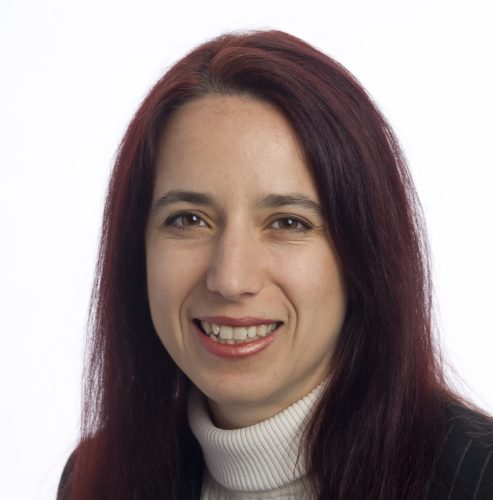
Irena Vodenska is Professor of Finance and Director of Finance Programs at Boston University’s Metropolitan College, Department of Administrative Sciences. She holds a PhD in statistical finance and an MA in economics from Boston University, an MBA from Vanderbilt University, and a BS in computer information systems from the University of Belgrade. She is also a Chartered Financial Analyst (CFA) charter holder. Her research is at the intersection of finance, complexity science, and artificial intelligence, focusing on systemic risk modeling, ESG investments, and financial network dynamics. She has led major interdisciplinary research projects funded by the National Science Foundation, the European Commission, and the U.S. Army Research Office. PhD, Statistical Finance – Boston University MA, Economics – Boston University MBA – Owen Graduate School of Management, Vanderbilt University BS, Computer Information Systems – University of Belgrade Dr. Vodenska’s research interests include network theory in finance, systemic risk propagation, AI-powered ESG analysis, cryptocurrency price forecasting, and financial regulation. She employs big data, machine learning, and natural language processing to analyze financial news, market dynamics, and corporate sustainability. Her work investigates how climate disinformation spreads via social networks and influences public policy and governance. The recent articles highlight a consistent focus on modeling financial and economic systems using network science and AI. Trends include systemic stress testing, sentiment analysis in financial markets, cascading failures, and the interplay between macroeconomic indicators and financial networks. Her work spans econophysics, behavioral finance, public health economics, and ethical AI in fintech. National Science Foundation (NSF) research grant (2023) NSF EAGER Award (2014–2015) European Commission FET Open Grant (2012–2014) U.S. Army Research Office (ARO) Grant (2020–2021) MEXT Post-K Computer Grant, Japan (2016–2019) Alexander Hamilton Fulbright Fellowship (1994) Owen Graduate School Fellowship (1995–1996) Dr. Vodenska teaches core finance courses such as Investment Analysis and Portfolio Management, Derivatives Securities, and Financial Regulation and Ethics. She co-developed the MET AD 678 course with Professor Tamar Frankel from BU Law, emphasizing real-world case studies and ethical decision-making. Her research grants have supported innovative work in systemic risk modeling, AI for ESG, and financial network stability. She is actively involved in mentoring, conference organization, and editorial roles in leading journals. She is a key organizer of the International School and Conference on Network Science (NetSci) and the Big Data in Economics, Science, and Technology (BEST) Conference. Her lab and research team focus on complexity in financial systems, bringing together economists, physicists, computer scientists, and data analysts to study global financial stability and sustainability.
Shuai Zhao is an Assistant Professor at the AAU Energy Department, Faculty of Engineering and Science, Aalborg University. His research focuses on applying machine learning and artificial intelligence techniques to enhance reliability and condition monitoring in power electronic systems, with specific interests in lifetime estimation, fault diagnosis, and health management of critical components like capacitors and semiconductor devices. Institution: Aalborg University School: Faculty of Engineering and Science Department: AAU Energy Email: szh@energy.aau.dk His research spans multiple domains including: Physics-informed machine learning for power converter systems Remaining useful life prediction with hybrid Bayesian deep learning Thermal transient analysis and stress emulation methods IoT-enabled monitoring schemes for semiconductor devices Neural network applications in lithium-ion battery prognostics Recent publications show a strong trend toward integrating domain-specific physics with machine learning frameworks to address real-world challenges in: Power electronics reliability under operational stress Anomaly detection in multivariate time-series data Robust fault diagnosis for railway traction systems Temperature estimation in electric vehicle motors Imbalanced data handling in diagnostic systems Capacitance degradation modeling under environmental factors Current projects demonstrate collaboration with leading institutions on: AI-assisted long-term maintenance strategies Physics-informed neural network architectures Smart agricultural monitoring systems via IoT platforms Advanced particle filter methods for life prediction
Ingemar Johansson Cox serves as a Professor within the Machine Learning section at the Department of Computer Science, University of Copenhagen. His research bridges theoretical machine learning foundations with practical applications across medical data analysis, information retrieval, remote sensing, and sustainability initiatives. His research portfolio emphasizes machine learning applications in high-impact domains, particularly medical data analysis (e.g., early detection of gynecological malignancy using online search activity) and sustainability (e.g., reducing AI's carbon footprint). The Machine Learning section actively contributes to the university's SCIENCE AI Centre, focusing on both algorithmic innovation and real-world problem-solving in biological modeling and environmental monitoring. Recent publication trends reveal expanding work in quantum computing applications for biomolecular modeling, sustainable AI frameworks, and cross-cultural NLP systems. His 2024-2025 output demonstrates strong interdisciplinary collaboration, especially in medical informatics and climate-related AI research. Professor Cox operates within the Department of Computer Science's robust research ecosystem, which includes dedicated compute clusters and specialized initiatives like TreeSense for global tree resource monitoring through remote sensing and deep learning. The department's infrastructure supports large-scale machine learning projects requiring significant computational resources.
Mateja Novak is an Assistant Professor at AAU Energy, Aalborg University, Denmark, within the Department of Applied Power Electronic Systems under the Faculty of Engineering and Science. Her research focuses on model predictive control, multilevel converters, machine learning, and reliability of power electronic systems, contributing to sustainable energy systems and renewable energy integration. She holds a Ph.D. from Aalborg University (2020) and an M.Sc. from Zagreb University (2014). Previously, she was a Postdoc at AAU Energy (2020-2023) and a visiting researcher at Kiel University (2018) and Danfoss (2023). Notable achievements include the EPE Outstanding Young EPE Member Award (2019) and 2nd place in the 2021 IEEE-IES Student and YP Competition. Her work spans projects like ALL2GaN (2023-2026) and AI-Power (2022-2027), addressing GaN IC solutions and AI-driven power electronics advancements. She is actively involved with IEEE societies including the Power Electronics Society and IEEE Women in Engineering. Her research outputs emphasize control strategies for power electronics, reliability analysis, and optimization techniques. Key areas of exploration include thermal stress balancing in converters, statistical model checking, and multiobjective control algorithms. Collaborations with industry partners like Danfoss and academic institutions like Kiel University underscore her interdisciplinary approach to advancing power electronics technology.
Niels Aage is an Associate Professor in the Department of Civil and Mechanical Engineering at the Technical University of Denmark (DTU). His research focuses on topology optimization, biomechanics, and multiphysics modeling, with applications in acoustic devices, biomedical implants, and microelectromechanical systems (MEMS). He holds roles such as Vice President of the International Society for Structural and Multidisciplinary Optimization (2023–2027). Education and Professional Background: Conducted a 5-month research visit at the University of Colorado, Boulder (USA) in 2010. Specializes in giga-scale numerical modeling, finite element methods, and topology optimization algorithms. Research Interests: Develops novel methods for topology optimization of fluidic, thermal, and acoustic systems. Explores applications in patient-specific spinal implants, metamaterials with vibroacoustic bandgaps, and nonlinear dynamic substructuring. His work integrates machine learning and reduced-order modeling for efficient simulation. Publications: Over 100 peer-reviewed articles, including recent contributions on connectivity promotion in topology optimization (2025), vibroacoustic metamaterial design (2025), and anatomically conforming spinal fusion cages (2024). Research emphasizes high-resolution modeling and bridging computational design with additive manufacturing. Scientific Awards: ISSMO Haftka Young Investigator Award (2021), Equinor Prize 2020, and Hyperion Innovation Excellence Award (2017). Recognized for contributions to structural optimization and computational mechanics. Advising and Grants: Supervises multiple PhD projects, including work on vibroacoustic shape optimization, quantum-opto-mechanical systems, and smart hearing aid modeling. Engages in collaborative projects funded by industry and academia. Labs/Teams: Collaborates with DTU’s Solid Mechanics group and industry partners on projects involving topology optimization, multiphysics simulation, and biomedical engineering. Active in international conferences and serves on editorial boards.
Amin Hajizadeh is an Associate Professor at Aalborg University (AAU), affiliated with the Esbjerg Energy Section in the Faculty of Engineering and Science . His research focuses on renewable energy systems, DC microgrids, offshore renewable energy integration, and AI-driven energy solutions. He holds a PhD in Electrical Power Engineering (2010). Research Highlights: Developing control strategies for modular multiport DC-DC converters and offshore wind-hydrogen systems Advancing energy management in net-zero buildings and smart city frameworks Pioneering work in AI-based wake steering for wind farm optimization Projects & Awards: Lead investigator in BlueBARGE (€5M EU project on renewable bunkering for anchored ships) Recipient of the 2024 Best Paper Award for work on neural network-based wake steering Key Contributions: Published 140+ papers in journals like IEEE Transactions and Renewable Energy Supervised 6 PhD students and contributed to 19 funded research projects Active in editorial roles (e.g., IET Renewable Power Generation)
Fan Zhou is a Researcher at Aalborg University's Department of Thermal Engineering within the Faculty of Engineering and Science, specializing in hydrogen and electro-fuels. His work focuses on high-temperature proton exchange membrane (HT-PEM) fuel cells and solid oxide electrolysis systems, with applications in power-to-X and micro combined heat and power (micro-CHP) solutions. He holds a PhD awarded in February 2016 and maintains an active research profile with 27 documented publications. His research interests center on Fuel Cell Technology , Hydrogen and Electro-fuels , and Thermal Engineering , with specific expertise in performance degradation mechanisms, fault diagnosis using electrochemical impedance spectroscopy (EIS) and machine learning, thermal management, and dynamic operation of energy conversion systems. Current investigations address real-time monitoring challenges in residential microgrids and power-to-X applications, examining how operational parameters like temperature, pressure, and gas composition affect system efficiency and durability. Analysis of his 15 most recent publications (2021-2025) reveals a strong emphasis on data-driven approaches for fault detection in fuel cells, dynamic operation effects on electrolysis cells, and integration of clean energy systems. Key trends include the application of convolutional neural networks for online diagnostics, investigation of AC/DC frequency effects in solid oxide electrolysis, and development of control systems for micro-CHP applications using HT-PEM fuel cells. Dr. Zhou currently participates in two major research projects: Robust And Dynamic Electrolysis for Power-to-X (2024-2027), focusing on advanced electrolysis technologies for power-to-X applications, and FC-COGEN (2023-2025), developing micro combined heat and power systems. Both projects are funded by the Energy Technology Development and Demonstration Program (EUDP) and involve collaboration with industry partners and researchers including Søren H. Jensen and Simon L. Sahlin from AAU's Power Electronics and Drives group.
Julian Antony Quick is a Researcher at the Department of Wind and Energy Systems within the Technical University of Denmark . His work focuses on wind farm optimization, energy management, and market-driven renewable energy systems. Active research in wind farm control and market integration Specializes in hybrid power plant design and uncertainty quantification Contributes to UN Sustainable Development Goals through wind energy research His research explores advanced optimization techniques for wind resource assessment, turbine design, and revenue maximization in electricity markets. Key areas include: Compressed air energy storage integration Wind farm layout optimization Surrogate-based system modeling Dynamic energy management strategies While not explicitly listed, his collaborative projects suggest active involvement in PhD supervision and industry partnerships across Europe. His recent publications demonstrate a strong focus on translating technical advances into economic benefits through: Market-aware wind farm design Data-driven flow control Hybrid system efficiency improvements SDG-aligned sustainable energy solutions
Carsten Schürmann is a Professor of Theoretical Computer Science at IT University of Copenhagen, where he serves as Center Manager for the Center for Information Security and Trust. His research spans information security, cryptographic voting protocols, identity management, and digital democracy, with significant contributions to security ceremonies and formal verification of protocols. Professor, Department of Computer Science Center Manager, Center for Information Security and Trust Principal Investigator for multiple DIREC projects through 2025 Active researcher with 64 publications and 20 projects listed His research focuses on the intersection of theoretical computer science and practical security challenges, particularly in voting systems and security ceremonies. Schürmann has developed formal methods for analyzing security protocols, with emphasis on human factors in security implementations and cryptographic voting systems. His work bridges logical frameworks with real-world security applications, addressing both technical and socio-technical aspects of security. Analysis of his recent publications reveals a strong emphasis on voting security, with multiple papers on risk-limiting audits, receipt-free voting, and election integrity. His work increasingly incorporates formal logical frameworks to verify security properties, while also addressing human factors in security ceremonies. The research spans theoretical foundations in linear logic to practical applications in election systems. As Principal Investigator, Schürmann leads several major projects funded by the Innovation Fund Denmark, including DIREC initiatives focused on Capacity Building, PhD School, Voting, and Entrepreneurship (2020-2025). He has also established working groups in Adversarial AI and Machine Learning. Organized workshops on Code Scanning (2014) and Verifying Security Protocols in Tamarin (2016) Active media commentator on security issues with 311 media appearances through 2025 Principal Investigator for 7 ongoing and 13 completed research projects Schürmann directs the Center for Information Security and Trust, which serves as a hub for interdisciplinary security research connecting theoretical computer science with practical security applications. His center focuses particularly on voting systems security and security ceremonies, bringing together researchers from multiple disciplines to address complex security challenges.
Fateme Aghaee is a Researcher at the University of Southern Denmark (SDU), affiliated with the Institute of Mechanical and Electrical Engineering . Her work spans multiple domains, including drone control systems and microgrid technology. Role: Researcher and educator Key Collaborations: SDU Mechatronics (CIM) and international researchers Her research focuses on advanced control systems for autonomous systems and power engineering solutions. She has contributed to cooperative drone control and resilient microgrid design through peer-reviewed publications. Recent publication trends highlight her expertise in: Drone Engineering: Cooperative control, slung-load dynamics Microgrid Technology: Distributed control, noise-resilient systems Communication Challenges: Packet loss, latency compensation She received the 1st award in Real-World Challenge on Multi-Robot Systems (2024) , underscoring her impact in cooperative robotics. Her teaching includes Control Engineering 2 , reflecting her technical specialization.
Sabina Storbjerg Houmøller is an Assistant Professor at the Department of Clinical Research, University of Southern Denmark, affiliated with the Research unit of Oto Rhino Laryngology (Odense) at KI, OUH. She holds a dual role as both an academic researcher and a Fitting Audiologist at Widex A/S, demonstrating strong connections between clinical practice and academic research. Her research interests focus on hearing impairment, sensory aids, logopedics, patient-reported outcomes, and presbyacusis, with particular expertise in randomized controlled trials and observational studies in audiology. Her work bridges clinical audiology with health services research, examining how hearing aid technology impacts real-world outcomes and quality of life. Dr. Houmøller's research output shows a clear trend toward understanding the relationship between hearing aid technology, patient-reported outcomes, and quality of life improvements, with recent work focusing on occupational noise exposure, tinnitus annoyance, and adaptation processes in hearing aid users. Her studies predominantly utilize robust methodologies including randomized controlled trials and longitudinal observational designs. She actively presents her findings at major conferences, demonstrating strong engagement with the international audiology community. Her collaborative work involves multiple Danish institutions and researchers, highlighting her integration within the national research ecosystem. As both a researcher and clinician, Dr. Houmøller contributes significantly to advancing evidence-based practices in hearing rehabilitation while maintaining direct connections to clinical applications through her work at Widex A/S.
Lasse Bjørn Kristensen is a Research Fellow at the Department of Computer Science, University of Copenhagen, specializing in Machine Learning with a focus on quantum computing applications. Research Interests His work bridges quantum computing, machine learning, and computational biology, with contributions to: Quantum neural networks and spiking neurons Quantum error correction and circuit robustness Quantum chemistry simulations Information flow in parametrized quantum systems Notable Research Trends Kristensen's publications reveal a strong emphasis on quantum-classical hybrid models, entanglement-enhanced devices, and computational methods for chemistry and physics. His recent work explores error-driven learning paradigms and quantum eigensolvers. Contact Email: lakr@di.ku.dk Address: Universitetsparken 1, 2100 Copenhagen Ø
William Henrich Due serves as a Lecturer at the Department of Computer Science (DIKU), University of Copenhagen, within the Machine Learning section. His work intersects with the SCIENCE AI Centre and leverages the department's high-performance compute cluster for research in quantum computing, sustainable AI, and medical applications. Research focuses span quantum machine learning (biomolecular simulations, photonic processors), sustainable AI systems (energy efficiency, climate impact), and clinical applications (EEG analysis, medical imaging). His recent publications reveal strong activity in quantum-classical hybrid systems, with 8/15 recent papers addressing quantum computing challenges. The work emphasizes practical implementations in medical imaging and resource-constrained environments. His research aligns with DIKU's Machine Learning section priorities including medical imaging biomarkers and sustainable computing. Key infrastructure includes TreeSense for remote sensing and the department's dedicated compute cluster. No scientific awards were explicitly documented in the provided materials. Due contributes to DIKU's teaching mission as a Lecturer while engaging with the SCIENCE AI Centre's interdisciplinary initiatives. His work connects with medical imaging applications and quantum computing infrastructure development. Active in the Machine Learning section's research ecosystem, his work intersects with medical imaging analysis and quantum computing applications, utilizing specialized resources like TreeSense for environmental monitoring.
Knud Henriksen serves as a Part-time Lecturer at the Department of Computer Science (DIKU), University of Copenhagen, within the Image Analysis, Computational Modelling and Geometry research section. His academic profile integrates teaching and research in computer graphics, physics-based animation, and computer vision, contributing to DIKU's expertise in visual computing methodologies. His educational background comprises: Elektroingeniør (Electrical Engineering) Cand. Scient (Master of Science) Ph.D. Henriksen's research focuses on Computer Graphics, Physics-Based Animation, Computer Vision, and Mathematics, with current investigations into inverse kinematics using bone representations and quaternions. His work emphasizes improving computational efficiency and realism in character animation through mathematical modeling and geometric algorithms. Analysis of his 30 publications (2002-2008) reveals consistent innovation in animation algorithms, particularly in inverse kinematics, physics simulation, and spline-based modeling. These contributions bridge theoretical computer graphics with practical applications in gaming and virtual reality, demonstrating robust solutions for 3D interaction and character rigging. No scientific awards are documented in the available information. Henriksen has supervised graduate projects including a 2008 thesis on quaternion-based inverse kinematics. While specific grant details are absent, his research aligns with DIKU's interdisciplinary approach. He operates within the Image Analysis, Computational Modelling and Geometry section, which collaborates extensively with industry on visual computing challenges.