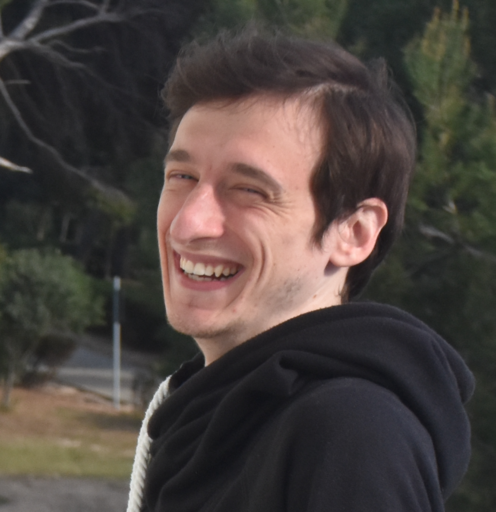
Franziska Boenisch is a tenure-track faculty member at the CISPA Helmholtz Center for Information Security , where she co-leads the SprintML lab for Secure, Private, Robust, Interpretable, and Trustworthy Machine Learning. Her research lies at the intersection of privacy-preserving machine learning and trustworthy ML , with a focus on differential privacy , model inversion attacks , and privacy risks in federated learning . She completed her PhD at Freie Universität Berlin and was a postdoctoral fellow at the Vector Institute for Artificial Intelligence under Prof. Nicolas Papernot. Her work has been recognized with awards such as the Academics Rising Start Award (3rd Prize) and the GI Junior-Fellow honor. Her research spans a wide range of topics including memorization in diffusion models , watermarking generative models , membership inference attacks , and privacy-preserving federated learning . She has published extensively in top-tier venues like ICML , NeurIPS , ICLR , and CVPR . She is actively involved in the academic community, serving as an Area Chair for NeurIPS , Track Chair for ACM AsiaCCS , and co-organizing workshops at ICML . She is currently hiring PhDs, postdocs, and research interns for her group.
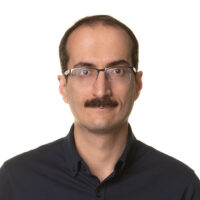
Prof. Dr.-Ing. Elisabeth Clausen is a Professor and Director of the Chair and Institute for Advanced Mining Technologies at RWTH Aachen University. She holds key roles in the Specialist Group for Raw Materials and Disposal Technology, serves as a rectorate representative, and leads the Commission for EU Research Funding. Her research spans Underground mining automation Acoustic emission diagnostics Sustainable mining systems Space resource extraction Advanced sensor technologies Her recent publications focus on autonomous mining machinery, underground communication systems, and acoustic emission analysis across 15+ studies from 2013–2025, with particular emphasis on Ultra-wideband positioning Thermographic detection Crack monitoring in planetary gearboxes Explosive atmosphere safety Mineral processing diagnostics Digitalization trends Prof. Clausen contributes to mining education reform through initiatives like CDIO™ and has developed innovative learning spaces in underground mines. She coordinates international educational labs and integrates sustainability into mining engineering curricula, with publications on Adaptive ventilation systems Mining education frameworks Future-proof mineral extraction Entrepreneurial mindset in engineering
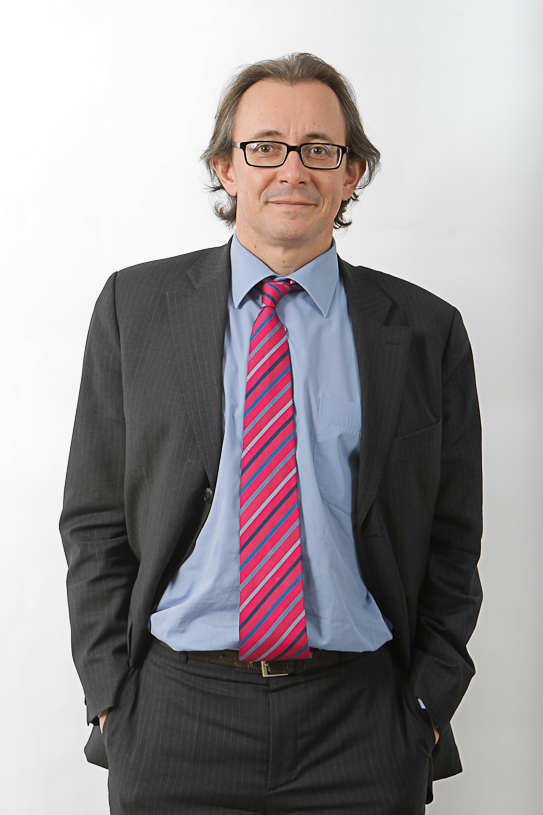
Dr. Jay Pujara is a Research Associate Professor of Computer Science at the University of Southern California (USC) and Director of the Center on Knowledge Graphs. He is also a Principal Scientist at the Information Sciences Institute (ISI) and leads research teams in data science and AI. Ph.D., University of Maryland, College Park (2016) M.S. and B.S. in Computer Science, Carnegie Mellon University Research Interests include artificial intelligence, probabilistic models, knowledge graph construction, statistical relational learning, NLP, and streaming inference. His work focuses on scalable algorithms for big data and uncertainty modeling in dynamic environments. Recent Publications highlight advancements in knowledge graphs, LLM reasoning, and table understanding. Notable topics include non-verbal abstract reasoning , faithful conversational datasets , and KGQA re-ranking . Scientific Awards : SWSA Ten-Year Award (2023), Outstanding Paper (IUI 2019), Top Reviewer (NeurIPS 2018), Best Paper (SRL Workshop 2016) Advising & Grants : Mentored 12+ graduate students, including Ph.D. advisees on topics like causal modeling and neuro-symbolic tasks. Secured NSF funding for table understanding in paleoclimate studies.
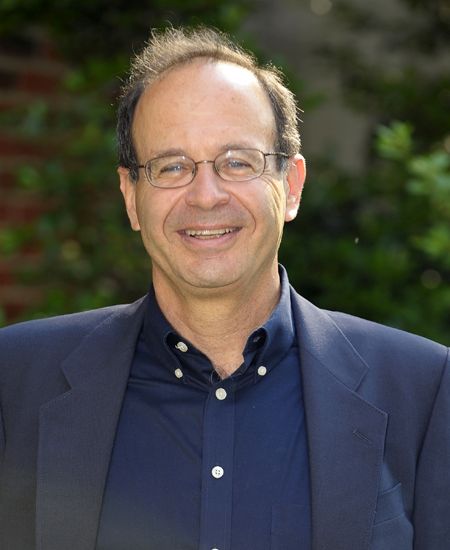
Carey E. Priebe is a Professor in the Department of Applied Mathematics and Statistics at the Whiting School of Engineering, Johns Hopkins University. He maintains strong affiliations with multiple research centers including the Johns Hopkins University Center for Imaging Science, the Mathematical Institute for Data Science, and the Human Language Technology Center of Excellence. His academic career spans several decades with significant contributions to statistical methodology and theory. Dr. Priebe's research focuses on computational statistics, statistical pattern recognition, and statistical inference for high-dimensional and graph data. His work bridges theoretical statistics with practical applications in areas such as brain connectome mapping, network analysis, and image processing. He has made significant contributions to spectral graph theory, graph matching, and vertex nomination, with applications ranging from neuroscience to national security. His publication record demonstrates consistent contributions to statistical methodology, with a notable emphasis on graph-based statistical methods. His research trajectory shows increasing focus on network data analysis, particularly in the last decade, with applications to brain mapping and connectome analysis as evidenced by his NSF BRAIN Initiative grant and Nature publication. 2013 Erskine Fellow (University of Canterbury) 2011 McDonald Award for Excellence in Mentoring and Advising 2010 ASA SDNS Distinguished Achievement Award 2009 Erskine Fellow (University of Canterbury) 2008 National Security Science and Engineering Faculty Fellow 2008 Pond Award for Excellence in Teaching NSF BRAIN EAGER grant recipient (2014) Professor Priebe has supervised an extensive number of doctoral students whose work spans statistical methodology, network analysis, and machine learning. His students have secured positions at prestigious institutions including academia (University of Wisconsin, Boston University), government research labs, and major technology companies (Microsoft, Facebook, Amazon). His research has been supported by significant grants from NSF, DARPA, and other agencies focused on national security applications and fundamental statistical methodology development. He maintains active collaborations across multiple disciplines and institutions, as evidenced by his numerous conference presentations and visiting appointments including at The Alan Turing Institute and The Isaac Newton Institute. His work bridges theoretical statistics with practical applications in neuroscience, security, and data science.
Dr. Borivoje Dakic is an Associate Professor at the University of Vienna , affiliated with the Faculty of Physics and the Quantum Optics, Quantum Nanophysics and Quantum Information department. His research spans foundational and applied aspects of quantum theory. Operational reconstruction of quantum formalism Quantum interference as a resource for communication Tomography of large-scale quantum systems Macroscopic quantum phenomena His work includes scalable verification techniques for quantum devices and collaborations with experimental teams like Philip Walther’s and Markus Aspelmeyer’s groups. He received the Marko Jarić Prize (2025) for his contributions. Recent projects focus on diagnostics of quantum devices (FWF BeyondC SFB), information-theoretic foundations of quantum interference (FWF P36994), and local operations in quantum field theory (Cluster of Excellence QuantA). His research on quantum coherence in networks and macroscopic entanglement challenges traditional assumptions about quantum-classical boundaries. Publications emphasize resource-efficient tomography, device-independent verification, and foundational frameworks for quantum statistics and field theory. Teaching: Quantum Information (2025W), Theory in Quantum Optics (2025S), VCQ Summerschool Labs: Dakić Group at University of Vienna
Alan Ritter is an Associate Professor at the School of Interactive Computing, Georgia Institute of Technology (Georgia Tech), affiliated with the Machine Learning Center (ML@GT). His research focuses on natural language processing (NLP), machine learning, and robust computational models. He completed his Ph.D. at the University of Washington and a postdoctoral fellowship at Carnegie Mellon University's Machine Learning Department. Education : - Ph.D. in Computer Science, University of Washington - Postdoctoral Research, Machine Learning Department, Carnegie Mellon University Research Interests : Ritter's work emphasizes developing models that operate across domains and languages with minimal supervision. His projects include systems analyzing social media data for cybersecurity threats, cultural bias in LLMs, and privacy-preserving dialogue agents. His group also explores efficient fine-tuning of language models and cross-lingual information extraction. Recent Activities & Awards : - NSF CAREER Award - Amazon Research Award - Best Social Impact Paper Award (ACL 2024) - Program Chair for NAACL 2025 Advising & Students : Ritter advises Ph.D. and M.S. students in Georgia Tech's ML and CS programs. Notable advisees include Yang Chen (Ph.D. 2024, now at NVIDIA) and Fan Bai (Ph.D. 2023). Labs & Affiliations : - Machine Learning Center (ML@GT) - Collaborations with institutions like AI2, Stanford, and Microsoft Research
Mykola Pechenizkiy is a Full Professor at the Department of Mathematics and Computer Science at Eindhoven University of Technology (TU/e), holding the Data Mining Chair. He also serves as an Adjunct Professor in Data Mining for Industrial Applications at the University of Jyväskylä. His research focuses on predictive analytics, data mining, and responsible AI, addressing real-world challenges in industry, healthcare, and education. He leads the Customer Journey research program at the Data Science Center Eindhoven, emphasizing ethical and transparent analytics. Academically, he holds a PhD from the University of Jyväskylä (2005) and has held visiting researcher positions at institutions like Columbia University and NYU. He has co-authored over 300 peer-reviewed publications and serves on editorial boards and committees for leading conferences (e.g., AAAI, IJCAI). He is the President of the International Educational Data Mining Society (IEDMS). His research interests include concept drift adaptation, sparsity techniques in neural networks, and fairness-aware AI. He has led projects such as the TKI PPS KPN Smart Two initiative and collaborates with industries like ASML, Philips, and Rabobank. His work contributes to UN SDGs, particularly in sustainable development through AI-driven solutions. Awards: Best Demo Paper Award (IEEE ICDE 2023), Best Paper Awards (ALA 2022, LoG 2022), and SensorKDD 2009 recognition. Grants/Projects: Active projects include TKI PPS KPN Smart Two (2019–2025) and Smart One W&I TKI KPN Flagship (2018–2022). Labs/Teams: Affiliated with EAISI Health, SIKS Scientific Board, and the University of Waikato’s AI Institute.
Tom Dhaene is a Full Professor at Ghent University, affiliated with the Department of Information Technology (INTEC-IDLab) within the Faculty of Engineering and Architecture (FEA). He also holds a position at imec, a research and innovation hub in nanoelectronics and digital technologies. Research Unit: Internet Technology and Data Science Lab (IDLab) Academic Rank: Full Professor Affiliations: Ghent University, imec His research focuses on data-efficient machine learning, surrogate modeling, Gaussian processes, Bayesian optimization, and system identification. He has developed widely used software tools such as the SUMO toolbox and ooDACE, and holds 5 U.S. patents. His work bridges theoretical advancements with practical applications in engineering and biomedical domains. Recent publications highlight his contributions to physics-informed machine learning, antenna design, microwave optimization, and healthcare applications. Notably, he explores Bayesian active learning, multi-objective optimization under uncertainty, and efficient modeling techniques for complex systems. Prof. Dhaene's research has been recognized through over 500 peer-reviewed publications and collaborations across academia, industry, and government sectors globally.
Luca Demetrio is an Assistant Professor at the University of Genoa, Italy, specializing in adversarial machine learning and cybersecurity. Previously, he was a Post-doctoral Researcher at the PRA Lab within the Department of Electrical and Electronic Engineering at the University of Cagliari. He holds bachelor's (2015), master's (2017), and Ph.D. (2021) degrees from the University of Genova, with his doctoral thesis focusing on formalizing evasion attacks against security detectors. His research emphasizes enhancing the robustness of machine learning models against adversarial attacks, particularly targeting malware detectors, SQL injection defenses, and Windows security systems. He leads the development of SecML Malware, a Python library for generating adversarial Windows malware, and contributes to the SecML framework. His work has been published in top-tier journals like ACM TOPS and IEEE TIFS. Key research interests include adversarial example generation, malware analysis, and cybersecurity defense mechanisms. He has explored query-efficient attacks on phishing detectors, certified adversarial robustness via randomized smoothing, and robust synthetic data-driven threat detection. His recent studies (2023–2025) address challenges in hardening machine learning models against evasion attacks, adversarial SQL injection countermeasures, and securing autonomous driving systems from adversarial reinforcement learning attacks.
Zhongying Deng is a Research Fellow in the Department of Applied Mathematics and Theoretical Physics (DAMTP) at the University of Cambridge, affiliated with the Cambridge Image Analysis research group. His work focuses on advancing medical imaging technologies and computer vision through deep learning and domain adaptation techniques. Key contributions include developing benchmark datasets like TrafficCAM and TrafficMOT for traffic analysis, A-Eval for abdominal organ segmentation, and foundational models for medical AI such as GMAI-VL. His research bridges theoretical advancements in neural networks and practical applications in healthcare and transportation. His research interests span image segmentation, domain adaptation, neural network architectures, and multimodal data integration. Notable projects include FCN+ for enhanced convolutional networks and Brain Foundation Models for neurodegenerative disease analysis. Deng collaborates extensively on interdisciplinary projects, combining mathematical modeling with computational tools to address real-world challenges in medical diagnosis and autonomous systems. Publications emphasize scalable medical image analysis frameworks (e.g., STU-Net, Sa-med2d-20m) and robust domain adaptation methods for cross-dataset performance. His datasets and models are widely recognized for enabling reproducible research and advancing state-of-the-art performance in critical areas like MRI reconstruction and multi-organ segmentation.
Dr. Hassan Ashtiani is an Associate Professor in the Department of Computing and Software at McMaster University and a faculty affiliate at the Vector Institute. He holds a PhD in Computer Science from the University of Waterloo (2018), a master’s in AI and Robotics, and a bachelor’s in computer engineering from the University of Tehran. His research focuses on machine learning, statistical learning theory, and theoretical computer science, with emphasis on adversarial robustness, privacy-preserving algorithms, and sample-efficient learning. Current projects include differentially private machine learning, robustness against adversarial perturbations, and distribution shifts. Recent work highlights include NeurIPS 2018 best paper award for pioneering distribution compression schemes in Gaussian mixtures. He routinely serves as an area chair for NeurIPS and other ML conferences. His CAS 775 course explores modern distribution learning theory, covering topics like PAC learning, computational complexity, and differential privacy. Awards: NeurIPS Best Paper Award (2018) Advising: Open PhD/MSc positions are listed on his homepage. His research group collaborates with the Vector Institute, focusing on advancing theoretical foundations of machine learning with practical applications.
Grégoire Allaire is a Professor of Applied Mathematics at École Polytechnique, where he leads research in shape optimization , homogenization , and multi-scale modeling . His work bridges theoretical and applied domains, focusing on partial differential equations (PDEs), composite materials, and computational methods.
Uzi Vishkin is a Professor at the University of Maryland's Institute for Advanced Computer Studies (UMIACS) and Department of Electrical and Computer Engineering, with additional affiliation in the Department of Computer Science. His work focuses on parallel computing, including the PRAM-On-Chip vision to bridge parallel algorithms and hardware. He holds a D.Sc. from Technion (1981), M.Sc. and B.Sc. in Mathematics from Hebrew University (1975/1974). Research interests span parallel algorithms, PRAM (Parallel Random Access Machine) architecture, machine learning applications, and pattern matching. His PRAM-On-Chip project aims to create a coherent computing stack for many-core processors. Vishkin has contributed to theoretical foundations and practical implementations, including the XMT architecture and compiler. He has been recognized with ACM Fellow (1996), Highly Cited Researcher (2003), and National Academy of Inventors Fellow (2024). Awards highlight his pioneering work in parallel algorithms and computing systems. Teaching spans courses like Parallel Algorithms and Mathematical Foundations for Computer Engineering. He emphasizes parallel algorithmic thinking in education and has developed teaching materials for high school and university levels. Key projects include the XMT architecture, simulations, and tools for parallel programming. His work integrates algorithmic theory with hardware design to address programming challenges in many-core systems.
Rayadurgam Srikant is the Fredric G. and Elizabeth H. Nearing Endowed Professor of Electrical and Computer Engineering at the University of Illinois Urbana-Champaign, affiliated with the Coordinated Science Lab. He co-directs the C3.ai Digital Transformation Institute, focusing on AI-driven solutions for global challenges. His research spans machine learning, communication networks, stochastic systems, and game theory. Srikant has authored influential textbooks including Communication Networks: An Optimization, Control and Stochastic Networks Perspective . He holds IEEE Fellow status and has received prestigious awards like the ACM SIGMETRICS Achievement Award (2021) and IEEE Koji Kobayashi Award (2019). Over 20 of his advisees hold faculty positions globally. Education: PhD (1991), MS (1988) in Electrical Engineering from UIUC; B.Tech (1985) from IIT Madras. He has taught advanced courses on optimization, stochastic systems, and game theory. His work bridges theory and practice, with contributions to congestion control, cloud computing, and reinforcement learning. Current projects include AI applications for pandemic response and digital transformation initiatives. Research highlights include foundational work on Lyapunov drift methods for network stability and distributed algorithms. He serves as Area Editor for Mathematics of Operations Research and has led editorial roles for IEEE/ACM Transactions on Networking. His lab collaborates with industry leaders like Microsoft and C3.ai, leveraging supercomputing resources for societal impact.
Dr. Changyou Chen is an Associate Professor in the Department of Computer Science and Engineering at the University at Buffalo, State University of New York. His research focuses on Multi-Modal Learning Foundation Models Deep Generative Models Large-scale Bayesian Sampling with applications in document understanding, music-AI integration, and molecular representation learning. Research Trends revealed through his recent publications include Optimizing Multimodal Large Language Models Developing Novel Retrieval-Augmented Generation Frameworks Creating Benchmark Datasets for Visual Text Understanding Advancing Diffusion Models with Domain-Specific Constraints across domains from music sheets to biomedical documents. Scientific Contributions : UB Young Investigator Award (2020) Architect of LoCAL Framework for Long Document Understanding Co-developer of MusiXQA Benchmark Pioneering Work in Probability Contrastive Learning Academic Leadership includes mentoring 10+ graduate students and serving as Area Chair for major AI conferences (ICML, NeurIPS, AAAI, IJCAI). His Labs develop scalable solutions for multimodal reasoning, with recent work demonstrating practical GPU memory optimization through LoRA adapter sharing.