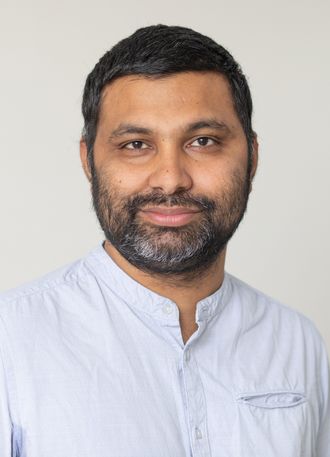
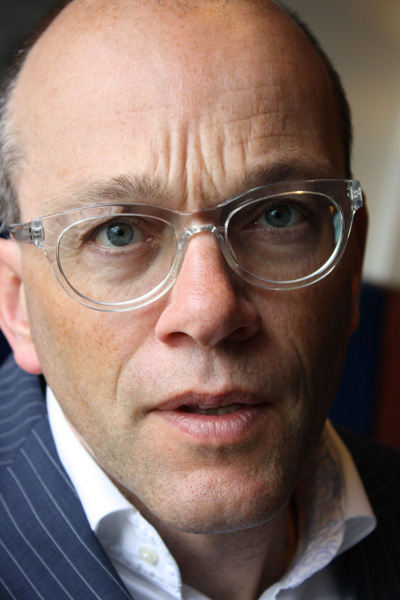
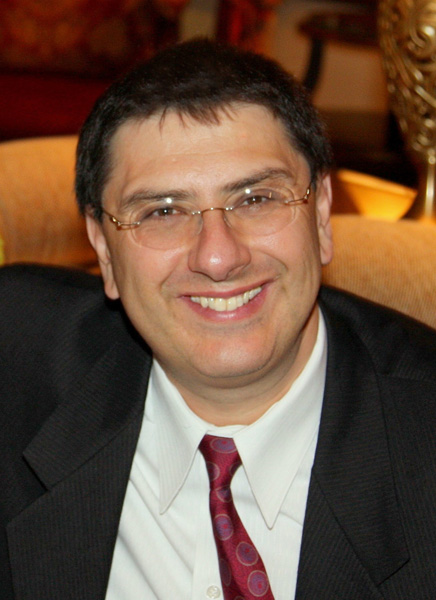
Wolfgang Bösch is a Professor at Graz University of Technology's Institute of Microwave and Photonic Engineering, specializing in advanced RF components and measurement techniques. His research advances high-frequency systems through innovations in antenna technology and electromagnetic theory. Research domains include: metamaterial-based antennas, precision measurement calibration, microwave filter optimization, and 3D-printed RF components. Recent work demonstrates strong focus on millimeter-wave systems and reconfigurable antenna arrays. Publications highlight expertise in: machine learning for filter design, metasurface applications, PCB transitions for high-frequency systems, and uncertainty quantification in RF engineering. Research consistently addresses miniaturization and performance optimization challenges. Awards recognize contributions to measurement science and antenna design: Fellow of IET, Houska Prize, and best paper awards. Current laboratories investigate liquid crystal antenna systems and error calibration methodologies for next-generation wireless systems.
Martin Ringbauer is an Associate Professor at the Department of Experimental Physics , University of Innsbruck . His research focuses on advancing quantum computing and quantum simulation through innovative applications of trapped ion qudits and high-dimensional quantum systems . Affiliation: Department of Experimental Physics, University of Innsbruck Research Areas: Lattice gauge theories, symmetry-protected topological phases, quantum verification protocols, and fidelity estimation Key Contributions: Development of qudit-based quantum processors for simulating complex physics, experimental demonstrations of quantum error correction and joint measurements His recent publications highlight advancements in quantum simulation (lattice gauge theories, Haldane phases), quantum verification (fidelity estimation, classical validation), and qudit engineering (mixed-dimensional frameworks, entanglement optimization). These works leverage trapped ion technology as a platform for scalable and precise quantum operations.
Thomas Henzinger is a Professor at the Institute of Science and Technology Austria (ISTA), where he leads the Henzinger Thomas Group focused on improving software reliability through mathematical methods. He previously served as ISTA's President (2009–2022) and held academic positions at EPFL, Max Planck Institute, UC Berkeley, and Cornell University. Education: Dipl.-Ing. in Computer Science (Johannes Kepler University, Austria), M.S. in Computer and Information Sciences (University of Delaware), PhD in Computer Science (Stanford University), and Honorary Doctorates from Fourier University (France) and Masaryk University (Czech Republic). The group's research spans concurrent systems , embedded systems , quantitative model checking , runtime monitoring , and trustworthy AI . They develop tools like HyTech and VAMOS, emphasizing predictability, robustness, and fairness in safety-critical software. Recent publications highlight trends in quantitative automata , fairness in AI , quantum algorithms , and automata theory , reflecting interdisciplinary applications from cyber-physical systems to neural networks. Collaborative projects include SPyCoDe (security foundations) and VAMOS (software monitoring). Honors & Awards: 2024 Fellow of the Royal Society 2020 Member, US National Academy of Sciences 2015 Royal Society Milner Award 2012 Wittgenstein Award 2006 ACM and IEEE Fellow 1995 NSF CAREER and ONR Young Investigator Awards Henzinger advises current and former PhD students including Mahyar Karimi, Pavol Kebis, and Mathias Lechner. His grants include ERC Advanced Grants (QUAREM, VAMOS) and FWF funding (Wittgenstein Award, NFN RISE). Labs & Teams: He leads the Henzinger Thomas Group at ISTA, collaborating with FORSYTE (TU Wien) and contributing to EU-funded initiatives. The group integrates postdocs, PhD students, and interns in formal methods and system verification.
Christa Cuchiero is a Professor at the Department of Statistics and Operations Research , University of Vienna , and an elected member of the Austrian Young Academy (Junge Akademie) since 2020. Her research bridges rigorous mathematics and cutting-edge applications in finance, machine learning, and stochastic analysis. Education: Christa earned her M.Sc. in 2006 from TU Wien with a thesis on affine interest-rate models, her Ph.D. in 2011 from ETH Zürich on affine and polynomial processes, and completed her Habilitation at the University of Vienna in 2018 on high-dimensional finance beyond classical paradigms. Research Interests: Her work centers on affine and polynomial processes , stochastic portfolio theory , signature methods , and infinite-dimensional stochastic analysis . Recent projects explore signature-based neural SDEs for option calibration, measure-valued diffusions for energy markets, and universal approximation properties of signature transforms. Awards & Recognition: Among her accolades are the FWF START Award 2019 , the Bruti-Liberati Visiting Fellowship 2018 , the ETH Medal 2012 for an outstanding Ph.D. dissertation, and the Prix de l’Institut Europlace de Finance 2017 for the best paper in finance. Contact: christa.cuchiero@univie.ac.at , Kolingasse 14-16, 05.47, 1090 Wien, Austria.
Hojjat Adeli is an Academy Professor at The Ohio State University (OSU) with courtesy appointments in the Departments of Neurology, Neuroscience, and Biomedical Informatics. He has held the Abba G. Lichtenstein Professorship in Infrastructure Engineering (2003-2013) and served as Editor-in-Chief of Computer-Aided Civil and Infrastructure Engineering for 25 years. Academy Professor, OSU (2018–present) Professor of Neurology, Neuroscience, and Biomedical Informatics (by courtesy, since 2015-2002) His research interests span interdisciplinary domains at the intersection of engineering and neuroscience, focusing on: Computational neuroscience and neurocomputing Biomedical signal processing (particularly EEG-based diagnostics) Machine learning and computational intelligence applications Smart infrastructure systems and structural engineering Optimization algorithms in civil and biomedical contexts His research trends demonstrate a synergy between: Neural network development for medical diagnostics Wavelet and chaos theory in epilepsy detection Computational intelligence for structural engineering Hybrid models integrating fuzzy logic and genetic algorithms Scientific awards and honors include: Multiple IEEE Fellowships and AAAS Fellow Thomson Reuters Highly Cited Researcher in Engineering and Computer Science Hojjat Adeli Awards for Neural Systems and Innovation in Computing Elections to international academies in Poland, Lithuania, and Spain Scott Award for Engineering Education and Distinguished Member ASCE
Liu Derong is a distinguished academic holding the position of Chair Professor at Southern University of Science and Technology (Shenzhen, China) since 2022. He is also a Full Professor at the University of Illinois at Chicago (UIC) since 2006. His academic journey includes roles as Professor at Guangdong University of Technology (2017–2022) and the Chinese Academy of Sciences' Institute of Automation (2008–2016). He earned his Ph.D. in Electrical Engineering from the University of Notre Dame (1994), M.S. from the Chinese Academy of Sciences (1987), and B.S. from Nanjing University of Science and Technology (1982). His research focuses on neural networks, reinforcement learning, intelligent control, and adaptive dynamic programming. He has authored 19 books and 260+ journal papers, contributing significantly to computational intelligence and control systems. Notable works include Adaptive Dynamic Programming with Applications in Optimal Control (2017) and co-editing volumes like Frontiers of Intelligent Control and Information Processing (2014). Liu Derong has held leadership roles in professional societies, including Editor-in-Chief of Artificial Intelligence Review , Deputy Editor-in-Chief of the IEEE/CAA Journal of Automatica Sinica , and President of the Asia Pacific Neural Network Society (2018). He has organized major conferences such as the IEEE World Congress on Computational Intelligence (2014) and received prestigious awards like the Dennis Gabor Award (2018) and membership in Academia Europaea (2021). His contributions span theoretical advancements and practical applications in control systems, with a focus on optimization, robotics, and energy systems. He has also served on editorial boards of leading journals and as a keynote speaker at 30+ international conferences.
Prof. Julio Lloret-Fillol is a Group Leader at the Institute of Chemical Research of Catalonia (ICIQ) and an ICREA Research Professor since 2015. His work bridges homogeneous catalysis , material science , and automation to develop sustainable chemical processes and solar fuels. He earned his PhD in 2006 from Universidad de Valencia under Prof. Lahuerta and J. Pérez-Prieto, followed by postdoctoral research at University of Heidelberg (MEyC and Marie Curie Fellowships). Awards: 2024 RSEQ-GEQO Award on Excellence 2023 Fellow of the Royal Society of Chemistry 2022 Ramón Areces Grant 2019 Thieme Chemistry Journals Award 2017 Young Academy of Europe 2015 Young Researcher RSEQ Award Research Interests: Water oxidation catalysis CO₂ reduction to value-added chemicals Artificial photosynthesis Electrocatalytic hydrogen generation Spin-off technologies for green hydrogen and photoreactors Notable Publications: 2024: Angew. Chem. Int. Ed. (electrocatalytic ketones from CO₂) 2024: ACS Catal. (Fe-doped NiO for OER) 2023: ACS Catal. (COF-based cobalt catalysts) 2022: JACS (OER mechanism with cobalt complexes) 2022: Angew. Chem. Int. Ed. (chloroalkane activation) Spin-offs: Treellum Technologies (photoreactors) JOLT Solutions (electrodes for hydrogen production)
Manuel Arellano is Professor of Economics at the Center for Monetary and Financial Studies (CEMFI) in Madrid since 1991, with prior appointments at the University of Oxford (1985-89) and London School of Economics (1989-91). A leading econometrician specializing in panel data analysis, his work bridges theoretical econometrics and labor economics applications. He earned his undergraduate degree from the University of Barcelona and Ph.D. from the London School of Economics. Arellano's research focuses on econometric methodology for panel data, particularly dynamic models with heterogeneity. His seminal book Panel Data Econometrics (2003) established foundational frameworks for nonlinear and dynamic panel estimation. Current work extends to distributional analysis of random coefficients and robust inference under uncertainty, maintaining consistent emphasis on labor market applications like unemployment duration and policy evaluation. His publication history reveals a 30-year trajectory advancing panel data econometrics, evolving from specification testing (1987-1995) to sophisticated dynamic and nonlinear models (2003-2014), with persistent focus on practical implementation and labor economics applications. Major honors include: President of the Econometric Society (2014) Foreign Honorary Member of the American Academy of Arts and Sciences (2014) Rey Jaime I Prize in Economics (2012) ISI Highly Cited Researcher status (2010) Fellow of the Econometric Society (2002) No information on student advising or research grants appears in the source materials. Similarly, details about research laboratories or collaborative teams are not documented in the provided texts.
Prof. Karl Kunisch is the Scientific Director at RICAM (Johann Radon Institute for Computational and Applied Mathematics) and a Full Professor of Mathematics at the University of Graz, Austria. He has held academic positions worldwide, including visiting roles at Brown University, INRIA, and Technical University Berlin. His research focuses on Optimization and Optimal Control, Partial Differential Equations (PDEs), Inverse Problems, and their applications in mathematical imaging, medicine, and computational science. Education: 1975: Diploma Degree, Technical University of Graz, Austria 1975: Master Degree, Northwestern University, Evanston, Illinois, USA 1978: Ph.D. Degree, Technical University of Graz 1980: Habilitation, Technical University of Graz Research Interests: Prof. Kunisch’s work spans theoretical and applied aspects of optimal control, including stabilization of PDEs, infinite horizon control problems, and feedback design. He explores numerical methods for PDE-constrained optimization and their applications in medical imaging, cardiac electrophysiology, and machine learning. His projects also address shape optimization and mathematical models for fluid dynamics and quantum systems. Publications Trends: His recent articles emphasize feedback stabilization for nonlinear systems, sparse control approaches, and the intersection of optimal control with machine learning. Key themes include robust algorithms for uncertainty handling, efficient numerical methods for high-dimensional problems, and applications in biomedical engineering. Awards: Pro Scientia-Scholarship (1974–1977) Research Award of Theodor-Körner-Fonds (1979) Fulbright Travel Scholarship (1979/80, 1985) Max Kade Scholarship (1982–83) Japanese Society for the Promotion of Science Fellowship (1990) Christian Doppler Laboratory Fellowship (1992) Advising & Grants: Prof. Kunisch leads the Optimization and Optimal Control research group at RICAM and has directed projects on mathematical data science and inverse problems. His work involves collaborations with institutions globally and has been supported by grants from NASA, the European Union, and national funding bodies. He has advised numerous researchers, though specific student names are not listed here. Labs/Teams: Group Leader of the Group "Optimization and Optimal Control" at RICAM since 2004, contributing to interdisciplinary research in computational mathematics and its applications.
Karl Kunisch is a Professor at the Department of Mathematics and Scientific Computing at the University of Graz and serves as Scientific Director of the Radon Institute of the Austrian Academy of Sciences in Linz. With a distinguished career spanning several decades, he has established himself as a leading researcher in optimization and control theory. Prof. Kunisch completed his PhD and Habilitation at the Technical University of Graz in 1978 and 1980, respectively. His academic journey includes significant positions at Brown University's Lefschetz Center for Dynamical Systems, INRIA Rocquencourt, Universite Paris Dauphine, and he previously served as a professor of numerical mathematics at the Technical University of Berlin. Research Interests: Prof. Kunisch's research focuses on optimization and optimal control, inverse problems and mathematical imaging, numerical analysis and applications, with current emphasis on life sciences applications. His specific areas include Optimal Control of Partial Differential Equations, Nonsmooth Optimization in Function Spaces, and Applications of Optimization and Control in the Life Sciences. His work bridges theoretical mathematics with practical applications across various scientific domains. His recent publications demonstrate a continued focus on advancing the theoretical foundations of optimal control while developing practical numerical methods. Key trends include work on infinite horizon control problems, feedback stabilization techniques, applications to PDE-constrained optimization, and the integration of machine learning approaches with traditional control theory. His research group actively explores connections between theoretical developments and applications in the life sciences. Scientific Recognition: W.T. and Idalia Reid Prize 2021 SIAM Fellow (2017) European Research Council Advanced Grant (2015) Alwin Walther Medaille (2008) SIAM Outstanding Paper Prize (2006) Prof. Kunisch has made substantial contributions to the mathematical community through his editorial work, serving as editor for prestigious journals including SIAM Journal on Control and Optimization, SIAM Journal on Numerical Analysis, and the Journal of the European Mathematical Society. He leads the Research Group on Optimization and Optimal Control at the Johann Radon Institute for Computational and Applied Mathematics (RICAM) and is involved in the ERC-Project OCLOC "From Open to Closed Loop Control".
Anna Beer is a researcher in the Faculty of Computer Science, specializing in data mining and machine learning with a focus on density-based clustering, spectral clustering, and interactive clustering frameworks. She holds a BSc and MSc in computer science and maintains an ORCID profile (https://orcid.org/0000-0002-6890-997X) for her research contributions. Research Themes: Development of clustering algorithms (e.g., DISCO, Scar, LUCKe), fairness in density-based clustering (FairDen), and applications to molecular dynamics and climate research (DROPP). Collaborations: Works with colleagues like Ira Assent, Christian Plant, and Lars Krieger, with recent contributions to conferences like ICLR 2025. Activities: Presented research on density-connectivity distance at a 2023 oral contribution. Publications: 9 publications since 2019, including 3 in 2025 and 6 in 2024, covering topics from cluster evaluation to deep active learning strategies.
Shah Nawaz is an Assistant Professor at the Institute of Computational Perception , Johannes Kepler University Linz. His research focuses on multimodal systems, deep learning applications in healthcare, and cross-modal learning frameworks. He leads projects addressing challenges like missing modalities in machine learning, face-voice association, and medical image analysis. Key research interests include machine learning for medical diagnostics (e.g., breast cancer detection, skin lesion segmentation), speech recognition, and adaptive neural network architectures. He has contributed to frameworks like Chameleon for robust multimodal learning and the FAME challenge for face-voice association in multilingual environments. Publications emphasize practical applications, such as bilingual healthcare chatbots for pregnant women and light-weight speech recognition models for resource-constrained systems. His work bridges theoretical advancements and real-world deployment in healthcare and security domains. Shaw Nawaz actively participates in academic communities through workshops like DaQuaMRec@RecSys2025 and has developed open-source frameworks for image restoration and multimodal fusion. His lab focuses on scalable solutions for multimodal data challenges in both technical and clinical contexts.
Dietmar Jannach is a Full Professor at the University of Klagenfurt, Austria, affiliated with the Institute for Artificial Intelligence and Cybersecurity where he leads the Research Group for Information Systems. His academic roles include membership in the university's Senate and Curricular Commissions for Liberal Arts and Information Management. His research spans: Core Areas : Artificial Intelligence, Recommender Systems, and Software Engineering. Methodological Focus : Algorithm reproducibility, fairness in AI, sequential recommendations, and hybrid learning models. Emerging Interests : Generative AI for group decision support, ethical recommender systems, and foundation model applications. Jannach's recent publications critically evaluate reproducibility challenges in AI research, advocate for calibrated recommendations to mitigate bias, and explore agentic paradigms in group recommender systems. He emphasizes real-world validation, with studies on deployment challenges and developer experiences in software processes. He actively contributes to academic governance and mentors through research groups, though specific student advisees are not listed. Contact via Dietmar.Jannach@aau.at .
Joost-Pieter Katoen is a full Professor at RWTH Aachen University and Head of its Computer Science Department since 2012. He also holds a part-time (20%) Professorship at the University of Twente . His research focuses on model checking , probabilistic verification , formal semantics , and software verification , with applications in aerospace systems. His work has led to significant tools like MRMC (probabilistic model checker), COMPASS (AADL analysis tool-set), and libalf (learning automata library). He has authored over 18 international projects (total €5.2 million) and graduated 12 PhD students. Scientific Awards : Member, German National Academy of Sciences (Leopoldina), 2024 ACM Fellow, 2020 ERC Advanced Grant, 2018 Honorary doctorate, Aalborg University, 2017 Teaching Award, RWTH Aachen, 2010 Philips Early Career Development Award, 1988 Research Trends (from articles): His recent work spans probabilistic program verification , quantitative game theory , Markov chain analysis , and parameter synthesis for stochastic systems, with applications in AI, quantum computing, and fault tree analysis. Leadership & Service : Katoen co-founded the QEST conference , chairs ETAPS steering committee, and has led numerous program committees (CONCUR, TACAS, QEST). He has served on editorial boards and organized conferences/seminars globally.
Rafail Ostrovsky is a Professor of Computer Science and Mathematics at UCLA , affiliated with the Center for Information and Computation Security at the Henry Samueli School of Engineering and Applied Science. He earned his Ph.D. in Computer Science from MIT in 1992 under Silvio Micali. Research Focus: His work spans cryptography, algorithms, and theoretical computer science, emphasizing secure multi-party computation, zero-knowledge proofs, oblivious RAM, and high-dimensional data analysis. Applications include privacy-preserving data mining, systems security, and quantum cryptography. Article Trends: Recent publications address concurrent security protocols, robust secret sharing via expander graphs, and efficient multi-party computation. Topics intersect computational complexity, cryptographic reductions, and practical security implementations. Awards: Recipient of the 2018 RSA Conference Excellence in Mathematics Award , 2017 IEEE Fellow , and multiple IEEE/ACM honors. Holds 14 U.S. patents and over 290 refereed papers. Advising: Supervised 27 Ph.D. students, many now professors at top institutions. Served on 40+ program committees, including FOCS 2011 Chair. Labs: Leads the CICS research center, fostering interdisciplinary work in information security and cryptographic systems.