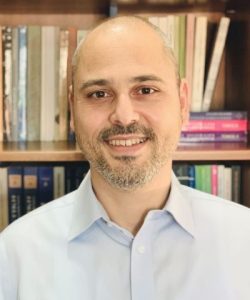
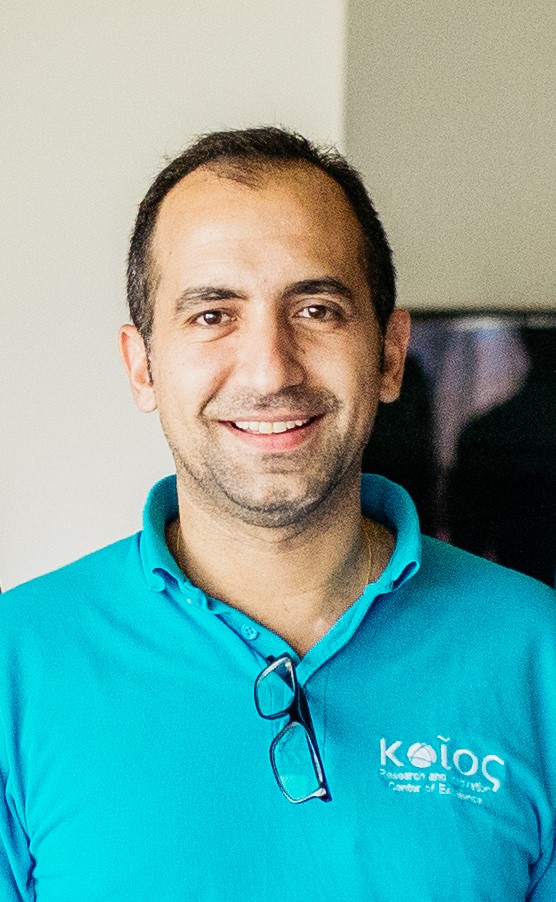
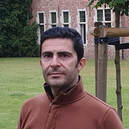
Stelios Timotheou is an Associate Professor at the Department of Electrical and Computer Engineering and faculty member at the KIOS Research and Innovation Center of Excellence, University of Cyprus. He holds a Dipl-Ing from National Technical University of Athens, and MSc/PhD from Imperial College London. His research focuses on developing real-time distributed methodologies using mathematical optimization, machine learning, and computational intelligence to enhance efficiency in critical infrastructure systems. Research interests center on data-driven decision making for urban mobility management, traffic control systems, and energy optimization. Key areas include: Intelligent UAV-based sensing for traffic monitoring Cooperative control algorithms for multi-agent systems Optimization of renewable energy integration Robust infrastructure protection strategies Recent publications demonstrate strong focus on traffic state estimation (76%), energy system optimization (16%), and UAV applications (8%). Awarded the Cyprus Research Award (2017) and ERC Consolidator Grant for URANUS project. Secured multiple research grants focusing on real-time control systems.
Marios Polycarpou is a Professor of Electrical and Computer Engineering and Director of the KIOS Research and Innovation Center of Excellence at the University of Cyprus. He holds honorary positions at Imperial College London and is a member of Academia Europaea. His expertise spans intelligent systems, adaptive control, machine learning, and critical infrastructure. Education: B.A. Computer Science (Rice University, 1987) B.Sc. Electrical Engineering (Rice University, 1987) M.S. Electrical Engineering (University of Southern California, 1989) Ph.D. Electrical Engineering (University of Southern California, 1992) Research Focus: Polycarpou’s work emphasizes fault diagnosis in cyber-physical systems, water distribution networks, and adaptive control. He pioneers digital twin technologies for infrastructure resilience and develops algorithms for real-time anomaly detection and system optimization. Article Trends: His recent publications address adaptive control strategies, cybersecurity in networked systems, and AI-driven solutions for water management. Key themes include distributed control, event-triggered mechanisms, and transformer-based anomaly localization. Awards: 2023 IEEE Frank Rosenblatt Technical Field Award 2016 IEEE Neural Networks Pioneer Award Fellow of IEEE and IFAC Grants & Leadership: He secured prestigious grants including ERC Advanced and Synergy Grants. He led KIOS CoE’s Horizon 2020 projects and served as IEEE Computational Intelligence Society President (2012–2013). Labs & Teams: Directs the KIOS CoE, a hub for AI in critical infrastructure. Collaborates on projects like ERC Water-Futures, focusing on long-term water system transitions and contamination mitigation.
Panayiotis Kolios is an Assistant Professor at the Department of Computer Science, University of Cyprus (UCY). Previously, he served as a Research Assistant Professor at the KIOS Research and Innovation Centre of Excellence (2013–2024) and a Visiting Lecturer at UCY. He holds a BEng and PhD in Telecommunications Engineering from King’s College London (2008 and 2012, respectively). His research focuses on networked intelligent systems, emergency management using AI and UAV technologies, and cyber-physical systems. Education: BEng in Telecommunications Engineering, King’s College London, 2008 PhD in Telecommunications Engineering, King’s College London, 2012 Research Interests: His work centers on autonomous systems, intelligent transportation, and emergency management. Key areas include AI-driven disaster response, UAV-based surveillance, and algorithmic optimization for critical infrastructure. He develops solutions for real-time situational awareness and decision-support in emergencies. Recent work trends show a focus on multi-UAV coordination, disaster management platforms (like AIDERS), and AI applications in emergency response. His team’s 2023 win in the Cooperative Aerial Robots Inspection Challenge highlights advancements in UAV inspection algorithms. Scientific Awards: First Prize in Cooperative Aerial Robots Inspection Challenge (CDC 2023) Grants and Advising: He has secured over €40 million in EU and industrial grants, leading projects like PREDICATE, SWIFTERS, and AIDERS. His team advises on emergency response strategies and has trained first responders through EU-funded programs such as the Exchange of Experts training. Labs and Teams: He leads the Security and Emergency Response Group at KIOS CoE and established the Cyprus Civil Defence Aerial Observation Unit. His team collaborates with institutions like the Cyprus Police and Fire Service to operationalize UAV technologies in disaster scenarios.
Professor Ioannis Katakis is a Faculty Member at the University of Nicosia, where he is affiliated with the School of Sciences and Engineering and the Department of Computer Science. He has held various academic positions across multiple institutions including Aristotle University of Thessaloniki, University of Cyprus, Cyprus University of Technology, Open University of Cyprus, Hellenic Open University, Athens University of Economics and Business, and National and Kapodistrian University of Athens. His educational background includes a PhD in Machine Learning for Automated Text Classification (2005-2009), a Master's in Information Systems (2005-2007), and a Bachelor's in Computer Science (2000-2004), all from Aristotle University of Thessaloniki. Professor Katakis specializes in several cutting-edge areas of computer science and data analysis. His primary research interests include Mining Social, Web and Urban Data , Sentiment Analysis and Opinion Mining , Data Streams , and Multi-label Learning . His work bridges theoretical machine learning approaches with practical applications in social media analysis, healthcare informatics, privacy protection, and smart city technologies. He has published extensively in top venues including CIKM, ECML/PKDD, IEEE TKDE, and ECAI. His recent publications demonstrate a clear trend toward applying machine learning techniques to real-world problems with societal impact. He has focused on areas such as GDPR compliance in smart devices, sentiment analysis in crowd-sourced content, healthcare applications including drug reaction classification and brain disease monitoring, and privacy protection in wearable technologies. His work often involves multi-modal data analysis and addresses challenges in data streams and multi-label classification. Professor Katakis has made significant contributions to his field, with his research cited over 4,200 times. He serves as an Editor for the journal Information Systems and has edited four special issues in journals such as DAMI and InfSys. He regularly contributes to the academic community by serving on program committees for major conferences including ECML/PKDD, WSDM, DEBS, and IJCAI, and by reviewing for prestigious journals like TPAMI, DMKD, TKDE, TKDD, JMLR, TWEB, and ML. He has been actively involved in European research projects, notably serving as Quality Assurance Coordinator and Senior Researcher for projects such as VAVEL (www.vavel-project.eu) and INSIGHT (www.insight-ict.eu). His grant activities demonstrate a strong focus on collaborative, interdisciplinary research with practical applications in urban data management, social media analysis, and healthcare informatics. He has organized three workshops at major conferences (ICML, ECML/PKDD, EDBT/ICDT) and has extensive experience translating research into practical applications through his involvement in European projects.
Maria K. Michael is an Associate Professor at the Electrical and Computer Engineering Department (ECE), University of Cyprus, and a cofounding faculty member of the KIOS Center of Excellence. She leads the Center’s Education and Training activities and coordinates the MSc program in Intelligent Critical Infrastructure Systems, a collaboration between UCY, KIOS CoE, and Imperial College London. Her expertise spans dependability, security, and reliability in cyber-physical systems, embedded systems, and AI/ML optimization for edge intelligence. Education: BSc in Computer Science MSc in Computer Science Ph.D. in Engineering Sciences (Computer Engineering), Southern Illinois University, USA Research Focus: Hardware-enabled security, cyber-security in intelligent embedded systems, reliability of edge-based accelerators, and applications in smart grids, UAVs, robotics, and autonomous vehicles. Her work emphasizes safety-critical systems and resource-constrained environments. Grants & Team: Leads a 15-member research team (postdocs, PhD/MSc/BSc students). Funded by EU FP7, H2020, Horizon Europe, NSF, Intel Corp., and the Cyprus Research and Innovation Foundation. No scientific awards listed explicitly in provided text. Labs & Initiatives: Director of Education/Training at KIOS CoE; core contributor to the MSc program in Intelligent Critical Infrastructure Systems.
Prof. Dr. Fadi AL-TURJMAN serves as the founding Dean of the Faculty of AI and Informatics at Near East University (NEU), Cyprus. He holds multiple leadership roles including Head of the Software Engineering Department and Director of the AI and Robotics Institute and the International Research Center for AI and IoT. With a PhD in Computer Science from Queen’s University (2011), he specializes in AIoT systems, wireless networks, and blockchain integration. Affiliation: Near East University Leadership: Founding Dean for AI and Informatics, Director of AI & Robotics Institute Research Focus: His work bridges Artificial Intelligence of Things (AIoT) , Blockchain Applications , and Smart Networking . He explores cybersecurity frameworks for smart cities, quantum state optimization techniques, and novel AI-driven solutions for healthcare, agriculture, and energy systems. Key Article Trends: Recent publications emphasize Transformer models for environmental monitoring, blockchain-enabled security protocols , and evolutionary algorithms for resource optimization. His research spans interdisciplinary domains including medical diagnostics, vehicular networks, and sustainable infrastructure. Scientific Awards: Lifetime Golden Award of Dr. Suat Gunsel (2022) Multiple Best Research Awards at International Venues Labs & Teams: Directs the International Research Center for AI and IoT at NEU, leading multidisciplinary teams in developing advanced networking technologies and AI-driven solutions for global value chain applications.
Savvas G. Loizou is a faculty member at the Cyprus University of Technology , affiliated with the Department of Mechanical and Materials Science and Engineering . He established the Robotics, Control, and Decision Systems Laboratory (RCDS Laboratory) in 2011. Education: PhD in Mechanical Engineering (2005) and Eng. Diploma (2000) from National Technical University of Athens (NTUA). Postdoctoral Experience: GRASP Laboratory, University of Pennsylvania (2005–2007). His research focuses on control theory for autonomous robotic systems , with applications in underwater, aerial, ground, and micro-robotics . Key areas include multi-agent coordination , human-robot interaction , task planning , and sensor-based navigation . Recent work emphasizes logistics automation , UAV hardware platforms , and bounded control algorithms . Dr. Loizou has contributed to multi-agent formation control , underwater vision systems , and nonlinear model predictive control for electric vehicles. He is active in control system design and navigation transformations for complex environments. His laboratory, RCDS , serves as a hub for research in autonomous systems and decision-making algorithms.
Assoc. Prof. Dr. Adnan Acan is a faculty member in the Department of Computer Engineering at Eastern Mediterranean University (EMU). He holds a PhD from Middle East Technical University, specializing in Electrical Engineering. His academic roles include teaching and supervising numerous graduate students in areas such as optimization algorithms, computer vision, and biomedical signal processing. Education: PhD, Electrical Engineering, Middle East Technical University (1992) MS, Electrical Engineering, Middle East Technical University (1985) BS, Electrical Engineering, Middle East Technical University (1983) Research Interests: His research focuses on optimization algorithms, machine learning, pattern recognition, and biomedical applications. Notable areas include metaheuristic algorithms (e.g., particle filters, great deluge), multi-agent systems, and ECG/heartbeat classification. He has contributed to advancements in computational intelligence, evolutionary algorithms, and medical diagnostics. Advising & Students: He has supervised over 30 graduate students, including PhDs such as JAMSHID TAMOUK (2021) and ZAHRA GOLRIZ KHATAMI (2019), and master’s students like MILAD ROSTAMPOUR (2023). His work spans applications in robotics, face recognition, and numerical optimization. Labs & Collaboration: His teaching and research involve courses in artificial intelligence, algorithms, and computer engineering. He actively contributes to academic service, including roles as a session chair and reviewer in conferences. His lab focuses on developing innovative solutions to complex computational and biomedical challenges.
Vasos Vassiliou is an Associate Professor in the Department of Computer Science at the University of Cyprus and Founding Academic Member & Research Group Leader at the Smart Networked Systems (SNS) Multidisciplinary Research Group within the CYENS Research Center. His work focuses on systems and protocols for improving network performance, reliability, and security in next-generation communication systems (5G/6G), with a strong emphasis on distributed AI/ML techniques, device-to-device (D2D) networking, IoT security, programmable metasurfaces, and intelligent network resource management. Department of Computer Science, University of Cyprus CYENS Research Center, Cyprus His research spans multiple subfields including D2D communication (interference management, device discovery), IoT security (blockchain solutions, intrusion detection), network optimization (traffic prediction, power management), and programmable metasurfaces for advanced beam steering. Recent projects like ERMIS (3D Indoor Positioning), ADROIT-6G (DAI-driven architecture), and METACITIES (digital twins/metaverse) demonstrate his leadership in cutting-edge research. His publications reveal a strong focus on distributed intelligence , machine learning applications , and security protocols across wireless systems. He has supervised multiple PhD students to completion and actively contributes to IEEE/ACM as Senior Member. IEEE Senior Member ACM Senior Member Teaching responsibilities include core courses like Computer Networks and specialized postgraduate modules on IoT Networks .
Dimitrios Dourakis is an Associate Professor of General Surgery at the European University Cyprus (EUC), Faculty of Medicine in Nicosia, concurrently serving as Director Surgeon of the Minimally Invasive Surgery Clinic at Medical Center Group in Greece since 2015. His academic appointment as Lecturer in Surgery at EUC began in 2016, complementing his active clinical and research roles across multiple institutions. His academic credentials include: Doctoral thesis (2015, National and Kapodistrian University of Athens): Study of anti-adhesive agents on experimental intestinal anastomoses University Diploma in Colorectal and Anal Surgery (2013, University Paris-Diderot) University Diploma in Hepatobiliary Surgery (2012, University of Paris XI) Inter-University Diploma in Ultrasound Techniques (2011, Universities of Paris, Nancy & Strasbourg) University Diploma in Laparoscopic Surgery (2010, University of Strasbourg) Medical Degree (2002, National and Kapodistrian University of Athens) Dr. Dourakis' research centers on Minimally Invasive Surgical Innovation , with pioneering work in Robotic Surgery and Image Guided Procedures . He developed the Transanal Total Mesorectal Excision (PROGRESS technique) and advanced protocols for colorectal liver metastases management. His work bridges traditional open surgery with cutting-edge technology to optimize precision, reduce complications, and accelerate patient recovery in complex gastrointestinal and hepatobiliary cases. His publication trajectory since 2010 reveals consistent innovation in robotic pancreatic resection, augmented reality navigation for liver surgery, and endoscopic salvage techniques for challenging adenomas. Recent work emphasizes solving anatomical challenges like the Arc of Bühler variation while integrating digital tools to enhance surgical accuracy across the gastrointestinal tract. He received the Arapakis Endowment Scholarship for medical studies and a 1st prize for the 'Exploring the Brain' public outreach initiative. His editorial contributions include peer review for 8 major surgical journals including World Journal of Gastrointestinal Surgery and International Journal of Medical Robotics . As Simulation Program Lead and Structure & Function Committee Chair at EUC, he directs surgical education innovation while co-leading research with ELPEN. His current projects span ambulatory surgery optimization and digital learning platforms, building on prior work with the French Colorectal Liver Metastases Working Group and IRCAD's Image Guided Surgery protocols. He maintains active roles at IRCAD/University of Strasbourg as Laparoscopic Surgery Expert since 2010, training surgeons globally, and leads EUC's simulation program while developing joint initiatives with the ELPEN research center to advance translational surgical science.
Prof. Nearchos Paspallis is the Head of the School of Sciences and Professor in Mobile and Distributed Systems at UCLan Cyprus. He holds a PhD in Computer Science from the University of Cyprus (2010) and has extensive academic leadership roles, including Deputy Head of School (2020–2022) and Chair of the Teaching and Learning Enhancement Committee (2018–2023). His teaching responsibilities include leading the BSc (Hons) Computing program and delivering modules on software development, mobile computing, and algorithms. Education: PhD Computer Science (University of Cyprus, 2010), MSc Computer Science (University of California, 2002), BEng/MEng Computer Engineering and Informatics (University of Patras, 2001). His research focuses on software engineering , distributed systems , and mobile computing , with recent work on machine learning applications, context-aware systems, and computer science education. He has pioneered initiatives like Code Cyprus to inspire youth in coding and co-led EU-funded projects such as WIDERa (€4.2M) and MentorME (€296K). Key Awards: Shortlisted for 2024 Outstanding Contribution award, Best Paper (2016), Fulbright Scholarship (2001). Prof. Paspallis has supervised multiple research projects, including a PhD on MMOG backend architectures. His outreach efforts extend to judging hackathons and robotics competitions, emphasizing STEM engagement.
Assistant Professor Elbrus Beşir İMANOV serves in the Computer Engineering Department at Near East University, Northern Cyprus, since September 2005. Previously, he held academic positions at Odlar Yurdu University (Baku, Azerbaijan) as Vice-Dean and Assistant Professor (2001-2004) and at Georgia State University (USA) as MBA Program Instructor (2004-2005). Educational background includes a BSc from Azerbaijan Technical University (1990) and a PhD from Odlar Yurdu University (2001) with dissertation 'Development of planning, navigation and control systems for intelligent robot'. Research focuses on Artificial Intelligence and Soft Computing methodologies, specifically: Expert Systems and Neural Networks Fuzzy Logic applications Decision Making frameworks Rule-based simulation for business/industrial contexts His work develops intelligent control systems for real-world industrial automation and business process optimization. No scientific awards are documented. Dr. İMANOV teaches core courses including Soft Computing, Artificial Intelligence, Real Time Systems, and Control Systems while mentoring undergraduate projects in AI applications. Current affiliations show no dedicated research laboratories or specialized teams beyond standard departmental structures.
MSc. Sinem Alturjman is a Lecturer in the Department of Artificial Intelligence Engineering at Near East University's College of Engineering. Her academic work focuses on the intersection of artificial intelligence, blockchain technology, and internet of things (IoT) systems. Research areas include: Development of AI-powered learning facilitators and educational tools Integration of blockchain for secure IoT architectures Optimization of mobile cloud computing services Application of machine learning in cybersecurity frameworks 6G communication systems with intelligent routing protocols Recent publications demonstrate expertise in: AI-enhanced scheduling mechanisms Decentralized cloud-IoT architectures Reinforcement learning applications Smart healthcare systems with blockchain Energy-aware routing protocols for sensor networks
Rúben Gouveia is an Assistant Professor at the University of Lisbon's Faculty of Sciences, specializing in Human-Computer Interaction (HCI) and the design of tools for health and wellbeing. He holds a PhD from the University of Madeira, supported by a National PhD studentship from the Portuguese Foundation for Science and Technology. Previously, he served as an Assistant Professor at the University of Twente in the Netherlands. His research focuses on self-tracking technologies, wearable devices, and personal informatics, with a particular interest in how these tools mediate human behavior and cultural contexts. He has conducted studies on diverse topics including sports tracking, social robots, and navigation systems, emphasizing user-centered design principles. Recent work highlights include investigations into watchface customization preferences (CHI 2023), goal-setting mechanisms in health apps (DIS 2023), and activity tracking during life transitions (NordiCHI 2022). His research has been recognized with an Honorable Mention (Top 5%) at DIS 2023. He advises PhD students including Tina Ekhtiar, Lara Siering, and Naomi Stralen. His scholarship spans over 20 peer-reviewed articles in top-tier venues like CHI, Ubicomp, and Sensors, focusing on HCI applications in healthcare, education, and everyday life.
Pericles Leng Cheng is a Lecturer in the Department of Computer Science and Engineering at the European University Cyprus (School of Sciences). He holds a Doctor of Information Technology (Walden University, 2017) and dual M.Sc. and B.Sc. in Computer Science from the University of Texas at Austin (2003 and 2001). His research focuses on robotics applications in education, therapeutic systems, and aspect-oriented software development for embedded systems. He leads Cyprus' participation in international robotics competitions like Robotex and has contributed to EU-funded projects addressing energy efficiency and ubiquitous computing. Education: PhD: Information Technology, Walden University (2017) M.Sc.: Computer Science, University of Texas at Austin (2003) B.Sc.: Computer Science, University of Texas at Austin (2001) Key Contributions: Developed robotic systems for Constraint Induced Movement Therapy (CIMT) in children Advanced remote robotic experimentation platforms for STEM education Authored foundational studies on aspect-oriented programming for real-time embedded systems Professional Roles: Head of Technical Committee for Robotex Cyprus (Cyprus Computer Society) EU Project Researcher (FP6, Horizon 2020, Erasmus+) Academic Consultant for educational robotics competitions His research spans robotics applications across healthcare, education, and industry, with a focus on integrating emerging technologies into practical solutions. Recent work emphasizes autonomous systems in gaming environments and robotics competitions' pedagogical impact. Over 15 years of academic experience includes teaching, curriculum development, and fostering international collaboration in tech education.