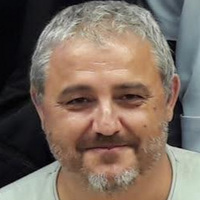
Sherine Antounمشاهده پروفایل
استادیار
Sherine Antoun is an Assistant Professor of Computer Science at Colorado Mesa University. He is based in Confluence Hall 335 and can be reached at 970.248.1148 or santoun@coloradomesa.edu. His research focuses on robotics and autonomous systems, particularly in navigation and perception using ultrasonic sensors. Dr. Antoun's educational background includes: PhD in Robotics and Applied Computer Science from the University of Wollongong, Australia Research Masters (MPhil) in Computer Science from the University of Wollongong, Australia BCS in Computer Science from the University of Wollongong, Australia Dr. Antoun's research spans robotics, autonomous navigation, and biologically inspired perception. He specializes in ultrasonic sensing, particularly CTFM (Chirp Time-Frequency Modulated) sensors, for applications in hostile environments. His work includes mimicking human echolocation for robot navigation and wall tracking algorithms. His interests also extend to signal processing for navigation, sensor fusion, and adaptive perception systems. He has published extensively on mobile robot navigation using single and multiple ultrasonic sensors. Dr. Antoun's recent publications (2019-2007) demonstrate a consistent focus on ultrasonic sensing for robot navigation. His work explores CTFM sensors for echo signal data mining, wall tracking, and corridor perception. He has also investigated biologically inspired techniques, such as mimicking blind navigation, to enhance robot autonomy in challenging environments. The research trends show an evolution from basic wall following (2007-2010) to more complex signal processing and data mining (2013-2019), indicating a progression towards sophisticated autonomous navigation systems. Dr. Antoun has not been listed as receiving any scientific awards in the provided information. Dr. Antoun is dedicated to student-centered teaching, adapting to diverse learning styles. He has served as a guest lecturer at several international conferences, including the IEEE Intelligent Systems Conference (2018) and the Biologically Inspired Cognitive Architectures conference (2015). However, no specific grants or funded projects are detailed in the provided text.