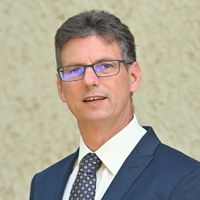
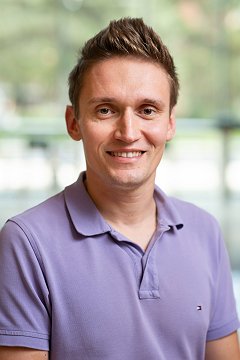
Mathias Hegele is a Professor at the Faculty of Psychology and Sports Science, Justus-Liebig Universität Gießen. His research focuses on motor learning, predictive error processing, and the neural mechanisms underlying human agency and sports performance. Project B6: Investigates predictive error perception in natural environments Project C5: Explores animate-inanimate distinctions in action and language perception His work combines neurophysiological methods with behavioral experiments, spanning studies on elite basketball players, schizophrenia patients, and general motor adaptation. Collaborators include Prof. Dr. Hermann Müller and Dr. Lisa Maurer. Recent publications analyze: Mechanisms of outcome prediction in sports Neural correlates of error valuation Agency perception in biological motion tracking Sensory signal integration in motor tasks He advises PhD students Theresa Brand and Lea Junge-Bornholt, with email contact mathias.hegele@sport.uni-giessen.de.
Chunying Li serves as an Assistant Professor in the Department of Electronic and Electrical Engineering at the College of Engineering, Southern University of Science and Technology (SUSTech). Recognized as a 2024 Shenzhen Pengcheng Peacock Program Distinguished Talent and Ocean Power Young Scientist nominee, her research pioneers spherical underwater robotics and multi-agent systems for complex marine environments. Her educational foundation includes: Ph.D. in Intelligent Mechanical Systems Engineering from Kagawa University, Japan (2021-2023) M.S. in Control Engineering from Tianjin University of Technology, China (2017-2020) Dr. Li's research integrates biomimetic principles with advanced engineering to solve underwater navigation challenges. Her work on multi-sensor fusion enables robust environmental perception, while adaptive control algorithms allow spherical robots to operate in turbulent conditions. Key applications include ocean monitoring, resource exploration, and collaborative multi-robot missions where traditional systems fail. Recent publications (2020-2024) reveal a strong focus on performance optimization and biomimetic sensing , with 7 of 11 representative papers appearing in Q1 journals like Information Fusion (IF=17.564). A notable trend is the development of artificial lateral line systems inspired by fish, significantly improving obstacle recognition in murky waters. Her accolades include: 2024 Young Scientists Nomination for Ocean Power 2024 Shenzhen Pengcheng Peacock Program Distinguished Talent 2023 Chinese Society of Automation Natural Science Award (Second Prize) 2022 CSC National High-Level University Scholarship Dr. Li leads the Shenzhen Outstanding Science and Technology Innovation Talent Program while contributing to international projects: Shenzhen Grants: Pengcheng Peacock Program (Principal Investigator) International Collaboration: Japan SPS KAKENHI Program (Key Researcher) Regional Projects: Tianjin Science and Technology Innovation Cooperation Program Her laboratory develops spherical underwater robot platforms featuring hybrid thrusters and multi-sensor arrays, emphasizing father-son robot coordination and jellyfish-inspired swarm behaviors. Through IEEE ICMA conference leadership roles (Finance Chair 2025, Publication Co-Chair 2024), she actively shapes robotics research standards in Asia-Pacific.
Dr. Salil Goel is an Assistant Professor in the Department of Civil Engineering at the Indian Institute of Technology Kanpur, specializing in Geoinformatics. He has been serving at IIT Kanpur since 2018, following research positions at The University of Melbourne and RMIT University in Australia. Education: PhD: The University of Melbourne and IIT Kanpur (Jointly awarded), 2017 B. Tech M.Tech (Dual), Civil Engineering (Geoinformatics), IIT Kanpur, 2011 Dr. Goel's research focuses on the use and fusion of sensors such as LiDAR, Camera, Inertial and GNSS to solve problems related to localization, mapping and tracking involving various platforms including terrestrial and UAV systems. He is particularly active in indoor positioning and navigation, developing algorithms for localization and mapping in GNSS denied and challenging environments. His work bridges geospatial technology, sensor fusion, and practical applications in urban and indoor settings. His publication record demonstrates a strong focus on cooperative positioning systems, UAV navigation, and mobile mapping technologies. His recent work has centered on indoor localization challenges, benchmarking measurement campaigns, and cooperative UAV localization networks, reflecting his commitment to advancing positioning technologies in environments where traditional GNSS systems fail. Scientific Awards: Young Geospatial Scientist Award 2018 and Rachapudi Kamakshi Memorial Gold Medal Best paper award, IGNSS Conference, Sydney, Australia (2018) ION GNSS+ 2017 student paper award Best paper award, 10th International Conference on Mobile Mapping Technology, Cairo, Egypt (2017) MATS award, Melbourne School of Engineering (2017) Dr. Goel leads the Geoinformatics Laboratory at IIT Kanpur, where he conducts research on sensor fusion techniques for challenging positioning environments. His work has implications for urban mobility, indoor navigation, and drone traffic management systems. While specific grant information is not provided, his numerous awards and publications suggest active research funding and collaboration with international institutions. His laboratory focuses on developing practical solutions for real-world positioning challenges, particularly in environments where traditional GPS/GNSS systems cannot function effectively. This research has applications in emergency response, indoor navigation, and autonomous systems operation in complex environments.
Benoit Piranda is an Associate Professor of Computer Science at the University of Franche-Comté , affiliated with the FEMTO-ST Institute and its Complex Networks Team (DISC/OMNI) . He leads the development of VisibleSim , a parallel behavioral simulator for modular robots. University: University of Franche-Comté Institute: FEMTO-ST Team: DISC/OMNI Role: Researcher & Software Developer Research Focus: Distributed algorithms for modular robots, programmable matter, physical simulations, and parallel execution environments. His work spans self-reconfiguration, communication protocols, and efficient scene encoding for large-scale robotic systems. Article Trends: Recent publications highlight advancements in 2D/3D lattice modular robot algorithms Porous structure reconfiguration Time synchronization protocols VisibleSim simulation framework Multi-scale distributed displays Security protocols for programmable matter Conference Involvement: Active in program committees for DARS, IEEE ATC, IROS, and AINA. Former Publicity Chair positions.
Ulrik Pagh Schultz Lundquist is a Professor at the Maersk Mc-Kinney Moller Institute, University of Southern Denmark (SDU), where he serves as Head of both the SDU UAS Center and SDU Climate Cluster. With over 123 research outputs spanning robotics, drone technology, and programming languages, Lundquist leads significant initiatives including WildDrone (2023-2026) and Terra Salva (2024-2026), and has established himself as a leading expert in unmanned aerial systems research with extensive field applications in wildlife conservation. Lundquist's research focuses on the intersection of robotics and environmental science, with particular expertise in drone swarms for ecological monitoring. His work bridges theoretical computer science with practical conservation challenges, developing programming languages and formal models specifically for modular robotics systems. Key research thrusts include minimizing wildlife disturbance through optimized drone operations, multi-perspective data collection techniques, and scalable BVLOS (Beyond Visual Line of Sight) systems for conservation areas. His fingerprint analysis reveals strong contributions to domain-specific languages (67%), unmanned aerial vehicles (28%), and object-oriented programming (28%). Recent publications demonstrate a clear trajectory toward practical conservation applications, with increasing emphasis on ethical drone deployment, wildlife disturbance minimization, and operational safety in complex environments. Lundquist's work shows growing integration of swarm intelligence techniques with traditional conservation practices, particularly in African ecosystems as evidenced by field trials at Kenya's Ol Pejeta Conservancy. Lundquist actively leads multiple research projects including WildDrone (focusing on multi-perspective animal monitoring), Terra Salva (terahertz data transmission via drones), and a High Altitude Balloon platform for vegetation monitoring. His professional leadership includes chairing the ACM International Conference on Generative Programming Steering Committee (2019-2022) and significant roles in COST Action IC1405 (2015-2019). As a highly visible expert, he has contributed to 107 media appearances, frequently advising on drone policy including Denmark's regulatory approaches to drone safety and wildlife protection. As Head of the SDU UAS Center, Lundquist directs a multidisciplinary research team specializing in conservation drone technology. The center maintains strong international collaborations, particularly with African conservation organizations, focusing on developing drone swarm methodologies that balance data quality with minimal ecological disturbance. Current team efforts prioritize field-deployable systems that can operate effectively in remote natural habitats while providing conservationists with high-quality multi-perspective monitoring capabilities.
Barbara Bazzana is an active Researcher specializing in Robotics and Mechatronics with a focus on unmanned aerial systems control. Her work integrates computer vision and machine learning to solve complex navigation challenges in multi-rotor platforms, particularly through novel applications of diffusion models and experimental force modeling. Her core research domains include: Visual servoing for UAV autonomous navigation Denoising diffusion probabilistic models in robotics Multi-rotor aerodynamics and cross-influence effects Real-time propeller force modeling Latent space representations for control systems Analysis of her 2024-2025 publications reveals a strong trend toward merging generative AI with physical UAV control systems. Her work demonstrates how return-conditioned latent diffusion models can enable image-based servoing without explicit state estimation, while her propeller force research provides experimentally validated solutions for multi-rotor instability caused by aerodynamic interference. Both threads emphasize practical implementation in real-world aerial systems rather than purely theoretical exploration.
Frank Nack is a researcher at the University of Amsterdam's Informatics Institute, where he leads the INDE Lab. His work bridges digital narrative systems with human communication and creativity. Research Focus: Interactive digital narratives, computational applications of media theory, AI in film, semiotics-driven hypermedia systems, and context-aware storytelling environments. His projects explore how technology can represent complex social issues through narrative frameworks. Project Highlights: Current work on Interactive Digital Storytelling (IDN) and Interactive Discourse Environments (IDE) authoring systems Projects like UBUZZ connecting cultural heritage with public spaces Earlier research on ambient intelligence (ACCOMPANY robotic companion) and location-based storytelling (SmartInside, MOCATOUR) Technical Contributions: Developed emotion editors for VRML (TINKY), narrative architecture for virtual reality (VirtuOsi), and semiotic tagging systems for media metadata.
Jaemin Lee is an Assistant Professor at North Carolina State University's Department of Mechanical and Aerospace Engineering. His research focuses on safety-critical control systems, motion planning, and hybrid dynamical systems for legged and multi-contact robots, aiming to develop safe, efficient robotic systems for human interaction and unstructured environments. Ph.D. in Robotics and Control from The University of Texas at Austin (2022) Postdoctoral Scholar at Caltech (2022-2024) M.S. in Robotics from Seoul National University (2012) B.S. in Mechanical Engineering from Konkuk University (2010) His work spans hierarchical control architectures, control barrier functions for safety verification, and data-driven methods integrating model discrepancy. He has developed algorithms for real-time model predictive control, robust locomotion under disturbances, and reachability-based motion planning. Recent publications focus on safety-critical control (2023-2024), hierarchical relaxation techniques (2023), and variable inertia models for bipedal maneuvers (2024). His research integrates control theory with practical robotic implementations across quadrupedal, bipedal, and aerial manipulators. Jaemin has served as a reviewer for major robotics conferences and journals including IROS, ICRA, and IEEE Transactions on Robotics. He leads the HIER Lab at NCSU, continuing his collaboration with Caltech's Mechanical and Civil Engineering Department.
Fredrik Danielsson is a Professor of Automation at University West, where he serves as an employee of the Department of Industrial Automation. He leads a research group focused on flexibility in industrial automation systems and teaches in University West's master's program in robotics. Professor Danielsson's research spans multiple areas of industrial automation, with a particular emphasis on flexible manufacturing systems. His work explores human-machine interaction to increase operator intervention possibilities in automated processes. He has made significant contributions to the development of Plug and Produce systems, which enable more adaptable and reconfigurable manufacturing environments. His research also encompasses robotics, mechatronics, and the application of Industry 5.0 principles to create human-centric smart manufacturing systems that balance technological advancement with human well-being. An analysis of Professor Danielsson's recent publications reveals a strong focus on making manufacturing systems more adaptable through multi-agent systems, digital twins, and advanced path planning algorithms. His work consistently addresses the challenge of implementing flexible automation that can be easily reconfigured by in-house personnel without requiring extensive programming knowledge. A notable trend is the increasing emphasis on safety management and hazard identification within reconfigurable manufacturing systems. Professor Danielsson supervises graduate students, including Anders Nilsson who completed a licentiate thesis on human-centric process planning for Plug & Produce systems under his guidance. His research group has developed a Plug & Produce test bed in cooperation with industrial representatives, particularly from the prefabricated wooden house industry, demonstrating practical applications of their theoretical work. The research group's approach emphasizes extracting information directly from computer-based product designs and incorporating in-house process knowledge through graphical configuration tools. Their work on intelligent products that 'know how to be finalized' represents an innovative approach to manufacturing automation that reduces complexity for human operators while maintaining high levels of flexibility.
Malaka Kaluarachchi serves as a Lecturer in Mechatronic Engineering at Anglia Ruskin University (ARU Peterborough) within the Faculty of Engineering, Agri-tech and the Environment. His expertise bridges theoretical robotics with practical applications across industrial, agricultural, and medical domains. His academic credentials include: PhD in Mechanical (Robotics) Engineering from University of Nottingham MEng (Hons) in Mechatronic Engineering from University of Nottingham PG Cert in Learning and Teaching in Higher Education from Kingston University Dr. Kaluarachchi's research centers on advanced robotics systems , with pioneering work in energy-efficient manipulator design , underactuated mechanisms , and tendon-driven robotics . His approach emphasizes reducing mechanical complexity while enhancing functionality, particularly through single-motor actuation and bistable electromagnetic systems. Current investigations target agricultural robotics applications within the 5G Connected Forest project framework. Publication trends reveal consistent innovation in robotic mechanism design, with 70% of recent work focusing on energy optimization and underactuation techniques. His research demonstrates strong translational potential, evidenced by industrial implementations of teaching pendants and mobile forest monitoring systems. Key recognitions include: Nomination for Most Innovative Use of 5G Technology award (UK 5G Week Awards) Top-ten all-time most-read paper status in Taylor & Francis journal As an active research supervisor, he mentors students in robotics thesis projects while contributing to the 5G Connected Forest initiative. His grant portfolio includes Birmingham City University's Smart Systems and Robotics project, with current focus on securing agricultural robotics funding. Dr. Kaluarachchi maintains industry partnerships through his role as Session Chair for IEEE WIESymp's Intelligent Systems track and extensive journal reviewing activities. He leads mechatronics development within ARU's engineering research group, specializing in physical implementations of theoretical robotic concepts for real-world deployment.
Dr. Corinna Maass is a Research Group Leader leading the Active Soft Matter Group within the Department of Dynamics of Complex Fluids at the Max Planck Institute for Dynamics and Self-Organization in Göttingen, Germany. She has held this position since 2014, establishing herself as a leading researcher in active matter systems and self-propelled droplets. Institution: Max Planck Institute for Dynamics and Self-Organization Department: Dynamics of Complex Fluids Research Group: Active Soft Matter Location: Göttingen, Germany Dr. Maass completed her physics diploma at the University of Konstanz (1999-2004), followed by doctoral research on 'Dynamics of levitated granular media' at the same institution, which she completed in 2009. She then conducted postdoctoral research at New York University (2010-2013) in the Chaikin and Seeman group working on 'Self replicating DNA nanostructures,' supported by a German Academic Exchange Service fellowship. Her research focuses on active matter systems far from equilibrium, particularly active liquid crystal emulsions consisting of uniform droplets studied in complex microfluidic geometries. These systems exhibit surprising similarities to biological analogues such as bacteria or plankton, displaying self-propulsion, navigation, and collective effects like swarming. Her work bridges fundamental physics with potential applications in microfluidics and soft robotics. The research employs experimental approaches combined with theoretical modeling to understand the emergent behaviors in these non-equilibrium systems. Analysis of Dr. Maass's recent publications reveals a consistent focus on the dynamics of active droplets and microswimmers, with increasing sophistication in controlling and understanding their behavior. Her work spans fundamental investigations of self-propulsion mechanisms, collective dynamics, and interactions with complex environments. The research shows strong interdisciplinary connections between soft matter physics, fluid dynamics, and non-equilibrium statistical mechanics, with applications emerging in microfluidic technology and biomimetic systems. Dr. Maass has successfully advised students including Strehl, A.-M. who completed a bachelor thesis on 'Self-propelling nematic droplets: role of director field elasticity' (2017) and Bantje, D. who worked on 'Interferometrie an aktiven Emulsionen' (2018). Her research is supported by the infrastructure of the Max Planck Institute, providing access to advanced microfluidics facilities and collaborative opportunities within the broader dynamics of complex fluids department. The Active Soft Matter Group operates within state-of-the-art laboratories at the Max Planck Institute for Dynamics and Self-Organization, utilizing advanced microfluidic setups, high-speed imaging systems, and precision manipulation techniques to study active droplet systems. The group collaborates extensively with other research teams both within the institute and internationally, particularly with groups specializing in theoretical modeling of active matter systems.
David Christopher Balderas-Silva serves as a Research Professor at Tecnológico de Monterrey's Institute for Advanced Materials for Sustainable Manufacturing in Mexico City. His interdisciplinary work bridges biomedical engineering, computer science, and advanced manufacturing with emphasis on sustainable industrial solutions and accessibility. His educational credentials include: B.Eng. in Mechatronics Engineering from Universidad Panamericana MSc in Biomedical Engineering from Delft University of Technology PhD in Engineering Sciences from Tecnológico de Monterrey Dr. Balderas-Silva's research centers on computer vision , artificial intelligence , and brain-computer interfaces , with applications in healthcare accessibility, robotics, and Industry 4.0. His work on EEG-based speech decoding and 3D-printed assistive devices demonstrates commitment to inclusive technology, while metaheuristic optimization research advances sustainable manufacturing. Recent publications reveal strong focus on neural signal processing (40% of 2022-2024 output) and computer vision for robotics (30%), with growing emphasis on UN Sustainable Development Goals related to disability inclusion and clean energy. His recognition includes: Mexican Researcher Certification - Level 1 As a member of the Mexican National Researchers System, he has co-authored over 20 publications and multiple inventions. His Education 4.0 pedagogy initiatives for machine learning and neurotechnology training highlight academic leadership. While specific grant details aren't provided, his Institute affiliation indicates active participation in collaborative research addressing sustainable manufacturing and assistive technology gaps. He contributes to the Institute for Advanced Materials for Sustainable Manufacturing through projects integrating brain-computer interfaces with industrial robotics, developing low-cost eye-tracking systems, and optimizing PCB manufacturing via digital twins. His lab work emphasizes cross-disciplinary teams focused on translating AI research into practical solutions for Industry 4.0 challenges.
Ivan Ruchkin is an Assistant Professor in the Department of Electrical and Computer Engineering at the University of Florida, where he leads the Trustworthy Engineered Autonomy (TEA) Lab. He holds affiliate appointments in the Department of Mechanical & Aerospace Engineering, Department of Computer & Information Science & Engineering, Nelms Institute for the Connected World, Artificial Intelligence Academic Initiative, and Intelligent Critical Care Center. Dr. Ruchkin's research focuses on making autonomous systems safer and more trustworthy through novel techniques for modeling, analyzing, verifying, controlling, and monitoring cyber-physical systems. His work spans formal verification methods, safety monitoring with statistical guarantees, model integration approaches, and neuro-symbolic paradigms that combine the strengths of neural networks and symbolic reasoning. He has made significant contributions to the fields of conformal prediction for safety guarantees, neural network repair while preserving correct behaviors, and physically interpretable world models for autonomous systems. His recent publications reveal a strong trend toward developing statistically sound safety guarantees for learning-enabled systems, with particular emphasis on conformal prediction methods that provide calibrated confidence measures. His work bridges the gap between high-dimensional perception (like vision) and formal safety guarantees, addressing the critical challenge of ensuring safety in systems where traditional verification methods fail due to complexity. Dr. Ruchkin is actively involved in the academic community as a program committee member for major conferences including ASE 2025 (Research Papers track) and ICSE 2026 (New Ideas and Emerging Results track). His research has been published in top venues across software engineering, formal methods, and robotics. At the University of Florida, he directs the TEA Lab which focuses on developing theoretically grounded yet practically applicable methods for trustworthy autonomy. His lab investigates approaches that combine formal methods with machine learning to create safety-critical autonomous systems that can provide statistical guarantees about their behavior even in complex, uncertain environments.
James G. Puckett is a Professor in the Department of Physics and Astronomy at Gettysburg College, where he conducts research at the intersection of physics and biology. His work primarily focuses on collective behavior in biological systems, particularly insect swarms and fish schools, as well as granular materials and statistical physics. His research interests include collective animal behavior, statistical physics, biological physics, granular materials, and network analysis. Dr. Puckett employs advanced experimental techniques including multicamera imaging and tracking systems to study the motion of individual organisms within groups, developing mathematical models to explain emergent collective phenomena. His work has revealed important insights into pairwise interactions in insect swarms, adaptive long-range interactions, and thermodynamic analogies in collective animal behavior. Analysis of his publications shows a consistent focus on understanding how local interactions between individuals give rise to complex collective behavior. His research spans both biological systems (insect swarms, fish schools) and physical systems (granular materials), demonstrating the power of physics approaches to understand diverse phenomena. The interdisciplinary nature of his work bridges physics, biology, and mathematics. Throughout his career, Dr. Puckett has published in prestigious journals including Physical Review Letters, with research that has been cited over 45 times according to metrics shown in the repository. His collaborations include researchers from Yale University, Penn State, and other institutions, reflecting the collaborative nature of modern interdisciplinary research. Dr. Puckett's laboratory work involves sophisticated experimental setups for tracking individual organisms in controlled environments, combined with advanced data analysis techniques including time-frequency analysis, network analysis, and statistical modeling. His research has implications for understanding not only natural biological systems but also for developing principles applicable to robotics and artificial collective systems.
Dr Haotian Cha is a Research Fellow at Griffith University, affiliated with the School of Engineering and Built Environment - Civil and Environmental Engineering. He is currently a member of the Queensland Quantum and Advanced Technologies Research Institute (QUATRI) since 2025, and was previously affiliated with the Queensland Micro and Nanotechnology Centre from 2021 to 2025. Dr Cha's educational background includes a PhD in Engineering from Griffith University (January 2021-June 2024), a Master of Engineering in Mechanical Engineering from UNSW Sydney (July 2017-December 2019), and a Bachelor of Engineering from Nanjing University of Science and Technology in China (September 2012-June 2016). As an Early Career researcher, Dr Cha's primary research focuses on innovative Multiphysics Microfluidics technology, particularly inertial regime and dielectrophoresis (DEP), for micro/nano cell separation. His work spans several cutting-edge areas including bioparticle separation, circulating tumour cells (CTCs) liquid biopsy for cancer diagnosis and prognosis, flexible microfluidics for liquid transport, microfluidic nanoparticle synthesis, and the development of lab-on-a-chip biomedical applications. Recently, he has expanded his research into wearable devices, with emphasis on flexible microfluidic systems for liquid transport. Dr Cha's publication record demonstrates significant expertise in microfluidics and its biomedical applications, with over 20 journal articles in high-impact publications. His recent work shows a strong trend toward practical medical diagnostics applications, particularly for cancer detection through circulating tumor cell isolation and blood cell separation technologies. He has made notable contributions to inertial microfluidics, dielectrophoresis, viscoelastic microfluidics, and nanobubble technologies, with applications spanning from clinical diagnostics to environmental remediation. Dr Cha has received institutional support through the Griffith Sciences Early Career Researcher Travel Grant ($2,500), demonstrating recognition of his research potential. His collaborative publication pattern suggests active engagement with research teams across multiple institutions. Dr Cha maintains professional affiliations with two major research centers at Griffith University: the Queensland Micro and Nanotechnology Centre (2021-2025) and currently the Queensland Quantum and Advanced Technologies Research Institute (QUATRI). These affiliations position him at the forefront of advanced technology research in Australia, particularly in applying micro and nanotechnologies to solve complex biomedical and environmental challenges.