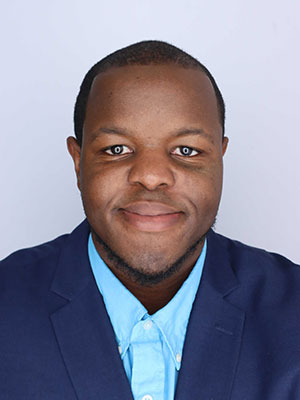
Dr. Joshua Peeples is an Assistant Professor in the Department of Electrical and Computer Engineering at Texas A&M University's College of Engineering. His research focuses on developing novel machine learning and computer vision methods for texture analysis, pattern recognition, and image processing, with applications ranging from biomedical imaging to agricultural automation and underwater acoustics. His work centers on histogram-based deep learning architectures for texture characterization and segmentation, with recent extensions to multi-modal data analysis and explainable AI. The Advanced Vision and Learning Lab he leads pioneers data-driven solutions for real-world challenges across diverse domains. Awards: NSF Graduate Research Fellowship McKnight Doctoral Fellowship ACES Faculty Fellowship Edward Alexandar Bouchet Honor Society His publications demonstrate strong emphasis on developing specialized neural network layers for texture analysis, with applications across sonar classification, plant phenotyping, and biomedical segmentation. Research consistently integrates theoretical machine learning advances with practical applications in engineering domains.
Prof Firuz Zare is the Head of School of Electrical Engineering & Robotics at Queensland University of Technology (QUT). With over 20 years of experience in academia, industry, and international standardization committees, he specializes in power electronics, renewable energy systems, electromagnetic compatibility, and pulsed power. His research focuses on grid-connected renewable energy, harmonics mitigation, and standardization of future grids. He has published over 320 peer-reviewed papers, secured AU$10M+ in research funds, and leads international projects. Awards include the Star Associate Editor Award (2020) and the 2015 Innovation and Excellence Award. Education: PhD in Electrical Engineering from QUT. Research areas include advanced power converter topology, electromagnetic interferences, grid standardization, and pulsed power applications. He has supervised 35 PhD/M.Eng students and 14 post-docs. Notable contributions include establishing IEEE Power Electronics Societies in Queensland and leading IEC standardization efforts for solar inverters and wind turbines. His teaching innovations include Power Electronics Education E-Books and entrepreneurship-focused pedagogy.
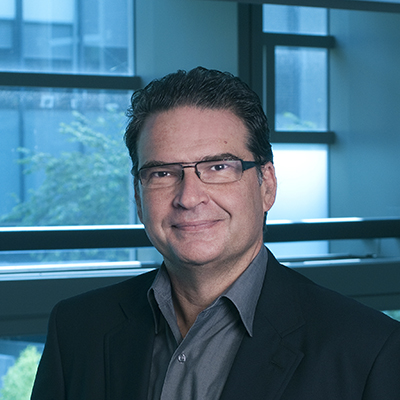
Associate Professor Yateendra Mishra specializes in renewable energy systems and smart grid technologies at Queensland University of Technology's School of Electrical Engineering & Robotics. He holds a PhD in Electrical Engineering (Power Systems) from the University of Queensland and has industry experience as a Transmission Planning Engineer at Midcontinent Independent System Operator (ISO). His research integrates renewable power systems modeling, distributed energy resources, and electricity markets. Recent projects include: Mitigating cyberattack risks in cyber-physical power systems Control systems for high-value distributed electrical storage Awards include the Advanced Queensland Fellowship (2016-2019) for enabling higher renewable penetration through smart inverter technologies. He mentors graduate students in power engineering and coordinates capstone projects. Current research explores grid stability under high renewable penetration and peer-to-peer energy trading frameworks.
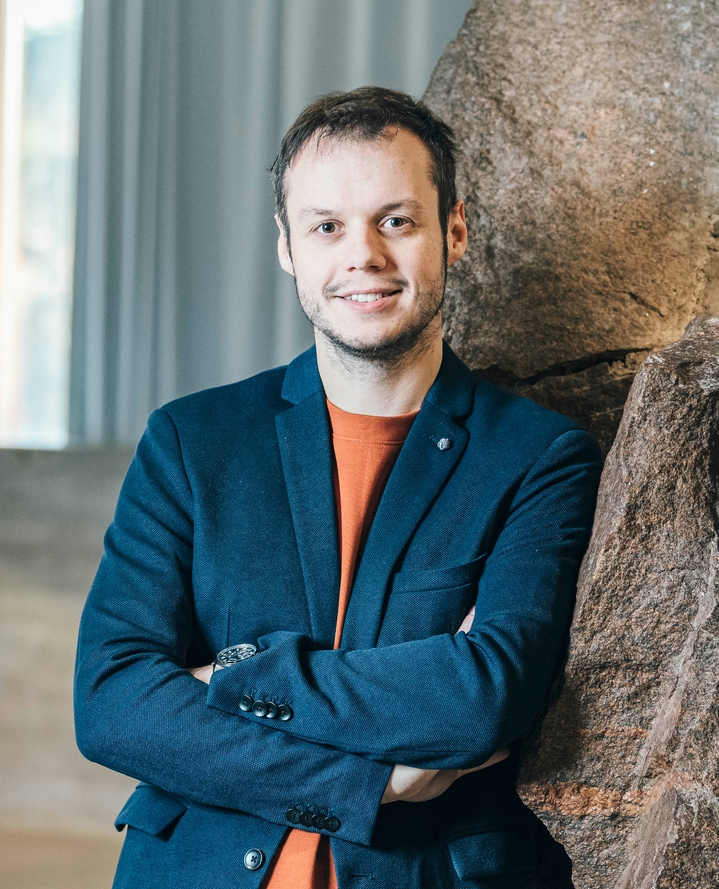
Dezso Sera is Associate Professor in Power Engineering at Queensland University of Technology. His research focuses on photovoltaic systems, power electronics, and renewable energy integration. He previously led the Photovoltaic Systems Research Programme at Aalborg University (2009-2019). Research Focus: Dr. Sera develops advanced technologies for solar energy systems including: PV array modeling and diagnostics Maximum power point tracking algorithms Grid integration of renewable energy Hybrid energy storage solutions His recent publications show strong emphasis on power converter topologies, machine learning applications for PV maintenance, and optimization of off-grid renewable systems.
Dr. Ghavameddin Nourbakhsh is Lecturer in the School of Electrical Engineering & Robotics at QUT, specializing in power system reliability, smart grids, and renewable energy integration. Research focuses on: Distribution system state estimation Microgrid control strategies PV generation forecasting Power equipment condition monitoring Reliability-centered maintenance Publications develop novel methods for managing high-penetration renewable scenarios in distribution networks. Recent work includes advanced techniques for solar generation estimation using limited measurements and Kalman filter applications for grid stability. Teaches power engineering courses and supervises postgraduate research on renewable integration challenges and smart grid technologies.
Konstantinos Daniilidis is the Ruth Yalom Stone Professor at the Department of Computer and Information Science, University of Pennsylvania, within the School of Engineering and Applied Science. He holds an adjunct position at Archimedes, Athena Research Center, Greece. His research focuses on computer vision, robotics, and geometric methods in AI, with a strong emphasis on 3D perception, event-based vision, and neural networks for motion analysis. Education : - PhD in Computer Science, University of Karlsruhe (1992), advised by Hans-Hellmut Nagel. - Diploma (Master's equivalent) in Electrical Engineering, National Technical University of Athens (1986). Research Interests : Daniilidis explores equivariant neural networks for structure from motion and robotics, event-based vision systems for low-latency perception, and 3D human motion capture using monocular and multi-sensor approaches. His work integrates geometric priors with deep learning to address challenges in SLAM, object pose estimation, and autonomous navigation. He also investigates robotic systems for tasks like object catching and fluid dynamics modeling, applying uncertainty-aware methods for robust decision-making. Articles Trends : Recent publications highlight advancements in event camera processing (e.g., EV-TTC, EqNIO), equivariant architectures for shape and motion analysis (SE(3)-Equivariant Networks), and multi-agent robotics with distributed perception systems. Collaborations with institutions such as ETH Zurich and Boston University reinforce his contributions to scalable and geometrically grounded AI solutions. Advising & Grants : He advises over 30 PhD students and postdocs, many now faculty or industry leaders. His grants include NSF awards (NCS-FO 2124355, CPS 2038873), ARL DCIST, and ONR funding, focusing on robotics, vision, and AI. His work often bridges theoretical insights (e.g., matrix permanent for localization) with practical robotic systems like the Tiercel drone. Labs & Teams : Affiliated with the GRASP Laboratory at Penn, a premier robotics & vision research center. Collaborates widely, including with the Robotics Lab at ETH Zurich and researchers at the University of Coimbra. His group develops open-source tools like EV-FlowNet and EventGAN for event-based vision.
Mihai Anitescu is a Senior Computational Mathematician in the Laboratory for Advanced Numerical Software (LANS) within the Mathematics and Computer Science Division at Argonne National Laboratory, a position he has held since 2002. He is also a part-time Professor in the Department of Statistics at the University of Chicago since 2009 and an adjunct Associate Professor in the Mathematics Department at the University of Pittsburgh. Additionally, he is a Senior Fellow of the Computation Institute, a joint Argonne-University of Chicago initiative. He leads the MACSER (MultiTimescale Control of Electric Power Systems) project and previously led the M2ACS project. Ph.D., Applied Mathematical and Computational Sciences, University of Iowa, 1997 Electrical Engineer, Polytechnic University of Bucharest, Romania, 1992 Dr. Anitescu’s research focuses on numerical optimization, uncertainty quantification, and numerical analysis, with applications spanning nuclear engineering, electric power grids, chemical engineering, materials science, biology, mechanical engineering, and robotics. His work develops scalable computational methods for complex systems, particularly leveraging high-performance computing. He has made significant contributions to optimization under uncertainty, stochastic programming, Gaussian process modeling, and simulation of multibody dynamics with contact and friction using differential variational inequalities. His recent publications (2020–2023) highlight a strong and consistent trend in applying advanced mathematical and computational techniques to critical energy infrastructure, particularly the electric power grid. Key themes include stochastic optimization for optimal power flow under uncertainty, risk assessment through extreme event simulation, frequency prediction and estimation using spatiotemporal and Bayesian methods, and the simulation of cascading failures. His work bridges core mathematical advances in optimization, sensitivity analysis, and scalable Gaussian process computation with high-impact applications in grid stability, reliability, and control. Dr. Anitescu is a senior editor of Optimization Methods and Software and a member of the editorial boards of Mathematical Programming and the SIAM Journal on Optimization . He has previously served on the editorial boards of the SIAM Journal on Scientific Computing and the SIAM/ASA Journal on Uncertainty Quantification . He is a dedicated mentor, having advised numerous postdoctoral fellows, Ph.D. students, and M.S. students at Argonne, the University of Chicago, and the University of Pittsburgh. His advisees have gone on to successful careers in national laboratories, academia (e.g., UC Santa Barbara, Purdue, University of Wisconsin), and industry (e.g., Amazon, Citibank, Morgan Stanley, IBM). He has secured and led significant research grants through projects like MACSER and M2ACS, which focus on the mathematical challenges of managing complex, uncertain energy systems. His work is highly collaborative, involving partnerships across institutions and disciplines. Dr. Anitescu leads the MACSER project, a major research initiative focused on developing mathematical and computational tools for the multi-timescale control of electric power systems. This work is central to ensuring the stability and reliability of modern power grids, especially as they integrate increasing amounts of renewable energy.
Giampiero Salvi is a Professor at the Department of Electronic Systems, Norwegian University of Science and Technology (NTNU). He is affiliated with the Signal Processing research group and holds academic qualifications from La Sapienza University of Rome (Civil Engineering) and the Royal Institute of Technology (Dr.Scient). His research focuses on artificial intelligence, machine learning, speech processing, and human-machine interaction. Key contributions include advancements in speech recognition systems, neural network architectures for video prediction, and applications in healthcare analytics and cybersecurity. His work bridges theoretical foundations with practical implementations, such as developing pronunciation assessment frameworks for children, Parkinson’s disease detection via speech analysis, and real-time speaker diarization systems. He has contributed to foundational research in acoustic-to-articulatory mapping, explainable AI for clinical prediction, and multimodal dialogue systems. His research often addresses challenges in low-resource languages and clinical settings, emphasizing interdisciplinary collaboration. Salvi’s recent publications highlight trends in foundational models, generative AI for video and speech, and ethical AI applications in healthcare. He actively participates in international conferences and collaborates with institutions like KTH Royal Institute of Technology and the University of Tartu, reflecting his global academic network.
Dr. Tomasz Kucner is an Assistant Professor in the Department of Electrical Engineering and Automation at Aalto University, specializing in robotics and autonomous systems. His research focuses on enabling robots to operate safely and intelligently in human-robot shared environments through contextual learning, self-assessment, and understanding human behavior dynamics. His work emphasizes multi-modal perception, trajectory prediction, and human-aware navigation. Key projects include the ILIAD Safety Stack for industrial mobile robots and development of datasets like THÖR-MAGNI for motion capture analysis. He collaborates with institutions globally and leads the Mobile Robotics research group. Publications highlight advancements in radar-lidar fusion, pedestrian intent prediction, and generative terrain modeling. His work bridges theoretical robotics research with practical applications in autonomous driving and service robotics. Research Group: Mobile Robotics Key Focus Areas: Human-Robot Interaction, Autonomous Systems, Motion Prediction
María Dolores Rodríguez Moreno is a Full Professor at the Universidad de Alcalá in the Department of Automation . She holds a PhD in Computer Science from the same institution, specializing in planning tasks with time and resource constraints. Her research focuses on Artificial Intelligence , Robotics , and Smart Grids , with notable contributions to autonomous systems, energy management, and healthcare analytics. Her work integrates machine learning, multi-agent systems, and optimization techniques to address real-world challenges like emergency department forecasting, microgrid coordination, and Mars rover navigation. She leads the Intelligent Systems Group (ISG) , advancing applications in WSNs for military operations and CAPTCHA security analysis. Key research trends include: Generative AI for healthcare resource planning Bio-inspired control strategies for sustainable energy systems Multi-agent coordination in complex environments Her publications emphasize practical solutions for energy efficiency, emergency management, and cybersecurity. Current projects include frameworks for autonomous controller assessment (OGATE) and AI-driven solutions for the Energy-Water-Food Nexus. She advises the Intelligent Systems Group and collaborates on initiatives like SOPRENE (predictive maintenance for naval assets) and LARES (AI-based teleassistance systems for elderly care).
Mario Garcia Sanz is a Professor in the Department of Electrical, Computer, and Systems Engineering at the Case School of Engineering, Case Western Reserve University. His research focuses on bridging advanced control theory with practical applications in energy systems, wind energy, spacecraft control, environmental engineering, and robotics. He holds a patent for an Airborne Wind Energy System (pending) and has published extensively on topics like wind farm optimization, telescope control systems, and quantitative feedback theory. Teaching interests include advanced control solutions for energy systems, multi-megawatt turbines, renewable plants, power electronics, wastewater treatment, and robotics. His work emphasizes interdisciplinary approaches to solving complex engineering challenges across multiple domains including aerospace, environmental systems, and industrial automation. Key research trends in his publications include energy innovation (wind/hydrokinetic systems), structural dynamics (telescopes/satellites), and robust control methodologies (quantitative feedback theory). His collaborative projects span academic and industrial applications, with notable contributions to precision instrumentation and grid integration strategies. Advising and grants are not explicitly detailed in the provided text, though his patent and publication record suggest active engagement in research funding. His lab focuses on applied control engineering with real-world impact in renewable energy, aerospace, and environmental systems.
John S. Baras is a Professor at the University of Maryland, holding joint appointments in the Department of Electrical and Computer Engineering and the Institute for Systems Research (ISR). He is a Hans Fischer Senior Fellow at the TUM Institute for Advanced Study (TUM-IAS), hosted by Sandra Hirche, focusing on Networked Cyber-Physical Systems (NetCyPhy). His research spans systems theory, communication networks, cyber-physical systems, and quantum control, with notable contributions to trust models in networks and hybrid communication systems. Baras has pioneered interdisciplinary research, founding ISR and directing the Maryland Hybrid Networks (HyNet) Center. He has over 90 patents, including foundational work on satellite internet delivery (HughesNet®), earning him prestigious awards like the AAAS and SIAM Fellowships. His work emphasizes bridging theory and practice in complex systems, with applications in security, smart grids, and healthcare. Education & Career: Founding Director of the Institute for Systems Research (ISR) Lockheed Martin Chair in Systems Engineering Guest Professor at Royal Institute of Technology (KTH), Stockholm Over 40 years of academic leadership and industry collaboration Research Focus: Baras's work addresses multi-disciplinary challenges in networked systems, integrating control theory, information science, and computing. Recent projects include trust-aware crowdsourcing, event-triggered control, and optimal sensor scheduling. His contributions to quantum control and systems biology reflect his interest in emerging interdisciplinary frontiers. Awards & Recognition: AAAS Fellow (2014), SIAM Fellow (2014) IEEE Life Fellow (2013) Outstanding Invention Awards (2008, 1998, 1994, 1991) Grants & Labs: Leads HyNet Center, focusing on hybrid networks, and collaborates on projects like trust evaluation in ad-hoc networks. His research is funded by NSF, DoD, and industry partners.
António Cunha is an Assistant Professor at the University of Trás-os-Montes and Alto Douro (UTAD), affiliated with the Department of Engineering. He holds a doctorate from UTAD (2005) and has been a senior researcher at the Center for Research in Biomedical Engineering (C-BER/INEC-TEC) since 2014. His research focuses on medical and biological image analysis, computer vision, and machine learning, particularly in developing CAD tools for applications like CT imaging and endoscopic videos. Key research areas include medical imaging analysis (e.g., retinography, endoscopy), deep learning for disease detection (e.g., glaucoma, fatty liver disease), and agricultural applications (e.g., grapevine classification using drones and neural networks). He actively participates in biomedical projects and collaborates on datasets like MedShapeNet. His work bridges computer science and healthcare, emphasizing practical clinical integration. Publications emphasize medical AI applications, dataset development, and algorithmic innovation in low-resource imaging scenarios. He explores techniques like GANs for data augmentation, transformer architectures for image classification, and active learning for pathology detection. His contributions span both technical advancements and real-world healthcare challenges.
Dr. Andrej Bicanski is a Research Fellow and group leader of the Neural Computation Research Group at the Max Planck Institute for Human Cognitive and Brain Sciences in Leipzig, Germany. His work focuses on computational models of spatial cognition, locomotion, and neuromechanical systems. He integrates neuroscience, robotics, and artificial intelligence to study neural mechanisms underlying spatial navigation, grid cells, and motor control. Research interests include: Neural coding of spatial orientation and navigation Computational models of head direction cells and grid cells Neuromechanical simulations of animal locomotion (e.g., salamander spinal networks) Integration of sensory feedback and central control in movement His recent articles explore topics such as adaptable locomotor patterns in salamanders, path integration in humans, and large-scale spatial cognition models. He has contributed to understanding how grid cells and place cells function in complex environments, with applications to robotics and cognitive science. No scientific awards or grants are explicitly mentioned in the provided text. He leads the Neural Computation Research Group, which develops biologically inspired computational models to bridge neural mechanisms and behavior.
Prof. Michael Blaich is a Professor of Computer Science at Konstanz University of Applied Sciences, specializing in Robotics and Artificial Intelligence. He teaches in Bachelor's programs in Applied Computer Science (AIN) and Business Information Systems (WIN), as well as the Master's Program in Computer Science (MSI). His courses include Computer Architectures, Fundamentals of Robotics, Artificial Intelligence, Hardware and System Fundamentals, and Autonomous Robots. His research focuses on autonomous systems, robotics, and maritime navigation technologies. Key areas include visual place recognition, collision avoidance algorithms for vessels, and agricultural robotics. His work integrates sensor technologies like laser rangefinders and Kinect sensors for real-time object detection and navigation. Prof. Blaich's publications span topics from autonomous robot design to maritime safety systems, reflecting his expertise in both theoretical and applied robotics. His research emphasizes practical applications, such as unmanned surface vehicles (USVs) and agricultural automation through robots like Trimbot2020. His office is located in Room F 123 at Alfred Wachtel Str. 8, Konstanz. Office hours are by appointment, and he can be contacted at mblaich@htwg-konstanz.de.