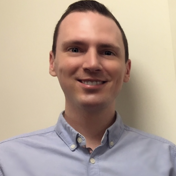
Steven Holloway is an Associate Teaching Professor at Arizona State University's School of Social and Behavioral Sciences, where he teaches psychology courses and directs the Cognition, Learning, and Neuroscience Lab. He conducts research in the Cognitive and Visual Science Lab (CVSL) under President's Professor José Náñez. His research focuses on visual system processing mechanisms, particularly the dorsal stream's role in perceptual learning, reading ability, and neural plasticity. He explores methodologies for measuring dorsal stream processing efficiency and its impact on cognitive functions. His scholarly work demonstrates expertise in: Visual processing and neuroplasticity Perceptual learning mechanisms Reading disorder interventions Visual-motor integration Neural pathway diagnostics Dr. Holloway earned his Ph.D. in Cognitive Psychology from Arizona State University, working in the Perception, Ecological Action, and Robotics Lab (PEARL) under Professor Mike McBeath. He teaches courses including Memory and Cognition (PSY 324), Sensation and Perception (PSY 323), and various honors research courses.
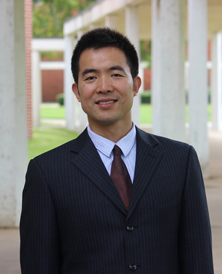
Raymond Smith is a Lecturer in Public Health within the School of Allied and Public Health Professions at Canterbury Christ Church University (CCCU), teaching across Global Public Health MSc, Mental Health & Wellbeing BSc, and Public Health BSc programmes. His educational background includes: Bachelor's degree in Psychology (clinical route) Master's degree in Psychiatric Research PhD in Health and Social Care Sciences (awarded April 2016) Dr. Smith's research integrates clinical psychology with public health interventions through major projects including CASCADE (dementia care sustainability), MOTION (pediatric orthotic devices for neurological disorders), and ADAPT (robotic assistive technologies for disabled individuals). His work emphasizes interdisciplinary solutions for complex health challenges in mental health, dementia, and disability support systems. As a Research Supervisor, he mentors students in public health research while contributing to grant-funded initiatives that bridge clinical practice and policy development. Current projects focus on developing sustainable care models and technology-driven healthcare improvements. Based in the Allied Health Professions and Dental Practice department, he actively collaborates with international research teams to advance healthcare delivery through innovative technological and social frameworks.
Dr. Christine Walck is an Assistant Professor in the Department of Mechanical Engineering at Embry-Riddle Aeronautical University's College of Engineering. She joined ERAU in 2019 after serving as a Mechanical Engineer at the U.S. Naval Research Laboratory (2011-2018), where she specialized in unmanned systems and decoy technologies. As the primary investigator of the Embry-Riddle Biomechanical Analyses Laboratory (ERBAL), she conducts interdisciplinary research spanning biomechanics, human performance optimization, and medical rehabilitation. Her research integrates mechanical engineering with neuroscience and computer science to: Analyze muscle function and human movement patterns Develop enhanced rehabilitation protocols Design assistive medical devices and orthotics Create aerospace countermeasures for microgravity effects Engineer robotic systems for research and education Dr. Walck's recent publications demonstrate strong focus areas in knee biomechanics (including ACL rehabilitation and orthotic design), ligament modeling techniques, assistive sports technologies, and educational robotics. Her work frequently appears in biomechanics and orthopedic journals, with recent studies exploring patient-specific modeling approaches and cross-disciplinary applications between aerospace and biomedical engineering. She has received multiple recognitions including: Best Poster Award (Fall & Spring 2023-2024) Most Outstanding Teaching Award Nominee (Spring 2024) Mechanical Engineering Outstanding Service Award (2023) Dr. Walck actively teaches core mechanical engineering courses including Dynamics and Fundamentals of Biomechanics, while supervising graduate theses. She maintains professional engagements through peer review activities, committee memberships for the College of Arts and Sciences, and mentorship roles in student organizations like the EagleNauts Club.
Dr. Nuray Yozbatiran is an Associate Professor for Research in the Department of Physical Medicine and Rehabilitation at McGovern Medical School, The University of Texas Health Science Center at Houston (UTHealth). She is affiliated with the Neuromodulation and Rehabilitation Laboratories at the UTHealth NeuroRecovery Research Center at TIRR Memorial Hermann, where she conducts cutting-edge research in neurorehabilitation. Dr. Yozbatiran's research focuses on developing and optimizing treatment protocols for upper-limb movement rehabilitation in individuals with stroke, spinal cord injury, and traumatic brain injury. Her work integrates various approaches including non-invasive brain stimulation techniques (transcranial direct current stimulation and transcranial magnetic stimulation), robotic exoskeletons, and exercise therapies. She also investigates the underlying neural mechanisms of recovery using advanced neuroimaging techniques such as diffusion tensor imaging and functional MRI. Her research has been supported by significant grants including a Principal Investigator role on a Mission Connect/TIRR Foundation-funded project examining combined tDCS and robotic-assisted training for spinal cord injury, and a Co-Investigator role on an NIH-National Institute of Neurological Disorders and Stroke grant focused on brain-machine interface control of therapeutic exoskeletons. Dr. Yozbatiran has published extensively in her field, with research spanning from fundamental neuroimaging of motor recovery to clinical trials of novel rehabilitation techniques. Her publication record demonstrates a consistent focus on translating basic neuroscience into practical rehabilitation applications for patients with neurological conditions. Her research methodology combines clinical assessment with advanced neurophysiological and neuroimaging techniques to understand both the behavioral outcomes and neural mechanisms underlying rehabilitation interventions. This comprehensive approach allows her to develop more targeted and effective treatment protocols for patients with neurological injuries.
Dr. Yueqing Li serves as an Associate Professor in the Department of Industrial and Systems Engineering within Lamar University's College of Engineering. His expertise spans neuroergonomics, human-computer interaction, and data analytics with significant contributions to transportation safety and assistive technologies. Dr. Li's educational foundation includes: Ph.D. in Industrial Engineering from North Carolina State University M.S. in Industrial Engineering from University of Arkansas M.S. in Economics from Nanjing University of Aeronautics and Astronautics B.S. in Electronics Engineering from Zhengzhou University His research program integrates neuroergonomics (BCI systems, neurocognitive processing), human-computer interaction (haptic interfaces, AR-based systems), human factors engineering (driving safety, occupational ergonomics), and data science (machine learning applications for safety analytics). Current projects focus on UAV security systems, pipeline leak detection, and transportation resilience in extreme weather. Analysis of Dr. Li's 15 most recent publications reveals dominant themes in transportation safety (32% of works), neuroergonomics applications (28%), and machine learning for safety engineering (24%). His Southeast Texas-focused crash severity studies demonstrate methodological innovation through CART and fuzzy systems, while his BCI research bridges rehabilitation engineering and human factors. Key recognitions include: Engineering Faculty Fellow (Lamar University College of Engineering, 2017-2020) Eric Malstrom Endowed Memorial Scholarship (University of Arkansas) Multiple university-level teaching and research awards across three institutions Dr. Li actively mentors graduate students (11 primary advisees since 2017) and secures substantial research funding, including $516,031 from NSF for high-performance computing infrastructure and $33,172 from the Center for Advances in Port Management for autonomous freight safety. His $600,000+ grant portfolio addresses critical challenges in port security, pipeline monitoring, and transportation resilience. The Human Factors and Ergonomics Laboratory under Dr. Li's direction features 16-channel EEG systems, BIOPAC data acquisition suites, wireless EMG/ECG modules, driving simulators, and Gazepoint eye tracking technology. His research team collaborates with TEES and the Texas Department of Transportation on interdisciplinary projects spanning neuroergonomics, transportation safety, and assistive technology development.
Edward Brown serves as an Associate Professor in the Department of Biomedical Engineering at the Kate Gleason College of Engineering, Rochester Institute of Technology. He also holds an associate faculty position in the Department of Electrical and Microelectronic Engineering. Dr. Brown received his B.S. in Electrical Engineering from the University of Pennsylvania, and his M.S. and Ph.D. degrees in Electrical Engineering from Vanderbilt University. His primary research focus is in Rehabilitation Robotics, studying how robots can assist individuals with physical disabilities through multi-modal human-robot interaction (HRI3). His work centers on developing intelligent orthotics and wearable robotic systems that utilize human physical and physiological information to aid those with conditions affecting upper-limb extremities. Additionally, he has significant interest in engineering education and developing teaching strategies for diverse student populations to make STEM disciplines more accessible. Dr. Brown's publication record shows consistent research output in rehabilitation robotics, myoelectric control systems, and engineering education initiatives. His work spans both technical development of rehabilitation systems and educational strategies for underrepresented students in engineering. As director of the Biomechatronic Learning Laboratory, Dr. Brown leads research efforts in rehabilitation robotics and human-robot interaction. His teaching portfolio includes core biomedical engineering courses such as Biomedical Signal Analysis, Dynamics and Control of Biomedical Systems, and the BME Senior Lab. His educational philosophy emphasizes making STEM disciplines more accessible for all students regardless of background, with the goal of creating sustainable models for increasing engineering graduation rates, particularly for underrepresented student populations.
Jenny Eriksson Lundström serves as an Associate Professor at Uppsala University's Department of Informatics and Media within the Faculty of Social Sciences. Her academic profile combines teaching excellence across bachelor's, master's, and doctoral programs with significant administrative leadership experience, having served as Head of Department, Vice President of the Academic Senate, and Director of the Head of Department Council. She currently represents teachers on the Board of the Disciplinary Domain of Humanities and Social Sciences and serves as co-PI for the WASP-HS funded BioMe project. Her research program centers on the intersection of digitalization, artificial intelligence, and societal impact, with particular emphasis on ethical frameworks, knowledge representation, and innovation management. She takes special interest in public sector digitalization and automation, critically examining issues of social inclusion and exclusion in technological implementations. Her work demonstrates consistent engagement with both theoretical foundations and practical applications of information systems in complex organizational contexts. Analysis of her recent publications reveals a strong trajectory toward critical AI ethics, with increasing focus on biometrics, embodied interaction with technology, and the social implications of AI systems. Her work bridges technical AI research with philosophical, sociological, and ethical perspectives, particularly evident in her 2024-2025 publications addressing existential care frameworks, crip theory applications to biometrics, and collaborative approaches to technology development with vulnerable populations. Her scientific recognition includes the prestigious AI4Research Fellowship for 2024, which acknowledges her contributions to interdisciplinary AI research. Her publications appear in leading journals such as European Journal of Information Systems, Journal of Business Research, and AI & Society. As an academic leader, she supervises three PhD candidates and contributes to institutional governance through multiple leadership roles. Her current research projects, including the WASP-HS BioMe project, demonstrate her commitment to addressing societal challenges through responsible innovation. Her work on the Human Observatory for Digital Existence represents an innovative approach to studying digital phenomena through collaborative, interdisciplinary frameworks.
Lesley Pritchard, PT, PhD, is a Professor in the Department of Physical Therapy within the Faculty of Rehabilitation Medicine at the University of Alberta. Her work bridges clinical practice and academic research in pediatric rehabilitation, with active teaching responsibilities including PTHER 563 (Gross Motor Development and Pediatric Physical Therapy) and REHAB 601 (Research Design in Rehabilitation Research). Her educational foundation includes: PhD in Rehabilitation Medicine (University of Alberta, 2008) MScPT (University of Alberta, 2002) BScPT (University of Alberta, 1996) Dr. Pritchard's research centers on improving rehabilitation outcomes for children with motor disabilities, particularly through understanding family perspectives on service delivery and developing evidence-based interventions for cerebral palsy. She investigates community participation barriers and designs child-focused rehabilitation approaches that prioritize functional outcomes in natural environments. Her recent publication trends (2022-2025) reveal a strategic focus on implementation science and translational research. Key themes include validation of assessment tools like the Gross Motor Family Report, qualitative exploration of family experiences with orthotics and telehealth, and rigorous evaluation of innovative interventions such as robotic gait training. There is strong emphasis on mixed-methods designs and multi-center trials that bridge clinical practice and research evidence. No scientific awards are documented in the provided materials. As a graduate supervisor, Dr. Pritchard mentors students in rehabilitation research methodology while securing substantial grant funding for projects like the ENGAGE study on goal setting and TIPS for telehealth implementation. Her work demonstrates consistent collaboration with interdisciplinary teams across clinical, academic, and policy domains. She leads the ENGAGE research group focused on child-centered rehabilitation and contributes to the University of Alberta's Pediatric Rehabilitation Research cluster, collaborating with clinicians, families, and international researchers to advance evidence-based service delivery models.
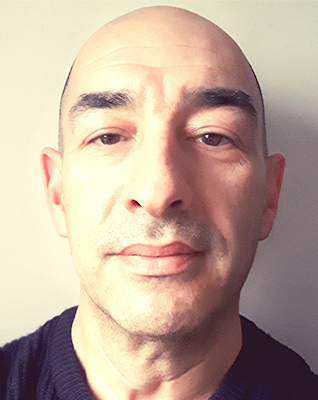
José Rouillard is a Lecturer-Researcher in Computer Science (section 27) at Université de Lille, affiliated with the CRIStAL laboratory (Centre de Recherche en Informatique, Signal et Automatique de Lille) where he works in the Brain-Computer Interface (BCI) research team. His academic position combines teaching responsibilities with active research in human-computer interaction, particularly focusing on novel interface technologies and assistive applications. Dr. Rouillard's primary research interests center around Brain-Computer Interfaces with particular expertise in Steady-State Somatosensory-Evoked Potentials (SSSEP). His work explores multimodal interaction techniques, virtual reality integration with BCI systems, and applications for individuals with motor disabilities such as Duchenne muscular dystrophy. Recent publications (2023-2024) demonstrate continued innovation in BCI technology, including Wizard of Oz studies on user perception, advanced SSSEP recording techniques with cEEGrid systems, and multimodal cobot interaction frameworks using MQTT protocol. His research bridges theoretical neuroscience with practical applications for assistive technologies. As an educator, Dr. Rouillard has created one of the most comprehensive App Inventor 2 teaching resources available, with 76 detailed projects covering the full spectrum of mobile application development. His course materials progress from basic applications to advanced implementations involving Bluetooth communication with Arduino, Firebase database usage, and AI APIs including OpenAI's ChatGPT and DALL-E. His teaching spans multiple academic years, with documented student projects from 2013 through 2023 across various Master's programs including MMD IAE, MIAGE, and e-Services. Supervised PhD thesis: "Hybrid brain-machine interface to overcome disability caused by Duchenne muscular dystrophy" (Alban Dupres, 2016) Supervised PhD thesis: "Filtrage somesthésique pour des interfaces cerveau-ordinateur utilisant des stimulations vibro-tactiles" (Jimmy Petit, 2022) Dr. Rouillard maintains a strong educational presence through his extensive online resources, including YouTube video tutorials, NextCloud file sharing for course materials, and detailed project guides. His student projects demonstrate practical applications of mobile development across diverse domains including health monitoring, gaming, social networking, and educational tools. The breadth of his educational impact is evident in the hundreds of student applications documented from 2013-2023, showcasing his commitment to practical, hands-on learning in computer science education.