Andrea Stevenson Won is a researcher at Cornell University in the Department of Communication , focusing on virtual reality (VR), human-computer interaction, and social dynamics in immersive environments. Her work explores avatar embodiment , nonverbal behavior , and accessibility in VR for users with disabilities. Research Themes : Virtual embodiment and its psychological effects Accessibility solutions for blind and low-vision users in social VR Nonverbal communication analysis in immersive environments Pro-social behavior through VR interventions Collaborative VR systems and AI integration Recent Article Trends : 2024: Investigated avatar behavior transformation in mixed reality ( MRTransformer ), AI-guided accessibility tools, and nonverbal cue adaptations 2023-2022: Focused on educational VR applications, 360° video narratives, and longitudinal team dynamics 2021-2014: Pioneered avatar embodiment studies, anxiety detection via movement tracking, and homuncular flexibility in VR
Robert D. Gregg, IV is a Professor of Mechanical Engineering, Robotics, and Electrical & Computer Engineering at the University of Michigan. He serves as Associate Director for Graduate Education at Michigan Robotics and directs the Locomotor Control Systems Laboratory. His research focuses on control systems for wearable robots, prosthetics, and orthotics, emphasizing biomimetic principles and nonlinear control theory. Gregg holds a PhD from the University of Illinois at Urbana-Champaign (2010) and prior academic roles at the University of Texas at Dallas and Northwestern University. Education: PhD, Electrical and Computer Engineering, University of Illinois at Urbana-Champaign, 2010 MS, Electrical and Computer Engineering, University of Illinois at Urbana-Champaign, 2007 BS, Electrical Engineering and Computer Sciences, University of California, Berkeley, 2006 Research Interests: Gregg’s work spans control mechanisms for bipedal locomotion, wearable robotics, nonlinear control theory, and rehabilitation engineering. His lab develops high-performance control systems for prosthetic legs and exoskeletons to enhance mobility for individuals with disabilities. Key areas include energy-efficient control strategies, adaptive impedance systems, and biomechanical modeling of human movement. Grant & Award Highlights: $3M NIH R01 Grant (2023): Modeling and control of agile powered prosthetic legs for varied activities. $1.7M NIH R01 Grant (2021): Modular powered orthoses for broad patient populations. NSF CAREER Award (2017) NIH New Innovator Award (2013) Advising & Labs: Gregg mentors PhD students in robotics and biomechanics, emphasizing independent research and collaborative team environments. His lab supports over 15 researchers and has produced notable alumni like Dr. Cara Welker (University of Colorado Boulder faculty). The lab’s work is supported by NIH, NSF, and industry partnerships. Recent Contributions: Recent work includes phase-variable control for stair climbing, energy shaping methods for exoskeletons, and open-source robotic leg platforms. Gregg also chairs major robotics conferences (e.g., IROS 2023) and advises on clinical translation of wearable robotics.
Professor Washington Yotto Ochieng serves as Head of the Department of Civil and Environmental Engineering and Chair Professor in Positioning and Navigation Systems at Imperial College London. He directs the Centre for Active Resilience and Security (CARS) and maintains key affiliations with the Centre for Systems Engineering and Innovation, Centre for Transport Engineering and Modelling, Institute for Molecular Science and Engineering, and Space Lab. His extensive advisory roles include the Science Museum Group Board of Trustees, Royal Institute of Navigation Presidency, and Royal Academy of Engineering Africa Steering Committee. His educational background includes a BSc (First Class) in Engineering from the University of Nairobi and MSc (Distinction) and PhD in Civil Engineering from the University of Nottingham. He received an honorary DSc from Technical University of Kenya in 2023. Ochieng's research pioneers critical infrastructure resilience, user-centric mobility, and positioning/navigation/timing (PNT) systems. He has designed satellite navigation systems (including Europe's EGNOS and GALILEO) for multi-domain applications and advanced Air Traffic Management and Intelligent Transport Systems. His work integrates geomatics, transportation engineering, and sustainable mobility to solve global urban infrastructure challenges, with recent emphasis on decarbonization and AI-driven solutions. His 2024-2025 publications reveal strong trends in sustainable transportation decarbonization, AI-optimized traffic management, and resilient urban positioning systems. Research focuses on hydrogen fuel cell trains, carbon-efficient aviation, and deep reinforcement learning applications for emission reduction, demonstrating interdisciplinary integration of engineering, environmental science, and artificial intelligence to address climate challenges. Fellow of the Royal Academy of Engineering (2013) Harold Spencer-Jones Gold Medal from Royal Institute of Navigation (2019) Doctor of Science (honoris causa) from Technical University of Kenya (2023) Elder of the Order of the Burning Spear (EBS) from Kenya (2023) Commander of the Order of the British Empire (CBE) (2024) Ochieng provides strategic guidance to UK Government bodies (Government Office for Science, Department for Transport, FCDO), European Parliament, and European Court of Auditors. His advisory work shaped the Blackett Review on Satellite-derived Time/Position, UK Space Strategy, and Future of Mobility report. He chairs the Science Museum London Advisory Board and leads FCDO's Sustainable Urban Economic Development program in Africa, with significant grant influence through UK National Physical Laboratory and Department for International Development. He directs the Centre for Active Resilience and Security (CARS) and leads Space Lab initiatives, focusing on mission-critical PNT systems and infrastructure resilience. His teams collaborate with international consortia including RTCM Special Committee 134 and US Institute of Navigation, developing next-generation navigation solutions for safety-critical applications across transport, aviation, and urban environments.
Marcelo M. Wanderley is a Professor and Director of the Centre for Interdisciplinary Research in Music Media and Technology (CIRMMT) at McGill University's Schulich School of Music. His academic roles include Area Coordinator for Music Technology and membership on the Executive Committee. He holds a PhD in acoustics, signal processing, and computer science from Université Pierre et Marie Curie (Paris VI). Wanderley's research focuses on novel interfaces for music performance, digital musical instruments (DMIs), and human-computer interaction. He has authored influential works such as New Digital Musical Instruments: Control and Interaction Beyond the Keyboard (2006) and pioneered research in gestural control of music. His work integrates engineering, computer science, and musicology to create innovative performance tools, including the T-Stick and Karlax instruments. He has held visiting professorships at Université de Bretagne Sud, Universidade Federal de Minas Gerais (Brazil), and the University of Mons (Belgium), where he was awarded prestigious chairs. Wanderley's awards include the Inria International Chair (2016–2020) and the Distinguished Visitor Award from the University of Auckland. His research has been widely cited in the International Conference on New Interfaces for Musical Expression (NIME), and he actively contributes to editorial boards (e.g., Computer Music Journal ) and academic leadership roles. Wanderley's lab, the Input Devices and Music Interaction Lab (IDMIL), develops open-source frameworks like Puara and Probatio for DMI design and mapping. Key research areas include haptic feedback systems, motion capture of musical performances, and accessibility in music technology. He emphasizes interdisciplinary collaboration, bridging engineering, art, and cognitive science to advance musical expression and performance practices.
Professor Kiyotaka Iwasaki at Waseda University's Faculty of Science and Engineering is a leading figure in biomedical engineering with a focus on cardiovascular device development , tissue engineering , and regulatory science . His career spans over two decades at Waseda University, including roles as Associate Professor (2006-2014) and positions at Harvard Medical School's Laboratory for Tissue Engineering. Holding a Doctor of Engineering from Waseda, he serves on numerous international regulatory committees and has contributed to ISO/TC194 standards for medical devices. 1993-2002: Waseda University Education in Mechanical Engineering 2001-2004: Research Associate at Waseda University 2004: Research Scientist at Harvard Medical School 2018-Present: Professor at Waseda University His research interests include Non-clinical testing methodologies for medical devices Regulatory science frameworks Tissue engineering for ligament and cardiac applications Cardiovascular biomedical engineering His scientific contributions reveal through Development of decellularized tissue grafts for orthopaedic surgery Innovations in 3D cardiac tissue engineering using fibrin-based cell sheet stacking Pioneering bioresorbable stent technology with magnesium alloys Creation of biomechanical simulators for valvular disease modeling His awards span from the 2021 Japanese Ministerial Science Commendation 2020 JSME Standards Award 2018 ARIA Innovation Award 2001 ASAIO Fellowship While his publications demonstrate expertise in Vascular and cardiac device testing Bioresorbable stent evaluation Machine learning in medical device regulation Decellularized tissue applications
Bruce A. Maxwell is a Teaching Professor and Assistant Director of Computing Programs at Northeastern University’s Seattle Campus, following roles as Chair of the Computer Science (CS) Department at Colby College (2013–2020) and leadership in establishing the Khoury College MS CS Align Program at the Roux Institute (2020–2022). His academic journey includes affiliations with Northeastern’s Seattle Campus and ongoing collaboration with Colby CS as a research scientist. He specializes in Computer Vision, Robotics, Computer Graphics, Game Design, and Data Analysis, with notable contributions to concussion management research through the Maine Concussion Management Initiative (MCMI), focusing on sports-related injury analysis and symptom monitoring. His research spans over two decades, with significant work in human-robot interaction, autonomous systems, and educational technology. Notable projects include developing tools for real-time shadow removal in autonomous driving contexts and analyzing cognitive outcomes in student-athletes post-concussion. Maxwell has authored over 50 peer-reviewed publications, emphasizing interdisciplinary approaches bridging computer science, sports medicine, and educational policy. Teaching innovations include integrating thematic elements (e.g., Lord of the Rings) into CS1 coursework and advocating for writing in computer science curricula. He maintains active roles in academic service, including SIGCSE conference contributions and panel discussions on gender equity in tech education. Education: Ph.D. in Robotics from Carnegie Mellon University (1996), M.Phil. in Engineering from Cambridge University (1993). Awards: Recognized for pedagogical contributions but no named awards listed in provided materials. Labs/Teams: Collaborates with the Maine Concussion Management Initiative and Khoury College’s Align Program team.
Brenna D. Argall is an Associate Professor of Computer Science, Mechanical Engineering, and Physical Medicine & Rehabilitation at Northwestern University, and a Faculty Research Scientist at the Shirley Ryan AbilityLab. Her research focuses on assistive and rehabilitation robotics, with an emphasis on human-robot interaction, shared autonomy, and intelligent control systems. She holds a PhD in Robotics from Carnegie Mellon University and has held postdoctoral fellowships at EPFL (Switzerland) and the NIH. Education: PhD in Robotics, Carnegie Mellon University (2009) Postdoctoral Fellow, EPFL (2009–2011) B.S. in Mathematics, Carnegie Mellon University (2002) Affiliations: Director, Argallab (Assistive & Rehabilitation Robotics Laboratory) Member, Northwestern Center for Robotics and Biosystems Advisor, Northwestern MS in Robotics Program Her research explores dynamic autonomy allocation , shared control systems , and interface-aware robotics , with applications in rehabilitation and assistive devices. Key projects include wheelchair automation, robotic arm control, and body-machine interfaces for users with motor impairments. Research Highlights: NSF CAREER Award (2016) AIMBE Fellow (2020) "40 under 40" Innovator (Crain’s Chicago Business) Publications emphasize human-centered robotics, including over 50 peer-reviewed articles on topics like intent inference, assistive autonomy, and teleoperation assistance. Current lab efforts prioritize interface-aware systems and customizable shared control to enhance accessibility for users with disabilities.
Professor Bruce N. Walker holds a joint appointment in the School of Psychology and School of Interactive Computing at Georgia Institute of Technology, within the College of Sciences. His research focuses on human-centered technology design, emphasizing accessibility, auditory displays, and human-AI interaction. He leads the Sonification Lab, pioneering multimodal interfaces and inclusive technology solutions. He earned his Ph.D. in Human Factors and Human-Computer Interaction from Rice University in 2001. Research Interests: Trust in technology, accessible interfaces, sonification, AI-human collaboration, and HCI in non-traditional environments. Current projects include the AccessCORPS VIP initiative to enhance course accessibility and studies on automated vehicle interaction. Awards: Best Paper Award at AudioMostly 2014 for auditory weather reports research. Active in professional organizations like the International Community for Auditory Display and Human Factors and Ergonomics Society. Teaching: Courses include Research Methods for Human Factors, Sensation and Perception, and HCI Foundations. Supervises interdisciplinary teams in the Sonification Lab R&D Studio and AccessCORPS VIP. Labs/Teams: Sonification Lab (multimodal data exploration) and AccessCORPS (disability-inclusive course design). Collaborates on international projects like the Mwangaza initiative for learners with vision impairment in Kenya.
Troy McDaniel is an Assistant Professor at Arizona State University's School of Manufacturing Systems and Networks, specializing in haptic interfaces and assistive technologies for people with disabilities. With over 50 peer-reviewed publications and two authored books, his work bridges engineering, computer science, and healthcare to develop innovative rehabilitation solutions. Ph.D. from Arizona State University His research focuses on haptic perception and human augmentation through wearable technologies, with emphasis on assistive devices for motor and cognitive rehabilitation. Key areas include vibrotactile communication systems, social robotics for elderly care, and machine learning applications for activity recognition. His work prioritizes user-centered design for real-world disability challenges. Recent publications (2023-2025) demonstrate strong trends in haptic neuro-spatial rehabilitation, executive function therapy apps, and social robot companionship systems. His research increasingly integrates privacy-preserving AI for smart city health applications while maintaining clinical validity through partnerships with institutions like Mayo Clinic. Multiple Top 5% teaching awards for faculty at the Ira A. Fulton Schools of Engineering Dr. McDaniel advises graduate students in manufacturing systems and robotics through dissertation committees (MFG 799, CSE 799), with recent projects spanning haptic training simulations to PERACTIV activity monitoring systems. His research funding includes significant NSF grants like the IGERT program on person-centered technologies for disabilities and collaborations with Intel Corp on smart stadium applications. He contributes to ASU's Smart Living Research initiative, developing haptic neuro-spatial rehabilitation devices and social robotics frameworks within interdisciplinary teams focused on translating lab innovations to community health solutions.
Juan Wachs is the James H. and Barbara H. Greene Professor at the Edwardson School of Industrial Engineering, Purdue University. He holds a courtesy appointment in Biomedical Engineering and is an Adjunct Professor of Surgery at the IU School of Medicine. His research focuses on the intersection of robotics, human-AI interaction, and healthcare systems, with a particular emphasis on surgical robotics, assistive technologies, and telemedicine. Education: PhD in Industrial Engineering (Intelligent Systems), Ben-Gurion University of the Negev MSc in Industrial Engineering (Information Systems), Ben-Gurion University of the Negev BEdTech in Electrical Education, ORT Academic College in Jerusalem Research interests include surgical telementoring via augmented reality, gesture-based interfaces for sterile environments, and semi-autonomous robotic systems for healthcare. His ISAT Lab develops solutions like the STAR telementoring system and robotic assistants like Gesturenurse and FIST-D for explosive ordnance disposal. Recent work emphasizes AI-driven medical decision support (Trauma THOMPSON), burn wound characterization, and robotic ultrasound automation. Key contributions include over 100 publications in robotics, medical AI, and human factors. Scientific Awards: James H. and Barbara H. Greene Professorship Purdue University Faculty Scholar Advising & Labs: Guides over 10 PhD/Master’s students in robotics and healthcare tech ISAT Lab fosters interdisciplinary projects in surgical robotics, human-robot interaction, and accessibility
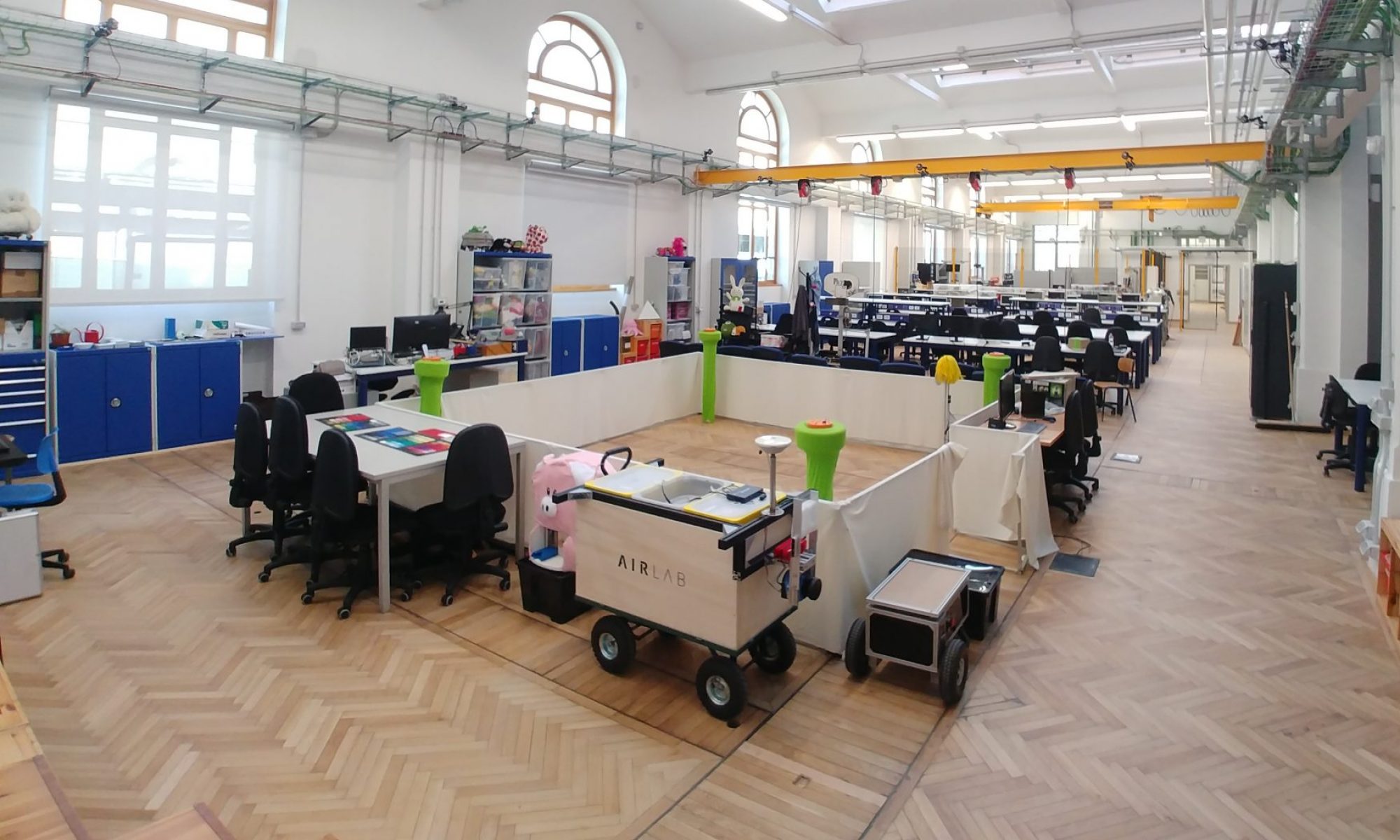
Andrea Bonarini is a Professor at the Department of Electronics, Information, and Bioengineering (DEIB) within the School of Industrial and Information Engineering at Politecnico di Milano. His research focuses on Artificial Intelligence , Robotics , and Human-Robot Interaction , particularly in assistive technologies for children with disabilities and autism therapy. Key Research Areas: Reinforcement Learning, Social Robotics, Affective Computing, Accessibility in Robot Design Notable Projects: Development of frameworks like Mushroomrl and datasets like POLIMI-ITW-S for robotics research His recent publications highlight advancements in playful robotics for neurodevelopmental disorders, emotion projection in non-bio-inspired robots, and safety experiments for small social robots interacting with children. He also contributes to ethical, social, and psychological challenges in robotics applications.
Gonzalo Nápoles is an Assistant Professor at Tilburg University's School of Humanities and Digital Sciences, Department of Cognitive Science and AI. He holds a Doctoral Degree in Computer Science from Rough Cognitive Networks (2014–2017). His research focuses on AI applications in cognitive modeling, pattern classification, and neural networks with interdisciplinary applications in healthcare, finance, and social sciences. Key research areas include Fuzzy Cognitive Maps, data augmentation techniques for neuroimaging, and interpretable machine learning systems. He actively contributes to UN Sustainable Development Goals related to education and innovation. Recent work explores AI ethics, financial risk assessment using dynamic networks, and sensory processing disorder analysis through neural networks. Education: Doctoral Degree in Computer Science, 2017 (Thesis: Rough Cognitive Networks) Prize-winning research includes Best Paper Awards at CIARP 2021 and IWAIPR 2023. He collaborates internationally, hosting academic visitors and serving on multiple PhD committees. Current projects involve stock prediction using graph neural networks and fMRI data augmentation methodologies. Awards: Best Paper Award - CIARP 2021 Best Paper Award - IWAIPR 2023 Nápoles advises on PhD theses in cognitive science and AI applications. His work bridges theoretical advancements with practical implementations in healthcare, finance, and urban systems.
Emma Colamarino is a Researcher at the Department of Computer, Control and Management Engineering "Antonio Ruberti" of Sapienza University of Rome. She holds an M.Sc. in Biomedical Engineering (2014, cum laude) and a Ph.D. in Bioengineering (2019). Since 2015, she has been a research collaborator at the Neuroelectrical Imaging and Brain-Computer Interfaces Lab of IRCCS Fondazione Santa Lucia in Rome and served as a Visiting Ph.D. student at Imperial College London (2018). From 2019 to March 2023, she was a Post-Doctoral Fellow at Sapienza University. Her research focuses on Advanced electroencephalographic (EEG) and electromyographic (EMG) signal processing Brain-Computer Interface (BCI) protocols for cerebral function recovery Machine learning in neurorehabilitation Hybrid BCIs integrating cortico-muscular networks Recent publications address stroke rehabilitation, BCI design, spectral graph theory, and EMG-EEG integration. Her work spans biomedical data analysis, neuroengineering, and rehabilitation technology validation. Scientific awards include multiple grants from Sapienza University and the Italian Ministry of Health, a Student Award at the 7th International BCI Meeting (2018), and recognition as a Subject Expert (2019). She has supervised/co-supervised 18 MD theses across Biomedical, Management, and Robotics Engineering disciplines.
Daniel Groos is a Researcher at the Department of Computer Science, NTNU, specializing in the development of machine learning models for medical and sports-related motion analysis. His work focuses on applying deep learning techniques to video-based movement analysis for early detection of cerebral palsy in infants and performance analysis in elite sports. Education: PhD in Medical Technology (NTNU, 2018-2022), MSc in Computer Science with specialization in AI (NTNU, 2013-2018). Research interests include interdisciplinary collaborations with St. Olavs Hospital and Norwegian Open AI Lab. Key topics are deep learning applications in healthcare, computer vision for movement analysis, and sports biomechanics. Publications emphasize automated clinical analysis, video-based diagnostics, and human pose estimation. Notable projects include a deep learning method for cerebral palsy prediction and motion tracking systems for elite ski jumpers. Collaborations with institutions like the Centre for Elite Sports Research and Olympiatoppen highlight his work in sports performance analysis. No formal scientific awards listed but active in academic outreach with lectures at European conferences on childhood disability and movement analysis.
Freyja Hartzell is Associate Professor, Director of Masters Studies, and Editor of 'West 86th: A Journal of Decorative Arts, Design History, and Material Culture' at Bard Graduate Center, an advanced graduate research institute in New York City dedicated to the cultural histories of the material world. She teaches the history of modern design, architecture, and art with a focus on European and American material culture from 1750 to the present. Her research centers on the dynamic relationship between humans and objects, examining how designed things shape and are shaped by cultural, social, and political contexts. Hartzell's work spans European design from the nineteenth through twenty-first centuries, with particular expertise in German design and cultural politics, object agency, materiality, and dolls/toys as significant cultural artifacts. Her approach emphasizes close examination of material forms and their historical meanings to understand broader cultural significance. Hartzell's scholarly output reveals a consistent focus on German design history, particularly the work of Richard Riemerschmid and interwar period design. Her publications demonstrate a sophisticated exploration of transparency in glass design, material politics, and the philosophical dimensions of objects. A notable thematic thread connects material substances (wood, glass, textiles) with their cultural and political meanings across different historical periods. Richard Riemerschmid's Extraordinary Living Things (MIT Press, 2022) Berlin Program for Advanced German and European Studies fellowship German Academic Exchange Service (DAAD) support National Endowment for the Humanities grant Corning Museum of Glass research support 2022 Grants to Individuals Hartzell actively mentors graduate students through the MA and PhD programs at Bard Graduate Center, with courses including 'In Focus: Welcome to the Dolls' House,' 'Living Things: Biology & Design in the Long Nineteenth Century,' and 'Doll Parts: Human Forms in the History and Theory of Design.' She is currently developing 'Dollatry: Designing Likeness,' a book exploring dolls, puppets, and robots as sites for examining subject-object relations, alongside a related exhibition scheduled to open at the Bard Graduate Center Gallery in February 2025. Her research on disability representation in dolls was recently featured on Jonathan Van Ness's podcast 'Getting Curious.'