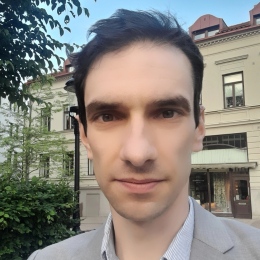
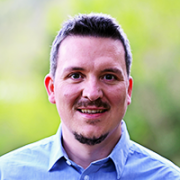
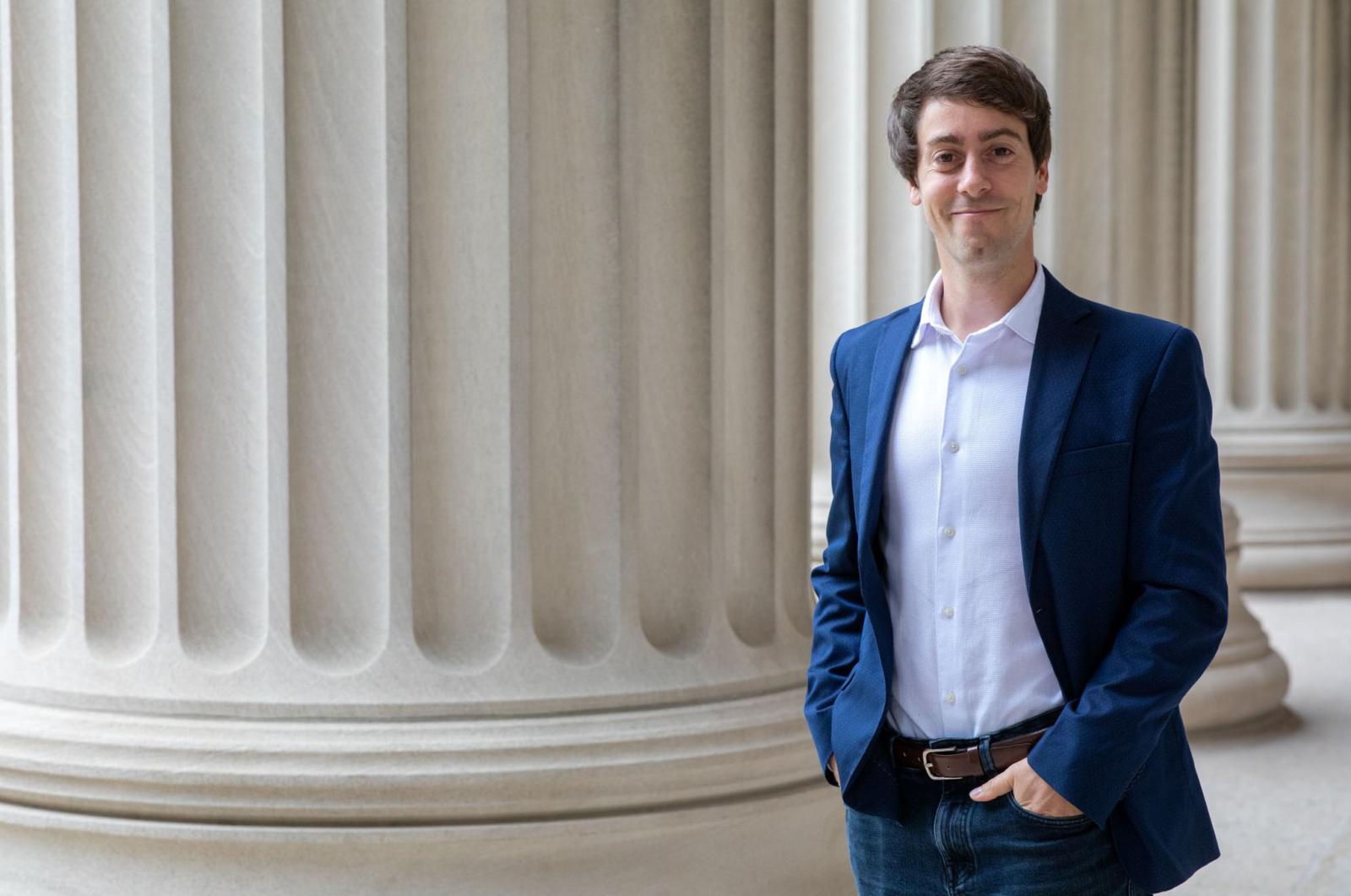
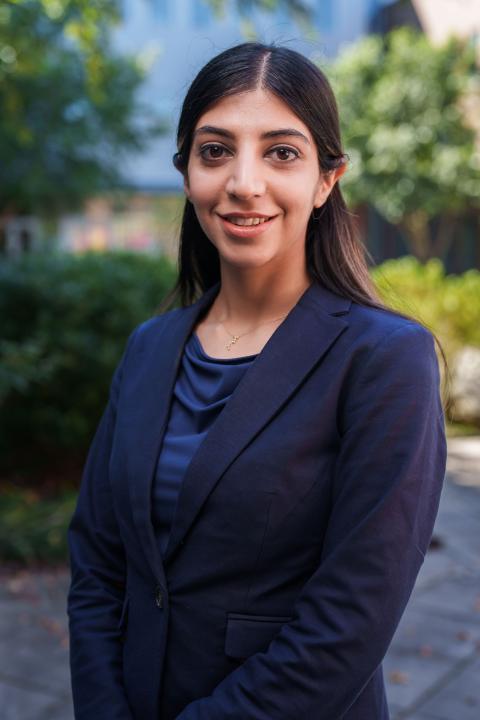
Isaac Taylor is a Lecturer in the Department of Philosophy at Stockholm University. His research intersects political philosophy, ethics, and emerging technologies, with a focus on AI accountability, counterterrorism ethics, and public goods theory. Research Interests: AI ethics and autonomous systems governance Counterterrorism moral frameworks Public goods and distributive justice Security policy and just war theory Recent Publication Trends: His 2025 work explores AI agency and explainability. Earlier studies analyze collective responsibility for autonomous weapons, algorithmic sentencing limits, and minimalist approaches to conflict resolution.
Professor Ben Horan is the Head of School of Engineering at Deakin University , Faculty of Science Engineering and Built Environment. He holds a Doctor of Philosophy and Bachelor of Engineering from Deakin University, with expertise in electrical engineering , control systems , and human-centred computing . As a leading researcher in virtual reality (VR) applications, he focuses on safety training, aged care, and extended reality (XR) systems. PhD in Electrical Engineering (Deakin University) Graduate Certificate of Higher Education (Deakin University) Bachelor of Engineering (Deakin University) His research spans VR for electrical safety training , automated vehicle interactions , and XR applications in museums . His work includes grants from the Department of Health, Melbourne Water Corporation, and City of Greater Bendigo. Recent publications analyze 360° video realism, cognitive load in virtual workplaces, and AR for Industry 5.0. Professor Horan supervises PhD candidates exploring topics like autonomous vehicle pedestrian interactions , VR stress mitigation , and industrial XR systems . He has completed supervision of 10+ PhD and Master’s students.
Dr. Erica Ballantyne is a Senior Lecturer in Operations and Supply Chain Management at the University of Sheffield Management School, where she leads the Logistics & Supply Chain Management Research Theme. With a PhD from the University of Leeds and industry experience at major logistics firms, her work focuses on sustainable transport solutions. She holds a PG Certificate in Learning & Teaching and is a Fellow of the Higher Education Academy. Education: BSc Hons Business Administration & Transport Management (Cardiff University) MSc Logistics and Supply Chain Management (University of Hull) PhD in Transport Studies (University of Leeds) Research Interests: Dr. Ballantyne specializes in electric vehicle applications in logistics, urban freight planning, and sustainable transport policy. Her interdisciplinary approach integrates energy storage solutions with transport systems, reverse logistics optimization, and behavioral aspects of supply chain management. Publication Trends: Recent works demonstrate a strong focus on data-driven modeling of EV energy consumption, infrastructure integration for urban fleets, and policy frameworks for sustainable freight. Methodologies emphasize empirical analysis and cross-sector applications. Awards: Fellow of the Higher Education Academy (FHEA) Research Leadership: Principal Investigator for multiple grants including EPSRC-funded 'Fleet Energy Optimisation' and EU H2020 project 'ProSFeT'. Actively supervises PhD candidates investigating EV charging infrastructure and last-mile delivery solutions. Professional Engagement: Committee member of Chartered Institute of Logistics & Transport (CILT) South Yorkshire group, with research cited in international policy frameworks.
Dinesh Manocha is a Distinguished University Professor of Computer Science at the University of Maryland, with joint appointments in the Department of Electrical and Computer Engineering and the University of Maryland Institute for Advanced Computer Studies (UMIACS). He is also affiliated with the Maryland Robotics Center and the Institute for Systems Research. His educational background includes a Ph.D. in Computer Science from the University of California at Berkeley (1992) and a B. Tech in Computer Science and Engineering from the Indian Institute of Technology, Delhi, India (1987). Professor Manocha's research spans multiple domains with significant emphasis on: Computer Graphics and Visualization Robotics and Motion Planning Virtual and Augmented Reality Systems Geometric Computing Algorithms AI Applications for Autonomous Systems High Performance Computing His extensive publication record shows consistent innovation in multi-agent navigation, collision avoidance algorithms, and applications in virtual environments. Recent work focuses on trajectory prediction for autonomous vehicles and physics-based simulation for immersive experiences, with algorithms integrated into industry-standard systems like ROS (Robot Operating System). Among his numerous honors, Professor Manocha is recognized as: ACM, IEEE, AAAS, and AAAI Fellow Member of the IEEE VGTC Virtual Reality Academy Recipient of the Pierre Bézier Award from the Solid Modeling Association University of Maryland Distinguished University Professor Multiple best paper awards across premier conferences He has supervised 54 PhD students throughout his career and currently advises numerous graduate researchers. His research has attracted significant funding from NSF, Google, Amazon, Facebook, and industry partners. Notably, he co-founded Impulsonic, a company developing physics-based audio simulation technologies acquired by Valve Corporation in 2016. Professor Manocha leads the GAMMA research group, which continues to advance geometric algorithms with applications across multiple disciplines.
Dr. Sönke Knoch is a researcher affiliated with the Ubiquitous Media Technology Lab (UMTL) at the Saarland Informatics Campus and the German Research Center for Artificial Intelligence (DFKI) GmbH . His work focuses on Human-Computer Interaction , Activity Recognition , Process Mining , and Industry 4.0 technologies. Current Affiliation: DFKI GmbH (Saarland Informatics Campus) Academic Role: Researcher Research Interests span digital twins, augmented reality in manufacturing, and safety-critical systems. He leads projects like RZzKI (AI and Digital Transformation) and BaSySafe (risk assessment via management shells). His work addresses zero-defect manufacturing and cognitive support for impaired workers . Recent Publications focus on digital twins for industrial safety, AR-based task adaptation , and AI quality management in smart factories. Key themes include human-centric AI , real-time process conformance , and context-aware systems . Leadership includes contributing to the WALL-ET project for autonomous logistics and co-developing the PARTAS system for cognitively impaired workers.
Prof. Fabian Meder is an Associate Professor at the BioRobotics Institute of Scuola Superiore Sant'Anna in Pisa, Italy, leading the Lab for Surface Phenomena and Integrated Systems . He holds a PhD in Materials Science (2013) from the University of Bremen and has held positions at EMPA (Switzerland), University College Dublin (Ireland), and the Max Planck Institute (Germany). His research focuses on surface phenomena and their applications in energy harvesting, soft robotics, and biohybrid systems, particularly leveraging plant surfaces for sustainable technologies. Education: Bachelor's in Bio- and Nanotechnology (2008) – South Westphalia University of Applied Sciences PhD in Materials Science (2013) – University of Bremen Research Interests: Triboelectric charging and energy conversion on biological surfaces Plant-inspired biohybrid systems for autonomous energy generation Epicuticular electrification mechanisms and their ecological implications Soft robotics and sensor technologies integrated with natural systems Grants & Awards: ERC Consolidator Grant (2024) for the EpiC project on epicuticular electrification National Italian Habilitation (ASN) as Associate Professor in Physical Chemistry (2022) Labs & Teams: Leads the Lab for Surface Phenomena and Integrated Systems, collaborating on interdisciplinary projects in biohybrid robotics and energy harvesting.
Jun Shen is a Professor at the School of Computing and Information Technology, University of Wollongong. He specializes in computational intelligence, cloud computing, and big data applications, with a focus on AI-driven solutions for real-world challenges in transport systems, healthcare, education, and environmental management. He has secured over 40 research grants totaling AU$4.5 million and supervised 26 completed PhD projects. His work spans interdisciplinary areas including bioinformatics, smart manufacturing, and digital health. Research interests include bio-inspired algorithmic optimization, AI in arts/media, and edge computing for IoT systems. He has pioneered research centers in applied computing since 2014 and holds editorial roles in top journals like IEEE Transactions. As an IEEE Distinguished Lecturer, he actively promotes AI ethics and interdisciplinary collaboration. Recent publications emphasize adversarial machine learning defenses, UAV systems, and multimodal data fusion. His supervision includes projects in intelligent transport systems, cloud computing, and e-learning. Grants include projects on resilient energy systems and UAV geolocation verification. Leadership roles include leading over 20 researchers and chairing conferences. He advocates for digital transformation in public services and has conducted fieldwork at MIT, UCI, and Georgia Tech.
Raphael Zufferey is an Assistant Professor in the Department of Mechanical Engineering at the Massachusetts Institute of Technology, where he leads the MIT AURA (Aerial-Aquatic bio-inspired robots) laboratory since January 2025. His research focuses on developing bio-inspired robotic systems capable of seamless transitions between aerial and aquatic environments for environmental monitoring applications. Education: 2013 - EPFL BSc 2015 - EPFL MSc 2020 - Imperial College London PhD Zufferey's research interests center around autonomous robotics with emphasis on bio-inspired hybrid designs that enable seamless transitions between aerial and aquatic environments. His work bridges mechanical engineering, robotics, and ocean sciences to develop novel propulsion methods and control systems for environmental monitoring applications. He specializes in creating miniature robots that can operate in challenging aquatic environments while maintaining energy efficiency through innovative locomotion strategies. His publications demonstrate a consistent focus on solving the fundamental challenges of aerial-aquatic transition in robotics, with particular emphasis on bio-inspired designs that mimic natural organisms. The research spans multiple disciplines including fluid dynamics, control theory, and materials science to create functional hybrid robotic systems. Scientific Awards: 2022 Marie Skłodowska-Curie Actions (MSCA) Individual Fellowship 2020 Best PhD in Robotics UK 2019 Best Paper Award, AMAM conference, Lausanne Switzerland 2018 Best Conference Paper Nominee, ICRA conference, Brisbane Zufferey actively mentors students and postdocs in his AURA lab, with current members including graduate students, postdocs, and UROPs working on various aspects of aerial-aquatic robotics. He serves in editorial roles for prominent robotics publications and organizes workshops at major conferences, demonstrating his growing influence in the robotics community. His lab has secured funding for innovative projects including the REaCT workshop at ICRA 2025 focused on Robotics for Environmental and Climate Assessment. The MIT AURA lab, established in January 2025, has quickly grown to include multiple researchers working on cutting-edge projects such as flapping-wing perching mechanisms, aquatic jump-gliders using water-reactive fuels, and sailing-flying hybrid robots for extended mission durations. The lab collaborates with institutions like Woods Hole Oceanographic Institution and maintains strong connections with researchers at EPFL.
Dr. Arezoo Hasankhani is an Assistant Professor at the University of New Hampshire (UNH) in the College of Engineering and Physical Sciences, affiliated with the Department of Electrical and Computer Engineering and the Ocean Engineering program. She leads the Energy Control and Optimization (ECO) Lab, focusing on marine renewable energy systems, control systems design, and optimization for sustainable ocean resource use. Prior to joining UNH in January 2024, she earned her Ph.D. in Electrical Engineering from Florida Atlantic University and completed a postdoctoral fellowship at Cornell University. Research Interests: Her work integrates control engineering, optimization, and machine learning (e.g., reinforcement learning) to address challenges in ocean energy systems, autonomous underwater vehicles, and marine spatial planning. Key areas include: Design and control co-optimization of marine current turbines Path planning for autonomous systems in uncertain ocean environments Multi-disciplinary approaches to enhance the 'blue economy' through sustainable ocean energy Integration of renewable energy systems into microgrids and power networks Teaching: She teaches graduate-level courses in control systems (ECE/ME 772/872) and ocean instrumentation (OE 610), alongside doctoral research supervision. Collaborations: Her interdisciplinary research bridges control systems, mechanical design, and ocean engineering, supported by close ties with UNH's Ocean Engineering program. Recent projects include wave-powered offshore aquaculture farm planning and reinforcement learning-driven path optimization for marine turbines. Labs/Teams: Leads the ECO Lab, fostering innovation in energy control systems and ocean technology. Collaborates with industry and academic partners on marine energy solutions.
Gunho Sohn is an Associate Professor and Department Chair in the Earth and Space Science and Engineering (ESSE) Department at York University's Lassonde School of Engineering. His research focuses on advanced geomatics engineering applications, including 3D urban modeling, photogrammetric computer vision, and geospatial data integration. He specializes in developing innovative solutions for navigation systems, energy optimization, and autonomous robotics through interdisciplinary approaches. Dr. Sohn's work emphasizes practical implementations of remote sensing technologies, with notable contributions to LiDAR data processing, SLAM systems, and BIM-GIS integration. His research has addressed real-world challenges such as improving air quality models using industrial plume observations and creating inclusive pedestrian navigation tools using open geospatial datasets. Recent trends in his publications highlight advancements in deep learning for geospatial tasks, including semantic segmentation of aerial LiDAR data, noise reduction in sensor networks, and UAV positioning systems. His work also explores digital twin applications for simulating urban environments and optimizing building energy consumption through BIM data analysis. While no specific awards or grants are listed, his extensive publication record reflects significant contributions to the fields of geomatics and computer vision. His research group collaborates on large-scale datasets like YUTO MMS and Yuto Semantic, advancing mobile mapping and semantic understanding of urban infrastructure.
Mubarak A. Shah is a Professor in the Department of Computer Science at the University of Central Florida (UCF) and holds the UCF Trustee Chair. He is affiliated with CREOL, The College of Optics and Photonics, and leads the UCF Center for Research in Computer Vision. His research focuses on advancing computer vision technologies, with applications in image processing, machine learning, and artificial intelligence. Shah’s academic roles include contributing to interdisciplinary research at the intersection of computer science and optics. His work emphasizes computational methods for visual data analysis and has likely influenced advancements in fields such as robotics, medical imaging, and autonomous systems. Though no specific grants, awards, or student advisees are listed here, his position as a Trustee Chair underscores his institutional leadership. The UCF Center for Research in Computer Vision serves as a hub for collaborative projects, fostering innovation in visual computing.
Houssam Abbas is an Assistant Professor in the School of Electrical Engineering and Computer Science at Oregon State University. He holds a Ph.D. in Electrical Engineering from Arizona State University and has professional experience in SoC verification at Intel and postdoctoral research at the University of Pennsylvania. His work focuses on computational ethics for AI agents, design/verification of cyber-physical systems, and autonomous systems like self-driving cars and drones. Education: Ph.D., Electrical Engineering, Arizona State University (2015) M.Sc., Electrical Engineering, Arizona State University (2006) B.Eng., Computer and Communications Engineering, American University of Beirut (2004) Abbas' research integrates deontic logic for ethical obligations in AI, distributed verification techniques for autonomous systems, and fair control algorithms for aerial missions. He co-leads the F1/10 autonomous racing initiative and teaches hands-on courses on self-driving cars. Awards: 2022 NSF CAREER Award 2022 Grainger Foundation Frontiers of Engineering Symposium Participant Grants & Projects: NSF CCRI Grant for F1/10 Racecar platforms (with Penn and Clemson) FAA ASSURE project on UAV cybersecurity Lab/Teams: His work involves the Autonomous Systems Lab , focusing on ethical AI, robotics, and formal verification tools like the F1/10 platform.
Muhammad R. Hajj is the George Meade Bond Professor, Chair of the Department of Civil, Environmental and Ocean Engineering, and Director of the Davidson Laboratory at Stevens Institute of Technology. With a distinguished career spanning over three decades, his expertise lies in nonlinear dynamics , fluid-structure interactions , and energy harvesting , applying these to ship hydrodynamics , biomimetic flight/underwater vehicles , and coastal resilience . He has mentored 32 PhD students and authored over 170 journal publications. Education PhD (1990), MS (1985), Civil Engineering , University of Texas at Austin BE (1983), Civil Engineering (with Distinction) , American University of Beirut Research Interests Dr. Hajj’s work bridges nonlinear dynamics and fluid mechanics to address challenges in structural/aeroelastic stability , bio-inspired design , and renewable energy systems . His fluid-structure interaction studies focus on ship hydrodynamics , transonic flutter , and storm surge prediction , while his energy harvesting research explores piezoelectric systems , self-powered sensors , and biomimetic energy conversion . Recent Trends in Publications His 2022-2021 publications emphasize coastal extreme weather resilience via AI-driven storm surge modeling , bio-inspired robotic fish for underwater energy harvesting , and nonlinear aeroelastic systems to enhance renewable energy extraction . Themes include high-efficiency piezoelectric designs , vortex-induced vibration control , and ultrasonic contactless power transfer , reflecting his commitment to integrating nonlinear dynamics with practical engineering applications . Scientific Honors Fellow, Engineering Mechanics Institute, ASCE Distinguished Civil Engineering Alumni (AUB, 2019) Dean’s Award for Excellence in Research (VT, 2016) Distinguished Leader in Research (VT, 2016) Excellence in Research Award (VT, 2015) Advising and Grants Dr. Hajj has supervised 32 PhD students , many of whom hold prestigious roles in academia and industry. He has secured major grants, including $1.8M from the Department of Energy for floating wave energy converters , $4.94M from the Port Authority for storm surge forecasting , and $200K from the NSF for bio-inspired telemetry energy harvesting .
Brendan Englot is the Anson Wood Burchard Endowed Professor and Director of the Stevens Institute for Artificial Intelligence (SIAI) at Stevens Institute of Technology. He holds a Ph.D., S.M., and S.B. in Mechanical Engineering from MIT. His research focuses on perception, navigation, and decision-making algorithms for mobile robots in complex environments, particularly underwater and autonomous systems. He has held roles such as Professor (2024–present), Associate Professor (2020–2024), and Assistant Professor (2014–2020) at Stevens, and previously worked at the United Technologies Research Center and Yale University. Education: Ph.D., Mechanical Engineering, MIT, 2012 S.M., Mechanical Engineering, MIT, 2009 S.B., Mechanical Engineering, MIT, 2007 Research Interests: Englot’s work emphasizes robust autonomy for unmanned vehicles in degraded conditions, leveraging AI to enhance situational awareness and decision-making under uncertainty. Key areas include navigation algorithms for underwater, aerial, and ground vehicles, sensor fusion, and multi-agent systems. Awards: AMiner’s Top 100 Robotics Scholars (2023, 2024) Provost’s Award for Research Excellence (2021) NSF CAREER Award (2017) ONR Young Investigator Award (2020) Grants & Advising: Englot has secured over $5M in grants as PI, including projects on underwater exploration, reinforcement learning for navigation, and robotic inspection systems. He mentors students in robotics, autonomy, and AI applications. Labs & Teams: Leads the SIAI and collaborates on projects involving autonomous vehicles, SLAM systems, and marine robotics through Stevens’ interdisciplinary initiatives.
Dr. Lei Fan is an Assistant Professor in the Department of Engineering Technology at the University of Houston, with a joint appointment in the Electrical and Computer Engineering (ECE) Department. His research focuses on power system operations, optimization algorithms, quantum computing, and energy storage systems. He holds a Ph.D. from the University of Florida and a B.S. from Hefei University of Technology. Education: Ph.D., University of Florida B.S., Hefei University of Technology Research Interests: Dr. Fan’s work bridges theoretical optimization and practical energy systems, including quantum algorithms for power grid management, battery storage planning, and distributed quantum computing architectures. His LORE (Learning & Operations Research & Energy) lab explores cutting-edge applications in teleoperation, satellite networks, and environmental monitoring. Publications: Recent work emphasizes quantum computing’s role in solving complex optimization problems, such as entanglement routing in satellite networks and distributed hydrogen-power systems. His research also integrates machine learning for methane plume detection and hyperspectral imaging. Labs/Teams: He leads the LORE lab, advancing interdisciplinary research in energy systems and quantum technologies.