Oliver Lomp is a researcher at the Institute for Neuroinformatics (INI) within the Faculty of Computer Science at Ruhr University Bochum. His work focuses on integrating perception and object recognition into dynamic field theory frameworks for robotic systems. He actively contributes to publication and teaching in neurorobotics and cognitive systems. Contact details: Email: oliver.lomp@ini.rub.de Office: NB 02/77, Ruhr University Bochum Campus Research trends include: Dynamic Field Theory applications in robotics Neurodynamic architectures for autonomous systems Object recognition with concurrent pose estimation Development of cognitive frameworks like CEDAR
Amir Taherkordi is a Professor in the Networks and Distributed Systems group at the Department of Informatics, University of Oslo, Norway. His research focuses on resource-efficiency, scalability, adaptability, and mobility in distributed systems for emerging technologies like IoT, Fog/Edge/Cloud Computing, and Cyber-Physical Systems (CPS). University: University of Oslo Department: Informatics Academic Rank: Professor His research spans IoT, Edge/Fog Computing, and Cyber-Physical Systems, emphasizing energy efficiency, privacy preservation, and self-adaptive architectures. Key areas include network traffic classification, computation offloading, and federated learning applications in vehicular systems. Recent publications highlight advances in latency-aware IoT data transmission , federated vehicular networks , energy-efficient wireless charging , and privacy-preserving data integration . These works often integrate machine learning with network optimization. Projects include the CPS Lab at UiO, DILUTE (Fluid Service Abstraction), and the Gemini Centre on IoT . He collaborates on initiatives like PACE for energy informatics curricula development.
Jason B. Moats is a Professor of Practice at Texas A&M University and Director of the USA Center for Rural Public Health Preparedness. With a distinguished background spanning academia, U.S. Navy service, fire service, and emergency management, he integrates practical field experience with scholarly research to advance disaster response systems and public safety training methodologies. His academic credentials include: PhD in Educational Human Resource Development, Texas A&M University (2013) MS in Educational Human Resource Development, Texas A&M University (2007) BS in Workforce Education and Development, Southern Illinois University, Carbondale (1997) Dr. Moats' research centers on disaster management training and technology acceptance within public safety ecosystems. He pioneers human-centered approaches to immersive technologies (AR/VR), robotics deployment in crises, and equity-focused emergency preparedness. His work critically examines barriers for underrepresented groups in fire services while developing adaptive training frameworks for emergency responders operating in resource-constrained environments. Analysis of his 2020-2025 publications reveals three dominant trajectories: (1) Immersive technology integration in triage training systems, (2) Robotics applications during pandemics and natural disasters, and (3) Socio-technical factors affecting vulnerable populations' disaster resilience. These intersect with his foundational work on scholar-practitioner development and technology adoption theory. His accolades include: Regents Fellow Award (Texas A&M University System) Distinguished Service Award (Texas A&M Engineering Extension Service) Navy and Marine Corps Achievement Medal Valor Award (Escambia County Firefighters Association) As an active scholar-practitioner, Dr. Moats serves on editorial boards for human resource development journals and contributes to national policy discussions through non-profit and governmental boards. His leadership in the USA Center for Rural Public Health Preparedness drives innovation in rural emergency response capabilities through technology adaptation and workforce development initiatives. The USA Center for Rural Public Health Preparedness, under his direction, develops specialized training programs addressing unique challenges in rural disaster management, including telehealth integration, cross-jurisdictional coordination, and culturally competent response strategies for underserved communities.
Srishti Yadav is a Research Fellow at the University of Copenhagen and University of Amsterdam , affiliated with the Pioneer Centre for AI and ILLC respectively. She is advised by Dr. Serge Belongie and Dr. Ekaterina Shutova . Education: M.Sc. (Research-Track) in Computing Science, Simon Fraser University , Canada Research Interests: AI and Society Cross-Cultural Competency in Multimodal Models AI Safety and Evaluation Frameworks Model Interpretability and Dataset Creation Scientific Awards: ELLIS PhD Fellowship Advising & Community: Board Member, Women in Computer Vision (WiCV) Advisor for WiCV@ICCV2023 and WiCV@CVPR 2021 Chaired workshops at CVPR 2024, CVPR 2023, CVPR 2020 Labs & Teams: Belongie Lab (University of Copenhagen) Shutova Lab (University of Amsterdam) Collaborator at MILA Biodiversity Monitoring Project
Tero Karppi is an Associate Professor at the University of Toronto Mississauga's Institute of Communication, Culture, Information, and Technology (ICCIT), with a graduate appointment in the Faculty of Information. His research focuses on Critical Computation, Digital Media, and disconnection studies, examining how social media platforms engage users and maintain power through design and algorithmic practices. He holds a PhD from the University of Turku and has held roles at institutions like the University at Buffalo and Microsoft Research. Key publications include *Disconnect: Facebook’s Affective Bonds* (2018) and co-authored works like *Undoing Networks* (2021). Education: PhD in Media Studies, University of Turku, Finland Previous positions at University of Tampere's Game Research Laboratory and Microsoft Research Research Interests: Dr. Karppi explores disconnection studies, platform power dynamics, social media design, and media theory. His work critiques how digital platforms shape user behavior and societal structures through cultural techniques and algorithmic governance. He is particularly interested in the paradoxes of user disengagement and corporate accountability in tech. Publications: His recent work (2021-2024) addresses platform studies, digital standards, and disconnection paradoxes. Earlier research includes analyses of AI limitations, predictive policing, and robotic care. Advising & Labs: Currently supervising Yuxing (Yolanda) Zhang. Affiliated with the Schwartz Reisman Institute for Technology and Society. His lab work integrates media theory with digital humanities approaches.
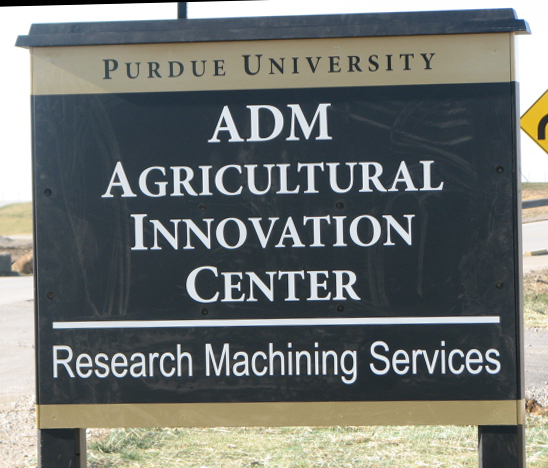
John T. Evans IV is an Assistant Professor in the Department of Agricultural & Biological Engineering at Purdue University. He specializes in Machine Systems and Automation, focusing on agricultural machine design, precision agriculture technologies, and automated systems modeling. His research bridges robotics, digital agriculture, and sustainable farming practices, contributing to advancements in autonomous navigation and machine learning applications for crop management. Bachelor's in Biosystems Engineering, University of Kentucky Master's in Biosystems Engineering, University of Kentucky PhD in Biological Systems Engineering, University of Nebraska–Lincoln Evans' work centers on optimizing agricultural machinery through synthetic vision systems, digital twin environments, and deep learning algorithms. Key areas include autonomous roadside mowing , corn row identification , and transfer performance optimization for robotic systems. His publications reveal interdisciplinary trends combining robotics, precision agriculture, and computational modeling. He actively mentors Purdue's Quarter Scale Tractor Team and contributes to the American Society of Agricultural and Biological Engineers. His research involves collaboration with Purdue's ADM Agricultural Innovation Center and Discovery Park facilities, focusing on automation, data science, and machine learning in agricultural contexts.
Călin-Adrian POPA is a Full Professor at the Department of Computer and Software Engineering, Politehnica University of Timişoara. He holds a Ph.D. in Computer Science and Information Technology (2015) from Politehnica University Timişoara, and additional degrees in Mathematics from West University of Timişoara (B.Sc. 2013, M.Sc. 2015). His research focuses on artificial intelligence, machine learning, and neural networks, with specializations in complex-valued systems (octonion, quaternion, Clifford algebra), stability analysis, and synchronization of neural networks. He has been awarded the 'Profesor Bologna' Distinction (2017). Research interests include: Advanced neural network architectures Deep learning for computer vision Fractional-order systems Nonlinear dynamics and control Applications in robotics and astrophysics His publications span 2014–2025, emphasizing theoretical contributions to neural networks and practical applications in computer vision and robotics. He supervises a large cohort of PhD students in AI-related fields.
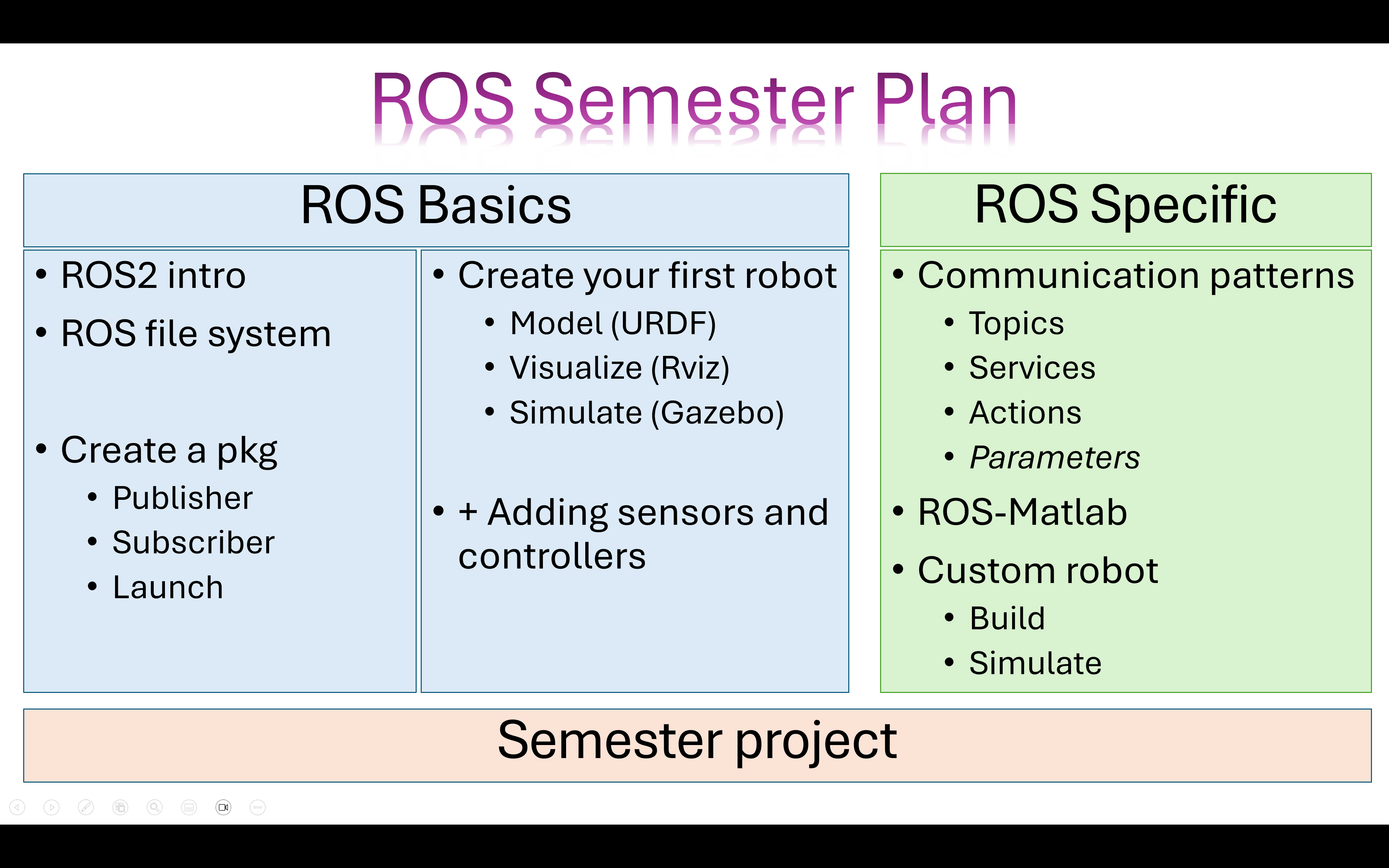
Gizem Ates Venås is an Associate Professor in the Department of Computer Science, Electrical Engineering and Mathematical Sciences at Western Norway University of Applied Sciences. She leads research in Human-Robot Interaction (HRI), focusing on intuitive human-robot cooperation through inertial measurement units (IMUs), gamified training systems, and teleoperation. Her work emphasizes safety and natural interaction in collaborative robotics applications. Education: Bachelor's in Electronics and Communication Engineering (2010-2015), Izmir Institute of Technology Master's in Mechanical Engineering (2015-2018), Izmir Institute of Technology PhD in Computer Science (Software Engineering, Sensor Networks) (2018-2023), Western Norway University of Applied Sciences Research interests include: IMU-based motion estimation for cooperative manipulation Design of gamified training systems to improve HRI proficiency Medical robotics applications in teleoperated surgical systems Sensor fusion and real-time data processing for collaborative robots Teaching focuses on robotics fundamentals: ROS programming, embedded systems (Arduino), and robot control Courses: ELE306 Robotics, DAT160 Intelligent Robots, ADA526 Applied Robot Prototyping Labs/Teams: Core member of HVL Robotics Lab, developing open-source robotics education materials and simulation tools.
Mazen Farhood is a Professor in the Kevin T. Crofton Department of Aerospace and Ocean Engineering at Virginia Polytechnic Institute and State University (Virginia Tech). He holds a Ph.D. (2005), M.S. (2001), and B.Engr. (1999) in Mechanical Engineering from the University of Illinois and American University of Beirut. His research focuses on formal validation of UAV control systems, motion planning, cooperative control in complex environments, model reduction, and obstacle-sensitive trajectory regulation. He is a Senior Member of the IEEE, and a member of AIAA and ASME. In 2014, he received the NSF CAREER Award for his work on formal validation of autonomous systems. Farhood leads the distributed UAV test bed at Virginia Tech, integrating theoretical control frameworks with experimental validation. His research emphasizes safety-critical systems, cybersecurity for autonomous vehicles, and robust control under uncertainty. Collaborations include Virginia Tech’s Autonomous Systems Center and National Security and Technology initiatives. Key projects include developing compositional falsification tools, analyzing cyber-physical system vulnerabilities, and advancing LPV control methodologies for nonstationary systems. Education: Ph.D. Mechanical Engineering (UIUC), M.S. Mechanical Engineering (UIUC), B.Engr. Mechanical Engineering (AUB) Awards: 2014 NSF CAREER Grant Key Projects: Formal validation of UAV software, cooperative multi-vehicle control, obstacle-aware trajectory regulation His work bridges theoretical control advancements with practical applications, contributing to safer and more reliable autonomous systems.
Ruisheng Su is an Assistant Professor in the Department of Biomedical Engineering at Eindhoven University of Technology (TU/e), part of the Medical Image Analysis group (IMAG/e). He leads the SWITCH stroke workshop at MICCAI and collaborates with institutions like Erasmus MC, University of Bern, and Philips. His research focuses on deep learning for neurovascular image/video analysis, including applications in stroke, aneurysms, and image-guided interventions. He aims to develop trustworthy AI methodologies for medical professionals. Academic Background: Joined TU/e's IMAG/e group in 2024. Previously, he was a post-doctoral researcher at Erasmus MC’s Biomedical Imaging Group Rotterdam, specializing in AI for endovascular stroke interventions. Before 2020, he worked as a software engineer at ASML and a research scientist at Philips Research. Holds a Master’s in Electrical Engineering from Technical University of Munich (TUM), with thesis work at Philips on patient activity monitoring. Research Highlights: Active in developing AI-based techniques for image registration, segmentation, and quantification in neurovascular diseases. Key projects include CAVE (artery/vein segmentation), AngioMoCo (motion correction), and autoTICI (automatic reperfusion scoring). His work contributes to UN Sustainable Development Goals in health and well-being. Awards: Van Leersum Grant (2022) for visiting Harvard Medical School and DAAD AiNet Fellowship (2023) for collaborations in Berlin/Munich. Teaching: Courses include 'Medical Image Analysis' spanning from 2013 to present and ongoing courses starting 2024.
Emmanuel Cecchet is a Senior Research Fellow at the University of Massachusetts Amherst's Department of Computer Science. He is affiliated with multiple research groups including the Laboratory for Advanced System Software (LASS), the Commonwealth Center for Forensics & Society, and the Advanced Networked Systems Research Group. His research focuses on distributed systems, dependability, high availability, databases, and benchmarking. Cecchet has held roles as a postdoctoral researcher at Rice University, a Research Scientist at INRIA, and Chief Architect at Continuent. He has received numerous awards, including the Best Paper Award at IWQoS 2013 and the Best PhD Thesis Award from Institut National Polytechnique de Grenoble (2004). His work includes projects like BenchLab, Open Cloud Testbed (OCT), and contributions to middleware systems such as C-JDBC and Sequoia. Education: PhD in Distributed Systems from Institut National Polytechnique de Grenoble (2001). Research Interests: Operating Systems, Distributed Systems, Dependable Systems, Databases, Virtualization, Networking, and Open Source Software. He also contributes to data forensics and leads the Frog Racing foundation as an amateur car racer. Key Projects: BenchLab for realistic benchmarking, CloudLab for cloud infrastructure research, and WiFiMon for mobility analytics using WiFi sensing. He has served on program committees for Eurosys, SRDS, and other conferences.
Jeremy Gummeson is an Adjunct Assistant Professor at the University of Massachusetts Amherst, affiliated with the College of Information and Computer Science. He currently works in the Sensors Lab under Deepak Ganesan and the Laboratory for Advanced Systems Software under Prashant Shenoy. His research focuses on energy harvesting for wearables, backscatter communication systems, and distributed wireless sensing technologies. Education: Ph.D. in Computer Systems Engineering from the University of Massachusetts Amherst (2013). Research Interests: Jeremy’s work spans energy-efficient wearable devices, privacy in sensor systems, metamaterial-based mmWave networks, and low-power environmental monitoring. His innovations include intra-body power transfer for health wearables and acoustic-based sensing for vision-impaired environments. Recent projects emphasize sustainable computing and secure authentication mechanisms within smart spaces. Article Trends: His recent publications (2024-2025) highlight advancements in privacy-preserving audio systems, metamaterial networks, and intra-body communication. These reflect a focus on integrating biomedical applications with cutting-edge wireless technologies to enhance both functionality and security. Leading the Way award (Hewlett Packard, 2015) IEEE Outstanding Senior (2006) Betterment of the ECE Department award (2006) Outstanding Teaching Assistant (2006) Advising & Grants: Jeremy has no listed advisees. He has served as a reviewer for ACM MobiSys, ACM UbiComp, ACM CHI, IEEE RFID, and multiple transactions journals. As Web Chair for ACM HotMobile (2016), he contributed to conference organization. His current lab affiliations drive collaborative research in sensor systems and network software. Labs/Teams: Active member of the Sensors Lab and the Laboratory for Advanced Systems Software, working on projects involving energy autonomy, wireless communication, and health monitoring through wearable technologies.
Johannes Schneider is a researcher at the University of Bonn, affiliated with the Institute of Geodesy and Geoinformation's Department of Photogrammetry. His role includes scientific research and academic contributions in the field of computer vision and robotics. He holds a Master's degree in Geodesy and Geoinformation from the University of Bonn (2011) and has been a PhD student since 2012, supervised by Wolfgang Förstner, focusing on visual SLAM and multi-camera systems. His research interests span bundle adjustment, visual odometry, multi-camera systems, and unmanned aerial vehicle (UAV) applications. He actively contributes to the 'Mapping on Demand' project (funded by DFG) and has developed software tools like BACS (Bundle Adjustment for Camera Systems). Teaching responsibilities include lectures on '3D Coordinate Systems' and project supervision for master students. Notable achievements include the Karl Kraus Young Scientist Award (2013). His work emphasizes real-time navigation, obstacle detection, and precise 3D reconstruction using UAVs, integrating sensors like RTK-GPS, IMUs, and fisheye cameras. Recent publications highlight advancements in dense stereo matching, SLAM algorithms, and system calibration.
Professor Manuchehr Soleimani is a Professor in the Department of Electronic & Electrical Engineering at the University of Bath, leading the Engineering Tomography Lab (ETL) since 2011. He specializes in AI-driven tomographic imaging techniques, including Electrical/Electromagnetic Tomography, X-ray CT, and Ultrasound Tomography. His research focuses on medical imaging, industrial process monitoring, and robotic touch sensing. He collaborates with CERN on projects like the TIGRE open-source software platform and leads Bath's educational initiatives, including the MSc in AI for Engineering and Design and the Robotics Engineering undergraduate program. His research interests span inverse problems, machine learning integration, and multi-modality tomography. Key applications include lung monitoring, industrial quality control, and medical diagnostics. Professor Soleimani has secured funding from Innovate UK, EPSRC, EU Horizon 2020, and industry partners. He serves on the Scientific Advisory Panel at the University of Cambridge and has supervised 31 doctoral/master’s students. His lab develops cutting-edge imaging systems, such as contactless EIT sensors and ultrasonic tomography for in-vivo imaging. Key Projects: AdvanCT (EU), TIGRE (CERN collaboration), and industrial tomography systems for steel casting and CO₂ capture. Publications: Over 378 peer-reviewed articles, with recent focus on AI-enhanced reconstruction algorithms and multi-frequency imaging. Scientific contributions include pioneering work in capacitively coupled tomography and tactile sensing systems. His work aligns with UN SDGs through innovations in health and sustainable industry practices.
Kartik Ariyur is a Lecturer in the Department of Mechanical Engineering at Purdue University, based remotely. His research focuses on autonomous systems, control systems, sensor technology, and energy systems. His work spans applications in robotics, navigation, and environmental sustainability. Key projects include improving UAV navigation accuracy, developing LiDAR-based traffic monitoring systems, and optimizing wireless networks through adaptive control techniques. Education details are not explicitly listed, but his publications suggest expertise in control systems, robotics, and interdisciplinary engineering. His research interests emphasize practical applications of advanced control theory in real-world systems, including autonomous vehicles and renewable energy systems. Recent publications highlight contributions to geolocation using celestial and magnetic sensing, multi-object tracking with LiDAR, and adaptive control algorithms for hypersonic vehicles. While no specific awards are listed, his extensive publication record reflects active engagement in cutting-edge engineering research. Advising and grants: No formal advisees are listed, but his research collaborations likely involve graduate students and interdisciplinary teams. His work aligns with initiatives in smart infrastructure, autonomous systems, and sustainable energy. No specific grants are mentioned, but his projects suggest funding from sources like the USDOT Regional University Transportation Center. Research activities include contributions to labs focused on autonomous systems, sensor networks, and control systems engineering. His work often integrates hardware and software solutions for real-world challenges in transportation and environmental monitoring.