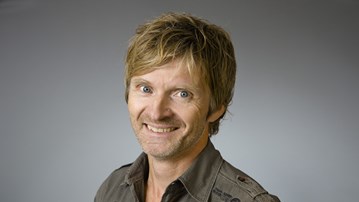
Erik Elmroth is a Professor at the Department of Computing Science, Umeå University. He leads research in distributed systems, cloud/edge computing, and autonomous resource management, directing a 30+ member research group. His leadership includes transformative roles as department head (2009-2021) and Deputy Director at High Performance Computing Center North (HPC2N). Elmroth serves on executive committees for the SEK 6.2B Wallenberg AI program (WASP) and SEK 390M eSSENCE initiative, and leads multiple Kempe Foundation projects. Research interests center on: Autonomous control of cloud/edge infrastructures Software-defined systems and federated clouds AI-driven resource optimization High-performance computing architectures Robust machine learning for distributed environments His publications emphasize adaptive cloud systems, anomaly detection, and federated learning, with consistent focus on scalability and resilience in edge/cloud deployments. Awards and honors: Member of Royal Swedish Academy of Engineering Sciences (IVA) Nordea Scientific Prize (2011) SIAM Linear Algebra Prize (2000) National HPC Lecturer appointment He has supervised 40+ PhD students and secured major grants including the Swedish Research Council's second-largest award for the Cloud Control project. Elmroth founded the Control Workshops series and co-founded Elastisys AB, a cloud security firm with 50+ employees recognized as Umeå's Spin-off Company of the Year.
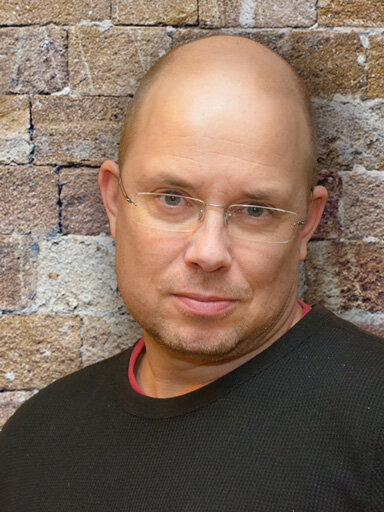
Magnus Haake is an Associate Professor in Cognitive Science at the Department of Philosophy, Lund University. He has been a researcher at the Department of Cognitive Science (LUCS) since 2012, following his doctoral studies and research at the Department of Design Sciences at Lund University from 2000-2011. Haake is affiliated with the Educational Technology Group (ETG) and participates in the Communication and Cognition Profile area as well as the LU Profile Area: Natural and Artificial Cognition. His educational background includes: Artistic and graphical education in Sweden and USA MSc in Engineering Physics from Lund University PhD in Design Sciences from Lund University Scholarship at University of California, San Diego (UCSD) Haake's research focuses on the intersection of cognitive science and educational technology, with particular emphasis on classroom-based learning environments. His work investigates how students, teachers, and learning materials interact within educational contexts, with special attention to the added value of educational technology. He explores how digital tools can support cognitive processes like attention and perseverance in diverse student populations, particularly in early childhood education settings. His approach integrates perspectives from cognitive science, social psychology, and interaction design to develop and evaluate educational interventions that are both scientifically grounded and practically applicable. His extensive publication record demonstrates a consistent focus on educational technology applications, particularly examining teachable agents, feedback mechanisms, and multimodal learning environments. The research shows progression from foundational work on virtual characters and pedagogical agents to more recent studies on attention scaffolding, information literacy, and the impact of educational interventions during the pandemic. A notable trend is the increasing focus on inclusive education approaches that combine adaptive instruction with universal design principles. Haake has received recognition through his involvement in significant research projects: TELEB: Technologically Enhanced Language learning and its Effect on the Brain (2021-2025) Learning, Context and Transfer: Exploring Constraints and Affordances in the Virtual and Digital Age (2019-2024) Virtuellt klassrum som forskningsplattform (2016-2021) Supporting Students' Productive Choices When Learning Gets Difficult (2015-2018) Påverkan av icke-verbala faktorer och omgivningsfaktorer på barns förståelse (2014-2019) He has supervised several doctoral students, including Jens Nirme in Cognitive Science, and served as assistant supervisor for E.-M. Ternblad's dissertation on "Learning, Context and Transfer." His supervisory approach emphasizes the integration of cognitive science principles with practical educational applications. Haake has also led multiple research projects examining how educational technology can support learning processes, particularly focusing on feedback mechanisms, attention management, and the role of multimodal communication in educational contexts. Haake is actively involved with the Educational Technology Group (ETG) at Lund University Cognitive Science (LUCS), which serves as a hub for interdisciplinary research connecting cognitive science with educational practice. His work often involves collaboration with researchers from psychology, linguistics, and educational sciences to develop and evaluate technology-enhanced learning environments. Recent projects have explored virtual classrooms as research platforms and the impact of non-verbal factors on children's comprehension.
Maurice Lamb is a researcher at the University of Skövde , affiliated with the Interaction Lab (ILAB) and the School of Informatics . His work bridges digital human modeling (DHM) , virtual reality , and human-robot interaction (HRI) with applications in automotive design and cognitive science . Research interests include: Automated design optimization using simulation-based multi-objective methods Collaborative tools for remote design reviews and CAD integration Cognitive implications of inverse kinematics solvers (FABRIK) in motor planning Impact of XR technologies on motor skill learning and human-agent coordination Methodological challenges in NARS (Negative Attitude toward Robots Scale) application Key projects include PLENUM (Vinnova-funded) and OKAVIM (AFA Insurance-funded), focusing on remote collaboration , ergonomics , and cognitive support in VR/XR . His publications span IEEE , Springer , and Elsevier journals, often co-authored with experts like Francisco Garcia Rivera, Erik Billing, and Dan Högberg.
Felix Dobslaw is a Senior Lecturer and Associate Professor at Mid Sweden University , affiliated with the Department of Communication, Quality Technology and Information Systems (KKI). He leads the cross-disciplinary Software Engineering and Education (SEE) research group, focusing on the intersection of technology and human use in software development, with a particular emphasis on Generative AI applications.
Viggo Kann is a Professor of Computer Science at the Royal Institute of Technology (KTH) in Stockholm, Sweden, holding this position since 2000. He serves as Director of Studies in the Theoretical Computer Science department at KTH's School of Electrical Engineering and Computer Science, a role he has maintained since 1998 with a brief interruption from 2012-2015. One-fifth of his time is dedicated to the Department of Learning, where he teaches courses on examinership and developing learning with grading criteria. He also chairs KTH's Language Committee and coordinates the director of studies network, PA network, PriU groups, and major institutional events. Professor Kann's research spans language technology and computer didactics, with current projects focusing on examination quality and diversity, cheating prevention, examiner training, and program-coordinating courses. His work bridges theoretical computer science with practical educational applications, particularly in assessment methodologies and educational technology. His recent publications reveal a strong emphasis on educational aspects of computer science, examining student behavior, programming fluency, and the impact of emerging technologies like ChatGPT on academic integrity. He has also published extensively on language technology, including grammar checking systems and natural language processing tools for Swedish language processing. As examiner and course coordinator, Professor Kann oversees multiple courses including Algorithms, Data Structures and Complexity (DD2350), Ethics in Introduction to Computer Science (DD1348), and various specialized degree projects across industrial economics, machine learning, systems engineering, robotics, and communication systems. His leadership in educational development initiatives at KTH demonstrates significant institutional influence in shaping educational policies and practices.
Morten Fjeld is a Professor at Chalmers University of Technology in the Department of Interaction Design and Software Engineering . His research focuses on Human-Computer Interaction (HCI) , Augmented Reality (AR) , and Virtual Reality (VR) , with applications in industrial tomography, drone interaction, and multimodal systems. He has co-authored 152 publications and leads projects connecting immersive technologies with user experience, robotics, and collaborative tools. His recent articles explore gaze cues in climate data visualization, emotion-aware voice assistants, and haptic feedback in VR door-opening techniques. Themes span AR/VR design , human-drone interaction , and multimodal feedback systems . He actively collaborates with researchers in Sweden, Germany, and Japan, focusing on user-centric technology development. Contact: fjeld@chalmers.se .
Ingela Nyström is a Professor in Visualization at Uppsala University's Department of Information Technology. She serves as the node coordinator for InfraVis and as Director of Postgraduate Studies at the Department of Information Technology. Her interdisciplinary work bridges Uppsala University's three academic domains through collaborations with the Centre for Image Analysis (CBA), Centre for Women's Mental Health (WOMHER), Uppsala Centre for Digital Humanities (CDHU), and Medtech Science & Innovation (MTSI). Medical image analysis 3D visualization Haptics in surgery planning Interactive segmentation Digital geometry Biomedical engineering Her recent research focuses on rotation-equivariant neural networks for biomedical image classification, interactive segmentation tools for cranio-maxillofacial surgery planning, and precision evaluation of intraoral scanning technologies. Publications since 2023 demonstrate continued work on 3D imaging protocols for implant dentistry and surgical applications. 2024: Equivariant CNNs for rotation-invariant biomedical imaging 2023: In vivo precision studies of full-arch implant scans 2021: Virtual surgical planning with haptic assistance 2016-2017: Multimodal robotics perception and 3D segmentation tools 2014: Orbital morphology analysis in craniosynostoses 2005-2011: Foundational work in 3D skeletons and fuzzy object measurements
Mike Hazas is a Professor of Human-Computer Interaction at the Department of Information Technology , Uppsala University . He also holds a position at the Institute for Research on Conflicts of Interest in Sustainable Social Transformation/Uppsala . Research Focus: Sustainability in digital technologies, energy demand analysis, thermal comfort automation, and environmental impacts of internet services. Methodology: Combines qualitative and quantitative approaches to study socio-technical systems. Selected Recent Research Trends: His work addresses the hidden sustainability costs of digital proliferation (streaming, gaming, social networks), energy implications of domestic automation, and thermal comfort policies for net-zero transitions. Publications span journals like IEEE Pervasive Computing , Building Research & Information , and International Journal of Human-Computer Studies , with a strong focus on environmental justice in computing.
Frida Heskebeck is a Doctoral student at the Department of Automatic Control , Lund Institute of Technology , Lund University , and a member of the LTH Profile Area: AI and Digitalization . She actively contributes to the research group on EEG-based Brain-Computer Interfaces (BCI) led by Prof. Bo Bernhardsson . Research Focus: Optimization of next-generation BCI using cloud computing and individualization of real-time systems. Teaching: Delivers lectures, webinars, and lab sessions for courses like Process Control and Systems Engineering (2024), Physiological Models and Computations (2023), and Automatic Control (2021, 2020). Awards: Recipient of the Pedagogical Prize for best teaching assistant in 2021 (M-guild and W-guild) and Best Master's Thesis in 2020. Research Trends: Her recent articles focus on BCI calibration, real-time control, and cloud integration. Broad keywords include Control Engineering , Machine Learning , and Neuroscience , with sub-fields like Domain Adaptation , Signal Processing , and Online Teaching . Scientific Distinctions: Teaching assistant of the year (awarded by the M-guild) 2021 Teaching assistant of the year (awarded by the W-guild) 2021 Best Master's Thesis 2020 Advising and Collaborations: Supervision of master's theses for Tom Andersen (2021) and Johanna Wilroth (2020), where the latter received a scholarship. She also held roles in the department's board and organized seminars like the AI Lund lunch seminar in 2024.