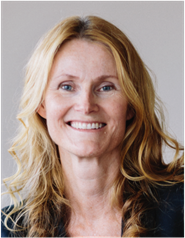
Helena Lindgren is a Professor of Computer Science at Umeå University, specializing in Human-Centered AI and Human-AI Collaboration at the intersection of Artificial Intelligence , Interaction Design , and Cognitive Science . Her work focuses on developing intelligent and autonomous systems for healthcare through sociotechnical design principles. Department of Computing Science, Umeå University Founder of Interactive Intelligent Systems research group and Collaborative AI Lab (2010-2011) Co-developer of UMeHealth Lab for AI-based eHealth solutions Her research emphasizes: Digital Coaching for health behavior change Participatory Design of adaptive systems Formal Argumentation in human-AI dialogues Clinical Reasoning and knowledge representation Behavior Change Evaluation in aging populations Contextual Adaptation of AI systems Recent publications highlight socially intelligent agents , norm interpretation , and personalized digital coaching for seniors. She serves as Co-Director of Wallenberg Autonomous Systems, AI and Software Program - Humanities and Society (WASP-HS) and holds leadership roles in AI councils at Umeå University.
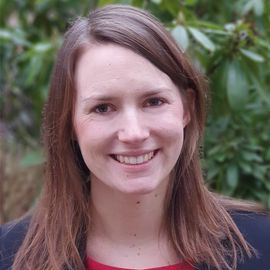
Rebekka Wohlrab is a tenure-track Assistant Professor in Software Engineering at Chalmers University of Technology (Gothenburg, Sweden) and an adjunct faculty member at Carnegie Mellon University’s Software and Societal Systems Department (S3D). Her research focuses on requirements engineering, self-adaptive systems, and robotics. She leads a research group supported by the Wallenberg AI, Autonomous Systems and Software Program (WASP). Education: PhD in Computer Science and Engineering (Chalmers, 2020), MSc/BSc in Computer Science (Paderborn University, 2016). Postdoc at Carnegie Mellon University (2020-2022). Research interests include requirements conflicts resolution, quality attribute trade-offs, and ethical monitoring in cyber-physical systems. She has published extensively on adaptive systems, architectural tactics, and agile development practices. Notable contributions include frameworks for robot mission planning, security assurance cases, and traceability management in automotive systems. Recent awards include a pedagogical prize from students at Chalmers. She advises PhD students on topics like self-adaptive robotics and WASP-funded projects. Her work spans theoretical research and industry collaboration (e.g., Volvo Cars). Active in conferences like ICSE, RE, and ICSA as a program committee member. Labs/Teams: Leads the Self-Adaptive Systems Research Group at Chalmers, collaborating with WASP and automotive industry partners.
Daniel Felipe Perez Ramirez is an industry doctoral student at KTH Royal Institute of Technology, affiliated with the Division of Software and Computer Systems within the School of Electrical Engineering and Computer Science . His research focuses on applying machine learning to solve combinatorial optimization problems in networked systems, emphasizing scalability and generalization. He is involved in the SSF project 'Instant Cloud Elasticity' and the Horizon 2020 AI@Edge project. Education: B.Sc. in Mechanical Engineering (Technical University of Munich) M.Sc. in Robotics, Cognition, Intelligence (Technical University of Munich) His research interests span machine learning applications in combinatorial optimization, resource management for networked systems, and scalability challenges in AI. Prior to joining KTH, he worked at RISE Research Institutes of Sweden AB as a research engineer, focusing on applied machine learning for automotive industries, robotics sensor integration, and agile product development methods. Advisors: Prof. Dejan Kostic and Prof. Magnus Boman. Labs/Teams: Collaborates with RISE and KTH’s research divisions in networked systems.
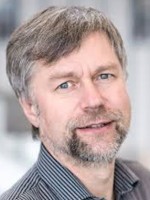
Markus Bohlin serves as Professor (on leave) at Mälardalen University within the School of Innovation, Design and Engineering's Division of Product Realisation. He concurrently holds leadership roles as Dean of the School of Business Society and Engineering, Division Manager for Product Realization, and School Director for the INDTECH Industrial Graduate School. His academic credentials include: Doctoral thesis defended at Mälardalen University (2009) Associate professorship (docent) granted at Mälardalen University (2013) Adjunct professorship in rail traffic systems analysis at KTH Royal Institute of Technology (2014) Full professorship in Computer Science with Applied AI focus at Mälardalen University (2019) Bohlin's research centers on Applied Artificial Intelligence across critical infrastructure domains. His primary focus areas include: Railway systems optimization and freight logistics Cyber-physical systems for construction automation Machine learning applications in manufacturing quality control Simulation-assisted decision support systems His work bridges theoretical AI with industrial implementation in transportation, production, and power systems. Recent publications demonstrate a clear trajectory toward integrating machine learning with simulation modeling for real-world problem solving, particularly in railway punctuality optimization, construction site autonomy, and manufacturing defect detection. This interdisciplinary approach consistently targets high-impact industrial applications. Bohlin has held significant leadership positions including: President of the Swedish Operations Research Association (2012-2016) Member of Trafikverket Board on Capacity in Railways Program chair for ICROMA 2019 and multiple national conferences His academic supervision includes 4 completed PhDs, 9 licentiate degrees, and 5 ongoing doctoral candidates. With 20+ years of experience managing organizations up to 60 employees and 40+ projects (including H2020 initiatives), he brings substantial operational expertise to research commercialization. Current leadership roles encompass the Product Realisation division and INDTECH Industrial Graduate School, driving industry-academia collaboration in innovation and engineering.
Samuele Giussani is a researcher affiliated with the Faculty of Technology at Linnaeus University , working within the Department of Computer Science and Media Technology . He actively contributes to the Engineering Resilient Systems (EReS) and Smart Industry Group (SIG) research labs, focusing on system resilience and interdisciplinary applications of computer science and mechanical engineering. Giussani’s research centers on Digital Twin of the Organization (DTO) and Adaptable Architectures for Organizations' Digital Twins (Aladino) . These projects aim to develop live organizational models and engineering methodologies for modeling, evaluating, and optimizing systems through digital twins and model-driven engineering. His work spans IoT architectures for energy efficiency, self-adaptive robotic manipulators, and visualization techniques for time series data in simulations. His recent publications (2022–2025) highlight advancements in digital twin technologies , self-adaptive systems , and model-driven engineering . These studies emphasize organizational modeling, business process optimization, explainable AI, and energy-efficient IoT solutions. Giussani teaches courses in Operating Systems , Algorithms and Advanced Data Structures , and Software Engineering , while participating in interdisciplinary collaborations between computer science and mechanical engineering. Giussani’s research groups ( EReS and SIG ) integrate theoretical and practical approaches to enhance system resilience and smart industrial production. His contributions reflect a focus on bridging software engineering with real-world applications in robotics, IoT, and sustainable organizational design.
Benny Thörnberg is an Associate Professor (Docent) at Mid Sweden University, working in the Department of Computer and Electrical Engineering (DET). He is employed in the Electronics subject area and is affiliated with the STC Research Centre. His office is located in room L204b in Sundsvall, and he can be contacted at benny.thornberg@miun.se. Dr. Thörnberg completed his Licentiate thesis in 2004 and his Doctoral thesis in 2006, both from Mid Sweden University, focusing on "Memory modeling and synthesis for real-time video processing systems." His academic journey has centered around hardware and software solutions for imaging and sensor systems. Thörnberg's primary research interests span hyperspectral imaging , computer vision , sensor technology , and FPGA-based real-time processing systems . His work bridges theoretical development with practical applications, particularly in material analysis, environmental monitoring, and transportation safety. He has made significant contributions to short-wave infrared imaging, 3D reconstruction techniques, and specialized instrumentation for challenging environments like icing conditions on wind turbines and roads. His recent publications demonstrate a clear trend toward practical applications of advanced imaging technologies, with focus areas including material classification, atmospheric icing measurement, anti-icing agent detection, and autonomous systems. Thörnberg has developed innovative solutions such as the Material Imaging Analyzer (MIA) and cost-optimized multi-camera dome systems for volumetric surveillance, showing his ability to translate theoretical concepts into deployable technologies. Thörnberg leads or contributes to several research projects including MEQAL (Detect methane leaks with new technology) and SENAVIS (Sensor technology for smart de-icing). His completed projects span diverse areas from autonomous friction measurement and airport monitoring to wood disintegration processes and rail pollution detection. These projects highlight his interdisciplinary approach and ability to address real-world challenges through advanced engineering solutions. As part of the STC Research Centre, Thörnberg collaborates with a multidisciplinary team focused on sensor technology and imaging systems. His work often involves partnerships across different sectors, including transportation, energy, and materials science, demonstrating the broad applicability of his research. His recent patent for an "Imaging Material Analyzer" underscores his commitment to developing practical tools that bridge laboratory research and field applications.
Tobias Schauerte is a Professor at Linnaeus University's Department of Mechanical Engineering within the Faculty of Technology. He serves as program director for the Bachelor's program in Industrial Engineering and teaches courses in industrial economics, strategic management, and production management. His research focuses on the wooden house industry with emphasis on production development, business strategy, and internationalization, supported by over 15 years of industry experience. His research portfolio includes active projects like Competitive timber structures – Resource efficiency and climate benefits along the wood value chain through engineering design and Smart Dat (automation and digitalization for SMEs). Completed projects address topics such as competence development for professionals and advanced mechanical engineering courses for industry needs. Recent publications analyze productivity trends in off-site timber construction, economic distress metrics in wooden housing firms, and automation potential in window installation systems. He contributes to the Linnaeus University Centre for Competitive Timber Structures and Smart Industry Group , an interdisciplinary team combining computer science and mechanical engineering expertise. His work bridges academic research with industry applications through collaborations like the Torparängen urban development project in Växjö, and he has published extensively in journals like Wood Material Science & Engineering and Pro Ligno , alongside presentations at international conferences including the Swedish Production Symposium and World Conference on Timber Engineering .
Gustaf Gredebäck is a Professor at the Department of Psychology , Uppsala University , specializing in Developmental Psychology . His research investigates how infants' and children's cognitive, social, and emotional development is shaped by personal exploration, adverse environments (war, mental health challenges), cultural contexts, and early educational settings. Research Interests: Cognitive development, social cognition, emotional processing, executive functions, and the impact of sociocultural/political contexts on child development Methodologies: Eye tracking, pupillometry, experimental paradigms, and cross-cultural comparisons Key Collaborations: International studies in Bhutan, Syria, and Sweden; partnerships with autism research groups Recent Research Trends: Analysis of urbanization's developmental effects, methodological rigor in infancy research, gaze-following as a social cognition marker, and maternal mental health impacts on refugee children. His 2025 articles explore expertise acquisition through play and cross-cultural gaze stability. Scientific Contributions: Holds a significant grant from the Knut and Alice Wallenberg Foundation (2015) and has developed innovative tools like TimeStudio for behavioral research workflows.
Hans Hansson is a Professor at Mälardalen University since 1997, leading the Mälardalen Real-Time Research Centre (MRTC) and the strategic profile area Trusted Smart Systems (TSS). He holds multiple degrees from Uppsala University, including an MSc in Engineering Physics and a Doctor of Technology in Computer Systems. His research focuses on real-time systems, cybersecurity, industrial control systems, and safety-critical systems. He has advised over 20 PhD students, five of whom became university professors. Hans has secured over 500 MSEK in external funding from national and European grants. His work spans fault-tolerant systems, embedded software verification, and compositional safety analysis in complex systems. Key projects include the development of the Pkl language for operational design domains, security frameworks for industrial IoT systems (e.g., ICSSIM testbeds), and real-time storage solutions for fog computing. He also chairs the PROGRESS Centre for Predictable Embedded Software Systems. Publications emphasize cybersecurity in industrial systems, safety-critical software design, and real-time scheduling in time-triggered networks. His research bridges theory and practice, addressing challenges in autonomous systems, mining automation, and Industry 4.0.
Gustaf Hendeby is an Associate Professor and Docent in Automatic Control at Linköping University's Department of Electrical Engineering (ISY). His career spans academia and defense research, including a part-time role at the university and prior positions at the German Research Institute for Artificial Intelligence (DFKI) and the Swedish Defence Research Agency (FOI). Dr. Hendeby’s research focuses on statistical and model-based sensor fusion , particularly in target tracking, SLAM, positioning, and nonlinear estimation. He has contributed to Kalman filter approximations (EKF, UKF) and particle filter methodologies, aiming to enhance sensor data utilization and algorithm accessibility for non-experts. His recent publications address magnetometer-IMU calibration, magnetic-field SLAM, DVB-T signal localization, and adaptive basis function selection for efficient predictions. Collaborations include researchers like Isaac Skog and Chuan Huang, with applications in autonomous systems and sensor networks. Teaching : Lectures on Sensor Fusion (TSRT14) and supervises Master’s theses. Projects : Technical coordinator for EU’s COGNITO project; software integration for Trivisio GmbH’s Colibri IMUs.
Lena-Maria Öberg is a Senior Lecturer at Mid Sweden University's Department of Communication, Quality Technology and Information Systems (KKI), Faculty of Natural Sciences, Mathematics and Technology (NMT). She serves as Vice-Dean of NMT and program manager for the master's-by-research program in Informatics. Teaches in Bachelor's programs and supervises Master's independent work Research focuses on system development education and technical communication Active in the Software Engineering and Education (SEE) research group Her research spans blended learning, crisis management systems, and digitalization in education. Key projects include Duvkom (digital education systems) and Cross-border Security Cooperation. Publications examine traceability in information systems, Lean methodology in technical communication, and scenario planning for future user needs. Recent work analyzes privacy concerns in learning analytics (2022), rural coworking environments (2025), and mobile technology-enhanced collaboration (2018). She contributes to networked learning research through Springer publications (2023) and co-edits proceedings for international conferences.
Fredrik Danielsson is a Professor of Automation at University West, where he serves as an employee of the Department of Industrial Automation. He leads a research group focused on flexibility in industrial automation systems and teaches in University West's master's program in robotics. Professor Danielsson's research spans multiple areas of industrial automation, with a particular emphasis on flexible manufacturing systems. His work explores human-machine interaction to increase operator intervention possibilities in automated processes. He has made significant contributions to the development of Plug and Produce systems, which enable more adaptable and reconfigurable manufacturing environments. His research also encompasses robotics, mechatronics, and the application of Industry 5.0 principles to create human-centric smart manufacturing systems that balance technological advancement with human well-being. An analysis of Professor Danielsson's recent publications reveals a strong focus on making manufacturing systems more adaptable through multi-agent systems, digital twins, and advanced path planning algorithms. His work consistently addresses the challenge of implementing flexible automation that can be easily reconfigured by in-house personnel without requiring extensive programming knowledge. A notable trend is the increasing emphasis on safety management and hazard identification within reconfigurable manufacturing systems. Professor Danielsson supervises graduate students, including Anders Nilsson who completed a licentiate thesis on human-centric process planning for Plug & Produce systems under his guidance. His research group has developed a Plug & Produce test bed in cooperation with industrial representatives, particularly from the prefabricated wooden house industry, demonstrating practical applications of their theoretical work. The research group's approach emphasizes extracting information directly from computer-based product designs and incorporating in-house process knowledge through graphical configuration tools. Their work on intelligent products that 'know how to be finalized' represents an innovative approach to manufacturing automation that reduces complexity for human operators while maintaining high levels of flexibility.
Ivan Stenius is a full-time Associate Professor at the Department of Engineering Mechanics, KTH Royal Institute of Technology. He holds a M.Sc. (2003) and Ph.D. (2009) in Lightweight Structures from KTH, with a licentiate degree (2007). His research focuses on composite materials, fluid-structure interactions, hydrodynamics, marine robotics, and model-based systems engineering. He leads the Swedish Maritime Robotics Centre (SMaRC), Sweden’s largest academic initiative in underwater robotics, and co-founded Zparq AB for marine electric propulsion. Education: M.Sc. in Lightweight Structures (KTH, 2003) Technical Licentiate in Lightweight Structures (KTH, 2007) Ph.D. in Hydroelasticity and Fluid-Structure Interactions (KTH, 2009) Research & Collaboration: Stenius develops advanced software tools with FMV and the Swedish Coast Guard. He leads cross-disciplinary projects involving computer vision, electrochemistry, and networked control. His work on hydrofoiling and electric propulsion has spun off Zparq AB. Recent projects include autonomous seaweed farm inspection, bioinspired underwater robots, and reinforcement learning for AUV maneuvering. Labs & Initiatives: PI of SMaRC, which integrates advanced robotics and maritime systems. Active in courses like Underwater Technology (SD2709) and Vehicle Engineering (SD1002).
Torbjörn Andersson is an Associate Professor at Linköping University , affiliated with the Department of Management and Engineering (IEI) within the Product Realisation (PROD) unit. His research focuses on strategic design practices, aesthetic flexibility in product branding, and the integration of artificial intelligence in design education. He is part of the Unit of Design and Product Development (PRODDOP) and contributes to the Product Realisation program at the university. His work emphasizes balancing creativity with market needs, particularly in industrial design. Key areas include product portfolio management, design judgment processes in manufacturing, and user-centered ergonomics education. Recent projects explore AI's role in design pedagogy, such as robotic design case studies applying Bloom's taxonomy. He also investigates autonomous vehicle acceptance and new mobility applications. Andersson’s teaching and research bridge engineering and design disciplines, addressing both theoretical frameworks (e.g., aesthetic modularity) and practical applications (e.g., infotainment systems in vehicles). His contributions span academic publications, industry collaborations, and curriculum development initiatives.
Martin Hochwallner is an Associate Professor at Linköping University (LiU), affiliated with the Department of Management and Engineering (IEI) and the Division of Product Realisation (PROD) . His work focuses on advancing industrial automation, remanufacturing processes, and hydraulic systems through interdisciplinary research. Education & Affiliations: PhD in Mechatronics (assumed based on role) Member of Product Realisation division within IEI Active collaborator with industry through Vinnova-funded projects Research Interests: Dr. Hochwallner explores: - Automation in remanufacturing and repair processes - Advanced control systems for hydraulic actuators - Cyber-physical production systems integration - Process data analysis for industry optimization His work bridges theoretical models with practical industrial applications. Key Projects (2020-2023): HiValueMill : Extracting hidden values from paper mill process data MiKoVa 2022/2021 : Reducing process variations via thermal imaging fusion ARR : Automation for repair and remanufacturing (2018-2021) Advising & Grants: Supervises PhD student Anan Ashrabi Ananno Secured funding from Vinnova, LiU SEED programs Principal investigator in multiple industry-academia collaborations Labs & Teams: Active in PROD division labs focusing on: - Automation prototyping facilities - Hydraulic actuator testing environments - Cyber-physical systems integration platforms