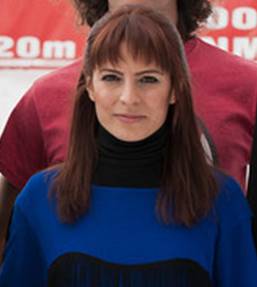
Selda Güney is an Assistant Professor in the Department of Electrical and Electronics Engineering at Başkent University's Faculty of Engineering. She holds a PhD (2013), Master's (2007), and Bachelor's (2004) in Electrical-Electronics Engineering from Karadeniz Technical University. Her professional experience includes roles as an R&D Engineer at DEKA Digital (2004-2005), Research Assistant at Karadeniz Technical University (2005-2013), and Assistant Professor at Başkent University (2013-present). Her research spans: Machine Learning : Applications in medical imaging, radar, and industrial systems Signal/Image Processing : Focus on real-time classification and fault detection Pattern Recognition : Electronic nose systems and biometric analysis Her recent publications demonstrate strong emphasis on deep learning applications in healthcare (chest X-ray classification, fracture detection) and industrial automation (real-time fault detection systems). Over 70% of her last 15 articles involve medical/industrial AI implementations using convolutional networks. Awards & Honors: TÜBİTAK Domestic PhD Scholarship IBEC ERASMUS Scholarship Research Leadership: Supervised 20+ graduate theses (e.g., radar data classification, medical image steganography) and led 9 R&D projects including: AI-based pathology classification in lung X-rays VR glove development Smart parking systems She is a member of IEEE and ISOCS, and teaches courses including Pattern Recognition, Signals and Systems.
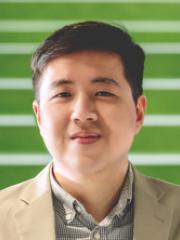
Jordan Schweidenback is a Lecturer and Coordinator of the Master of Healthcare Administration (MHA) program in the Department of Population Health and Leadership at the School of Health Sciences, University of New Haven. He is currently a doctoral candidate in the Doctor of Health Science (DHSc) program. Education Doctor of Health Science (DHSc) - University of New Haven (Current) Master of Healthcare Administration (MHA) - University of New Haven Bachelor of Science - Medical Imaging, Nuclear Medicine Concentration - Rhode Island College Research & Expertise Jordan focuses on healthcare leadership , organizational theory , and behavioral dynamics in healthcare systems , with a specific emphasis on implementing healthcare innovation . His clinical background spans nuclear medicine , PET imaging , and CT scanning , with experience in strategic business development and operational efficiency in healthcare institutions. Awards & Recognition Academic Excellence Award in Educational Leadership Professional Experience He has held roles as Perioperative Business Manager at Yale New Haven Health's Lawrence and Memorial Hospital, Westerly Hospital, and Pequot Surgery Center, where he led initiatives like implementing a robotic surgery program. He also secured a Lean Six Sigma Green Belt certification and worked in clinical radiology at Lifespan's Rhode Island Hospital.
Dr Kai Li Lim is the St Baker Fellow in E-Mobility at the Dow Centre for Sustainable Engineering Innovation , part of the Faculty of Engineering, Architecture and Information Technology at The University of Queensland (UQ) . Specializing in data engineering , telematics , and autonomous vehicle systems , his research examines electric vehicle (EV) usage patterns , charging reliability , and spatiotemporal data analysis to inform policy and sustainable transport strategies. Education : BEng (Hons) in Electronic and Computer Engineering (University of Nottingham), MSc in Computer Science (Lancaster University), PhD in Artificial Intelligence and Robotics (The University of Western Australia, funded by Australian Government Research Training Programme). Research Interests include: Electric vehicle telematics and data analytics Computer vision and deep learning for autonomous navigation Policy development for sustainable transport Infrastructure planning for EV and hydrogen systems Integration of cloud computing and IoT in mobility solutions Publication Trends reveal a focus on EV charging behaviors , data platform architectures , and autonomous driving frameworks , with recent work addressing regional emission disparities , modular safety systems , and online assessment integrity . Scientific Awards : St Baker Fellow in E-Mobility, Visiting Fellowship at UC Davis Electric Vehicle Research Center, Australian Government Research Training Programme (PhD funding). Supervision and Grants : Available for supervision, Dr Lim has secured funding from Energy Consumers Australia , iMove CRC , and Australian Urban Research Infrastructure Network (AURIN) for projects on EV charging incentives, freight emissions modeling, and longitudinal vehicle data databases. Labs and Collaborations : Collaborates with UC Davis Electric Vehicle Research Center , UQ School of Civil Engineering , and UQ School of Electrical Engineering and Computer Science . Leads the UQ Teslascope Project and contributes to the Green Australian Vehicle Ownership (GreenAVO) Capability for AURIN .
Pauline Leonard is Professor of Sociology and Associate Dean (Research & Enterprise) in the Faculty of Social Sciences at the University of Southampton. As a Director of the Web Science Institute and founding member of the Work Futures Research Centre, she holds fellowships with the Academy of Social Sciences (FAcSS), Royal Society of Arts (FRSA), and Alan Turing Institute. Her research examines diversity and changing nature of work through lenses of gender, race, age and social background. Core interests include: Impact of technological change on working lives and careers Skilled migration and whiteness studies Organizational transformation in digital economies Trustworthy human-AI collaboration systems Recent publications (2022-2024) demonstrate strong focus on technology's societal impacts, particularly AI ethics in security systems, automation effects on labor, and racial/gender dynamics in tech industries. Research consistently addresses inequality mechanisms through socio-technical frameworks. Awards and honors: Fellow, Academy of Social Sciences (2016) Turing Fellow (2021) Fellow, Royal Society of Arts (2018) Currently leads multiple UKRI-funded projects including 'Trustworthy Human Robot Teams' and 'Verifiably Safe and Trusted Human-AI Systems'. Supervises five PhD students researching sociology, social policy, and web science. Maintains active speaking engagements on migration, digital futures, and post-pandemic work.
Dr. Lydia Ray is a Professor at the TSYS School of Computer Science , Columbus State University, with a Ph.D. in Computer Science from Louisiana State University (2005) and an M.Stat in Statistics from Indian Statistical Institute (1998). She specializes in Wireless Sensor Networks , Wireless Network Security , RFID Systems , and Computer Science Education . Research Interests: Secure energy-efficient data transmission in Wireless Sensor Networks RFID security and privacy mechanisms Virtual network labs for online education Teaching: Graduate courses: Advanced System Security, Computer Forensics, Wireless Security Undergraduate courses: Data Structures, Introduction to Programming, Information Technology Education Outreach: Active8 Summer Camps (Scratch, Pico Cricket, Alice, Lego Robotics) Future Teachers’ Academy (Cybersecurity, Computer Networks) Computer Science Academy workshops Contact: ray_lydia@columbusstate.edu | Office: CCT Building Room 429
Andrea Zeffiro is an Associate Professor at McMaster University's Department of Communication Studies and Media Arts. From 2015–2025, she served as Academic Director of the Lewis and Ruth Sherman Centre for Digital Scholarship. Education: PhD in Communication Studies (Concordia University) SSHRC Postdoctoral Fellowship (Simon Fraser University) Research Focus: Her work spans critical data studies, cybersecurity ethics, data justice, and digital research methods, with a focus on feminist and queer perspectives in technology. She explores immersive media, virtual environments, and the social implications of data systems. Recent Publications: Her 15 most recent works analyze digital scholarship infrastructure, cybersecurity narratives, and ethical frameworks for locative media. Key themes include democratizing technology, challenging algorithmic biases, and preserving digital activism. Awards: 2025 University Scholar Societal Impact Seed Grant ($85,000) SSHRC Postdoctoral Fellow Notable Projects: The collaborative digital storytelling project Techno Trash is featured in digital humanities guides at Loyola University, Virginia Tech, and Northwestern University. She has exhibited work at Banff New Media Institute and California Nanosystems Institute.
Spyros Reveliotis is a Professor at the Stewart School of Industrial & Systems Engineering within the College of Engineering at Georgia Institute of Technology. His work bridges theoretical advancements with practical applications in automation and control systems. Education : PhD in Industrial Engineering (University of Illinois at Urbana-Champaign), B.Sc. in Electrical Engineering (National Technical University of Athens), M.Sc. in Computer Systems Engineering (Northeastern University) Reveliotis focuses on discrete event systems theory , emphasizing control of flexible automation and traffic management for multi-agent systems. His research integrates machine learning and Markov decision processes to optimize scheduling and coordination in complex environments like robotics and manufacturing systems. Recent trends in his publications address deadlock avoidance , min-time coverage in constrained spaces, and liveness enforcement for transport systems. These works often leverage combinatorial optimization and graph theory for scalable solutions. Scientific Awards : IEEE Fellow As a core faculty member of the Institute for Robotics and Intelligent Machines (IRI) , Reveliotis contributes to interdisciplinary robotics research. His affiliations with professional societies like INFORMS reflect his impact on operations research and automation fields.
Luca Guarnera is a Fixed-term Assistant Professor (RTDA) of Informatics at the Department of Mathematics and Computer Science, University of Catania. Born in Catania on October 26, 1992, he has been a research fellow in Computer Science at the University of Catania since January 1, 2022. His academic journey includes a PhD in Computer Science (XXXIII cycle, PON number E37H18000330006) from the University of Catania, with part of his research conducted at the University of Hertfordshire under Prof. Salvatore Livatino. PhD in Computer Science, University of Catania (2018-2021) Master's Degree in Computer Science (cum laude), University of Catania (2015-2017) Bachelor's Degree in Computer Science, University of Catania (2011-2015) Guarnera's research focuses on Computer Vision, Machine Learning, and Multimedia Forensics, with special emphasis on Deepfake Detection across images, video, audio, and multimodal data. His work explores intrinsic traces left during content creation processes, VR applications for forensic analysis, and deep learning approaches to forensic problems. He has contributed significantly to forensic firearms ballistics analysis through immersive VR observation and handwritten document analysis. His publication record shows a strong trajectory in deepfake detection technologies, evolving from early work on convolutional traces to current research distinguishing between GAN and Diffusion Model outputs. His research spans both theoretical foundations and practical applications in digital forensics, with increasing focus on multimodal approaches and real-world implementation challenges. Guest Editor for Special Issue 'Advancements in Deepfake Technology, Biometry System and Multimedia Forensic' in MDPI Journal of Imaging Guarnera actively participates in the academic community as a reviewer for international journals and has contributed to prestigious international events as a Technical Program Committee member. His research is supported through collaborations with industry partners like iCTLAB srl and academic institutions. He is involved in the HEALTHY-UNICT project studying dietary habits of college students through ecological momentary assessment approaches. As a member of IPLab (Image Processing Lab) since 2015, Guarnera has been involved in various research initiatives including participation in Mohamed Bin Zayed International Robotics Challenge (MBZIRC) competitions and international summer schools (ICVSS, MISS, S3P). His work bridges theoretical computer science with practical forensic applications, particularly in the rapidly evolving field of deepfake detection and multimedia authentication.
Dr. Cungang Yang serves as an Associate Professor in the Department of Electrical, Computer, and Biomedical Engineering at Toronto Metropolitan University, specializing in cybersecurity for emerging technologies. His work addresses critical vulnerabilities in robotics, cloud infrastructure, and wireless communications, driven by the proliferation of IoT devices and e-commerce platforms where data privacy remains paramount. Academic credentials include: PhD in Computer Science from University of Regina (2003) MS from Jilin University (1992) Research focuses on developing efficient authentication mechanisms and security protocols across three core domains: AI-integrated robotics security, cloud computing vulnerabilities, and wireless network protection. Yang emphasizes that "security always follows new technologies," with current projects targeting power system networks and smart grid infrastructures where sensor communication exposes consumer data to potential breaches. His approach balances cryptographic rigor with practical implementation for real-world systems. Publication analysis reveals consistent emphasis on lightweight authentication and key management solutions between 2017-2018, spanning power systems, IoT, and cloud environments. These works demonstrate strategic adaptation to evolving threats in mission-critical infrastructure, particularly optimizing security protocols for resource-constrained devices while maintaining robust data protection standards across heterogeneous networks. Award recognition includes: New Opportunities Fund grant from Canada Foundation for Innovation (CFI) Departmental Teaching Excellence Awards Dr. Yang actively supervises graduate researchers and secures external funding for security infrastructure development. His teaching portfolio covers advanced network security (COE 817, EE 8213) and software systems (COE 318), with research grants specifically enabling experimental validation of authentication protocols for industrial control systems. Within the department, Yang leads a specialized research collective investigating sensor communication security across IoT ecosystems. The team develops novel cryptographic methods for mission-critical wireless networks, with current projects focused on securing energy grid communications and cloud-based data sharing architectures through efficient group authentication frameworks.
Michael M. Zavlanos is the Yoh Family Professor in the Thomas Lord Department of Mechanical Engineering and Materials Science at Duke University's Pratt School of Engineering. He also holds secondary appointments in the Department of Computer Science and the Department of Electrical and Computer Engineering. Currently serving as the Director of the Healthcare Systems Optimization program with Duke AI Health and as an Amazon Scholar with Amazon Robotics, his academic career spans control theory, optimization, and artificial intelligence with applications across multiple domains. Dr. Zavlanos received his educational foundation from prestigious institutions: Diploma in Mechanical Engineering from the National Technical University of Athens (NTUA), Greece (2002) M.S.E. in Electrical and Systems Engineering from the University of Pennsylvania (2005) Ph.D. in Electrical and Systems Engineering from the University of Pennsylvania (2008) His research program spans multiple interconnected domains, with a strong foundation in control theory, optimization, and learning methodologies . This theoretical work directly enables applications in robotics and autonomous systems , where his team develops algorithms for multi-robot coordination, motion planning under complex constraints, and network connectivity maintenance. A significant portion of his work addresses networked and distributed control systems , focusing on how multiple agents can coordinate effectively with limited communication. More recently, he has expanded his research into cyber-physical systems with healthcare applications, leveraging his expertise to optimize healthcare delivery systems through the Duke AI Health initiative. Dr. Zavlanos' work demonstrates a consistent trajectory from theoretical foundations to real-world applications. His early work established fundamental principles for maintaining connectivity in mobile robot networks, which evolved into more sophisticated approaches for temporal task planning and risk-averse decision making in uncertain environments. The most recent phase of his research integrates machine learning with traditional control theory to address complex healthcare system optimization problems. His significant contributions to the field have been recognized through prestigious awards: Office of Naval Research Young Investigator Program (YIP) Award (2014) National Science Foundation Faculty Early Career Development (CAREER) Award (2012) National Science Foundation Faculty Early Career Development (CAREER) Award (2011) Duke University Distinguished Faculty Rank (2019) Duke University Distinguished Professor designation (2018) As an educator, Dr. Zavlanos has taught courses including ME 627: Linear System Theory, ME 592: Research Independent Study, ECE 391/291: Projects in Electrical and Computer Engineering, and CEE 627: Linear System Theory. His research program has been supported by multiple grants from the National Science Foundation and the Office of Naval Research, enabling him to mentor numerous graduate students and postdoctoral researchers in the development of cutting-edge control and optimization algorithms. Dr. Zavlanos leads research efforts at the intersection of control theory, optimization, and artificial intelligence, with particular focus on translating theoretical advances into practical applications. His recent work with Duke AI Health represents a strategic expansion of his research portfolio into healthcare systems optimization, where he applies his expertise in algorithmic decision making to improve patient scheduling, resource allocation, and operational efficiency in medical settings. Through his Amazon Scholar role, he also contributes to advancing robotics technologies for real-world applications.
Dr. Thi Phuong Khanh Nguyen is a researcher at the Ecole Nationale d'Ingénieurs de Tarbes (ENIT) , affiliated with the College of Engineering and Department of Systems . Her work focuses on Prognostics and Health Management (PHM) , predictive maintenance, and industrial data analytics, combining machine learning with physics-informed modeling to address uncertainty in system degradation. Teaching: Mathematics for engineers, Probability, Statistics, Operating safety Research: Health indicators, diagnostics, prognostics, multimodal data fusion Methods: Data mining, physical and data-driven models, decision support systems Tools: FAST, Petri nets, UML, HMM, RNN, CNN, Transformer architectures Her recent publications highlight advancements in explainable AI , physics-informed neural networks , and multimodal learning for fault detection, battery RUL prediction, and robotic inverse dynamics. She also explores blockchain and federated learning for decentralized prognostics.
Nick Bassiliades is a Professor at the School of Informatics , Aristotle University of Thessaloniki , Greece. His academic roles include serving as President of the Digital Governance Committee and the Digital Transformation of Greek Universities Committee, as well as Director of the Web, Data, and Knowledge Engineering Sector. Education: B.Sc. in Physics, Aristotle University of Thessaloniki (1991) M.Sc. in Applied Artificial Intelligence, University of Aberdeen (1992) Ph.D. in Parallel Knowledge Base Systems, Aristotle University of Thessaloniki (1998) His research focuses on Semantic Web , Ontologies , Knowledge Graphs , and applications in Artificial Intelligence , eGovernment , and Intelligent Agents . Recent publications emphasize ontological frameworks for requirements engineering, explainable AI, and electric vehicle knowledge graphs. He actively contributes to scientific communities as a Senior Member of IEEE and ACM , and serves as Co-Editor-in-Chief for the International Journal of Artificial Intelligence in Business and Management . His work involves collaborations with the Intelligent Systems laboratory and projects like XR4DRAMA for disaster management.
Professor Kerstin Dautenhahn serves as Visiting Professor in Artificial Intelligence at the Centre for AI and Robotics Research, University of Hertfordshire. A pioneering researcher in socially assistive robotics, she directs therapeutic applications for children with autism and elderly care through human-robot collaboration frameworks. Her research spans Human-Robot Interaction, Social Robotics, and Robot-assisted therapy with expertise in autobiographic memory systems and narrative-driven social learning. Current work focuses on developing adaptive companion robots that evolve through longitudinal human engagement, particularly investigating trust dynamics during error recovery and continual learning mechanisms in therapeutic contexts. Recent publications (2022-2025) reveal concentrated exploration of robot curiosity frameworks, human perception of autonomous decision-making, and error consequence modeling. These studies establish foundational principles for socially intelligent robots that maintain user trust through transparent learning processes and context-aware adaptation. Professor Dautenhahn holds editorial leadership as founding Editor-in-Chief of Interaction Studies and Associate Editor for IEEE Transactions on Affective Computing , International Journal of Social Robotics , and Adaptive Behavior . She maintains Senior Membership in IEEE and active roles in ACM and SSAISB. She has supervised three graduate students and secured 23 research projects including Horizon 2020 initiatives BabyRobot (2016-2018) and SECURE (2015-2019), plus the KASPAR autism therapy project (2013-2018). Her funding portfolio demonstrates sustained focus on translating social robotics research into clinical and domestic applications through multi-institutional collaborations. As principal investigator for the Centre for AI and Robotics Research, she leads the KASPAR humanoid robot development team and coordinates the Robot House 2.0 facility. Her interdisciplinary teams integrate computer scientists, developmental psychologists, and clinical therapists to create evidence-based robotic interventions validated through longitudinal field studies.
Nicolas Mansard is a permanent researcher at LAAS-CNRS in Toulouse, France, where he has been working since October 2008. He is a member of the Gepetto research group alongside Philippe Souères, Florent Lamiraux, Olivier Stasse, and Jean-Paul Laumond. He defended his Habilitation à Diriger des Recherches (HDR) in July 2013 on the topic of motion semiotics. In 2013, he was an invited researcher at Emo Todorov's lab at the University of Washington, Seattle. His research focuses on sensor-based control, particularly the integration of sensor-based schemes into humanoid robot applications. His work spans the intersection of robotics, automatic control, signal processing, and numerical mathematics, with humanoid robotics as his primary application field. Mansard has made significant contributions to hierarchical quadratic programming for fast online humanoid-robot motion generation, inverse dynamics control, and sensor-based control systems. Mansard has received prestigious awards including the CNRS Bronze Medal in 2015 and the Grand Prix de l'ANR in 2016 for his project ANR Entracte. His research has resulted in numerous publications in top robotics journals and conferences, with a focus on motion generation, control theory, and humanoid robotics applications. His work has been particularly influential in developing efficient algorithms for hierarchical task control and inverse dynamics. 2015 CNRS Bronze Medal for research in robotics Grand Prix de l'ANR in 2016 for project ANR Entracte Associate Editor for IEEE TRO since July 2013 Mansard has advised numerous PhD students including Justin Carpentier, Mathieu Geisert, Oscar Ramos, and Sovannara Hak. He has secured significant research funding including leading the ANR project ENTRACTE (starting November 2013) and serving as CNRS coordinator and work package leader for the FP7 EuRoc project. He has also taught courses in advanced robotics at Supaero, mathematics for motion generation at École Normale Supérieure, and experimental humanoid robotics at INSA, all in Toulouse. His research group has been involved in developing open-source software for motion generation, notably the Stack of Tasks framework, which has been widely adopted in the robotics community. His work on humanoid robot dance with HRP-2 demonstrated the practical applications of his theoretical contributions to motion generation and control.
Dr. Xiaoguang Dong is an Assistant Professor in the Department of Mechanical Engineering at Vanderbilt University , School of Engineering. He received his Ph.D. (2019) and M.S. (2016) from Carnegie Mellon University, and B.S. (2013) from Harbin Institute of Technology. His research focuses on miniature soft robotics , swarm robotics , and intelligent soft materials for biomedical, microfluidic, and biomechanical applications. Design of shape-morphing soft robots for minimally invasive medicine Development of magnetic microrobot swarms for cooperative tasks Integration of machine learning with mechanics for smart material design Recent publications highlight advancements in wireless medical robots for drug delivery, biofluid pumping, and tissue sensing, with works in Science Advances , Nature Communications , and PNAS . He has received significant recognition including the 2025 NSF CAREER Award and 2024 Med-X Young Investigator Award . 2022 Spring: Dynamics (ME 2190) 2023 Fall: Miniature Robotics 2014-2015: Teaching assistant at Carnegie Mellon University