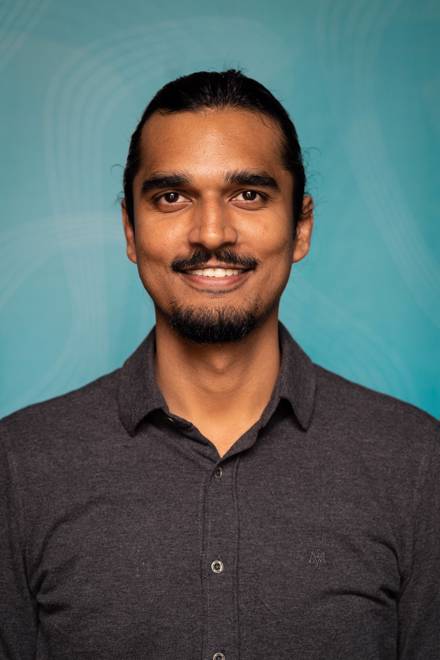
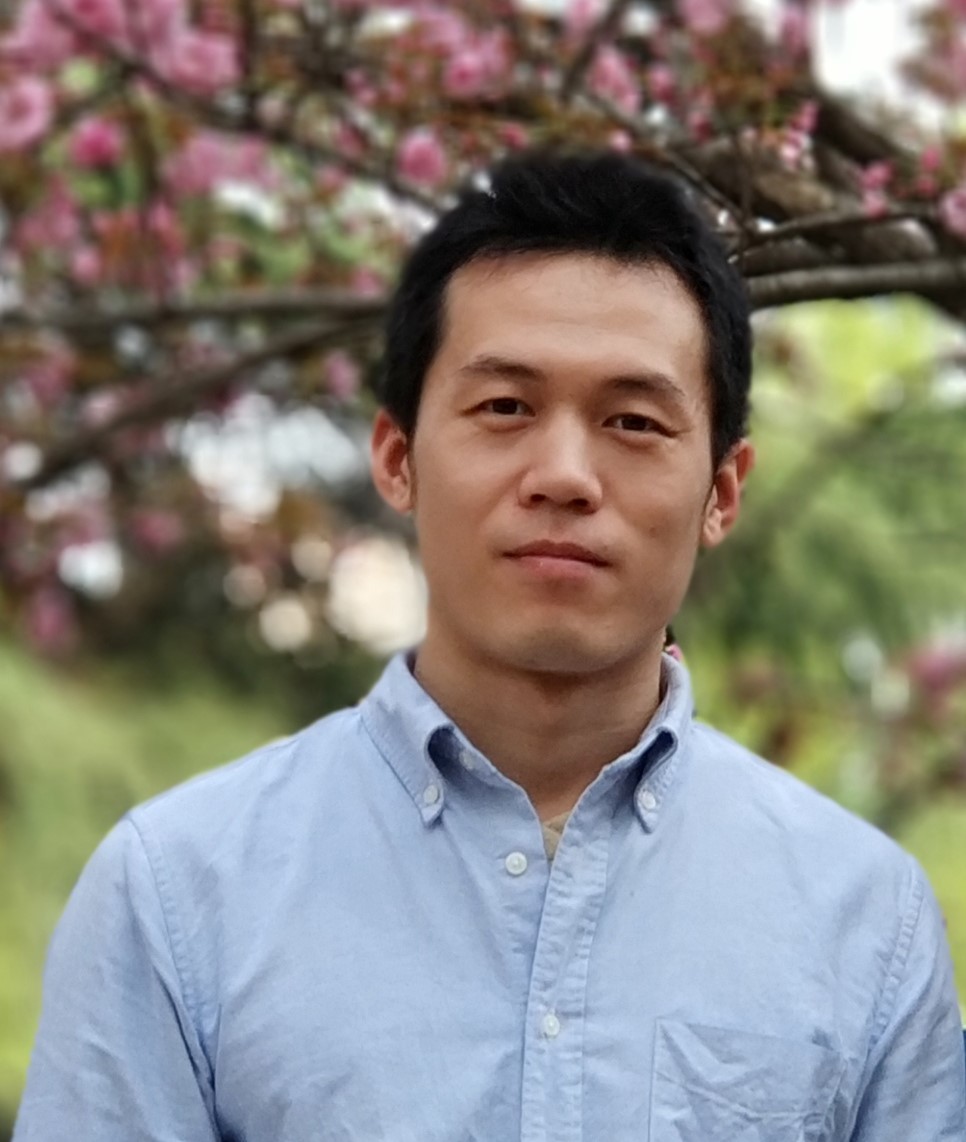
Knut Håkon Hole is an Associate Professor at the University of Oslo's Department of Radiology and Nuclear Medicine. His research focuses on diagnostic imaging applications in oncology, particularly in prostate and rectal cancers. He specializes in MRI, PET, and radiogenomics techniques to assess tumor biology, treatment response, and recurrence. Expertise: Prostate cancer imaging, neoadjuvant therapy response, tumor hypoxia, and imaging biomarkers Key affiliations: Oslo University Hospital (Rikshospitalet), Radium Hospital Research interests include: Developing MRI and PET protocols for cancer staging and recurrence detection Integrating imaging with genomic data (radiogenomics) Optimizing therapeutic approaches using imaging biomarkers Recent work highlights: Prostate cancer radiogenomics and hypoxia biomarkers (2024) MRI/PET comparisons for tumor localization (2021-2023) Neoadjuvant therapy response assessment in rectal and breast cancers (2020-2023) Publications span over 50 peer-reviewed articles with a focus on translational imaging research. Collaborates extensively with oncology and urology teams.
Børge Rokseth is an Associate Professor at the Department of Engineering Cybernetics , Norwegian University of Science and Technology (NTNU). His work focuses on integrating advanced methodologies for safety and risk control in autonomous maritime systems. He has held academic positions since at least 2014, with a consistent record of research collaboration and publication. Research Areas: Maritime risk analysis, autonomous ship systems, safety engineering, dynamic positioning systems, systems-theoretic process analysis (STPA) Key Publications: 15 most recent articles cover topics like trajectory prediction for autonomous vessels, hybrid power systems safety, machine learning in risk assessment, and dynamic positioning system reliability His publications (2014-2025) emphasize safety-critical systems in marine environments. Common themes include: Application of STPA for hazard analysis in autonomous shipping Development of risk-informed control systems Integration of machine learning with engineering risk assessment Comparative studies of different ship autonomy levels As a supervisor, Rokseth has guided master's students including Ane Joramo Stokke and Ludvig Vik Løite. His work has been presented at international conferences such as the European STAMP Workshop, International Conference on Conceptual Modeling, and the International Seminar on Safety and Security of Autonomous Vessels.
Astrid Gynnild is a Professor at the Department of Information and Media Studies, Faculty of Social Sciences, University of Bergen, Norway. She is also the Principal Investigator of the ViSmedia project and Head of the Journalism Program. Her work bridges journalism innovation, pedagogy, and ethical technology use in media. Education & Background: PhD in Journalism and Media Studies (2006), University of Bergen, with a grounded theory on creative exchange in journalism. Extensive professional experience at Adresseavisen, including news work, editorial management, and organizational development. Visiting researcher at the University of California, Berkeley. Research Interests: Gynnild’s research is organized into three core tracks: (1) AI and technological innovation in journalism, especially drone and mobile journalism; (2) student-active learning and workshop-based pedagogy in higher education; and (3) surveillance, privacy, and responsible innovation in visual media. She emphasizes ethical frameworks like Responsible Research and Innovation (RRI) and grounded theory methodology. Publication Trends: Her recent work reflects a strong focus on emerging technologies in journalism, particularly drones and immersive storytelling. Articles consistently explore ethical implications, professional adaptation, and pedagogical integration. There is a clear trajectory toward interdisciplinary, socially responsible research with real-world impact in media practice and policy. Scientific Awards: Fellow of the Grounded Theory Institute Meritorious Lecturer, Faculty of Social Sciences, University of Bergen (2019) Advising and Grants: Gynnild has supervised students at bachelor's, master's, and PhD levels. She led the ViSmedia project (2015–2021), funded by the Research Council of Norway (NFR), and contributed to multiple collaborative initiatives such as INJECT, Visual Journalism in the Newsroom, and Communicative Effects of Climate Messaging. She has developed curricula including the master’s program in investigative journalism and promotes open-access, co-creative dissemination. Labs and Research Groups: She leads the Journalism Research Group at UiB and was central to the ViSmedia project, which created a digital archive of conferences, student experiments, and publications on visual surveillance in media. The project website ( https://www.uib.no/en/vismedia ) serves as a hub for interdisciplinary dialogue and innovation.
Kyriaki Papageorgiou is a Senior Researcher and Marie Skłodowska-Curie Fellow at the Department of Interdisciplinary Studies of Culture, Faculty of Humanities, Norwegian University of Science and Technology (NTNU). She holds a PhD in Cultural Anthropology and investigates the intersection of education, innovation, and technological transformation, with a focus on robotics, AI, and systemic societal challenges. Her work employs ethnographic methods and anthropological theory to analyze innovation ecosystems and pedagogical futures. Research Interests include: AI and Robotics in Societal Contexts Future of Learning and Academic Work Social Innovation and Ecosystems Ethics of Co-Creation and Scaling Digital Transformation in Education Recent Publications (2020–2025) span AI ethics, educational reform, and social innovation, often bridging cultural anthropology with technology studies. Key trends include: Critical analysis of human-AI collaboration and trust Design of challenge-based and co-creative learning models Role of technology in pandemic response and daily life Evaluation of social innovation labs and ecosystems Scientific Awards include: Marie Skłodowska-Curie Fellowship Fulbright Scholarship She has secured grants from the US National Science Foundation (NSF), EU Framework Program (FP7, H2020), Wenner-Gren Foundation, and UNESCO, and has served as an independent expert for the European Commission and other governmental agencies. Kyriaki leads the Fusion Point collaborative research program in Barcelona.
Mona Naomi Lintvedt is a Research Fellow and PhD candidate at the University of Oslo's Department of Private Law within the Faculty of Law. Her work focuses on the intersection of law, technology, and digitalization, with particular emphasis on privacy, cybersecurity, and robotics ethics. She holds a Master of Laws degree from the University of Oslo (1999) and has extensive experience in public sector digitalization, including roles as Data Protection Officer at the Norwegian Tax Administration (2018–2020) and senior advisor roles in government ministries. Her research explores ethical and legal challenges in human-robot interaction, particularly in healthcare settings, and examines regulatory frameworks such as GDPR compliance for AI and robotics. She is affiliated with the Center for Forensic Informatics and the Law and Technology (JOT) research group. Current projects include the Vulnerability in the Robot Society (VIROS) initiative, which investigates legal and cultural dimensions of robotics in Europe and Japan. Lintvedt has contributed to international organizations like the OECD and EU committees on digital governance. She has taught at institutions including BI Norwegian Business School and OsloMet, focusing on legal informatics and technology law. Her publications analyze topics such as privacy in robotics, algorithmic welfare systems, and data protection enforcement mechanisms.
Samar Abbas Nawaz is a Senior Researcher at the Peace Research Institute Oslo (PRIO) with expertise at the intersection of law and technology. He holds a PhD in "Safe integration of civil drones: Law, self-operation & infrastructure" from the Department of Criminology & Sociology of Law at the University of Oslo. His current research focuses on regulatory challenges of emerging technologies, particularly Artificial Intelligence and unmanned systems. Dr. Nawaz has been professionally involved in the legal field for nearly a decade, serving as a practitioner, in-house advisor, and academic researcher. His doctoral research was conducted as part of the 'RegulAIR' project funded by the Research Council of Norway between 2021-2024 under the supervision of Bruno O. Martins and Kristin B. Sandvik. His primary research interests lie in the regulatory frameworks governing emerging technologies, with special focus on: Legal challenges of integrating civil drones into civilian airspace Regulation of artificial intelligence in security and border management contexts Human oversight requirements for autonomous systems Infrastructure challenges for drone operations (U-Space) Policy coherence in EU regulatory approaches to drone technology and AI Conceptual issues in defining "autonomous operation" and "remote pilot" Dr. Nawaz's scholarly work demonstrates a consistent focus on the intersection of law, technology, and regulatory frameworks. His publications reveal an evolving research trajectory from foundational drone law analysis towards more complex issues of AI integration, autonomy spectrums, and institutional policy coherence. A notable trend in his work is the application of Science and Technology Studies (STS) perspectives to legal analysis of emerging technologies, highlighting regulatory lag and conceptual challenges in current frameworks. As a Senior Researcher at PRIO, Dr. Nawaz is currently working on the EU-funded 'TRANSCEND' project, researching challenges for civil society engagement in border management technologies. He is also engaged in an internal project analyzing AI-related frameworks in Kenya, Brazil, and South Korea. Between 2021-2024, he conducted doctoral research as part of the 'RegulAIR' project funded by the Research Council of Norway. In 2022 and 2025, he co-facilitated the 'Peace Research' summer course in collaboration with the University of Oslo.
Tobias Mahler is a Professor of Law at the University of Oslo's Department of Private Law and serves as deputy director of the Center for Legal Informatics. He leads the legal innovation lab LILO and has been a visiting scholar at prestigious institutions including Stanford Law School and the Max Planck Institute for Foreign and International Criminal Law in Freiburg, Germany. Originally trained as a German lawyer, Mahler has practical experience having previously practiced as a paralegal in Norway. Professor Mahler's research spans the intersection of law and emerging technologies, with particular expertise in artificial intelligence regulation, robotics law, cybersecurity, and digital governance. His work focuses on developing legal frameworks that balance innovation with risk management and proportionality. He has published extensively on the EU AI Act, examining its risk-based approach and implementation challenges across various technological domains. His research also addresses the legal implications of healthcare robotics, cloud computing services, and domain name systems in the evolving digital landscape. Analysis of Mahler's recent publications reveals a strong focus on the regulatory challenges posed by artificial intelligence, particularly the EU's regulatory framework. His work examines both high-risk and non-high-risk AI systems, exploring compliance procedures, national implementation strategies, and the relationship between risk management and legal proportionality. He has made significant contributions to understanding how legal frameworks should address specific applications like medical AI, care robotics, and smart robotics within the EU context. His research consistently bridges technical and legal perspectives, emphasizing the need for adaptable regulatory approaches that can keep pace with technological innovation. Professor Mahler holds several important positions that demonstrate his influence in the field. He serves as a member of the Research Council's advisory expert group for the KI initiative (2023), is a board member of the Norwegian Association for Law and EDB, and participates in Standard Norway's committee on Artificial Intelligence (SN/K 586). He has led significant studies for both the Research Council of Norway on research data sharing and for the EU Commission related to the Digital Services Act. Previously, he served as program manager for the LLM in Information and Communication Technology Law. At the University of Oslo, Mahler is actively involved in research groups focused on Law and Technology (JOT) and Market, Innovation and Competition (MIK). He leads the legal innovation lab LILO and contributes to projects including Societal Security and Digital Identities (SODI) and Vulnerability in a Robot Society (VIROS), which examine the legal and societal implications of emerging technologies in security contexts and robotics.
Gunhild Tøndel is an Associate Professor in general sociology at the Department of Sociology and Political Science, Faculty of Social and Educational Sciences at the Norwegian University of Science and Technology (NTNU). Her academic journey at NTNU includes earning her PhD from the Department of Sociology and Political Science in 2014, followed by a postdoctoral fellowship at the Department of Interdisciplinary Cultural Studies from 2014 to 2017. Until summer 2025, she has held several leadership positions including subject group leader for sociology, study program leader for ÅSOS/BSOS/MSOS, and coordinator for the department's specialization within MORG (Organization, society, and change). Her educational background includes: PhD in Sociology and Political Science from NTNU (2014) Master's degree in Sociology (implied from her master's thesis "Diagnoser og forhandling. DRG-systemets interaksjon med den medisinske diagnosesettingen" from 2006) Tøndel's research moves at the intersection of welfare, technology, and knowledge production, with particular focus on digitalization, governance, aging, and life within health and care services. She has maintained a longitudinal research interest in governance technologies and their relationship to knowledge formation within public services, primarily examining the welfare state-citizen relationship. Her work frequently employs qualitative research methods to explore how datafication, metrics, and technological solutions transform public service delivery, particularly in healthcare contexts. Analysis of her recent publications reveals a consistent focus on how digital technologies reshape care practices, governance mechanisms, and professional work in welfare services. Her research increasingly examines the implementation challenges of welfare technology, particularly social robots for elderly care, while critically analyzing how quality measurement systems transform healthcare work. A recurring theme across her work is the examination of how quantitative metrics and datafication processes alter professional practices and citizen experiences within the welfare state. Professor Tøndel has been actively involved in several major research projects funded by the Research Council of Norway: CRIMKNOW - Digitalization and privatized knowledge regimes in criminal policy (2023-2027) AUTOWORK - Workers in transition through automation, digitalization and robotization (2020-2026) MASQ - Measuring quality: Exceeding the limitations of quality management in municipal health and care services (2020-2024) She has extensive teaching experience across all study levels, covering qualitative methods, project design, sociological theory, health sociology, and microsociology. Her educational contributions include co-authoring textbooks on bachelor thesis writing and research methods, reflecting her commitment to student development and academic supervision. Tøndel's research takes place at the intersection of several important societal developments, particularly examining how digital transformation affects welfare state institutions and citizen experiences. Her work provides critical insights into the implementation challenges of technological solutions in care contexts, with particular attention to how measurement systems and datafication processes reshape professional work and service delivery.
Henrik Skaug Sætra is an Associate Professor at the Department of Informatics , University of Oslo . His research addresses philosophical and ethical issues related to technology, with a focus on artificial intelligence and social robots . His work explores the intersections of technology with the three dimensions of sustainable development (environmental, social, economic) and the Sustainable Development Goals (SDGs) . Research Interests: Artificial Intelligence Social Robotics Philosophy of Technology Environmental Ethics Techno-Solutionism Research Groups: Sustainability Law Norwegian Research Center for Sexual Health (CENSE) Regenerative Technologies His recent publications examine themes such as ethical AI governance , techno-moral change , and sustainable technological practices . He critiques techno-solutionism , explores user behavior on social platforms , and investigates ecocentric machine design . His work spans environmental ethics , political philosophy , and digital trust , often published in leading journals like Communications of the ACM and Nature Machine Intelligence .
Shiliang Zhang is a Postdoctoral Fellow at the University of Oslo working with the Networks and Distributed Systems research group. His research focuses on privacy preservation in smart grid and transactive energy management systems, including the Privacy preserving Transactive Energy Management (PriTEM) project. He teaches Energy Informatics and Artificial Intelligence for Energy Informatics courses while developing interactive visualization tools for Norwegian energy infrastructure. His primary research areas encompass Smart Grid systems, Transactive Energy Management, and Privacy Preservation through Differential Privacy techniques. He applies Artificial Intelligence and Energy Informatics to address renewable energy integration challenges, grid resilience, and autonomous navigation systems. Recent work explores bionic data-driven approaches for underwater navigation and anomaly-resistant control mechanisms. Publications from 2022-2025 reveal strong interdisciplinary focus on machine learning applications for energy systems and navigation. Key themes include privacy-preserving pricing schemes for smart grids, robust control under system uncertainties, and deep reinforcement learning for geomagnetic navigation. His work spans IEEE Transactions, SmartGridComm, and Mathematics journals with significant contributions to resilient energy infrastructure. No scientific awards were mentioned in available sources. Zhang has no listed advisees but actively contributes to the PriTEM project within Networks and Distributed Systems. His research leverages collaborations across energy informatics domains, evidenced by publications in high-impact venues and development of practical tools like Norway's energy consumption and solar panel distribution maps. He operates within the Networks and Distributed Systems research group, developing interactive visualizations for Norwegian energy infrastructure including municipal energy consumption (May 2025), Oslo's solar panel distribution (April 2025), and national power lines (May 2025). His work bridges theoretical control systems with real-world energy applications through the PriTEM project.
Sheng Xu is a Research Fellow at the Department of Technology and Security, UiT The Arctic University of Norway. His postdoctoral research focuses on designing adaptive learning models for maritime education and training (MET), particularly in Arctic navigation contexts. His work integrates risk assessment methodologies, Bayesian network modeling, and data-driven analytics to enhance operational safety in ice-covered waters. Research interests include autonomous ship systems, collision risk mitigation in ice channels, and the application of probabilistic models to predict navigation hazards. He collaborates on projects analyzing vessel besetting incidents, ice load impacts on offshore structures, and human factors in Arctic navigation decision-making. Publications span 2012–2025, emphasizing statistical analysis of ice-related maritime risks and software risk modeling for autonomous vessels. His studies frequently utilize AIS data, satellite imagery (e.g., Sentinel), and hybrid causal logic frameworks. Key technical contributions include frameworks for failure scenario identification in autonomous ship control systems and reviews comparing risk analysis models in ice-covered regions. His work bridges engineering, environmental science, and policy to address challenges in Arctic shipping.
Guillaume Dutilleux is a Professor in the Department of Electronic Systems at the Norwegian University of Science and Technology (NTNU). His research focuses on bioacoustics, environmental acoustics, sound propagation, and noise mitigation in contexts such as wind turbines, railways, and road traffic. He has contributed to interdisciplinary projects, including acoustic tracking of wildlife and automated biodiversity monitoring. Dutilleux teaches courses like TTT4181 (Acoustic Discovery), TTT4290 (Bioacoustics for Biodiversity), and TFE4595 (Electronic Systems Design). He has published extensively in journals such as Applied Acoustics , Journal of the Acoustical Society of America , and Bioacoustics , with recent work addressing time-varying acoustical systems and noise annoyance prediction. His research emphasizes practical applications of acoustics in environmental and technological domains. Leading acoustic experiments on long-range sound propagation and noise impact assessment Developing educational programs in acoustical measurement techniques Collaborating on automated acoustic monitoring for endangered species conservation His work bridges theoretical acoustics with real-world challenges, contributing to both academic discourse and policy-informing studies.
Ricardo Colomo-Palacios is a Full Professor at the Department of Computer Science and Communication at Østfold University College, Norway. He coordinates the DigiTech research group associated with the Digital Society research priority area. Previously, he worked at Universidad Carlos III de Madrid, Spain. His educational background includes a PhD in Computer Science from Universidad Politecnica of Madrid (2005) and an MBA from the Institute of Empresa (2002). He has professional experience as a Software Engineer, Project Manager, and Software Engineering Consultant, including work at INDRA, a leading Spanish IT company. Colomo-Palacios' research spans several interconnected areas focusing on human aspects of computing and software engineering. His primary interests include Human Factors in Computing, Project Management in Information Systems Development, Global & Distributed Software Engineering, and Systems, Services and Software Process Improvement & Innovation. He also investigates Management Information Systems, Computing Profession Studies, Business Software, and Innovation in IT, with recent work emphasizing cybersecurity applications in critical infrastructure. His recent publications demonstrate a strong focus on cybersecurity applications in critical infrastructure, DevSecOps frameworks, visual analytics for supply chains, and social robotics security. The research shows a clear trend toward integrating security practices throughout the software development lifecycle while addressing real-world challenges in critical systems and infrastructure. He leads several significant research projects including DigiMat (Smart, transparent and sustainable food supply chains), EduTech (Technological assistance to accessibility in Virtual Higher Education), RECYCIN (Reinforcing Competence in Cybersecurity of Critical Infrastructures), and SecuRoPS (User-centred Security Framework for Social Robots in Public Space). As Coordinator of the DigiTech research group, Colomo-Palacios oversees research initiatives within the Digital Society priority area. His work bridges academic research with practical applications in industry, particularly in the areas of software engineering process improvement and cybersecurity for critical infrastructure.
Lee Andrew Bygrave is Professor at the Department of Private Law, University of Oslo, where he serves as Director of the Norwegian Research Center for Computers and Law (NRCCL). He also holds positions as honorary professor at the College of Law, Australian National University, academic affiliate of the Centre for Health, Law and Emerging Technologies at the University of Oxford, and Senior Research Affiliate at the Centre for Digital Law, Singapore Management University. His teaching spans multiple international institutions including Vienna, Stockholm, Tilburg, Tartu, Tel Aviv, and New South Wales. Professor Bygrave's educational background includes: Doctorate of Laws (dr. juris) from the University of Oslo (2000) Bachelor of Laws (Honours) from Australian National University, Canberra (1989) Bachelor of Arts (Honours) from Australian National University, Canberra (1985) His research focuses on the intersection of law and digital technology, with particular expertise in data protection, internet governance, and cybersecurity. Professor Bygrave has conducted pioneering work on cognitive sovereignty in the context of machine learning, the application of contract law to digital networks, and design-based regulatory techniques for embedding legal values into information systems. His scholarship addresses critical challenges in automated decision-making, privacy implications of emerging technologies, and the evolving legal frameworks governing digital spaces. Analysis of Professor Bygrave's recent publications reveals a consistent focus on the evolving regulatory landscape for digital technologies, particularly in the EU context. His work spans data protection law (especially GDPR implementation), cybersecurity regulation, and the governance challenges posed by AI and robotics. A notable trend is his exploration of how traditional legal concepts adapt to technological innovations, with increasing attention to human rights implications and accountability mechanisms in algorithmic systems. Professor Bygrave's significant scholarly recognition includes: His data protection scholarship has been cited with approval by Advocates General of the Court of Justice of the European Union Professor Bygrave leads the VIROS (Vulnerability in the Robot Society) research project funded by the Research Council of Norway, examining legal and ethical implications of AI-empowered robotics. He has served as principal teacher for the LL.M. program in Information and Communications Technology (ICT) Law at the University of Oslo and has taught English contract law. His editorial leadership includes founding co-editorship of Oslo Law Review and service on editorial boards of multiple leading journals in AI, law, and data protection. As Director of the Norwegian Research Center for Computers and Law (NRCCL), Professor Bygrave oversees a vibrant research environment focused on the legal dimensions of digital technologies. The center serves as a hub for interdisciplinary research connecting law with computer science, ethics, and policy studies, fostering collaborations across national and institutional boundaries to address emerging challenges in the digital society.
Dan Sui is a Professor in the Department of Energy and Petroleum Engineering at the University of Stavanger, within the Faculty of Science and Technology. His research is centered on drilling automation, digitalization, artificial intelligence, machine learning, data analytics, modeling, optimization, and control systems in petroleum and geothermal energy contexts. His research interests span drilling automation, AI, machine learning, data processing, modeling, optimization, simulation, control system design (including model predictive control, PID, Kalman filters), advanced drilling technologies, drilling event detection, geothermal drilling, and digital twin development. He actively contributes to the development of smart drilling systems and data-driven models for real-time decision support. The recent publications (2020–2025) highlight a strong trend in applying reinforcement learning, deep learning, and data-driven modeling to drilling optimization, ROP prediction, well path design, and subsea control. These works are published in high-impact journals such as SPE Journal , Journal of Petroleum Science and Engineering , and Applied Sciences , as well as in proceedings from ASME and IADC/SPE conferences, indicating a strong presence in both petroleum and mechanical engineering domains. Automatic calibration of directional drilling control Multi-agent reinforcement learning for waterflooding PI controller tuning using Deep Q-Learning Safe operating envelope for directional drilling Neural network optimization for ROP prediction Real-time ROP trend analysis Well path optimization with Bezier curves Anti-collision trajectory design Automated drilling algorithms on lab rigs Subsea shuttle tanker depth control While no specific scientific awards are listed, his extensive publication record and involvement in AI and digital twin projects reflect significant recognition in the field. He advises students and collaborates on research involving laboratory-scale drilling automation systems, hybrid test environments, and smart drilling robots, contributing to both theoretical and applied advancements. His work includes development of algorithms for autonomous drilling agents, feature selection for kick detection, and experimental studies on drillstring dynamics. Dan Sui is a key contributor to the OpenLab project, a modern drilling digitalization infrastructure, and leads research in data quality improvement, downhole data correction, and sensor data reconstruction using recurrent neural networks. His lab-based work includes designing autonomous small-scale drilling rigs and testing machine learning algorithms for incident detection, showcasing a strong integration of experimental and computational research.