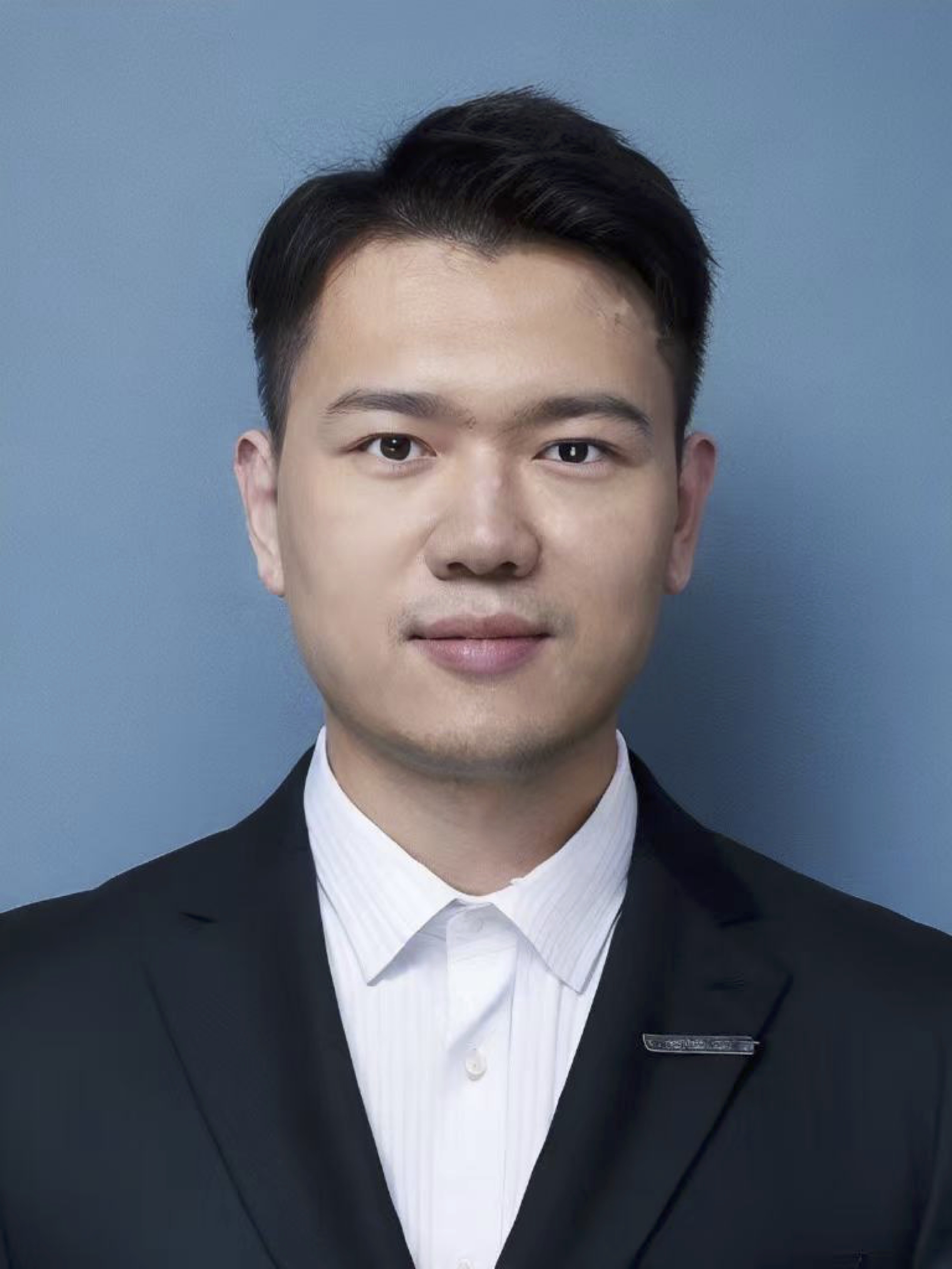
Jiayun (Peter) Wang is a Postdoctoral Scholar Research Associate in the Department of Computing and Mathematical Sciences at the California Institute of Technology (Caltech). His research focuses on advancing AI-driven solutions in medical imaging, computational imaging, and computer vision. Current projects emphasize applying deep learning to diagnose ocular conditions like dry eye syndrome and improving 3D reconstruction techniques. Collaborations with institutions such as UC Berkeley, Microsoft, and NVIDIA highlight his interdisciplinary approach to solving real-world medical and imaging challenges. Research Interests: Medical AI and Healthcare Analytics Deep Learning Applications in Ophthalmology 3D Reconstruction and Scene Understanding Physics-Informed Neural Networks Compressed Sensing MRI Key Contributions: Developed machine learning models predicting dry eye-related outcomes using meibography images Pioneered physics-aware neural operators for ultrasound lung aeration mapping Advanced open-vocabulary 3D object detection systems Labs/Teams: Collaborates with Caltech's AI4Health initiative and NVIDIA's research group, contributing to medical imaging advancements through interdisciplinary teams.
Teemu Malmi is a Professor in the Department of Accounting at the School of Business, Aalto University, Finland. He has been an influential figure in management accounting research, particularly in management control systems and performance measurement. His academic qualifications include a Doctoral degree (1997), Licentiate degree (1994), and Master's degree (1990), all in Business and Economics from the Helsinki School of Economics. His research interests span management control, performance measurement, digitalization in finance, public sector accounting, and organizational behavior. His work often integrates empirical analysis with case studies, including a notable investigation into Nokia’s management control challenges. He has published extensively in top-tier journals and contributed to major handbooks in accounting and information systems. The recent trend in his publications (2020–2025) reflects a growing emphasis on digital transformation, blockchain, data analytics, and the evolving role of finance functions. His research increasingly bridges traditional accounting with technology and public policy, especially in healthcare financing and sustainability. Scientific Awards: “Thirst for knowledge” (“Tiedon Jano”) award by JOKO Executive Education Oy (2001) Teemu Malmi has supervised at least five theses and led externally funded research projects, including the SOTE/Kaks project (2015–2016) on social and healthcare services. He has been actively involved in academic service, such as serving on editorial boards, hosting international scholars, presenting keynote lectures, and participating in funding organization committees. His media appearances demonstrate his engagement in public discourse on welfare policy and regional financing in Finland. There is no indication of part-time status, retirement, or former staff designation; he remains an active academic.
Maurizio MUZZUPAPPA is a Full Professor at the Department of Mechanical, Energy and Management Engineering (University of Calabria) since 2018. His roles include Rector's Delegate for Technology Transfer, Academic Delegate for Education at DIMEG, and Head of the Physical Prototyping Laboratory at the MaTeRiA Center (UNICAL-CNISM collaboration). He supervises the Unical Racing Team in Formula SAE competitions and co-founded three university spin-offs: 3DResearch, Tech4Sea, and Q-BOT. As Scientific Director of projects like TECH4YOU (climate change adaptation technologies) and GROWN IN THE BLUE (Mediterranean reef conservation), he integrates research in industrial design, augmented reality, and underwater cultural heritage. He has authored over 200 publications (h-index 27) and holds 10 patents. His teaching includes Tools and Methods for Industrial Design and Formula SAE LAB . His research focuses on: Industrial design methodologies with parametric and sustainable approaches 3D prototyping and additive manufacturing User-Centered Design for product ergonomics Virtual/Augmented Reality applications in engineering and cultural heritage Underwater robotics and artifact restoration Recent publications highlight trends in AR for industrial maintenance, generative design tools, and mechatronic solutions for underwater heritage. He has supervised over 300 theses and 10 Ph.D. students while leading technology transfer initiatives.
Peng Zhou is an Assistant Professor at the School of Advanced Engineering, The Great Bay University , and the Principal Investigator of the Embodied Manipulation Intelligence (EMAIL) Robotics Lab . His research integrates robotics, machine learning, and computer vision, with a strong focus on deformable object manipulation, robot perception, and task-motion planning. Education: Ph.D. in Robotics, The Hong Kong Polytechnic University (Supervised by Dr. David Navarro-Alarcon) Postdoctoral Research Fellow, The University of Hong Kong (Advised by Dr. Pan Jia) Exchange Ph.D. Student, KTH Royal Institute of Technology (Supervised by Prof. Danica Kragic) Research Interests: Dr. Zhou's work spans robotics , machine learning , and computer vision , with specialized expertise in deformable object manipulation , robot perception and learning , and task and motion planning . His lab, EMAIL, pioneers solutions for robotic manipulation of soft and deformable materials. Scientific Awards & Honors: 2024 : Track 3 Champion, Zhuhai International Dexterous Manipulation Challenge 2023 : IEEE R10 Outstanding Volunteer Award 2022 : Outstanding Young Researcher Award, National Engineering Research Center 2022 : Best AI Implementation Award, Hong Kong AI Open Competition 2022 : IEEE MGA Young Professional Achievement Award Editorial & Leadership Roles: Dr. Zhou serves as an Associate Editor for IEEE Robotics and Automation Letters and has organized key workshops like the IROS 2025 Workshop on Contact and Impact-aware Manipulation . He is also a Guest Editor for special issues in Electronics and Frontiers in Robotics and AI .
Suren Jayasuriya is an Associate Professor at Arizona State University's The GAME School, with joint appointments in the School of Electrical, Computer and Energy Engineering (ECEE) and the Department of Arts, Media and Engineering (AME). He is also an Affiliate Faculty Member at the Mary Lou Fulton College for Teaching and Learning Innovation. His lab, the Imaging Lyceum, focuses on transdisciplinary research bridging computational imaging, computer vision, sensors, and STEAM education. Education Ph.D. Electrical and Computer Engineering, Cornell University (2017) M.S. Electrical and Computer Engineering, Cornell University (2015) B.S. Mathematics, University of Pittsburgh (2012) B.A. Philosophy, University of Pittsburgh (2012) Research Focus Dr. Jayasuriya's work integrates optics, computational photography, and machine learning to develop novel imaging systems. His research spans: Computational cameras and light transport analysis Atmospheric turbulence modeling and video restoration Neural volumetric reconstruction for sonar/radar STEAM education frameworks for K-12 teachers Philosophical aspects of imaging and representation His lab emphasizes interdisciplinary collaboration across engineering, arts, and humanities. Publication Trends Recent publications demonstrate strong focus on computational imaging (45%), AI/ML applications (30%), and educational technology (25%). Dominant themes include turbulence mitigation in videos, neural rendering for sonar/radar, sensor fusion, and AI curriculum development for middle schools. Work frequently appears in top venues like CVPR, SIGGRAPH, and IEEE Transactions. Awards Image Electronics Technology Excellence Award (IIEEJ, 2021) Best Demo Awards: IEEE ICCP 2019, MIRU 2018 Best Paper Award: IEEE ICCP 2014 ASEE Diversity Paper Finalist (2020) Teaching Honors: Fulton Top 5% Award (2019, 2021), ASU Game Changing Faculty (2021) Teaching & Advising Teaches graduate/undergraduate courses including Machine Vision (EEE 515), Minds and Machines (AME 400), and thesis supervision. Leads NSF-funded projects on computational imaging education and AI teacher training. Mentors students through the Imaging Lyceum lab with projects spanning optics, philosophy, and educational technology. Lab & Collaborations Directs the Imaging Lyceum, emphasizing Aristotle-inspired collaborative research. The lab works on: computational cameras, STEAM education, sensor development, and philosophical inquiries into imaging. Collaborates with Carnegie Mellon Robotics Institute and international partners. Funded by NSF, NEH, and industrial partners for projects in sonar imaging, heat resiliency sensing, and educational AI.
Mikael Johansson is a Professor at Kungliga Tekniska Högskolan (KTH), specializing in Control Technology . He teaches and coordinates courses such as Distributed Optimization (FEL3311) and various advanced-level degree projects in computer science, electrical engineering, and systems engineering. His research spans Control Systems , Machine Learning , and Optimization , with a focus on asynchronous algorithms, federated learning, and applications in energy systems and construction. His work includes 15 recent publications on topics like neural networks, distributed optimization, and battery technology. Notable areas of contribution are in asynchronous learning, federated learning with privacy constraints, and quasi-Newton methods for optimization. His research bridges theoretical advancements with practical applications in urban design, healthcare, and autonomous systems.
Elena Asparouhova is a Professor of Finance at the David Eccles School of Business , University of Utah. She holds a doctorate in Social Sciences from the California Institute of Technology and a Masters in Statistics from Sofia University , Bulgaria. Her research focuses on theoretical and experimental financial economics , including asset pricing theory , experimental finance , general equilibrium theory , and econometrics . Recent work examines financial market competition under delegation , information percolation in dark markets , and human-robot interaction in trading . Best Paper Award, Journal of Financial Markets (2025) Best Paper Award, Review of Finance (2024) Best Paper, Behavioral Finance and Capital Markets Conference, Australia (2025) Continuous National Science Foundation funding for 10+ years Contact: e.asparouhova@utah.edu , University of Utah, Salt Lake City, Utah 84112.
Karen M Feigh is a Professor and Associate Chair for Research in the Daniel Guggenheim School of Aerospace Engineering at the Georgia Institute of Technology, holding the prestigious David S. Lewis Professorship. Her interdisciplinary work integrates aerospace engineering with cognitive sciences to address human-machine interaction challenges in complex aviation and autonomy systems. Education B.S. in Aerospace Engineering, Georgia Institute of Technology MPhil in Aeronautics, Cranfield University, UK Ph.D. in Industrial and Systems Engineering, Georgia Institute of Technology Dr. Feigh's research centers on cognitive engineering applications for flight operations and air traffic management. Through ethnographic studies, human-in-the-loop experiments, and expert system design, she develops solutions that align technology with human cognitive processes to enhance safety and efficiency in NextGen air traffic concepts, vertical lift systems, and autonomous vehicle operations. Scientific Awards David S. Lewis Professorship in the School of Aerospace Engineering (2025) AIAA Wilbur and Orville Wright Graduate Award (2006) Zonta International Amelia Earhart Fellowship (2005) National Science Foundation Graduate Research Fellowship (2001-2006) Marshall Scholarship (2001-2003) As director of the Cognitive Engineering Center (CEC), Dr. Feigh mentors graduate researchers and leads interdisciplinary collaborations across Georgia Tech's research ecosystem. The CEC, embedded within the Vertical Lift Research Center of Excellence and Institute for Robotics and Intelligent Machines, secures funding from agencies including NSF and AIAA to advance adaptive intelligence for industrial robotics and air traffic control systems. Laboratories and Collaborations The Cognitive Engineering Center under Dr. Feigh's leadership conducts field work, human-subjects studies, and mathematical modeling to solve human-machine interaction challenges. The lab maintains active partnerships with NASA, FAA, and industry stakeholders to implement research findings in real-world aerospace operations, with current focus on adaptive interfaces for autonomous systems and crew decision support tools.
Olli Seppänen serves as Associate Professor in Civil Engineering at Aalto University's School of Engineering, specializing in operations management for construction productivity improvement. He coordinates the Vision 2030 consortium—comprising 13 Finnish construction and design firms—to develop industrialized building methods for 2030, while leading multiple Business Finland-funded research initiatives focused on digital construction workflows and real-time monitoring. His research centers on lean construction principles, location-based management systems, and digital transformation through IoT, AI, and robotic vision. Key focus areas include prefabrication optimization, construction logistics, and shifting work off-site to industrialize processes. He aims to solve industry-wide productivity challenges by creating real-time situational awareness and implementing takt production systems for workflow stability. Recent publications (2024-2025) reveal strong emphasis on digital twin frameworks, semantic modeling for quality assurance, and AI applications in risk management. His work bridges theoretical lean construction concepts with practical implementations, particularly in real-time resource tracking, waste reduction in MEP work, and cross-sector learning from high-performing teams. Seppänen has received significant recognition including: School of Engineering doctoral dissertation award (2024) Best paper at IEEE Wireless Sensors Conference (2019) Nordic Conference best paper award for PhD research (2019) DSc dissertation award (2010) As principal investigator, he manages: Vision 2030 consortium projects (2-3 annually; PI for two current projects) iCONS: Real-time resource flow monitoring via indoor positioning RECAP: Deep learning analysis of progress/quality from images/point clouds DiCtion: Integrated data systems for real-time stakeholder situation pictures He actively contributes to the "Performance in Building Design and Construction" research group and leverages the Vision 2030 consortium as a collaborative platform for industry transformation, driving adoption of digitalized, industrialized construction methods through academic-industry partnerships.
Professor Lyudmila Mihaylova is a distinguished academic at the University of Sheffield's School of Electrical and Electronic Engineering, where she holds the position of Professor of Signal Processing and Control. She has established herself as a leading researcher in the fields of signal processing, Bayesian methods, and autonomous systems, with significant contributions to particle filtering techniques for intelligent transportation systems. Her work bridges theoretical developments with practical applications across multiple domains including transportation, healthcare, and industrial automation. Prof. Mihaylova's research interests center on nonlinear filtering, sequential Monte Carlo methods, statistical signal processing, and sensor data fusion. Her work spans both theoretical advancements and practical implementations, with particular focus on high-dimensional problems including vehicular traffic flow estimation, image processing, and localization in sensor networks. She has extensive experience with various image modalities such as optical, thermal, LIDAR, SAR, and hyperspectral imaging. Her group actively develops novel methods for autonomous intelligent systems focusing on sensing, tracking, decision making, and machine learning applications. Analysis of Prof. Mihaylova's recent publications reveals a strong trend toward uncertainty quantification in machine learning models, particularly for safety-critical applications. Her work increasingly integrates traditional signal processing techniques with modern deep learning approaches, with applications spanning sewer inspection robotics, medical diagnostics (particularly sleep apnea detection), UAV swarm tracking, industrial manufacturing, and autonomous vehicle systems. A significant portion of her recent research focuses on developing robust methods that can handle incomplete or outlier-corrupted data while providing reliable uncertainty estimates. Among her notable professional achievements: President of the International Society of Information Fusion (ISIF) Senior member of the IEEE Signal Processing Society Associate Editor for IEEE Transactions on Aerospace and Electronic Systems Associate Editor for Elsevier Signal Processing Journal Prof. Mihaylova has successfully mentored numerous PhD students and postdoctoral researchers, many of whom have gone on to prominent academic and industry positions. Her research has been supported by major funding bodies including EPSRC, EU, MOD/DSTL, and industry partners, with recent projects including 'Protecting Environments with UAV Swarms' (InnovateUK, 2022-2024), 'ShiRAS: Towards Safe and Reliable Autonomy in Sensor Driven Systems' (NSF-EPSRC, 2019-2023), and 'Confident safety integration for Cobots' (Lloyd's Register Foundation, 2019-2020). Her research group follows a collaborative approach with the philosophy 'We share knowledge, we grow.' Prof. Mihaylova maintains active research collaborations with institutions worldwide and has held previous academic positions at Lancaster University (2006-2013) and University of Bristol (2004-2006), along with research visiting positions at the University of Ghent, Katholic University of Leuven, and the Bulgarian Academy of Sciences.
John F. Reid is a prominent Research Professor at the University of Illinois at Urbana-Champaign in the College of Engineering , with dual appointments in Computer Science and Agricultural and Biological Engineering . He serves as Executive Director of the Center for Digital Agriculture . With over 35 years of experience in academic and industrial R&D, his career spans faculty roles at UIUC (1986-2000), leadership at Deere & Company (2000-2020), and Vice President positions at Brunswick Corporation (2020-2022). Education : Ph.D. in Agricultural Engineering (Texas A&M, 1987), M.S. and B.S. in Agricultural Engineering (Virginia Tech, 1982 & 1980) Dr. Reid's research focuses on agricultural automation , machine vision , and innovation management . He has pioneered agricultural robotics , precision technologies , and embodied AI applications in food, construction, and marine systems. His work has resulted in over 30 patents in automated guidance , sensor systems , and agricultural informatics . His scientific contributions center on stereo vision navigation , 3D field mapping , and adaptive control systems for mobile equipment. These innovations underpin modern precision agriculture and agricultural robotics frameworks. Major awards include: NAE Election (2019) ASABE Fellow (2004) University Scholar (1995) Academy of Engineering Excellence (2020) He holds leadership roles in international organizations including the CIGR Working Group on Circular Bioeconomy Systems (Chair 2024-present) and Fraunhofer USA (2013-2022).
Prof. Dr.-Ing. Stefan Kopp is a faculty member at Bielefeld University's Faculty of Engineering and serves as Research Group Leader of the Cognitive Systems and Social Interaction Group . He also holds administrative roles as Vice Dean and Deputy CITEC Coordinator . His work focuses on Artificial Intelligence , Cognitive Systems , and Socio-Technical World research areas. Research Group Leader: Cognitive Systems and Social Interaction Group Vice Dean: Faculty of Engineering Deputy Coordinator: Center for Cognitive Interaction Technology (CITEC) Project Manager: TRR 318 "Constructing Explainability" subprojects His research explores human-agent interaction , multimodal conversational agents , and social AI through projects like 39-Inf-11 Human-Machine Interaction and 39-M-Inf-VKI Virtual Humans and Conversational Agents . Publications address topics including adaptive explanation generation , gesture synthesis , and social cognition in dynamic environments. Current research topics span cooperative AI , explainable decision-making , and sensorimotor grounding in artificial systems.
Summary Luis A. Duffaut Espinosa is an Assistant Professor in the Department of Electrical and Biomedical Engineering at the University of Vermont (UVM), affiliated with the College of Engineering and Mathematical Sciences. His research focuses on control theory, estimation, robotics, and nonlinear systems with applications in autonomy, quantum control, and environmental monitoring. He holds a Ph.D. in Electrical and Computer Engineering from Old Dominion University (2009) and has held academic positions at George Mason University and postdoctoral roles at Johns Hopkins University and the University of New South Wales. Education: Ph.D. in Electrical and Computer Engineering (2009), Old Dominion University M.S. in Mathematics (2005), Pontificia Universidad Católica del Perú B.S. in Physics (2003), Universidad Nacional de Ingeniería, Peru Research Interests: His work emphasizes data-driven control and estimation methodologies, including model-free approaches for power systems, environmental monitoring, and quantum control. Current projects include real-time data assimilation in harsh environments, resilient robotics in GPS-denied conditions, and SAR with small satellites. He co-directs the Autonomous and Intelligent Systems Research Laboratory (AIRLab) and is part of the CREATE center. Recognition: 2024 NSF CAREER Award for work on safety-aware data-driven control frameworks Teaching & Advising: He teaches courses in estimation theory, control systems, and signal processing. Advises a team of graduate and undergraduate students focusing on autonomy, robotics, and control systems. Notable students include Danial Waleed (Ph.D. 2024), Jacob Friz-Trillo (M.S. 2025), and Farnaz Boudaghi (Ph.D. candidate). Labs & Collaborations: AIRLab: Focuses on data-driven control for autonomy in robotics and engineered systems CREATE: Research on resilient energy and autonomous technologies
Monica Olvera de la Cruz is the Lawyer Taylor Professor of Materials Science and Engineering, Chemistry, and Chemical & Biological Engineering at Northwestern University, with a courtesy appointment in Physics and Astronomy. She directs the Center for Computation & Theory of Soft Materials and serves as Deputy Director of the Center for Bio-Inspired Energy Science. Her research focuses on designing responsive materials, including polymers, electrolytes, and complex fluids, with applications in biotechnology and energy. She holds a Ph.D. from Cambridge University (1985) and a B.A. from UNAM (Mexico). Her research interests include self-assembly of heterogeneous molecules, ionic-driven assembly mechanisms, and functional materials design. Recent work highlights include modeling electrostatic effects in biomimetic systems and exploring superionic conductors. Awards include National Academy of Sciences membership (2012), APS Polymer Prize (2017), and American Philosophical Society membership (2020). Professional service roles: Gordon Research Conferences Board, DOE Basic Energy Sciences, Max Planck Institute advisory board Led over 150 publications since 2020, emphasizing soft matter physics and materials innovation Her group's innovations bridge theoretical physics and applied materials science, with notable achievements in bio-inspired materials and electrochemical systems.
Ken Wong is an Associate Professor in the Department of Computing Science at the University of Alberta's Faculty of Science. He also serves as Associate Chair within the same department. Holding a PhD in Computer Science from the University of Victoria (1999), his research focuses on software engineering challenges such as reverse engineering, program understanding, and software visualization. He emphasizes improving software evolution through tools like architecture recovery and root cause analysis, with applications in web/mobile platforms and diverse system understanding. Teaching highlights include developing Massive Open Online Courses (MOOCs) via Coursera, including the 'Software Product Management Specialization' and courses on Agile practices, client needs analysis, and software metrics. His recent publications (2023–2025) span AI-driven healthcare innovations (e.g., medical imaging, photoacoustic tomography) and advanced computer vision techniques (e.g., diffusion models, video inpainting). Notable collaborations include EVAREST studies on heart failure management and lung transplantation outcomes. His work bridges software engineering theory and practical applications in healthcare technology, with contributions to federated learning frameworks (e.g., FedLPPA) and AI-augmented clinical decision support systems. Research also extends to autonomous driving (DriveGPT4-V2) and 3D human avatar generation (DreamAvatar), showcasing interdisciplinary impact.