Emma De Keersmaecker is a Research Fellow at the Faculty of Physical Education and Physiotherapy , Vrije Universiteit Brussel , Belgium. Her work focuses on Virtual Reality , Gait , and Rehabilitation for neurological populations including Stroke and Multiple Sclerosis patients. Research keywords: Optic Flow, Patient Rehabilitation, Exercise Equipment, Biomechanics, Immersion Active in peer-reviewed publications and Cochrane systematic reviews Recipient of the FWO SB fellowship for fundamental research Research Trends : Emma's publications emphasize Virtual Reality applications for gait rehabilitation, investigating how Optic Flow , Immersion , and Assistive Technologies improve locomotion in stroke survivors and neurological patients. Her work spans Exoskeletons , Biomechanical Analysis , and Clinical Interventions . Scientific Awards : FWO SB Fellowship (2019)
R. Karina Gallardo is a Professor and Extension Economist at Washington State University’s School of Economic Sciences. Her work bridges research and outreach to enhance value-added agribusiness opportunities for specialty crops in Washington state. Education: Ph.D. in Agricultural Economics (Oklahoma State University, 2007), M.Sc. in Agricultural Economics (Mississippi State University, 2004), and degrees in Food Science/Technology from Universidad Nacional Agraria La Molina (Peru). Her research focuses on consumer demand analysis and technological change economics , with emphasis on: Consumer preferences for fresh fruit quality Profitability of new cultivar adoption Labor-saving agricultural technologies Willingness-to-pay for clean labels and biotech Market responses to nutrition information Recent work includes economic viability of robotic harvesters, H-2A labor preference modeling, and CRISPR technology acceptance in cranberries. Grants from USDA-NIFA-SCRI (total $84,912–$276,224 per project) support her studies on storage technologies, automated harvest systems, and pest management. Collaborations span institutions like Cornell, University of Minnesota, and Michigan State University. She employs experimental auctions, sensory evaluations, and choice experiments to analyze market dynamics for tree fruits, berries, and processed foods.
Maria Letizia Marchegiani is an Assistant Professor at the University of Parma , affiliated with the Department of Engineering and Architecture . Previously, she held academic positions at Aalborg University (2019) and Oxford Robotics Institute (2014-2018). Education: PhD in Computer Science and Engineering from Sapienza - University of Rome , MSc/BEng in Computer Engineering Her research interests span signal processing , machine learning , and their applications to robotics , autonomous systems , intelligent transportation , and intelligent healthcare . She explores intersections between auditory perception , cognitive modeling , and energy-efficient wearable systems . Recent publications demonstrate expertise in acoustic event localization , ML-SDWSN architectures , thermal camera integration for vehicles, and privacy-preserving wearable systems . Her work addresses challenges in network reliability , urban soundscapes , and human-robot collaboration .
Juan Antonio Corrales Ramón is a Research Fellow at the University of Santiago de Compostela's CiTIUS laboratory under the prestigious Beatriz Galindo program. Previously, he served as an Associate Professor at Sigma Clermont Engineering School (2014-2020) and conducted research at UPMC/ISIR in France. His academic credentials include a PhD in Automatic Control and Robotics (2011) and a Computer Engineering degree (2005) from the University of Alicante. Dr. Corrales' research centers on robotics with specialized interests in: Human-robot physical interaction for industrial applications Deformable object manipulation and control theory Tactile sensing technologies and sensor fusion Robotic grasping and in-hand manipulation Multi-robot coordination systems His recent publications demonstrate strong focus on adaptive control systems for deformable objects, tactile sensor development, and human-robot collaboration frameworks. He has participated in significant EU projects including: H2020 SoftManBot (soft material handling) H2020 Bots2Rec (recycling robotics) FUI Aerostrip (aerospace applications) Sudoe Commandia (service robotics) Honors include competitive fellowships: FPU Program Fellowship (Spanish Ministry of Education) Beatriz Galindo Program Fellowship (research excellence) At CiTIUS laboratory, he contributes to advanced robotics research with applications in industrial automation, healthcare, and agricultural robotics.
Professor Maurizio Caon is a faculty member at HES-SO (University of Applied Sciences and Arts Western Switzerland). His primary research areas include Human-Computer Interaction, Digital Transformation, and User Experience Design, with a focus on aging populations and health technology. He leads the HumanTech Institute and contributes to projects like NESTORE COACH and PEGASO, which develop virtual coaching systems for elderly well-being and adolescent health behavior change. His research explores tangible interfaces for e-coaching, gestural interaction design for professional cyclists, and data privacy mechanisms using pictograms. While his publications span topics from AI implementation in HRM to posthumanist perspectives on enhancement, his core work centers on applying digital technologies to improve health outcomes across age groups. He collaborates with institutions like Politecnico di Milano and contributes to European Union-funded initiatives. Professor Caon's recent work examines conversational agents for life-course health interventions, virtual reality exergame design, and wearables' impact on body awareness. His projects integrate behavioral change theories with IoT architectures and human-centered design principles. Despite active research engagement, no scientific awards are explicitly mentioned in the provided texts.
Professor Gordon Cheng is a faculty member at the Technical University of Munich (TUM), affiliated with the School of Computation, Information and Technology (CIT). He serves as the Director of the Chair of Cognitive Systems at the Institute for Cognitive Systems (ICS), where he focuses on advancing cognitive systems, robotics, and their intersections. His research addresses fundamental challenges in creating intelligent systems capable of understanding and interacting with complex environments. Research Interests: His work spans Neuroengineering , Robotics , and Cognitive Systems , emphasizing the integration of biological principles into artificial systems. Key projects include robot skin development , EEG-based prosthetic control , and human-robot co-adaptation . Selected Publications: Recent articles highlight advancements in real-time tactile sensing , neuroprosthetics , and BCI-driven rehabilitation , reflecting his interdisciplinary approach bridging robotics and neuroscience. Supervision: He supervises PhD students from the Graduate School of Neuroscience (GSN), including Jasmin Kajopoulos and Nikolas Berberich. Contact: Email: gordon@tum.de | Website
Joy Hirsch is a Professor of Psychiatry, Comparative Medicine, and Neuroscience at the Yale School of Medicine. She directs the Brain Function Laboratory, which focuses on the neural mechanisms of social interactions using functional near-infrared spectroscopy (fNIRS). Her work bridges single-brain and multi-brain neuroimaging to explore dynamic social behaviors under natural conditions. Education: PhD, Columbia University (1977) MA, Portland State University (1970) BS, University of Oregon (1967) Research Interests: Dr. Hirsch investigates the 'neuroscience of two,' emphasizing cross-brain neural synchrony and the 'interactive brain hypothesis.' Her lab develops multimodal technologies to study face-to-face interactions, focusing on conflict, cooperation, nonverbal cues, and social anxiety. Key themes include autism research, emotional contagion, and the impact of virtual communication on brain activity. Scientific Trends: Her recent articles highlight applications of fNIRS in psychiatric disorders, machine learning for neural diagnostics, and comparative studies of in-person vs. virtual interactions. Collaborations span interdisciplinary domains, including cognitive modeling, neuroimaging, and behavioral analysis. Scientific Awards: George Gamow Science Award (2009) Leah M Lowenstein Teaching Award (1990) Advising and Grants: Dr. Hirsch mentors students in social neuroscience and neuroimaging. She leads clinical trials, including Neural Mechanisms for Social Interactions and Eye Contact in ASD (HIC ID 1512016895), with primary completion in 2026. Lab and Teams: The Brain Function Laboratory, established at Yale in 2013, continues her legacy from Columbia's fMRI Research Center. The lab explores ecological validity in social neuroscience using head-mounted cameras, physiological sensors, and multimodal data synchronization.
Carlo Alberto Avizzano serves as Associate Professor in Robotics and Automation at the University of Pisa's School of Engineering, Department of Information Engineering. He coordinates the Department of Excellence in Robotics & Artificial Intelligence (MUR) and leads the Intelligent Automation System Research Group. Research spans robotics, human-robot interaction, computer vision, and control systems Specializes in creating intelligent automation systems with cognitive capabilities Integrates AI, machine learning, and mechatronics for robust autonomous systems His research focuses on developing robots that learn from human examples, adapt to changing environments, and interact through advanced perception systems. Current work emphasizes wearable robotics, UAVs, and industrial automation solutions with applications in medical rehabilitation, firefighting, and manufacturing. He employs distributed computing architectures integrating sensors, real-time control, and knowledge transfer algorithms. Publications reveal strong emphasis on practical implementations: 15 recent works cover exoskeleton design (2024), UAV firefighting systems (2024), industrial bin-picking datasets (2024), and haptic interfaces (2012-2023). Key trends show progression from virtual reality systems (2006-2008) toward modern AI-integrated robotics with industrial and medical applications. Teaching responsibilities include PhD courses in Sensors for Construction, Python Programming for HealthScience, and Digital Perception; plus undergraduate Mechatronics and Computer Vision labs. He serves on PhD boards for Emerging Digital Technologies and Health Science Technology. Extensive patent portfolio including haptic interfaces (2012), sailing simulators (2006), and UAV systems (2024) Research directly translated to commercial products and spin-off companies
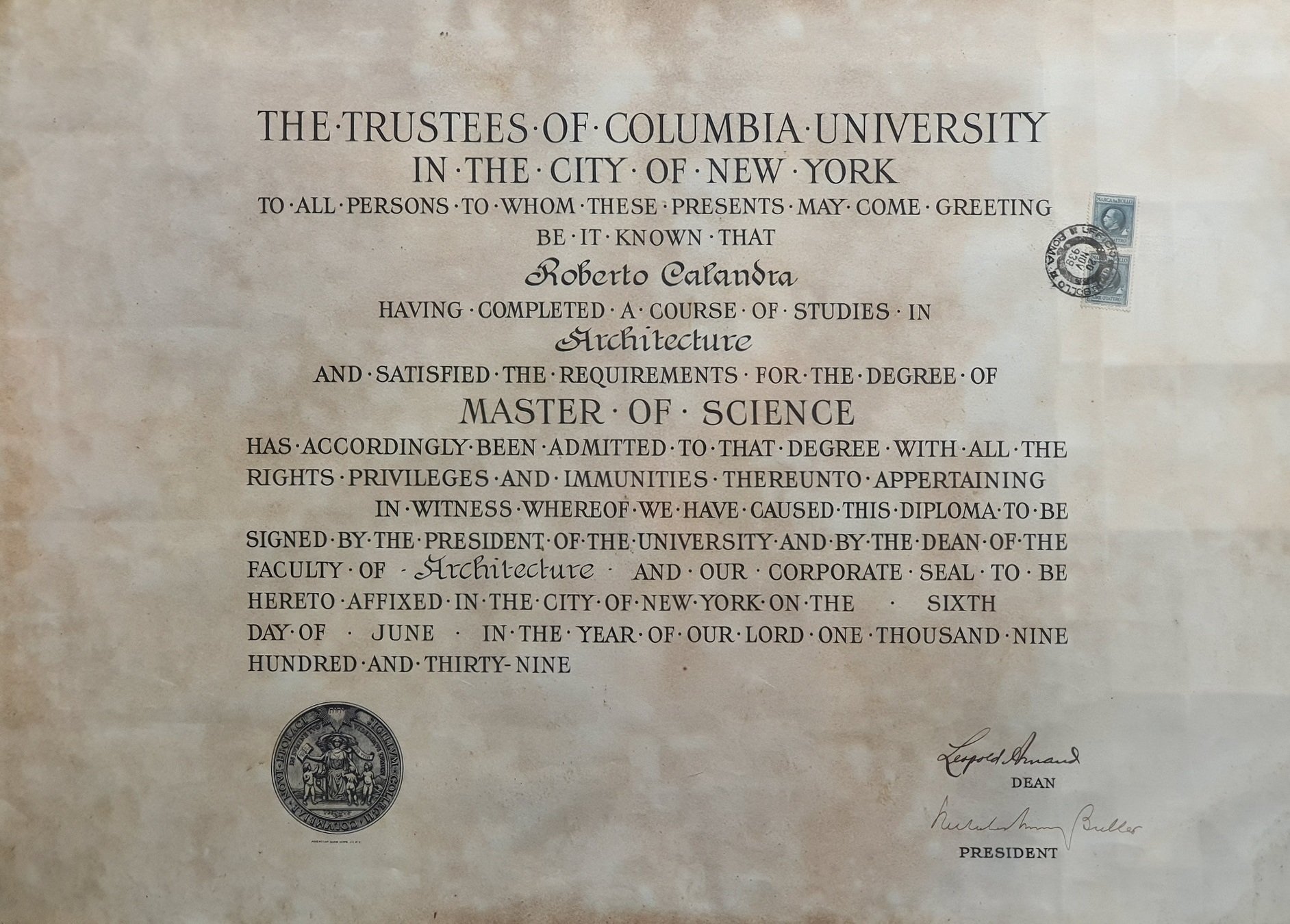
Roberto Calandra is a Full (W3) Professor at Technische Universität Dresden, where he leads the Learning, Adaptive Systems and Robotics (LASR) Lab. Previously, he served as a Research Scientist at Meta AI (formerly Facebook AI Research) and a Postdoctoral Scholar at UC Berkeley’s BAIR Lab under Sergey Levine. His academic journey includes a PhD in Robotics from TU Darmstadt, an M.Sc. in Machine Learning from Aalto University, and a B.Sc. in Computer Science from Università di Palermo. His research bridges Robotics and Machine Learning, focusing on tactile sensing, Bayesian Optimization, and model-based reinforcement learning. He pioneered the DIGIT tactile sensor , now the most widely used tactile sensor in robotics, and advocates for a computational field of Touch Processing to advance haptic understanding. His work emphasizes data-efficient learning, real-world dexterous manipulation, and multimodal perception. Recent publications highlight breakthroughs in tactile sensor design, in-hand object manipulation, and multimodal integration. He organizes workshops on robotics and machine learning (e.g., at NeurIPS, ICRA) and promotes open-source tools like PyTouch and TACTO .
Professor Kerstin Dautenhahn serves as Visiting Professor in Artificial Intelligence at the Centre for AI and Robotics Research, University of Hertfordshire. A pioneering researcher in socially assistive robotics, she directs therapeutic applications for children with autism and elderly care through human-robot collaboration frameworks. Her research spans Human-Robot Interaction, Social Robotics, and Robot-assisted therapy with expertise in autobiographic memory systems and narrative-driven social learning. Current work focuses on developing adaptive companion robots that evolve through longitudinal human engagement, particularly investigating trust dynamics during error recovery and continual learning mechanisms in therapeutic contexts. Recent publications (2022-2025) reveal concentrated exploration of robot curiosity frameworks, human perception of autonomous decision-making, and error consequence modeling. These studies establish foundational principles for socially intelligent robots that maintain user trust through transparent learning processes and context-aware adaptation. Professor Dautenhahn holds editorial leadership as founding Editor-in-Chief of Interaction Studies and Associate Editor for IEEE Transactions on Affective Computing , International Journal of Social Robotics , and Adaptive Behavior . She maintains Senior Membership in IEEE and active roles in ACM and SSAISB. She has supervised three graduate students and secured 23 research projects including Horizon 2020 initiatives BabyRobot (2016-2018) and SECURE (2015-2019), plus the KASPAR autism therapy project (2013-2018). Her funding portfolio demonstrates sustained focus on translating social robotics research into clinical and domestic applications through multi-institutional collaborations. As principal investigator for the Centre for AI and Robotics Research, she leads the KASPAR humanoid robot development team and coordinates the Robot House 2.0 facility. Her interdisciplinary teams integrate computer scientists, developmental psychologists, and clinical therapists to create evidence-based robotic interventions validated through longitudinal field studies.
Jitendra Malik is the Arthur J. Chick Professor of Electrical Engineering and Computer Sciences (EECS) at the University of California, Berkeley, with affiliations in Bioengineering, Cognitive Science, and Vision Science groups. He previously served as Chair of the Computer Science Division (2002-2004) and Department Chair of EECS (2004-2006 and 2016-2017). He also worked part-time as Research Director and Site Lead at Facebook AI Research (Meta Inc.) during 2018-2019. Education : B.Tech in Electrical Engineering (IIT Kanpur, 1980), PhD in Computer Science (Stanford, 1985) Current Research : Computer Vision, Robotics, Machine Learning, Computational Modeling of Human Vision, and Biological Image Analysis Making significant contributions to computer vision , robotics , and machine learning , Malik’s work includes foundational algorithms like anisotropic diffusion , normalized cuts , and R-CNN . His recent research focuses on embodied AI agents , dexterous manipulation , 3D scene reconstruction , and vision-language-action models . His publications have received 11 best paper awards , including test-of-time awards like the Longuet-Higgins Prize (3x) and Helmholtz Prize (3x). Malik has mentored over 80 PhD students and postdoctoral fellows , many of whom hold prominent positions at institutions like MIT, Caltech, Google, and Meta. His lab’s work spans computer vision , robot learning , and 3D modeling , with applications in autonomous systems, medical imaging, and computational biology. Scientific Awards Presidential Young Investigator Award (1989) Distinguished Alumnus Award, IIT Kanpur (2008) IEEE PAMI-TC Distinguished Researcher (2013) K.S. Fu Prize, IAPR (2014) ACM-AAAI Allen Newell Award (2016) IJCAI Award for Research Excellence (2018) IEEE Computer Society Pioneer Award (2019) Fellow, IEEE, ACM, AAAS Member, National Academy of Engineering and National Academy of Sciences As a leader in sensorimotor learning and humanoid robotics , Malik has pioneered approaches for vision-based quadcopter control , humanoid locomotion , and visuo-tactile perception , further advancing the field of artificial intelligence and computational vision .
Paul P. Maglio is a Professor of Management and Cognitive Science at the University of California, Merced, where he is affiliated with the School of Engineering and the Department of Management of Complex Systems. As one of the founders of the field of service science, he has established himself as a leading researcher at the intersection of management, cognitive science, and information systems. His work spans from theoretical foundations of service systems to practical applications of service innovation. Maglio received his bachelor's degree in computer science and engineering from MIT and earned his Ph.D. in cognitive science from the University of California, San Diego. His academic journey reflects his interdisciplinary approach that bridges technical and social sciences. His research interests focus on human-computer interaction, distributed cognition, and service science, with particular emphasis on how technology enables service innovation and value creation. Maglio's work explores how cognitive principles can inform the design of service systems and how service systems can be understood through the lens of complex adaptive systems. His research has practical applications in digital service transformation, service design, and the integration of artificial intelligence in service contexts. Analysis of his recent publications reveals a clear trajectory toward understanding service systems in the age of AI. His work increasingly examines how autonomous technologies transform human-centered service systems, with particular attention to trust in AI systems, digital service transformation, and the ethical implications of data-driven business models. The publications show a consistent focus on service science as an interdisciplinary field that connects management, information systems, and cognitive science. Maglio served as Editor-in-Chief of INFORMS Service Science from 2013 to 2018 and is the lead editor of the Handbook of Service Science, Volumes I and II. He has published over 125 papers across computer science, cognitive science, and service science domains, establishing him as a prolific contributor to these fields. As an educator, Maglio teaches courses including Technology-enabled Service, Foundations of Management of Complex Systems, Service Science, and Service Innovation. His teaching reflects his research interests and commitment to developing the next generation of service science scholars and practitioners. His work with students likely focuses on the practical application of service science principles to real-world business challenges. Maglio directs research that examines the intersection of cognitive science and service systems, with particular attention to how people interact with and through service systems. His work on epistemic actions and distributed cognition provides theoretical foundations for understanding how humans and technology collaborate in service contexts.
Alice Haynes is a Digital Futures Postdoctoral Fellow at KTH Royal Institute of Technology, working on the Felt Connections project under the Division of Media Technology and Interaction Design . She collaborates with Prof. Kristina Höök and Associate Prof. Iolanda Leite to create shape-changing textile interfaces that foster meaningful bodily interactions for children and adults. Education PhD in Engineering Mathematics, University of Bristol (2022) Specialization in Soft Robotics and Haptic Interfaces Her research blends soft robotics, e-textiles, and soma design to develop tactile technologies that prioritize bodily engagement over traditional visual/auditory interfaces. Current work explores: first-person design for scoliosis, symmetry-asymmetry dynamics in bodily interactions, and soma-driven methods that emphasize felt experiences. Key article trends include shape-changing textiles (SMA-actuated smocking, machine embroidery), emotional/therapeutic applications (anxiety relief, social touch), and multisensory integration (audio-tactile mappings, biosignal interaction). Scientific Contributions Recipient of Digital Futures Postdoctoral Fellowship Co-design methodologies for child-centered technology Material-driven evaluation frameworks for e-textiles Embodied interaction paradigms through haptic cushions Alice teaches Human-Computer Interaction Research Seminars (DH2632) and Media Technology and Interaction Design (DM2601) , while actively seeking Master's students for collaborative thesis work.
Ali Farhadi is a Professor in the Department of Computer Science & Engineering at the University of Washington's Paul G. Allen School of Computer Science & Engineering and serves as CEO of the Allen Institute for Artificial Intelligence (AI2). His educational background includes: Ph.D. from the University of Illinois at Urbana-Champaign under David Forsyth Postdoctoral fellowship at Carnegie Mellon University's Robotics Institute with Martial Hebert and Alyosha Efros Farhadi's research centers on Computer Vision and its synergies with Machine Learning and Natural Language Processing , with deep emphasis on Knowledge Representation and Reasoning , Visual Reasoning , and semantic analysis in visual understanding. His work bridges theoretical AI foundations with practical applications to enhance machine perception and cognitive capabilities. He directs the Reasoning, AI, and VisioN (RAIVN) Lab , which pioneers interdisciplinary research in vision-language integration and explainable AI systems.
Aline Normoyle is an Assistant Professor of Computer Science at Bryn Mawr College, where she leads the MOVR (Motion Capture and Virtual Reality) lab. Her research focuses on character animation, video game design, and analyzing human motion from video. She holds a B.Sc. from McGill University, and a M.Sc. and Ph.D. from the University of Pennsylvania. Prior to academia, she worked as a software engineer for 10 years, specializing in networking, graphics, and behavioral modeling. Her work bridges computational methods with experimental approaches to study non-player characters, avatars, and game mechanics. Normoyle’s contributions include open-source tools for sign language analysis and VR experiments, and she actively collaborates across disciplines including linguistics and psychology. She has been recognized with the Best Student Presentation Award at the 2013 Symposium on Applied Perception. Her teaching spans foundational computer science courses and specialized topics in game programming and animation. Education: B.Sc. in Computer Science, McGill University (1999) M.Sc./Ph.D. in Computer Science, University of Pennsylvania (2015) Research Interests: Procedural character animation and behavior Motion capture and analysis techniques Immersive VR/AR applications Game-based experimental platforms Accessibility in digital human modeling Recent Work Trends: Normoyle’s recent publications explore gesture-based user identification, controller effects in AR games, and the role of hand motions in virtual communication. Her work emphasizes interdisciplinary approaches, combining AI with traditional animation techniques to create more expressive and interactive virtual characters. Awards: Best Student Presentation Award, Symposium on Applied Perception (2013) Advising & Grants: Normoyle advises students in animation, VR, and game design, requiring foundational coursework in computer graphics and systems programming. She has received support for her research through collaborations with institutions like Clemson University and New York University. Labs & Teams: Director of the MOVR lab at Bryn Mawr, focusing on motion capture, VR experiments, and open-source tools for sign language analysis.